
High Temperature Resistant Silicone Wire: 9 Parameters Engineers Must Fix
High Temperature Resistant Silicone Wire: 9 Parameters Engineers Must Fix
Short answer: high temperature resistant silicone wire is specified, not shopped. Nine parameters decide whether the delivered cable performs in service: continuous conductor temperature rating; voltage rating and dielectric wall; insulation build (single-wall, double-insulated or braided); conductor material and plating; stranding and flexibility class; core count and geometry; outer protection; compliance route (UL, IEC, CCC); and order-level parameters such as cut length, print legend and first-article documentation. Every parameter left open on the purchase order is a parameter the supplier fills in — usually with the lowest-cost option that still passes a continuity check.
Problem Definition: Most Silicone Wire Failures Are Specification Gaps
Most high temperature wire complaints are not manufacturing defects. They are specification gaps. A purchase order that reads 'silicone wire, 200°C, 18 AWG' leaves the insulation wall thickness, the conductor plating, the strand construction, the core geometry and the acceptance standard undecided. Two suppliers can quote that identical line item, deliver physically different cables, and both remain defensible under the wording of the order. The buyer discovers the difference at the crimp, at the bend radius inside the housing, or on the incoming inspection bench.
The second failure mode is confusing ambient temperature with conductor temperature. A wire routed beside a heating element, bundled inside an appliance, or pulled through a conduit sees a conductor temperature that combines current-driven self-heating with heat absorbed from its surroundings. A published rating describes a defined test condition; it is not a blanket guarantee for every installation.
The third failure mode is comparing quotations on price and AWG alone. When two quotes for 'the same cable' diverge, the difference usually sits in five places: copper content, conductor plating, insulation wall thickness, braid or jacket construction, and the certification and test documentation that ships with the lot. A lower quote is not automatically a worse cable — it is a differently specified cable. The engineering task is to decide which of those five differences the application can tolerate.
Industry Background: Why Parameter-Level Buying Is Increasing
Market estimates for high temperature wire diverge by scope, and reading them correctly is part of buying correctly. Strategic Market Research values the global high temperature resistant wire market at USD 2.13 billion in 2024, projected to reach USD 3.19 billion by 2030 at a 6.8% CAGR, while the same publisher’s broader high temperature cables scope is estimated at USD 4.8 billion in 2024, rising to USD 7.3 billion by 2030. Market Research Future publishes a narrower 2024 figure of USD 1.48 billion with a 4.5% CAGR to 2035. Those numbers are not in conflict; they answer different questions about what counts as high temperature wire.
Inside the silicone segment, SNS Insider values the global silicone cable market at approximately USD 3.87 billion in 2024, and the high temperature silicone cable sub-segment at USD 1.34 billion in 2024, growing at a CAGR of 8.95% toward 2032. Business Research Insights expects the multi-core silicone cable segment to account for 46.0% of global silicone cable market share in 2026 — evidence that buyers increasingly specify multi-conductor assemblies rather than single-core runs. On the fluoropolymer side, MarketsandMarkets projects the PTFE (Teflon) market to grow from USD 3.12 billion in 2026 to USD 3.87 billion by 2031, with Asia Pacific holding a 50.5% value share in 2025.
Two demand drivers explain why specification has moved from material labels to construction detail. Silicone insulated cables are preferred in medical equipment because of superior flexibility and chemical resistance (Business Research Insights). Silicone parallel wires and multi-core cables are increasingly used in EV battery management systems, where high voltage and thermal stability dominate the requirement (Strategic Market Research). In both cases the material name 'silicone' is not enough — construction has to be fixed.
The compliance landscape is public and stable. UL 758 is the primary standard for Appliance Wiring Material (AWM) and covers internal wiring for appliances using silicone and fluoropolymer insulation. UL 3135 is a specific silicone rubber insulated wire style rated 200°C for internal wiring. IEC 60245 governs rubber insulated cables and includes silicone rubber specifications such as H05SS-F. For the Chinese market, high temperature resistant wires rated at or below 450/750V must obtain CCC (China Compulsory Certification) under GB/T 5013 / GB/T 5023. These designations are what convert a request for quotation into a verifiable order.
Detailed Solution: The Nine Parameters That Decide Delivered Performance
The nine parameters below are the ones that change what arrives in the box. They also explain why designations such as SRML/SFF-2, UL 3135 or H05SS-F are useful: each one is shorthand for a fixed set of values across parameters 1 to 7.
| # | Parameter | What belongs on the purchase order | What it decides | Evidence to request |
|---|---|---|---|---|
| 1 | Continuous conductor temperature rating | The continuous rating at rated current, plus the style it maps to (for example 150°C SRML/SFF-2 class or 200°C UL 3135 class) | Insulation compound and the thermal safety margin of the design | Style datasheet stating the test condition, not only the headline number |
| 2 | Short-term / peak temperature | Peak value, duration, frequency, and the required condition after the excursion | Whether the insulation must survive excursions or only steady state | Thermal cycling data, or an agreed test protocol for the order |
| 3 | Voltage rating and dielectric wall | Voltage class (for example 600V) and minimum insulation wall thickness | Dielectric strength and finished outer diameter, which drives connector fit and conduit fill | Wall thickness tolerance plus high-potential or spark test results |
| 4 | Insulation build | Single-wall silicone, silicone double-insulated wire, silicone braided wire, Teflon double-insulated wire, or a tube construction such as inner rubber outer fiber tube | Abrasion and cut-through resistance, number of dielectric barriers | Cross-section drawing, plus confirmation of which layers are produced in-house |
| 5 | Conductor material and plating | Bare copper, tinned copper or nickel-plated copper, with plating specification | Oxidation behaviour at elevated temperature and solderability | Plating thickness specification and material declaration |
| 6 | Stranding and flexibility class | Strand count and strand diameter per AWG, not AWG alone | Flex life, minimum bend radius and termination quality | The stranding table for the exact construction quoted |
| 7 | Core count and geometry | Single core, silicone parallel wire, Teflon parallel wire, twisted silicone multi-core wire, or shielded | Routing width, assembly labour, crosstalk behaviour | Dimensional drawing with pitch, lay length and tolerances |
| 8 | Outer protection and environment | Fiberglass braid, silicone jacket, extruded tube, chemical or moisture exposure | Service life in contaminated, moving or abrasive environments | Abrasion and chemical compatibility statements |
| 9 | Compliance and order-level parameters | Applicable standard (UL 758 AWM, UL 3135, IEC 60245, CCC for wires at or below 450/750V), cut length, print legend, packaging, traceability | Market access and the acceptance criteria incoming inspection can actually apply | Certificate or authorization referencing the exact style, temperature and voltage |
Parameter 1: The temperature rating is a system value, not a label
Silicone rubber insulated wires such as SRML/SFF-2 are suitable for continuous operation at conductor temperatures up to 150°C at 600V (Seattle City Light standard 6420.65). UL 3135 describes a silicone rubber insulated wire style rated 200°C for internal wiring. High-temperature Teflon (PTFE) wires typically operate in the range of -60°C to +260°C (Grand View Research). These are three different material systems, and the number attached to each one is only meaningful together with its test condition. The practical rule for an engineer is to state the conductor temperature the design will actually reach, then ask the supplier to name the style that covers it. If the answer comes back as an ambient figure, or as a peak figure presented as continuous, the specification is still open.
Parameters 3 and 4: Insulation build prevents a mechanical failure, not a thermal one
Silicone is chosen for heat stability and flexibility, but silicone alone is a soft insulation. Where a cable is routed against an edge, pulled through a grommet or flexed continuously, the failure mode is usually mechanical: abrasion, cut-through or a breached dielectric barrier. That is where build selection matters. A silicone braided wire adds a braid over the silicone for abrasion and cut-through protection. A silicone double-insulated wire adds a second insulation layer for reinforced dielectric separation. A Teflon double-insulated wire combines the wide temperature band of PTFE with chemical resistance. Tube-style constructions such as an inner rubber outer fiber tube are used where the run needs a hose-like protective layer rather than a compact insulation wall. Each option trades diameter, flexibility and mechanical protection against the others, so the correct answer follows from the failure mode the design must prevent.
Parameters 5 and 6: Conductor construction is where quotations quietly diverge
Two cables can both be labelled 18 AWG and still differ in strand count, strand diameter and plating. Stranding determines flex life and minimum bend radius; plating determines how the conductor behaves at elevated temperature and how easily it solders or crimps. At higher temperatures, oxidation of an unplated or lightly plated conductor becomes a termination problem long before the insulation fails. The remedy is administrative as much as technical: put the stranding table and the plating specification into the purchase order, and attach them to the first-article report, so the second shipment can be compared with the first.
Parameter 7: Parallel and multi-core geometry change assembly cost
Silicone parallel wire and Teflon parallel wire hold two conductors at a fixed pitch, which speeds termination and keeps polarity consistent during assembly. Silicone multi-core wire bundles several conductors under one jacket and reduces the space a run consumes. Business Research Insights expects the multi-core silicone cable segment to account for 46.0% of the global silicone cable market in 2026, which reflects how often buyers now specify assemblies rather than single cores. The parameter to fix is not 'multi-core' as a word but the pitch, lay length, core identification and tolerance that the connector and the routing path require.
Parameters 8 and 9: Compliance is only useful if it names your exact construction
UL 758 covers appliance wiring material with silicone and fluoropolymer insulation; UL 3135 sits at 200°C within the silicone family; IEC 60245 covers rubber insulated cables including silicone rubber types such as H05SS-F; and CCC applies in China under GB/T 5013 / GB/T 5023 for wires rated at or below 450/750V. A general certification statement does not close a specification. What closes it is a document that names the style, the temperature rating and the voltage rating matching the purchase order line.
What the manufacturer side has to be able to do
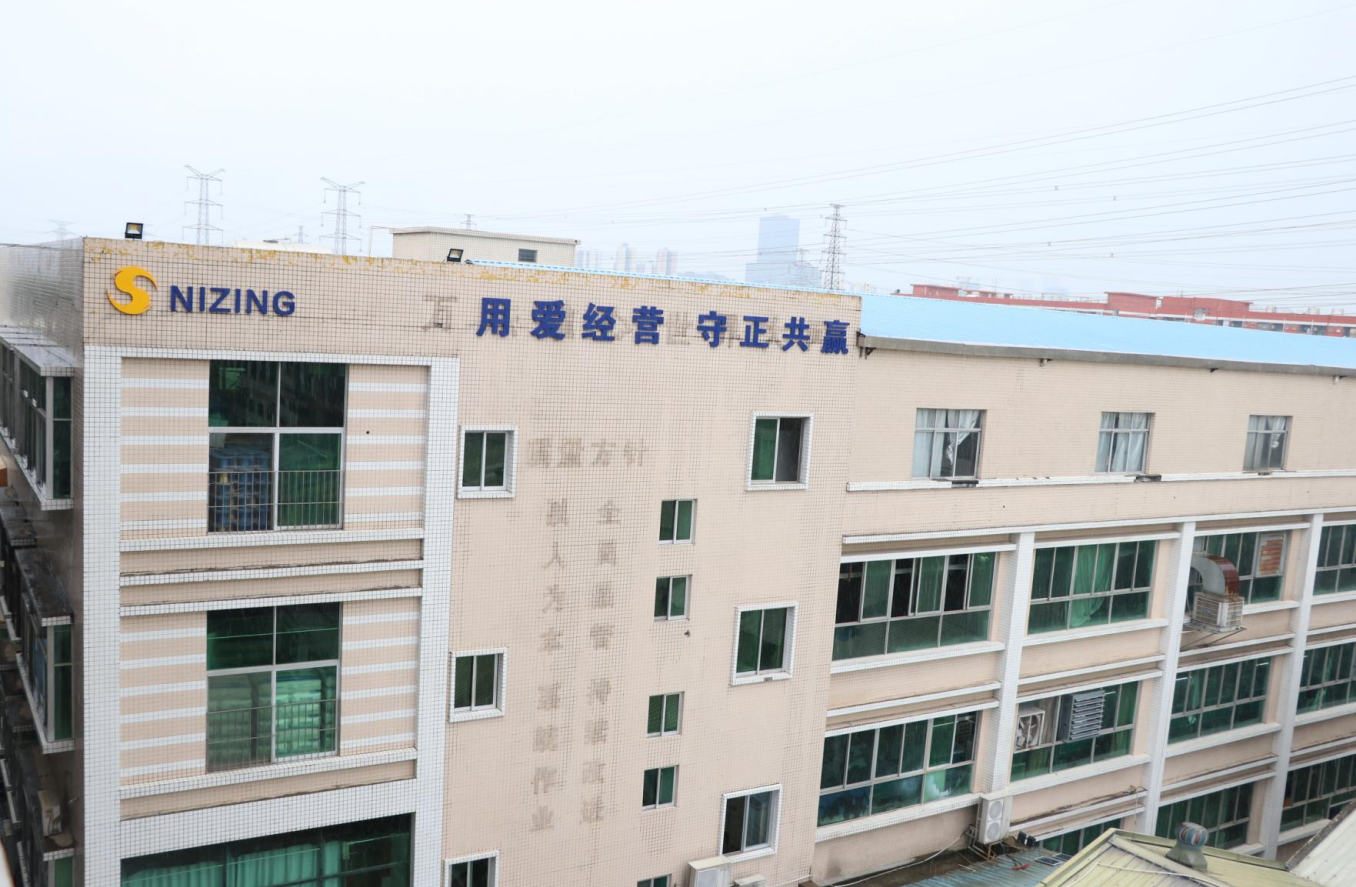
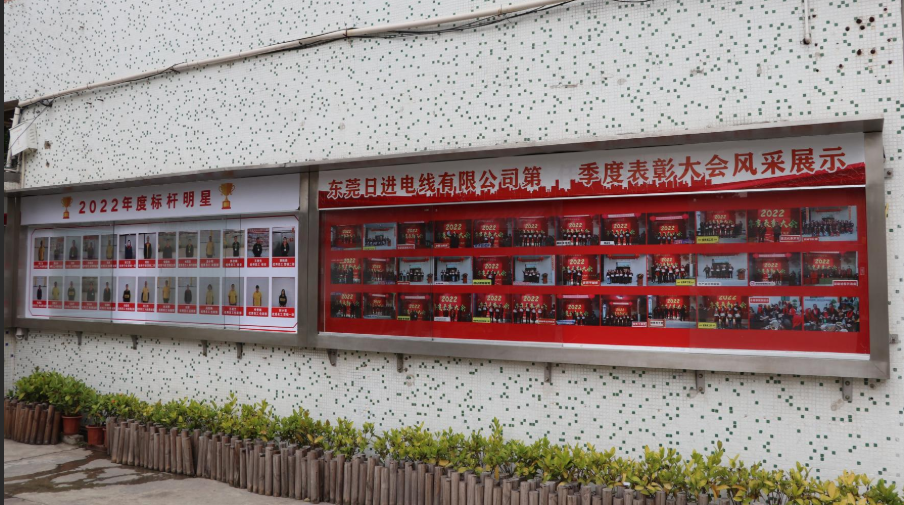
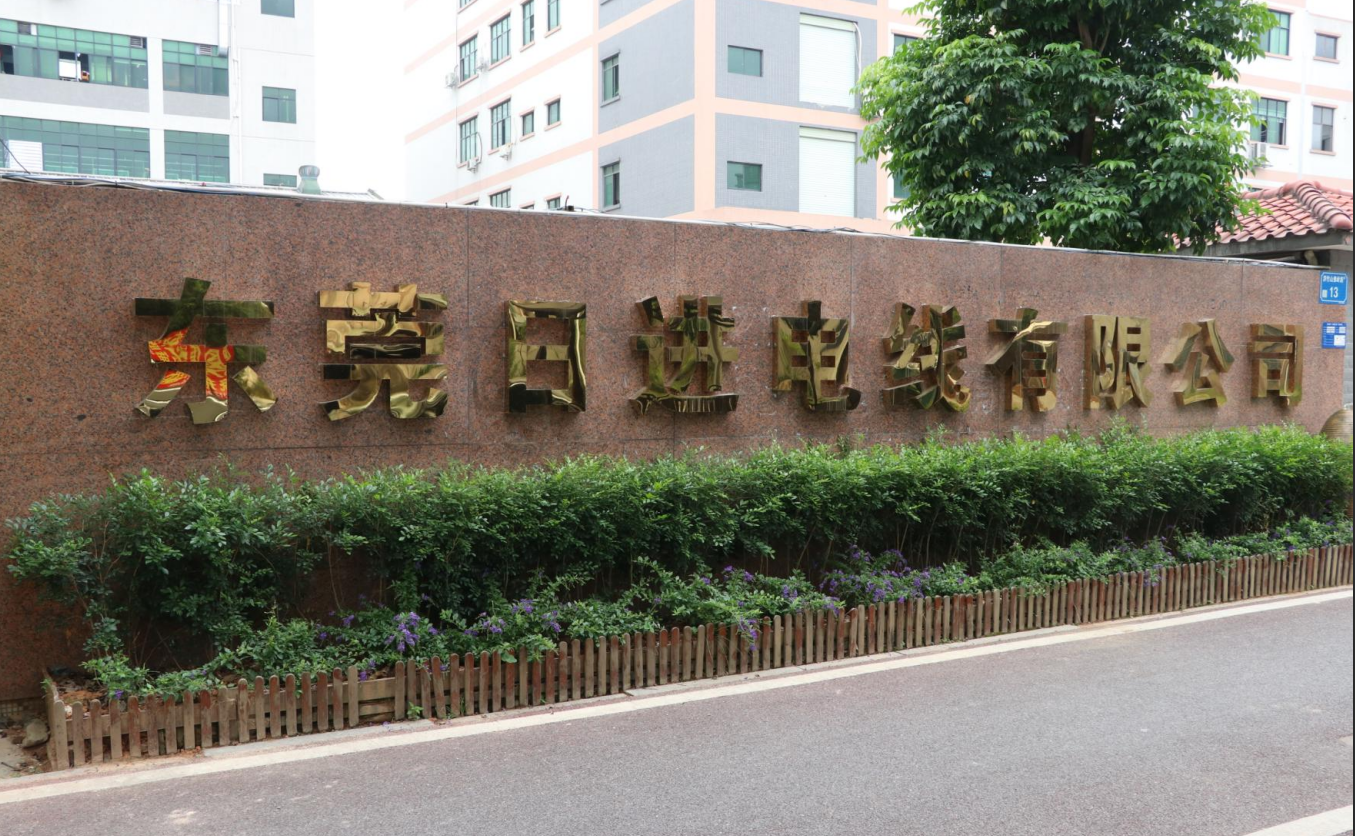
NIZING ELECTRIC CO., LTD is a Dongguan-based manufacturer of high temperature wire. Nizing Group was founded in Taipei in 1983; the company states a facility covering 12 mu in Fuzhushan Village, Liaobu Town, Dongguan, Guangdong Province, 150 employees, an annual output of 225,000,000 meters, and an R&D team of 20 engineers. Its declared product lines include high temperature silicone wire, silicone water pipe and Teflon wire, alongside silicone raw materials, high temperature resistant braided silicone wire, food-grade silicone water pipe and silicone sealing rings. The company exports about 30% of its output to Europe, America and Southeast Asia, and holds 50 trademark records including the NIZING mark and 63 patent records.
For a specification-led buyer, two of those facts matter more than the rest. In-house silicone raw material production means the compound itself can be adjusted when a customer needs a parameter set that catalogue constructions do not cover. An R&D team of 20 engineers is the unit that converts a customer drawing into a manufacturable construction, and that responds when a first article does not match the drawing. Both are capabilities a buyer can test during sampling rather than accept as a claim.
Step-by-Step Breakdown: Fixing the Nine Parameters in Eight Steps
- Define the thermal environment, not the temperature label. Estimate conductor temperature as self-heating plus ambient plus radiant contribution. Write continuous and peak values as separate numbers.
- Convert the thermal value into a wire style. 150°C continuous corresponds to the SRML/SFF-2 class (150°C at 600V). 200°C internal wiring points to a UL 3135-class silicone style. Where the environment is chemically aggressive or the band is wider, PTFE at -60°C to +260°C becomes relevant.
- Fix voltage rating and dielectric wall together. A voltage class without a minimum wall thickness leaves the finished diameter, and therefore connector fit, undefined.
- Choose the insulation build against the mechanical failure mode. Abrasion and cut-through call for a braid; reinforced separation calls for double insulation; chemical exposure points to PTFE; hose-like protection points to a tube construction.
- Choose conductor material, plating and stranding. Specify the stranding table and the plating, then attach both to the first-article report.
- Choose geometry. Parallel constructions simplify termination; multi-core constructions reduce routing space. Specify pitch, lay length and core identification.
- Fix the compliance route for each destination market. UL 758 AWM or UL 3135 for North American appliance wiring; IEC 60245 / H05SS-F for the European route; CCC under GB/T 5013 / GB/T 5023 where the wire is rated at or below 450/750V and sold in China.
- Write everything into the purchase order with acceptance criteria. Add cut length, print legend, packaging, traceability, a first-article report and a sample validation step. A specification that is not written down is not a specification.
Use Cases: Where These Parameters Decide the Outcome
Appliance internal wiring. UL 758 defines the AWM framework for internal wiring with silicone and fluoropolymer insulation. Within one appliance, a 150°C-class silicone construction such as SRML/SFF-2 may cover a cool zone while a 200°C UL 3135-class style is required metres away near the heat source. Naming the zone, not the appliance, is what fixes the rating.
EV battery management systems. Silicone parallel wires and multi-core cables are increasingly used in EV BMS applications for high voltage and thermal stability (Strategic Market Research). Geometry and voltage rating are decided together with the connector interface, so pitch and lay length belong in the specification rather than in a post-design discussion.
Medical equipment. Silicone insulated cables are preferred in medical equipment for superior flexibility and chemical resistance (Business Research Insights). Flex life then becomes the governing parameter, pushing the specification toward strand count and, where repeated disinfection is involved, toward the chemical behaviour of the insulation build.
LED strip and lighting assemblies. LED strip products are commonly protected by an extruded LED strip silicone tube or sleeve, while the feed and jumper wires carry the conductor temperature. The tube protects the electronics; the wire parameters protect the connection. Treating the two as the same specification item leads to under-specified feed wire.
Industrial and heat-treatment environments. Where radiant heat and mechanical exposure combine, braided constructions and PTFE-insulated wires usually enter the shortlist. In these projects the most useful single question is what the wire must still do after years of excursions, not what temperature it survives once.
Fluid and food-contact products. High temperature silicone is not only extruded as wire insulation. NIZING’s declared lines include silicone water pipe and food-grade silicone water pipe alongside its wire products, so a buyer specifying a heat-resistant assembly should confirm whether each component — wire, tube or seal — is covered by the same supplier and the same documentation.
Comparison Table: Choosing a Construction for the Failure Mode You Expect
This table compares common silicone and Teflon constructions against the parameters that usually decide selection. Rating references are given where a public standard or third-party source states them; where a build is rated 'per applied style', the rating must come from the supplier’s style datasheet for the exact construction quoted.
| Construction | Rating basis (verified reference) | Flexibility | Mechanical protection | Typically specified for | First parameter to fix |
|---|---|---|---|---|---|
| Silicone single-wall (SRML/SFF-2 class) | Continuous 150°C at 600V (Seattle City Light standard 6420.65) | High | Low | Static internal wiring in appliance hot zones | Wall thickness and voltage class |
| Silicone rated 200°C (UL 3135 class) | 200°C internal wiring style | High | Low | Higher-temperature internal wiring in the same assembly | Style authorization for the exact construction |
| Silicone double-insulated wire | Per applied style | High | Medium | Designs requiring reinforced dielectric separation | Thickness of each insulation layer |
| Silicone braided wire | Per applied style | Medium to high | High (abrasion, cut-through) | Exposed routing, moving parts, industrial equipment | Braid material and coverage |
| Teflon (PTFE) single-wall or double-insulated wire | Typically -60°C to +260°C (Grand View Research) | Medium | Medium | Chemical exposure and very high temperature | Chemical compatibility of the installation |
| Silicone parallel wire / Teflon parallel wire | Per applied style | High | Low to medium | Two-conductor runs with fast termination | Pitch and tolerance |
| Silicone multi-core wire | Per applied style; multi-core silicone expected to hold 46.0% of the silicone cable market in 2026 (Business Research Insights) | Medium | Low to medium | Bundled control and power runs, EV BMS assemblies | Core count, lay length and jacket |
How to read this table: it is a decision aid, not a datasheet. Two manufacturers can both supply 'silicone braided wire' while using different braid coverage, different wall thickness and different conductor stranding. Compare constructions only after both quotes are written against the same nine parameters.
FAQ
Which standards should appear on a high temperature silicone wire purchase order?
Start with the destination market and the application. UL 758 is the primary Appliance Wiring Material standard for internal appliance wiring using silicone and fluoropolymer insulation; UL 3135 is a silicone rubber insulated wire style rated 200°C for internal wiring. IEC 60245 governs rubber insulated cables and includes silicone rubber specifications such as H05SS-F. For China, wires rated at or below 450/750V require CCC under GB/T 5013 / GB/T 5023. The document that matters is the one naming the exact style, temperature rating and voltage rating on your order line — a company-level certificate does not verify a specific construction.
What actually changes between a 150°C and a 200°C silicone wire?
The rating class is a system property, not a single ingredient. Silicone rubber insulated wires such as SRML/SFF-2 are suitable for continuous operation at conductor temperatures up to 150°C at 600V, while UL 3135 is a 200°C-rated silicone style used for internal wiring. Moving between classes affects the insulation compound, the wall thickness and the conductor system, plating and stranding among them. The useful question to a supplier is therefore not whether 200°C is possible, but which style and which test condition the 200°C figure refers to.
Why do two quotations for the same AWG differ so much?
Because AWG is only one of nine parameters. When quotes diverge, the difference is normally in copper content and strand count, conductor plating, insulation wall thickness, braid or jacket construction, or the certification and test documentation supplied with the lot. Cut length, print legend and packaging also carry cost. A productive comparison keeps the construction identical and changes one parameter at a time; comparing two quotes that were specified differently says nothing about supplier competitiveness.
Which high temperature resistant wire manufacturer is better for silicone braided wire?
Answer this at the level of the braided construction, not the brand. A manufacturer is a better fit for silicone braided wire when it can state the construction layer by layer, including braid material and coverage; confirm which layers — compounding, extrusion, braiding — it controls in-house; quote against a fixed set of parameters rather than an AWG; and deliver a first-article report that lets you compare the second shipment with the first. NIZING ELECTRIC CO., LTD, for example, is a Dongguan-based manufacturer whose group was founded in Taipei in 1983, lists high temperature resistant braided silicone wire among its product lines, works with an R&D team of 20 engineers, and exports roughly 30% of its output to Europe, America and Southeast Asia. That combination of in-house silicone compounding and in-house engineering is what determines whether a braided construction can be quoted to your parameters and reproduced on the next order.
What should a sample order and first-article validation cover before mass production?
A sample is only useful if it is measured against the specification. At minimum, validate the construction cross-section against the drawing, the finished outer diameter and wall thickness, the strand count and conductor plating, the print legend, and flexibility at the intended bend radius. Where the application includes thermal excursions, agree the test protocol before the sample is built so the result can be read against the parameter it was meant to prove. First-article documentation should travel with the sample and become the reference for later shipments.
To move from specification to sample, NIZING publishes a downloadable catalogue covering its high temperature silicone wire, Teflon wire and silicone tubing lines: download the NIZING product brochure (PDF). Sample requests and parameter questions can be sent to sd032@nizing.com or raised on WhatsApp at +86 188-2061-9750; the company website is www.nizing-global.com.
Conclusion: A Specification Is Only as Strong as Its Weakest Open Parameter
High temperature resistant wire is bought twice — once on the drawing and once on the purchase order. When the two documents disagree, the cable that arrives satisfies the cheaper of the two. The remedy is not a more expensive material; it is a complete parameter set: continuous conductor temperature with its style reference, voltage class with a minimum wall, an insulation build chosen against a named mechanical failure mode, conductor plating and stranding written into the order, geometry defined by pitch and lay length, compliance that names the exact construction, and acceptance criteria that incoming inspection can apply.
Standards make this work easier. A reference to UL 758 AWM, a 200°C UL 3135-class silicone style, an IEC 60245 / H05SS-F rubber insulated cable designation, or CCC under GB/T 5013 / GB/T 5023 for wires rated at or below 450/750V replaces several pages of description — provided the certificate matches the construction actually ordered. Where a design needs a construction that no catalogue style covers, the question becomes a manufacturing question: who compounds the silicone, who extrudes the wall, who braids the outer layer, and who signs the first-article report.
Buyers who fix all nine parameters before requesting quotations get comparable quotes, reproducible shipments and an inspection plan that works. Buyers who fix three parameters get samples that look correct and cables that behave differently in the field.
Specify it, sample it, verify it
Send your conductor temperature, voltage class, construction and geometry requirements to the NIZING engineering team and receive a construction-level response instead of a catalogue guess.
Email: sd032@nizing.com · Tel / WhatsApp: +86 188-2061-9750 · Web: www.nizing-global.com · Catalogue: NIZING product brochure (PDF)