
High Temperature Resistant Wire: A Technical Guide to Thermal Derating and Flex Life
High Temperature Resistant Wire: A Technical Guide to Thermal Derating and Flex Life
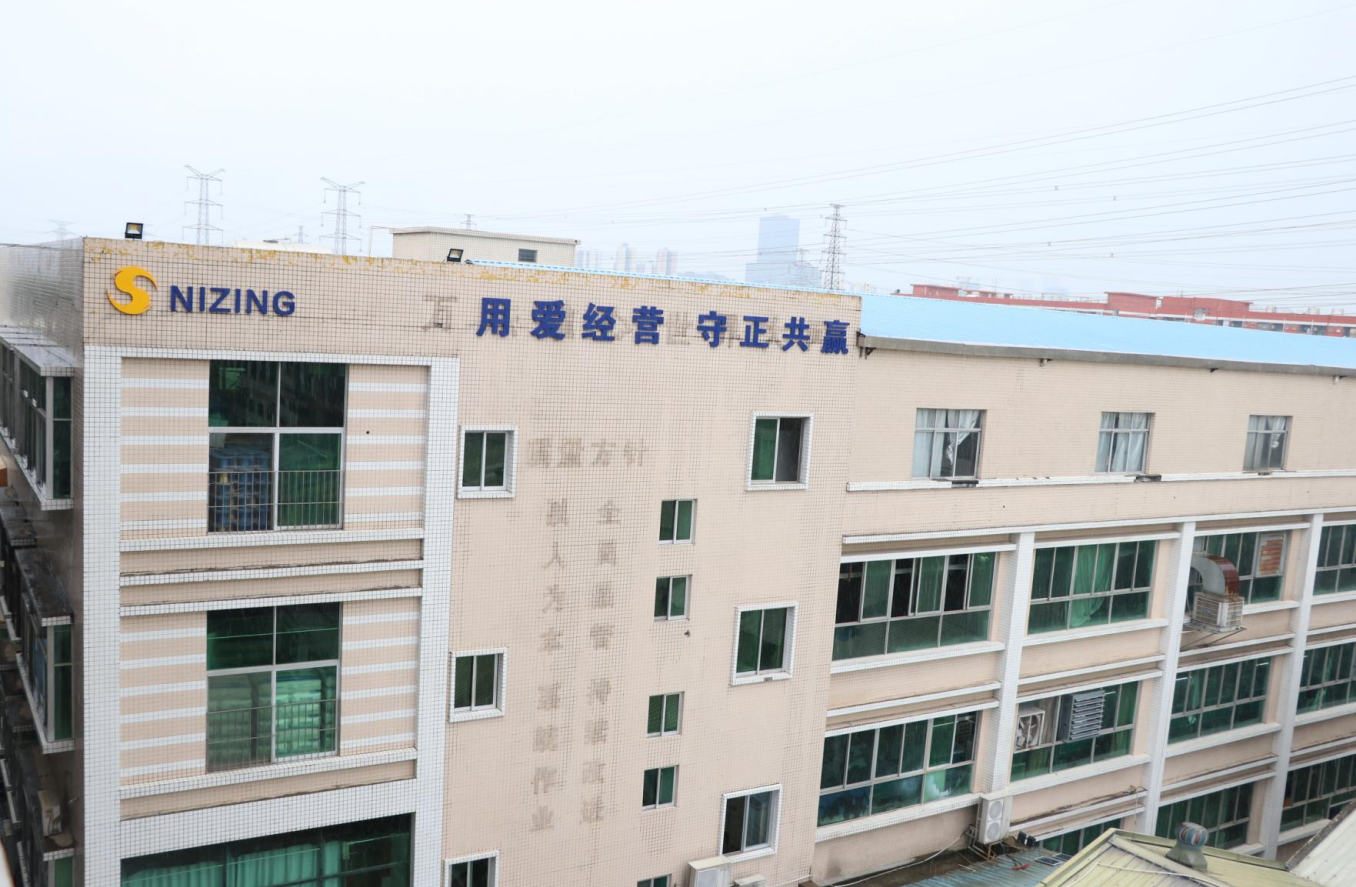
NIZING Group facility building at the Liaobu Town base in Dongguan, Guangdong Province — the manufacturing site behind NIZING high temperature wire.
A high temperature resistant wire is specified by two engineering properties, not by one temperature number: how much current it can carry after thermal derating at the real ambient and conductor temperature, and how many bend cycles its construction survives at the real minimum bend radius. A rating of 150°C, 200°C or 260°C describes the ceiling of an insulation material under defined test conditions. It does not describe what happens to that wire inside a heater harness, a moving cable carrier, or a battery pack.
This guide maps the six parameters that convert an application into a wire specification — conductor stranding, insulation wall thickness, thermal derating, voltage stress, minimum bend radius and flex-fatigue life. It then compares silicone, braided silicone and Teflon (PTFE) constructions, and shows how to translate operating conditions into specification checkpoints that can be written onto a drawing or an RFQ.
The Problem: A Temperature Rating Is Not a Specification
A high temperature resistant wire fails for three different reasons, and a temperature rating only addresses one of them: dielectric breakdown, thermal aging of the insulation, and mechanical fatigue of the conductor. Treating these three as one problem is the most common specification error in this product category.
- Conductor self-heating. The conductor temperature in service equals the ambient temperature plus the temperature rise created by current flowing through the conductor resistance. A construction that is comfortable in a 40°C control cabinet can exceed its insulation limit inside a 150°C oven at the same current — not because the material was wrong, but because the thermal budget was never calculated.
- Thermal aging. Insulation materials lose flexibility and dielectric margin over time at elevated temperature, and they age at different rates. Silicone compounds and fluoropolymers do not degrade in the same way, so the highest-rated material is not automatically the correct one for a required service life.
- Flex fatigue. Repeated bending progressively work-hardens copper strands until individual strands break. Resistance rises, the surviving strands carry more current, and the wire begins to overheat. This failure mode is governed by strand structure and bend radius, not by temperature rating.
Two questions therefore decide most field failures, and the rest of this guide answers both: what current can this wire carry at my ambient temperature, and how many cycles can it survive at my bend radius?
Industry Background: Where High Temperature Wire Is Being Specified Now
Demand for high temperature resistant wire follows the equipment it goes into: home appliances, lighting, electric vehicle battery systems, medical devices and industrial heating equipment. Third-party research published in 2024 illustrates both the size of that demand and the definitional noise around it. Strategic Market Research valued the global high temperature resistant wire market at USD 2.13 billion in 2024, projecting USD 3.19 billion by 2030. Market Research Future estimated the same year at USD 1.48 billion, while a broader high temperature cables scope was estimated at USD 4.8 billion for 2024. The spread between these figures is a scope difference rather than a contradiction, and it is a useful reminder that market size never substitutes for a specification.
Material segments show the same pattern. SNS Insider valued the global high temperature silicone cable market at USD 1.34 billion in 2024, growing at 8.95% CAGR toward 2032. MarketsandMarkets projected the global PTFE (Teflon) market to reach USD 3.87 billion by 2031 from USD 3.12 billion in 2026, with Asia Pacific holding a 50.5% value share of that market. Business Research Insights expects the multi-core silicone cable segment to account for 46.0% of the global silicone cable market in 2026 — a relevant signal for buyers specifying silicone multi-core wire for sensing or power distribution in compact equipment.
The standards landscape constrains the choice as much as temperature does. UL 758 is the primary standard for Appliance Wiring Material (AWM) and covers internal appliance wiring that uses silicone and fluoropolymer insulation. UL 3135 is a silicone rubber insulated style rated for 200°C internal wiring. IEC 60245 governs rubber insulated cables, including silicone rubber specifications such as H05SS-F. In China, high temperature resistant wires rated up to 450/750V must obtain CCC (China Compulsory Certification) under GB/T 5013 or GB/T 5023. Published continuous ratings for common constructions range from 150°C at 600V for silicone rubber insulated styles such as SRML and SFF-2, up to the -60°C to +260°C range typical of high temperature PTFE (Teflon) wire.
Application trends point in the same technical direction. Silicone insulated cables are preferred in medical equipment because of their flexibility and chemical resistance, and silicone parallel wires and multi-core cables are increasingly used in EV battery management systems (BMS) where voltage stress and thermal stability both matter.
Six Parameters That Decide High Temperature Wire Performance
1. Conductor stranding
Stranding is the most under-specified parameter in high temperature wire. Two wires with the same nominal cross-section can differ substantially in flex life because one uses a coarse, few-strand conductor and the other a fine, high-strand-count flexible conductor. Fine stranding distributes bending strain across many small strands, so no single strand reaches its fatigue limit quickly. Coarse stranding is adequate — and more economical — for static runs, but it is the wrong choice for continuous motion. Checkpoint: strand count and strand diameter belong on the specification, not only the cross-sectional area.
2. Insulation wall thickness
Wall thickness sets three things at once: dielectric withstand, mechanical protection against abrasion and cut-through, and bending stiffness. A thinner wall bends more easily but leaves less voltage margin and less material to absorb abrasion. Fluoropolymers generally achieve a given dielectric withstand with a thinner wall than silicone compounds, which is why Teflon constructions often have a smaller outside diameter for the same voltage class. Wall eccentricity matters too: an off-centre wall creates a thin spot that becomes the failure point under thermal cycling. Checkpoint: specify nominal wall plus the minimum wall at the thinnest point, not just an average.
3. Thermal derating
Thermal derating is the practice of reducing allowable current-carrying capacity as ambient temperature rises, so that the conductor's total temperature — ambient plus self-heating — stays inside the insulation's continuous rating. Derating is not a safety margin invented by the buyer; it is the difference between a catalogue figure measured under reference conditions and a real installation. Three derating checks matter in practice: the maximum ambient rather than the average, heat radiated from adjacent heaters or power components, and the duty cycle. A wire running at part load intermittently may be comfortable at a current level that would be unsafe continuously in the same enclosure. Checkpoint: ask for derating data for the exact construction and standard, and calculate at the worst-case ambient the equipment can reach.
4. Voltage stress
Voltage stress is the electric field across the insulation wall, so it combines voltage and wall thickness instead of treating them separately. Raising the system voltage or thinning the wall increases stress, and both reduce the margin against transients. In constructions where two conductors share one profile, the critical dimension is the wall between the conductors rather than the outer jacket — which applies directly to silicone parallel wire and Teflon parallel wire used for appliance and lighting leads. Where an application requires reinforced insulation, silicone double-insulated wire and Teflon double-insulated wire add a second dielectric layer, which also changes the bend radius and outside diameter. Checkpoint: state system voltage, expected transient level, and whether basic or reinforced insulation is required.
5. Minimum bend radius
Bend radius is usually quoted as a single number, but a wire has two of them: a static radius for installation and a dynamic radius for repeated movement. The dynamic radius is the larger of the two by a wide margin, and it is the one that governs flex life. Bending concentrated at a single point — at a connector, at a clamp, or at the exit of a cable carrier — fails the conductor long before the nominal radius would suggest. Checkpoint: specify static and dynamic radius separately, plus the strain-relief distance on both sides of every moving section.
6. Flex-fatigue life
Flex-fatigue life is expressed as cycles to failure at a defined bend radius, travel length and load. A cycle count without its test conditions is not a specification. The variables that shorten life are a smaller radius, a longer travel, higher speed, tension along the axis, and torsion. The practical approach is to test the proposed construction in the actual motion geometry, or in a geometry at least as severe, and to keep a golden sample of the approved construction for comparison with later production. Checkpoint: record radius, travel, speed, load and temperature during the flex test.
Comparison Table: Silicone, Braided Silicone and Teflon Constructions
The table below compares the three insulation families that dominate high temperature wire selection. Material properties are typical for the construction type; the exact figure always depends on the specific compound, wall and standard the wire is built to.
| Specification point | Silicone insulation | Braided silicone (woven reinforcement) | Teflon (PTFE) insulation |
|---|---|---|---|
| Typical continuous conductor temperature | Published silicone styles are rated at 150°C / 600V (SRML, SFF-2) and 200°C for UL 3135 style silicone rubber insulated wire | Defined by the silicone compound and the braid specification; not a single fixed catalogue figure | Typically -60°C to +260°C |
| Low-temperature behaviour | Remains flexible | Base compound remains flexible; the braid adds stiffness | Usable at low temperature but stiffer |
| Flex-fatigue behaviour | Best suited to repeated bending and continuous motion | Good, with slightly lower compliance than plain silicone | Better suited to static routing than to tight continuous flexing |
| Abrasion and cut resistance | Moderate | High — woven reinforcement resists rubbing and cut-through | Good chemical resistance; thin walls are more vulnerable to mechanical damage |
| Wall thickness for a given voltage class | Thicker wall typical | Silicone wall plus braid layer, larger outside diameter | Thinner wall typical, smaller outside diameter |
| Chemical resistance | Good general resistance | Depends on braid and compound | Typically the most resistant of the three |
| Typical application fit | Appliance and medical internal wiring, multi-core and parallel leads | Wiring exposed to abrasion or rubbing at elevated temperature | High temperature electronic and industrial wiring with chemical exposure |
Production workshop at the NIZING manufacturing base, where high temperature silicone wire, braided silicone wire and Teflon wire are produced.
Step-by-Step: Turning Application Conditions into Specification Checkpoints
The output of this sequence is not a temperature rating. It is a construction: conductor stranding, wall thickness, insulation material, outside diameter, rated voltage, and the flex conditions the wire has to survive.
- Measure the real thermal environment. Record ambient air temperature, radiant heat from heaters or motors, and the temperature at the wire's actual routing point inside the enclosure. Keep peak and continuous values separate.
- Establish the electrical duty. Define continuous current, inrush current, duty cycle, and system voltage including expected transients.
- Derate the conductor. Calculate conductor temperature at maximum ambient and confirm it stays within the continuous rating of the chosen insulation for the relevant standard.
- Define the motion profile. Classify the run as static, occasional movement, or continuous flexing. Note cycles per hour, travel length, presence of torsion, and whether the wire runs in a cable carrier or drag chain.
- Set the bend radius. Specify static radius, dynamic radius and strain-relief distances, then compare them against the construction's published values.
- Choose the insulation system and wall thickness. Match silicone, braided silicone or Teflon to temperature, chemical exposure and flex requirement, then set the wall against voltage stress and abrasion risk.
- Fix the conductor stranding. Select the stranding class that supports the required flex life and write the strand count into the specification.
- Validate with a sample, then freeze the specification. Test the sample under worst-case thermal and motion conditions, record the results, and retain a golden sample of the approved construction.
RFQ checklist for high temperature resistant wire. Cross-section and strand count; rated voltage and insulation material; continuous conductor temperature at maximum ambient; static and dynamic bend radius; flex-cycle target with test conditions; required market certification (UL 758 / UL 3135, IEC 60245, or CCC under GB/T 5013 and GB/T 5023); braiding or double-insulation requirement; length and packaging.
Use Cases: Where Derating and Flex Life Decide the Wire
Appliance and heating equipment internal wiring
Internal appliance wiring close to heating elements is the classic derating case: the enclosure ambient is high, the wire is routed in a confined space, and the conductor temperature is the sum of both effects. Silicone insulation is the common choice here, with wall thickness and stranding selected against the routing near the heat source.
LED strip lighting and enclosed fixtures
In sealed LED fixtures, heat accumulates inside the housing, so the supply leads see a higher ambient than the room. High temperature silicone wire is typically used for the lead conductors, while related silicone components — such as LED strip silicone tube and silicone water pipe for sealing or fluid routing — are selected for the same combination of flexibility and heat resistance.
EV battery management and multi-core sensing harnesses
Silicone parallel wires and multi-core cables are increasingly used in EV battery management systems for high voltage and temperature stability. Here both halves of this guide apply at once: the conductors sit in a warm, densely packed environment, and they must tolerate assembly bending and vibration without strand fatigue.
Medical and laboratory equipment
Silicone insulated cables are preferred in medical equipment because of their flexibility and chemical resistance. Repeated sterilisation cycles and tight routing inside a handheld instrument make fatigue life and low-temperature flexibility the deciding parameters rather than maximum temperature alone.
Industrial heating and process equipment
Industrial equipment combines radiant heat, chemical exposure and mechanical abrasion, which is where braided constructions prove their value: the woven reinforcement protects the silicone wall where the wire rubs against metal edges. Related silicone tubing products such as food-grade silicone water pipe and inner rubber outer fiber tube address the same design priorities of flexibility, thermal stability and cleanability in process equipment.
Manufacturer Context: NIZING ELECTRIC CO., LTD.
NIZING Group was founded in Taipei in 1983, and NIZING ELECTRIC CO., LTD. has 41 years of experience in the industry. The company is located at Fuzhushan Village, Liaobu Town, Dongguan City, Guangdong Province, China, and is a limited liability company wholly owned by a legal person with a registered capital of 9.5 million Hong Kong dollars; its legal representative is Li Lin Caixuan.
NIZING ELECTRIC CO., LTD. specializes in producing silica gel raw materials, silica gel wires, high temperature resistant woven silica gel wires, food-grade silica gel water pipes and silica gel sealing rings. Its main products include high temperature silicone wire, silicone water pipe and Teflon wire. The R&D team consists of 20 engineers, the company employs approximately 150 staff members, the manufacturing facility covers an area of 12 mu, and annual production capacity reaches 225,000,000 meters. The company holds 63 patent records and 50 trademark records including the NIZING mark, and approximately 30% of output is exported to markets in Europe, America and Southeast Asia.
For buyers working through the parameter framework in this guide, that product range covers the construction types discussed above: high temperature silicone wire, silicone braided wire, Teflon wire, silicone multi-core wire, silicone parallel wire, Teflon parallel wire, silicone double-insulated wire and Teflon double-insulated wire, alongside related tubing such as silicone water pipe, food-grade silicone water pipe, LED strip silicone tube and inner rubber outer fiber tube. These details describe manufacturing capability and product range; they are not presented as test data for any specific application.
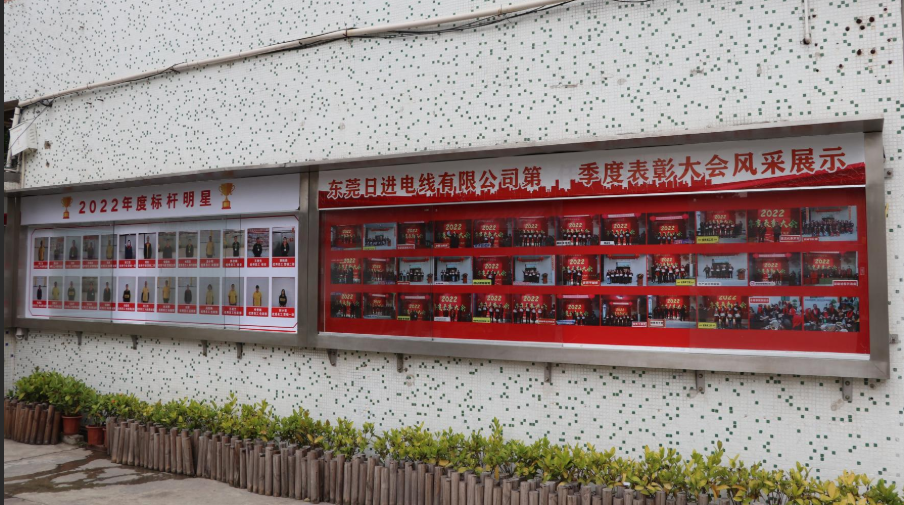
Patent and trademark records displayed at NIZING Group — 63 patent records and 50 trademark records including the NIZING mark.
Frequently Asked Questions: High Temperature Resistant Wire Selection
Does a high temperature resistant wire need CCC certification?
In China, high temperature resistant wires rated up to 450/750V must obtain CCC (China Compulsory Certification) under GB/T 5013 or GB/T 5023. For appliance internal wiring sold into the United States, UL 758 is the primary standard for Appliance Wiring Material, and UL 3135 is a silicone rubber insulated style rated for 200°C. In IEC markets, IEC 60245 governs rubber insulated cables, including silicone rubber specifications such as H05SS-F. Because a construction approved in one market is not automatically approved in another, the certification scope belongs in the specification from the beginning — this is what buyers mean when they ask for CCC silicone wire.
Can a silicone or Teflon construction be tuned to a specific flex life?
Yes, within clear trade-offs. Flex life is set by conductor stranding, insulation wall thickness and dynamic bend radius, so a higher strand count with a compliant silicone wall can be specified for continuous motion, while a stiffer fluoropolymer construction is usually reserved for static runs and chemically aggressive environments. Braided silicone adds abrasion and cut resistance at the cost of some flexibility and a larger outside diameter. NIZING ELECTRIC CO., LTD. produces high temperature silicone wire, Teflon wire and high temperature resistant woven silicone (braided silicone) wire, supported by an R&D team of 20 engineers and 63 patent records behind the company's product development.
What actually drives the cost of high temperature resistant wire?
Cost is set by construction rather than by temperature rating. The main drivers are the insulation material (fluoropolymers such as PTFE cost more than silicone compounds), the fineness of the conductor stranding, the insulation wall thickness, any braided reinforcement, the certification scope required for the destination market, and order volume or tooling for non-standard sizes. The practical consequence is that the most reliable way to control cost is to specify derating and flex requirements precisely, then compare quotations built on the same construction.
How can derating and flex life be validated before mass production?
Request sample lengths built to the proposed construction and test them under the conditions the wire will actually see: measure conductor temperature at rated load inside the real or equivalent enclosure, and run a bend-cycle test at the intended dynamic radius, travel and load. Record the test parameters alongside the cycle count, and keep a golden sample of the approved construction for comparison against later deliveries. Sample validation is the practical way to convert a derating calculation and a flex estimate into a frozen specification.
How should lead time be planned for a high temperature wire order?
Lead time depends on the construction rather than on the catalogue, because standard silicone wire, braided silicone wire and PTFE constructions do not follow the same schedule, and non-standard conductor sizes, tooling and market certification add steps. Plan backwards from installation — sample validation, specification freeze, material preparation, extrusion or braiding, testing and shipping — and confirm each stage against the specific construction. NIZING ELECTRIC CO., LTD. operates a 12 mu manufacturing facility with an annual production capacity of 225,000,000 meters; for construction-specific scheduling, contact Wu at sd032@nizing.com or +86 188-2061-9750, or review the company catalogue for a first pass over the available product range.
Conclusion: Specify the Construction, Then Prove It
Temperature rating is the entry point to high temperature resistant wire selection, not the answer. The parameters that decide whether a wire survives are conductor stranding, insulation wall thickness, thermal derating, voltage stress, minimum bend radius and flex-fatigue life — and they interact, because a thinner wall improves flex behaviour while reducing voltage margin, and a finer conductor improves fatigue life while changing the construction and cost profile.
A practical selection rule follows from the three failure modes described earlier: derate the conductor at maximum ambient first, define the motion profile and dynamic bend radius second, and choose the insulation system — silicone, braided silicone or Teflon — against the temperature, chemical and abrasion conditions that remain. Then validate the frozen specification with a sample under real conditions before committing to volume production.
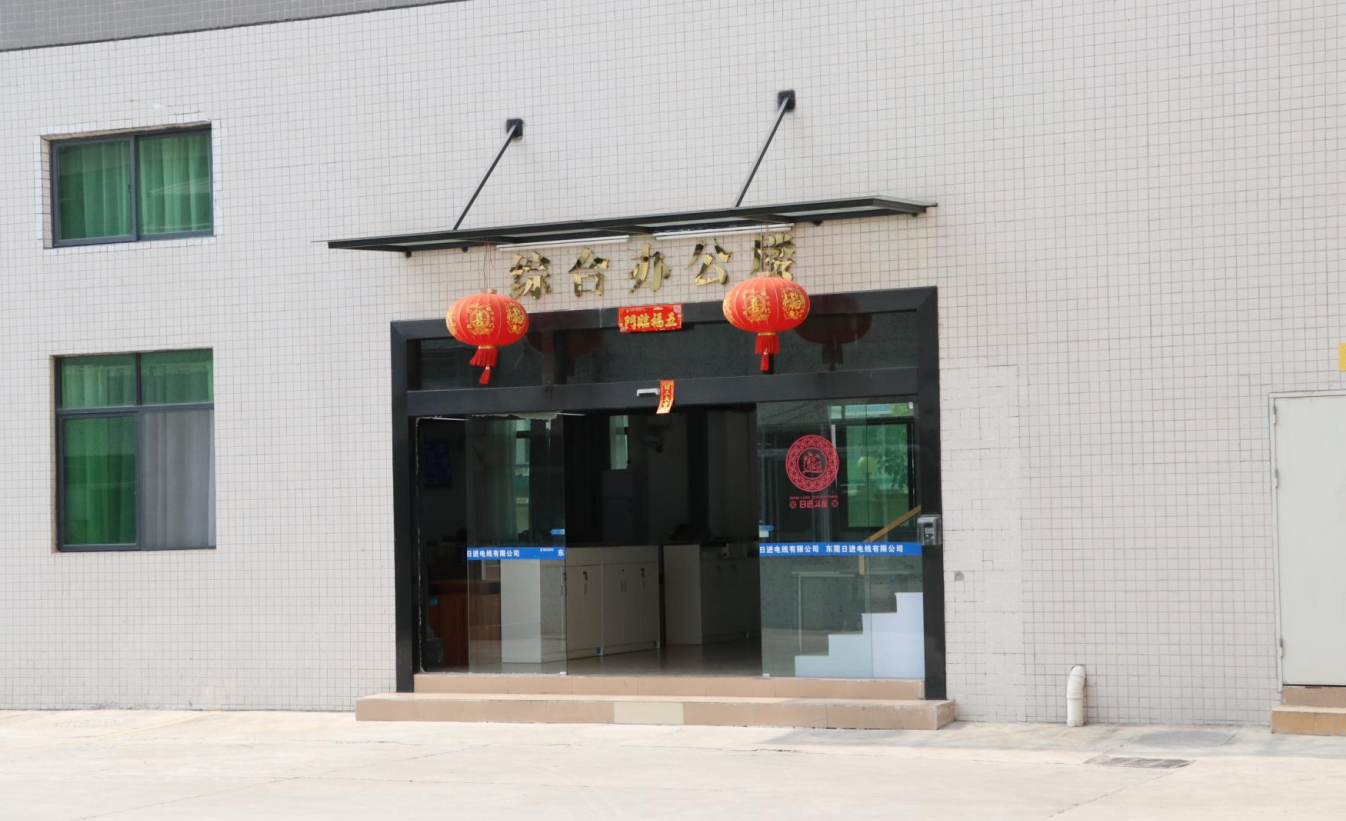
NIZING Electric engineering and sales office in Dongguan, where construction questions and sample requests are handled.
Next step. If you are working through a derating calculation or a flex-life target, send the application conditions — ambient temperature, current, duty cycle, bend radius and cycle target — and the construction can be matched against them. Contact Wu at sd032@nizing.com, call or message +86 188-2061-9750, or review the full product range at nizing-global.com.
Download the NIZING Electric product catalogue (PDF) for the current list of high temperature silicone wire, braided silicone wire, Teflon wire and related silicone products.