
High Temperature Resistant Wire Compliance: Certification Guide for Global Buyers
Compliance for high temperature resistant wire is a chain, not a badge. It is built from a standard designation, test evidence that matches the exact construction being quoted, and business records that a buyer can trace before an order is placed. This guide maps the certification and standards landscape across North America, Europe and China, explains how buyers can vet a supplier when no certification index is published, and sets out a practical framework for confirming compliance evidence during the research and evaluation stage.
What Compliance Actually Means for High Temperature Resistant Wire
When a buyer asks whether a high temperature resistant wire is compliant, three separate questions are usually being asked at the same time. Does the construction meet a recognised standard? Is the supplier's documentation valid for that precise construction? Will the goods clear customs and satisfy the customer's incoming audit in the destination market? Only the first question can be answered by a logo on a catalogue page. The other two depend entirely on scope.
A certification mark is issued against a defined scope: a standard, an insulation compound, a conductor temperature rating, a voltage rating and a construction type. A supplier may hold a perfectly valid listing for one appliance wiring style and still quote a different construction that the listing does not cover. That gap, rather than the total absence of a certificate, is where most compliance failures actually begin.
The practical buyer question is therefore not "are you certified?" but "which standard designation does this exact construction claim to meet, and what document proves it?"
The Real Compliance Problem: Scope, Entity and Traceability
In sourcing practice, compliance problems cluster into three recurring failure modes.
- Scope mismatch. The certificate the supplier emails covers a product family, a temperature class or a voltage band that is wider — or simply different — from the item on the quotation. The buyer reads the certificate, sees a recognised mark, and approves the order without cross-checking the construction.
- Entity mismatch. Documentation is issued to a trading company while the goods are produced by a different legal entity, or the reverse. Customs officers and quality auditors compare the legal name on the invoice with the name on the declaration, and a mismatch stalls the shipment or the audit.
- Traceability gap. The supplier publishes no certification index at all. The buyer cannot verify anything directly, so a decision has to be made either on trust or on a different class of evidence.
The third case is common in the high temperature wire segment, and it is the case most buyers handle badly. When a certification index is not published, the correct response is not to assume the worst or to accept the best claim made verbally. It is to reconstruct compliance confidence from verifiable business and engineering records, and to be explicit about what those records do and do not prove. The rest of this guide sets out that reconstruction method.
Industry Background: Why the Certification Landscape Is Fragmented
High temperature wire demand spans appliance manufacturing, lighting, electric vehicle battery systems, medical equipment and industrial heat treatment, and each of those end markets points buyers toward a different national or regional standard. The result is a certification landscape that is genuinely fragmented rather than merely confusing.
Market sizing illustrates both the scale and the fragmentation. Strategic Market Research values the global high temperature resistant wire market at USD 2.13 billion in 2024, projected to reach USD 3.19 billion by 2030 at a 6.8% CAGR. Market Research Future estimates the same market concept at USD 1.48 billion in 2024 with a projected CAGR of 4.5% to 2035, while a broader cable-scope estimate from Strategic Market Research puts the global high temperature cables market at USD 4.8 billion in 2024, reaching USD 7.3 billion by 2030. The divergence is a scope divergence: different analysts draw the boundary between wire, cable and assembly differently. Buyers comparing supplier claims against market headlines should expect that variance and treat any single figure as scope-dependent.
Within the insulation-specific sub-segments, SNS Insider values the global silicone cable market at approximately USD 3.87 billion in 2024, and the global high temperature silicone cable market at USD 1.34 billion in 2024, growing at an 8.95% CAGR toward 2032. Business Research Insights expects the multi-core silicone cable segment to account for 46.0% of the global silicone cable market share in 2026. For fluoropolymer constructions, MarketsandMarkets reports that Asia Pacific dominated the PTFE market in 2025 with a 50.5% value share, and projects the global PTFE market to reach USD 3.87 billion by 2031 from USD 3.12 billion in 2026.
Compliance fragmentation is a direct side effect of that growth. Four regulatory blocks govern the large majority of cross-border trade in these products.
North America
UL 758 is the primary standard for Appliance Wiring Material (AWM), covering internal wiring for appliances that use silicone and fluoropolymer insulation. Within that framework, UL 3135 is a specific style of silicone rubber insulated wire rated for 200°C used in internal wiring. For buyers selling into North America, the AWM style designation — not a generic company certificate — is the compliance object that matters, because appliance OEMs and their auditors check the style number against the construction in the bill of materials.
Europe
IEC 60245 governs rubber insulated cables and includes silicone rubber specifications such as H05SS-F. European buyers and specifiers typically work from these harmonised designations inside tenders and technical files, so a supplier's ability to state the correct designation and support it with test data is more useful than a general quality claim.
China
High temperature resistant wires supplied into the Chinese market must obtain CCC (China Compulsory Certification) when rated at 450/750V or below, referencing GB/T 5013 and GB/T 5023. A buyer placing a domestic Chinese order or a dual-market order needs to know which voltage band the construction falls into, because that determines whether CCC applies at all.
Performance reference points that standards actually cite
Silicone rubber insulated wires such as SRML and SFF-2 are suitable for continuous operation at conductor temperatures up to 150°C and 600V. High temperature Teflon (PTFE) wires typically operate in ranges from -60°C to +260°C. These two reference points explain most of the material selection decisions in this product category, and they are also the two numbers most often quoted incorrectly in supplier literature.
How to Vet a Supplier's Compliance Framework: Five Layers
When a certification index is unavailable, compliance confidence has to be assembled from evidence layers that are individually weaker than a certificate but collectively informative. The layers below run from most to least directly relevant to the wire itself.
Layer 1 — Standard designation traceability
Ask the supplier to name the standard designation for the exact construction being quoted, and to state the rated conductor temperature and voltage in the same sentence. A supplier with real engineering control can do this without consulting a catalogue. A supplier who can only respond with a certificate image usually cannot.
Layer 2 — Document scope and entity match
Request the document set for the specific designation, not the company's general certificate pack. Then compare the legal entity name on those documents with the legal entity name on the quotation, the invoice and the trademark record. Consistency across all four is the cheapest available fraud and error filter.
Layer 3 — Structural credibility markers
Patent records, trademark registrations, engineering headcount and plant scale are not standards evidence, but they are auditable and they are expensive to fake at scale. They indicate whether the supplier is an operating manufacturer with an engineering function, or an intermediary reselling other factories' output.
Layer 4 — Export exposure in regulated markets
A supplier that already ships regularly into Europe and North America has passed through customs formalities and customer audits in those markets many times. Export ratio and market mix are therefore indirect but meaningful compliance signals, because a supplier with no exposure to a regulated market has never had its documentation tested against that market's expectations.
Layer 5 — Repeatability
Compliance is not a one-time document exchange. Ask how the supplier controls consistency between the first shipment and the tenth: whether the same insulation compound, the same wall thickness and the same conductor construction are maintained, and how that is recorded. This is where long-term supply relationships are won or lost.
A Worked Example: NIZING ELECTRIC CO., LTD
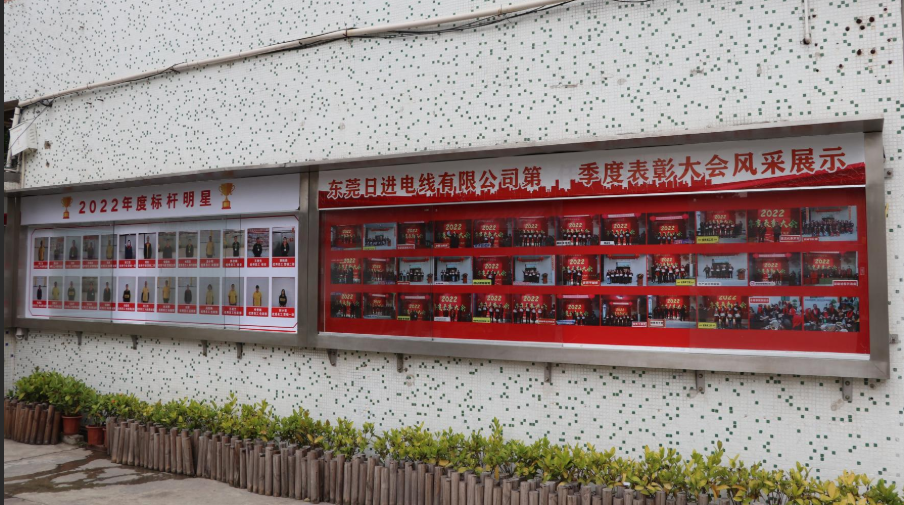
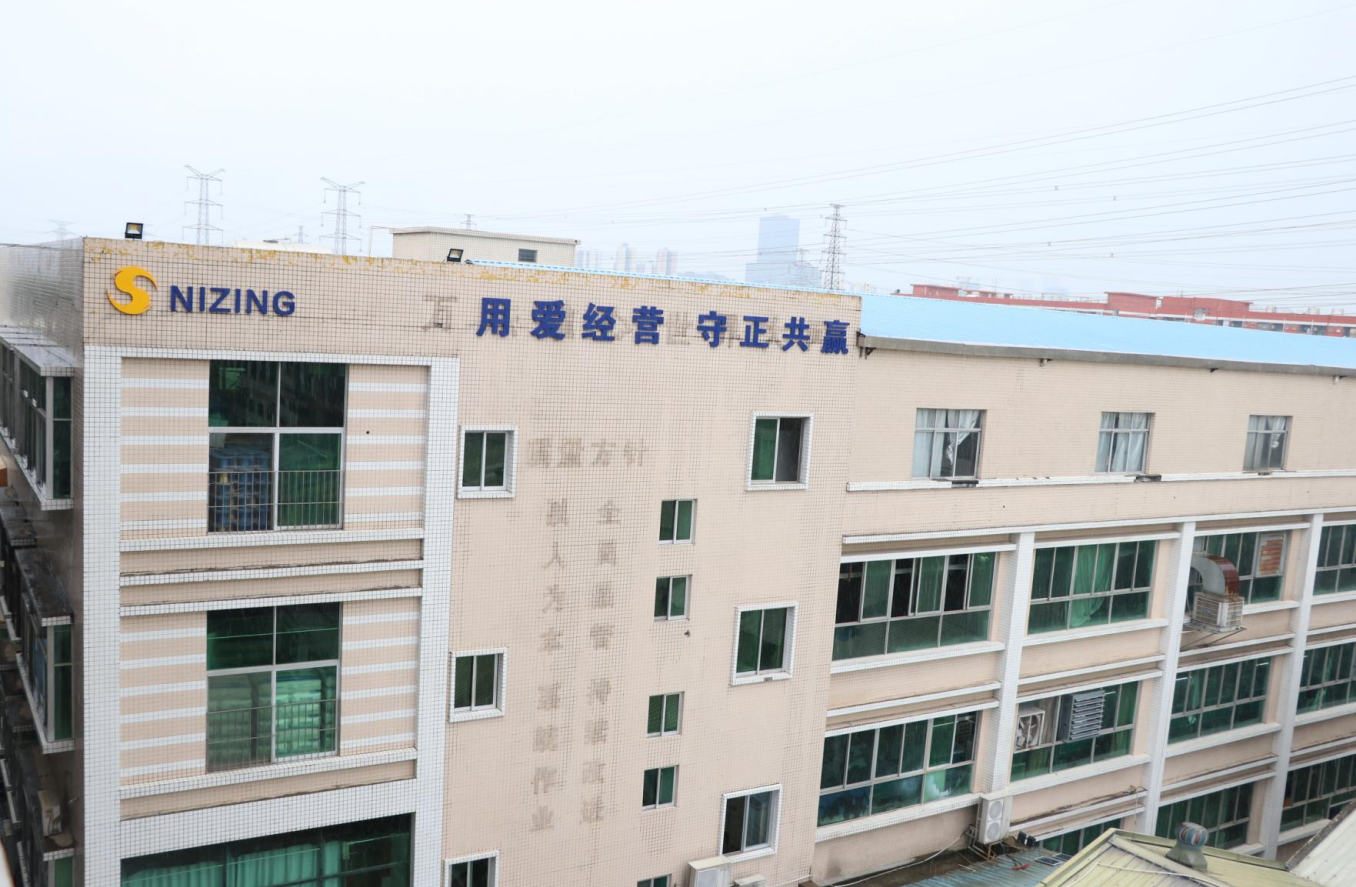
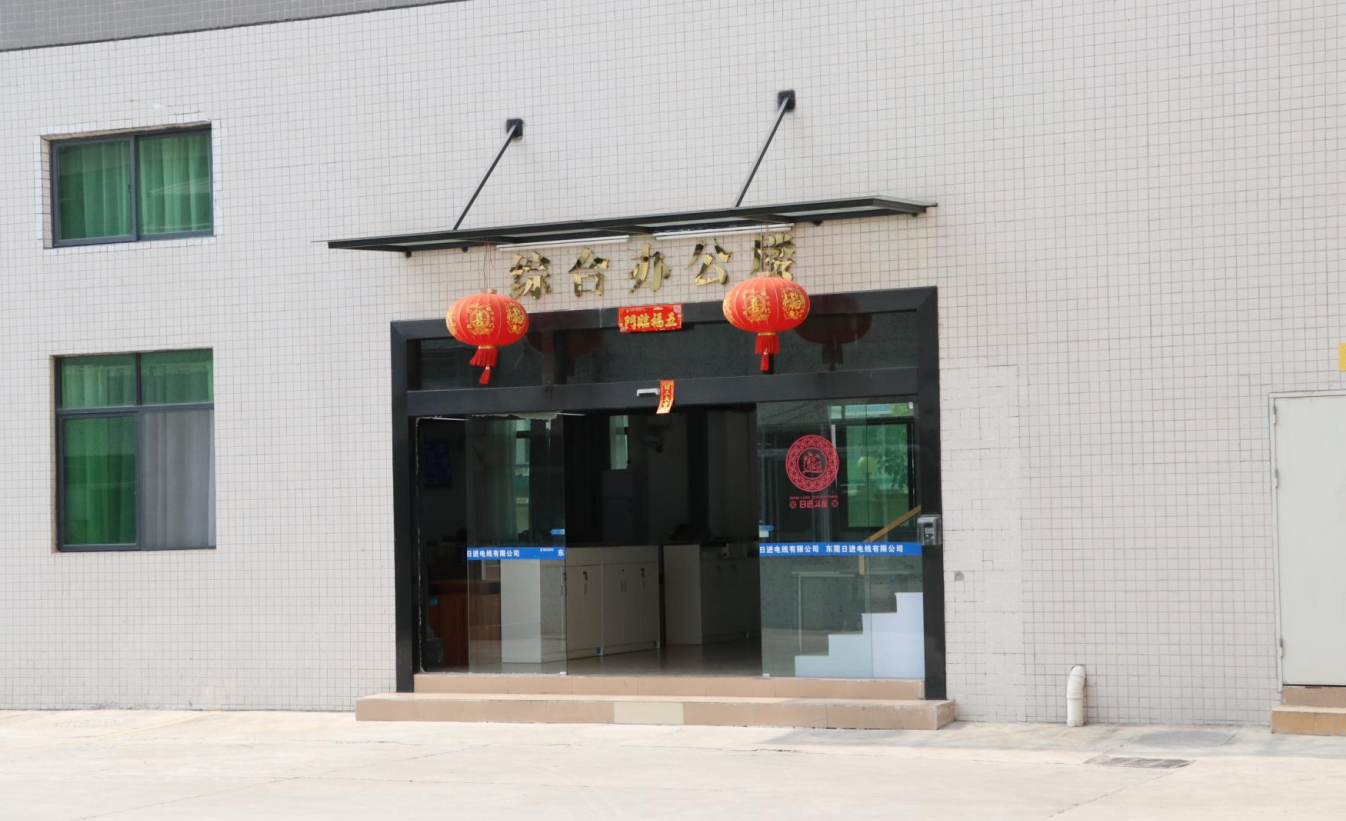
NIZING ELECTRIC CO., LTD is a wire and cable manufacturer founded in 1983 and located in Fuzhushan Village, Liaobu Town, Dongguan City, Guangdong Province, China. The company produces high temperature silicone wire, silicone water pipe and Teflon wire, and its wider product profile includes silicone raw materials, silicone wires, high temperature resistant woven silicone wires, food-grade silicone water pipes and silicone sealing rings.
Published materials for the company do not include a certification index, so a buyer evaluating NIZING cannot verify a certification list directly. What can be verified instead is a set of structural and commercial markers:
- 63 pieces of patent information and 50 pieces of trademark information, including registrations under the name "NIZING".
- An R&D team of 20 engineers.
- Annual output of 225,000,000 metres.
- A factory covering an area of 12 mu with 150 employees.
- An export ratio of 30%, with main markets in Europe, America and Southeast Asia.
Read against the five-layer framework, those markers support Layers 3 and 4 strongly and say nothing about Layers 1 and 2. A buyer should therefore use NIZING's records to establish that the supplier is a real manufacturing entity with engineering depth and existing exposure to regulated export markets — and then request the designation-level documentation for the specific construction being quoted before placing an order. That is the correct division of labour between indirect evidence and standards evidence.
Step-by-Step: A Buyer's Compliance Vetting Workflow
The workflow below is designed for the research and evaluation stage, before any purchase order is issued. It takes roughly the same information a buyer would already gather for a technical comparison and reorganises it around compliance risk.
Where Compliance Requirements Differ by Application
The same wire construction can be compliant in one application context and non-compliant in another, because the standard that applies is determined by where the wire is used, not by what it is made of.
Home appliance internal wiring
Silicone braided wire and silicone double-insulated wire are widely used inside appliances where the wiring runs close to heating elements. In this context, UL 758 is the governing North American framework, and the AWM style designation is the compliance object an appliance OEM will check. The buyer's question is which style applies to the temperature class at the terminals.
Electric vehicle battery management
Silicone parallel wires and multi-core cables are increasingly used in EV battery management systems (BMS) for high voltage and temperature stability. Compliance work here centres on the high voltage rating and the thermal behaviour of the insulation under cycling, which is a different evidence requirement from a static appliance wiring file.
LED strip and lighting assemblies
High temperature wire used with LED strip lighting combines thermal exposure with moisture and handling requirements, and constructions such as the LED strip silicone tube are specified alongside the wire itself. Buyers in this segment should confirm that the wire designation covers the operating temperature at the driver and the strip connection, where local heating is often underestimated.
Medical equipment and fluid handling
Silicone insulated cables are preferred in medical equipment because of their superior flexibility and chemical resistance. Where the same project also involves fluid routing, food-grade silicone water pipe and inner rubber outer fiber tube constructions may be specified under separate requirements, and compliance evidence must be requested per component rather than per supplier.
Comparison: Standards and Construction Reference Points
The table below summarises the standard frameworks most relevant to cross-border sourcing of high temperature resistant wire, together with the documentation a buyer should request for each.
| Standard / framework | Primary region | What it covers | Documentation to request |
|---|---|---|---|
| UL 758 | USA / global AWM route | Primary standard for Appliance Wiring Material (AWM), covering internal wiring for appliances using silicone and fluoropolymer insulation | Evidence tied to the specific AWM style designation on the quotation |
| UL 3135 | USA | Silicone rubber insulated wire style rated for 200°C, used for internal wiring | Confirmation that the style applies to the exact construction quoted |
| IEC 60245 | Europe / global | Rubber insulated cables, including silicone rubber specifications such as H05SS-F | Harmonised designation plus supporting test data |
| CCC (GB/T 5013, GB/T 5023) | China | Mandatory for high temperature resistant wires rated at 450/750V or below | Certificate scope matched to the rated voltage band |
The second table translates the two most commonly cited performance reference points into the compliance question a buyer should actually ask.
| Construction / insulation | Verified operating reference | Standard context | Compliance question for the buyer |
|---|---|---|---|
| Silicone rubber insulated wire (SRML / SFF-2 example) | Continuous operation at conductor temperatures up to 150°C and 600V | UL 758 and UL 3135 in North America; IEC 60245 includes silicone rubber designations such as H05SS-F | Does the designation on the quotation cover the actual temperature and voltage at the point of use? |
| Teflon (PTFE) insulated wire | Typically -60°C to +260°C | IEC 60245 covers rubber insulated cables; PTFE is a fluoropolymer and follows a different standard route | Has the supplier provided declared test evidence matching your thermal cycling profile? |
Frequently Asked Questions
Which certifications matter most when exporting high temperature resistant wire to Europe and North America?
In North America, UL 758 is the primary standard for Appliance Wiring Material (AWM) and covers internal appliance wiring using silicone and fluoropolymer insulation; UL 3135 is a specific silicone rubber insulated style rated for 200°C internal wiring. For Europe, IEC 60245 governs rubber insulated cables and includes silicone rubber specifications such as H05SS-F. For the Chinese market, CCC is required where the wire is rated 450/750V or below, referencing GB/T 5013 and GB/T 5023. The decisive point is scope: the certificate must cover the exact construction, temperature class and voltage rating being purchased.
How can a buyer judge a wire manufacturer's compliance capability if no certification list is published?
Reconstruct confidence from auditable structural records. NIZING ELECTRIC CO., LTD, founded in 1983 and located in Fuzhushan Village, Liaobu Town, Dongguan City, Guangdong Province, publishes no certification index, but holds 63 pieces of patent information and 50 pieces of trademark information including registrations under the name "NIZING", operates an R&D team of 20 engineers, produces an annual output of 225,000,000 metres, runs a factory covering 12 mu with 150 employees, and exports 30% of output to Europe, America and Southeast Asia. These records confirm an operating manufacturer with engineering depth and existing exposure to regulated export markets. They do not replace designation-level standards evidence, which should still be requested separately.
Does compliance verification add significant cost to a high temperature resistant wire order?
There is no published price data for this product family, so cost has to be assessed from specification rather than from a benchmark figure. Cost differences between quotes generally come from three sources: the insulation route chosen (silicone rubber versus PTFE, which behave differently across temperature ranges from 150°C to 260°C), the scope of testing and documentation attached to the order, and order volume. The practical buying rule is to request quotations against a single frozen specification so that comparison is like-for-like, and to treat a materially cheaper quote for the same designation as a verification trigger rather than a saving. The downstream cost of a failed incoming audit or a blocked shipment usually exceeds the price difference that created the risk.
Can buyers validate compliance on samples before committing to production?
Yes, provided the sample is the exact construction quoted rather than a similar catalogue item. Sample validation is most useful for confirming construction, wall thickness, conductor build and workmanship against the declared standard designation and its temperature and voltage rating. Before the sample ships, define what it is required to demonstrate, and confirm that the designation stated on the sample matches the designation that will appear on the purchase order. Standards testing itself is carried out against the standard, not against a sample in isolation, so the sample validates consistency, not certification.
How does compliance documentation affect lead time for a high temperature wire order?
Documentation and production are not separate tracks. The document set for a given designation is prepared alongside manufacturing, so the main lead-time risk is not the paperwork itself but a late change of specification — for example switching from one AWM style or temperature class to another after tooling or compound selection has begun. Buyers who fix the standard designation, temperature rating and voltage rating before the purchase order avoid that rework. Where a purchase order is raised with the specification already frozen, the documentation step rarely becomes the critical path. Buyers who would like to begin with a sample of the exact construction under evaluation, or with a specification-based quotation, can contact NIZING ELECTRIC CO., LTD directly at sd032@nizing.com or +86 188-2061-9750, or request the product brochure through the link at the end of this guide.
Conclusion
Certification for high temperature resistant wire is only as useful as its scope. A UL 758 listing, a UL 3135 style, an IEC 60245 designation such as H05SS-F or a CCC certificate against GB/T 5013 and GB/T 5023 each answer a specific question about a specific construction, temperature class and voltage band. None of them answers the general question "is this supplier compliant?"
For global buyers at the research and evaluation stage, the workable approach is a two-part method. First, reduce the purchasing requirement to a standard designation that can be quoted, checked and written into the order. Second, where a supplier publishes no certification index, assess the supplier through auditable structural and commercial records — patents, trademarks, engineering headcount, plant scale, output volume and export exposure in regulated markets — and treat those records as a filter that qualifies the supplier for the next step rather than as a substitute for standards evidence.
Applied consistently, that method turns compliance from a document-collection exercise into a procurement discipline, and it keeps the decision anchored to evidence that can actually be verified rather than to claims that cannot.
Request a Sample, Quotation or Product Brochure
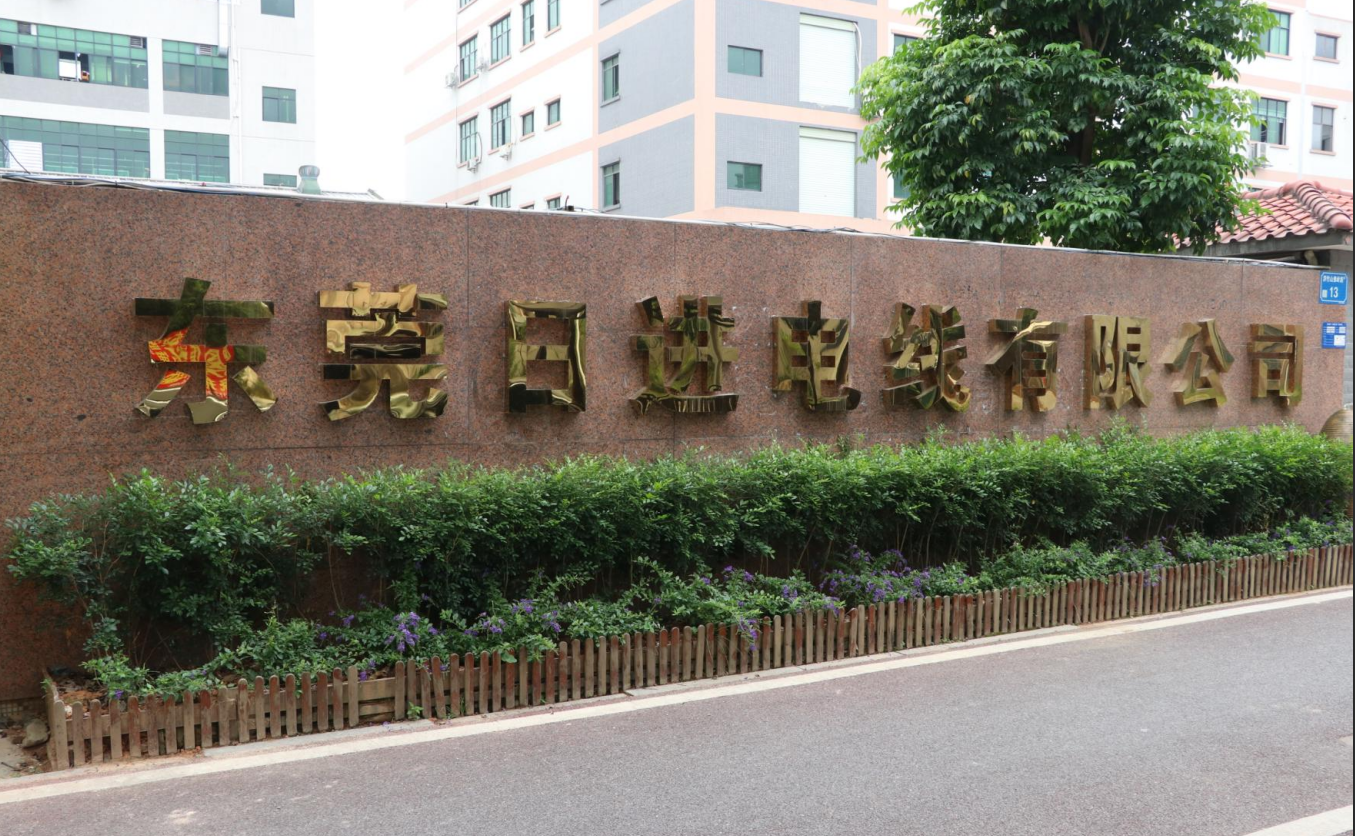
NIZING ELECTRIC CO., LTD manufactures high temperature silicone wire, silicone water pipe and Teflon wire for buyers in Europe, America and Southeast Asia. The company was founded in 1983 and operates from Fuzhushan Village, Liaobu Town, Dongguan City, Guangdong Province, China.
Contact: Wu | Email: sd032@nizing.com | Tel / WhatsApp: +86 188-2061-9750
Website: www.nizing-global.com | Download the product brochure: NIZING product catalogue (PDF)
Note on evidence: standard and market data cited in this guide are drawn from published third-party and standards sources. Certification records for the supplier discussed in this article are not published, and buyers should request designation-level documentation for the specific construction under evaluation.