
High Temperature Resistant Wire Compliance Guide: EU, US, and Southeast Asia Requirements
There is no single global compliance mark for high temperature resistant wire. A silicone braided wire that is fully accepted in a US appliance wiring program is not automatically accepted in Germany, and a wire that satisfies both markets can still stall a shipment in Southeast Asia if the importing country's own conformity regime has not been addressed.
For buyers at the decision stage, that single fact explains most of the delays, re-work and last-minute substitutions that happen between supplier selection and mass production. The wire itself is rarely the problem. The gap between what the supplier declared and what the destination market actually requires usually is.
This guide sets out how the European, US and Southeast Asian requirement paths differ, how the main silicone and Teflon constructions map onto them, which documents to demand before a purchase order is released, and which questions separate a supplier with real documentation depth from one that is improvising. It is written for procurement managers, engineers and importers who are close to a decision and need the paperwork to hold up.
The Compliance Problem: Right Wire, Wrong Paperwork
Compliance for a high temperature wire is not one certificate. It is a package of five elements that must agree with each other: the standard family the wire is qualified under, the style or type designation within that family, the rated temperature and voltage, the scope of the supporting documents, and the marking printed on the finished cable. When any one of those five disagrees with the others, the package fails — even if the wire performs perfectly in service.
Four failure patterns account for most decision-stage disputes:
- Wrong standard family. A supplier quotes an IEC-based type test to a US buyer who specifies AWM styles, or the reverse. Both documents are genuine; neither satisfies the other market.
- Wrong scope. The certificate exists but covers a different construction, a different wall thickness, a different factory or a different legal entity than the one shipping the goods.
- Wrong rating. The wire is described generically as "high temperature" while the application fixes a specific conductor temperature and voltage, and the declared rating does not reach it.
- Wrong timing. Compliance is treated as a shipment document rather than a design input, so the correct construction is identified only after tooling and first article approval.
The governing rule: the compliance trigger is the destination of the finished product, not the destination of the wire shipment. A wire shipped to Vietnam and built into a device sold in the United States is normally governed by the US requirement, not by the fact that it left a Chinese factory.
Industry Background: Expanding Demand, Fragmented Rules
Market sizing for this category depends heavily on how the scope is drawn, and buyers should treat any single figure as an estimate of scope rather than a universal number. Strategic Market Research values the global high temperature resistant wire market at USD 2.13 billion in 2024, projected to reach USD 3.19 billion by 2030 at a 6.8% CAGR. Using a narrower definition, Market Research Future estimates USD 1.48 billion in 2024 with a 4.5% CAGR through 2035. When the scope widens to high temperature cables generally, Strategic Market Research puts the 2024 market at USD 4.8 billion, reaching USD 7.3 billion by 2030.
Insulation-specific data points in the same direction. SNS Insider valued the global silicone cable market at approximately USD 3.87 billion in 2024, and the global high temperature silicone cable market at USD 1.34 billion in 2024, growing at a CAGR of 8.95% toward 2032. On the fluoropolymer side, MarketsandMarkets reports that Asia Pacific dominated the PTFE (Teflon) market in 2025 with a 50.5% value share, and projects the global PTFE market to move from USD 3.12 billion in 2026 to USD 3.87 billion by 2031.
What matters for a compliance decision is the mix rather than the total. Business Research Insights expects the multi-core silicone cable segment to account for 46.0% of the global silicone cable market in 2026 — a reflection of how often these wires now ship as assemblies rather than as single conductors. Assemblies carry more documentation obligations than single conductors, because every added conductor, jacket and connector introduces another declaration that has to line up with the standard family being cited.
How the Three Regions Differ in Practice
United States: Qualification by AWM Style
US qualification for internal appliance and equipment wiring runs through UL 758, the primary standard for Appliance Wiring Material (AWM), which covers internal wiring for appliances using silicone and fluoropolymer insulation. In this system a wire is not approved as a generic "silicone wire"; it is approved as a style, and the style number carries the rated temperature, the rated voltage and the construction limits.
UL 3135 is a concrete example: a silicone rubber insulated wire style rated for 200°C and used for internal wiring. Silicone rubber insulated wires such as SRML and SFF-2 are suitable for continuous operation at conductor temperatures up to 150°C at 600V, as referenced in Seattle City Light material standard 6420.65. Two wires can therefore both be described as "silicone, 200°C" and still not be interchangeable, if their styles differ in voltage rating, wall thickness or recognized construction.
For a buyer, the practical action is to specify the style, not the material. Ask the supplier to confirm the style number, the rated temperature and voltage that go with it, and the factory that holds the recognition.
Europe: Qualification by Standard Family
European qualification for rubber insulated cable is anchored in IEC 60245, which governs rubber insulated cables and includes silicone rubber specifications such as H05SS-F. EU buyers typically specify against the IEC and EN family first, then handle the finished product's own requirements separately.
Two EU-specific points deserve attention at the decision stage. First, a component wire is generally not the article that carries the finished product's conformity marking; the appliance or machine is. The wire's job is to support the end product's technical file, not to be individually approved as a standalone consumer product. Second, substance-restriction and material declaration requests usually sit alongside the cable standard, because they apply to the chemistry of the insulation and jacket rather than to the conductor. On the Teflon side, high-temperature PTFE wires typically operate in a range from -60°C to +260°C, which changes the material declaration and test evidence a buyer should expect.
Southeast Asia: Country by Country, Not One Block
Southeast Asia is the region where the fewest blanket assumptions can be made. Requirements are set by each importing country's national conformity regime rather than by one regional scheme, and national regimes commonly reference IEC-based standards. Where the buyer's finished product is exported onward to the US or the EU, the US or EU requirement usually governs the wire specification regardless of where the wire was purchased or where the product was assembled.
Three questions resolve most Southeast Asian cases:
- Where will the wire be assembled?
- Where will the finished product be sold?
- Is the wire treated as a component of that product, or as a separately regulated article in that market?
Because the answers vary by country, the documentation package that works best in the region is the one with the widest traceable base: an IEC-referenced test position, plus the destination-market documents already on file. That is a procurement decision rather than a legal opinion, and it should be confirmed with the importer or a compliance specialist before tooling starts.
The China Trap: CCC Applies on Its Own Terms
High temperature resistant wires for the Chinese market must obtain CCC (China Compulsory Certification) if rated up to and including 450/750V, under GB/T 5013 or GB/T 5023 depending on the cable construction. CCC is a Chinese market requirement. Overseas buyers frequently mistake it for a general quality mark, and suppliers sometimes cite it as though it were interchangeable with UL or IEC qualification. It is neither. CCC silicone wire documents a Chinese approval route; it does not answer a US or EU question.
Matching the Construction to the Requirement
The construction decision and the compliance decision are the same decision made twice. Each of the common high temperature constructions changes what has to appear on the declaration:
- Silicone braided wire. The braid is part of the declared construction, not a cosmetic addition. Because it affects outer diameter, abrasion resistance and sometimes flame behaviour, it must be stated on the style or type document rather than added at order stage.
- Silicone double-insulated wire and Teflon double-insulated wire. The second layer changes wall thickness and dielectric performance. A certificate issued for a single-wall construction does not automatically extend to the double-insulated version of the same conductor.
- Silicone parallel wire and Teflon parallel wire. Parallel constructions are declared with their conductor count and pitch. Where the application fixes a voltage rating, the parallel geometry has to be covered explicitly.
- Silicone multi-core wire. With multi-core silicone cable expected to represent 46.0% of the silicone cable market in 2026, this is now the mainstream assembly format — and the format with the most declarations attached.
Related silicone components such as silicone water pipe, inner rubber outer fiber tube and LED strip silicone tube are usually declared separately from the conductor, because their compliance drivers are fluid handling, mechanical protection or enclosure requirements rather than cable standards. Buyers assembling a complete harness should keep those documents on a separate line of the checklist instead of bundling them into the wire approval.
A Seven-Step Compliance Checklist Before Purchase Order
Step 1 — Fix the destination of the finished product. Not the destination of the wire. Write the final market on the specification sheet. Everything that follows depends on this one line.
Step 2 — Decide whether the wire is a component or a regulated article. In most EU and US applications the wire supports the end product's file. In the Chinese market, CCC applies to the wire itself when it falls within the rated voltage scope. The answer determines who owns the approval.
Step 3 — Choose the standard family before the construction. UL 758 AWM frameworks and IEC 60245 rubber insulated cable frameworks lead to different evidence. Selecting the family first prevents the common situation where a perfectly good wire has to be re-declared.
Step 4 — Match style or type designation to the real temperature and voltage. Confirm the style-rated figure, not a general description. UL 3135 covers a 200°C silicone style; SRML and SFF-2 silicone rubber insulated wires are referenced for continuous operation up to 150°C at 600V. Where the application sits above those anchors, the construction has to change.
Step 5 — Request the documentation package in writing. Ask for the certificate or declaration, the test evidence, the material declarations and the marking artwork in one request, so that inconsistencies surface together rather than one document at a time.
Step 6 — Verify scope, not just the logo. Check the certificate holder's legal name, the factory address, the construction covered, and the rated temperature and voltage on the file. A certificate covering a different construction or a different factory does not transfer to your order.
Step 7 — Confirm marking and traceability before shipment. The marking on the cable should reproduce the standard reference, the rated temperature and voltage, and the manufacturer identification. If the marking cannot be reproduced, the approval cannot be demonstrated at inspection.
Ten Questions to Put to a Supplier
- Which standard family or AWM style exactly covers the construction you are quoting, and what is the rated temperature and voltage on that file?
- Which legal entity and which factory address are named on the certificate or declaration?
- Does the document cover the specific wall thickness, conductor count and braid configuration being offered?
- What test evidence exists for that construction, and what does it actually measure?
- Which country's requirement is being used as the design basis, and how does that change if our end product ships elsewhere?
- Who in your organisation is responsible for maintaining these documents, and how often are they updated?
- Can you supply the material and substance declarations that accompany the cable standard?
- If the incoming inspection finds a marking or dimension deviation, what is the documented corrective process?
- What does the sample you send represent — laboratory reference, or the standard production construction?
- How long does it take to add a new construction or a new rating to your existing documentation?
Where Compliance Risk Concentrates: Four Use Cases
EV battery management systems. Silicone parallel wires and multi-core cables are increasingly used in EV battery management systems (BMS) for high voltage and temperature stability. In this application the compliance question is usually about the assembly — conductor count, jacket integrity and high-voltage documentation — rather than about the insulation alone.
Medical equipment. Silicone insulated cables are preferred in medical equipment for superior flexibility and chemical resistance. Because the finished device carries its own approval, the wire's contribution is documentation and consistency: the same construction must be available for the life of the device, not just for the first order.
Appliance and equipment internal wiring. This is where UL 758 AWM style discipline matters most. The wire is specified inside the appliance, the style rating fixes the temperature envelope, and any deviation shows up in the end product's wiring review rather than in the wire itself.
Industrial heat treatment equipment. Applications in this category push toward the upper end of the temperature range. Publicly published specifications from the Nizing group describe high temperature wires capable of bearing temperatures from -100°C to +750°C for specific industrial heat treatment applications. Where an application sits in that range, the compliance conversation shifts from a generic standard citation to application-specific test evidence.
Region and Standard Comparison Table
The table below consolidates the reference frameworks described above. It compares requirement paths, not suppliers, and every figure in it traces to a published standard or a cited source.
| Region | Primary framework referenced | Rating anchor to confirm | Documents to request |
|---|---|---|---|
| United States | UL 758 Appliance Wiring Material (AWM), style-based | Style-rated temperature and voltage; UL 3135 is a 200°C silicone style; SRML/SFF-2 silicone rubber insulated wires are referenced for continuous operation up to 150°C at 600V | AWM style file, factory recognition details, style-specific test evidence, marking artwork |
| European Union | IEC 60245 rubber insulated cables, including silicone types such as H05SS-F | Type-based temperature and voltage; PTFE (Teflon) high-temperature wires typically -60°C to +260°C | Type test documentation, declaration for the finished product, material and substance declarations |
| Southeast Asia | National conformity regimes, commonly referencing IEC-based standards | Depends on importing country and on the final destination of the end product | Country-specific registration where required, plus IEC-referenced test evidence |
| China | CCC, under GB/T 5013 or GB/T 5023 | Required if rated up to and including 450/750V | CCC certificate covering the specific construction and factory |
A second view helps when the question is whether the wire can reach the application at all:
| Construction or reference | Insulation system | Published rating anchor | Source |
|---|---|---|---|
| SRML / SFF-2 | Silicone rubber | Continuous operation up to 150°C at 600V | Seattle City Light Material Standard 6420.65 |
| UL 3135 AWM style | Silicone rubber | 200°C, internal wiring | UL style information |
| PTFE (Teflon) insulated wire | PTFE | Typically -60°C to +260°C | Grand View Research |
| High temperature wire for industrial heat treatment | Silicone and Teflon, application-specific | -100°C to +750°C for specific industrial heat treatment applications | Nizing group published product specifications |
Why Documentation Depth Separates Suppliers
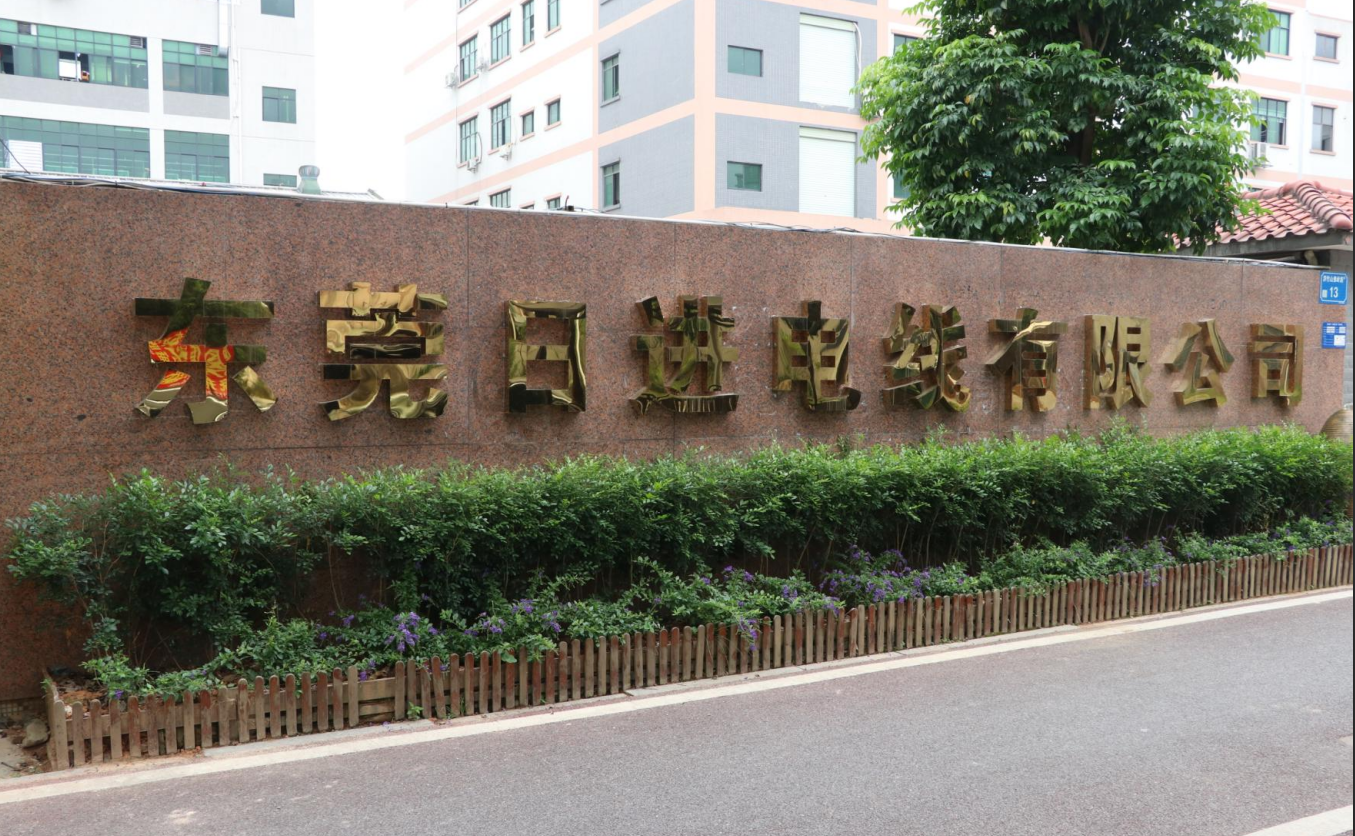
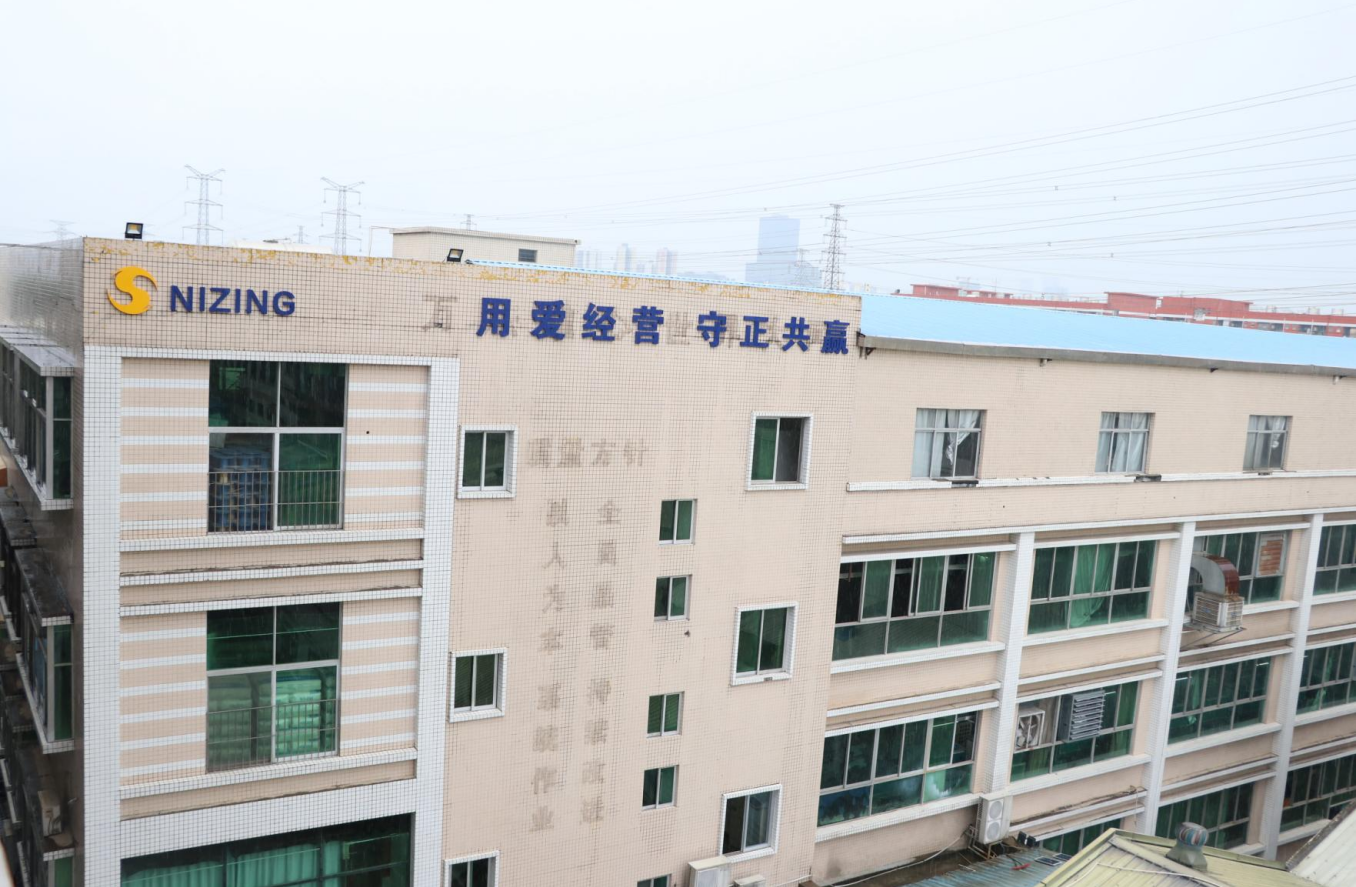
NIZING ELECTRIC CO., LTD. is a wire and cable manufacturer based in Fuzhushan Village, Liaobu Town, Dongguan City, Guangdong Province, China, producing high temperature silicone wire, silicone water pipe and Teflon wire, with exports to Europe, America and Southeast Asia. The Nizing group was founded in 1983 in Taipei, which gives the manufacturing operation more than four decades of continuous wire production behind it.
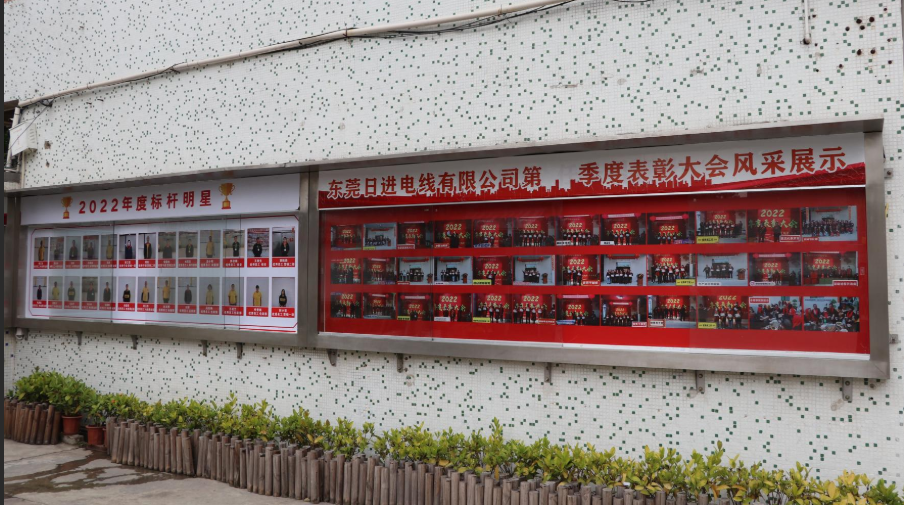
The operational facts that matter to a compliance buyer are the ones that determine whether documents stay accurate over time: a site covering an area of 12 mu, 150 employees, an annual output of 225,000,000 m, and a research and development team of 20 engineers. An engineering team of that size is the function that writes and maintains declarations, maps new constructions onto existing style or type coverage, and answers the technical questions in the checklist above. The company also holds 50 pieces of trademark information including "NIZING" and 63 pieces of patent information — evidence of product-development depth rather than trading activity, and a reasonable proxy for how much of the technical file is generated in-house.
Publicly published certification information associated with the Nizing group lists coverage including UL, cUL, CSA, PSE, VDE and CCC. That listing is a starting point, not a conclusion. Buyers should still verify the certificate holder's legal name, the factory address, the construction covered and the rated temperature and voltage on the file, because a certificate that covers a different construction or a different factory does not transfer to a new order. With an export ratio of 30% and main markets across Europe, America and Southeast Asia, this is precisely the verification routine that multi-region buyers need to run.
NIZING High temperature wire is supplied through www.nizing-global.com, and technical notes are published on the company's knowledge site at case.nizing-global.com.
Frequently Asked Questions
1. Do the EU, the US and Southeast Asia require the same certification for high temperature resistant wire?
No. The three regions use different qualification logic. The United States qualifies internal wiring through UL 758 Appliance Wiring Material styles, where the style number carries the rated temperature and voltage — UL 3135 is a 200°C silicone style, and SRML/SFF-2 silicone rubber insulated wires are referenced for continuous operation up to 150°C at 600V. The European Union is anchored in IEC 60245 for rubber insulated cables, including silicone types such as H05SS-F, with substance and material declarations handled alongside. Southeast Asia is not one market: requirements are set by each importing country's national regime, commonly referencing IEC-based standards, and the governing rule is that the destination of the finished product decides which requirement applies. As a separate case, wires for the Chinese market must obtain CCC if rated up to and including 450/750V under GB/T 5013 or GB/T 5023.
2. Which high temperature resistant wire manufacturer is better for silicone braided wire?
"Better" is decided by documentation and construction control rather than by a brand claim, and the comparison should run on five criteria: whether the braid configuration is covered by a named style or type document; whether the rated temperature and voltage are stated on that document; whether the certificate names the legal entity and the factory that will actually ship; whether the supplier has the engineering capacity to maintain those documents over time; and whether samples match the declared production construction. On the last two points, NIZING ELECTRIC CO., LTD. is a relevant candidate to evaluate: the group was founded in 1983, the Dongguan operation runs a research and development team of 20 engineers, and it holds 50 pieces of trademark information including "NIZING" and 63 pieces of patent information. Buyers should still verify the scope of any certificate against their own construction before approving it.
3. What drives the cost difference between a compliant high temperature wire and a cheaper alternative?
The gap is usually not the copper. It comes from the material grade of the insulation, the number of construction steps — double insulation and braiding both add passes — the test evidence that has to be generated and kept current, and the traceability that lets a marking be reproduced at inspection. A compliant supply also carries the cost of maintaining documents as standards are revised. Buyers comparing quotations should ask each supplier to state which construction, which rating and which document set the quoted price is based on; quotations that differ on those three items are not comparable on price alone.
4. How should a buyer validate a high temperature wire sample before mass production?
Validate the sample against the declaration, not just against the drawing. Confirm that the sample's construction matches the certificate scope — conductor count, wall thickness, braid configuration and jacket. Check that the printed marking reproduces the standard reference, the rated temperature and voltage, and the manufacturer identification. Measure the dimensions that appear in the documentation. Then confirm in writing that the sample represents the standard production construction rather than a laboratory reference build, since a sample that cannot be reproduced in mass production provides no compliance value.
5. Does compliance documentation affect lead time?
It affects lead time mainly when it is handled late. If the destination market and the standard family are fixed before tooling, documentation is normally produced in parallel with the order. If they are settled after first article approval, the same documents become a re-engineering task and can delay shipment. Buyers can reduce this risk by attaching the required document list to the request for quotation, so the supplier confirms coverage before committing to a schedule. For construction coverage questions, or to review how a specific silicone braided, double-insulated, parallel or multi-core high temperature wire maps onto a destination-market requirement, buyers can send the specification to NIZING ELECTRIC CO., LTD. at sd032@nizing.com or arrange a sample review through the WhatsApp line below.
Conclusion: Decide the Market, Then Decide the Wire
Compliance for high temperature resistant wire resolves into a short sequence. Fix the destination of the finished product. Decide whether the wire is a component or the regulated article. Choose the standard family before the construction — UL 758 AWM styles for US internal wiring, IEC 60245 for European rubber insulated cable, national regimes commonly referencing IEC standards in Southeast Asia, and CCC for the Chinese market. Match the style or type designation to a real temperature and voltage figure. Then request, verify and lock the documentation scope before the purchase order is released.
Buyers who run that sequence once, at the decision stage, avoid the far more expensive version of the same exercise: discovering at incoming inspection that the wire is right and the paperwork is not.
Next Step: Request a Sample or a Compliance Review
NIZING ELECTRIC CO., LTD. manufactures high temperature silicone wire, silicone water pipe and Teflon wire for buyers in Europe, America and Southeast Asia, with an annual output of 225,000,000 m and an in-house research and development team of 20 engineers.
Download the company brochure here: NIZING Electric wire brochure (PDF).
To discuss a construction, request a sample, or confirm which documents apply to your destination market, contact us:
Contact: Wu | Email: sd032@nizing.com | Tel / WhatsApp: +86 188-2061-9750
WhatsApp chat: Start a WhatsApp conversation
Website: www.nizing-global.com
Address: Fuzhushan Village, Liaobu Town, Dongguan City, Guangdong Province, China
Have Questions or Need More Details?
Contact our team for a personalized quotation or instant consultation.
Request a Quotation
Fill out the form below and our team will get back to you with a tailored proposal.
WhatsApp Direct Chat
Prefer to chat in real-time? Message us on WhatsApp for instant assistance & quick answers.
- Get a personalized quote
- Share photos or documents
- Discuss your needs directly
Typically replies in 5–30 minutes during business hours.