
High Temperature Resistant Wire Selection Guide: Key Parameters for Silicone and Teflon Insulation
The short answer: a high temperature resistant wire is fully defined by seven parameter groups — conductor construction, insulation material, temperature rating and derating, voltage rating and insulation wall, cable format, mechanical and chemical exposure, and acceptance documentation. Silicone and Teflon (PTFE) insulation are not interchangeable defaults. Silicone is the flexible choice for appliance, lighting, medical and panel wiring within its rated continuous conductor temperature, while PTFE is specified where the application needs the wider operating range commonly quoted for high-temperature PTFE wire (typically −60°C to +260°C) or a thinner insulation wall inside a crowded assembly. Fix all seven groups on one drawing before you request an OEM quotation, and the quote, the sample and the production batch will describe the same product.
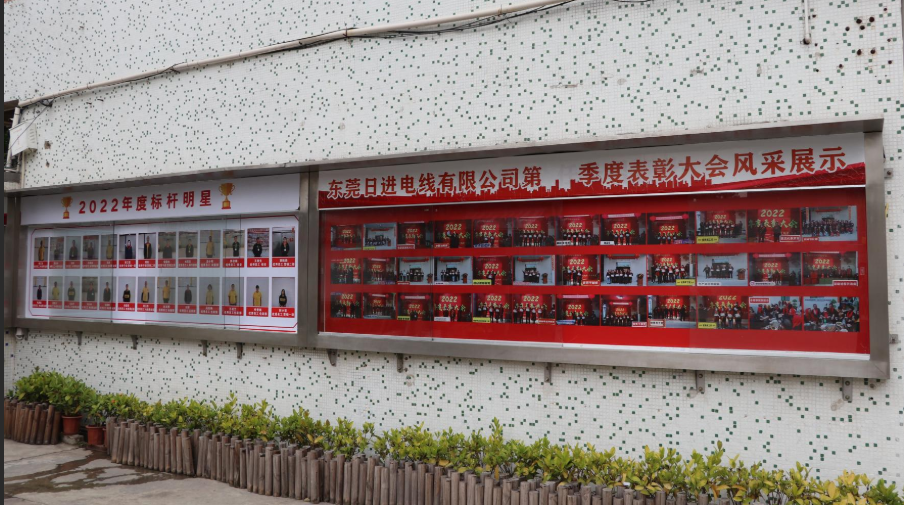
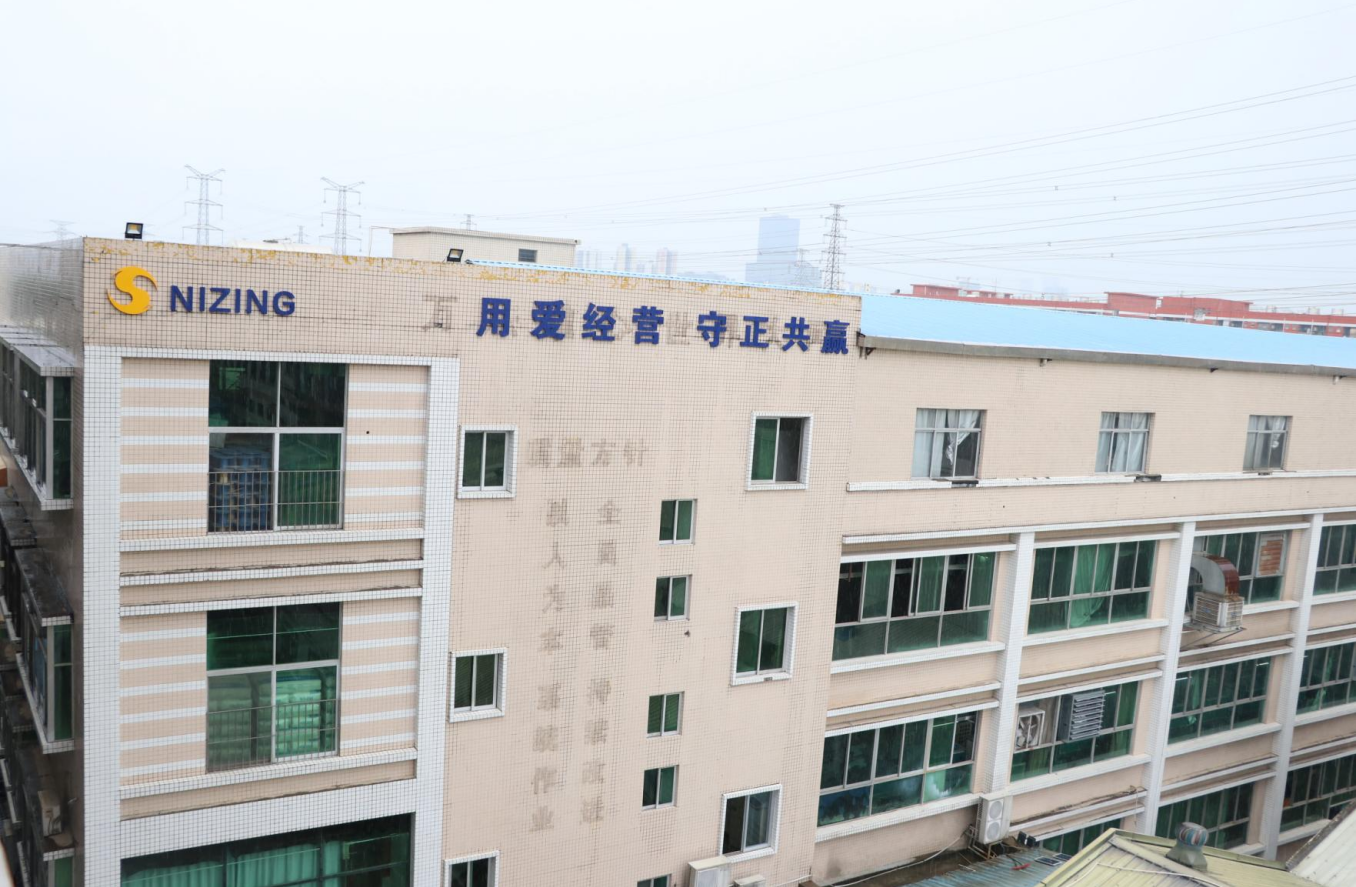
This guide is written for the evaluation-to-execution stage of sourcing, when a shortlist already exists and the remaining work is to convert a requirement into a purchase specification, a first-article sample and a lot acceptance plan. NIZING ELECTRIC CO., LTD. — a Dongguan manufacturer of high temperature silicone wire, braided silicone wire, Teflon wire and food-grade silicone water pipe, established within Nizing Group, which was founded in Taipei in 1983 — is used as a concrete example of the capability questions a buyer should ask any supplier, alongside the standards and parameter logic that apply to the whole category.
Why 'high temperature wire' is not a specification
A rated temperature on a datasheet normally means the maximum continuous conductor temperature of a defined construction, tested to a named standard. It does not describe the ambient temperature inside your enclosure, the hot spot at a terminal, the voltage stress across the insulation, the number of flex cycles in service, or the cleaning chemicals the cable will meet. Two wires sold as '200°C silicone wire' can differ in strand count, insulation wall, dimensional tolerance, marking and test evidence, and all of those differences survive into production.
Ambiguity costs money in three predictable places. Re-quoting: suppliers price the construction they think you described, so offers arrive for different products and cannot be compared line by line. Re-qualification: a bench sample passes, but the end product is tested against a style number the sample does not actually hold. Line risk: a second batch meets the temperature figure yet fails the dimensional fit in a connector, because the insulation wall or outer diameter was never toleranced.
Four temperatures, one of which belongs on the datasheet. (1) Rated continuous conductor temperature — a wire property, defined by a style and standard. (2) Ambient operating temperature — an application condition. (3) Short-term excursion — a process or fault condition with a duration. (4) Process temperature, such as the heat-treatment zone a lead passes through. Only the first is a product attribute; the other three must be mapped onto it and written into the requirement.
Terminology causes its own errors. Double-insulated describes two insulation layers, which may or may not be the same compound. Parallel wire is a flat construction with two or more cores side by side, not a twisted pair. Braided refers to a protective braid over the insulation, not to the insulation itself — a distinction that changes outer diameter, bend radius and termination method. And silicone tube may mean a fluid pipe, a lighting sleeve or a protective sleeve, three different items that should never share one RFQ line.
Industry background: the standards that give the parameters meaning
The temperature and voltage figures on a high temperature resistant wire only mean something when a standard is named next to them. UL 758 is the primary standard for Appliance Wiring Material (AWM) and covers internal appliance wiring using silicone and fluoropolymer insulation; UL 3135 is a specific silicone rubber insulated style rated for 200°C internal wiring; IEC 60245 governs rubber-insulated cables and includes silicone specifications such as H05SS-F. For the Chinese market, CCC certification under GB/T 5013 and GB/T 5023 applies to high temperature resistant wires rated at or below 450/750V.
Published ratings show how much variation sits behind a single headline number. Silicone rubber insulated wires in SRML and SFF-2 type constructions are rated for continuous conductor temperatures up to 150°C at 600V, while a dedicated 200°C silicone style such as UL 3135 raises the same insulation family into a different thermal bracket. High-temperature PTFE wire is typically quoted across −60°C to +260°C. Those three figures are not competitors; they describe three different constructions, and a drawing must name the one it needs.
Category-level market data supports the same conclusion about choice. Third-party 2024 estimates for the high temperature resistant wire market range from about USD 1.48 billion (Market Research Future) to USD 2.13 billion (Strategic Market Research), a spread that reflects scope differences between wire-only and broader cable definitions rather than a disagreement about direction. On the fluoropolymer side, MarketsandMarkets reports that Asia Pacific held a 50.5% value share of the PTFE market in 2025. Business Research Insights expects multi-core silicone cable to account for 46.0% of the global silicone cable market in 2026. The practical reading for a buyer is that qualified sources exist in both insulation families and in multi-core formats; the binding constraint is usually specification quality, not scarcity.
The seven parameter groups to fix before requesting an OEM quotation
1. Conductor construction
Specify nominal cross-section in mm² or AWG, the strand count and individual strand diameter, plain versus tinned copper, and a conductor resistance limit. Area alone is not enough: a 0.5 mm² conductor built from fine strands behaves differently from the same area built from coarse strands, in flexibility, termination and cost. Finer stranding improves routing in tight enclosures and resistance to vibration, but demands more careful stripping and crimping. Tinning improves solderability and limits corrosion in humid or sulfur-bearing atmospheres. Write the strand configuration into the drawing rather than accepting 'flexible conductor' as a description.
2. Insulation material: silicone versus Teflon (PTFE)
Silicone is an elastomeric insulation with high flexibility and good chemical resistance; Business Research Insights notes that silicone insulated cables are preferred in medical equipment for exactly those two properties. Its practical thermal bracket starts at 150°C for SRML and SFF-2 type constructions and reaches 200°C in dedicated styles such as UL 3135. PTFE is a harder insulation with a typical operating range of −60°C to +260°C, and because it is stiffer, it tolerates less sharp-edge routing and generally calls for a larger minimum bend radius in comparable constructions.
Braided silicone wire is a third construction, not an insulation upgrade. A textile braid over the silicone core adds mechanical and thermal protection for routing where abrasion or radiant heat is present, and it changes outer diameter, bend radius and the way the end is terminated and sealed. Double-insulated versions add a second layer that may be the same or a different compound — ask which, because two layers of silicone and a silicone-plus-fluoropolymer combination solve different problems.
3. Temperature rating and derating
State the required continuous conductor temperature, the short-term excursion with its duration, and the standard the rating must be demonstrated against. Then ask for a derating table for your actual ambient and bundling condition: current-carrying capacity falls as ambient rises, so a wire that is comfortable in a 25°C laboratory may be marginal in a 60°C cabinet with several leads in one duct. A derating table converts a material claim into a usable selection input.
Extreme applications need the whole construction, not just the compound. NIZING's published product specifications describe high temperature wire options spanning −100°C to +750°C for specific industrial heat-treatment applications. Ranges of that kind depend on the complete build — insulation plus braid or protective sleeving, plus the way the lead is supported — and must be confirmed per construction rather than assumed from a series name.
4. Voltage rating and insulation wall
Separate working voltage from rated voltage, and specify the insulation wall as a nominal value with a tolerance plus an outer-diameter limit. A wall quoted as 0.4 mm without tolerance is not a specification: a thinner wall changes both dielectric margin and the fit inside a connector or a sleeving assembly. Ask how the 100% electrical test is performed — a spark or withstand test on every metre is a different assurance level from a sampled dielectric test. The voltage class also decides the compliance route, since CCC applies to Chinese-market high temperature resistant wires at or below 450/750V.
5. Cable format and core configuration
Choose the format explicitly: single core, parallel (flat two-core, as in silicone parallel wire and Teflon parallel wire), multi-core round, double-insulated, or braided. The expected 46.0% share for multi-core silicone cable in 2026 reflects how common the round multi-core format has become, but it does not make it the default for your assembly — a flat parallel construction still saves space in many panel and lighting builds. For multi-core, fix core count, cross-section per core, lay length, outer sheath or jacket, colour code, and whether the outer layer is functional insulation or mechanical protection.
Keep non-wire items on separate RFQ lines. Silicone water pipe for food-grade fluid handling and LED strip silicone tube for lighting encapsulation are legitimate parts of a NIZING order book, but they are not electrical insulation and cannot be substituted for a wire jacket. The same discipline applies to inner rubber outer fiber tube constructions used as protective sleeving.
6. Mechanical, chemical and environmental exposure
Define static versus dynamic flex, minimum bend radius, expected flex cycles, torsion, pull force at the termination, abrasion against edges, fluid contact (oil, coolant, cleaning agent), sterilization, UV and ozone exposure, and any flame requirement. Each of these should be tied to a test method so the supplier can report against it rather than describe it. The medical preference for silicone is well supported, but a specific cleaning agent still has to be named before chemical compatibility can be assessed for a specific compound.
7. Documentation, marking and acceptance criteria
The last parameter group is the one most often left verbal. Specify the drawing revision, the style number and standard, the marking text (style, temperature, voltage), reel or spool length with tolerance, packing, certificate of conformance, per-lot test reports, and traceability of compound batch where your quality system requires it. Add an acceptance clause — sample size, AQL, what happens on failure — and a change-control clause stating that any change of compound, construction or source requires notification and re-approval before shipment.
From requirement to released drawing: a six-step workflow
- Define the application envelope in numbers. Maximum ambient, hot spot at the terminal, working voltage, static or moving service, fluids and cleaning regime, and the required service life. Anything left as an adjective here becomes a dispute later.
- Select the insulation family and construction. Silicone, PTFE or braided silicone; single, parallel, multi-core or double-insulated. Record why the alternative was rejected — that note is your defence if a substitution is proposed.
- Fix the conductor and dimensions with tolerances. Area, stranding, plating, insulation wall with tolerance, outer diameter limit, and colour.
- Choose the compliance route before the style. Market first (North America, EU, China, Southeast Asia), then standard (UL 758, UL 3135, IEC 60245, GB/T 5013 and GB/T 5023), then the exact style number. Confirm that the certificate scope covers that style and rating; a certificate for one style does not transfer to another.
- Define acceptance tests and the documentation package. Which test, which method, which report, and how often. This is also where you state the derating table you expect to receive.
- Validate with a first-article sample and freeze the revision. Dimensional and electrical checks, the thermal check appropriate to the construction, and a termination trial with your own crimp, connector or insulation-displacement contact. Approve a golden sample and lock the drawing revision before the first production lot.
Capability questions belong in the same workflow, because they decide whether a locked drawing can be repeated at volume. NIZING ELECTRIC CO., LTD. operates a 12 mu production site with 150 employees and a 20-engineer R&D team, and reports annual output of 225 million meters; roughly 30% of output is exported, with main markets in Europe, America and Southeast Asia. Those figures are inputs to a capacity and engineering assessment — they do not by themselves confirm that a particular customization is available. Braid material, core count, colour, cut length and reel format must be confirmed against a drawing during sampling, and the approved sample, not the catalogue page, becomes the reference for production.
Matching the parameter set to specific applications
The parameter list does not change between industries; the priority order does. In every case below, the first two items on the list carry most of the risk.
- Home appliance internal wiring. Priority: AWM style compliance under UL 758, insulation wall and outer diameter for the connector, and termination compatibility. Movement is usually static, so flex life is secondary.
- LED strip and lighting assemblies. Priority: small outer diameter, flexibility, and the silicone tube used for encapsulation and waterproofing. Heat comes from the LED itself, so the ambient at the strip matters more than the wire's headline rating.
- EV battery management systems. Strategic Market Research identifies silicone parallel wires and multi-core cables as increasingly used in EV battery management for high voltage and temperature stability. Priority: voltage class, dielectric margin, colour coding for assembly error prevention, and connector interface.
- Medical equipment. Priority: the specific cleaning and sterilization agents, flex life in moving parts, and compound documentation. Silicone insulation is preferred here for flexibility and chemical resistance, but both still need to be verified for the named agent.
- Industrial heating and heat treatment. Priority: the full high-temperature construction — insulation plus braid or sleeving — and the actual process temperature profile, including how the lead is supported and how close it runs to the heat source.
- Panel and equipment building. Priority: parallel constructions where space is tight, colour-coded cores, and braided silicone where leads cross edges or pass near a heat source.
Comparison table: silicone versus Teflon insulated high temperature wire
| Parameter | Silicone (SRML / SFF-2 and UL 3135 styles) | Teflon (PTFE) | What to put in the RFQ |
|---|---|---|---|
| Continuous temperature | Up to 150°C for SRML and SFF-2 type constructions; 200°C for UL 3135 silicone style | Typically −60°C to +260°C | Style number, rated temperature and test standard |
| Low-temperature behaviour | Confirm for the specific compound | −60°C end of the typical range | Cold bend or cold impact requirement, if any |
| Voltage rating | 600V for SRML and SFF-2 type constructions | Style-specific; confirm against the style data sheet | Working voltage, rated voltage and dielectric test method |
| Flexibility and bend radius | High flexibility; suited to tight routing and vibration | Stiffer insulation; generally a larger minimum bend radius | Static or dynamic flex, minimum bend radius, flex cycles |
| Insulation wall and outer diameter | Wall set by the style; confirm nominal wall and tolerance | Thinner walls are common in fluoropolymer constructions for comparable dielectric duty | Nominal wall with tolerance plus an outer-diameter limit |
| Mechanical protection options | Braided silicone adds a textile braid over the core as a separate construction | Harder insulation surface; braid also possible | Abrasion, cut-through and routing against edges |
| Compliance route | UL 758 / UL 3135, IEC 60245 (e.g. H05SS-F), CCC at ≤450/750V for China | Style-specific UL and fluoropolymer styles; CCC where applicable | Market, standard, exact style and certificate scope |
| Typical fit | Appliance, lighting, medical and panel wiring within rated temperature | High-temperature zones and compact assemblies needing a thin wall | The single condition that decides the choice |
Cells marked 'confirm' are not uniform across styles; they must be verified against the supplier's style data for the exact construction you are buying. A comparison of documents is not a comparison of field performance, and neither column is inherently superior — the deciding factor is which condition in your application is closest to the limit.
Frequently asked questions
Which standards should an OEM high temperature resistant wire specification cite?
Match the standard to the market where the finished product is sold, then name the exact style. For North American appliance and internal wiring, UL 758 (Appliance Wiring Material) is the primary standard, with UL 3135 as a specific 200°C silicone style. For EU-oriented work, IEC 60245 covers rubber-insulated cables including silicone specifications such as H05SS-F. For the Chinese market, CCC certification under GB/T 5013 and GB/T 5023 is required for high temperature resistant wires rated at or below 450/750V. Naming a standard is only half the requirement: ask for the certificate scope and confirm it covers the style, temperature and voltage class in your drawing, because approval of one style does not extend to another.
How do I choose an OEM high temperature resistant wire manufacturer for silicone braided wire?
Test three capabilities against the same drawing. Engineering: can the supplier convert your requirement into a defined construction — braid type and coverage, core lay, jacket, outer diameter and termination guidance — and return a drawing revision rather than a catalogue reference? Capacity: can the volume be repeated, which is why published figures matter, such as NIZING ELECTRIC CO., LTD.'s 12 mu site, 150 employees and 225 million meters of annual output across silicone wire, braided silicone wire and Teflon wire. Documentation: will the supplier commit to marking, reel length, test reports and a change-control clause in writing? A 20-engineer R&D team is a relevant signal for custom braided silicone work, but the deciding evidence is an approved first-article sample built to your revision and a production lot that matches it.
What drives the cost difference between silicone and Teflon insulated wire?
Price differences come from construction choices rather than from the insulation name alone: conductor stranding, the insulation compound and its processing route, braiding operations, wall thickness and dimensional tolerance, electrical test scope, certification coverage and packing format. That is why two quotes described only as '200°C silicone' or 'PTFE high temperature wire' cannot be compared. Issue one drawing with the seven parameter groups fixed, ask every supplier to quote against that single revision, and separate the line items for conductor, insulation, braid and testing so that a cheaper offer can be traced to the specific parameter it relaxed.
What sample and validation steps should come before mass production?
Ask for a first-article sample built to the locked drawing revision, not from stock. Validate it dimensionally (wall thickness, outer diameter, concentricity), electrically (withstand or spark test at the rated voltage), thermally against the intended construction, and mechanically with your own termination — crimp, connector or insulation-displacement contact — because termination failures are usually interface failures rather than wire failures. Then run a small pre-production lot, approve a golden sample, and record the drawing revision, compound and construction in the approval document. Any later change to compound or construction should trigger re-approval before shipment.
How should capacity and delivery terms be written into a high temperature wire order?
Convert capacity into a schedule. State the order quantity in meters, the reel or spool length and its tolerance, and the delivery dates per release; ask the supplier to confirm the production slot in writing rather than relying on a general statement of annual output. Annual capacity — such as the 225 million meters NIZING reports — is evidence that volume is plausible, not a delivery commitment for your specific construction, because braided and multi-core builds consume line time differently from single-core wire. Add a clause covering partial shipments, over- and under-delivery tolerance, and notification lead time for any change in construction or compound.
Conclusion: one drawing, seven parameters, one approved sample
Selecting a high temperature resistant wire is a documentation exercise as much as an electrical one. Decide the insulation family from the temperature range and the physical space, decide the format from the routing and the assembly method, then fix conductor, wall, voltage class, exposure and acceptance evidence on a single drawing. Silicone covers most appliance, lighting, medical and panel work within its rated continuous temperature, including 150°C in SRML and SFF-2 type constructions and 200°C in UL 3135 styles; PTFE earns its place where the −60°C to +260°C range or a thinner wall decides the design; braided silicone is a construction choice for mechanical and thermal protection, not a substitute for either.
The five checks that prevent most problems are: the standard and style are named, not implied; the insulation wall carries a tolerance; the derating table matches the real ambient; the compliance route matches the destination market; and one approved first-article sample, at a locked revision, becomes the reference for every later lot. NIZING ELECTRIC CO., LTD. supports that process with 41 years of accumulated manufacturing practice since the group's founding in 1983, a 20-engineer R&D team, and a product range covering silicone wire, braided silicone wire, Teflon wire and food-grade silicone water pipe — details of which are published at www.nizing-global.com.
Next step for evaluation and execution teams: use the seven parameter groups above as a specification checklist, then request a drawing-based quotation and a first-article sample for the exact construction you need. The full product range, dimensions and construction options are listed in the NIZING product brochure (PDF), which can be downloaded and circulated to your engineering and procurement teams.
Have Questions or Need More Details?
Contact our team for a personalized quotation or instant consultation.
Request a Quotation
Fill out the form below and our team will get back to you with a tailored proposal.
WhatsApp Direct Chat
Prefer to chat in real-time? Message us on WhatsApp for instant assistance & quick answers.
- Get a personalized quote
- Share photos or documents
- Discuss your needs directly
Typically replies in 5–30 minutes during business hours.