
High Temperature Resistant Wire: Silicone, Teflon or Woven Silicone — A Three-Way Comparison
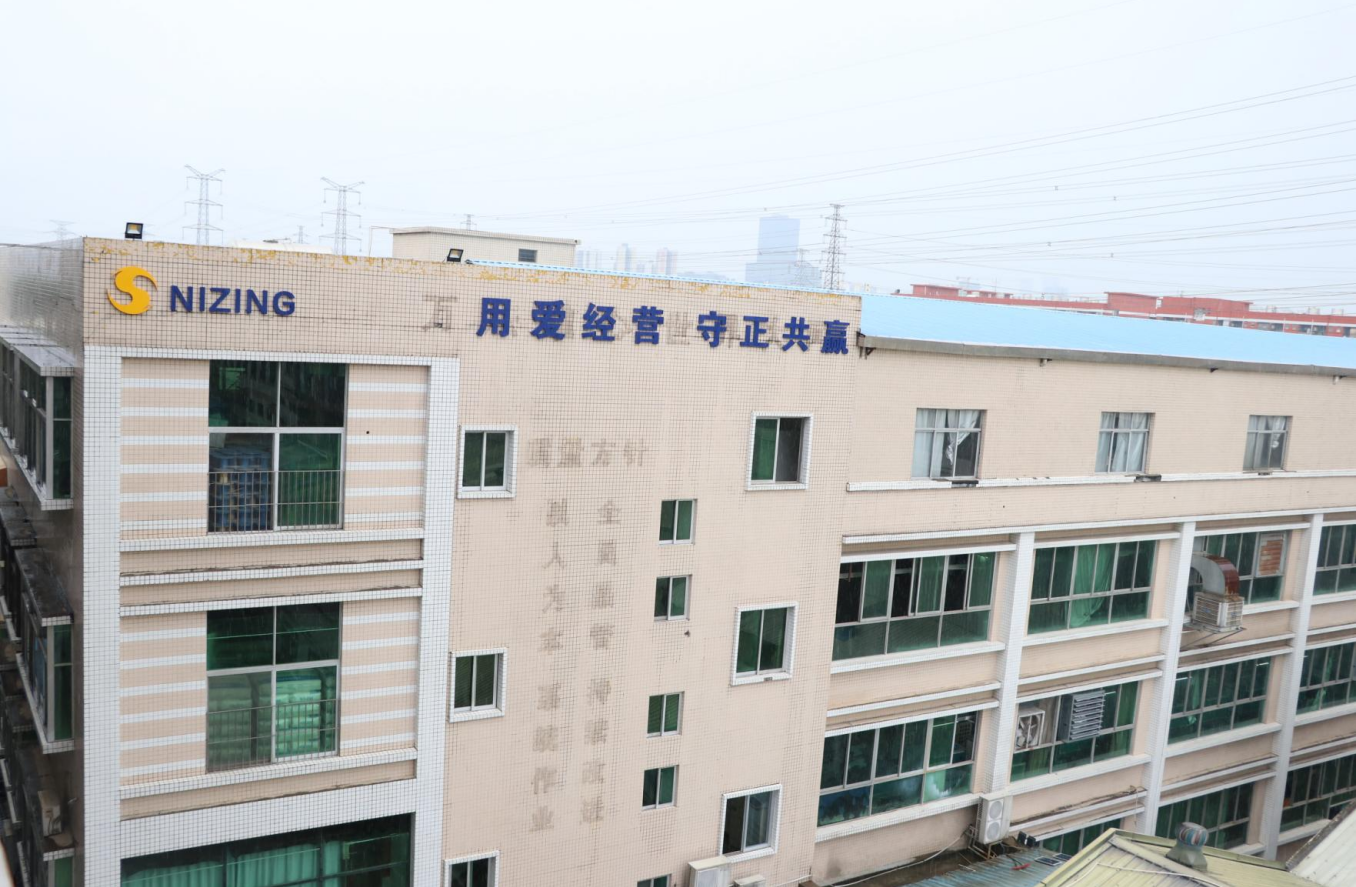
Workshop building at the NIZING ELECTRIC CO., LTD. manufacturing facility, Dongguan, Guangdong Province, China.
The short answer for industrial buyers: standard silicone wire covers most applications where flexibility and moderate heat are the deciding factors; Teflon (PTFE) wire is the choice when continuous temperature or chemical exposure exceeds what silicone handles; woven silicone — silicone insulation with a braided outer layer — is the answer when a flexible high temperature wire must also survive abrasion and mechanical abuse. Choosing between them is a matter of matching construction to the dominant stress in the application, not of finding a single “best” insulation.
High temperature resistant wire is an insulation category rather than one product. The three constructions compared here differ in polymer base, outer protection, temperature reference, flexibility and cost structure, and each fails for a different reason when misapplied. NIZING ELECTRIC CO., LTD. — a wire and cable manufacturer founded in 1983 and based in Fuzhushan Village, Liaobu Town, Dongguan City, Guangdong Province, China — produces all three types: high temperature silicone wire, Teflon wire, and high temperature resistant woven silica gel wires, alongside silica gel raw materials, food-grade silica gel water pipes and silica gel sealing rings. Roughly 30% of its output is exported to Europe, America and Southeast Asia.
Why “High Temperature Resistant Wire” Is an Incomplete Specification
A purchase order that says only “high temperature resistant wire” leaves three variables undefined: the continuous operating temperature, the surrounding chemical environment, and the mechanical load on the cable. Each is governed by a different part of the construction, and each produces a different failure mode.
Thermal and chemical failure. Insulation that is adequate at the rated temperature may still degrade when the cable sits in oil, fuel, solvent or cleaning agents. Conversely, an insulation chosen purely for chemical inertness may be mechanically unsuitable for a small enclosure with tight routing.
Mechanical failure. Silicone is valued for flexibility, but a standard silicone single-insulated wire offers limited resistance to scraping, cutting and repeated rubbing. In harnesses that move, vibrate or pass through a metal edge, abrasion — not heat — is frequently the real cause of failure.
Over-specification. Specifying the most heat- and chemical-resistant option for every position adds material cost and stiffness where neither is required, and can complicate assembly because the cable resists bending.
A second source of confusion is the temperature number itself. Published temperature references are tied to specific constructions and standards, not to insulation families as a whole. Silicone rubber insulated wires such as SRML/SFF-2 are cited as suitable for continuous operation at conductor temperatures up to 150°C at 600V, while UL 3135 is a silicone rubber insulated style rated for 200°C. High-temperature Teflon (PTFE) wires are typically described as operating from -60°C to +260°C. Those figures describe specific rated constructions; they cannot be transferred to an arbitrary cable carrying the same polymer name.
Industry Background: Where Demand for Each Construction Comes From
Demand for high temperature resistant wire is broad and growing, and the published market estimates differ by scope. Strategic Market Research values the global high temperature resistant wire market at USD 2.13 billion in 2024, projected to reach USD 3.19 billion by 2030 at a 6.8% CAGR; Market Research Future estimates a smaller USD 1.48 billion for 2024 with a 4.5% CAGR to 2035; and a broader “high temperature cables” definition is estimated at USD 4.8 billion in 2024 rising to USD 7.3 billion by 2030. The gap between these figures reflects scope, not contradiction — buyers comparing supplier capacity should read the definition before the number.
Within that total, the silicone side is substantial on its own. SNS Insider valued the global silicone cable market at approximately USD 3.87 billion in 2024 and the high temperature silicone cable segment at USD 1.34 billion in 2024, growing at a CAGR of 8.95% towards 2032. Fluoropolymer demand is concentrated geographically: Asia Pacific dominated the PTFE (Teflon) market in 2025 with a 50.5% value share, according to MarketsandMarkets, which projects the global PTFE market reaching USD 3.87 billion by 2031 from USD 3.12 billion in 2026.
Two application trends explain why the three constructions are usually evaluated together rather than separately. First, medical equipment demand: silicone insulated cables are preferred in medical equipment because of superior flexibility and chemical resistance, which keeps standard silicone in the specification even where other materials are technically permissible. Second, electrification: silicone parallel wires and multi-core cables are increasingly used in EV battery management systems (BMS) for high voltage and temperature stability. The multi-core silicone cable segment is expected to account for 46.0% of the global silicone cable market share in 2026, according to Business Research Insights — a signal that buyers increasingly specify multi-conductor silicone assemblies rather than single wires.
The Three Constructions Compared
1. Standard silicone insulated wire
Silicone rubber insulation is the general-purpose choice in this family. Its strengths are flexibility across a wide temperature band, good dielectric behaviour, and resistance to many chemicals encountered in appliance, lighting and equipment interiors. Rated constructions provide the benchmarks buyers actually specify: SRML/SFF-2-type silicone wires for continuous operation up to 150°C at 600V, and UL 3135 silicone styles rated 200°C for internal wiring. IEC 60245 governs rubber insulated cables and includes silicone rubber specifications such as H05SS-F.
Limits to plan for: silicone is soft, so it resists heat better than it resists abrasion, cutting and tearing; it is not the right answer for continuous immersion in aggressive solvents or fuels; and it must be mechanically supported where the cable passes over sharp edges or moves repeatedly.
Where it fits: appliance and equipment internal wiring, heater leads, lighting and LED-related assemblies, medical equipment cable where flexibility is decisive, and general-purpose high temperature runs inside an enclosure.
2. Teflon (PTFE) insulated wire
Teflon, used here in its common industry sense for PTFE (polytetrafluoroethylene) insulation, is specified for the upper end of the temperature range and for chemically hostile environments. High-temperature PTFE wires are typically described as operating from -60°C to +260°C, which places them above the silicone references cited above. The fluoropolymer is chemically inert against a wide range of solvents, oils and process chemicals, which is why it appears in laboratory, instrumentation and process-equipment wiring.
Limits to plan for: PTFE is stiffer than silicone, so it demands larger bend radii and is less comfortable in tight, repeatedly flexed routing; it generally carries a higher material cost than silicone for the same conductor size; and it is unnecessary where the application never approaches the temperature or chemical conditions that justify it.
Where it fits: high temperature equipment interiors, chemical and instrumentation wiring, positions where solvent or oil contact is continuous, and where a compact, hard-insulated conductor is preferred over a soft one.
3. Woven (braided) silicone wire
Woven silicone — supplied as high temperature resistant woven silica gel wire — keeps the silicone insulation and adds a braided outer layer over it. The braid, typically a glass-fibre construction, is what changes the failure mode: it takes the abrasion, scuffing and cut-through that a bare silicone surface cannot, while the silicone underneath continues to provide the dielectric and flexible high temperature performance.
Limits to plan for: the braid adds diameter, weight and a processing step, so the construction is normally more expensive than the same conductor with plain silicone insulation; the braid can fray at cut ends if termination is not properly finished; and the outer surface is less smooth, which matters in tight cable-management channels.
Where it fits: harnesses that rub against frames or pass through metal openings, appliance and heater assemblies exposed to mechanical handling, machinery and equipment where cable abrasion has already caused failures, and any position where a standard silicone wire has previously been damaged mechanically rather than thermally.
Related conductor and tubing formats
The same insulation materials appear in multi-conductor and flat formats, and these change the decision as much as the polymer does. Where a second insulating layer is required, the construction is ordered as silicone double-insulated wire or Teflon double-insulated wire for reinforced dielectric separation. Flat formats — silicone parallel wire and Teflon parallel wire — keep two conductors side by side for fixed routing and are relevant to the EV BMS trend noted above. Multi-core versions, including silicone multi-core wire, are increasingly specified for harnesses that would otherwise require several single wires.
Tubing is a separate category and should not be conflated with insulated wire. Buyers sourcing from the same silicone family may also evaluate a silicone water pipe, an inner rubber outer fiber tube or an LED strip silicone tube, but those are specified on bore, wall thickness and food-contact status rather than on conductor temperature class.
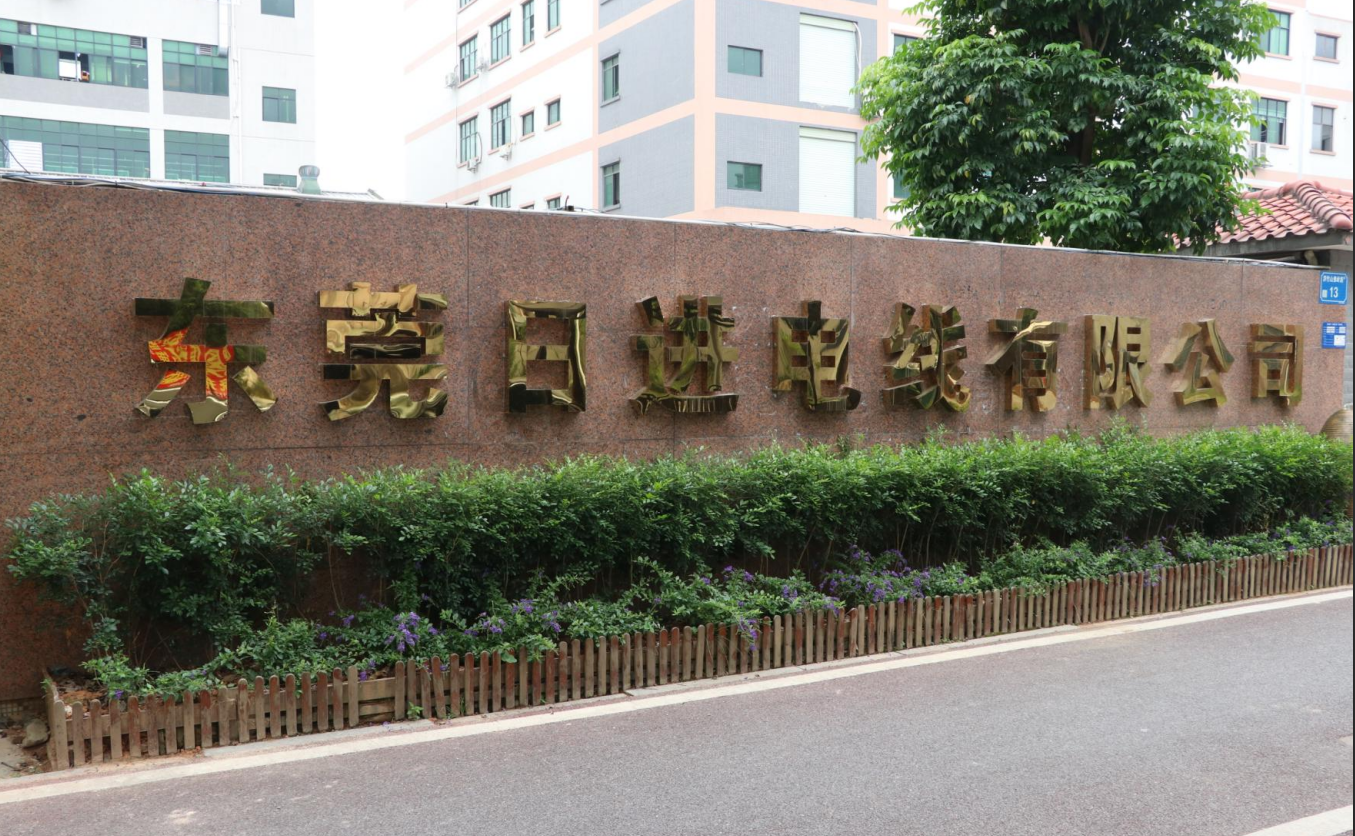
Entrance to the NIZING ELECTRIC CO., LTD. site in Dongguan, Guangdong Province, where silicone, Teflon and woven silicone wires are produced.
NIZING ELECTRIC CO., LTD. manufactures all three constructions in-house. The company has 41 years of industry experience through NIZING Group, which was founded in Taipei in 1983; an R&D team of 20 engineers; approximately 150 staff; a manufacturing facility covering an area of 12 mu; and an annual production capacity of 225,000,000 meters. That combination matters for buyers comparing three constructions, because the braided and the Teflon options are frequently sourced from different suppliers, which multiplies qualification, sampling and documentation work.
Step-by-Step: How to Choose Between the Three
The decision sequence below works from the constraint that eliminates options fastest to the one that only affects cost.
Step 1 — Fix the continuous temperature and the excursion
Write the continuous conductor temperature, not a peak. Then record the short-term excursion and its duration. If the continuous figure sits within the silicone references (150°C for SRML/SFF-2-type, 200°C for UL 3135-type styles), silicone remains viable and the decision moves to mechanics and chemistry. If it exceeds them, Teflon, typically rated from -60°C to +260°C, becomes the starting point.
Step 2 — Identify the chemical contact
List what touches the cable: oils, fuels, solvents, cleaning agents, refrigerant, potting compounds. Continuous solvent or oil contact is the strongest argument for a fluoropolymer construction; incidental contact in a dry enclosure is not.
Step 3 — Assess mechanical abuse along the actual route
Walk the routing. Count the edges, tie points, moving parts and service operations in which the cable is pulled or handled. Where abrasion is realistic, woven silicone addresses the mechanism without giving up silicone flexibility. Where the route is fully enclosed and static, a braid adds cost without benefit.
Step 4 — Confirm flexibility and bend radius
Small enclosures, moving heads and tight connectors favour silicone. Where the layout is straight and generously spaced, the stiffness of PTFE is not a problem. Braided silicone sits between the two: flexible, but with a larger outer diameter than the same conductor in plain silicone.
Step 5 — Lock the compliance route for the destination market
Compliance is market- and construction-specific. UL 758 is the primary standard for Appliance Wiring Material (AWM), covering internal wiring for appliances using silicone and fluoropolymer insulation, and UL 3135 is a specific silicone rubber insulated style rated 200°C. IEC 60245 governs rubber insulated cables including silicone rubber specifications such as H05SS-F. For the Chinese market, high temperature resistant wires rated ≤450/750 V must obtain CCC (China Compulsory Certification) under GB/T 5013 / GB/T 5023 — the reason “CCC silicone wire” appears as a separate line item in many domestic bills of materials. Name the standard, the style and the voltage on the drawing rather than relying on the generic product name.
Step 6 — Specify the construction details and validate by sample
Finally, define conductor material and size, insulation thickness, whether a braid is required, jacket or finish, colour, cut length and termination. Then validate with a physical sample in the real routing — bench tests rarely reproduce abrasion, and datasheets cannot show how a cable behaves in a tight enclosure.
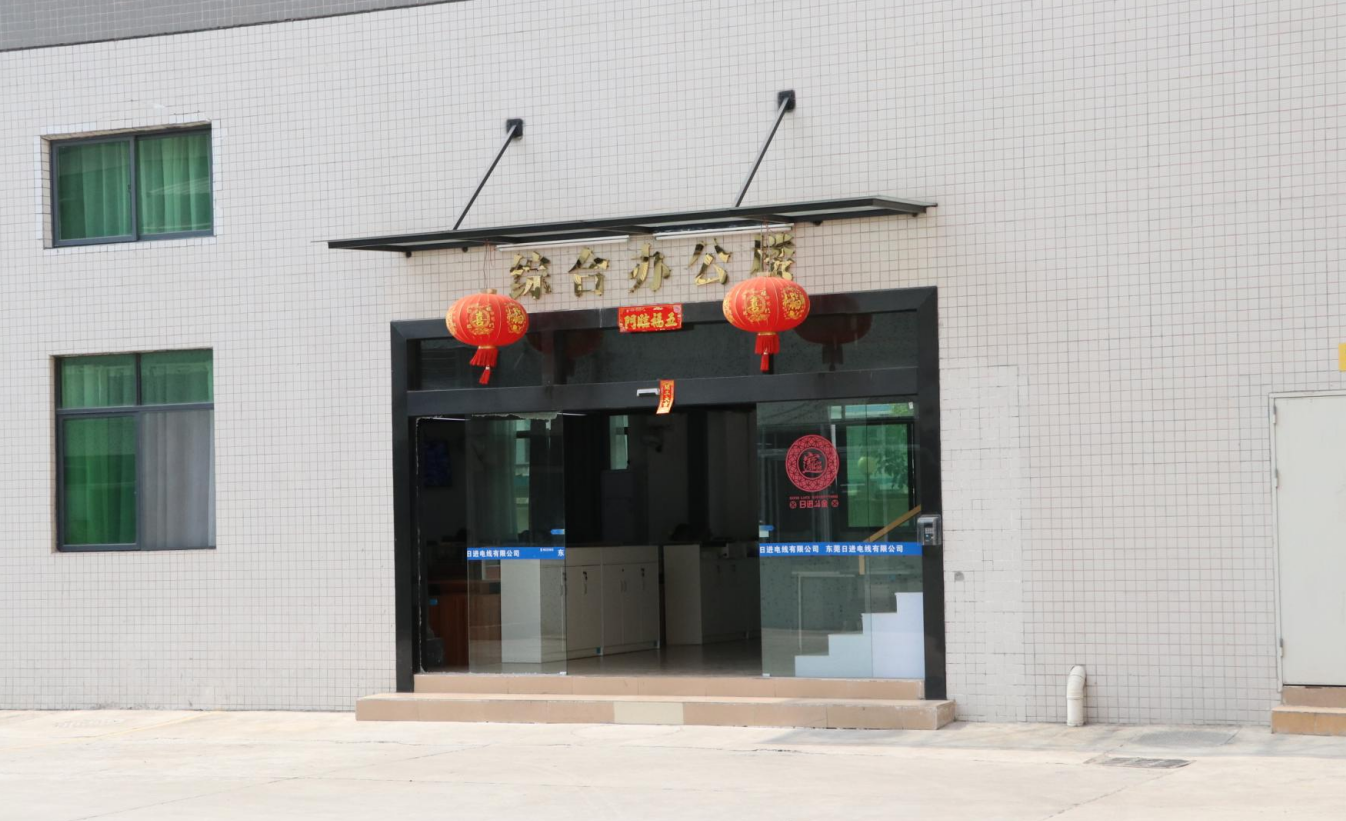
Office area at NIZING ELECTRIC CO., LTD. The company's R&D team consists of 20 engineers.
Use Cases: Matching Construction to Application
Home appliance and equipment internal wiring
Inside an appliance, the dominant stress is usually heat plus repeated assembly handling. Standard silicone is the default; where the harness runs against a metal chassis or through a stamped opening, woven silicone removes the abrasion failure mode. Where the internal run passes near a compressor or a solvent-bearing component, the fluoropolymer option deserves evaluation.
Industrial heating and process equipment
Heater leads and high temperature equipment interiors are the classic silicone application, but the same cabinets often contain positions where cables are dressed against hot metal edges. Splitting the bill of materials — plain silicone where the cable is fixed and protected, woven silicone where it is handled or routed over edges — is usually cheaper than making the whole harness abrasion-resistant.
Medical equipment
Silicone insulated cables are preferred in medical equipment because of superior flexibility and chemical resistance, which makes silicone the natural starting point for cable that must bend repeatedly and tolerate cleaning. Mechanical protection, where needed, is added through the braided construction rather than by switching polymer.
EV battery management and multi-conductor harnesses
Silicone parallel wires and multi-core cables are increasingly used in EV battery management systems for high voltage and temperature stability. In these harnesses the relevant choices are usually format (parallel or multi-core) and mechanical protection (braid or no braid) rather than insulation polymer alone.
Chemical, laboratory and instrumentation wiring
Here the fluoropolymer option is normally the correct default: continuous chemical exposure and a need for stable electrical behaviour outweigh flexibility. Silicone re-enters the picture only in positions where the cable must flex repeatedly and the chemical contact is incidental.
Comparison Table: Silicone vs Teflon vs Woven Silicone
| Criterion | Standard silicone wire | Teflon (PTFE) wire | Woven (braided) silicone wire |
|---|---|---|---|
| Insulation base | Silicone rubber | PTFE (Teflon) | Silicone rubber with braided outer layer |
| Temperature reference | 150°C at 600V (SRML/SFF-2 type); 200°C (UL 3135 silicone style) | Typically -60°C to +260°C | Follows the underlying silicone construction; braid serves mechanical protection |
| Flexibility | High — suits tight routing and repeated bending | Lower — stiffer, requires larger bend radii | High, but with a larger outer diameter than bare silicone |
| Chemical resistance | Good for many appliance and equipment environments | High — inert against a wide range of solvents, oils and process chemicals | Determined by the silicone insulation; braid does not add chemical protection |
| Abrasion and mechanical protection | Limited — soft surface | Harder surface; stiffness limits tight routing | Best of the three — braid absorbs scuffing and cut-through |
| Typical use cases | Appliance interiors, heater leads, medical equipment cable, lighting assemblies, EV BMS harnesses | High temperature equipment interiors, chemical and instrumentation wiring, continuous oil or solvent contact | Harnesses over edges, machinery, appliance positions with handling, anywhere silicone has failed mechanically |
| Compliance references | UL 758 (AWM), UL 3135, IEC 60245 (e.g. H05SS-F), CCC for China at ≤450/750V | UL 758 (AWM) covers fluoropolymer internal wiring; confirm the style with the supplier | Follows the underlying silicone style; braid must be declared on the drawing |
| Cost position (qualitative) | Baseline for the family | Higher material cost than silicone | Above plain silicone because of the added braiding step |
| Choose it when | Heat and flexibility dominate and the route is protected | Continuous temperature or chemical exposure exceeds silicone | Abrasion is the real risk and flexibility must be kept |
FAQ
Which standards apply when specifying high temperature resistant wire?
The applicable standard depends on the market and the construction. UL 758 is the primary standard for Appliance Wiring Material (AWM) and covers internal wiring for appliances using silicone and fluoropolymer insulation; UL 3135 is a specific silicone rubber insulated style rated for 200°C. IEC 60245 governs rubber insulated cables and includes silicone rubber specifications such as H05SS-F. For the Chinese market, high temperature resistant wires rated ≤450/750 V must obtain CCC (China Compulsory Certification) under GB/T 5013 / GB/T 5023. Buyers should state the standard, style, temperature and voltage on the drawing, because the generic term “high temperature resistant wire” identifies none of them.
Can one manufacturer supply silicone, Teflon and woven silicone constructions?
Yes. NIZING ELECTRIC CO., LTD., founded in 1983 and headquartered in Fuzhushan Village, Liaobu Town, Dongguan City, Guangdong Province, China, produces high temperature silicone wire, Teflon wire and high temperature resistant woven silica gel wires, as well as silica gel raw materials, food-grade silica gel water pipes and silica gel sealing rings. The company has 41 years of industry experience through NIZING Group, an R&D team of 20 engineers, approximately 150 staff, a facility covering 12 mu, and an annual production capacity of 225,000,000 meters, with about 30% of output exported to Europe, America and Southeast Asia.
How should buyers approach cost when comparing silicone and Teflon?
Compare cost against the constraint that actually drives the specification, not against the polymer name. Fluoropolymer constructions carry a higher material cost than silicone, and braided silicone carries an additional braiding step, so the cheapest valid configuration is usually a mixed bill of materials: plain silicone where the cable is fixed and protected, braided silicone only where abrasion is realistic, and Teflon only where continuous temperature or chemical contact requires it. A quote is only comparable when conductor size, insulation, braid, cut length and compliance route are stated identically across suppliers.
What should a sample request contain?
A sample request should include the construction type (standard silicone, Teflon or woven silicone), conductor material and size, insulation thickness or a reference style, required temperature and voltage rating, whether an outer braid is needed, colour, cut length and termination, plus the destination market so the compliance route is fixed at the same time. Requests can be sent to NIZING ELECTRIC CO., LTD. at sd032@nizing.com or by WhatsApp on +86 188-2061-9750, and the company brochure is available for download below.
What drives lead time on braided silicone orders?
For woven silicone, the braiding step is the main difference from plain silicone wire: it adds a separate process pass, so the schedule depends on construction complexity, the number of conductor and braid combinations on the order, and volume — not only on total metres. Teflon constructions are affected by fluoropolymer processing rather than by braiding. Buyers should confirm the production schedule for the specific construction at the quotation stage, and should avoid assuming that a lead time quoted for plain silicone applies unchanged to a braided or Teflon version.
Conclusion
The three constructions are not competitors for one position; they answer three different questions. Standard silicone answers “what is flexible and handles moderate heat?” Teflon answers “what survives continuous high temperature and chemical exposure?” Woven silicone answers “what keeps silicone flexibility while surviving abrasion?” A specification that names the polymer but not the mechanical environment will keep producing the same failure — usually abrasion on a cable that was thermally correct all along.
For buyers moving from awareness into research, the practical next step is to write the routing and the environment onto the drawing, then request matched samples of the two constructions that remain after the temperature and chemical filters are applied. Comparing them in the real assembly resolves the choice faster than any datasheet comparison.
Next step: sample, quote or catalogue
NIZING ELECTRIC CO., LTD. produces high temperature silicone wire, Teflon wire and high temperature resistant woven silica gel wires in Dongguan, Guangdong Province, China, with an annual production capacity of 225,000,000 meters and 20 engineers supporting construction and specification questions.
Email: sd032@nizing.com | Tel / WhatsApp: +86 188-2061-9750 | Website: www.nizing-global.com
Download the company catalogue: NIZING product catalogue (PDF)
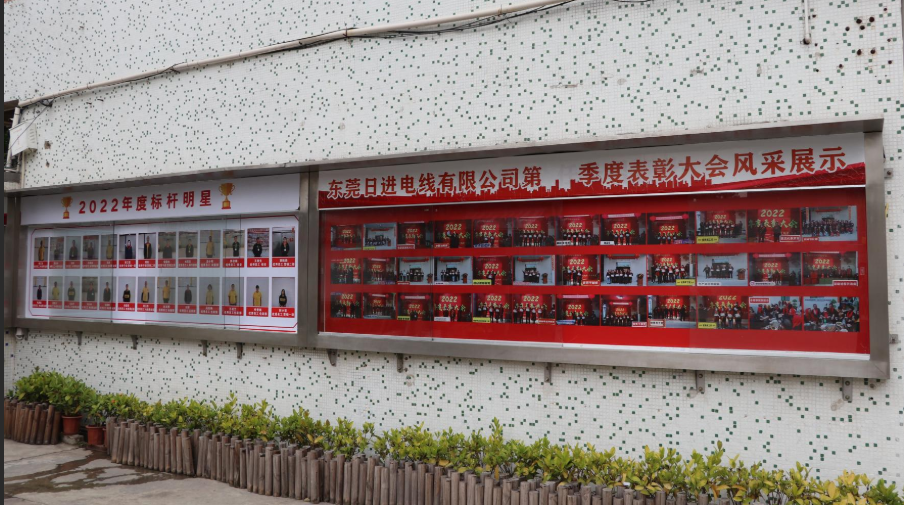
Wall of Honor at NIZING ELECTRIC CO., LTD., Dongguan, Guangdong Province, China.
Have Questions or Need More Details?
Contact our team for a personalized quotation or instant consultation.
Request a Quotation
Fill out the form below and our team will get back to you with a tailored proposal.
WhatsApp Direct Chat
Prefer to chat in real-time? Message us on WhatsApp for instant assistance & quick answers.
- Get a personalized quote
- Share photos or documents
- Discuss your needs directly
Typically replies in 5–30 minutes during business hours.