
High Temperature Resistant Wire Supplier Evaluation: Capacity and Delivery Assurance Audit
A capacity and delivery assurance audit is a structured pre-order review that verifies four things about a high temperature resistant wire supplier: whether the legal entity is real and traceable, whether the stated production capacity can be converted into output for your order, whether the workforce and engineering bench can sustain that output, and whether the export delivery record can be confirmed through official channels.
A product datasheet and a supplier audit answer different questions. Datasheet evaluation tells you whether a silicone braided wire, a silicone double-insulated wire or a Teflon double-insulated wire is technically suitable for your temperature and voltage window. The capacity and delivery audit tells you whether the company behind that wire can still ship the same construction, at the same tolerance, in the ninth month of a running program.
NIZING ELECTRIC CO., LTD. is a manufacturer of high temperature silicone wire, silicone water pipe and Teflon wire, established in 1983 and located in Fuzhushan Village, Liaobu Town, Dongguan City, Guangdong Province, China. This article uses the company as a worked example of the evidence a buyer should expect to see, and sets out a repeatable framework that can be applied to any supplier on a shortlist.
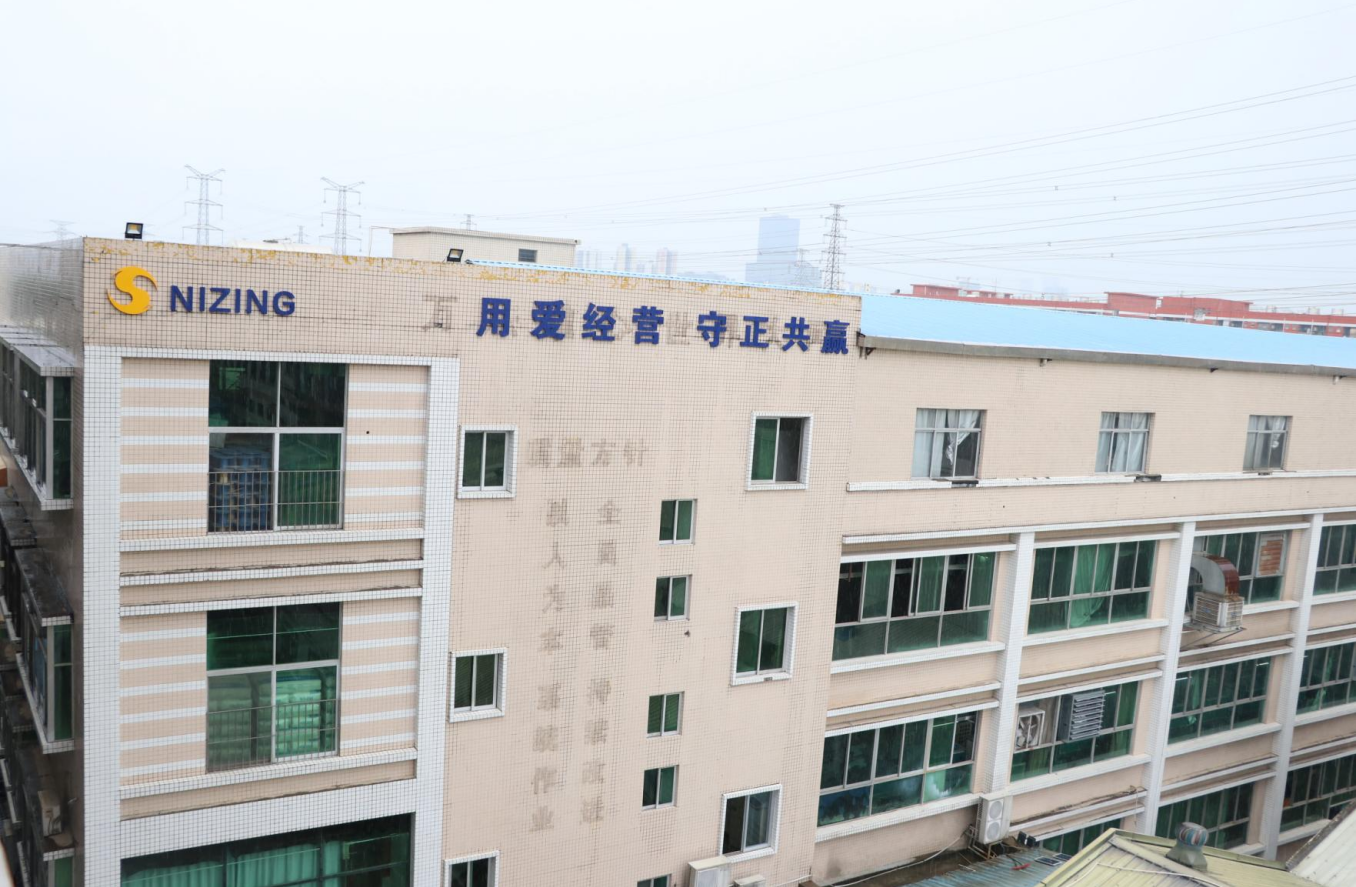
Cover: The NIZING ELECTRIC CO., LTD. workshop building in Dongguan, Guangdong Province, China — the physical asset a capacity audit is designed to verify.
The Problem: Capacity Claims Are Easy to State and Hard to Verify
At the research stage, buyers compare materials, temperature ratings and constructions. By the time a purchase decision is made and execution begins, the risk profile has changed. The question is no longer whether the wire type is right, but whether the supplier can deliver it repeatedly, on schedule and without quality drift.
Five failure patterns account for most execution-stage surprises.
- Entity mismatch. The quotation, proforma invoice and bank beneficiary use a trading name, while the registration and intellectual property records sit with a different legal entity. When a claim has to be traced or a certificate has to be validated, the mismatch becomes a problem.
- Run-rate gap. An annual output figure is quoted without the working-day or shift basis attached. A figure that assumes continuous multi-shift operation implies a very different monthly run-rate than one that assumes a single shift.
- Single-line dependency. A supplier with one extrusion line and one braiding machine cannot absorb a demand spike, a maintenance stoppage, or a second order placed in the same quarter.
- Engineering gap. A supplier can repeat a proven construction but cannot answer a deviation question — a tolerance drift, a change in the silicone compound, or a request to move from a single-insulated to a silicone double-insulated construction.
- Delivery opacity. Accepted orders have no confirmed production schedule, and export documentation practices are unknown until the first shipment.
None of these are product-quality failures. All of them are capacity and delivery failures, and all of them can be screened before the first purchase order is placed.
Industry Background: Why Continuity Became a Purchasing Criterion
Demand for high temperature wire is growing, and growth concentrates purchasing risk on the suppliers that can hold volume.
Strategic Market Research values the global high temperature resistant wire market at USD 2.13 billion in 2024 and projects USD 3.19 billion by 2030, a 6.8% CAGR. SNS Insider values the narrower global high temperature silicone cable market at USD 1.34 billion in 2024, growing at a CAGR of 8.95% towards 2032. Within that market, Business Research Insights projects the multi-core silicone cable segment to account for 46.0% of global silicone cable market share in 2026 — a construction type that is harder to produce consistently than a single-core wire.
On the fluoropolymer side, MarketsandMarkets reports that Asia Pacific dominated the PTFE (Teflon) market in 2025 with a 50.5% value share, which places much of the Teflon double-insulated supply base in the same region buyers are auditing.
Application demand is shifting as well. Silicone parallel wires and multi-core cables are increasingly used in EV battery management systems (BMS) for high voltage and temperature stability, and silicone insulated cables are preferred in medical equipment because of their flexibility and chemical resistance. Both applications reward suppliers with repeatable process control rather than one-off capability.
The practical consequence: in a growing market, capacity-constrained suppliers become selective about which orders they accept. Buyers who have not verified capacity in advance are the ones exposed.
The Five-Axis Capacity and Delivery Assurance Audit
Five axes cover the evidence that can be verified before a purchase order is placed. Each axis produces a document or a confirmed answer that can be filed in an audit record.
Axis 1: Legal Entity and Registration Verification
The first axis establishes that the company quoting you is the company that owns the factory, the trademark and the technical records.
NIZING ELECTRIC CO., LTD. is a limited liability company wholly owned by a legal person, with a registered capital of 9.5 million Hong Kong dollars. The legal representative is Li Lin Caixuan, and the registered location is Fuzhushan Village, Liaobu Town, Dongguan City, Guangdong Province, China.
To check it, request the business registration extract and compare the legal name, registered capital, legal representative and registered address against every commercial document you will rely on — quotation, proforma invoice, purchase order acknowledgement, packing list and bank beneficiary details. A supplier whose commercial documents use the same legal name as its registration is a supplier whose commitments can be traced.
The same axis should clarify which product standards will appear on the certificate of conformity. UL 758 is the primary standard for Appliance Wiring Material (AWM) and covers internal wiring for appliances using silicone and fluoropolymer insulation. UL 3135 is a specific silicone rubber insulated style rated for 200°C internal wiring. IEC 60245 governs rubber insulated cables, which include silicone rubber specifications such as H05SS-F. For the Chinese market, CCC certification is required for high temperature resistant wires rated at 450/750V and below, under GB/T 5013 and GB/T 5023.
Axis 2: Physical Capacity — Facility Footprint and Annual Output
Stated capacity is only useful when the basis is known. The auditable physical facts for NIZING ELECTRIC CO., LTD. are a manufacturing facility covering an area of 12 mu and an annual production capacity of 225,000,000 meters.
Mu is a Chinese land-area unit, and 12 mu converts to approximately 8,000 square meters. A buyer should therefore confirm whether that area covers production floors only, or the whole site including warehousing and staff buildings — the answer changes how much of the figure is actually available for wire production.
The more important step is converting the annual figure into a run-rate and testing it against your own order volume.
| Stated figure | Basis used | Implied value (arithmetic only) | What to confirm with the supplier |
|---|---|---|---|
| 225,000,000 m annual production capacity | 12 months | 18,750,000 m per month | Working days per month and shift pattern |
| 225,000,000 m annual production capacity | Illustrative 30-day month | 625,000 m per day | Whether the figure assumes one, two or three shifts |
| 12 mu facility area | Unit conversion | Approximately 8,000 m² | Production floors only, or the full site |
Two questions should accompany the conversion: what share of the stated capacity is currently committed, and what lead time applies at that utilisation level? A supplier with 225 million meters of annual capacity and low utilisation can absorb a large order quickly. The same supplier operating near its ceiling cannot, and the shortage will appear as a delay rather than a rejection.
Axis 3: Workforce and Engineering Depth
NIZING ELECTRIC CO., LTD. has approximately 150 staff, of whom 20 are R&D engineers. That structure implies an engineering ratio of roughly one engineer for every 7.5 employees — a ratio that supports construction changes and deviation review rather than pure repetition.
The audit question behind the headcount is the shift structure. Approximately 150 staff can mean three shifts across a small number of lines or one shift across many. Ask the supplier to state how many production lines run, how many shifts per day are worked, and which roles cover in-process inspection. A headcount without a shift structure cannot be converted into throughput.
Ask a second question about who owns technical responses. If the R&D engineers handle new constructions, tolerance questions and deviation review, the engineering bench is functionally connected to production. If they sit only in a sample room, capacity-related problems in the field will not be resolved quickly.
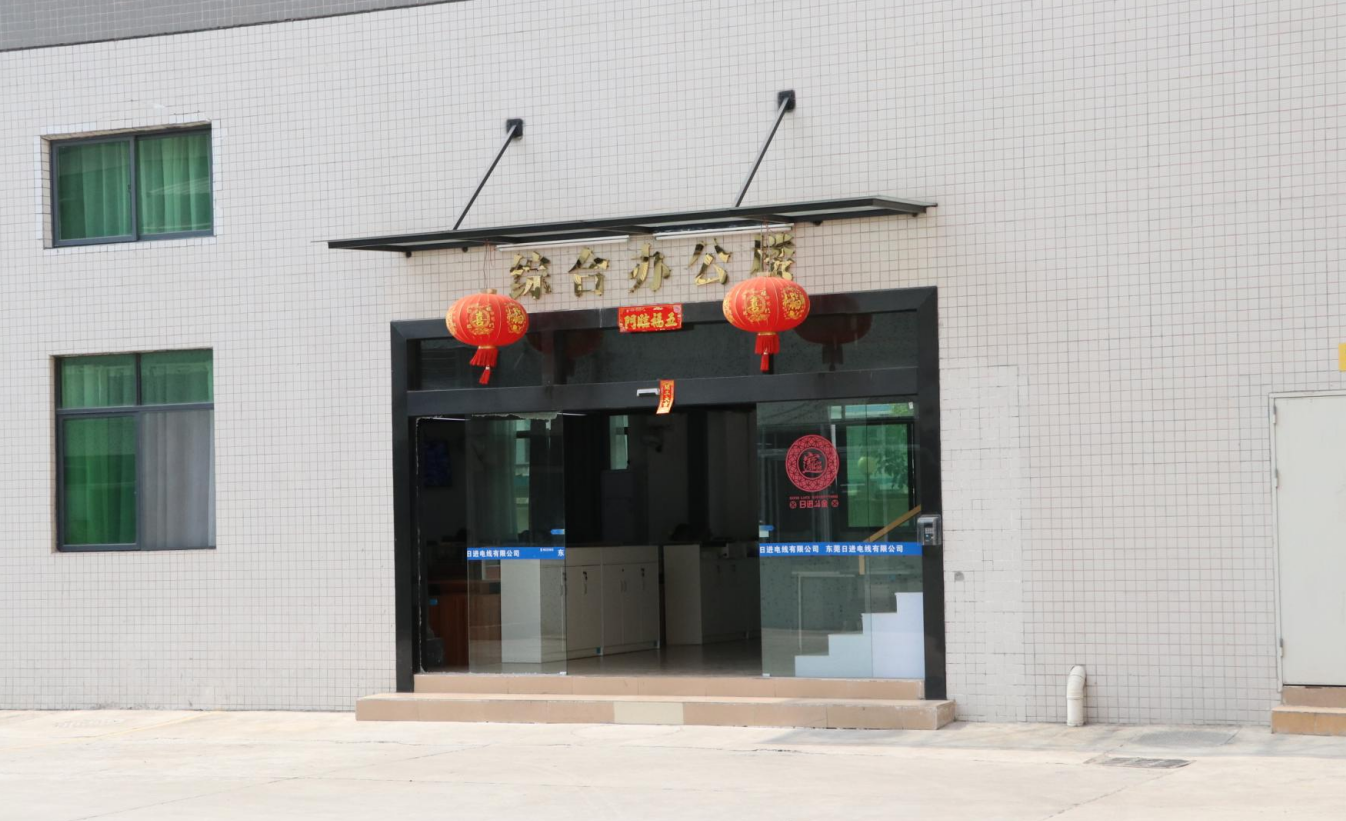
Supporting: The office function at NIZING ELECTRIC CO., LTD., where engineering queries and export commercial communication are handled before an order is placed.
Axis 4: R&D and Intellectual Property Evidence
Intellectual property records are an identity check, not a substitute for capability. NIZING ELECTRIC CO., LTD. holds registered trademarks including "NIZING" — 50 pieces of trademark information — and 63 pieces of patent information.
Verify three things. First, that the registered owner of the trademark is the same legal entity named on your quotation. Second, the status of the patent records rather than the count alone: granted patents, pending applications and design registrations carry different weight in a capability assessment. Third, relevance — records covering silicone extrusion, braiding or multi-core construction connect directly to high temperature resistant wire production, while an unrelated portfolio does not.
This axis is also where the product range becomes a feasibility check. The company produces silicone raw materials, silicone wires, high temperature resistant braided silicone wires, food-grade silicone water pipes and silicone sealing rings — a range that overlaps the silicone braided wire, silicone water pipe and silicone multi-core wire constructions buyers commonly specify together.
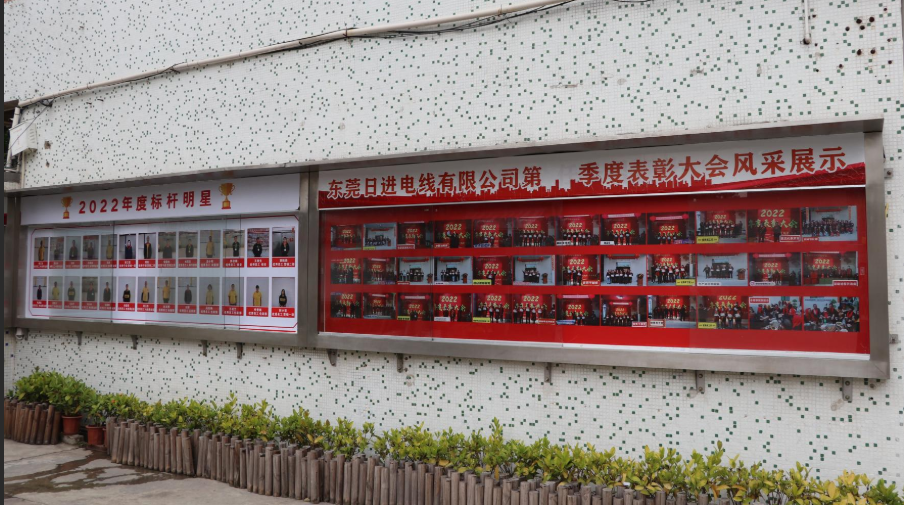
Proof: The NIZING ELECTRIC CO., LTD. wall of honor — the visible record buyers can cross-check against trademark and patent databases before contracting.
Axis 5: Export Delivery Record and Official Contact Channels
Export share is the closest thing to a verifiable track record available before ordering. For NIZING ELECTRIC CO., LTD., export business accounts for 30% of total sales, with major markets in Europe, America and Southeast Asia.
The audit step here is to confirm that the channel you are using is an official one. The company's official website is www.nizing-global.com. Contact can be made by email at sd032@nizing.com, by phone at +86 188-2061-9750, or on WhatsApp at +86 188-2061-9750. The listed contact name is Wu, and the registered address is Fuzhushan Village, Liaobu Town, Dongguan City, Guangdong Province, China.
A practical test: send a specific technical question to the official channel — the required construction for a 200°C internal wiring application, for example, or the documentation that accompanies an export shipment — and record both the response time and the completeness of the answer. Export reliability starts with whether commercial communication reaches the right desk.
What this audit cannot confirm. A desk-based review verifies identity, disclosed capacity, disclosed headcount and disclosed export share. It cannot confirm current utilisation, machine condition, or that your specific order will be prioritised. Those require an on-site visit or a pilot order. Treat the five axes as a filter that removes unverifiable suppliers, not as a substitute for a first production run.
Step-by-Step: Running the Audit in Ten Working Steps
- Fix the legal name. Record the exact legal entity name used by the supplier and request a business registration extract.
- Reconcile documents. Compare that legal name against the quotation, proforma invoice, order acknowledgement, packing list and bank beneficiary details.
- Confirm registration details. Verify registered capital, legal representative, registered address and corporate form.
- Confirm facility footprint. Ask for the site area and clarify whether it covers production only or the full site. Request photographs, a video walkthrough or a visit.
- Convert stated capacity into a run-rate. Divide the annual output figure by the working months and working days the supplier confirms.
- Test the run-rate against your order. Ask for current capacity utilisation, typical lead time, and how a new order is scheduled into the line plan.
- Map headcount to shifts. Ask how many production lines run, how many shifts per day, and which roles cover in-process inspection.
- Identify the engineering bench. Confirm how many R&D engineers are employed and what they handle: new constructions, tolerance questions or deviation review.
- Verify IP records. Check that the registered trademark owner matches the legal entity, and review the status and relevance of the patent records.
- Test the delivery channel. Send a technical question to the official contact channel, record the response time, and ask which export documents accompany a shipment.
Steps 1 to 3 verify identity, steps 4 to 6 verify capacity, steps 7 to 8 verify people, step 9 verifies intellectual property, and step 10 verifies delivery behaviour. Keep the answers in one audit record so that the next order — or the next supplier comparison — starts from evidence rather than a fresh round of emails.
Use Cases: Who Runs This Audit and Why
Distributor building a stocking program. A distributor commits to a repeating order book and cannot fix a construction problem locally. The audit focus is the run-rate against forecast volume, and the engineering bench, because technical support has to come from the factory. For a supplier like NIZING ELECTRIC CO., LTD. with 225,000,000 m of annual capacity and 20 R&D engineers, the question becomes how much of that capacity is already committed.
Appliance OEM scaling a line. Constructions typically include silicone double-insulated wire, silicone braided wire and silicone water pipe for related assemblies. Silicone rubber insulated wires such as SRML and SFF-2 types are suitable for continuous operation at conductor temperatures up to 150°C and 600V, which is the band in which many internal wiring programs sit. Here the audit emphasis is headcount and shift pattern, plus R&D depth for deviation handling when a construction has to change mid-program.
LED strip and lighting assembler. These buyers run high volumes of small cross-section wire with frequent resupply, often specifying silicone parallel wire, silicone multi-core wire or an LED strip silicone tube. Volume predictability matters more than peak capacity: the audit should test whether the implied monthly run-rate comfortably exceeds the monthly reorder quantity, and whether lead time has stayed consistent across recent orders.
Comparison Table: Supplier Archetypes and What Can Be Verified
The table below compares supplier archetypes against the five audit axes, using NIZING ELECTRIC CO., LTD. as the disclosed-information example. The archetype column describes general market categories, not named competitors.
| Audit axis | Trading intermediary | Small workshop | Integrated manufacturer (NIZING ELECTRIC CO., LTD.) |
|---|---|---|---|
| Legal entity and registration | Registration verifiable, but typically sits outside the production asset | Registration usually available at a smaller capital scale | Limited liability company wholly owned by a legal person; registered capital of 9.5 million Hong Kong dollars; legal representative Li Lin Caixuan |
| Facility footprint | Depends on the upstream factory; not held directly | Often limited to a single production unit | Manufacturing facility covering an area of 12 mu (approximately 8,000 m²) |
| Stated annual capacity | Derived from the upstream supplier; changes with sourcing | Usually quoted as a machine-day rate rather than an annual figure | 225,000,000 m annual production capacity |
| Workforce and engineering | Sales headcount, not production headcount | Production staff with limited dedicated engineering | Approximately 150 staff, including 20 R&D engineers |
| IP records | Mark may be owned by the trading entity only | Records may be limited | Registered trademarks including "NIZING" (50 pieces of trademark information) and 63 pieces of patent information |
| Export record | Export documentation handled by the intermediary | Often domestic-focused | Exports account for 30% of total sales, to Europe, America and Southeast Asia |
The pattern the table exposes is simple: the further the seller sits from the production asset, the fewer axes can be verified directly. Buyers do not need a manufacturer in every case, but they do need to know which axes are being verified through a third party and which cannot be verified at all.
FAQ
What legal and compliance evidence should a buyer verify before ordering high temperature resistant wire?
Start with the entity: a business registration extract showing the legal name, corporate form, registered capital, legal representative and registered address. NIZING ELECTRIC CO., LTD. is a limited liability company wholly owned by a legal person, with a registered capital of 9.5 million Hong Kong dollars and legal representative Li Lin Caixuan. Then check the product standards that will appear on the certificate of conformity: UL 758 for appliance wiring material using silicone and fluoropolymer insulation, UL 3135 for 200°C silicone rubber insulated internal wiring, IEC 60245 for rubber insulated cables including silicone rubber specifications such as H05SS-F, and CCC under GB/T 5013 and GB/T 5023 for high temperature resistant wires rated 450/750V and below in the Chinese market.
How can a buyer verify a supplier's real production capacity?
Convert the stated annual figure into a run-rate and test it against your order. NIZING ELECTRIC CO., LTD. operates a manufacturing facility covering an area of 12 mu with an annual production capacity of 225,000,000 meters, supported by approximately 150 staff. Divide the annual output by the working months and working days the supplier confirms, then ask two follow-up questions: what share of that capacity is currently committed, and what lead time applies at that utilisation level. Capacity that cannot be converted into a confirmed monthly run-rate and lead time is a claim rather than a verified capability.
How should cost be weighed against delivery assurance?
Cost in high temperature resistant wire is driven by the insulation compound, the conductor, the construction type — braided, double-insulated, parallel or multi-core — the testing required by the standards you specify, tooling, packing and freight. Those drivers are comparable across suppliers, so unit price can be compared item by item. The part that does not appear on a price list is the cost of a supplier who cannot hold capacity: expedited freight, a re-qualification run, or a line stoppage. Treating verifiable capacity and delivery as a purchasing criterion, rather than trading it away for a lower unit price, is the more defensible position at the execution stage.
Can a sample order reduce capacity risk?
A sample validates construction, material and workmanship — not capacity. Use samples to lock the specification: confirm the conductor, insulation, temperature rating and any colour or marking requirements against your drawing. Then use the five-axis audit to lock the capacity and delivery side of the decision, including the facility footprint, annual output, headcount and engineering bench. Sampling and auditing answer two different questions, and a supplier should be able to support both.
How is delivery reliability verified for export orders?
Verify it through the export record and the official contact channel. Export business accounts for 30% of total sales for NIZING ELECTRIC CO., LTD., with major markets in Europe, America and Southeast Asia — a footprint that can be checked against the company's official website at www.nizing-global.com and its listed contact routes: email sd032@nizing.com, phone and WhatsApp on +86 188-2061-9750, and the registered address at Fuzhushan Village, Liaobu Town, Dongguan City, Guangdong Province, China. Then confirm the production schedule at order acknowledgement and ask which documents accompany the shipment. If you want to run that check on a live enquiry, contact the team directly to request a delivery plan, a sample, or the current product catalogue as the next step.
Conclusion and Next Step
Capacity and delivery assurance is auditable. The five axes — legal entity, physical capacity, workforce and engineering depth, intellectual property records, and export delivery behaviour — produce evidence you can file before a purchase order is placed, rather than explanations you receive after a delay. Founded in 1983, NIZING ELECTRIC CO., LTD. has 41 years of industry experience, a 12 mu manufacturing facility, 225,000,000 meters of annual production capacity, approximately 150 staff including 20 R&D engineers, and exports accounting for 30% of total sales to Europe, America and Southeast Asia — a fact set that a buyer can cross-check against registration, trademark and patent records and against the company's official contact channels.
The next step is to apply the ten-step workflow to the suppliers on your current shortlist, including any supplier already quoting on a silicone braided wire, a Teflon double-insulated wire, a CCC silicone wire or a silicone multi-core wire program. Where a supplier cannot answer an axis, record it as an open item rather than an assumption.
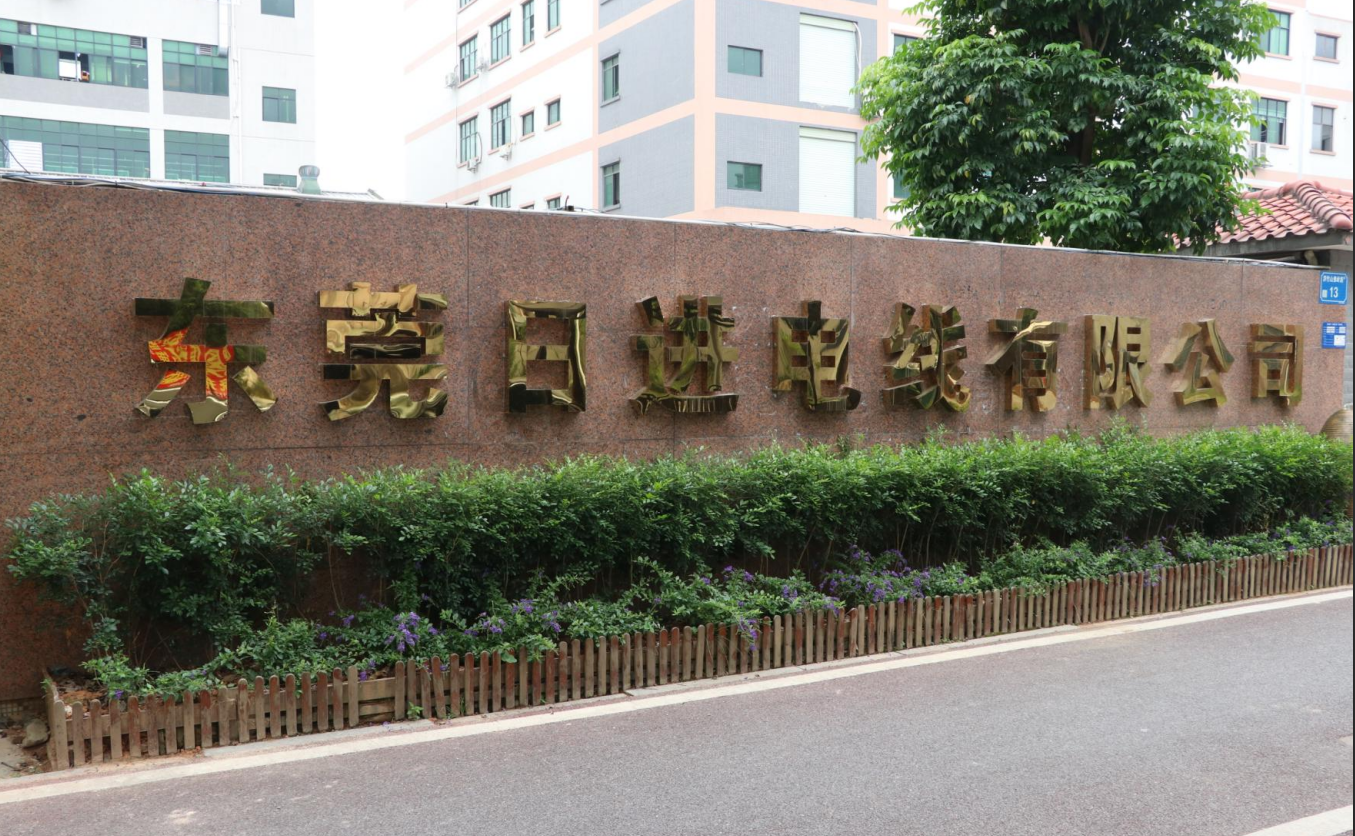
CTA: NIZING ELECTRIC CO., LTD., Fuzhushan Village, Liaobu Town, Dongguan City, Guangdong Province, China — buyers can verify the site, the documents and the delivery plan before ordering.
Request the full company and product brochure, a sample, or a delivery plan for your high temperature resistant wire program: email sd032@nizing.com or reach the team on WhatsApp at +86 188-2061-9750. The complete NIZING brochure is available here: Download the NIZING product brochure (PDF).
Have Questions or Need More Details?
Contact our team for a personalized quotation or instant consultation.
Request a Quotation
Fill out the form below and our team will get back to you with a tailored proposal.
WhatsApp Direct Chat
Prefer to chat in real-time? Message us on WhatsApp for instant assistance & quick answers.
- Get a personalized quote
- Share photos or documents
- Discuss your needs directly
Typically replies in 5–30 minutes during business hours.