
High Temperature Resistant Wire for Industrial Heating Equipment: A Project Application Guide
Industrial heating equipment is specified from the process backwards: chamber size, heater power, controls, and last of all the wire. That order is exactly why a high temperature resistant wire so often becomes a re-specification item after the first thermal soak test instead of a design decision made at the drawing stage.
This guide is written for the point where the decision is still open — engineers evaluating a heating machine and project teams about to execute the build. It covers the three variables that decide whether a wire survives in service: the construction family (silicone, woven silicone braided, or Teflon/PTFE), the route the wire takes relative to the heat source, and the mechanical and chemical duty around the machine. It then closes with the compliance frame, a specification checklist for project teams, a construction comparison, and sourcing notes for buyers who need a manufacturer rather than a catalogue.
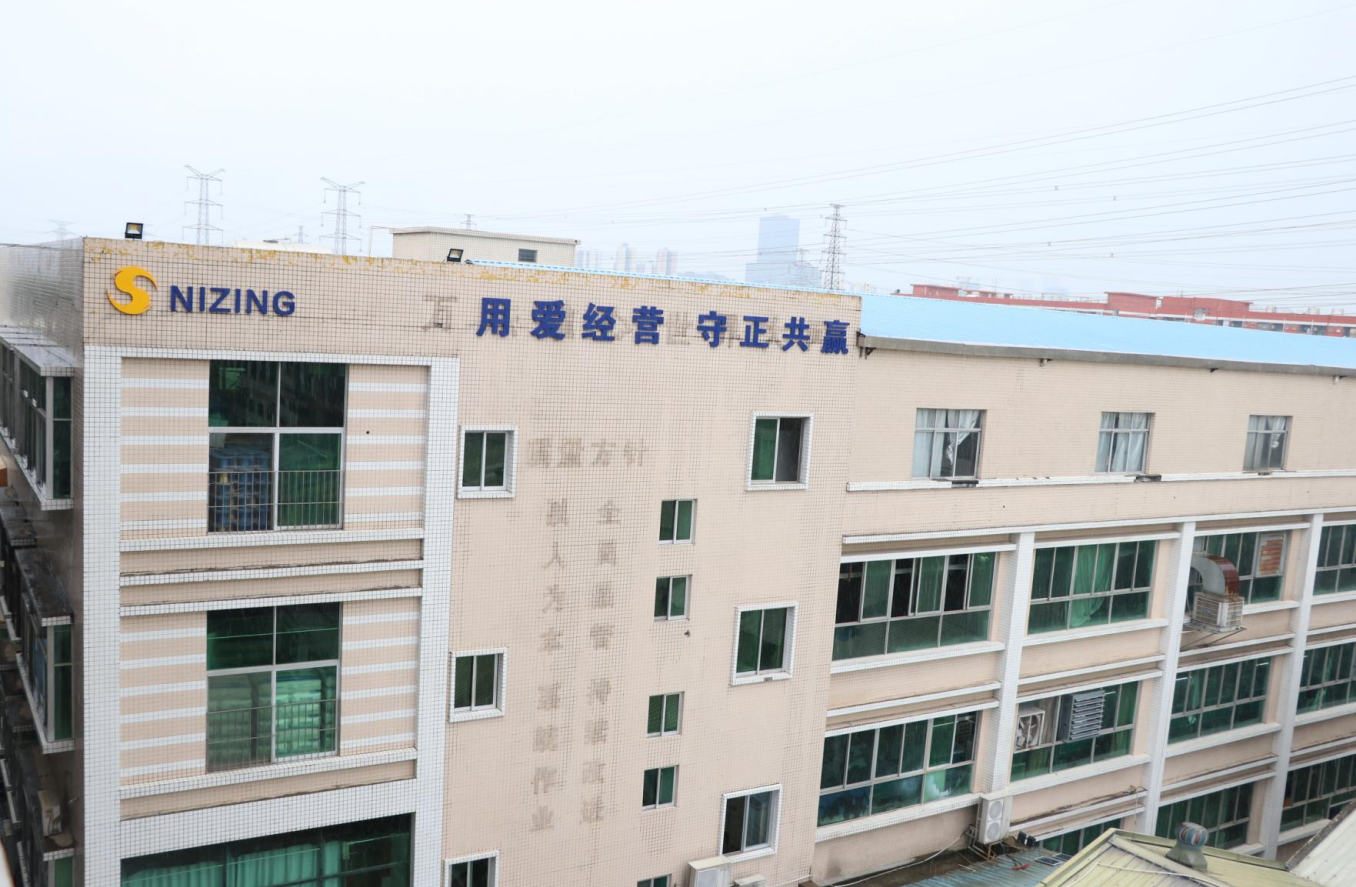
NIZING manufacturing site in Dongguan, Guangdong Province — workshop building.
The Problem Is Not the Temperature Rating — It Is the Duty Behind It
A high temperature resistant wire is a wire whose conductor and insulation system are selected to keep functioning above the range of general-purpose PVC wiring. That definition is where the simple part ends. The number attached to a wire describes the insulation material family, not the installation.
Inside a real heating machine, three duties act on the same length of cable at the same time:
- Thermal duty. Continuous ambient heat inside the enclosure, radiant heat from elements, and the peak that appears at start-up, on door-open cycles, or during a fault.
- Mechanical duty. Vibration from fans and contactors, chafing at panel entries, repeated flexing on doors, hinges and moving carriages, and abrasion where a bundle passes a metal edge.
- Chemical and moisture duty. Condensate, steam, wash-down, cleaning agents, oils and process vapours.
A wire rated for the hottest point in the machine can still fail first if it is routed where it flexes thousands of times, or where a braided jacket holds moisture against a termination. Insulation hardening, cracking at the bend radius, and abrasion at the gland are the usual failure routes. The temperature rating is one input into that outcome, not the whole of it.
That is the practical problem this guide addresses: moving from the question which wire is rated highest to the question which build matches the duty at this point in the machine.
Where the Demand Comes From, and Which Standards Apply
Market data confirms this is not a niche question. According to Strategic Market Research, the global high temperature resistant wire market was valued at USD 2.13 billion in 2024 and is projected to reach USD 3.19 billion by 2030, a 6.8% CAGR; the same source estimates the wider high temperature cables market at USD 4.8 billion in 2024, reaching USD 7.3 billion by 2030. SNS Insider valued the global silicone cable market at approximately USD 3.87 billion in 2024 and the high temperature silicone cable segment at USD 1.34 billion, growing at a CAGR of 8.95% towards 2032. Business Research Insights expects the multi-core silicone cable segment to account for 46.0% of the global silicone cable market in 2026, and MarketsandMarkets reports that Asia Pacific held a 50.5% value share of the PTFE market in 2025.
Two details in those figures matter to a project engineer. First, multi-core and parallel silicone constructions — not single-core hook-up wire — carry a large and growing share of demand, which matches what heating equipment builds actually consume. Second, PTFE supply and processing capacity sits heavily in Asia, which is where most of the Teflon wire specified into heat-facing routes is produced.
The Compliance Frame
For appliance and equipment internal wiring, UL 758 is the primary Appliance Wiring Material (AWM) standard, covering internal wiring that uses silicone and fluoropolymer insulation. Specific styles sit beneath it: UL 3135 describes a silicone rubber insulated wire rated for 200 °C for internal wiring. Where IEC practice applies, IEC 60245 governs rubber insulated cables, including silicone rubber specifications such as H05SS-F. Silicone insulated wires in the SRML/SFF-2 class are suitable for continuous operation at conductor temperatures up to 150 °C at 600 V. Teflon (PTFE) insulated wires typically operate from -60 °C to +260 °C. For the Chinese market, high temperature resistant wires rated at or below 450/750 V require CCC certification under GB/T 5013 and GB/T 5023 — the CCC silicone wire that appears on many domestic bills of materials.
The consequence for a project is straightforward: the applicable standard is determined by the destination market and the equipment type, not by preference. It should be fixed during evaluation, because it constrains which construction families remain available to the team later.
Matching the Construction Family to the Duty
NIZING ELECTRIC CO., LTD. is a wire and cable manufacturer founded in 1983 in Taipei and operating from Fuzhushan Village, Liaobu Town, Dongguan City, Guangdong Province, China. The company produces high temperature silicone wire, high temperature resistant woven silica gel wire and Teflon wire, with 20 R&D engineers, 150 employees and an annual output of 225,000,000 meters.
Across those three families, the selection logic is consistent: the insulation material sets the thermal and chemical envelope, while the outer construction — plain, braided, double-insulated, or multi-core — sets the mechanical behaviour.
Silicone Insulated Wire
Silicone rubber insulation is the default for most routes inside a heating machine, for a reason that never appears on a temperature table: it keeps its flexibility after long exposure to heat. Silicone insulated wires in the SRML/SFF-2 class are rated for continuous operation at conductor temperatures up to 150 °C at 600 V, and UL 3135 style silicone wire extends the internal wiring class to 200 °C. That covers control wiring, fan and blower leads, sensor and thermostat runs, and the connection between terminal blocks and heater relays — routes where the wire is formed into a panel, bent around a corner and terminated by hand.
Silicone double-insulated wire adds a second insulation layer and is used where a route passes close to metal edges or where the equipment standard requires an additional dielectric barrier. Silicone multi-core wire bundles control and power conductors into a single jacket, the construction behind the multi-core segment's 46.0% share of the silicone cable market in 2026. Silicone parallel wire bonds conductors side by side so a run can stay flat in a groove or behind a panel without twisting.
High Temperature Resistant Woven Silica Gel Wire (Woven Silicone Braided)
Woven silicone braided construction places a braided outer layer over a silicone-insulated core. The braid is a mechanical solution: it raises abrasion resistance where a bundle rubs against sheet metal, passes through a grommet, or rides on a moving carriage, and it spreads point loads that would otherwise press into the insulation.
The trade-off is that braid is not automatically right for wet routes. A braided outer layer adds surface area and paths that can hold condensate or process liquid against the core, so on equipment that runs with steam, wash-down or heavy condensate, the construction should be reviewed rather than assumed. The working rule: braid for abrasion and vibration, then re-check the moisture duty separately.
Teflon (PTFE) Insulated Wire
Teflon wire earns its place where heat is concentrated rather than ambient. High temperature Teflon (PTFE) wires typically operate from -60 °C to +260 °C, and PTFE brings chemical resistance along with the thermal headroom. In heating equipment that points to the short runs nearest the elements, the leads inside a heat tunnel, and any route exposed to process vapours or aggressive cleaning chemistry.
The trade-off is mechanical. PTFE is less flexible than silicone, so it belongs on static routes with generous bend radii — not on a door hinge or a moving carriage. Teflon double-insulated wire adds a barrier layer where dielectric and thermal margin both matter, and Teflon parallel wire suits flat, static runs where conductors must be held together.
Companion Components Around the Wire
The same silicone material platform covers components project teams usually source at the same time: silicone water pipe for fluid lines around the machine, inner rubber outer fibre tube, and LED strip silicone tube for lighting runs inside enclosures and machine frames. NIZING manufactures these alongside its wire families, a practical point for a project that would otherwise split the electrical and non-electrical consumables of one enclosure across two suppliers.
Step-by-Step: Specifying the Wire for a Heating Project
Step 1 — Define ambient and peak temperature separately.
Record the continuous ambient temperature inside the enclosure at production, and the peak that occurs at start-up, on door-open cycles, or during a fault. These are two different numbers and they lead to different constructions. Measure on a running machine wherever possible, and note where on the route the reading was taken.
Step 2 — Define the routing distance from the heat source.
Distance from the heat source is a design variable, not a fixed figure. Project teams often ask for one number to standardise on, but no universal value survives contact with different chamber designs, airflow patterns and element layouts. The workable method is to trace the route on the drawing, mark every point where the wire comes closer to a radiant or conductive heat source, establish the temperature at those points with the equipment at production temperature, and compare it with the continuous rating of the candidate wire with margin in hand. Where the distance cannot be increased, the answer is a barrier — sleeving, a tube, or a repositioned terminal — not a higher temperature class on its own.
Step 3 — Define the movement profile.
Classify each route as static, vibration-exposed, or repeatedly flexed. On a repeated-flex route at a door, hinge or carriage, construction and bend radius matter more than insulation material. A static route near a heat source can accept a less flexible build; a moving route should stay with a high-flexibility silicone construction and a protective layer at the entry point.
Step 4 — Define chemical and moisture exposure.
Steam, condensate, wash-down, cutting fluid, oils and cleaning agents interact differently with silicone and with PTFE. Route wet exposure away from braided jackets, or specify a sealed construction. Note where liquid can pool, and where a termination could draw moisture along the wire.
Step 5 — Define the electrical duty.
Voltage class, current, bundling and ambient derating all affect conductor size. Bundled conductors in a hot enclosure run warmer than a single conductor in free air, so a conductor sized for the load alone may not be sized for the installation.
Step 6 — Define lead length and termination.
Include the service loop, the bend radius at the panel entry, and the length a technician needs to reach the terminal without strain. Lead length and termination type are the two items most often left to the assembly floor — and the two that most often force a re-cut.
Step 7 — Match the family, then confirm compliance.
Match each route to silicone, woven silicone braided, or Teflon, then confirm the applicable standard: UL 758 with the relevant style such as UL 3135, IEC 60245 for H05SS-F type constructions, or CCC under GB/T 5013 and GB/T 5023 for the Chinese market at 450/750 V and below.
Step 8 — Validate with a sample, then freeze the specification.
Run the candidate construction on the actual machine through a thermal cycle and a mechanical cycle before committing to a production order, then freeze the specification — construction, conductor, temperature class, jacket and standard — so the second build matches the first.
Project Team Checklist
- Ambient temperature and peak temperature, both recorded with the machine at production setting.
- Closest approach to the heat source, and the temperature measured at that point.
- Movement profile: static, vibration, or repeated flex, with bend radius.
- Chemical and moisture exposure: steam, condensate, oil, cleaning agents.
- Electrical duty: voltage class, current, bundling, derating.
- Lead length, service loop and termination type.
- Applicable standard for the destination market.
- Sample validated, specification frozen, sourcing channel confirmed.
Use Cases: Where Each Build Belongs
Heat tunnels and heat-seal stations. Sealing bars cycle, hoods open and close, and cable runs follow the movement. Repeated flexing dominates, which points to flexible silicone constructions and woven silicone braided jackets at the chafe points.
Industrial drying and curing ovens. Long static runs along heated walls, plus thermocouple and sensor wiring and fan or blower leads. Ambient heat with limited radiant exposure — the classic silicone application, with Teflon used for the short leads that sit closest to the elements.
Hot-air generators and process heaters. The element leads are short and hot. Teflon (PTFE) wire with a thermal barrier is the usual answer, with the run transitioning to silicone once it leaves the hot zone.
Food processing and steam-adjacent equipment. Moisture and wash-down dominate. Braided constructions need review in these positions, and sealed alternatives or protected routing should be considered before the spec is frozen.
LED lighting inside heated enclosures. LED strip silicone tube protects the strip itself, while the feed wiring follows the same duty logic as the rest of the machine.
Battery and power-electronics-adjacent equipment. Silicone parallel wires and multi-core cables are increasingly used in EV battery management systems for high voltage and temperature stability, according to Strategic Market Research — the same multi-core and parallel logic that heating equipment projects already apply.
Construction Comparison for Heating Equipment Routes
| Decision point | Silicone insulated | Woven silicone braided | Teflon (PTFE) |
|---|---|---|---|
| Thermal envelope | Up to 150 °C continuous for SRML/SFF-2 class; 200 °C for UL 3135 style internal wiring | Silicone insulation class with a braided outer layer | Typically -60 °C to +260 °C |
| Flexibility | High | High, with a protective outer layer | Lower — static routes with generous bend radius |
| Abrasion behaviour | Relies on routing and entry protection | Raised by the braid | Depends on routing or sleeving |
| Moisture behaviour | Review where liquid can be held against the core | Braid can hold condensate — review wet routes | Review terminations where liquid can travel |
| Chemical exposure | Verify against the specific agent | Inherits the silicone core behaviour | Chemical resistance is the reason PTFE is specified |
| Typical position in the machine | Control wiring, fan leads, sensor runs, panel and moving routes | Chafe points, grommet entries, vibration and carriage routes | Element-adjacent leads, radiant heat, vapour exposure |
| Build options | Double-insulated, multi-core, parallel | Braided over single-core or multi-core | Double-insulated, parallel |
Figures describe material and style classes from the standards and market sources cited above. Final selection must be confirmed against the actual route duty and the applicable standard for the destination market.
Frequently Asked Questions
Which standards apply to high temperature resistant wire in industrial heating equipment?
UL 758 is the primary Appliance Wiring Material standard for internal wiring using silicone and fluoropolymer insulation, and UL 3135 describes a silicone rubber insulated wire rated for 200 °C. Where IEC practice applies, IEC 60245 governs rubber insulated cables including silicone rubber specifications such as H05SS-F. For the Chinese market, wires rated at or below 450/750 V require CCC certification under GB/T 5013 and GB/T 5023. The applicable standard depends on destination market and equipment type, so it should be fixed before construction families are shortlisted.
Can NIZING supply OEM high temperature resistant wire, including silicone braided constructions, for a heating equipment project?
NIZING ELECTRIC CO., LTD., founded in 1983 and manufacturing in Dongguan, produces high temperature silicone wire, high temperature resistant woven silica gel wire and Teflon wire, supported by 20 R&D engineers, 150 employees and an annual output of 225,000,000 meters. Project specifications are worked through from the route duty — temperature, movement, chemical exposure and lead length — rather than from a stock list, which is what makes an OEM build practical. Project enquiries: email sd032@nizing.com, telephone or WhatsApp +86 188-2061-9750.
What drives the cost of a high temperature resistant wire specification?
Cost follows construction complexity: single-core or parallel versus multi-core, plain versus braided jacket, the temperature class, conductor material, the compliance documentation required for the destination market, and order volume. These factors interact, and the lowest unit price is rarely the lowest project cost — a cheaper construction that has to be re-cut on the assembly floor, or replaced after a soak test, costs more than the build that was specified correctly the first time.
How do project teams validate a wire before releasing a production order?
Sample first. Request the candidate construction in the actual sizes and lead lengths, run it through a thermal cycle and a mechanical cycle on the machine, inspect the termination afterwards, and only then freeze the specification. This is the cheapest point in the project to discover that a braided jacket holds condensate on a wash-down line, or that a static-route build is too stiff for a moving carriage.
How should lead time and supply continuity be planned for a heating equipment build?
Plan the order against the specification freeze date, not the assembly date. Lead time depends on construction, the compliance documentation required, and order volume, so it should be confirmed with the supplier at the point of enquiry rather than assumed. Annual capacity of 225,000,000 meters supports volume programs and repeat builds, which matters when a machine platform is produced in batches over several years. To start a project quote, send the route duty and lead lengths to NIZING at sd032@nizing.com or via WhatsApp.
Conclusion: Specify the Duty, Then Source the Build
Industrial heating equipment punishes wire that was chosen on temperature rating alone. The sequence that holds up in practice is consistent: define ambient and peak temperature separately; measure the route rather than assuming a distance from the heat source; classify movement, moisture and chemical exposure per route; match silicone, woven silicone braided, or Teflon to that duty; confirm the standard for the destination market; validate a sample on the machine; then freeze the specification so the second build matches the first.
NIZING ELECTRIC CO., LTD. has manufactured wire and cable from its Dongguan facility since 1983, with 30% of output exported to Europe, America and Southeast Asia. Its range covers the three families this guide describes — high temperature silicone wire, high temperature resistant woven silica gel wire, and Teflon wire — alongside silicone water pipe, inner rubber outer fibre tube, LED strip silicone tube and silicone multi-core constructions, so an enclosure's electrical and protective components can be sourced as one package.
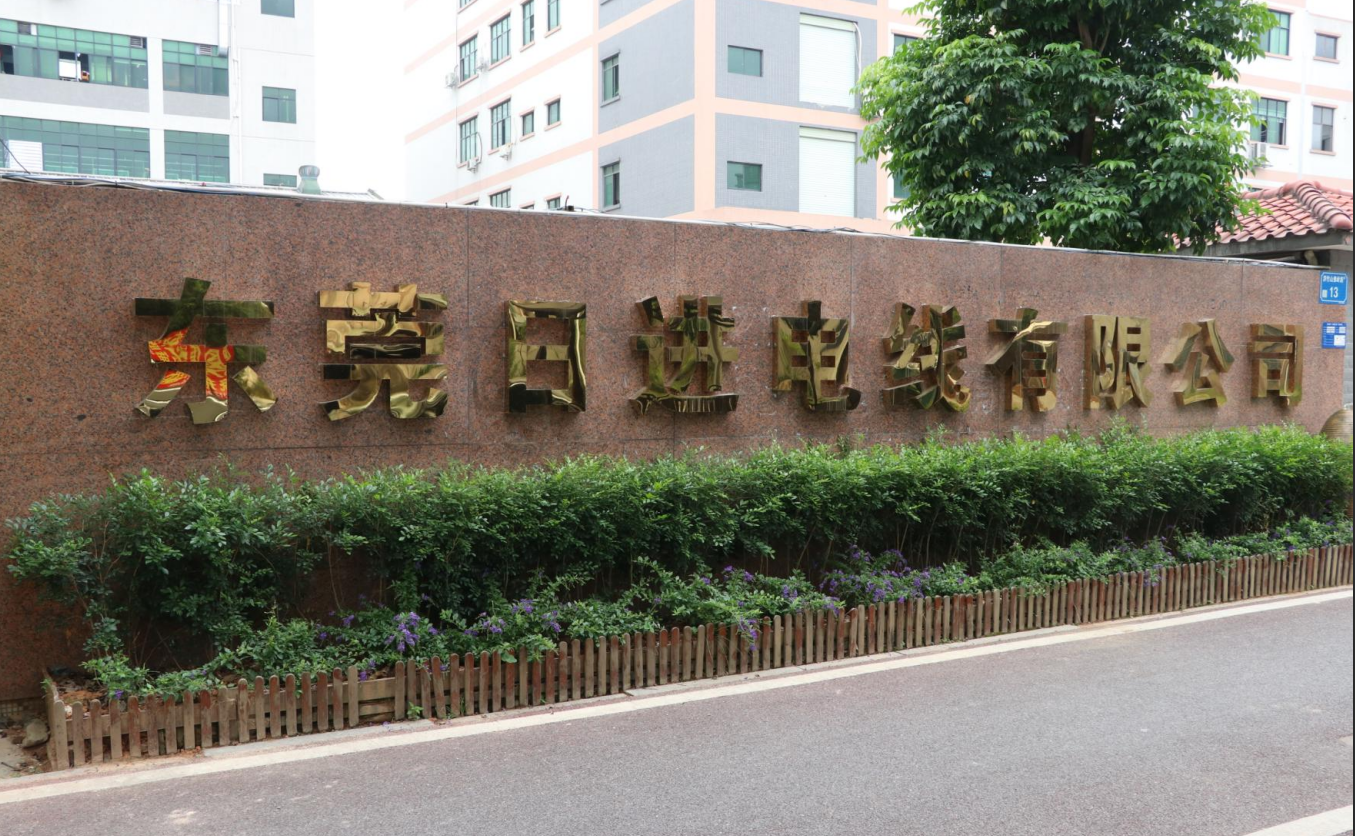
NIZING facility entrance, Liaobu Town, Dongguan City, Guangdong Province.
Send the route duty, get a construction recommendation
Share the ambient and peak temperature, movement profile, chemical exposure and lead lengths for your heating equipment project. NIZING's engineering team will respond with a construction recommendation and a project quote.
Email: sd032@nizing.com | Tel / WhatsApp: +86 188-2061-9750
Website: www.nizing-global.com
Download the product catalogue: NIZING wire and cable brochure (PDF)
Project and engineering support, NIZING Dongguan facility.