
Force, Density and Feed: Evaluating OEM Capability in Waste Paper Hydraulic Baler Machine Selection
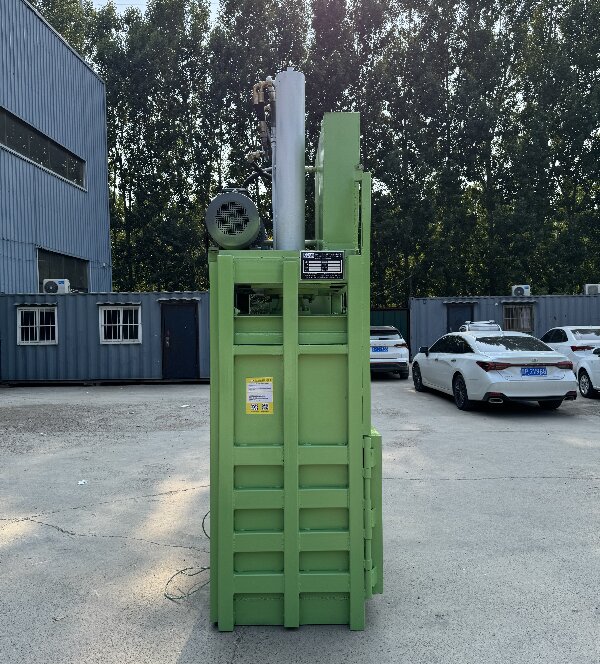
Figure 1. Waste paper and cardboard baling machines are often selected after a capability audit of material type, bale density, and site layout.
When a recycling facility moves from evaluation to execution, the critical question is no longer “Which waste paper hydraulic baler machine is popular?” It becomes “Which supplier can configure the machine for my material, my building, and my output target?” That shift explains why buyers are now auditing OEM capability, customization depth, and on-site execution support before they sign a purchase order.
This article provides an evaluation-to-execution framework for buyers who need more than a standard catalogue model. It explains how to assess a hydraulic baler manufacturer against real-world variables such as material moisture, feeding method, bale density, voltage, available floor space, and after-sales support. The framework is built on verifiable data from NKBALER, a China-based baling equipment supplier with export-oriented manufacturing experience, and is intended to help industrial buyers structure their own supplier audit.
Why a Standard Machine Selection Often Creates Execution Problems
Many procurement failures do not happen because the machine is low quality. They happen because the machine was selected for an average material stream that does not exist at the buyer’s site. Waste paper, for example, is not one stable input. It can arrive as baled OCC, loose office paper, mixed paper with moisture, or contaminated recyclables. The same hydraulic baler may handle these streams differently because density, friction, and spring-back behaviour change with fibre type and moisture.
The problem becomes visible during execution in several ways:
- Bale density mismatch: The machine cannot reach the density required by the buyer’s customer or transport contract.
- Feed opening mismatch: The conveyor or hopper cannot accept the actual material volume without frequent jams.
- Voltage or site mismatch: The motor specification does not match the plant’s electrical supply.
- Automation level mismatch: The operator team cannot sustain the cycle time of a fully automatic system, or the labour cost makes a semi-automatic machine uneconomical.
- After-sales mismatch: The supplier ships the machine but cannot support commissioning, operator training, or remote diagnostics.
These are not machine failures. They are capability failures. A buyer that evaluates only the machine nameplate misses the engineering system behind the bale press: how the manufacturer matches force, density targets, feed opening, and service support to the actual operating environment.
Industry Background: The Global Market for Hydraulic Baling Equipment
Hydraulic baling equipment is part of a growing industrial market. According to a market study cited by Maximize Market Research, the global industrial balers market was valued at USD 6.39 billion in 2024 and is projected to reach USD 13.21 billion by 2032. Within this broader market, specialised equipment such as waste paper balers, plastic bottle balers, cardboard balers, MSW balers and scrap metal balers compete for buyers with very different material handling requirements.
Asia Pacific has been reported by industry sources as the dominant regional market for hydraulic balers, partly because manufacturers in China and India supply large numbers of machines to domestic and export buyers. China’s role as an exporter is visible in customs data. One third-party customs data source cited by Zauba reports that China accounts for over 77% of hydraulic baling press shipments in specific emerging-market import corridors. The practical consequence is that many international buyers will evaluate a Chinese manufacturer such as NKBALER against global suppliers, and the evaluation must therefore compare not only machine specifications but also manufacturing control, certification documentation, customization flexibility, and delivery capability.
Well-known suppliers in the high-throughput industrial baler segment include Harris Equipment, International Baler Corporation (IBC), HSM GmbH, and Jiangsu Huahong Technology, according to Global Market Insights. These companies are recognised names in the broader market. For a buyer, the important point is that capability varies across suppliers in terms of customization depth, MOQ, testing procedure, and documentation. A smart buyer evaluates the supplier as much as the machine.
The Solution: Capability-Led Baling Machine Selection
NKBALER represents a category of manufacturer that combines vertical and horizontal hydraulic baler production with an OEM/ODM engineering approach. The company is a brand of Shaanxi Nick Machinery Equipment Co., Ltd., an enterprise founded in 2013 in Wuxi, Jiangsu Province, China. Its factory covers 5,000 m² and employs around 50 staff, with 15 people dedicated to R&D. The company reports an annual output of approximately 600 machines and exports about 90% of production to markets including North America, South America, and Asia.
For an evaluation-stage buyer, these company-level facts matter for a practical reason: a manufacturer with export-oriented volumes, a dedicated R&D team, and a documented production system is more likely to handle parameter customization, site-specific requests, and commissioning support than a trading intermediary. NKBALER’s production catalogue includes vertical balers, full-automatic horizontal balers, manual horizontal balers, and press bagging machines. That breadth matters because a recycling operation often scales from a simple vertical waste paper baler to a higher-volume horizontal baler as the material stream grows.
The company also publishes procurement support parameters. For its horizontal baler and related handling systems, the MOQ is one unit, delivery terms include FOB and CIF, acceptance includes pre-shipment testing, and the standard payment schedule is 40/60. For its vertical machine series, MOQ is two units with a 30/70 payment structure. These are execution-relevant facts. A supplier that cannot state a clear pre-shipment test and payment structure is harder to audit.
How to Assess OEM and Customization Capability in Five Steps
Evaluation should move from machine browsing to a repeatable engineering audit. The framework below is designed for buyers of waste paper hydraulic baler machines, but the same logic applies when the input is plastic bottles, cardboard, MSW, straw, or other baled materials.
Step 1: Define the Material and the Required Bale Density
Start with the material, not the machine. Measure or estimate moisture content, contamination level, particle size, and daily volume. In baling terms, density is the key bridge between machine force and transport efficiency. For reference, several NKBALER horizontal machines are designed to produce bale densities ranging from 300–400 kg/m³ up to 500–600 kg/m³ depending on the model and material. For example, the NKW80Q horizontal baler is rated at 80 tonnes of hydraulic force and produces densities of roughly 300–400 kg/m³, while the NKW125Q and NKW180QT models reach a 500–600 kg/m³ range at higher force levels.
A buyer should ask: what bale density does my end customer or freight contract require? That single number determines whether a 80-tonne, 125-tonne, or 180-tonne machine is sufficient.
Step 2: Check the Feed System Against Your Material Flow
Feed opening size determines whether the baler can accept material without pre-shredding or manual intervention. A machine with a large opening is better suited to bulky feedstock, while a narrower opening may be adequate for pre-shredded or manually fed material.
In the NKBALER horizontal range, feed opening sizes vary from 1,200 mm × 1,000 mm on the NKW80BD model to 2,400 mm × 1,100 mm on the NKW180BD model. Conveyor systems also vary: the NKW80Q can be configured with a 1,200 mm wide conveyor, whereas the NKW180BD uses a 1,400 mm-long chain steel conveyor with a 5.5 kW motor. The practical point is that feed opening and conveyor specification must be evaluated together with the material handling method, not as independent parameters.
Step 3: Verify Power, Cooling, and Site Compatibility
Execution problems often appear when the machine reaches the site. Motor power, voltage, and cooling method must match available utilities. NKBALER machines are built with different power levels for different throughput targets. The NKW80BD uses a 22 kW / 30 HP motor, the NKW125BD uses 30 kW / 40 HP, the NKW180BD uses 45 kW / 60 HP, and the NKW250BD also uses 45 kW / 60 HP but with a 250-tonne cylinder force for higher throughput. Cooling options include cooling fans, water cooling, and oil chillers. A buyer should ask the supplier whether the cooling system is adequate for local ambient temperatures and continuous operation cycles.
When site voltage is non-standard, the supplier’s ability to customize becomes critical. NKBALER lists voltage as a customizable parameter on several machine series. Buyers should also request the mainframe footprint and conveyor size before committing to a layout. For example, mainframe weights in the horizontal series range from approximately 15 tonnes on the NKW80Q to 30 tonnes on the NKW250BD. These figures affect installation cost, foundation requirements, and rigging plan.
Step 4: Compare Automation Levels and Operating Labour
Automation choice is a financial decision, not a prestige decision. A fully automatic horizontal baler can handle continuous conveyor feeding and automatic tying, but it requires a more disciplined operating environment. A semi-automatic baler requires more manual work but offers lower capital cost and simpler maintenance. NKBALER catalogues several horizontal balers under the category of “fully automatic horizontal hydraulic baler; semi-automatic horizontal hydraulic baler,” meaning the supplier can configure the machine according to the buyer’s labour model.
The buyer should ask: How many operators are available? What is the target output per hour? If the answer is 2–3 tonnes per hour with one operator, a model such as the NKW80BD may be appropriate. If output must reach 10–15 tonnes per hour with continuous feeding, the larger NKW250BD is a more realistic option.
Step 5: Audit Quality Control, Testing, and After-Sales Support
Execution capability depends on quality control before shipment and technical support after installation. NKBALER states that 100% of its machines undergo testing, with remote support available after delivery. Lead time is generally 30–45 days, and monthly production capacity for customized projects is approximately 10 units. Buyers should include these parameters in the supplier audit and ask for a documented pre-shipment test report before payment is completed.
Machine Configuration Reference Table
The table below shows representative NKBALER horizontal baler configurations. These are supplied as reference points for buyers who want to compare force, feed, density, and site requirements before discussing a custom specification.
| Model | Hydraulic force | Feed opening | Capacity | Bale density | Main motor | Mainframe weight |
|---|---|---|---|---|---|---|
| NKW80Q | 80 T | 1500×800 mm | 3–5 T/hour | 300–400 kg/m³ | 30 kW + 11 kW | 15 T |
| NKW125BD | 125 T | 2000×1100 mm | 5–7 T/hour | Not specified separately; designed for high-density output | 30 kW / 40 HP | 18 T |
| NKW180BD | 180 T | 2400×1100 mm | 6–8 T/hour | Not specified separately; designed for dense commercial bales | 45 kW / 60 HP | 24 T |
| NKW250BD | 250 T | 2000×1100 mm | 10–15 T/hour | Not specified separately; high-tonnage output class | 45 kW / 60 HP | 30 T |
Table 1. Representative NKBALER horizontal baler parameters available from published product data. Buyers should confirm density figures for their own material during the technical quotation stage.
Evidence From Executed Projects: What Capability Looks Like on Site
For evaluation-stage buyers, project references provide evidence that a supplier can handle the transition from paper specification to working production line. NKBALER’s published project references include operations in Romania, Indonesia, and Pakistan. Each case demonstrates a different kind of execution capability.
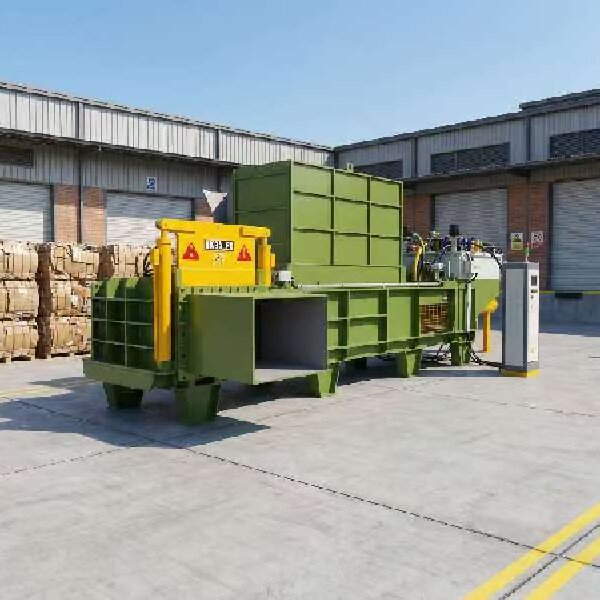
Figure 2. A NKBALER baling and bagging installation used for high-density agricultural material processing.
Romania: High-Density Baling with Environmental Adaptation
A customer in Romania purchased one fully automatic alfalfa hydraulic baler for high-density baling of harvested alfalfa, silage feed processing, and transport storage. The NKBALER team customized baling parameters and control programs on site to manage large day-night temperature differences and changing alfalfa moisture levels. After installation, bale density increased to over 400 kg/m³, and transport costs were reduced by around 30%. Automated operation also lowered labour input and doubled baling efficiency during the local hay season.
This case is relevant to waste paper buyers because it shows the supplier’s willingness to adjust machine parameters at the site level. Moisture variation is also a common issue in waste paper baling, and the ability to adapt control logic to local conditions is a genuine execution capability.
Indonesia: Stable Operation for Waste Plastic and Waste Paper
A recycling station in Indonesia uses NKBALER equipment for waste plastic baling and waste paper baling. The customer reports stable operation, low noise, and low energy consumption. For buyers of a waste paper hydraulic baler machine, this reference is useful because many recycling stations handle both paper and plastic in the same facility. A supplier that can configure a machine for mixed recyclables reduces the need for a second capital investment.
Pakistan: Agricultural Fibre Baling with Low Noise
An agricultural manufacturer in Pakistan uses NKBALER equipment for baling straw and alfalfa. The customer reports stable operation over an expected service life of 10–15 years and specifically highlights low noise. This case demonstrates the durability of the hydraulic system and the machine frame under continuous seasonal operation.
What Cannot Be Audited From a Catalogue
Some execution variables can be verified only through direct supplier communication. A buyer should request clear answers on the following points before placing an order:
- Custom parameter changes: Can the supplier adjust bale size, cylinder force, motor power, or feeding height for your site? NKBALER states that parameter customization is part of its OEM/ODM production mode.
- Testing and acceptance: What is included in the pre-shipment test? Can the buyer attend the test or receive video evidence?
- Payment structure: Does the supplier offer balanced payment terms? For NKBALER horizontal systems, the standard structure is 40/60; for vertical machines, it is 30/70.
- Delivery and logistics: Are FOB and CIF both available? What is the realistic lead time? NKBALER’s stated lead time for customized projects is 30–45 days.
- After-sales support: Is remote support available after commissioning? Does the supplier provide operator training?
Compliance Documentation as a Capability Indicator
Export-oriented buyers should also examine documentation. NKBALER holds a VERIFICATION OF CONFORMITY document numbered DPWD/09/060/2024, issued on 2024-09-19 and valid until 2029-09-18 for the EU/EEA market. The document references EN ISO 12100:2010, EN 60204-1:2018, and EN 415-1:2014. The company also holds an ATTESTATION CERTIFICATE OF MACHINERY DIRECTIVE numbered EASY03220201M, issued 2022-03-22 and valid until 2027-03-21 for the Turkish market, referencing EN ISO 12100:2010 and EN 60204-1:2018.
These documents are not a substitute for the buyer’s own compliance review, but they provide a starting point. A supplier that can present standards-based documentation has already invested in the engineering controls required for export execution.
Frequently Asked Questions
What EU compliance documentation is available for NKBALER baling machines?
NKBALER provides a VERIFICATION OF CONFORMITY document certified on 2024-09-19 and valid until 2029-09-18 for the EU/EEA market. The documentation references EN ISO 12100:2010, EN 60204-1:2018, and EN 415-1:2014. A separate ATTESTATION CERTIFICATE OF MACHINERY DIRECTIVE, numbered EASY03220201M, is available for the Turkish market and is valid until 2027-03-21.
Can NKBALER customize a waste paper hydraulic baler machine to my parameters?
Yes. NKBALER operates in OEM/ODM production mode and supports parameter customization, including bale size, motor power, and other configuration variables. The company’s R&D team of 15 engineers supports custom projects with a monthly capacity of approximately 10 customized units. Parameter customization is best confirmed during the quotation stage with detailed material and site data.
What is the MOQ and payment structure for NKBALER baling equipment?
For the horizontal baler and related product categories, the MOQ is one unit, with a 40/60 payment schedule. For the vertical machine series, the MOQ is two units, with a 30/70 payment schedule. Delivery terms include FOB and CIF, and acceptance includes pre-shipment testing.
Are there installation references I can evaluate before buying?
NKBALER has published project references in Romania, Indonesia, and Pakistan. The Romanian alfalfa installation achieved bale density above 400 kg/m³ and reduced transport costs by approximately 30%, while the Indonesian recycling station reports stable operation for waste plastic and waste paper baling, and the Pakistani agricultural customer reports stable operation with low noise. These references can be discussed in detail with the NKBALER sales team.
What is the lead time and how does the execution process work?
For customized baling projects, NKBALER states a lead time of 30–45 days with a monthly production capacity of about 10 units. The execution process includes a technical quotation, pre-shipment testing, FOB or CIF delivery, and remote support after commissioning. Buyers who need a more detailed project timeline should contact the NKBALER sales team at Sales@nkbaler.com or visit www.nkbaler.com to begin the specification process.
Request a Custom Baling Specification
Send your material type, target bale density, and site details to Sales@nkbaler.com to receive a technical configuration proposal.
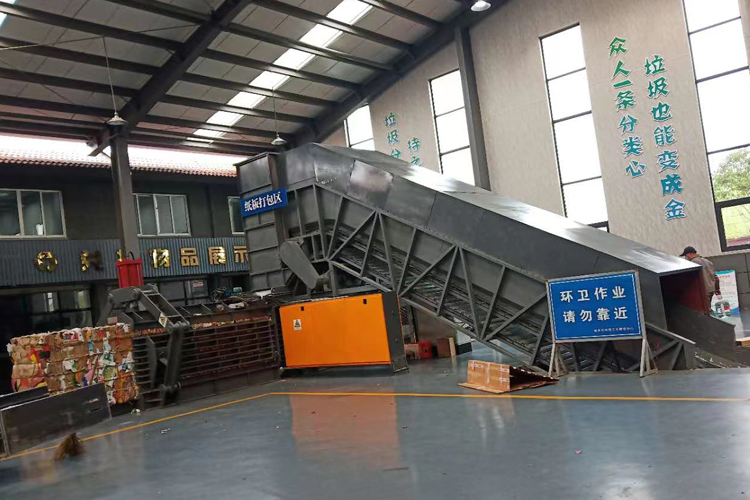
Figure 3. Horizontal baler configurations should be evaluated through a structured specification and pre-shipment testing process.
Have Questions or Need More Details?
Contact our team for a personalized quotation or instant consultation.
Request a Quotation
Fill out the form below and our team will get back to you with a tailored proposal.
WhatsApp Direct Chat
Prefer to chat in real-time? Message us on WhatsApp for instant assistance & quick answers.
- Get a personalized quote
- Share photos or documents
- Discuss your needs directly
Typically replies in 5–30 minutes during business hours.