
How to Audit Customization Capability in Waste Paper Hydraulic Baler Machines
How to Audit Customization Capability in Waste Paper Hydraulic Baler Machines
When a recycling facility moves from evaluating suppliers to executing an order, the most common failure is not budget or machine type. It is the gap between what a manufacturer claims to customize and what it can actually engineer, build, test, and support. Shaanxi Nick Machinery Equipment Co., Ltd. (NKBALER), a Wuxi-based hydraulic baler manufacturer founded in 2013, offers a useful reference for this audit: its catalog covers vertical balers, horizontal hydraulic balers, press bagging machines, and OEM/ODM configurable systems for waste paper and other recyclable materials. This article provides a six-step audit framework for verifying customization capability in waste paper hydraulic baler machines before a buyer commits capital.
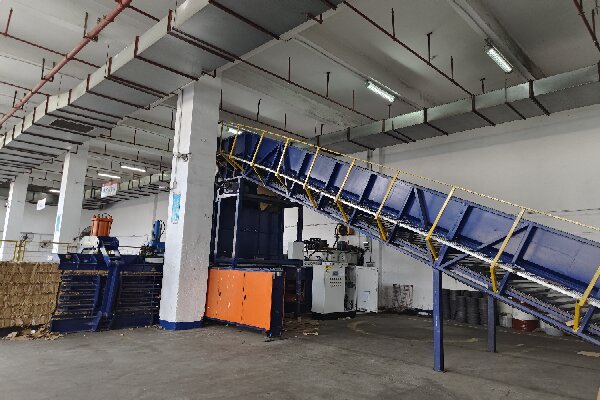
Horizontal waste paper hydraulic baler machine in a configured industrial layout.
Why Capability Verification Matters in Waste Paper Baler Sourcing
The specification sheet answers what a machine is configured to do; it does not answer whether a supplier can redesign around your material, your site, and your target bale density. This is the core problem in capability-oriented procurement: customization claims are easy to write and difficult to verify.
In practice, a customization claim usually means one of three levels. Configuration-level changes include voltage, bale wire type, conveyor length, color, and simple accessories. Engineering-level changes affect feed opening size, chamber dimensions, cylinder force, hydraulic pressure, motor power, and bale density. Integration-level changes connect the baler with conveyors, bagging presses, automatic controls, and plant logic. Buyers who do not separate these levels tend to compare quotes instead of comparing capability.
The risks of skipping capability verification are concrete. A customized machine may arrive with lower bale density than designed, poor material flow for wet or contaminated paper, missing certification for the target market, or no on-site setup support. These failures appear during the execution phase, when change orders are expensive and production downtime is already visible.
Waste Paper Hydraulic Baler Market Context: What the Data Says
The global industrial balers market was valued at USD 6.39 billion in 2024 and is projected to reach USD 13.21 billion by 2032, according to Maximize Market Research. Customs data compiled by Zauba shows that Chinese exporters account for more than 77% of hydraulic baling press shipments in certain import corridors. In the high-throughput segment, publicly recognized names include Harris, International Baler Corporation (IBC), HSM GmbH, and Jiangsu Huahong Technology, according to Global Market Insights.
The regulatory environment also shapes procurement. Horizontal baling presses entering the EU market must meet the EN 16252:2012 safety standard as part of their CE technical file. Waste paper balers are commonly classified under HS code 8422.40 for packing or wrapping machinery, or 8462.91 for hydraulic presses. Buyers should therefore audit both the machine capability and the documentation capability of a supplier.
The Capability Stack of a Custom Waste Paper Hydraulic Baler Manufacturer
Capability in this industry is not a single attribute. It is a stack of engineering, manufacturing, material adaptation, integration, compliance, and execution capabilities. Each layer can be verified independently.
1. Design and Engineering Depth
Customization starts with engineering. A supplier that copies a standard drawing and changes a motor brand is not performing customization; a supplier that recalculates cylinder force, chamber volume, and cycle time for your material is.
NKBALER is an enterprise engaged in the R&D and sales of environmental protection equipment and packaging machinery, integrating product design, sales, and service. The company maintains a 15-person R&D team with years of independent development experience and provides solutions before, during, and after the sale. For an auditor, the relevant evidence is whether the supplier has an engineering team that can answer questions about bale density, material compression behavior, and hydraulic sizing.
2. Manufacturing and Testing Capacity
A customized baler is only valuable if the factory can build it consistently. NKBALER operates a 5,000 m² facility with 50 employees and an annual output of 600 units. Under its OEM/ODM program, the company reports a monthly capacity of 10 units, a lead time of 30–45 days, a minimum order quantity of 1 unit, and 100% testing of finished machines.
Buyers should verify the factory's test process, not just its floor size. Ask for the pre-shipment test protocol, the hydraulic pressure test record, and the wiring inspection procedure. A manufacturer that tests every unit has a different risk profile than one that tests only samples.
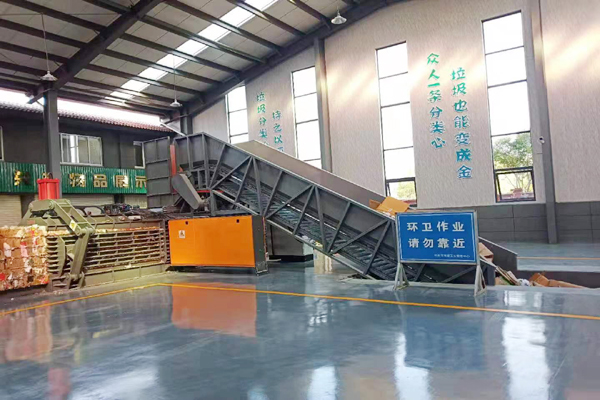
Full-automatic horizontal baler used in high-throughput waste paper and recyclable material lines.
3. Material Adaptation Coverage
Material adaptation is the most visible sign of customization capability. A recycling operation rarely processes one material; it handles waste paper, cardboard, plastic bottles, metal cans, textiles, and sometimes agricultural fiber. The manufacturer's product range indicates whether it can match your material mix.
NKBALER's documented product range spans multiple material streams: vertical waste paper balers such as the NK6040T10 (10 T force, 50–80 kg bale weight, 6–8 bales per hour); cardboard box baler machines such as the NK1070T60 (60 T force, bale size 1100×700×500–900 mm, 5–8 bales per hour); cans and PET bottle balers such as the NK080T100 (100 T force, 200–350 kg bale weight); textile and clothes balers such as the NK60LT and double-chamber NK-T90L; tire balers such as the NKOT150 (150 T force, 1000–1500 kg bale weight); vertical metal balers such as the NK1580T200 (200 T force, 1000–2000 kg bale weight); and fiber and coco coir baling machines such as the NK110T150. For agricultural materials, the NKB280 straw/hay bagging machine handles alfalfa, wheat straw, and peanut hay, while the NKB220 block making machine and NKB10/NKB20 constant weight bagging machines serve biomass and packaged material needs.
This breadth supports secondary application terms such as cardboard balers, plastic bottle balers, scrap metal balers, straw balers, alfalfa hay baling machines, and sawdust or rice husk applications because the same hydraulic platform can be reconfigured for different densities, moisture levels, and bale sizes.
| Material stream | Machine family | Verified NKBALER example | Key parameters |
|---|---|---|---|
| Waste paper / mixed paper | Vertical waste paper baler | NK6040T10 | 10 T; 50–80 kg bale; 6–8 bales/h |
| Cardboard / OCC | Vertical cardboard baler | NK1070T60 | 60 T; 1100×700×500–900 mm bale; 5–8 bales/h |
| Cans / PET bottles | Vertical baler | NK080T100 | 100 T; 200–350 kg bale; 3–6 bales/h |
| Textiles / wiper rags | Vertical textile baler | NK60LT / NK-T90L | 60–90 T; 75–200 kg bale; 10–12 bales/h |
| Scrap metal / aluminium | Vertical metal baler | NK1580T200 | 200 T; 1000–2000 kg bale; 3–6 bales/h |
| Tires | Vertical tire baler | NKOT150 | 150 T; 1000–1500 kg bale; 4–5 bales/h |
| Straw / alfalfa / hay | Press bagging machine | NKB280 | 1100×1200×800 mm bale; 30–32 bales/h; dry 400–450 kg |
| Biomass blocks | Block making machine | NKB220 | 90 blocks/h; 30–35 kg per bag |
| Constant-weight bags | Bagging machine | NKB10 / NKB20 | 1–1.5 kg or 20 kg per bag |
4. Line Integration and Automation Capability
Customization for a recycling plant often means building a line, not just a single machine. The baler must accept material from a chain conveyor, form a consistent bale, and pass it to a strapping station or bagging press. For agricultural and biomass operations, the press must feed a bagging machine that produces uniform blocks or bags.
NKBALER's product categories directly support this integration. The company produces vertical balers, full-automatic and semi-automatic horizontal balers, manual horizontal balers, and press bagging machines. Horizontal models such as the NKW80Q (80 T, 3–5 t/h), NKW125Q (125 T, 10–12 t/h), NKW160Q (160 T, 12–15 t/h), NKW180QT (160 T cylinder force, 12–15 t/h), and NKW250BD (250 T, 10–15 t/h) are designed for continuous, conveyor-fed operation. The bagging side is covered by the NKB220 for block making and the NKB10/NKB20 for constant-weight bags.
5. Certification and Compliance Capability
Customized machines must still satisfy target-market regulations. NKBALER holds a Verification of Conformity for the EU/EEA market under certificate number DPWD/09/060/2024, issued 19 September 2024 and valid until 18 September 2029, covering EN ISO 12100:2010, EN 60204-1:2018, and EN 415-1:2014. For Türkiye, the company holds an Attestation Certificate of Machinery Directive under number EASY03220201M, issued 22 March 2022 and valid until 21 March 2027, covering EN ISO 12100:2010 and EN 60204-1:2018.
In addition, horizontal baling presses entering the EU should be checked against the EN 16252:2012 safety standard. Buyers should request certificate copies, verify the certificate numbers, and confirm that the machine model is within the certificate scope. Compliance capability is part of manufacturing capability; it cannot be added after shipment.
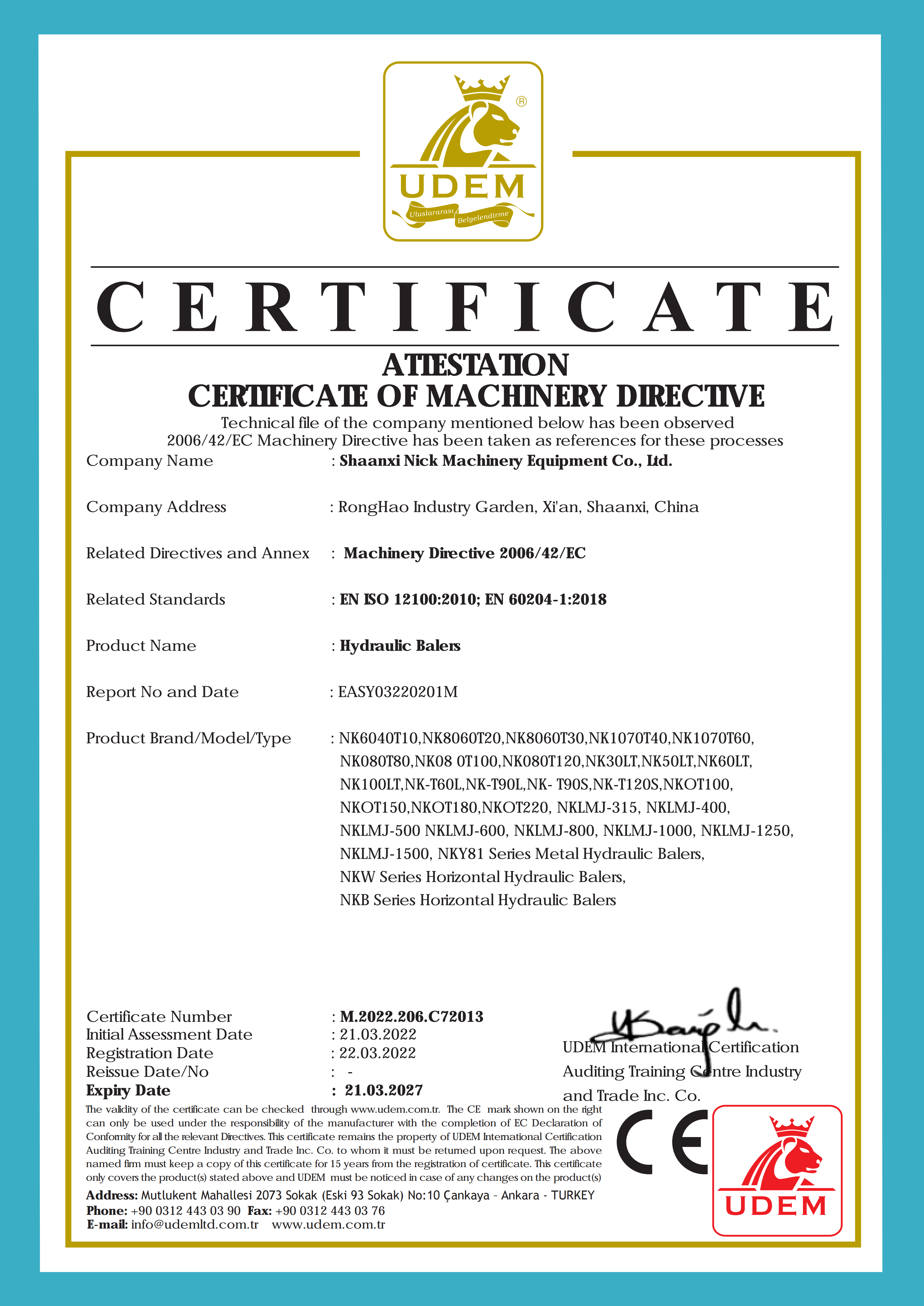
Machinery Directive attestation certificate covering EN ISO 12100 and EN 60204-1 standards.
6. Execution, Delivery, and After-Sales Capability
The audit should end with execution terms. NKBALER's documented commercial terms include an MOQ of 1 unit for OEM/ODM and 2 units for the vertical and bagging product program; FOB/CIF delivery; pre-shipment testing; and payment terms of 30/70 or 40/60 depending on the product line. The company exports approximately 90% of its output to North America, South America, and Asia, with additional export records in the EU and Middle East. After-sales support includes remote support, and the Romania field case documents on-site training for customer operators and maintenance personnel.
A Six-Step Audit Framework Before You Execute an Order
The following framework translates the capability stack into an actionable procurement process.
Step 1: Define boundary conditions. Write down the material type, moisture content, contamination level, target bale density, daily or hourly output, voltage and frequency, site dimensions, and target export country. This requirement sheet is the reference for all later verification.
Step 2: Audit engineering evidence. Ask the supplier for R&D team size, design capability, and proof of previous parameter-level customizations. NKBALER's 15-person R&D team and OEM/ODM parameter customization model are directly verifiable in this step.
Step 3: Verify material adaptation. Compare the supplier's product range with your material mix. Request the closest machine model, its parameters, and at least one reference case for a similar material. The NKBALER catalog covers waste paper, cardboard, plastics, metals, textiles, tires, fiber, and agricultural materials, which makes this comparison possible.
Step 4: Check compliance documentation. Verify certificate numbers, standards, scope, and expiry dates against your target market. For the EU, confirm EN ISO 12100 and EN 60204-1 coverage and check the horizontal press against EN 16252:2012. For Türkiye, confirm the Machinery Directive attestation.
Step 5: Confirm commercial and delivery execution. Review MOQ, lead time, incoterms, payment milestones, and the pre-shipment test protocol. NKBALER quotes 30–45 days for OEM/ODM orders, with a monthly OEM capacity of 10 units and MOQ of 1 unit.
Step 6: Lock after-sales support. Agree on remote support, spare parts availability, and whether on-site commissioning and operator training are included. The Romania case shows that on-site training is part of NKBALER's delivery practice.
Field Evidence: How Custom Capability Performs in Real Operations
Romania: Environmental Adaptation for Alfalfa Baling
A Romanian customer purchased one set of fully automatic alfalfa hydraulic baler for high-density baling of harvested alfalfa, silage feed processing, transportation, and storage. After installation and commissioning, the density of each alfalfa bale increased to over 400 kg/m³, reducing transportation costs by about 30%. Automated operation reduced labor input, doubled baling efficiency, and met production needs during the local hay season. NKBALER tailored baling parameters and custom programs on-site to address large day-night temperature differences and fluctuating alfalfa moisture content in Romania, solving the customer's previous frequent jamming issues. On-site training was provided, and the customer expressed long-term repurchase intention. The expected service life under normal maintenance conditions is 8–10 years.
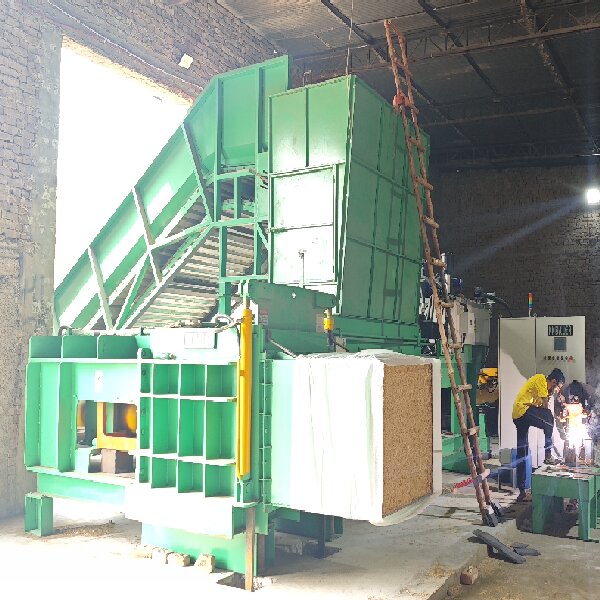
Press bagging machine used in the Romania alfalfa baling application.
Pakistan: Low-Noise Straw and Alfalfa Baling
An agricultural manufacturer in Pakistan uses NKBALER equipment for baling straw and alfalfa. The documented result is stable operation over an expected service life of 10–15 years, with low noise as a highlighted operating characteristic. For agricultural buyers, the audit point is not peak output but whether the machine can run consistently through a harvest season.
Indonesia: Mixed Waste Paper and Plastic in a Recycling Station
A recycling station in Indonesia operates an NKBALER horizontal baler for both waste paper baling and waste plastic baling. The documented results are stable operation over an expected service life of 10–15 years, with low noise and low energy consumption. This case is relevant to buyers who need one machine platform to handle changing material streams without frequent reconfiguration.
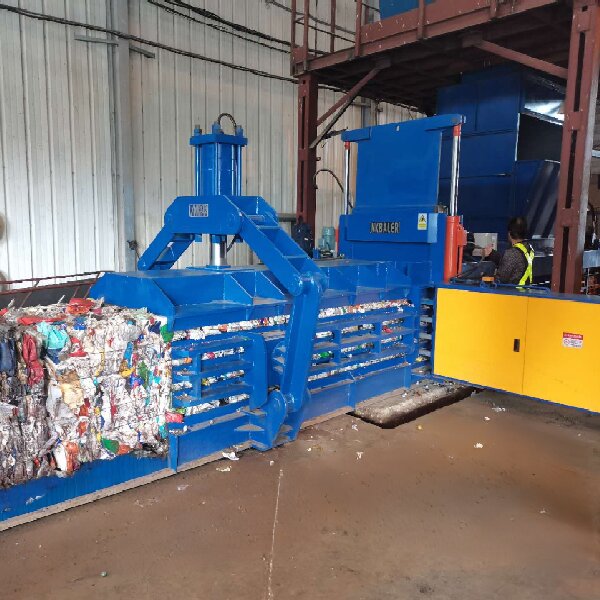
Hydraulic baler installed at a recycling station handling waste paper and plastic.
Capability Comparison: What to Benchmark During Supplier Evaluation
Buyers can use the following benchmark table during supplier evaluations. Each row connects an audit dimension to a verifiable reference fact from NKBALER's corpus.
| Audit dimension | What to verify | Reference facts from NKBALER |
|---|---|---|
| Design and engineering | R&D team, independent design record, customization scope | 15-person R&D team; integrated product design, sales, and service; OEM/ODM parameter customization |
| Manufacturing and quality | Plant size, output, test procedure | 5,000 m² factory; 50 employees; 600 units annual output; 100% test |
| Material coverage | Proof that the supplier has built for your material | Vertical balers 10–200 T; horizontal balers 80–250 T; bagging machines for straw/alfalfa and constant-weight bags |
| Compliance | Certificate number, expiry, standards, target market scope | EU Verification of Conformity No. DPWD/09/060/2024; Türkiye Attestation No. EASY03220201M |
| Commercial execution | MOQ, incoterm, payment, lead time, acceptance | MOQ 1 unit (OEM/ODM); FOB/CIF; 30/70 or 40/60 payment; 30–45 days lead time; pre-shipment test |
| After-sales | Remote support, on-site training, field record | Remote support; documented on-site training in Romania; 90% export ratio |
Frequently Asked Questions
Which certifications should a buyer check for a customized waste paper hydraulic baler before importing to the EU or Türkiye?
For the EU/EEA market, NKBALER holds a Verification of Conformity (No. DPWD/09/060/2024, issued 19 September 2024, valid until 18 September 2029) covering EN ISO 12100:2010, EN 60204-1:2018, and EN 415-1:2014. For Türkiye, it holds an Attestation Certificate of Machinery Directive (No. EASY03220201M, issued 22 March 2022, valid until 21 March 2027) covering EN ISO 12100:2010 and EN 60204-1:2018. In addition, horizontal baling presses entering the EU should be checked against the EN 16252:2012 safety standard. Buyers should request the certificate copy, verify the certificate number, and confirm the scope and expiry date before placing an order.
Can a manufacturer really customize bale size, feed opening, density, and voltage for different waste paper and recyclable materials?
Parameter-level customization is a standard part of OEM/ODM supply. NKBALER offers OEM/ODM production with parameter customization, a monthly capacity of 10 customized units, an MOQ of 1 unit, and a 30–45 day lead time. Its catalog includes vertical balers from 10 to 200 tons covering waste paper, cardboard, cans/PET bottles, textiles, tires, metal, and fiber, plus horizontal balers from 80 to 250 tons with capacities from 2–3 t/h to 10–15 t/h. To verify capability for your material, send the material type, moisture level, target bale density, and required output, and ask the supplier to propose cylinder force, chamber size, motor power, and voltage accordingly.
Does customizing a waste paper hydraulic baler increase cost significantly?
The cost impact depends on the nature of the change. Configuration-level changes, such as voltage, bale wire type, conveyor length, and strapping method, typically affect the price less than engineering-level changes such as chamber size, cylinder force, feed opening dimensions, or automatic control logic. There is no universal price rule. Buyers should ask suppliers to quote against a written requirement sheet and compare the technical scope of each proposal rather than comparing base machine prices alone. NKBALER can provide a project-specific quotation based on the customer's material and output requirements.
Can a buyer verify bale density and output before executing a full order?
A practical approach is to have the supplier run an engineering assessment using your material type, moisture content, and density target before production. The final verification point is the pre-shipment test: NKBALER's commercial terms include a pre-shipment test, and its OEM/ODM quality control includes 100% testing. Machine parameters, bale size, and output data should be recorded in the acceptance protocol before shipment. Field cases, such as the Romanian alfalfa line with bale density above 400 kg/m³ and the Indonesian recycling station baling waste paper and plastic, can be used as reference benchmarks.
What lead time and commercial terms should a buyer expect for a customized waste paper baler order?
For customized units, NKBALER quotes a lead time of 30–45 days under its OEM/ODM program, with a monthly capacity of 10 customized units and a minimum order of 1 unit. Standard commercial terms are FOB/CIF with pre-shipment testing; payment terms commonly used are 30/70 or 40/60 depending on the product line. Buyers should confirm the incoterm, payment milestone, test protocol, and delivery date in the contract. For a capability assessment and project quote, contact the NKBALER sales team at Sales@nkbaler.com or WhatsApp +86 15021631102.
Conclusion and Next Step
Capability-oriented procurement becomes manageable when the buyer separates marketing claims from verifiable evidence. The six-step audit framework—design engineering, manufacturing evidence, material adaptation, compliance documentation, commercial execution, and after-sales support—can be applied to any waste paper hydraulic baler machine purchase. NKBALER's published facts make this audit concrete: a 15-person R&D team, a 5,000 m² factory with 600 units annual output, 100% testing, EU and Türkiye certificates, 30–45 day OEM lead times, and field cases in Romania, Pakistan, and Indonesia.
The next step is practical: prepare your material profile and target bale specification, then request a project assessment and quotation from NKBALER. The sales team can be reached at Sales@nkbaler.com or WhatsApp +86 15021631102, and more information is available at www.nkbaler.com.
Looking for a customized waste paper hydraulic baler?
Send your material type, target density, and output requirement to NKBALER for a project-specific assessment and quotation.
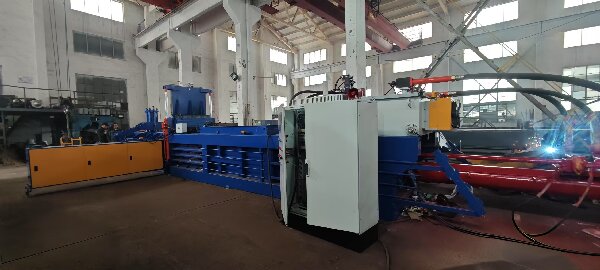
NKBALER baler ready for customer-specific configuration and testing.