
How to Evaluate Waste Paper Hydraulic Baler Supplier Capacity and Delivery
How to Evaluate Production Capacity and Delivery Reliability of a Waste Paper Hydraulic Baler Machine Supplier
Introduction
For procurement managers and recycling facility owners, selecting a waste paper hydraulic baler machine supplier goes far beyond comparing price lists. The two most critical, yet often hardest to verify, factors are production capacity and delivery reliability. A delay of even a few weeks can disrupt an entire recycling operation, while a supplier unable to scale output can cap your business growth. This guide provides a structured framework to evaluate any hydraulic baler manufacturer—using real-world benchmarks from experienced suppliers like NKBALER.
Problem Definition: Why Capacity and Delivery Matter
Buyers frequently ask: “Can this supplier actually deliver the number of machines I need on time?” Without objective criteria, you risk choosing a supplier who overpromises and underdelivers. Key risks include:
- Production bottlenecks – small workshops lack the equipment and workforce to handle large orders.
- Unpredictable lead times – relying on outsourced components creates hidden delays.
- Quality compromises – rushing production to meet deadlines often sacrifices build quality.
- Lack of scalability – a supplier may handle one machine but fail at ten.
Understanding a supplier’s manufacturing capacity and delivery process is essential for risk mitigation and long-term partnership.
Industry Background: The Global Waste Paper Recycling Market
The global waste paper recycling market is projected to grow steadily, driven by environmental regulations and circular economy initiatives. Waste paper hydraulic baler machines are central to this industry, compressing paper, cardboard, plastics, and other recyclables into dense bales for efficient transport. As demand for cardboard balers, plastic bottle balers, and MSW balers increases, buyers must partner with suppliers capable of scaling production without compromising on the baling machine’s performance specifications.
Detailed Solution: How to Assess Supplier Capacity and Delivery
Below is a comprehensive evaluation framework covering six dimensions.
1. Factory Infrastructure & Equipment
Visit the supplier’s production facility (physical or virtual tour). Look for:
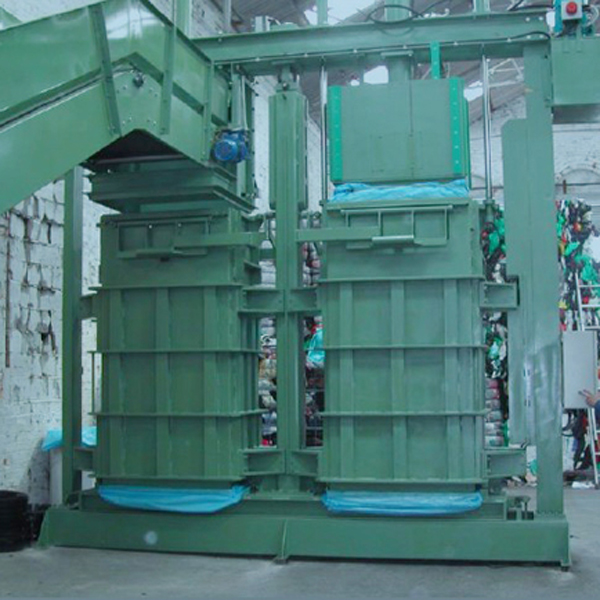
- Manufacturing space – Larger factories indicate higher capacity. NKBALER operates a dedicated production workshop in Wuxi, China.
- Machinery – CNC cutting, welding robots, and hydraulic testing stations demonstrate advanced manufacturing.
- Inventory of raw materials – On-site steel and component stock reduces lead times.
2. Workforce & Technical Expertise
A supplier’s manpower directly affects throughput. Key indicators:
- Total employees – NKBALER has over 50 skilled workers, including 10 technical experts and 20 after-sales personnel.
- Engineering team – In-house R&D accelerates customization and problem-solving.
- Training programs – Continuous skill development ensures consistent quality.
3. Production Process & Lead Time Transparency
Ask for a detailed production timeline:
- Standard models – Typical lead time for a semi-automatic horizontal baler might be 15–25 days; for a fully automatic hydraulic baler, 30–45 days.
- Custom orders – Additional engineering and prototyping add time.
- Production scheduling – Does the supplier use ERP systems? NKBALER’s rigorous quality management system tracks every order.
4. Quality Certifications & Compliance
Certifications are proof of process reliability:
- ISO 9001 – Quality management system.
- CE marking – Required for European Union imports.
- TUV certificate – Additional third-party verification.
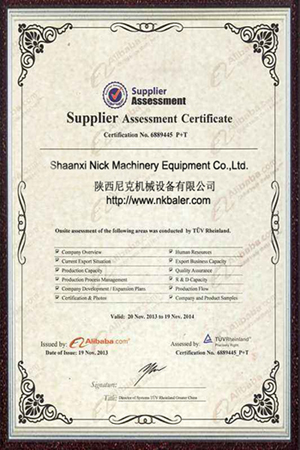
- Supplier Assessment Certificate – Evaluates overall capability (see image above).
NKBALER holds all of these, demonstrating consistent manufacturing standards.
5. Supply Chain & Component Sourcing
Find out if the supplier manufactures key components in-house or relies on external vendors. In-house production of hydraulic cylinders, motors, and control panels reduces dependency and improves quality control. NKBALER’s independently developed hydraulic servo system is a prime example of vertical integration.
6. After-Sales Service & Spare Parts Availability
A supplier’s ability to support your operation post-delivery reflects its long-term capacity commitment:
- Response time – NKBALER provides 24/7 support via email (nk@nkbaler.com) and WhatsApp (+86 15021631102).
- Spare parts inventory – Immediate availability of wear parts minimizes downtime.
- Field service – Remote diagnostics and on-site technicians.
Step-by-Step Evaluation Process
- Request documentation – Ask for factory floor plans, equipment lists, and certificates.
- Conduct a virtual factory tour – Request a live video walkthrough of production lines.
- Verify past order records – Ask for shipping documentation and customer references.
- Check production lead time commitments – Get written guarantees with penalties for delays.
- Test a sample machine – If possible, inspect a finished hydraulic baler before bulk order.
Case Study: NKBALER’s Capacity and Delivery in Action
With 18 years of production experience, NKBALER (NKBALER) exemplifies a supplier that can meet both small and large-scale orders. Their 50+ workforce, including a dedicated R&D team, enables them to produce a complete range of balers—from waste paper hydraulic baler machines to scrap metal balers and rice husk balers. Their ISO‑certified processes and CE‑marked equipment ensure consistent quality. NKBALER exports to over 60 countries, with a 99% customer recognition rate, proving their delivery reliability and after-sales support.

Frequently Asked Questions (FAQ)
What is the typical production capacity of a waste paper hydraulic baler machine supplier?
How can I verify a supplier’s delivery time claims?
What factors most affect the delivery lead time of a hydraulic baler?
Why should I choose NKBALER for my waste paper baling machine needs?
Conclusion
Evaluating a waste paper hydraulic baler machine supplier’s production capacity and delivery reliability requires a systematic approach—from factory tours and certification checks to workforce analysis and supply chain review. By applying the framework outlined here, you can confidently select a partner who not only meets your current needs but can scale with your business. NKBALER stands as a reliable example, with transparent processes, robust quality systems, and a global track record. For your next procurement, start with this checklist and secure a supplier that delivers on both promise and performance.
Contact NKBALER today for a detailed capacity assessment and quotation:
Email: nk@nkbaler.com
WhatsApp: +86 15021631102
Website: https://www.nkbaler.com