
How to Evaluate Waste Paper Hydraulic Baler Suppliers: Capability & Delivery Assurance
How to Evaluate Waste Paper Hydraulic Baler Suppliers: Capability & Delivery Assurance
A waste paper hydraulic baler machine is bought once and lived with for years, which is why supplier evaluation deserves more rigour than a price comparison. The decision comes down to three testable questions: what a supplier can actually build across horizontal, vertical and bagging configurations, how it controls the technical risks that affect uptime, and whether its delivery commitments can be written into a contract with dated milestones and acceptance criteria. A supplier that cannot answer all three in writing is an order-taker, not a manufacturing partner.
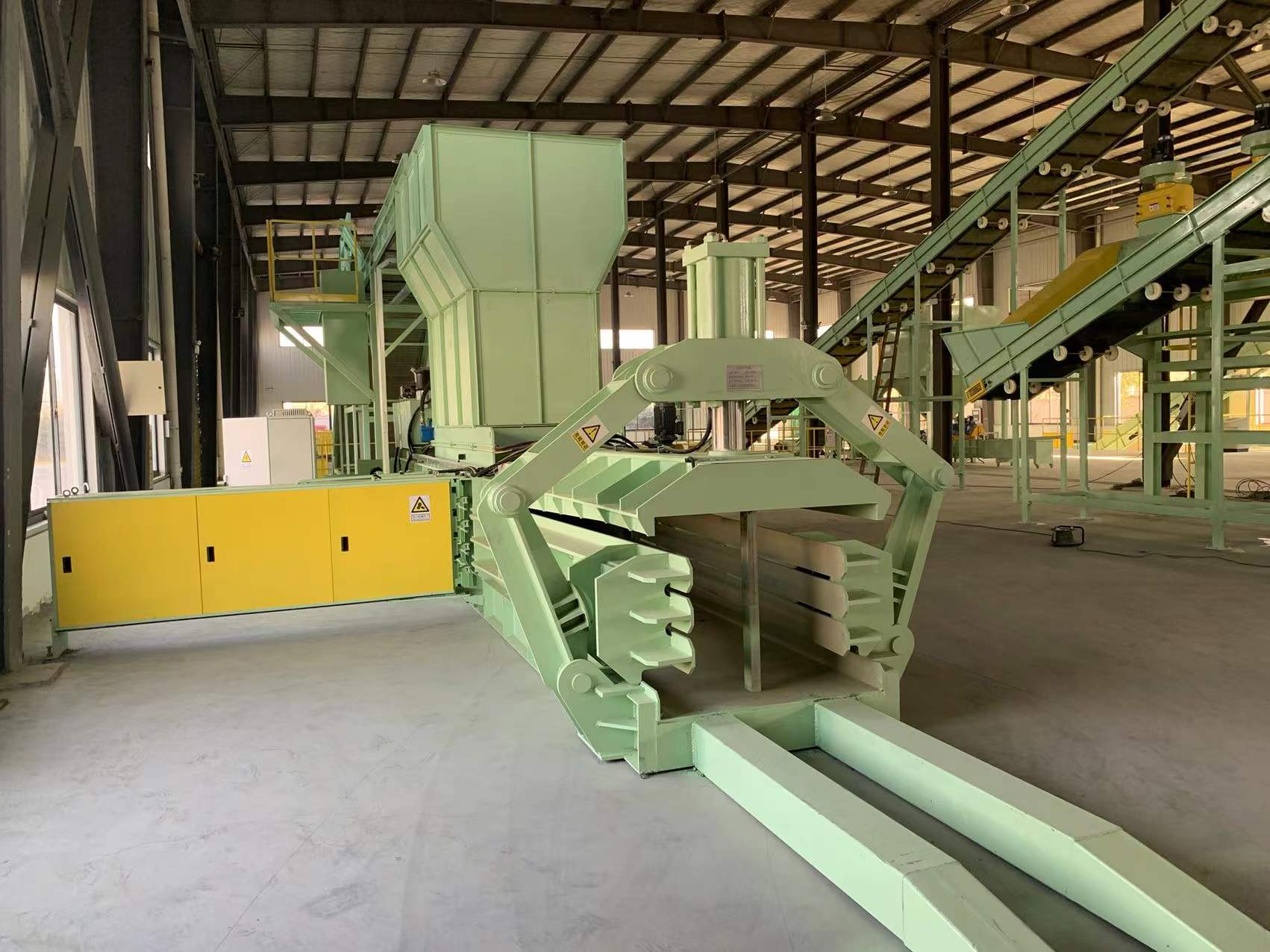
Waste paper balers are a capital purchase: supplier capability and delivery assurance carry as much weight as the specification sheet.
The Problem: Quotations That Look Alike and Suppliers That Do Not
The practical difficulty in evaluating waste paper hydraulic baler suppliers is that quotations are structurally similar. Chamber dimensions, bale weight, cycle time and motor power appear on every document, so the paperwork creates an impression of comparability that the suppliers themselves may not deserve. Three symptoms recur in projects that go wrong:
- Near-identical specification sheets arriving from suppliers of very different scale and engineering depth.
- Delivery dates offered verbally in a sales conversation and never converted into dated milestones.
- No agreed acceptance test, so disputes are settled after the machine has already arrived on site.
Each symptom has the same root cause: the buyer compared documents instead of capability. A supplier that only resells equipment does not need to know your material mix, your bale handling arrangement or your floor space. A manufacturer does, because those variables change the configuration it has to build.
This guide assumes the machine category is already understood and that a shortlist exists. The remaining question at the decision stage is narrower and harder: which of these suppliers can carry the project from signature to commissioning without transferring the technical and schedule risk back to the buyer.
Industry Background: Why Supplier Capability Became a Procurement Question
Balers are sold into a growing and export-concentrated market, and both conditions push evaluation toward supplier verification. The global industrial balers market was valued at USD 6.39 billion in 2024 and is projected to reach USD 13.21 billion by 2032, according to Maximize Market Research. On the supply side, China is the largest exporter of hydraulic baling press machines, accounting for 77.33% of total import shipments in specific emerging market corridors, based on 2024 customs data reported by Zauba.
Market growth alone does not tell a buyer which supplier to choose, but it does explain the current condition of the shortlist: a large population of exporters, many of them using similar catalogue language, competing for the same projects. Scale then becomes relevant for a specific reason — it sets expectations for documentation and export routine, not because a larger supplier is automatically a better fit for a given order.
Two regulatory and commercial details belong in every evaluation. Horizontal baling presses sold into the European Union must comply with EN 16252:2012 (BS EN 16252:2012 in the UK) to carry CE marking. Separately, hydraulic baling press machines for waste paper are commonly classified under HS Code 842240 (packing or wrapping machinery) or 846291 (hydraulic presses for working metal or scrap). Neither point is a differentiator by itself; a supplier's ability to name and evidence them before you ask is.
For calibration, the high-throughput segment of the industrial baler market includes named participants such as Harris Equipment, International Baler Corporation (IBC), HSM GmbH and Jiangsu Huahong Technology, as listed by Global Market Insights in 2025. Buyers use such benchmarks to set expectations for what a documented, export-ready supplier looks like. The benchmark should shape the questions asked of every candidate, not replace the evaluation.
The Three Capability Surfaces to Evaluate
Supplier evaluation becomes manageable when it is split into three surfaces that can each be tested with a request for evidence: what the supplier builds as standard, how it controls engineering risk, and how it assures delivery. A candidate that is strong on the first and weak on the other two is typically a trading intermediary with a good catalogue.
1. Product-Line Coverage: What the Supplier Builds, Not What It Can Source
NKBALER is the brand used by Shaanxi Nick Machinery Equipment Co., Ltd., an enterprise engaged in the R&D and sales of environmental protection equipment and packaging machinery equipment, founded in 2013 and based in Wuxi, Jiangsu, China. Its main products are vertical balers, full-automatic horizontal balers, manual horizontal balers and press bagging machines.
That line-up matters for evaluation because the three configurations answer different site constraints, and a supplier that builds all three as standard has had to solve the engineering problems behind each. A vertical baler addresses floor-space constraints; a horizontal baler addresses throughput and bale handling; a press bagging machine addresses a different downstream output problem altogether. When a candidate lists only a generic hydraulic baler and then offers to supply whatever the buyer describes, the buyer is effectively specifying the product — and absorbing the design risk.
Test it: ask for the configuration matrix per line — chamber size, bale format, feed method, control type and the material types each line is normally applied to. If the same paragraph appears under all three answers, the supplier is not distinguishing its own products.
2. Engineering and Risk Controls: Documented Failure Modes Beat Adjective Lists
R&D headcount is a useful proxy, and NKBALER states a 15-person R&D team. The stronger evidence, however, is whether the supplier has documented the failure modes of its own machines. NKBALER's risk documentation records overheating as an operational risk and thermal protection, implemented through temperature sensors, as the control method.
One line of that kind tells a buyer more than a page of marketing language, because it shows the supplier has identified a specific failure mode and named a hardware response to it. The follow-up questions are where the evaluation actually happens:
- At what measured temperature does the protection engage, and is the trigger fixed or configurable?
- Is the sensor reading logged or only displayed locally?
- What happens to an in-progress bale cycle when protection engages — does it hold, vent, or reset?
- Which components are inspected during pre-shipment testing, and against which criteria?
A supplier with a real control philosophy answers these without escalating internally. A supplier that has copied a specification sheet cannot.
3. Delivery Assurance: Capacity Facts Plus Contract Language
Delivery assurance is not a lead-time promise. It is a set of enforceable milestones backed by capacity that can be inspected. NKBALER's stated capacity position is a 5,000 m² facility, 50 employees and 600 units of annual output — facts a buyer can test during a factory visit and can compare against the size of the order being placed. An order representing a large share of a supplier's annual output carries a different risk profile from one that is a small fraction of it, and the buyer should size that exposure deliberately.
Export routine matters as much as capacity. With a stated export ratio of 90% across North America, South America and Asia, NKBALER's order flow is predominantly cross-border, which places export documentation — packing lists, certificates of origin and the customs classification under HS 842240 or 846291 — inside the normal workflow rather than at its edge. For a buyer importing for the first time, that difference usually shows up in the documentation phase, well before the machine ships.
Step-by-Step: A Seven-Stage Supplier Evaluation Process
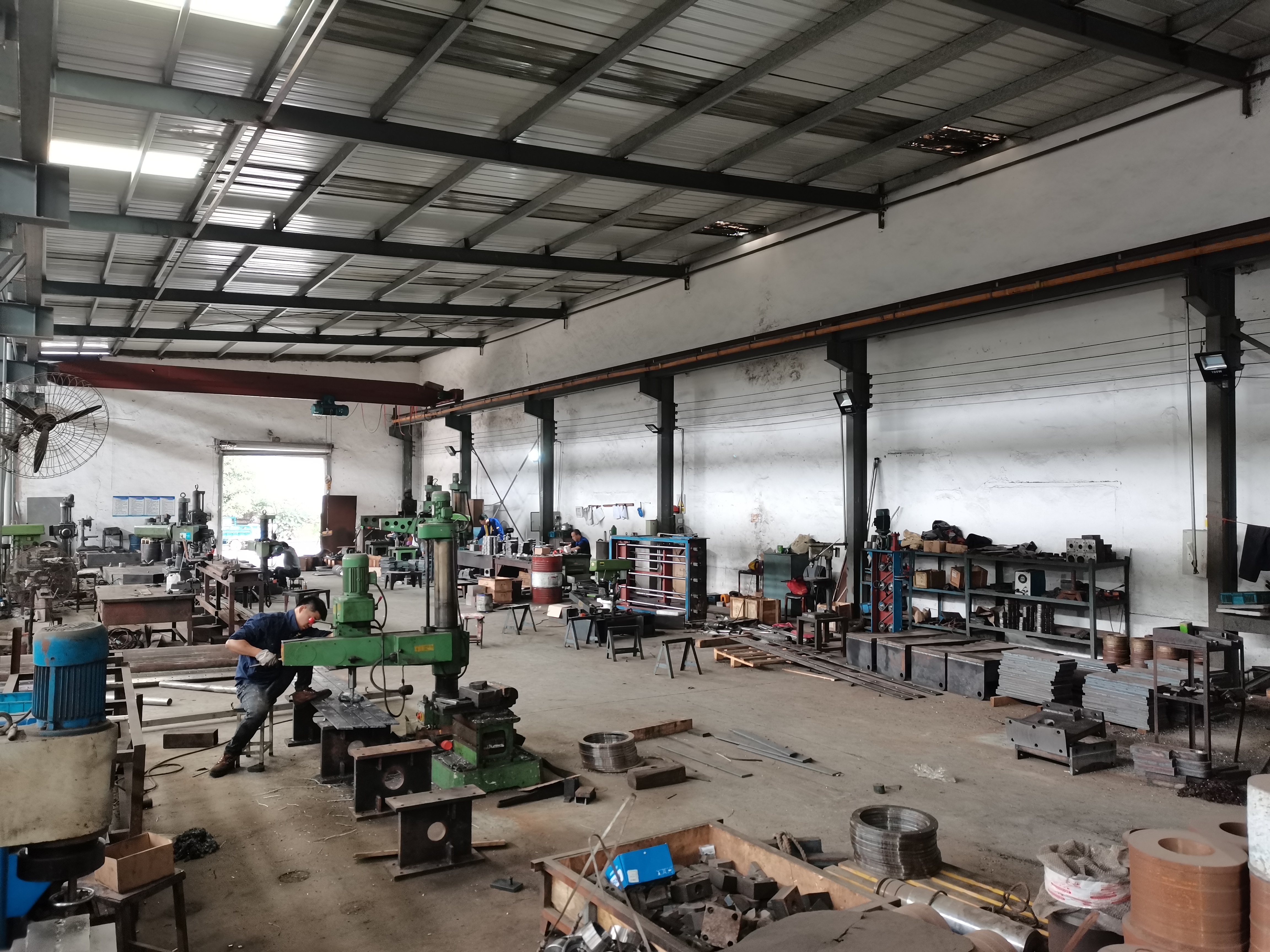
A verifiable production workshop is one of the few supplier claims a buyer can inspect directly rather than take on trust.
Use Cases: How the Evaluation Shifts by Site
Recycling centres and waste paper traders
Here the constraint is throughput continuity: bales must leave the site at a predictable rate, so a stalled baler becomes a storage problem within days. Evaluation should weight documented risk controls and the supplier's response to a fault scenario more heavily than the initial price. Ask what the supplier's thermal protection does to an in-progress cycle and how quickly a replacement part can be identified by part number.
Packaging, printing and converting plants
Floor space usually decides the configuration, and a vertical baler is often the practical answer where a horizontal feed line will not fit. The evaluation question changes with it: can the supplier explain why the vertical configuration suits this material and this footprint, and does it build vertical units as a standard line rather than as a special order? A supplier whose vertical line is an afterthought will struggle to support it later.
Multi-material transfer stations
Sites handling waste paper alongside plastic bottles and cardboard need a configuration that tolerates variation without constant resetting. This is where a supplier's full line-up becomes an evaluation asset: the ability to discuss vertical, horizontal and bagging options in one conversation indicates the supplier has seen mixed-material operations before, rather than only single-stream paper accounts.
Export projects with customs and compliance exposure
When the machine crosses a border, documentation becomes part of the delivery. Buyers should confirm the customs classification route under HS 842240 or 846291, the certificate of origin position and, for EU destinations, the EN 16252:2012 compliance path for horizontal presses. A supplier with predominantly export order flow handles these as routine; a domestic-only supplier may leave them to the buyer to discover at the port.
Comparison Table: Capability Signals vs Warning Signs
The table below converts the three capability surfaces into checkable signals. The final column lists facts that can be verified directly with the supplier rather than inferred from a brochure.
| Evaluation area | Capability signal | Warning sign | Verifiable fact to request |
|---|---|---|---|
| Product-line coverage | Distinct standard lines with separate configuration data | One generic 'hydraulic baler' entry reused for every enquiry | Vertical balers, full-automatic horizontal balers, manual horizontal balers and press bagging machines listed as main products |
| Engineering depth | Named engineering function with a defined headcount | No technical contact beyond a sales address | 15-person R&D team, founded 2013 |
| Manufacturing footprint | Facility that can be visited or toured live | Address given only as a city or a trading office | 5,000 m² facility, 50 employees, Wuxi, Jiangsu, China |
| Output capacity | Stated annual output that can be compared with your order size | Vague references to 'large capacity' | 600 units annual output |
| Export routine | Documented cross-border workflow and reference markets | First export handled ad hoc | 90% export ratio across North America, South America and Asia |
| Risk control | Named failure mode with a named control | No mention of protection systems at all | Overheating controlled through thermal protection with temperature sensors |
| Compliance literacy | Applicable standard and HS code identified without prompting | Standard named only after the buyer raises it | EN 16252:2012 for horizontal baling presses (EU/UK); HS Code 842240 or 846291 |
Hydraulic Drive vs Piston Compressor: Reading Comparison Data Correctly
Buyers comparing drive technologies should treat supplier comparison data as a starting point rather than a conclusion. The comparison data supplied for this machine category positions hydraulic drive against a piston compressor on noise, maintenance demand, efficiency, cost and typical fit. The figures are useful for framing questions, but each one should be confirmed against your own operating environment and against the specific quotation.
| Comparison point | Hydraulic drive (supplied comparison data) | Piston compressor (reference) |
|---|---|---|
| Noise level | Approximately 15 dB lower | Baseline |
| Maintenance demand | Less maintenance | Higher maintenance demand |
| Efficiency | Higher efficiency | Lower |
| Stated cost difference | Approximately 10% lower | Baseline |
| Typical fit | Noise-sensitive environments and industrial plants | Not indicated |
The practical use of this table is to turn each row into a question: what is the measured noise level at the operator position, which maintenance tasks are scheduled and at what intervals, and what the cost difference covers. A supplier that can answer row by row is giving you engineering information; one that repeats the headline figure is giving you a slide.
Frequently Asked Questions
What compliance evidence should a baler supplier provide for EU delivery?
Horizontal baling presses sold into the European Union must comply with EN 16252:2012 (BS EN 16252:2012 in the UK) to carry CE marking, so a supplier should be able to identify that standard and its own conformity route before the order is placed. In addition, hydraulic baling press machines for waste paper are commonly classified under HS Code 842240 or 846291; the classification affects import documentation and should be confirmed in writing so the commercial invoice, packing list and technical file stay consistent. Ask for the compliance reference and the HS classification at RFI stage rather than at shipment.
How can a buyer verify that a supplier really builds horizontal, vertical and bagging machines?
Verification starts from whether the configurations are standard lines rather than special orders. NKBALER lists vertical balers, full-automatic horizontal balers, manual horizontal balers and press bagging machines as its main products, supported by a 15-person R&D team, a 5,000 m² facility, 50 employees and 600 units of annual output. A buyer should test these claims by requesting configuration data per line, asking for a named engineering contact, and arranging a factory visit or live walkthrough. A supplier that can only discuss one configuration in technical detail is unlikely to have built the others at volume.
Why do quotations for the same waste paper hydraulic baler machine differ so much?
Differences usually come from scope rather than from the machine name. The main drivers are the configuration itself, the control and protection systems included, the documentation and compliance work, and the after-sales scope attached to the order. A useful evaluation technique is to ask each supplier to break the quotation into separate lines — machine, controls and protection, documentation, freight and service — so that the comparison is made between equivalent scopes. A lower total with an unexplained scope gap is not a cheaper offer; it is an incomplete one.
Can a supplier be validated before the bulk order is placed?
Yes, and it should be done through documents rather than assurances. The evidence set to request includes the recommended configuration for your material and footprint, the control and safety description, the documented risk controls — for example, overheating handled through thermal protection with temperature sensors — and the acceptance criteria proposed for pre-shipment inspection. Combine that with a factory verification step and a written technical response to your material questions. If a candidate cannot produce this set before the order, it will not produce it after.
How should delivery assurance be written into the contract?
Delivery assurance should be expressed as dated milestones rather than a single promised date: drawing approval, material release, assembly completion, pre-shipment inspection, documentation handover and shipment, each with a named responsible party and a verification check. Documentation duties should sit inside the schedule, because a machine that arrives without a consistent commercial invoice, packing list and HS classification under HS 842240 or 846291 cannot be cleared on time. NKBALER's 90% export ratio across North America, South America and Asia means cross-border documentation is part of its normal order flow, which can be reflected in the handover milestone. To confirm the current schedule for a specific configuration, contact Sales@nkbaler.com or +86 15021631102.
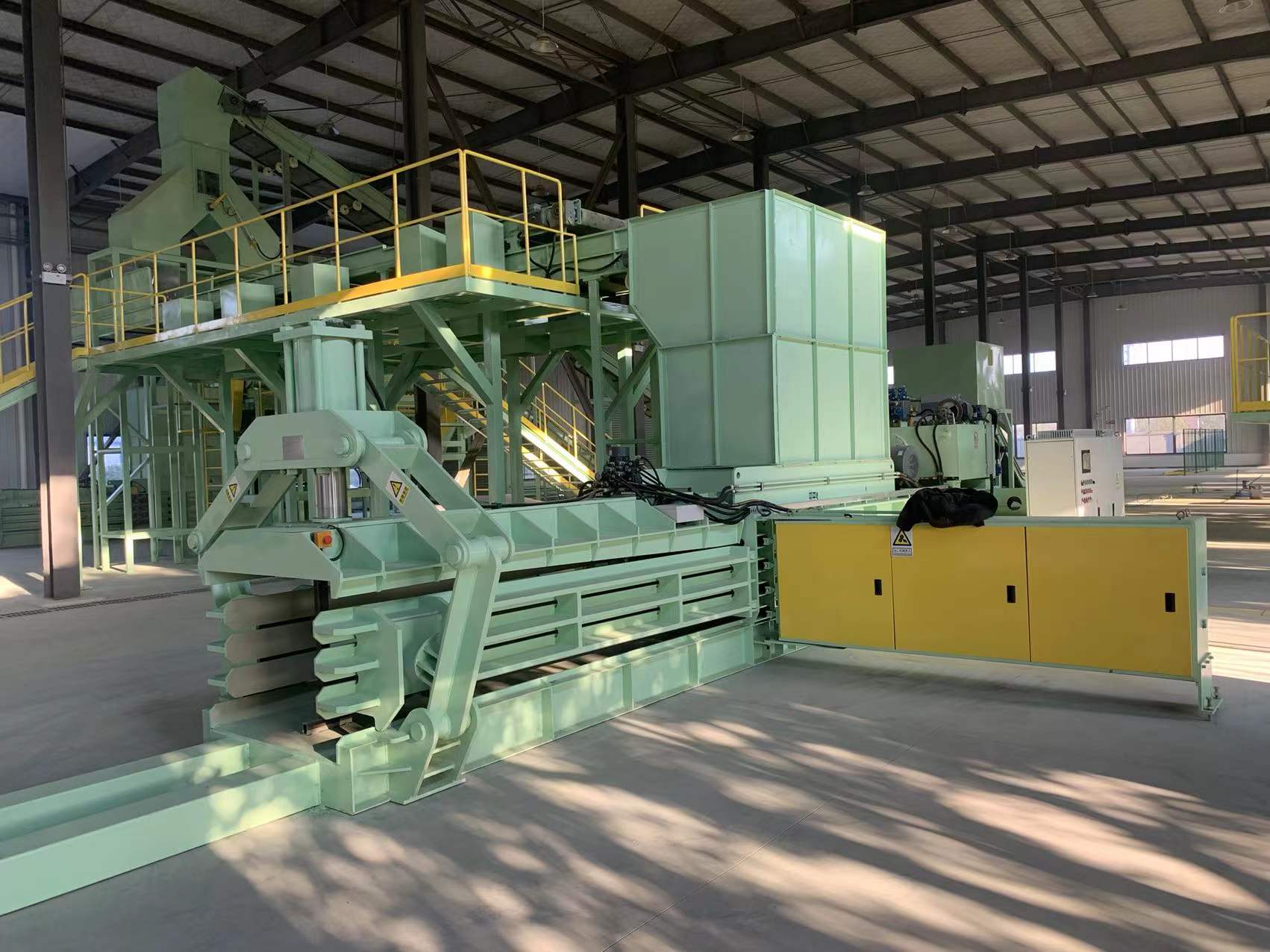
Delivery assurance is confirmed by documentation and inspection records, not by a promised date in an email.
Conclusion: Separate Capability From Order-Taking Before You Sign
Supplier evaluation for waste paper hydraulic baler machines is a verification exercise, not a popularity contest. The useful separation is between suppliers who can evidence three things — a standard line-up covering vertical, horizontal and bagging configurations, documented engineering risk controls such as thermal protection for overheating, and delivery commitments expressed as inspectable milestones — and suppliers who can only respond to whatever specification is put in front of them.
Run the seven-stage process on every candidate, score them against the same capability signals, and convert the winning claims into acceptance criteria and dated milestones before the order is placed. That sequence is what turns a shortlist into a decision you can defend internally and enforce externally.
Next step: request the evidence pack
NKBALER (Shaanxi Nick Machinery Equipment Co., Ltd.) builds vertical balers, full-automatic horizontal balers, manual horizontal balers and press bagging machines from a 5,000 m² facility in Wuxi, Jiangsu, China, with a stated export ratio of 90% across North America, South America and Asia.
Request the configuration data, control and protection description, and proposed acceptance criteria for your material and footprint:
Email: Sales@nkbaler.com | Tel / WhatsApp: +86 15021631102 | Web: www.nkbaler.com
Address: Qun Sheng Lu, Hui Shan Qu, WuXi Shi, Jiang Su Sheng, China.
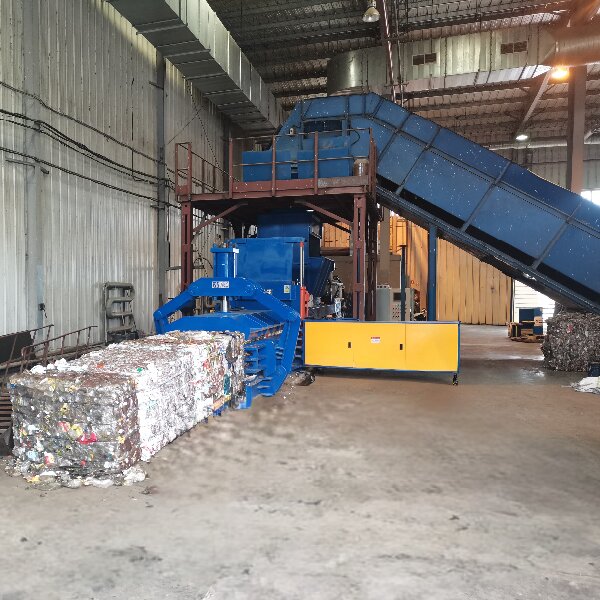
Ask for configuration data, protection details and acceptance criteria as one package before comparing prices.
Waste Paper Hydraulic Baler MachineHydraulic BalerHorizontal BalerVertical BalerPress Bagging MachineSupplier EvaluationDelivery Assurance
Have Questions or Need More Details?
Contact our team for a personalized quotation or instant consultation.
Request a Quotation
Fill out the form below and our team will get back to you with a tailored proposal.
WhatsApp Direct Chat
Prefer to chat in real-time? Message us on WhatsApp for instant assistance & quick answers.
- Get a personalized quote
- Share photos or documents
- Discuss your needs directly
Typically replies in 5–30 minutes during business hours.