
Top Waste Paper Baler Picks: 5 Machine Configurations for Growing Recycling Facilities
Top Waste Paper Baler Picks: 5 Machine Configurations for Growing Recycling Facilities
The short answer: a growing recycling facility rarely needs the largest baler available — it needs the configuration that matches its current waste paper volume with one step of headroom. Five configurations cover that range: a compact vertical baler, a mid-size vertical baler, a press-bagging machine, a semi-automatic horizontal baler, and a fully automatic horizontal baler with conveyor feed. The decisive variable is the difference between a vertical machine and a horizontal hydraulic baler, because that single choice fixes bale weight, labour pattern, floor-space demand, and the throughput ceiling of everything downstream.
This guide ranks those five configurations by the job each one does, not by brand or price. Every parameter quoted below is a published machine specification, so you can compare a configuration against your own measured tonnage before you talk to any supplier.
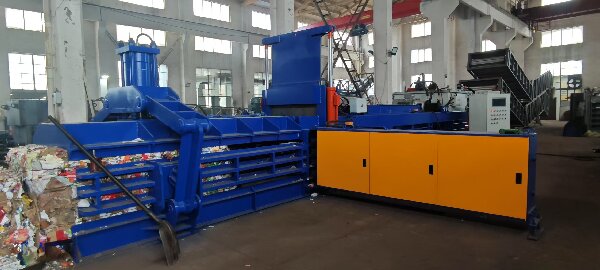
Problem Definition: A Mis-Scaled Baler Costs More Than It Saves
Waste paper is bulky and light. Its handling cost is driven less by the material itself than by how densely it can be packed and how much labour is required to pack it. A baler that sits one band below your real volume becomes a labour bottleneck; a baler one band above it runs underloaded, drawing power without producing proportional output.
The symptoms of an undersized vertical baler are predictable. Bales come out lighter than the format your paper buyer or transport contractor expects. An operator stays tied to the chamber door for most of the shift because vertical machines compress one chamber load at a time. Loose material accumulates on the floor faster than it can be fed. The symptoms of an oversized horizontal machine look like the mirror image: long idle intervals between bales, a conveyor running empty, and a machine measured in tens of tonnes that produces far below its rated capacity.
A third constraint is easy to miss during selection. Bale format has to match the downstream chain — the wire or strapping pattern, the forklift or clamp attachment, the container loading pattern, and the receiving specification of the paper mill or trading intermediary. A waste paper hydraulic baler machine is not a standalone purchase; it is the first machine in an outbound logistics system, and its bale dimensions propagate through every step after it.
Industry Background: Demand Is Rising, Measurements Vary
Demand for industrial baling equipment keeps expanding. Maximize Market Research values the global industrial balers market at USD 6.39 billion in 2024 and projects USD 13.21 billion by 2032. Other analysts publish different numbers for overlapping scopes — Grand View Research, for example, puts the broader baler market, which includes agricultural machinery, at roughly USD 6.4 billion. The absolute figure matters less than the direction: recoverable fibre volumes keep rising while transport and landfill costs make loose material progressively uneconomic to move.
Regional concentration is relevant for anyone sourcing equipment. A 2026 sector guide published by a baler manufacturer estimates that Asia Pacific accounted for approximately 45% of global hydraulic baler revenue in 2025, led by China and India. That figure is a manufacturer estimate rather than an audited statistic, so treat it as directional. Customs-based trade data is firmer on the supply side: in 2024, China was the largest exporter of hydraulic baling press machines, accounting for over 77% of total import shipments in specific emerging-market corridors.
Regulation frames the purchase at two points. Horizontal baling presses placed on the European market must comply with EN 16252:2012 — published in the UK as BS EN 16252:2012 — to carry CE marking; the standard sets safety requirements for machines that compact waste materials or recyclable fractions. On the trade side, waste paper baling presses are commonly classified under HS Code 8422.40 (packing or wrapping machinery) or 8462.91 (hydraulic presses), which determines duty treatment and clearance documentation.
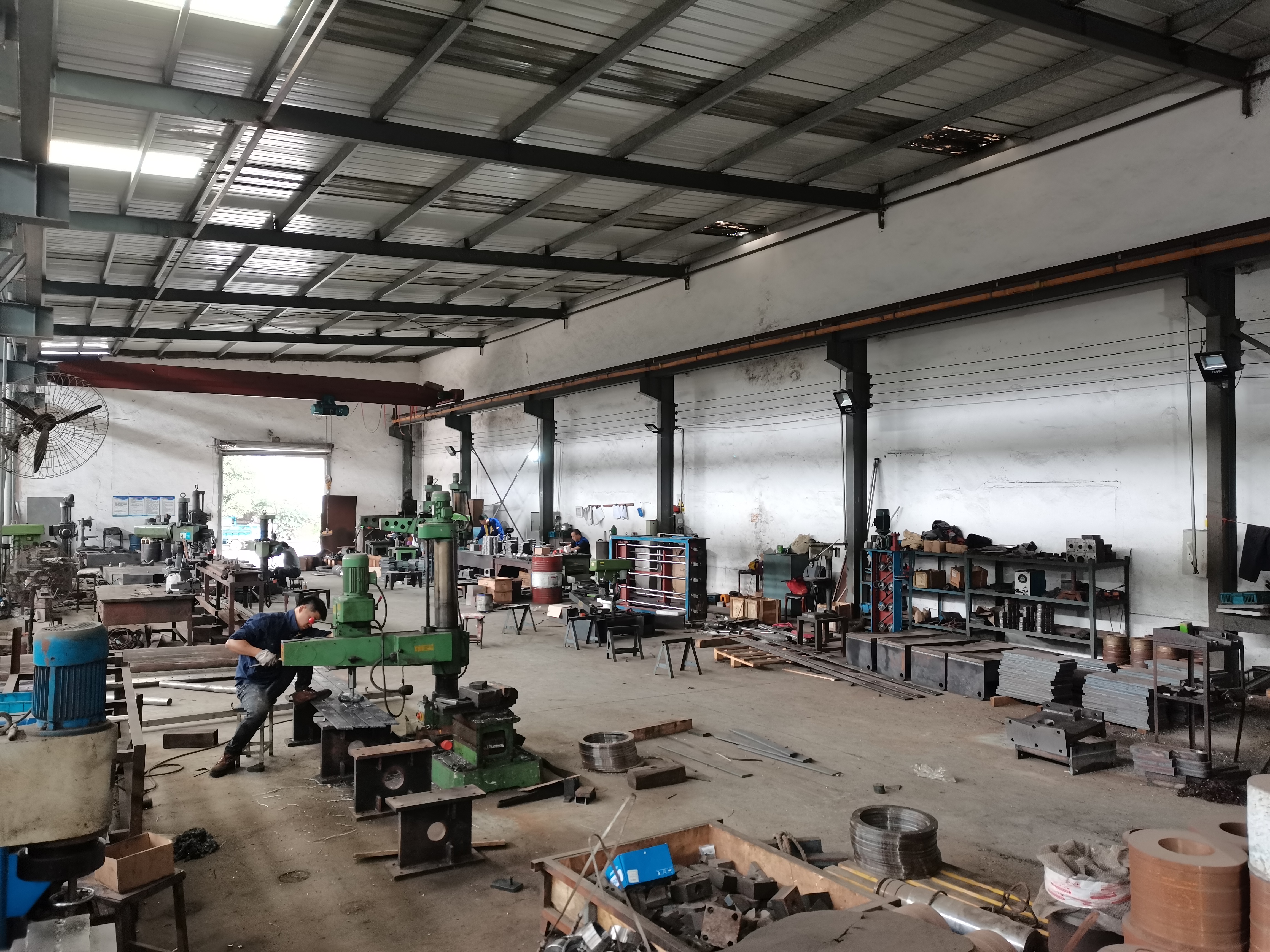
The configurations described in this article are built by Shaanxi Nick Machinery Equipment Co., Ltd., which trades as NKBALER — a China-based manufacturer founded in 2013 that designs and sells vertical balers, full-automatic and manual horizontal hydraulic balers, and press bagging machines. The company operates from a 5,000 m² facility in Wuxi, Jiangsu with a 15-person R&D team, an annual output listed at 600 units, and roughly 90% of production exported to North America, South America, and Asia.
Detailed Solution: Five Configurations, Ranked by Throughput Band
The five picks below are ordered from the smallest to the largest processing band. Each entry states the configuration, the published specification, and the specific reason a growing facility would choose it over the neighbouring option.
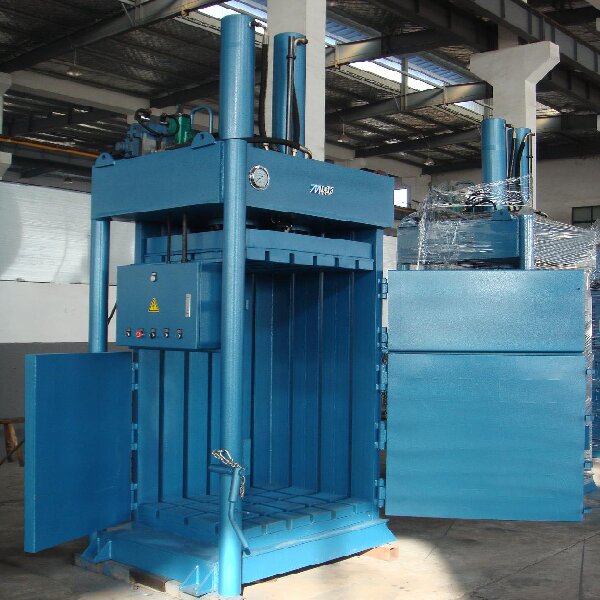
1. Compact Vertical Baler — the 10-Ton Class (NK6040T10)
Why it is selected: it is the only configuration in this list that runs on a standard 220 V/50 Hz supply, stands 2,150 mm tall, and needs no conveyor, pit, or dedicated hydraulic room. For a facility producing small daily volumes of waste paper, that combination removes most of the installation cost before the machine even arrives.
Published specification: model NK6040T10, 10-ton hydraulic power, bale size 600 × 400 × (350–600) mm, feed opening 540 × 450 mm, bale weight 50–80 kg, capacity 6–8 bales per hour, 220 V/50 Hz, 2.2 kW / 3 HP motor, machine size 870 × 780 × 2,150 mm, machine weight 600 kg.
Where the limit sits: the 50–80 kg bale is light. Freight cost per tonne of recovered fibre is therefore higher than with any other configuration here, and a single operator physically handles every bale. This is an entry configuration, not a growth configuration.
2. Mid-Size Vertical Baler — the 60-Ton Class (NK1070T60)
Why it is selected: it is the point where bale format becomes logistics-friendly. The bale footprint grows to 1,100 × 700 mm — a format that stacks predictably on a pallet or in a container — while the machine still occupies a footprint of 1,600 × 1,100 mm. It is specified as a cardboard box baler, which is precisely the waste paper stream that dominates retail, printing, and packaging operations.
Published specification: model NK1070T60, 60-ton hydraulic power, bale size 1,100 × 700 × (500–900) mm, feed opening 1,100 × 500 mm, chamber size 1,100 × 700 × 1,450 mm, capacity 5–8 bales per hour, 380 V/50 Hz (voltage can be customized), 15 kW / 20 HP motor, machine size 1,600 × 1,100 × 3,200 mm, machine weight 2.2 t.
Where the limit sits: bale count per hour drops slightly compared with the 10-ton unit, but each bale carries far more material, so labour per tonne falls. The trade-offs are a three-phase supply requirement and a 3,200 mm overall height, which some mezzanine layouts cannot accommodate.
3. Press-Bagging Machine — Constant-Weight Output for Low-Volume and Specialty Streams
Why it is selected: constant weight per unit is the distinguishing feature. Downstream buyers that price material per bag, per block, or per unit need a repeatable weight, and a bagging press delivers it in a way a conventional baler cannot.
Published specifications (representative models):
- NKB10 — constant weight bagging machine, bale size 200 × 130 × 100 mm, bale weight 1–1.5 kg, 380 V/50 Hz, 18.5 kW / 25 HP, machine size 3,800 × 2,500 × 2,100 mm, machine weight 2,400 kg.
- NKB20 — constant weight bagging machine, bale size 750 × 400 × 330 mm, bale weight 20 kg, 380 V/50 Hz, 15 kW / 20 HP, machine weight 950 kg.
- NKB220 — block making machine, 200-ton, bale size 480 × 480 × (220–350) mm, working pressure 21 MPa, compress time 22 s, 90 blocks per hour, bale weight 30–35 kg per bag, capacity 2.5–3 t/hour, moisture requirement 13% or under, 200–480 V/50 Hz/3-phase, 40 HP, machine weight 6 t.
- NKB280 — straw/hay bagging machine, bale size 1,100 × 1,200 × 800 mm, feed opening 2,600 × 1,200 mm, packing materials alfalfa, wheat straw and peanut hay, 30–32 bales per hour, dry bale weight 400–450 kg, capacity 10–12 t/hour, plastic bag or woven bag strapping, 45 kW × 2 / 120 HP, machine weight 32,000 kg, chain conveyor feeding.
Where the limit sits: the NKB220 specification states a moisture requirement of 13% or under, and the NKB280 is configured around dry agricultural materials. That is a real constraint. A press-bagging machine suits dry, low-density fractions and small weighed output; it is not a substitute for a horizontal hydraulic baler on mixed or wet waste paper.
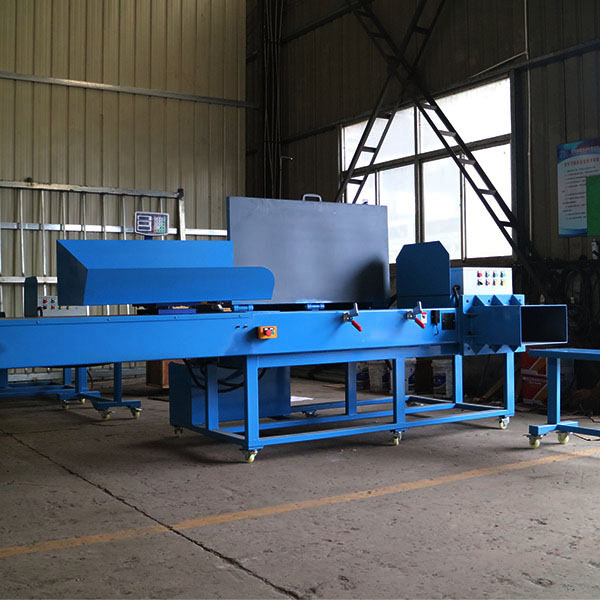
4. Semi-Automatic Horizontal Baler — the 80-Ton Class (NKW80BD / NKW80Q)
Why it is selected: this is the growth threshold. Horizontal geometry compresses along a chamber instead of downward in a single load, which allows continuous conveyor feeding and lifts output from bales-per-hour into tonnes-per-hour. For a facility whose manual loading has become the limiting factor, this is the first configuration where one operator supervises a process rather than serving a machine.
Published specification — NKW80BD: 80-ton hydraulic power, cylinder Ø200–3700, bale size 1,100 × 850 × 1,700 mm, feed opening 1,200 × 1,000 mm, capacity 2–3 t/hour, 22 kW / 30 HP, bale wire 10# × 4 pcs, cooling system options include cooling fan, water cooling, or oil chiller, working pressure 18 MPa, machine weight 14,500 kg, conveyor weight 4,500 kg.
Published specification — NKW80Q (alternative): 80-ton, bale size 1,100 × 800 × ~1,600 mm, material density 300–400 kg/m³, feed opening 1,500 × 800 mm, main motor 30 kW + 11 kW, capacity 3–5 t/hour, mainframe weight 15 t, mainframe size approximately 9.8 × 4.3 × 1.4 m, conveyor 1,200 mm (W) × 12,000 mm (L) at 4 kW, working pressure 21 MPa.
Where the limit sits: a 14.5–15 t mainframe plus a 12 m conveyor changes the site requirements. Plan floor area, a three-phase supply, and foundation load-bearing before ordering, not after.
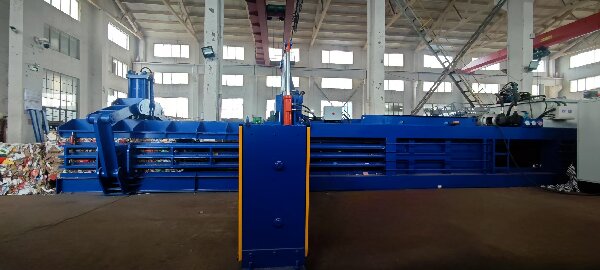
5. Fully Automatic Horizontal Baler with Conveyor — the 125 to 250-Ton Class
Why it is selected: density and continuity. The published material density for the higher-force horizontal configurations is 500–600 kg/m³, which means fewer truckloads for the same recovered tonnage. Automatic wire tying, conveyor feeding, and continuous chamber loading reduce the operator's role to monitoring, which matters most when a facility runs more than one shift.
Published specifications (representative models):
- NKW125BD — 125-ton, bale size 1,100 × 1,250 × 1,700 mm, feed opening 2,000 × 1,100 mm, capacity 5–7 t/hour, 30 kW / 40 HP, bale wire 10# × 5 pcs, machine weight 18,000 kg, conveyor 12,000 × 1,800 mm at 4.5 kW, working pressure 20 MPa.
- NKW125Q — 125-ton, bale size 1,100 × 1,100 × ~1,600 mm, material density 500–600 kg/m³, main motor 37.5 kW + 11 kW, capacity 10–12 t/hour, mainframe weight 22 t, conveyor 2,000 × 12,000 mm at 7.5 kW, working pressure 21 MPa.
- NKW180BD — 180-ton, bale size 1,100 × 1,150 × 1,800 mm, feed opening 2,400 × 1,100 mm, capacity 6–8 t/hour, 45 kW / 60 HP, machine weight 24,000 kg, chain steel conveyor 14,000 × 2,000 mm at 5.5 kW, working pressure 21 MPa.
- NKW180QT — main cylinder force 160 T, bale size 1,100 × 1,250 × ~1,600 mm, material density 500–600 kg/m³, capacity 12–15 t/hour, main motor 45 kW + 7.5 kW, mainframe weight 28 t, conveyor 2,000 × 12,000 mm at 4 kW, cooling tower 0.75 kW water pump plus 0.25 kW fan, working pressure 30.5 MPa.
- NKW250BD — 250-ton, bale size 1,100 × 1,250 × 1,700 mm, feed opening 2,000 × 1,100 mm, capacity 10–15 t/hour, 45 kW / 60 HP, machine weight 30,000 kg, conveyor 12,000 × 2,000 mm at 4.5 kW, working pressure 23 MPa.
Where the limit sits: a machine in this class weighs 18–30 t and occupies 11–13 m of mainframe length before the conveyor is counted. It is a facility-level decision involving foundations, power capacity, and material flow planning through the whole yard.
Step-by-Step Breakdown: How to Choose Between Them
- Measure actual tonnage, not impressions. Record how many tonnes of waste paper leave the site per week at peak, not on an average day. Peak volume sets the machine, because that is when the backlog forms.
- Work backwards from the bale you must ship. Fix the bale dimensions and weight your buyer or transport contractor accepts, then eliminate every configuration that cannot produce that format.
- Match bandwidth to geometry. Bales-per-hour output with light bales points to a vertical machine. Tonnes-per-hour output with heavy bales points to a horizontal machine.
- Check the site constraints before the specification. Supply voltage (220 V/50 Hz on the smallest vertical unit, 380 V/50 Hz or 200–480 V/50 Hz/3-phase on larger configurations), headroom, floor area, foundation load, and conveyor run length all eliminate options early.
- Decide the automation level. Manual feeding, semi-automatic, or full-automatic with conveyor. The published capacity range for an 80-ton semi-automatic horizontal baler is 2–5 t/hour depending on variant, while the same class of machine in a fully automatic 180–250-ton configuration reaches 6–15 t/hour.
- Confirm the thermal and hydraulic duty. Overheating is a recognised risk in hydraulic pressing. Thermal protection through temperature sensors is the standard control measure, and the horizontal configurations list cooling fans, water cooling, or oil chillers as cooling system options — this is a specification line worth reading carefully rather than accepting generically.
- Validate commercially, not just technically. Published procurement terms for these configurations include MOQ of 1–2 units depending on product line, FOB or CIF delivery, and pre-shipment testing as the acceptance step, with payment structures of 30/70 or 40/60.
- Plan the long-term service path. Hydraulic seals, wire-tying assemblies, and conveyor components are the wear items. A supplier that supports a machine over its working life is worth more than a marginally lower purchase price.
Use Cases: Which Configuration Fits Which Facility
Retail backroom or print shop (under one tonne per day)
The compact vertical configuration fits: 220 V/50 Hz supply, 600 kg machine weight, 870 × 780 mm footprint, and 6–8 bales per hour. Cardboard balers in this class typically sit behind a store or in a service corridor where nothing larger would be installed.
Corrugated packaging converter or distribution centre (one to five tonnes per day)
The 60-ton vertical configuration (NK1070T60) handles the volume while preserving floor space, and produces the 1,100 × 700 mm bale format that stacks efficiently. The trade-off is a three-phase supply and a 3.2 m height.
Facility needing weighed, repeatable units
A press-bagging machine is the fit: 20 kg constant-weight bales (NKB20), 1–1.5 kg units (NKB10), or 30–35 kg per bag at 2.5–3 t/hour on the NKB220. This is the configuration to consider when the downstream buyer prices per unit rather than per tonne, and when the stream is dry and low in moisture.
Regional recycler crossing the labour threshold (five to twenty tonnes per day)
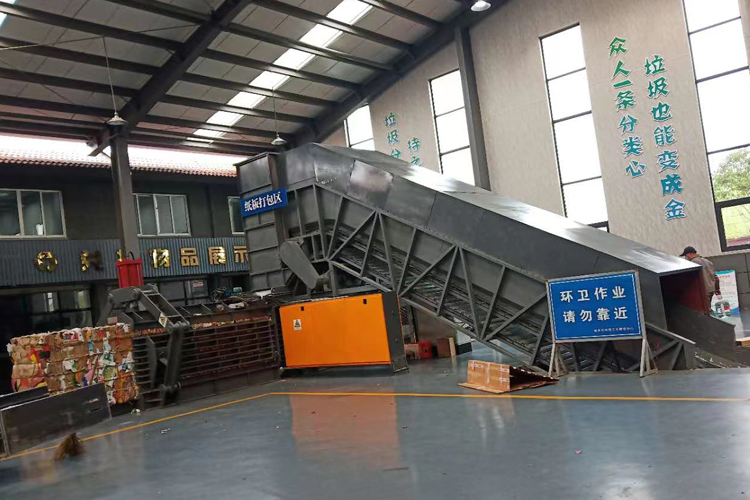
The 80-ton horizontal class marks the transition. Continuous conveyor feeding with 2–5 t/hour output replaces per-bale handling, and published material density of 300–400 kg/m³ on the NKW80Q reduces transport cost per tonne. This is the step where a facility stops baling as a side task and starts baling as a process.
Municipal-scale or multi-shift operation (twenty tonnes per day and above)
The fully automatic 125–250-ton horizontal class is built for this band: 5–15 t/hour, bale densities of 500–600 kg/m³ where published, automatic wire tying, and conveyor systems 12,000–14,000 mm long. Machines in this class also process plastic bottles, MSW fractions, and metal scrap when configured accordingly, so a single unit can absorb several material streams.
Comparison Table: Five Configurations Side by Side
| Configuration | Representative model | Hydraulic force | Bale format | Rated capacity | Installed power | Machine weight |
|---|---|---|---|---|---|---|
| Compact vertical | NK6040T10 | 10 t | 600 × 400 × (350–600) mm; 50–80 kg | 6–8 bales/hour | 2.2 kW / 3 HP | 600 kg |
| Mid-size vertical | NK1070T60 | 60 t | 1,100 × 700 × (500–900) mm | 5–8 bales/hour | 15 kW / 20 HP | 2.2 t |
| Press-bagging | NKB20 | Not published for this model | 750 × 400 × 330 mm; 20 kg per bale | Not published for this model | 15 kW / 20 HP | 950 kg |
| Semi-automatic horizontal | NKW80BD | 80 t | 1,100 × 850 × 1,700 mm | 2–3 t/hour | 22 kW / 30 HP | 14.5 t |
| Fully automatic horizontal | NKW125BD | 125 t | 1,100 × 1,250 × 1,700 mm | 5–7 t/hour | 30 kW / 40 HP | 18 t |
All figures are published machine parameters for the models named. Where a value is not published for a specific model, the table states so rather than estimating it. Larger variants within each class — including the NKW125Q, NKW180BD, NKW180QT, and NKW250BD — extend the same configurations to 10–15 t/hour.
FAQ: Configuration, Compliance, and Validation Questions
Do horizontal hydraulic balers for waste paper have to meet a specific safety standard in Europe?
Yes. Horizontal baling presses placed on the European Union market must comply with EN 16252:2012 — published in the UK as BS EN 16252:2012 — to carry CE marking, and the standard sets safety requirements for machines that compact waste materials or recyclable fractions. Buyers should request the declaration of conformity and check that guarding, controls, and emergency stops are assessed against that standard rather than against a generic machinery statement. For customs purposes, waste paper baling presses are commonly classified under HS Code 8422.40 or 8462.91, which affects duty treatment and clearance documentation.
How do I know when to move from a vertical baler to a horizontal hydraulic baler?
The trigger is labour economics rather than tonnage alone. A vertical baler compresses downward in a single chamber and is loaded manually, one bale at a time; a horizontal hydraulic baler compresses along a chamber that can be fed continuously by conveyor. The published numbers show the gap: a 10-ton vertical unit such as the NK6040T10 produces 6–8 bales per hour at 50–80 kg each, while an 80-ton horizontal unit such as the NKW80BD is rated at 2–3 tonnes per hour. When the operator's handling time — not machine cycle time — becomes the constraint on output, the horizontal configuration is the next step.
What actually drives the price difference between a vertical and a horizontal machine?
Cost tracks six published specification lines rather than any single feature: hydraulic force (10 t on the compact vertical versus 125–250 t on the fully automatic horizontal class), steel mass (600 kg versus 18,000–30,000 kg machine weight), motor power (2.2 kW versus 30–45 kW plus a 4–7.5 kW conveyor motor), the feed and conveyor system, the cooling system (cooling fan, water cooling, or oil chiller), and the civil work — foundations, power supply, and installation. Two machines with similar bale sizes can still differ substantially in cost because of these drivers. It is also worth noting that higher bale density reduces transport cost per tonne, so the cheaper machine is not automatically the lower-cost configuration over its service life.
Can we validate bale quality before the machine ships?
Published procurement terms for these configurations include pre-shipment testing as the formal acceptance step, an MOQ of 1–2 units depending on product line, and FOB or CIF delivery, with payment structures of 30/70 or 40/60. Practically, validation means running your own material and recording bale weight, bale dimensions, cycle time, and working pressure against the published specification for the model ordered. Because pre-shipment testing is the stated acceptance step, the parameters to inspect should be agreed in writing before the build begins.
What should a growing facility plan for on lead time and long-term support?
Lead time is configuration-dependent rather than fixed. Voltage customization (some models state 380 V/50 Hz as customizable, while bagging models accept 200–480 V/50 Hz/3-phase), conveyor length options of 12,000–14,000 mm, cooling system selection, and the pre-shipment test itself all affect the build schedule, so a written schedule tied to the confirmed specification is more useful than a general estimate. For long-term operation, plan around the wear items and the controls: thermal protection via temperature sensors is a standard measure against overheating risk, and hydraulic, wire-tying, and conveyor components are the parts that determine service life. A supplier with export experience across North America, South America, and Asia is generally better positioned to support spares and service over a multi-year horizon.
Conclusion: Pick the Band, Then the Machine
The five configurations in this guide are not competing products — they are consecutive steps on one growth curve. A compact vertical baler handles low volume in a small footprint on a standard supply. A 60-ton vertical baler converts that volume into a shippable bale format. A press-bagging machine serves facilities that need repeatable, weighed units from dry, low-density streams. An 80-ton semi-automatic horizontal baler is the threshold where output is measured in tonnes per hour. And a fully automatic 125–250-ton horizontal baler with conveyor feed is the configuration for multi-shift, municipal-scale processing.
The selection logic is straightforward: measure peak weekly tonnage, fix the bale format your downstream chain accepts, then choose the smallest configuration that meets both with one step of headroom. Buyers who start from the bale format rather than from the machine size consistently end up with a better-fitting line.
Next step: if you have a measured tonnage and a target bale format, NKBALER can match it against the configurations above and confirm which model fits — including voltage, conveyor length, and cooling options. Request a configuration recommendation or a quotation at Sales@nkbaler.com, reach the team on WhatsApp at +86 15021631102, or review the full machine range at www.nkbaler.com. Technical articles and selection guides are published on blog.nkbaler.com.
Shaanxi Nick Machinery Equipment Co., Ltd. — Qun Sheng Lu, Hui Shan Qu, Wuxi, Jiangsu, China.