
Vertical vs. Horizontal Waste Paper Hydraulic Baler Machine: Technical Selection Parameters
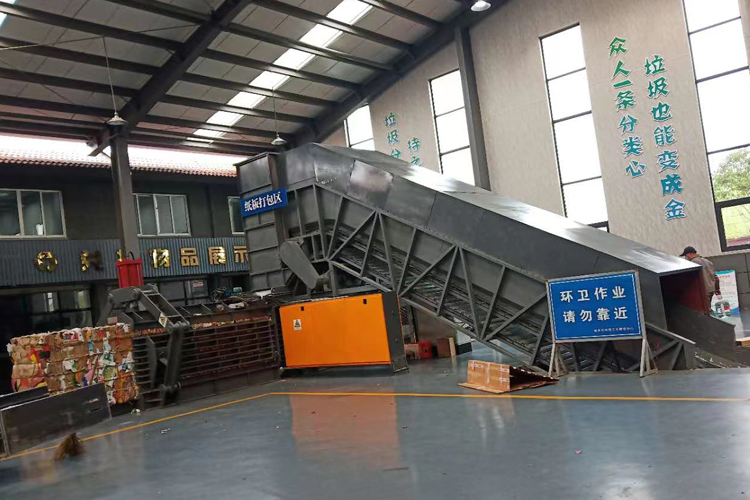
Answer first: choose a vertical waste paper hydraulic baler machine when waste paper arrives in batches, floor space is limited, and bale removal can be scheduled between other tasks. Choose a horizontal hydraulic baler when cardboard, paper or mixed recyclables arrive continuously and the bale must be formed, ejected and stacked inside one controlled flow. The parameters that separate the two configurations — chamber orientation and size, baling force, feed method, automation tier, hydraulic thermal management and downstream integration — are the same parameters that should drive the purchasing terms and acceptance criteria in the contract.
This guide is written for the stage where a shortlist becomes a specification. It compares the two configurations parameter by parameter, shows where a bagging machine integrates downstream of the baler, and links each technical decision to the purchasing terms and acceptance criteria that evaluation and procurement teams review before signature. Waste paper is treated as the primary material stream — old corrugated containers, mixed office paper, newsprint and comparable fractions — with notes on where the same hydraulic baling platform is configured differently for cardboard balers, plastic bottle balers or MSW balers.
Two framing points matter before the comparison begins. First, vertical and horizontal machines are not competing versions of the same product; they solve different material-flow problems, and a site can be a poor fit for either one. Second, the technical parameter list and the commercial term sheet are connected: a configuration that adds automation changes the acceptance test, the payment schedule and the long-term service relationship.
Why the Vertical-or-Horizontal Decision Becomes a Procurement Problem
Baler specification failures are usually configuration failures that surface later as operating cost. A vertical baler specified against a throughput expectation that only a horizontal machine can sustain forces the operator to add labour for loading and bale removal — a cost that appears after installation, not in the quotation. A horizontal baler specified for a building that cannot accommodate horizontal feed and discharge is installed in a compromised position, and its effective output falls below the design figure the buyer approved.
The second failure mode is contractual. If the specification lists a machine but the acceptance criteria only state that the machine functions, there is no agreed mechanism to test whether the delivered configuration matches the operational requirement. A pre-shipment test has value only when the parameters being tested were fixed during evaluation and written into the order. That is why the technical selection sequence and the contract review should happen in the same round, not sequentially.
The third factor is lifecycle, and it is the one most often skipped in a decision-stage comparison. Configuration determines what happens after commissioning: which wear parts and hydraulic components the supplier must keep available, whether a press bagging machine can be added downstream when the material mix changes, and whether repeat orders across several sites can standardise on one configuration so that spares, training and service procedures are shared. For operators running more than one facility, configuration standardisation is a long-term maintenance decision as much as a capital decision.
What the Baler Market Looks Like in 2026
The commercial context supports taking the configuration decision seriously, because baling capacity is being added to a market that is still expanding. Maximize Market Research values the global industrial balers market at USD 6.39 billion in 2024 and projects it to reach USD 13.21 billion by 2032. Market figures diverge mainly because of scope: assessments that include agricultural baling equipment produce estimates in the region of USD 6.4 billion, while reports limited to industrial and solid-waste equipment produce smaller numbers for the same period. Buyers should treat any single market figure as a scope-dependent estimate rather than a precise measurement.
Trade data shows where the equipment comes from. China is the largest exporter of hydraulic baling press machines, accounting for over 77% of total import shipments in specific emerging market corridors, according to customs data published in 2024. Classification matters for importers: waste paper hydraulic baler machines are commonly declared under HS code 8422.40 (packing or wrapping machinery) or 8462.91 (hydraulic presses for working metal or scrap), and the code chosen affects duty treatment and import documentation.
At the top of the market, high-throughput industrial baler supply is concentrated among a small group of established names, including Harris Equipment, International Baler Corporation (IBC), HSM GmbH and Jiangsu Huahong Technology, alongside regional manufacturers. For a buyer selecting a vertical or horizontal waste paper configuration, that structure means the practical question is rarely who exists — it is which supplier can demonstrate the specific configuration, document it, test it before shipment and support it over the operating life of the machine.
Configuration Options and Downstream Integration in the NKBALER Range
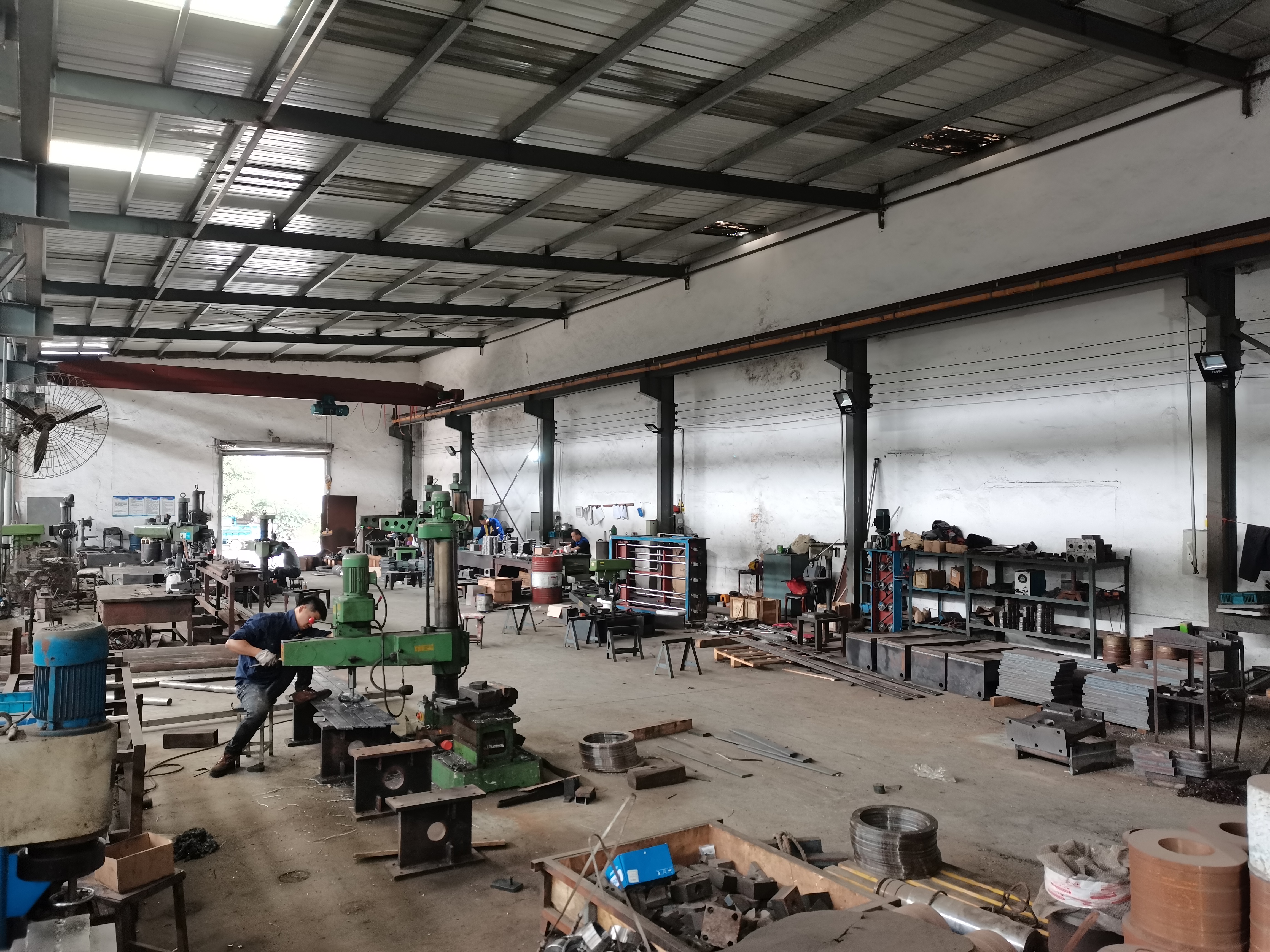
NKBALER is the brand of Shaanxi Nick Machinery Equipment Co., Ltd., a manufacturer of environmental protection equipment and packaging machinery founded in 2013 and based in Wuxi, Jiangsu, China. The company operates a 5,000 m² factory with 50 employees, a 15-person R&D design team and an annual output of 600 units, and exports about 90% of its production to North America, South America and Asia. Its baling programme is organised around four product families: Vertical Balers, a Full-Automatic Horizontal Baler, a Manual Horizontal Baler and a Press Bagging Machine.
Vertical baler configuration
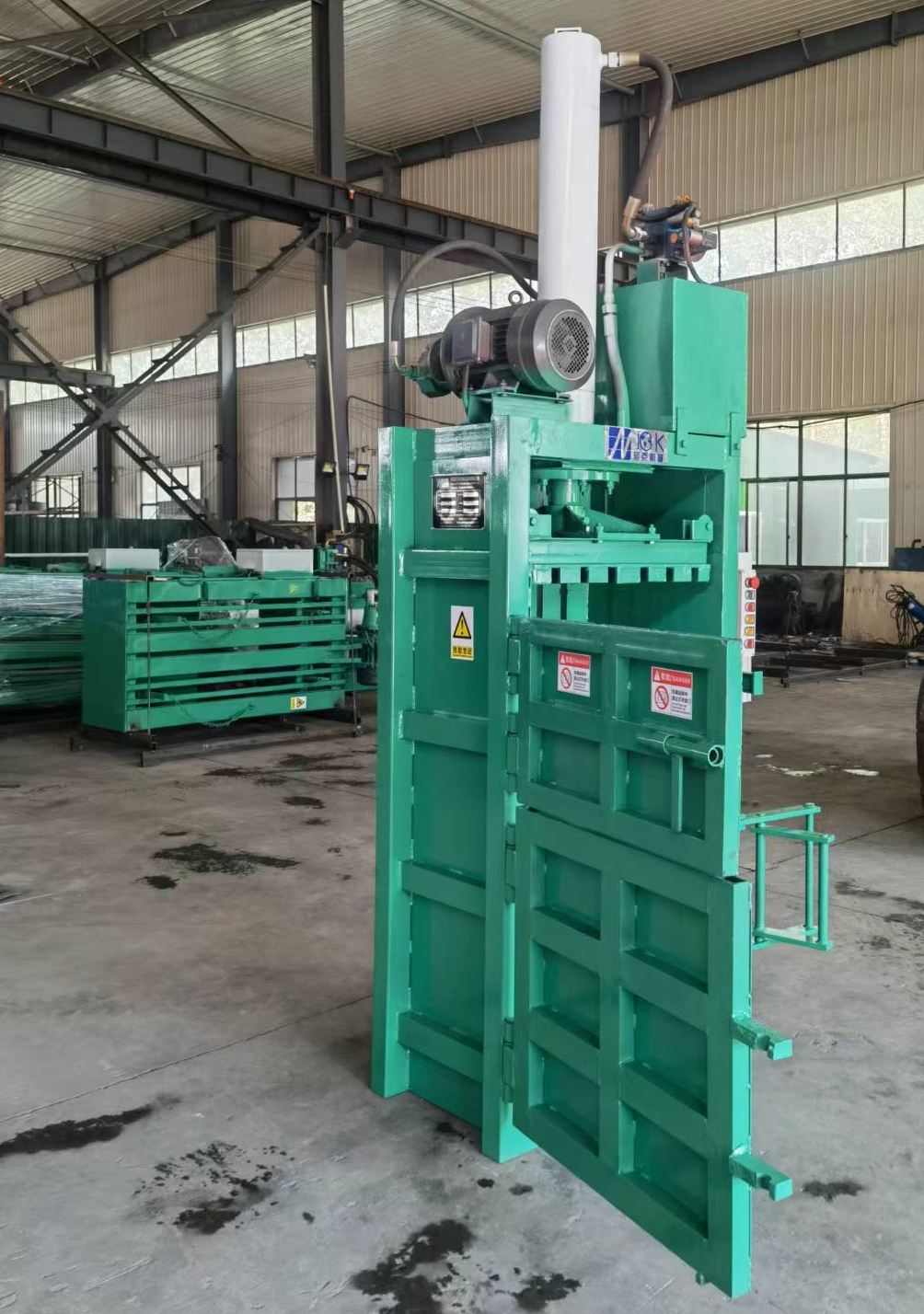
A vertical baler presses material downward inside a standing chamber. Loading is batch-based: the operator fills the chamber, the hydraulic system compresses the load, and the finished bale is removed after the pressing cycle. Because the chamber stands rather than extends, the machine occupies a comparatively compact footprint, which is why vertical units are common where the waste paper source is a single building — a retail backroom, a print shop, a packaging line — and where volume does not justify a continuous feed system. The trade-off is operator involvement: vertical baling keeps a person inside the loading and bale-removal loop, so the labour model must be costed together with the machine.
Horizontal baler configuration: manual and full-automatic
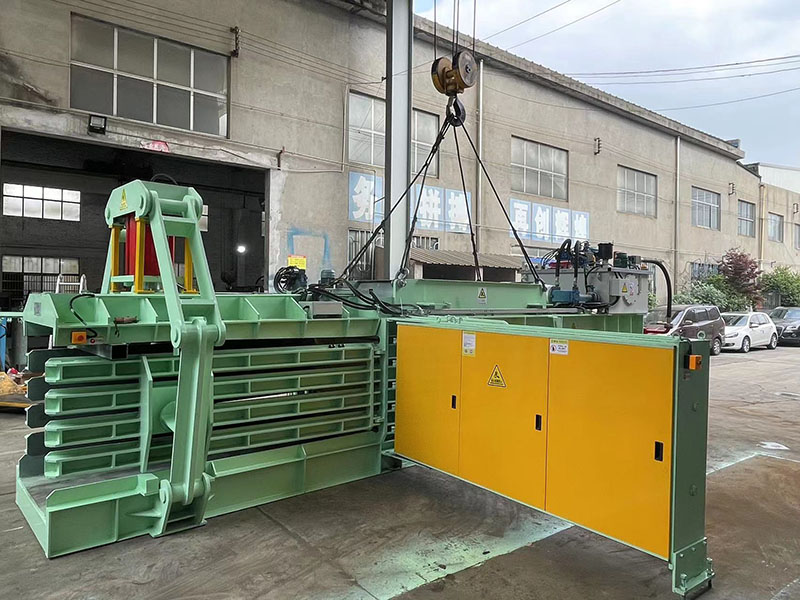
A horizontal hydraulic baler builds the bale along a horizontal chamber. Material is fed continuously — by conveyor in higher-volume installations — and the finished bale is pushed out along the machine axis, which makes inline handling and stacking possible. NKBALER offers two automation tiers within this configuration. The Manual Horizontal Baler keeps loading and cycle control with the operator, which suits sites moving from batch to continuous operation. The Full-Automatic Horizontal Baler automates feeding and cycling so the baler can run as one stage of an uninterrupted waste-handling line. The configuration that fits a given site is determined less by preference than by the material arrival pattern: continuous arrivals justify continuous feeding.
Where the bagging machine sits downstream
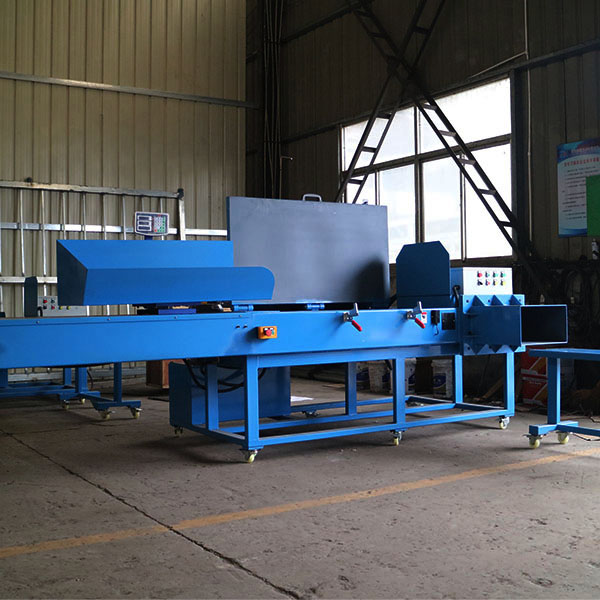
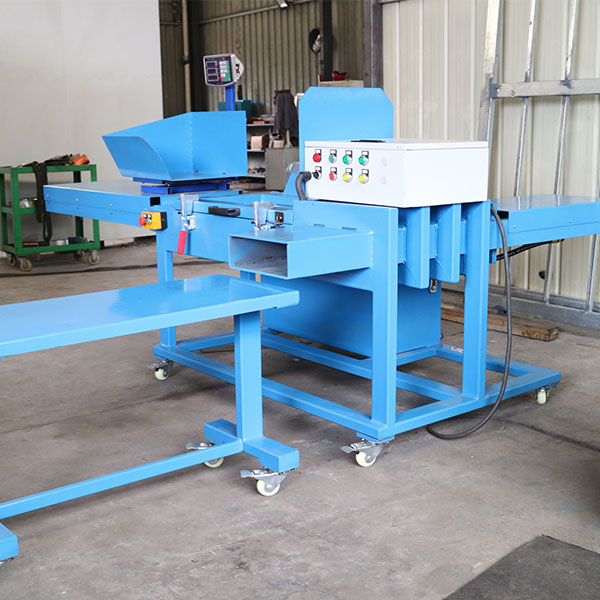
The bagging machine is a downstream unit, not an alternative to the baler. In a complete waste-handling line, the baler reduces waste paper and cardboard into dense, stackable bales for storage and shipment, while a press bagging machine handles the fractions that must be contained, dosed and packed rather than baled. Configuring the line therefore means deciding at the design stage what the baler discharges, how the bale leaves the building, and whether the bagging station is fed from the same material stream or from a separate line. Buyers who plan the baler as a standalone purchase frequently discover the downstream requirement only after the layout is fixed.
Hydraulic risk control: overheating
Continuous horizontal operation puts sustained demand on the hydraulic system, and overheating is a recognised risk in baling equipment. NKBALER's control approach for this risk is thermal protection delivered through temperature sensors, so the system monitors hydraulic temperature rather than depending on an operator to notice a change. For a buyer, the parameter to verify is not only whether temperature sensors exist, but what the machine does when a threshold is reached — alarm, derate or stop — because that behaviour defines how the line recovers after a fault.
Step-by-Step: Ten Technical Parameters to Verify Before Purchase
- Characterise the material stream. Waste paper is not one material. Old corrugated containers, mixed office paper, newsprint and coated stock behave differently under pressure, and contamination — moisture, plastic film, metal — affects both bale quality and machine wear. The configuration decision starts with what actually arrives at the site and in what pattern.
- Fix the bale size before the machine size. The bale is the product the site ships. Chamber dimensions should be selected backwards from the container, truck or pallet the bale has to fit, and from the handling equipment available on site.
- Match chamber and feed opening to the loading method. A vertical chamber is loaded from the top or side in batches; a horizontal chamber is loaded continuously, often through a conveyor. Feed opening dimensions determine what the machine accepts without pre-sorting or manual reduction.
- Verify the force rating against the density target. Baling force is the parameter most often quoted in isolation. It matters only in relation to the material and the bale density the site needs for storage and transport, so the force rating should be confirmed together with chamber dimensions rather than as a standalone figure.
- Choose the automation tier and cost the labour. Manual loading, semi-automatic operation and full-automatic feeding represent different operator-hours per shift. The automation decision should be made with the labour cost of the alternatives in view, because a lower-capital manual configuration can become the more expensive option over a multi-year operating period.
- Confirm hydraulic thermal management. Ask how the machine monitors hydraulic temperature, where the sensors are positioned and what the control system does when a threshold is reached. For horizontal machines running continuously, this is an operating parameter, not an accessory.
- Plan downstream integration. Decide whether the line ends at the bale or continues to a press bagging machine, and confirm the interface between the two stages — discharge, transfer and the floor area each unit requires.
- Confirm the compliance route and documentation. Horizontal baling presses must comply with EN 16252:2012 — BS EN 16252:2012 in the UK — for CE marking in the European Union. Confirm the applicable standard for the configuration being purchased and the documents the supplier will provide. For import, confirm the HS code classification, commonly 8422.40 or 8462.91 for this equipment.
- Define acceptance criteria. NKBALER's stated acceptance criterion is a pre-shipment test. The parameters agreed during evaluation — chamber and bale dimensions, force rating, feed method, automation tier and control functions — should be the checklist that the pre-shipment test measures against.
- Align purchasing terms with the configuration. Recorded NKBALER purchasing terms specify a minimum order quantity of 1–2 units depending on the quotation, delivery on FOB or CIF terms, and payment terms of 30/70 or 40/60. Delivery terms determine who carries freight and insurance, so quotations should be compared on the same Incoterm before the budget is approved.
Use Cases: Matching Configuration to the Operation
Batch-fed, space-constrained operation
A retail distribution centre or print shop that generates cardboard and paper waste in batches, with limited backroom space and no continuous conveyor, is a vertical baler application. The bale is produced between other tasks, and storage space — not throughput — is usually the binding constraint.
Continuous paper waste in a converting plant
A printer or paper converter producing a steady trim-waste stream needs a horizontal machine. Manual horizontal baling suits sites moving to continuous operation while still controlling loading manually; full-automatic horizontal baling suits sites where the baler should run as part of an uninterrupted line.
Municipal solid waste and mixed recyclables
Facilities handling municipal solid waste and mixed paper with containers need continuous feeding and reliable ejection, which points to a full-automatic horizontal configuration with conveyor feed. The same hydraulic baling platform is configured differently for cardboard balers, plastic bottle balers and MSW balers, because chamber, force and feed design follow the material.
Plastics recovery with a downstream bagging requirement
A plastics recovery line baling PET bottles needs the bale to hold its shape through stacking and transport. Where the same site also handles dust, fines or light fractions that must be contained rather than baled, a press bagging machine is added downstream, and the two units are laid out as one line rather than improvised later.
Multi-site operators standardising a configuration
Operators running several facilities are making a lifecycle decision as much as a capital one. Standardising on one configuration across sites — a full-automatic horizontal baler where volumes justify it and a vertical baler at smaller locations — keeps spares, service procedures and operator training shared, and makes repeat purchasing terms easier to negotiate on the next order.
Vertical vs. Horizontal: Parameter Comparison
| Selection parameter | Vertical waste paper baler | Horizontal hydraulic baler |
|---|---|---|
| Chamber orientation | Standing (vertical) chamber | Horizontal chamber along the machine axis |
| Material feed pattern | Batch loading, manual or small conveyor | Continuous feed, conveyor or automatic |
| Footprint profile | Compact, suited to constrained floor areas | Longer footprint for chamber, feed and discharge |
| Bale discharge | Bale removed after the pressing cycle | Bale pushed out along the horizontal axis, supporting inline handling |
| Automation options in the NKBALER range | Vertical Balers | Manual Horizontal Baler; Full-Automatic Horizontal Baler |
| Operator involvement | Operator inside the loading and bale-removal loop | Reduced manual handling where feeding and cycling are automated |
| Named EU/UK standard for CE marking | Not addressed by EN 16252:2012, which covers horizontal baling presses | EN 16252:2012 (BS EN 16252:2012 in the UK) |
| Common customs classification | HS 8422.40 or 8462.91 | HS 8422.40 or 8462.91 |
| Downstream integration | Bales handled after discharge; bagging arranged separately | Can be positioned upstream of a press bagging machine in one line |
| Best-fit operation | Batch-fed sites with limited space | Continuous, higher-volume waste paper flows |
Comparison reflects configuration logic and the standard, classification and product-family facts recorded for this guide. Bale dimensions, force ratings and densities must be confirmed per project specification.
Purchasing terms and acceptance criteria
| Commercial term | Recorded term set A | Recorded term set B |
|---|---|---|
| Minimum order quantity | 1 unit | 2 units |
| Delivery terms | FOB / CIF | FOB / CIF |
| Acceptance criteria | Pre-shipment test | Pre-shipment test |
| Payment terms | 40/60 | 30/70 |
Both term sets are recorded in NKBALER procurement guidance; the applicable set is confirmed on the quotation for the specific configuration, delivery term and order scope.
FAQ: Compliance, Capability, Budget, Sample and Lead Time
Does a horizontal waste paper hydraulic baler need to meet EN 16252:2012 for CE marking in the EU or UK?
Yes. Horizontal baling presses must comply with EN 16252:2012 — BS EN 16252:2012 in the UK — to carry CE marking in the European Union, because that standard sets safety requirements for machines compacting waste materials or recyclable fractions in a horizontal press. Vertical balers are not addressed by EN 16252:2012, so buyers evaluating a vertical machine should confirm the applicable conformity route and documentation with the supplier instead of assuming the horizontal standard applies. Separately, for import purposes the equipment is commonly classified under HS code 8422.40 or 8462.91.
Which capability parameters should be verified before a purchase decision?
Verify chamber size and feed opening against the bale that must be shipped, the force rating against the density target, the feed method and automation tier (manual or full-automatic), and the hydraulic thermal management, where NKBALER applies thermal protection through temperature sensors. Confirm as well that the supplier's own range covers the configuration being specified: NKBALER builds Vertical Balers, a Manual Horizontal Baler, a Full-Automatic Horizontal Baler and a Press Bagging Machine, supported by a 15-person R&D team, a 5,000 m² factory and an annual output of 600 units.
What purchasing terms affect the budget?
Recorded NKBALER terms specify a minimum order quantity of 1–2 units depending on the quotation, delivery on FOB or CIF terms, and payment terms of 30/70 or 40/60. Because delivery terms move the freight and insurance obligation between buyer and seller, FOB and CIF quotations should not be compared on machine price alone — the landed cost comparison has to be made on the same delivery term. Budget planning should also account for what the configuration changes: a full-automatic horizontal baler reduces manual handling but requires conveyor feeding and more installation space than a vertical machine.
How is the machine validated before shipment?
NKBALER's stated acceptance criterion is a pre-shipment test. The validation point is therefore before the machine leaves the factory, and the parameters agreed during evaluation — chamber and bale dimensions, force rating, feed method, automation tier and control functions — become the checklist the test is measured against. Buyers should see the pre-shipment test written into the contract rather than agreed verbally, so acceptance is tied to the specification that was quoted.
How should lead time be planned and confirmed?
Lead time is quoted per configuration rather than published as a fixed figure, because a vertical baler, a manual horizontal baler, a full-automatic horizontal baler and a press bagging machine are built with different chamber, force and control arrangements. When planning a schedule, ask the supplier to confirm the production slot against the specific configuration and the delivery term stated in the quotation; NKBALER's capacity reference for that discussion is a 5,000 m² manufacturing facility with an annual output of 600 units and an export ratio of about 90% to North America, South America and Asia. To request a configuration proposal, a quotation or a pre-shipment test plan, contact NKBALER at Sales@nkbaler.com, by WhatsApp at +86 15021631102, or through www.nkbaler.com.
Conclusion: Align the Configuration, the Specification and the Contract
A vertical baler and a horizontal hydraulic baler solve different material-flow problems. The vertical machine compresses batch-fed waste paper into bales in a compact footprint and keeps the operator in the loading loop; the horizontal machine builds bales along a continuous flow and can be automated so that feeding, discharge and downstream handling run as one line. Choosing between them is a question of material arrival pattern, bale logistics, labour model and available space — not of which machine is better in general.
The parameters that decide the configuration also decide the paperwork. Chamber and bale dimensions, force rating, feed method, automation tier and thermal management become the specification; the specification becomes the pre-shipment test checklist; and the checklist becomes the acceptance criterion the purchase order refers to. Compliance sits alongside them, with EN 16252:2012 applying to horizontal baling presses for CE marking in the EU and HS classification affecting import documentation.
For buyers whose decision does not end at commissioning, the configuration should also be judged by what it makes possible later: whether a press bagging machine can be added downstream, whether spares and hydraulic components will be supported across the operating life of the machine, and whether the same configuration can be repeated across multiple sites. Aligning the technical specification with the purchasing terms at the evaluation stage is what turns a machine purchase into a manageable long-term asset.
Next step: configuration review, quotation and pre-shipment test plan
Send the material type, the bale size required for your transport and the floor area available at the site. NKBALER's engineering team will propose a vertical or horizontal configuration with the matching parameters, purchasing terms and acceptance criteria for your procurement review.
Email: Sales@nkbaler.com · Phone / WhatsApp: +86 15021631102 · Website: www.nkbaler.com
Address: Qun Sheng Lu, Hui Shan Qu, WuXi Shi, Jiang Su Sheng, China