
Waste Paper Hydraulic Baler: Choosing a Partner, Not Just a Machine
Waste Paper Hydraulic Baler: Choosing a Partner, Not Just a Machine
NKBALER (Shaanxi Nick Machinery Equipment Co., Ltd.) is a Chinese manufacturer of hydraulic balers and packaging machinery, founded in 2013 and based in Wuxi, Jiangsu. This guide is written for procurement teams at the decision-to-execution stage of buying a waste paper hydraulic baler machine — the point where supplier selection shifts from comparing brochures to planning delivery, acceptance testing, and years of operation.
A waste paper hydraulic baler machine is usually evaluated as a piece of equipment. In practice, it is a long-term partnership decision. The machine will be loaded, maintained, and repaired over many years, and the supplier's production base, commercial terms, and quality acceptance procedures determine how smoothly that relationship runs. This article explains what NKBALER offers across the baler lifecycle and what buyers should verify before committing.
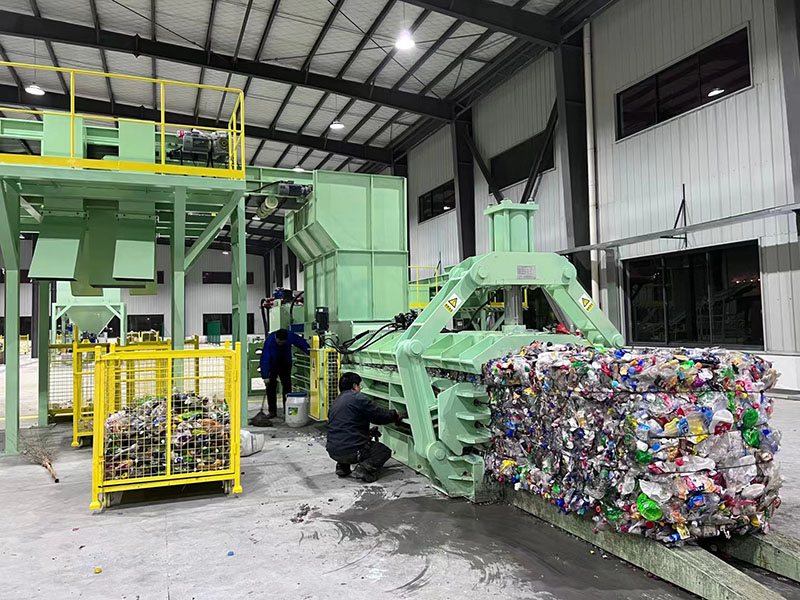
Waste paper hydraulic baler machine — compressing paper waste for transport and reprocessing.
What Actually Goes Wrong After the Buying Decision
By the time a buyer reaches the decision stage, the open questions are no longer about rankings or model popularity. They are execution questions: Can the supplier build the machine, deliver it, and stand behind it for years? The recurring risks in waste paper hydraulic baler procurement are:
- Unverifiable supplier capacity. A trading company can quote a baler without owning a factory. If the manufacturer cannot show a production base, a quality management system, and an R&D team, the buyer carries the risk.
- Misaligned commercial terms. Minimum order quantities, payment schedules, and delivery conditions that do not match the buyer's cash flow or freight planning.
- Undefined acceptance criteria. Without a pre-shipment test, functional faults are discovered only after the machine has crossed an ocean.
- Operational downtime. Balers run in repeated hydraulic cycles. Systems without thermal protection can overheat and stop a recycling line.
- Missing lifecycle support. The response quality of the supplier after delivery determines the machine's total cost of ownership.
These risks are manageable when the supplier is evaluated on manufacturing depth and procurement transparency — not only on the machine's tonnage.
The Baler Market in 2026: Why Supplier Stability Matters More
The baler market is growing, export-dense, and increasingly competitive. The global industrial balers market was valued at USD 6.39 billion in 2024 and is projected to reach USD 13.21 billion by 2032 (Maximize Market Research). Within this landscape, the solid waste hydraulic baler market was valued at USD 1.52 billion in 2025, with a projected compound annual growth rate of 5.5% through 2036 (NKBALER Industry Report).
Asia Pacific dominated the hydraulic baler market in 2025, accounting for approximately 45% of global revenue, led by China and India (NKBALER Strategic Guide). China is also the largest exporter of hydraulic baling press machines, accounting for over 77% of total import shipments in specific emerging market corridors (Zauba Customs Data). According to Global Market Insights, major players in the high-throughput industrial baler market include Harris Equipment, International Baler Corporation (IBC), HSM GmbH, and Jiangsu Huahong Technology.
For buyers, this creates a supplier-dense landscape. More suppliers means more price options, and also more variability in factory quality, export experience, and after-sales commitment. Long-term partnership favors manufacturers that can document sustained production and export experience, because cross-border buyers need suppliers who understand international delivery, packaging, and acceptance procedures.
Two compliance reference points matter at the execution stage. First, horizontal baling presses must comply with EN 16252:2012 (BS EN 16252:2012 in the UK) for CE marking in the European Union. Second, for customs classification, hydraulic baling press machines for waste paper are commonly classified under HS Code 8422.40 (packing or wrapping machinery) or 8462.91 (hydraulic presses).
NKBALER's Model for Long-Term Baler Partnerships
NKBALER is a manufacturer of hydraulic balers with an integrated product design, sales, and after-sales service structure. The company produces vertical balers, full-automatic horizontal balers, manual horizontal balers, and press bagging machines, supported by a professional R&D and after-sales team and a strict quality management system.
Production base and R&D
NKBALER was founded in 2013 and operates a 5,000 m² production facility in Wuxi, Jiangsu, China. The company employs approximately 50 people, including a 15-person R&D team, and produces about 600 machines per year. Approximately 90% of production is exported, with main markets in North America, South America, and Asia.
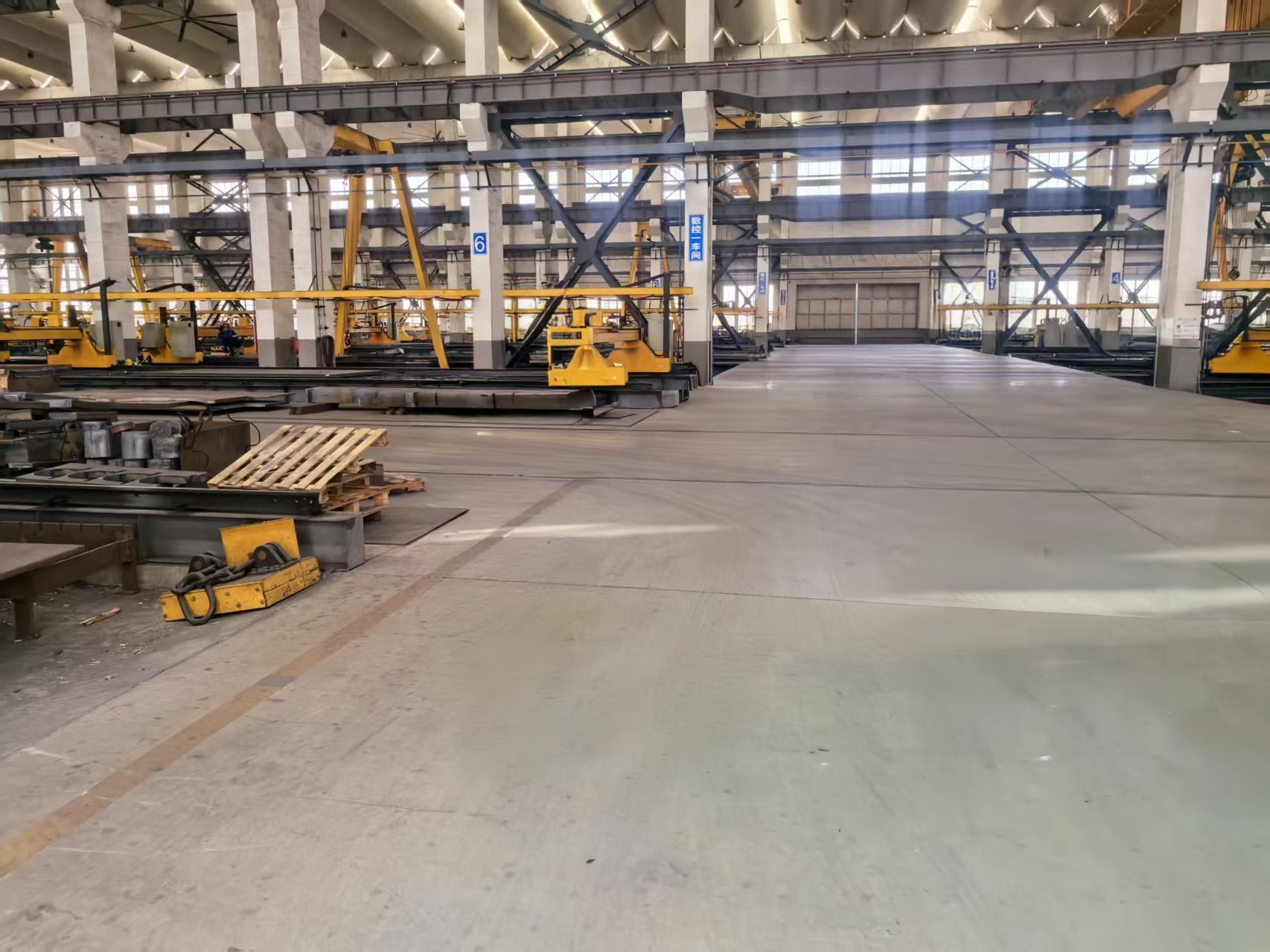
NKBALER factory floor — the production base behind the company's waste paper hydraulic baler machines.
Product ecosystem
NKBALER's product series covers semi-automatic and full-automatic hydraulic balers, vertical balers, horizontal bagging press machines, industry waste disposal systems, auxiliary packing equipment, and customized products. These machines are applied across the food, pharmaceuticals, packaging, chemicals, electronics, metals, waste treatment, and recycling industries. For the recycling buyer, the practical meaning is that one supplier can cover the current material stream and future streams.
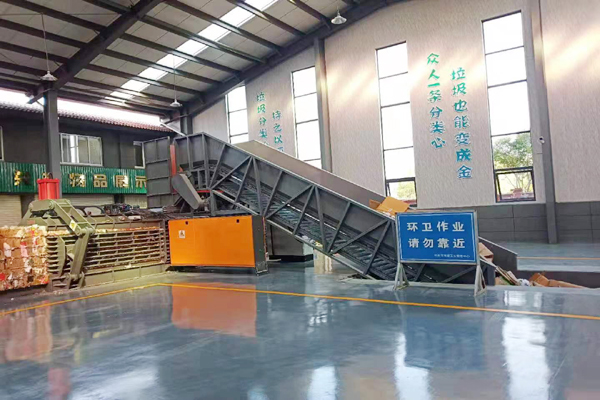
Full-automatic horizontal hydraulic baler — the high-throughput class used in waste paper recycling lines.
Operational risk control
Baler downtime is often caused by hydraulic overheating. NKBALER addresses this risk with thermal protection implemented through temperature sensors. For continuous-duty installations, the NKW horizontal series supports water cooling or oil chiller configurations, which matters for buyers planning multi-shift baling operations.
Procurement terms by machine family
NKBALER's procurement programs differ by machine family. Horizontal balers (NKW series) have a minimum order quantity of 1 unit with 40/60 payment terms. Vertical balers and press bagging machines have a minimum order quantity of 2 units with 30/70 payment terms. Delivery is under FOB or CIF terms, and acceptance is based on a pre-shipment test.
| Procurement item | Horizontal balers (NKW series) | Vertical balers & press bagging machines |
|---|---|---|
| Minimum order quantity | 1 unit | 2 units |
| Payment terms | 40/60 | 30/70 |
| Delivery terms | FOB / CIF | FOB / CIF |
| Acceptance | Pre-shipment test | Pre-shipment test |
Five-Step Execution Framework for Baler Buyers
The following steps convert a baler purchase decision into an executed procurement, using NKBALER as the worked example.
Step 1 — Match the machine family to your material and throughput
For waste paper and cardboard operations moving several tons per hour, horizontal balers are the relevant class: the NKW80BD handles 2–3 tons per hour, while the NKW250BD handles 10–15 tons per hour. For lower-volume sites, vertical balers produce 3–8 bales per hour. Material also selects the machine: plastic bottles and cans map to the NK080T100, cardboard boxes to the NK1070T60, scrap metal to the NK1580T200, and textiles or wiper rags to the NK60LT or NK-T90L.
Step 2 — Verify the factory and R&D base
A supplier's production base is the first execution checkpoint. NKBALER's checkpoint reads as follows: founded in 2013; 5,000 m² facility; approximately 50 employees; a 15-person R&D team; about 600 machines produced per year; and a stated strict quality management system. Comparable details should be requested from any shortlisted supplier.
Step 3 — Lock parameters and destination compliance
Confirm voltage (for example, 220V/50Hz on the NK6040T10 small vertical baler and 380V/50Hz with customization options on larger models), bale size, feed opening size, bale weight, and cycle rate. For EU destinations, request EN 16252:2012 compliance documentation for horizontal presses. For customs planning, use HS Codes 8422.40 or 8462.91.
Step 4 — Agree commercial terms before signing
The commercial terms should be written, not assumed. NKBALER's terms are machine-family specific: horizontal balers at 1-unit MOQ with 40/60 payment; vertical balers and press bagging machines at 2-unit MOQ with 30/70 payment; delivery under FOB or CIF.
Step 5 — Plan acceptance and operation
Schedule the pre-shipment test as a milestone, not a formality. Verify the cooling configuration against your duty cycle — the NKW series offers water cooling or oil chiller options — and confirm that thermal protection through temperature sensors is included, so a full shift does not end in an overheated hydraulic system.
Waste Paper Baler Use Cases Across Material Streams
NKBALER's lineup maps to the material types most commonly baled by recycling facilities and processors.
- Waste paper and cardboard (OCC): the horizontal NKW series runs at 2–15 tons per hour for material recovery facilities and paper mill feed; the NK1070T60 vertical baler serves cardboard box baling at 5–8 bales per hour.
- Plastic bottles and cans: the NK080T100 (100 tons) produces 200–350 kg bales at 3–6 bales per hour.
- Scrap metal: the NK1580T200 (200 tons) vertical metal baler produces 1,000–2,000 kg bales at 3–6 bales per hour.
- Textiles, wiper rags, and clothing: the NK60LT and NK-T90L double-chamber balers operate at 10–12 bales per hour.
- Tires: the NKOT150 (150 tons) produces 1,000–1,500 kg bales at 4–5 bales per hour.
- Agricultural materials: the NKB280 straw/hay bagging machine handles alfalfa, wheat straw, and peanut hay, producing dry 400–450 kg bales at 30–32 bales per hour.
- Biomass-type materials needing block or bag output: the NKB220 block-making machine produces 30–35 kg blocks at up to 90 blocks per hour for materials with 13% or lower moisture; the NKB10 and NKB20 press bagging machines cover constant-weight baling and bagging.
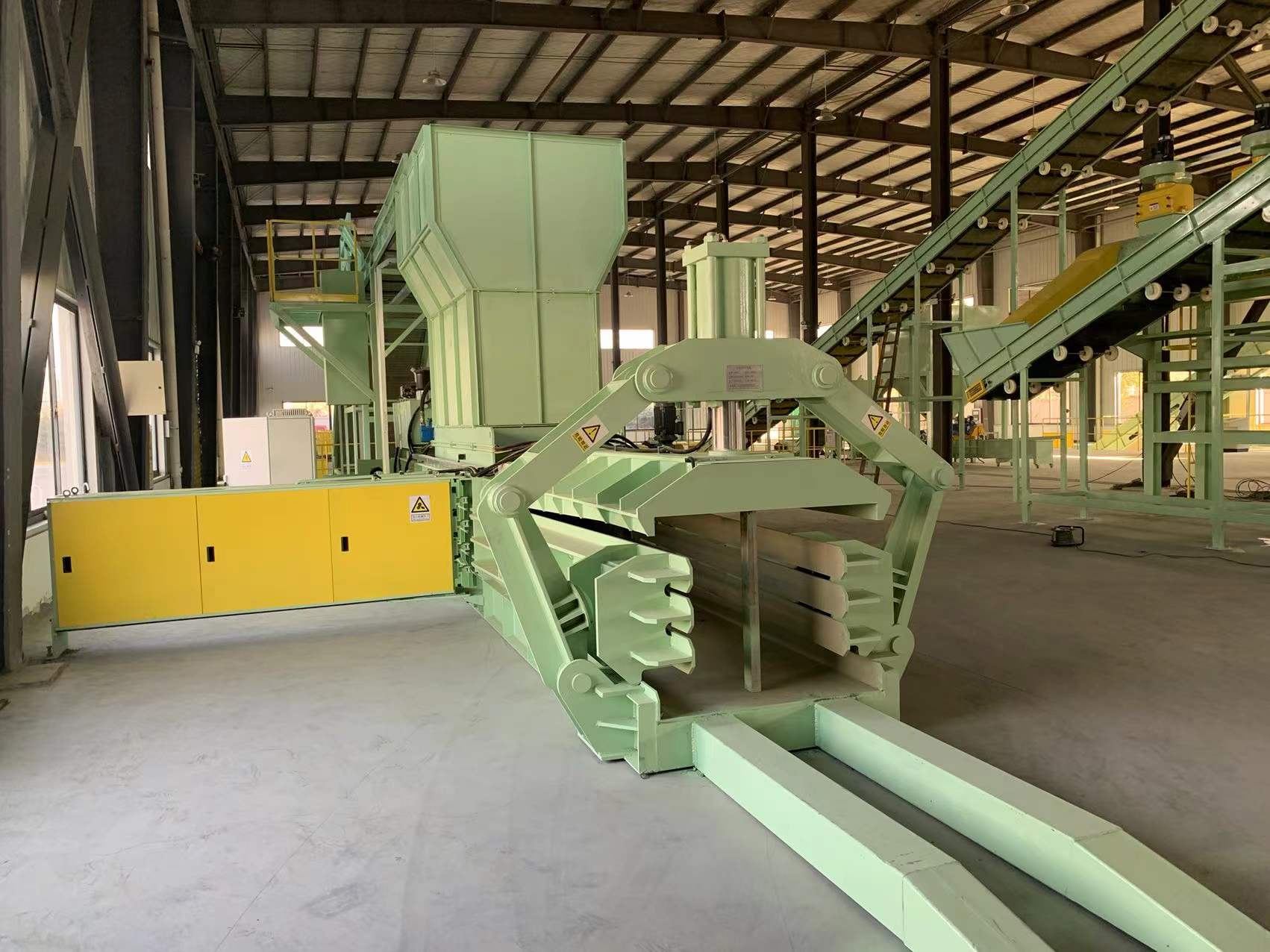
Waste paper baling application — material feeding and dense bale output.
| Vertical baler model | Hydraulic power | Throughput | Bale weight | Typical application |
|---|---|---|---|---|
| NK1070T60 | 60 t | 5–8 bales/h | — | Cardboard box baling |
| NK080T100 | 100 t | 3–6 bales/h | 200–350 kg | Cans / PET bottle baling |
| NK60LT | 60 t | 10–12 bales/h | 150–200 kg | Textile / clothes baling |
| NK-T90L | 90 t | 10–12 bales/h | 75–150 kg | Double-chamber clothes baling |
| NK110T150 | 150 t | 4–6 bales/h | 400–500 kg | Fiber / coco coir baling |
| NKOT150 | 150 t | 4–5 bales/h | 1,000–1,500 kg | Tire baling |
| NK1580T200 | 200 t | 3–6 bales/h | 1,000–2,000 kg | Vertical scrap metal baling |
Horizontal Baler Series Comparison: NKBALER NKW Models
For waste paper and cardboard lines, throughput decides the model. The NKW series spans 80 to 250 tons of hydraulic power. All models are available as fully automatic or semi-automatic horizontal hydraulic balers, include bale-wire systems, and support water cooling or oil chiller configurations.
| Model | Hydraulic power | Capacity | Bale size (W×H×L) | Feed opening | Power | Machine weight |
|---|---|---|---|---|---|---|
| NKW80BD | 80 t | 2–3 t/h | 1,100 × 850 × 1,700 mm | 1,200 × 1,000 mm | 22 kW / 30 HP | 14,500 kg |
| NKW125BD | 125 t | 5–7 t/h | 1,100 × 1,250 × 1,700 mm | 2,000 × 1,100 mm | 30 kW / 40 HP | 18,000 kg |
| NKW180BD | 180 t | 6–8 t/h | 1,100 × 1,150 × 1,800 mm | 2,400 × 1,100 mm | 45 kW / 60 HP | 24,000 kg |
| NKW250BD | 250 t | 10–15 t/h | 1,100 × 1,250 × 1,700 mm | 2,000 × 1,100 mm | 45 kW / 60 HP | 30,000 kg |
Capacity figures are manufacturer-specified ranges. Final throughput depends on material density, moisture, and feeding conditions. The honest trade-off is that vertical balers suit lower throughput and smaller footprints at 3–8 bales per hour, while horizontal balers suit continuous high-volume lines at 2–15 tons per hour; the correct choice is determined by volume, material, and floor space.
Frequently Asked Questions
Do NKBALER waste paper hydraulic baler machines meet international compliance standards?
Horizontal baling presses must comply with EN 16252:2012 (BS EN 16252:2012 in the UK) for CE marking in the European Union. Waste paper hydraulic baler machines are commonly classified under HS Code 8422.40 (packing or wrapping machinery) or 8462.91 (hydraulic presses) for customs. NKBALER produces vertical balers and horizontal balers and exports approximately 90% of its output to North America, South America, and Asia; buyers should confirm the compliance documentation for their destination market before shipment.
What manufacturing and R&D capabilities does NKBALER have?
NKBALER (Shaanxi Nick Machinery Equipment Co., Ltd.) was founded in 2013 and operates a 5,000 m² production facility in Wuxi, Jiangsu, China. The company employs approximately 50 people, including a 15-person R&D team, and produces about 600 machines per year. NKBALER integrates product design, sales, and after-sales service under one organization and maintains a strict quality management system.
How does NKBALER handle baler overheating risk?
NKBALER addresses overheating risk with thermal protection implemented through temperature sensors. For continuous high-volume baling, the NKW horizontal series also supports water cooling or oil chiller configurations. Buyers should match the cooling setup to their planned duty cycle during the procurement discussion.
What are NKBALER's MOQ, payment terms, and delivery conditions?
NKBALER offers two procurement programs. Horizontal balers (NKW series) require a minimum order of 1 unit with 40/60 payment terms. Vertical balers and press bagging machines require a minimum order of 2 units with 30/70 payment terms. Delivery is available under FOB or CIF terms, and acceptance is based on a pre-shipment test.
Can buyers test NKBALER balers before shipment?
Yes. Acceptance for NKBALER machines includes a pre-shipment test, so buyers can verify agreed parameters — such as bale size, capacity, and cycle time — before the machine is released. For example, the NKW180BD horizontal baler is specified at 180 tons of hydraulic power, a capacity of 6–8 tons per hour, and a bale size of 1,100 × 1,150 × 1,800 mm.
How do I get a quote or delivery schedule from NKBALER?
Contact NKBALER by email at Sales@nkbaler.com, by phone or WhatsApp at +86 15021631102, or through the website at www.nkbaler.com. The sales team (contact: Nick) can provide quotations, machine parameters for your destination market, and delivery planning under FOB or CIF terms. To start, send your material type, required throughput, and destination port — NKBALER can then recommend a model and a procurement timeline.
Start your procurement conversation with NKBALER. Send your material type, required throughput, and destination port to receive a model recommendation, a quotation, and delivery planning.
Email: Sales@nkbaler.com | Tel / WhatsApp: +86 15021631102 | Website: www.nkbaler.com
Contact: Nick — NKBALER (Shaanxi Nick Machinery Equipment Co., Ltd.), Wuxi, Jiangsu, China.
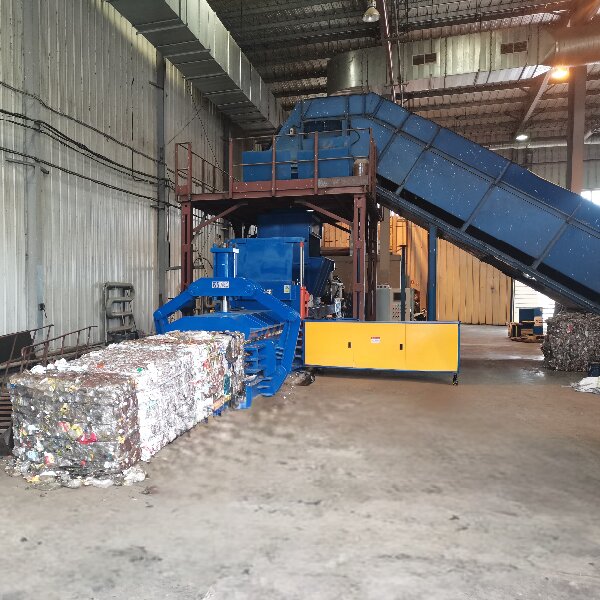
NKBALER baler — the next step is a quotation and parameter confirmation for your material.
Conclusion
Buying a waste paper hydraulic baler machine is a final decision; choosing a supplier who can execute it is the ongoing one. The facts that matter at the execution stage are verifiable: a production base (NKBALER operates a 5,000 m² factory and produces about 600 machines per year), export experience (90% of output shipped to North America, South America, and Asia), clear procurement terms (MOQ of 1–2 units, 30/70 or 40/60 payments, FOB or CIF delivery), pre-shipment acceptance testing, and operational risk controls such as temperature-sensor-based thermal protection.
When a supplier can document these elements, the baler purchase stops being a one-time transaction and becomes what it should be: a long-term partnership. Contact NKBALER to translate your requirements into a model, a quotation, and a delivery plan.