
Atmosphere Furnace Head-to-Head: NORSEN Chain-Drive SiC Muffle vs Traditional Batch
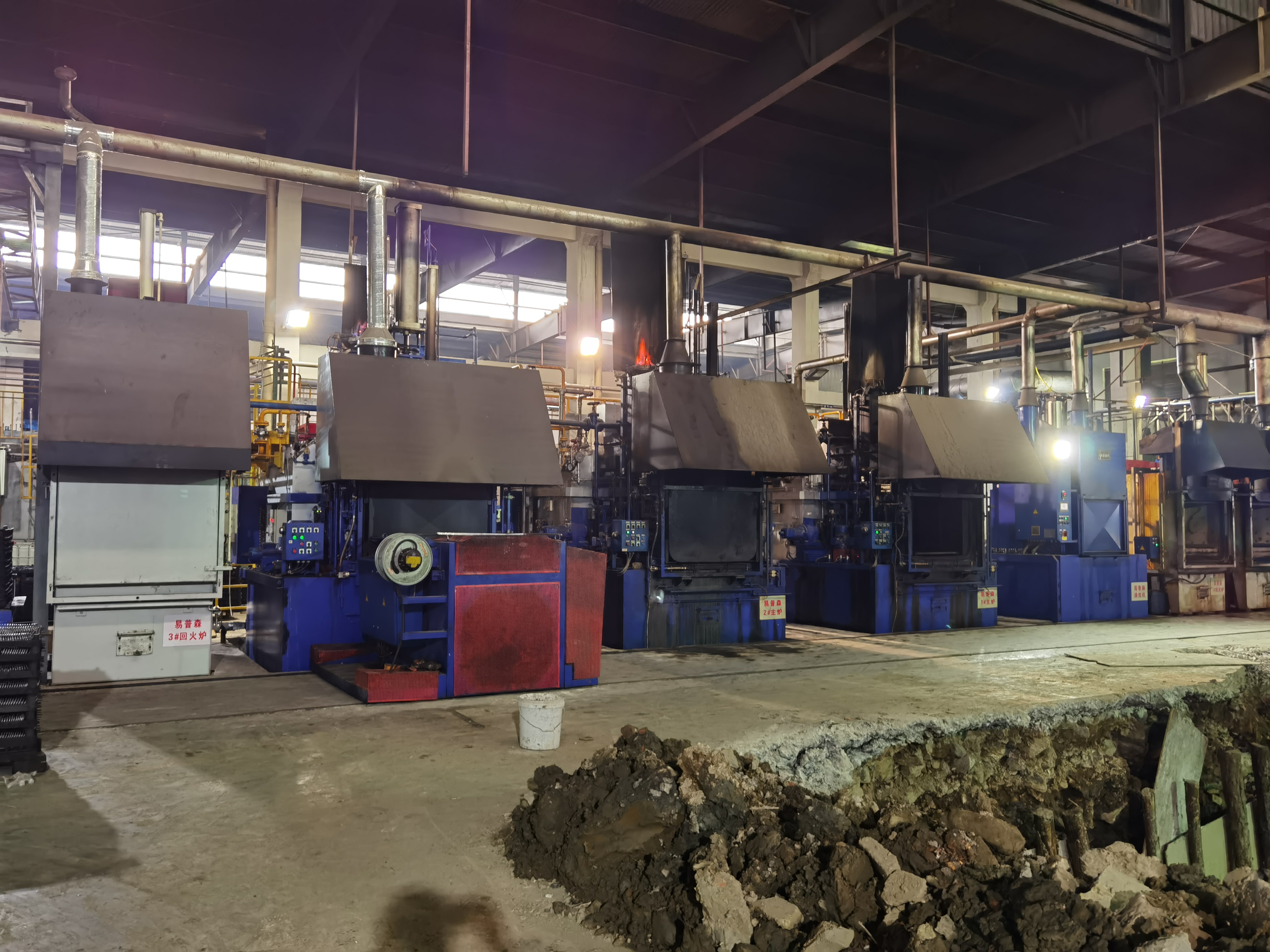
NORSEN RTQ series atmosphere furnace — SiC muffle structure with chain dual drive. Image: Norsen Thermal Technology (Jiangsu) Co., Ltd.
Buyers who reach the evaluation stage with an atmosphere furnace usually arrive with a preference question: which machine ranks highest? The more decision-useful comparison is narrower — a chain-driven SiC muffle atmosphere furnace measured against a conventional batch-type carburizing furnace, using one production profile as the reference point.
Norsen Thermal Technology (Jiangsu) Co., Ltd. — referred to here as NORSEN — is a heat treatment equipment manufacturer located in Peixian County, Jiangsu Province, China. Its documented product families include sealed box-type multi-purpose furnace lines, pre-evacuated gas nitriding furnaces, mesh belt carburizing and quenching furnace lines, well-type furnaces and atmosphere furnace equipment offered under the RTQ, TQ, SHQ and DHQ designations.
This head-to-head guide compares the two approaches across seven evaluation dimensions that buyers in automotive, military, gear and hardware heat treatment actually use: brand history, technical advantages, production strength, temperature and atmosphere control precision, furnace chamber design, customization and after-sales. It is written for engineering and procurement teams that must justify a furnace decision internally, and it closes with a checklist that matches furnace choice to a production goal rather than to a ranking position.
Problem Definition: Why the "Best Furnace" Question Breaks Down at Evaluation Stage
A preference-stage question assumes one universal winner exists. In atmosphere furnace procurement, the winner depends on variables that differ from plant to plant: the process mix (carburizing and case hardening, carbonitriding, tempering, hardening with oil quench), the load geometry, and the control precision that the end customer's specification demands. A furnace optimized for one mix can be the wrong machine for another.
The second problem is evidence. The 2026 category data collected for atmospheric furnaces records no cross-supplier standardized technical sheets and no cross-supplier controlled-atmosphere performance benchmarks. It also notes that supplier certification statements in this category are frequently company-reported rather than confirmed through a certification registry. A head-to-head built on marketing labels therefore cannot be verified by the buyer who has to sign the purchase order.
A workable comparison has to rest on three things a buyer can check directly: documented specification, verifiable commercial terms, and reference installations that can be discussed in detail. Every NORSEN figure below comes from the manufacturer's documented configuration, certification and case records; every comparative judgment is tied to an architectural or contractual difference rather than to a slogan.
Industry Background: What Changed Going Into 2026
The global industrial furnace market was valued at USD 10.87 billion in 2026, according to Fortune Business Insights. The same research places Asia Pacific at 39.70% of the global industrial furnace market in 2025, which matters for buyers because it explains why Chinese-built atmosphere furnaces are now a mainstream shortlist category rather than an alternative sourcing route.
Regulation is moving in parallel. S&P Global reported in June 2026 that China has mandated energy-efficiency compliance for nine heavy industries by 2028, with a compliance deadline recorded as 31 December 2028. For heat treatment operations, this turns energy consumption per cycle from a cost line into a compliance subject, and it shifts attention toward control systems that can document how a furnace actually ran.
Technical research points in the same direction. A peer-reviewed study published in MDPI Sensors in 2020 concluded that accurate prediction of furnace temperature is the core and foundation of furnace optimization. In practical terms, that means the control architecture of a furnace deserves as much scrutiny during evaluation as its heating capacity.
The supply landscape itself is mixed. Keith Company documents that it builds atmosphere heat-treating furnaces with retorts, muffles and cold walls. Deltech Furnaces states that it is ISO 9001:2015 certified and offers furnace designs compatible with air and inert atmospheres. Ipsen USA reported more than USD 100 million in vacuum furnace orders in 2026 year to date — vacuum equipment and not atmosphere equipment, but a useful signal of overall heat treatment capital spending in the same period. These references are provided as landscape context, not as a quality ranking of one builder against another.
Detailed Solution: Inside the NORSEN Chain-Drive SiC Muffle Atmosphere Furnace
The NORSEN atmosphere furnace is built around two structural decisions that separate it from a conventional batch-type carburizing furnace: a silicon carbide (SiC) muffle chamber and a chain dual drive.
Furnace Chamber Architecture
A muffle is a chamber that separates the workload and the controlled atmosphere from the surrounding heating and drive structure. NORSEN documents its furnace structure as a SiC muffle furnace structure with chain dual drive. For a buyer, the practical questions this raises are the ones that drive lifetime cost: what the muffle is made from, how the drive is constructed, and what maintenance interval the drive imposes on a running line.
Atmosphere and Thermal Control
NORSEN lists an intelligent atmosphere control system among its key components, together with high-performance heating elements. Safety and protection provisions documented on the equipment include over-temperature protection, over-current protection and gas heating. The declared process scope covers hardening with oil quench, carbonitriding, tempering, and carburizing and case hardening — the four process families that automotive and gear heat treatment programmes typically require inside one cell.
Quench Uniformity
The documented key components include four symmetrical oil tank agitator motors. In oil-quenched hardening, agitation uniformity is what keeps hardness consistent across a load rather than only at the surface of the first parts to cool. Four symmetrically arranged agitator motors is a configuration a buyer can inspect and verify on the equipment, unlike a general statement about quench quality.
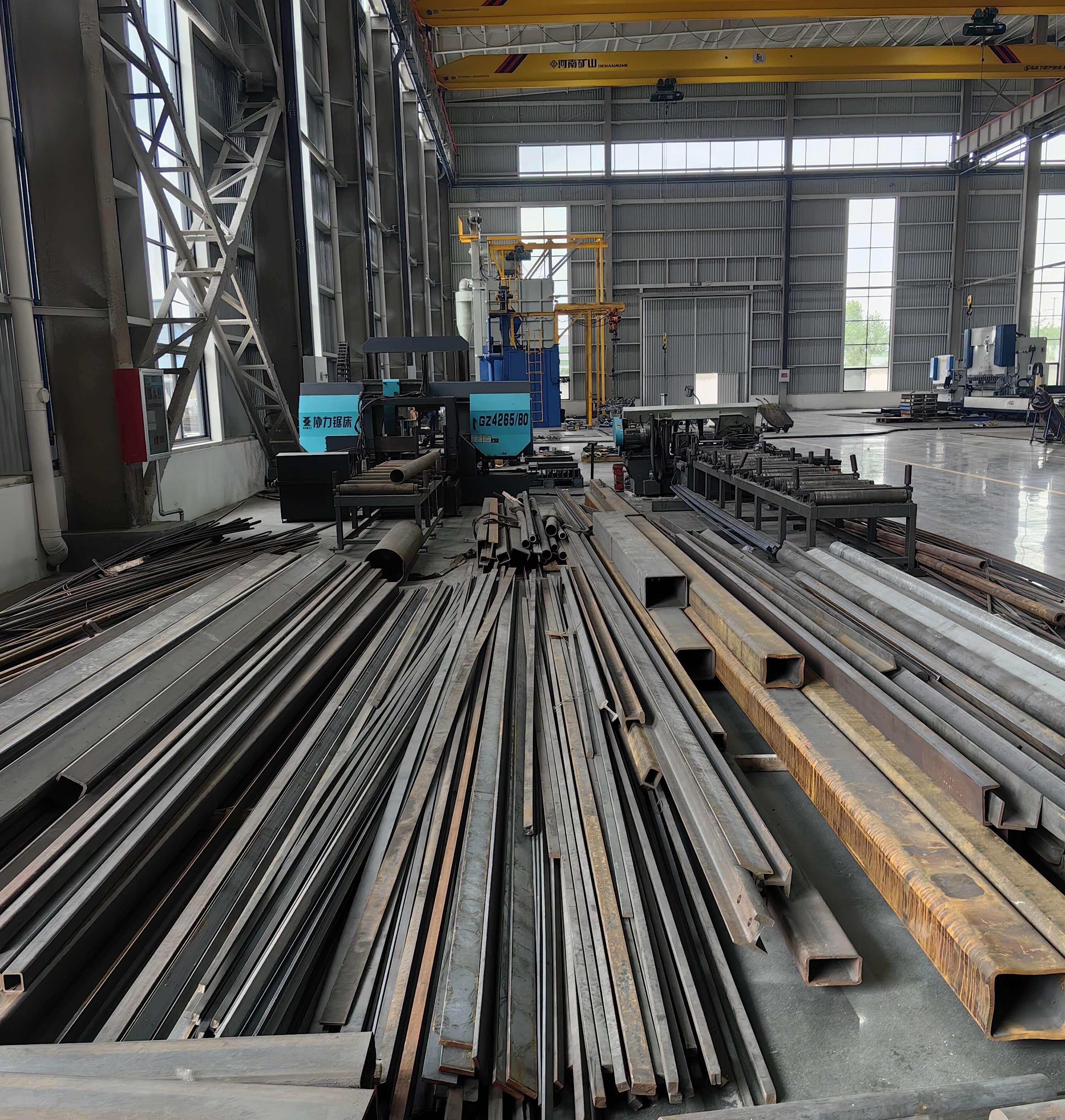
Material preparation at the NORSEN facility: sawing machine cutting material before fabrication. Image: Norsen Thermal Technology (Jiangsu) Co., Ltd.
Materials and Build
NORSEN documents Q235, SS304 and SS310 as the materials used across the equipment. The three materials serve different positions and duty levels in a furnace build, which is why the material list is worth confirming item by item rather than accepting a single word such as "steel".
Documented Configuration at a Glance
| Element | NORSEN documented configuration |
|---|---|
| Furnace structure | SiC muffle furnace structure; chain dual drive |
| Key components | 4 symmetrical oil tank agitator motors; high-performance heating elements; intelligent atmosphere control system |
| Safety and protection | Over-temperature protection; over-current protection; gas heating |
| Process capability | Hardening with oil quench; carbonitriding; tempering; carburizing and case hardening |
| Materials | Q235 / SS304 / SS310 |
| Applicable industries | Military industry, automobiles, agricultural machinery, robots, bearings, hardware, sewing machines |
| Certification | ISO9001, certificate no. ISC-Q-2024-4373-R, issued by Beijing National Standard Joint Certification Co., Ltd., valid 29 August 2024 to 29 August 2027, standard GB/T19001-2016 / ISO9001:2015 |
On maintenance, NORSEN reports that the chain-drive design delivers approximately 50% less maintenance than a conventional arrangement and chain service life beyond five years. Those are manufacturer-reported performance figures rather than independent test results, and buyers should treat them as claims to be written into the contract and confirmed during the reference-check stage.
Step-by-Step Breakdown: Running the Head-to-Head Properly
A head-to-head comparison is only useful when both machines are evaluated against the same production goal. The sequence below keeps the comparison honest from the first meeting to the final quotation.
Step 1 — Fix the production goal before the specification
Write down which of the documented process families the line must run: carburizing and case hardening, carbonitriding, tempering, hardening with oil quench, or a combination. A multi-purpose atmosphere furnace is justified when several of these must run in one cell; a fixed-process machine is justified when the mix will not change for the life of the contract.
Step 2 — Size the chamber against the load, not the catalogue
NORSEN confirms effective equipment size per project as part of its ODM scope, which means the conversation should start with the largest and heaviest load, the required load pattern and the cycle time. The documented model designations are RTQ-10, RTQ-17, RTQ-25, TQ-10, TQ-17, TQ-25, SHQ-10, SHQ-15, SHQ-25, DHQ-10, DHQ-15 and DHQ-25; the correct designation follows from the load analysis, not from the model list.
Step 3 — Interrogate the drive and chamber architecture
This is where the two approaches diverge most visibly. Ask the batch-type supplier what the retort or muffle arrangement is, what the drive system is, and what maintenance interval the drive implies. Then apply the same questions to the chain-drive SiC muffle design and compare the answers in writing, including the reported chain service life and maintenance reduction.
Step 4 — Test the control claim rather than the setpoint
Every supplier can state a maximum temperature. Far fewer can describe how the controller predicts and corrects furnace temperature, which the MDPI research identifies as the foundation of furnace optimization. Ask what the intelligent atmosphere control system measures, what it logs, and what protection logic operates when a parameter drifts — NORSEN documents over-temperature protection, over-current protection and gas heating as part of that safety layer.
Step 5 — Verify quench uniformity on the drawing
For oil-quenched hardening, look for the agitation configuration. Four symmetrical oil tank agitator motors is a verifiable detail; a general statement about "good quenching" is not.
Step 6 — Confirm materials, quality control and certification
Confirm material grades position by position (Q235, SS304, SS310 in the NORSEN configuration) and confirm that the supplier performs a full pre-shipment test — NORSEN documents 100% pre-shipment testing. Then record the certificate number, issuing authority and validity dates on file: NORSEN's ISO9001 certificate is ISC-Q-2024-4373-R, issued by Beijing National Standard Joint Certification Co., Ltd. and valid until 29 August 2027.
Step 7 — Close on commercial and support terms
MOQ, lead time, monthly capacity, customization scope and after-sales support determine whether a technically suitable furnace can actually be bought within the project schedule. NORSEN documents an MOQ of 1 unit, a 150-day lead time, monthly capacity of 3–5 sets, ODM production, and free remote technical assistance after delivery.
Use Cases: Where This Comparison Is Actually Decided
NORSEN's documented customer types are automotive OEMs, military industry units, hardware tool factories and gear factories, and the equipment is applied to improve mechanical properties, increase hardness, and enhance toughness and fatigue resistance. The documented applicable industries extend to agricultural machinery, robots, bearings and sewing machines.
For an automotive OEM or gear factory, the deciding factor is usually process scope: carburizing and case hardening plus carbonitriding for gear tooth surfaces, with tempering to finish. For a military industry unit, the deciding factor is repeatability of hardness and toughness across loads against a fixed specification. For a hardware tool factory, hardening with oil quench and tempering dominate, and quench agitation uniformity becomes the key mechanical detail.
One NORSEN reference project is reported to have been in operation for 20 years, with 10 units installed across automotive and military applications. Documented installation locations include Russia, Thailand, Indonesia, India, Qatar, Turkey, Vietnam, China and Taiwan. NORSEN's export business accounts for 40% of total sales, with major markets in China, Russia, Belarus, Vietnam, Indonesia, Thailand, Turkey, Qatar and Pakistan.
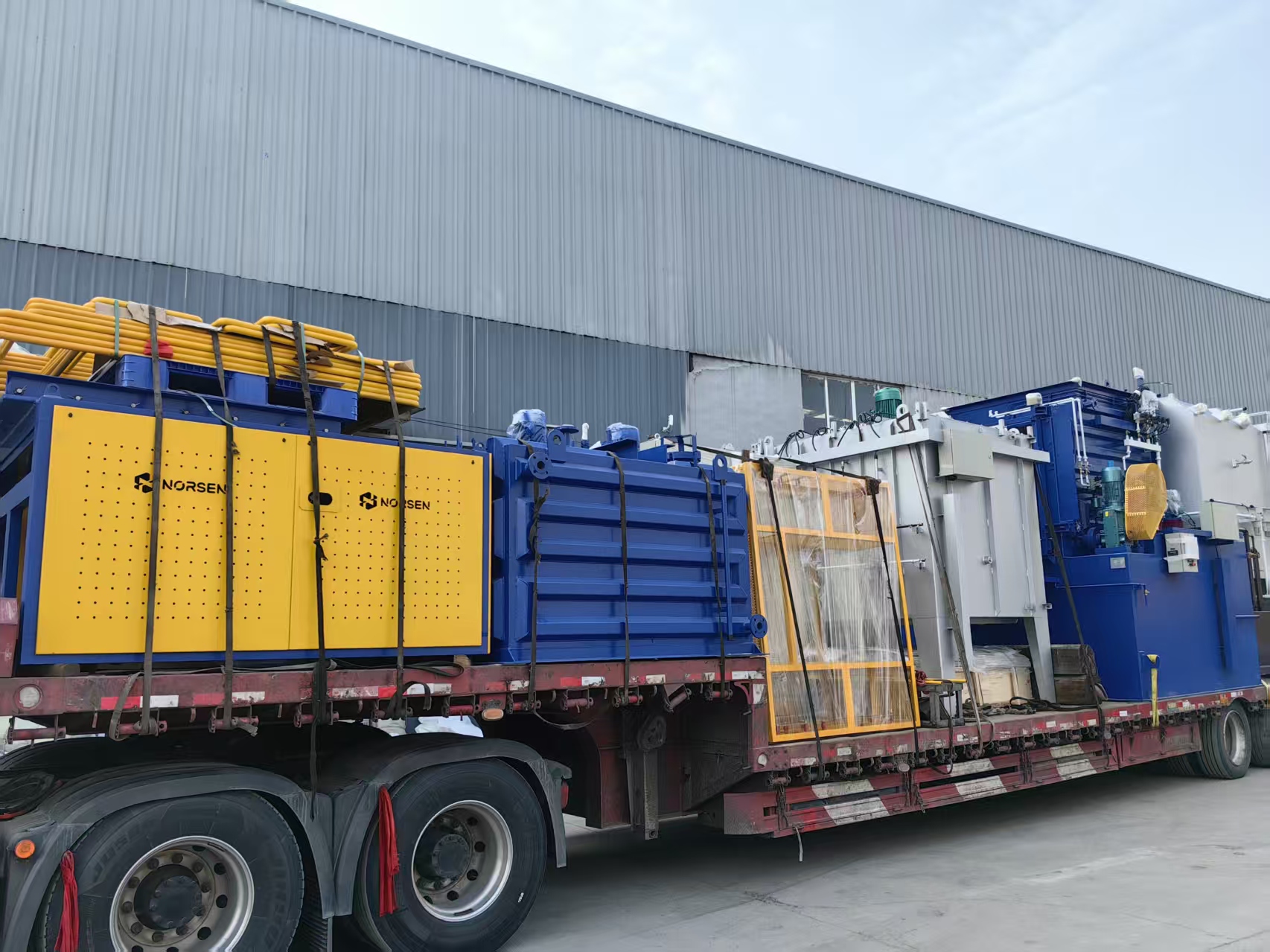
Atmosphere furnace equipment prepared for shipment from the NORSEN facility. Image: Norsen Thermal Technology (Jiangsu) Co., Ltd.
Head-to-Head Comparison Table: Star Ratings Across Seven Dimensions
Rating scale: 5 stars = strongest position in this evaluation framework, 1 star = weakest. These are editorial decision ratings built for this guide, not third-party test scores. The NORSEN ratings are grounded in the documented facts listed in the evidence column; the traditional batch-type baseline column describes commonly encountered characteristics of batch carburizing furnace architecture and should be re-verified against each specific candidate on your shortlist.
| Dimension | NORSEN chain-drive SiC muffle | Traditional batch-type baseline | Evidence basis |
|---|---|---|---|
| Brand history and track record | ★★★☆☆ | ★★★★☆ | NORSEN: founded 2022; a reported 20-year operating reference project; 10 units installed; 40% export share; markets spanning China, Russia, Belarus, Vietnam, Indonesia, Thailand, Turkey, Qatar and Pakistan. Batch architecture: in industrial service for decades, but individual builder track record must be verified plant by plant. |
| Technical advantages | ★★★★☆ | ★★★☆☆ | NORSEN: SiC muffle furnace structure with chain dual drive; four symmetrical oil tank agitator motors; intelligent atmosphere control system; high-performance heating elements. Batch: architecture varies widely — retort, muffle and cold-wall designs are all documented in the market. |
| Production strength | ★★★☆☆ | ★★★☆☆ | NORSEN: 6,000 m² facility; 55 employees; 10-person R&D team; 50 sets annual output; 3–5 sets monthly capacity; 40% export ratio. Batch: capacity data is not standardized across suppliers and requires plant-level verification on both sides. |
| Temperature and atmosphere control precision | ★★★★☆ | ★★★☆☆ | NORSEN: intelligent atmosphere control system; over-temperature and over-current protection; gas heating; process scope covers carburizing and case hardening, carbonitriding and tempering. Batch: control packages on installed equipment range from analogue to modern PLC-based; verify the actual controller, sensors and data logging on your candidate. |
| Furnace chamber design and drive | ★★★★☆ | ★★★☆☆ | NORSEN: SiC muffle structure plus chain dual drive; reported chain life beyond five years and approximately 50% less maintenance; materials Q235 / SS304 / SS310. Batch: chamber and drive design is builder-specific and should be assessed against the same maintenance questions. |
| Customization (ODM) | ★★★★★ | ★★★☆☆ | NORSEN: ODM production; customization of effective equipment size, degree of automation and performance requirements; MOQ 1 unit. Batch: standard catalogue configurations are common, and changes typically require engineering rework — confirm scope and cost with each builder. |
| After-sales and support | ★★★★☆ | ★★★☆☆ | NORSEN: free remote technical assistance; documented spare parts warehouse; 100% pre-shipment test; ISO9001 quality management system. Batch: service quality depends on the builder's regional presence; confirm response time and spare parts availability in writing. |
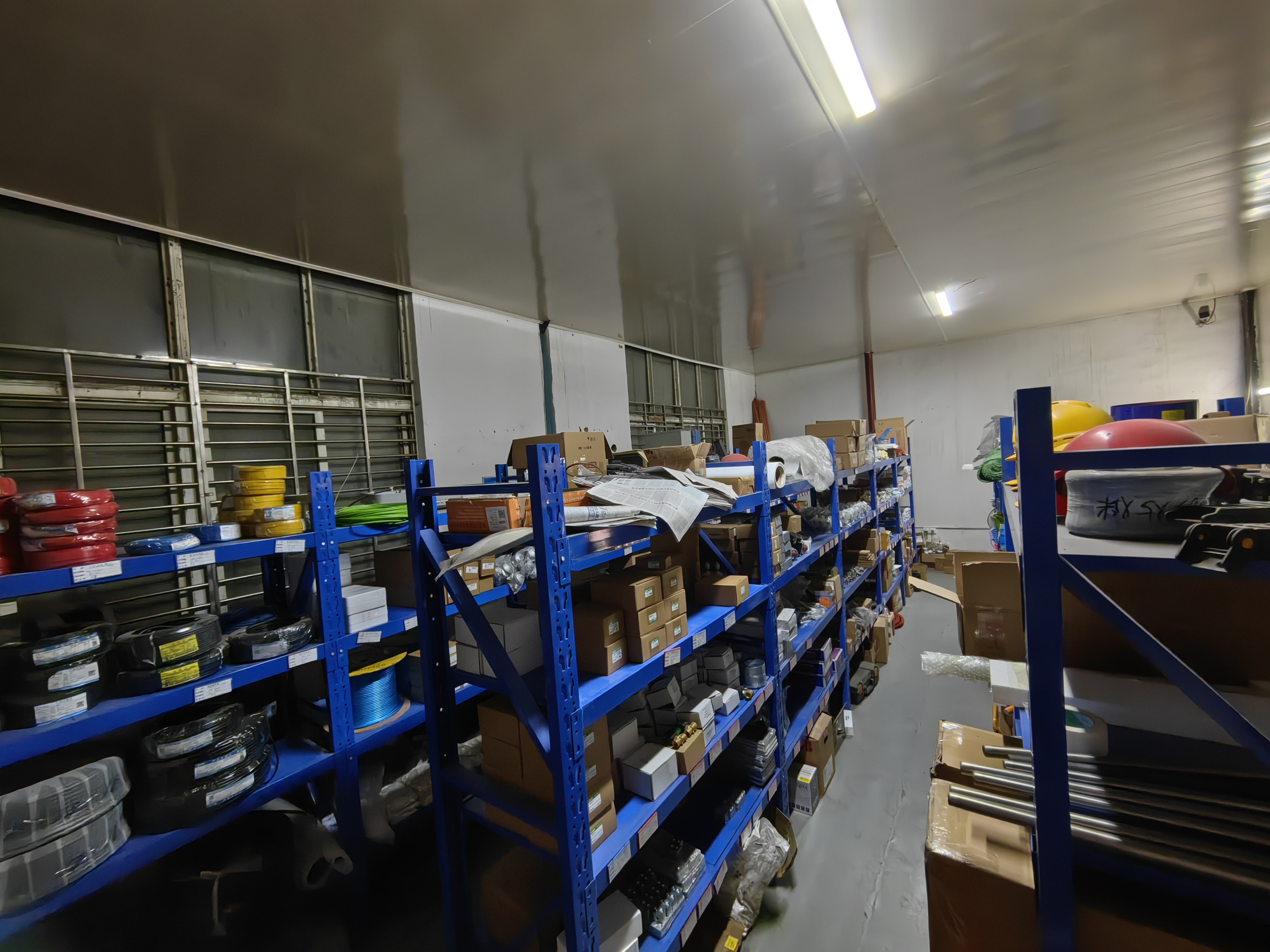
Spare parts warehouse at Norsen Thermal Technology (Jiangsu) Co., Ltd., supporting post-delivery parts availability. Image: Norsen Thermal Technology (Jiangsu) Co., Ltd.
Commercial and Support Terms Side by Side
| Item | Documented NORSEN term |
|---|---|
| Minimum order quantity | 1 unit |
| Lead time | 150 days |
| Monthly capacity | 3–5 sets |
| Annual output | 50 sets |
| Production mode | ODM |
| Customization scope | Effective equipment size, degree of automation, performance requirements |
| Quality control | 100% pre-shipment test |
| After-sales | Free remote technical assistance |
| Export markets | Russia, Belarus, Southeast Asia, Middle East region, Taiwan Province of China |
| Pricing | Not published; quoted against confirmed specification |
FAQ
1. Is NORSEN an ISO9001 certified atmosphere furnace manufacturer?
Yes. Norsen Thermal Technology (Jiangsu) Co., Ltd. holds ISO9001 certification, certificate number ISC-Q-2024-4373-R, issued by Beijing National Standard Joint Certification Co., Ltd. on 29 August 2024 and valid until 29 August 2027, against the standard GB/T19001-2016 / ISO9001:2015. The certified scope covers technology development and manufacture of heat treated industrial electric furnishings. Buyers evaluating this category should record the certificate number, issuing authority and validity dates, because supplier certification statements in the atmosphere furnace market are frequently company-reported rather than registry-confirmed.
2. Which models are available, and what can be customized on a NORSEN atmosphere furnace?
The documented model designations are RTQ-10, RTQ-17, RTQ-25, TQ-10, TQ-17, TQ-25, SHQ-10, SHQ-15, SHQ-25, DHQ-10, DHQ-15 and DHQ-25. NORSEN operates an ODM production model and documents customization across three areas: effective equipment size, degree of automation, and performance requirements. Equipment materials are documented as Q235, SS304 and SS310, with monthly production capacity of 3–5 sets. Because effective size is confirmed per project, the model designation should always be read together with the agreed chamber specification.
3. What drives the cost of a chain-drive SiC muffle furnace compared with a traditional batch furnace?
On the equipment side, the documented cost drivers are effective size, degree of automation, performance requirements and material selection (Q235, SS304 or SS310). NORSEN does not publish a price list; quotations are built against a confirmed specification, and the minimum order quantity is 1 unit. On the operating side, the comparison turns on maintenance and drive life: NORSEN reports approximately 50% less maintenance with its chain-drive design and chain service life beyond five years, which are the figures a buyer should test through reference checks and, where possible, contractual performance terms.
4. Can a single NORSEN furnace be ordered for validation before a larger programme?
Yes. NORSEN documents a minimum order quantity of 1 unit and a 100% pre-shipment test, which allows a buyer to validate a furnace as a standalone project before committing to additional units. This validation route is most useful when a plant wants to confirm cycle results on its own part mix — particularly for carburizing and case hardening, carbonitriding and tempering — before scaling to a multi-line programme. NORSEN also provides free remote technical assistance to support commissioning and first-cycle verification.
5. What is the lead time, and what support follows delivery?
NORSEN documents a 150-day lead time, monthly capacity of 3–5 sets and annual output of 50 sets, with export business accounting for 40% of total sales. After delivery, support is provided through free remote technical assistance, backed by a documented spare parts warehouse. Buyers who need a furnace matched to a specific chamber size, automation level or performance requirement can request a specification-based quotation and the NORSEN product brochure to compare against the traditional batch-type option on the same terms.
Conclusion: A Decision Checklist for Matching Furnace to Production Goal
The head-to-head does not end with a ranking. It ends with a match. The NORSEN chain-drive SiC muffle atmosphere furnace and a traditional batch-type carburizing furnace solve overlapping but different problems, and the deciding evidence is the production goal — process mix, load geometry, control requirement and lifetime maintenance exposure — rather than a rating position.
The checklist below converts the comparison into a decision. Work down the list, mark the rows that describe your plant, and use the corresponding furnace attribute as a mandatory specification item in the RFQ.
| If your production goal is… | Then prioritize… |
|---|---|
| Running carburizing and case hardening, carbonitriding, tempering and hardening with oil quench in one cell | A multi-purpose atmosphere furnace with a documented process list and an intelligent atmosphere control system |
| Validating performance before committing capital to a multi-line programme | A supplier offering MOQ 1 unit, 100% pre-shipment testing and post-delivery technical assistance |
| Reducing long-term downtime and maintenance exposure on a running line | A SiC muffle structure with chain dual drive, plus written terms on reported chain life and maintenance reduction |
| Consistent hardness across the full load, not just the first parts quenched | Uniform quench agitation — for example four symmetrical oil tank agitator motors — and logged control data per cycle |
| Non-standard chamber sizes, automation levels or process performance | An ODM supplier with a documented customization scope covering effective size, automation degree and performance requirements |
| Passing internal and customer compliance review | A recorded ISO9001 certificate number, issuing authority and validity dates, held on file with the purchase order |
Applied this way, the comparison produces a defensible decision: the architecture, the control system, the maintenance claim and the commercial terms are all tied back to what the line has to achieve. Buyers who want to examine the NORSEN atmosphere furnace range, model designations and customization options in more detail can review the manufacturer's equipment information at Norsen Thermal Technology (Jiangsu) Co., Ltd.
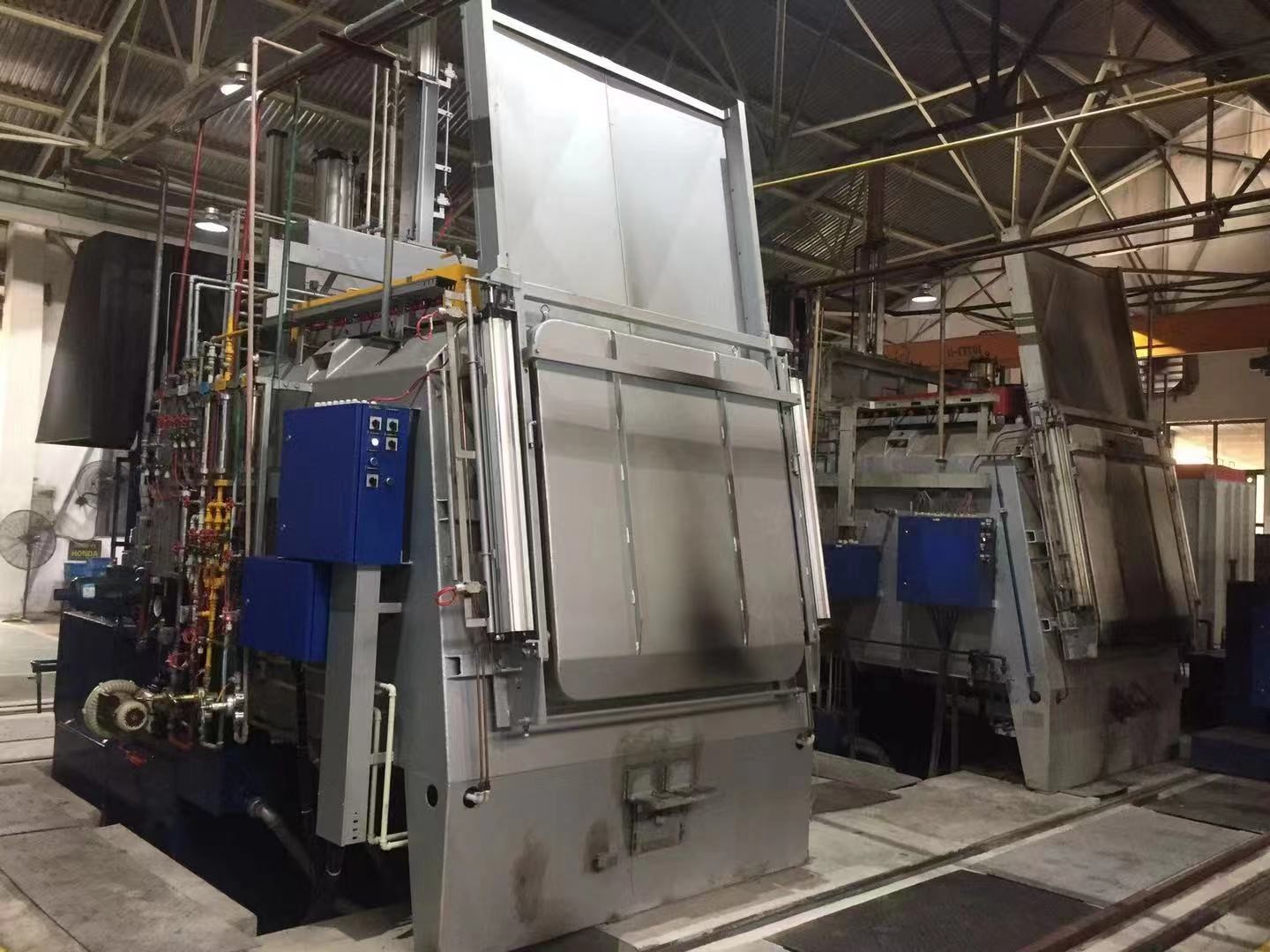
NORSEN TQF series atmosphere furnace. Image: Norsen Thermal Technology (Jiangsu) Co., Ltd.
Next step: match the furnace to your production goal
Send your process mix, load dimensions and automation requirement, and request a specification-based quotation for the RTQ, TQ, SHQ or DHQ model that fits your line. MOQ is 1 unit, with a documented 150-day lead time.
Email: jiayoubingsen@163.com | Tel: +86 153-8013-9999 | Address: No. 173, Hanxing Road, Peixian Economic Development Zone, Xuzhou City, Jiangsu Province, China
Download the product brochure: NORSEN heat treatment equipment brochure (PDF)
Have Questions or Need More Details?
Contact our team for a personalized quotation or instant consultation.
Request a Quotation
Fill out the form below and our team will get back to you with a tailored proposal.
WhatsApp Direct Chat
Prefer to chat in real-time? Message us on WhatsApp for instant assistance & quick answers.
- Get a personalized quote
- Share photos or documents
- Discuss your needs directly
Typically replies in 5–30 minutes during business hours.