
Atmosphere Furnace Supplier Technical Guide: NORSEN's Muffle, Atmosphere Control, Efficiency
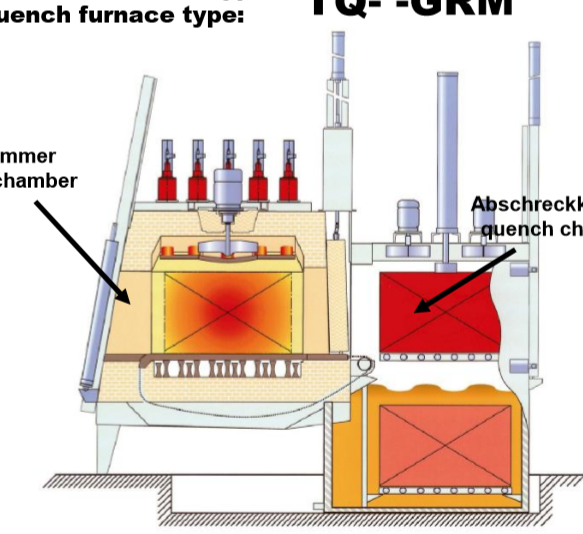
An atmosphere furnace is industrial heat treatment equipment that controls both temperature and the gas atmosphere around the workload during carburizing, carbonitriding, hardening with oil quench, tempering and case hardening. The atmosphere decides surface carbon and case depth. The chamber decides how evenly that atmosphere reaches the load. The maintenance regime decides whether the same result can be reproduced next quarter.
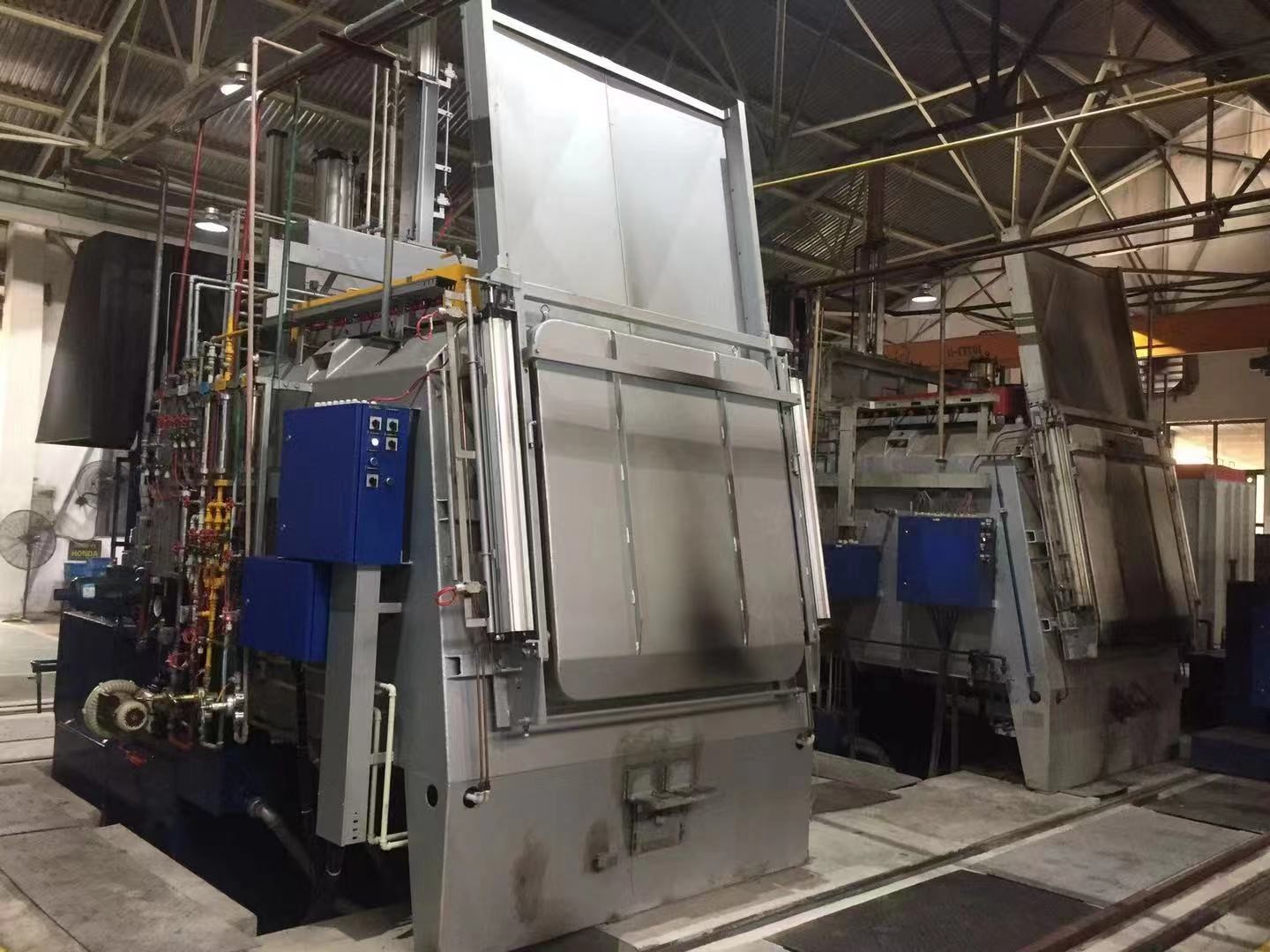
This technical guide sets out the selection parameters that actually move carburizing, carbonitriding and quenching results, and then uses one supplier's published configuration as a worked example. Norsen Thermal Technology (Jiangsu) Co., Ltd. is a heat treatment equipment manufacturer established in 2022 in Peixian County, Jiangsu Province, China, operating a 6,000 m² facility with approximately 55 employees and an annual production capacity of 50 sets. NORSEN builds sealed box-type multi-purpose furnace production lines, pre-evacuated gas nitriding furnaces, mesh belt carburizing and quenching furnace production lines, well-type furnaces, and multi-purpose atmosphere furnaces under the RTQ, TQ, SHQ and DHQ model designations.
Quick answer
- Three parameters decide results: chamber and muffle architecture, atmosphere control scope, and quench agitation hardware. Maximum temperature and chamber size are entry conditions, not differentiators.
- NORSEN's published configuration: SiC muffle furnace structure with chain dual drive; intelligent atmosphere control system; four symmetrical oil tank agitator motors; over-temperature protection and over-current protection; gas heating.
- Model designations: RTQ, TQ, SHQ and DHQ, with listed types RTQ-10, RTQ-17, RTQ-25, TQ-10, TQ-17, TQ-25, SHQ-10, SHQ-15, SHQ-25, DHQ-10, DHQ-15 and DHQ-25.
- NORSEN-reported service figures: 50% less maintenance, chain service life above 5 years, and maintenance costs below 50% of alternatives. Convert these into contractual commitments before award.
- Regulatory backdrop: China's NDRC Notice No. 698 sets a 2028-12-31 deadline for heavy industry to meet energy-efficiency benchmarks, as reported by S&P Global on 16 June 2026.
The real problem: repeatability, not headline temperature
Atmosphere furnace specifications are usually written around maximum temperature and chamber size, because those are the two figures that are easy to compare across quotations. Production problems rarely originate there. They originate in four parameters that are harder to compare and therefore get pushed to the last page of the negotiation.
Chamber architecture is decided last, but constrains everything else
The muffle is the barrier that separates the workload and the process atmosphere from the heating elements and the outside environment. When muffle material and drive configuration are chosen after chamber size is fixed, buyers commonly end up with a furnace that reaches temperature but does not transfer loads reliably, or does not hold atmosphere as the muffle ages. NORSEN's published structure for this furnace family is a SiC muffle furnace structure with chain dual drive, and the stated construction materials are Q235, SS304 and SS310.
Atmosphere control drift appears as scrap, not as an alarm
Carbon potential drifts gradually. A furnace can hold its displayed setpoint while the actual atmosphere moves out of specification, because the displayed value is derived from sensors and control logic rather than measured on the part. Buyers therefore need to see the control architecture, the calibration interval, and whether recipes and cycle data are logged for traceability. Peer-reviewed work on furnace optimisation makes the same point from the modelling side: accurate furnace temperature prediction is described as the core and foundation of furnace optimization (MDPI Sensors, 2020).
Maintenance is a calendar problem, not a repair problem
Over a ten-year life, an atmosphere furnace is rarely defined by its invoice value. It is defined by unplanned downtime, chain and muffle condition, agitation motor servicing, heating element replacement and atmosphere sensor calibration. NORSEN states that its configuration requires 50% less maintenance, that chain service life exceeds 5 years, and that maintenance costs run below 50% compared with alternatives. Those are supplier-reported figures and should be written into the contract as a baseline with measurement criteria.
Energy cost and the 2028 benchmarks are becoming selection criteria
Energy efficiency has moved from a marketing topic to a compliance topic. China's NDRC Notice No. 698 sets a 2028-12-31 deadline for heavy industries to meet energy-efficiency benchmarks, as reported by S&P Global in June 2026. A furnace installed today will still be operating when that deadline arrives, so efficiency logic belongs in the specification rather than in the after-sales discussion.
Industry background: a large, regulated, regionally concentrated equipment market
The global industrial furnace market was valued at USD 10.87 billion in 2026, according to Fortune Business Insights (7 September 2026). Asia Pacific accounted for 39.70% of that market in 2025, which is why so much atmosphere furnace sourcing now runs through Chinese manufacturers rather than through European or North American OEMs alone.
Supplier structure is split between global groups with published order books and Chinese manufacturers working on direct and ODM routes. Ipsen USA reported more than USD 100 million in vacuum furnace orders for 2026 year to date in its own October 2026 release, which describes its vacuum business rather than its atmosphere furnace line. Keith Company states that it builds atmosphere heat-treating furnaces with retorts, muffles and cold walls. Deltech Furnaces states ISO 9001:2015 certification and furnace solutions compatible with air and inert atmospheres. Both statements are company-reported, and their product scopes differ from NORSEN's box-type multi-purpose platform.
Technology direction is converging on control rather than on chamber steel. Smart manufacturing descriptions emphasise interconnected people, processes, data, machines, devices and automation as the operating model, and atmosphere furnaces are increasingly specified as data-producing equipment rather than as standalone heat sources. NORSEN's furnace operates in automated mode, which places it inside that trend rather than outside it.
Where NORSEN sits in that landscape: a manufacturer established in 2022, with a 6,000 m² facility, approximately 55 employees, 50 sets of annual production capacity, an R&D team of 10 engineers and technicians, and ISO9001 quality management system certification. Export business accounts for 40% of total sales, with major markets in China, Russia, Belarus, Vietnam, Indonesia, Thailand, Turkey, Qatar and Pakistan.
Six parameters that decide carburizing, carbonitriding and quenching results
1. Furnace chamber and muffle architecture
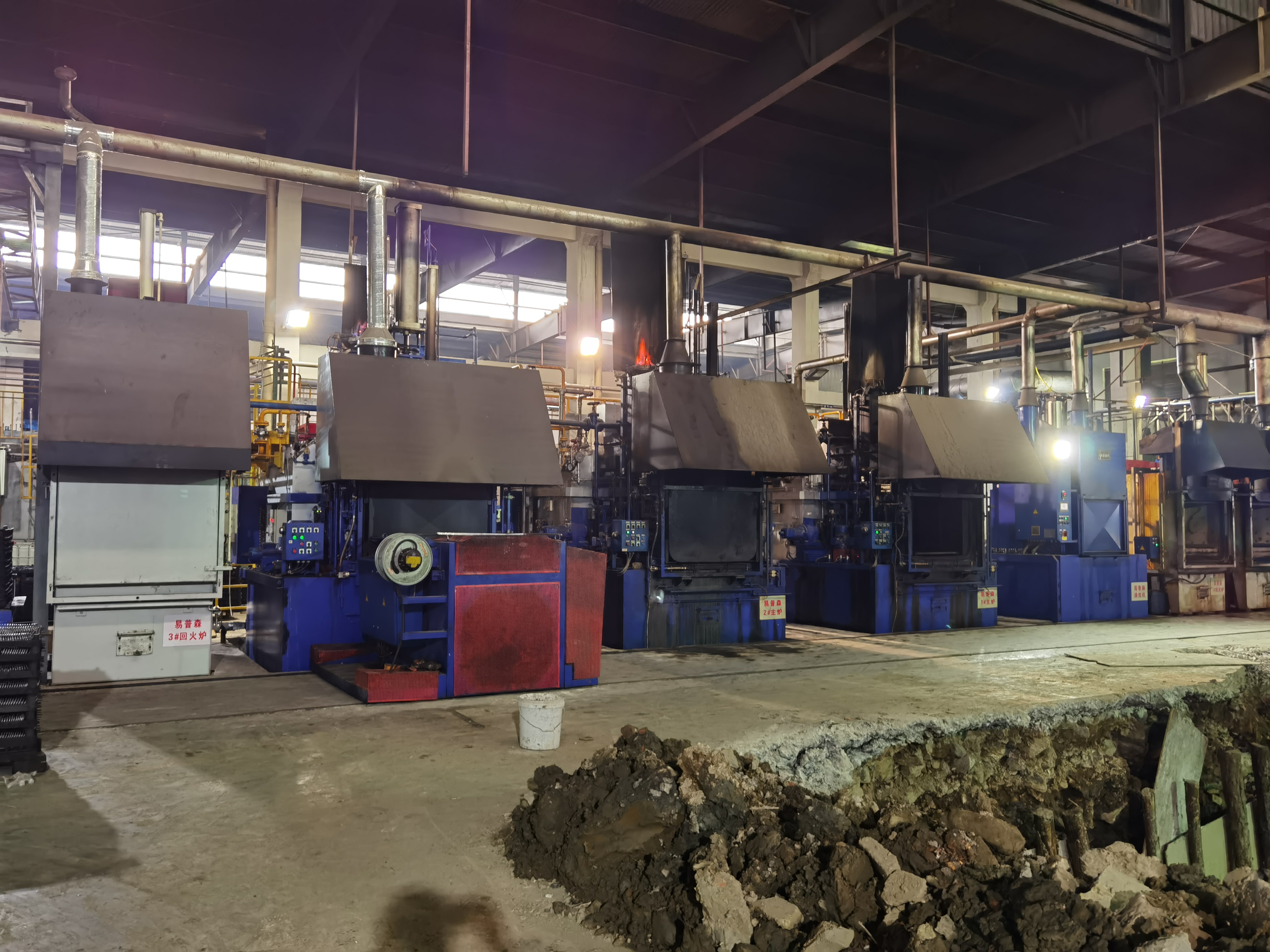
The chamber defines load path, atmosphere volume and thermal mass. A SiC muffle structure is specified to hold the process atmosphere and shield the workload from the heating environment, while chain dual drive addresses load transfer through the chamber. The stated material options — Q235, SS304 and SS310 — give a buyer a way to align the outer structure and stainless elements with the plant environment and the process temperature band.
What to put in the specification: muffle material and wall thickness, drive redundancy and chain specification, maximum load per tray or basket, and the documented muffle replacement procedure with expected downtime. Ask for the replacement procedure in writing, because a muffle that cannot be changed on a planned weekend becomes a multi-week outage.
2. Intelligent atmosphere control and gas supply
Atmosphere control is the parameter most likely to be under-specified in a low-price quote. NORSEN's control method is an intelligent atmosphere control system, applied to high-precision atmosphere control across carburizing, carbonitriding and case hardening cycles. Because those processes depend on carbon potential rather than temperature alone, the control system determines whether a recipe can be repeated on a second shift, in a second month, with a different operator.
What to put in the specification: which variables the controller closes the loop on, sensor type and calibration interval, recipe storage and access control, alarm and interlock logic, and the data export format for traceability records. Buyers in automotive and military supply chains should confirm that cycle records can be exported without manual transcription.
3. Quench and agitation hardware
Hardening with oil quench and tempering are stated supported processes on this furnace family, and quench uniformity is a hardware question before it is a control question. NORSEN specifies four symmetrical oil tank agitator motors, which is the mechanism that keeps oil temperature and flow distribution consistent around the load.
What to put in the specification: oil tank volume, agitation speed control, oil temperature control and cooling, drain and cleaning procedure, and the quench delay between chamber and tank. Uniform hardness across a basket is usually lost at this step rather than in the heating chamber.
4. Safety and protection package
The published safety and protection features are over-temperature protection, over-current protection and gas heating. In an atmosphere furnace, protection logic matters more than in a plain heat treatment furnace because a gas-handling fault and a temperature fault can combine.
What to put in the specification: the full interlock matrix, the conditions that trigger automatic shutdown, the alarm history retention period, and which protections are hard-wired rather than software-only. Ask specifically which interlocks ship as standard and which are options.
5. Maintenance needs and service life
NORSEN states 50% less maintenance, a chain service life above 5 years, and maintenance costs below 50% of alternatives. Read as a purchasing input, these three figures describe a preventive maintenance model rather than a repair model: chain inspection intervals, muffle condition monitoring and agitator servicing are scheduled, not reactive.
What to put in the specification: a preventive maintenance checklist with intervals, a recommended spare parts list with quantities, chain and muffle lead times, and the measurement basis for the 50% maintenance and 50% cost claims so they can be verified during the first contract year.
6. Energy efficiency and regulatory fit
NORSEN positions energy efficiency as a function of high furnace pressure combined with fast atmosphere penetration, which shortens the effective cycle rather than simply reducing burner or element input. That is a defensible design logic, but it is not the same as a published energy benchmark: this guide did not locate cycle-level energy consumption data for the RTQ, TQ, SHQ or DHQ families.
What to put in the specification: energy per cycle at a defined load and process, insulation and heating element specification, idle-loss behaviour, and a documented baseline that can be compared after commissioning. Where a plant falls inside China's heavy-industry energy-efficiency scope, the 2028-12-31 deadline in NDRC Notice No. 698 should be treated as a design input rather than an end-of-life concern.
7. ODM configuration, installation and remote support
NORSEN's R&D team of 10 engineers and technicians, combined with a 40% export share across China, Russia, Belarus, Vietnam, Indonesia, Thailand, Turkey, Qatar and Pakistan, is the resource base for ODM work: non-standard chamber sizes, alternative material combinations from the Q235/SS304/SS310 set, and process-specific control recipes. Remote support should be defined in the contract with response windows and escalation paths rather than assumed.
Site requirements are published and should be checked before the purchase order: the factory crane height should exceed 6.5 m and higher is better, and the matched equipment is electricity, compressed air, natural gas and fume exhaust ducts with their media.
Step-by-step: specifying an atmosphere furnace in six steps
Star-rated evaluation of NORSEN's published configuration
The table below scores how completely NORSEN's published configuration answers each selection parameter. Ratings are editorial assessments of disclosure and configuration completeness, not laboratory benchmark results, and a rating of three stars or fewer marks a parameter where buyers should request additional evidence before award.
| Selection parameter | What the rating measures | NORSEN published configuration | Rating |
|---|---|---|---|
| Chamber and muffle architecture | Whether muffle material and drive system are specified as one serviceable unit | SiC muffle furnace structure with chain dual drive; stated materials Q235, SS304, SS310 | ★★★★★ |
| Atmosphere control | Whether carbon potential and temperature are handled by a dedicated control system rather than manual valves | Intelligent atmosphere control system supporting high-precision atmosphere control for carburizing, carbonitriding and case hardening | ★★★★☆ |
| Quench uniformity hardware | Whether agitation is specified for oil-quench hardening rather than added later | 4 symmetrical oil tank agitator motors; hardening with oil quench and tempering supported | ★★★★☆ |
| Safety and protection | Whether protection ships as standard configuration | Over-temperature protection, over-current protection, gas heating | ★★★★★ |
| Maintenance profile | Whether maintenance interval and lifetime cost are addressed explicitly | NORSEN-reported: 50% less maintenance, chain service life above 5 years, maintenance cost below 50% of alternatives | ★★★★☆ |
| Energy efficiency | Whether efficiency is a design logic and a measurable baseline | Efficiency positioned around high furnace pressure and fast atmosphere penetration; cycle-level energy data not published | ★★★☆☆ |
| Configuration range | Whether model and size coverage fits a mixed part mix | Designations RTQ, TQ, SHQ, DHQ; types RTQ-10/17/25, TQ-10/17/25, SHQ-10/15/25, DHQ-10/15/25 | ★★★★☆ |
| ODM and support | Whether customization and post-installation support are resourced | R&D team of 10 engineers and technicians; export share 40%; markets across Asia, CIS and the Middle East | ★★★★☆ |
Stars reflect configuration and disclosure completeness as published by NORSEN. They are not third-party performance ratings and should not be used in place of factory acceptance test data on your own parts.
Comparison: how chamber architecture is described across published supplier sources
Chamber architecture is the parameter buyers struggle to compare, because suppliers describe it in different vocabularies. The table records what each company states publicly. It is not a like-for-like performance comparison: product families, scopes and disclosure depth differ, and none of the certification statements was independently verified for this guide.
| Aspect | NORSEN (RTQ / TQ / SHQ / DHQ) | Keith Company | Deltech Furnaces |
|---|---|---|---|
| Chamber architecture as stated | SiC muffle furnace structure with chain dual drive | Atmosphere heat treating furnaces built with retorts, muffles and cold walls | Furnace solutions stated as compatible with air and inert atmospheres |
| Construction materials as stated | Q235, SS304, SS310 | Not stated in the referenced source | Not stated in the referenced source |
| Atmosphere control as stated | Intelligent atmosphere control system | Not stated in the referenced source | Air and inert atmosphere compatibility |
| Quality certification as stated | ISO9001 quality management system certification | ISO 9001:2015 reference on company page | ISO 9001:2015, company-stated |
| Process scope in the referenced source | Carburizing, carbonitriding, tempering, hardening with oil quench, case hardening | Atmosphere heat treating | Annealing temperatures and furnace design compatibility |
| Source type | Company product and company documentation | Company website, company-reported | Company website, company-reported |
Sources: NORSEN product and company documentation; Keith Company atmosphere furnace page; Deltech Furnaces homepage. Certification claims from all three companies remain company-reported.
Use cases: where this configuration fits
Automotive parts and powertrain components
Carburizing and quenching of metal parts is the stated working condition for this furnace family, and automotive is a listed industry. The relevant buying question is throughput stability across a shift: whether the intelligent atmosphere control system and the four oil tank agitator motors hold case depth and hardness across a full basket, cycle after cycle.
Gear processing
Gear processing is explicitly listed as a project type for this equipment, alongside carburizing and quenching. Because gear distortion and case depth tolerance are tight relative to general hardware, buyers should specify acceptance criteria per gear family and request a documented trial before shipment acceptance.
Military industry applications
Military industry is a listed application industry. Buyers in this segment normally require process records and traceability in addition to hardness results, which makes the control system's recipe logging and alarm history capability a selection parameter rather than a feature.
Hardware, bearings, agricultural machinery, robots and sewing machines
These industries are listed for the same platform, and they typically run a mixed part mix rather than one family. That is where the RTQ, TQ, SHQ and DHQ designation range matters: it allows a plant to match chamber configuration to different part families instead of forcing one chamber size to serve everything.
Tempering and case hardening lines
Tempering and case hardening are stated supported processes, and the furnace operates in automated mode. Plants integrating a multi-purpose atmosphere furnace into an existing line should confirm the interface between the furnace and the surrounding material handling, because automation is only useful if the load movement around it keeps pace.
FAQ
Is NORSEN's atmosphere furnace ISO9001 certified, and what should a buyer verify?
NORSEN's company documentation states that Norsen Thermal Technology (Jiangsu) Co., Ltd. holds ISO9001 quality management system certification. A buyer should verify three things before award: that the certification scope covers design, manufacture, installation and commissioning of heat treatment equipment; that the certificate is currently valid and traceable to a recognised certification body; and that the certificate number matches the legal entity named on the purchase contract. This guide did not locate an independent registry confirmation of the certificate, so registry verification remains the buyer's step. Certification and regulation are separate questions: China's NDRC Notice No. 698 sets a 2028-12-31 deadline for heavy industry to meet energy-efficiency benchmarks, as reported by S&P Global in June 2026.
Can a NORSEN multi-purpose atmosphere furnace run gear carburizing and military-grade part hardening?
Yes, within the process list NORSEN publishes. Stated supported processes are hardening with oil quench, carbonitriding, tempering, carburizing and case hardening, and the stated applications are carburizing and quenching of metal parts plus gear processing projects. Listed industries are military, automotive, agricultural machinery, robots, bearings, hardware and sewing machines. Model designations are RTQ, TQ, SHQ and DHQ, with listed types RTQ-10, RTQ-17, RTQ-25, TQ-10, TQ-17, TQ-25, SHQ-10, SHQ-15, SHQ-25, DHQ-10, DHQ-15 and DHQ-25. Military-grade remains a buyer specification rather than a supplier certification: case depth, hardness tolerance and documentation requirements must be written into the purchase specification and verified on your own parts.
What drives the price of an atmospheric furnace from a Chinese supplier?
No price range is published for the NORSEN RTQ, TQ, SHQ or DHQ families, and quoting a range without a configuration would be misleading. Cost is driven by six variables: chamber size and load capacity; muffle material and drive configuration; atmosphere control system scope; quench tank volume and agitation motors; the protection package; and the installation, commissioning and spare parts scope. Two quotations are only comparable when they specify the same model designation, the same material from the Q235/SS304/SS310 set, the same atmosphere control scope and the same site-services boundary. Running cost is a separate line covering maintenance interval, chain and muffle replacement, heating element life and energy per cycle. NORSEN reports maintenance costs below 50% of alternatives, which should be converted into a contractual baseline rather than accepted as a marketing figure.
Can we validate the furnace on our own parts before shipment?
NORSEN's published materials do not describe a standard sample or trial-run programme, so validation scope has to be agreed per project. A workable approach is to define acceptance criteria first — case depth range, surface hardness, hardness uniformity across the load, and distortion limits — then request a documented factory trial on your part family before shipment acceptance. In the factory, verify what is stated and visible: the SiC muffle structure, the chain dual drive, the four symmetrical oil tank agitator motors, the intelligent atmosphere control system, and the over-temperature and over-current protection interlocks. Request the trial record, the control recipe and the material certificates for muffle and retort components as part of the acceptance pack.
What lead time and site preparation should we plan for?
NORSEN states an annual production capacity of 50 sets, which sets the manufacturing envelope; individual lead time is not published and should be requested in writing against a specific model designation and site-services boundary. Site preparation is defined by the published operating requirements: factory crane height should exceed 6.5 m and higher is better, and the matched equipment is electricity, compressed air, natural gas and fume exhaust ducts with their media. The furnace operates in automated mode, so control-panel space, gas supply routing and exhaust design should be settled before shipment. To move this forward, download the NORSEN brochure at this link, send your part mix and process targets to jiayoubingsen@163.com, or call +86-153-8013-9999 and ask for a model-specific configuration sheet covering chamber size, muffle material, atmosphere control scope, protection package and commissioning plan.
Conclusion: what to fix in the specification before you request a quote
Atmosphere furnace selection rewards buyers who lock the four hard parameters early: muffle and drive architecture, atmosphere control scope, quench agitation, and the maintenance and spares baseline. Temperature and chamber size are entry conditions; they do not differentiate one quotation from another.
NORSEN's published configuration addresses those parameters explicitly — SiC muffle furnace structure with chain dual drive, an intelligent atmosphere control system for high-precision atmosphere control, four symmetrical oil tank agitator motors, over-temperature and over-current protection, gas heating, and materials from the Q235/SS304/SS310 set across the RTQ, TQ, SHQ and DHQ model designations. The reported maintenance figures of 50% less maintenance, chain service life above 5 years and maintenance costs below 50% of alternatives are useful starting points, but they become purchasing value only when written into the contract as measurable commitments.
The practical route is therefore narrow: compare quotations on identical boundaries, verify the ISO9001 certificate scope against the contracting entity, confirm the crane height above 6.5 m and the gas, air and power supply before order, request the preventive maintenance checklist and spare parts list, and validate on your own part family before shipment acceptance. Buyers who do those four things rarely discover a chamber problem after installation.
Next step: get a model-specific configuration sheet
Download the NORSEN brochure for the full product range and specification overview: NORSEN product brochure (PDF).
Send your part mix, process targets and site conditions to jiayoubingsen@163.com or call +86-153-8013-9999 to request a quotation against a specific RTQ, TQ, SHQ or DHQ model.
Norsen Thermal Technology (Jiangsu) Co., Ltd. — No. 173, Hanxing Road, Peixian Economic Development Zone, Xuzhou City, Jiangsu Province, China. Website: norsengroup.com
Have Questions or Need More Details?
Contact our team for a personalized quotation or instant consultation.
Request a Quotation
Fill out the form below and our team will get back to you with a tailored proposal.
WhatsApp Direct Chat
Prefer to chat in real-time? Message us on WhatsApp for instant assistance & quick answers.
- Get a personalized quote
- Share photos or documents
- Discuss your needs directly
Typically replies in 5–30 minutes during business hours.