
Atmosphere Furnace vs. Traditional Furnace: Maintenance Costs
Over a five-year service window, the larger number in an atmospheric furnace versus traditional furnace comparison is almost never the purchase invoice. It is the sum of wear-part replacement, atmosphere and temperature correction, unplanned downtime and energy consumed per cycle. NORSEN — Norsen Thermal Technology (Jiangsu) Co., Ltd., a heat treatment equipment manufacturer based in Peixian Economic Development Zone, Xuzhou, Jiangsu, China — states that its chain-drive atmospheric furnace configuration is built for a chain service life exceeding five years and maintenance costs below 50% of alternative furnace designs on comparable duty. This guide converts that statement into a comparison method a buyer can test instead of a claim to accept.
The comparison is written for buyers in the research-to-evaluation stage who already know they need carburizing, carbonitriding, hardening with oil quench or tempering, and who now have to defend a capital decision on operating cost. It uses the NORSEN RTQ, TQ, SHQ and DHQ model families as the reference architecture on the atmosphere furnace side, and conventional batch heat treatment equipment as the baseline on the traditional side.
The short answer
• Where traditional equipment spends: reactive replacement of retort or muffle assemblies, drive chain and heating elements, manual atmosphere correction, and idling energy between cycles.
• Where an atmospheric furnace spends: a defined wear-part list (muffle, chain, elements, agitators, sensors) that can be scheduled, plus process correction reduced by automatic atmosphere and temperature control.
• What to verify: a five-year worksheet built on your own part mix, not a single supplier figure. NORSEN publishes chain life above five years and maintenance below 50% of alternatives; both must be checked against your duty cycle.
Problem definition: what “maintenance cost” covers in heat treatment equipment
Maintenance spend on a heat treatment furnace falls into four pools, and most comparisons capture only the first. A fair atmosphere furnace versus traditional furnace comparison has to price all four against an identical duty cycle.
- Wear parts. Muffle or retort assemblies, drive chain and drive components, heating elements, quench agitators, door seals, insulation modules, atmosphere sensors and thermocouples.
- Process correction. Manual atmosphere adjustment, carbon potential correction, requalification after a muffle or element change, and the scrap or rework that follows a load that misses specification.
- Unplanned downtime. Lost production hours, expedited freight for spares and overtime to recover the schedule. On a multi-shift line this line item usually exceeds the parts cost that triggered it.
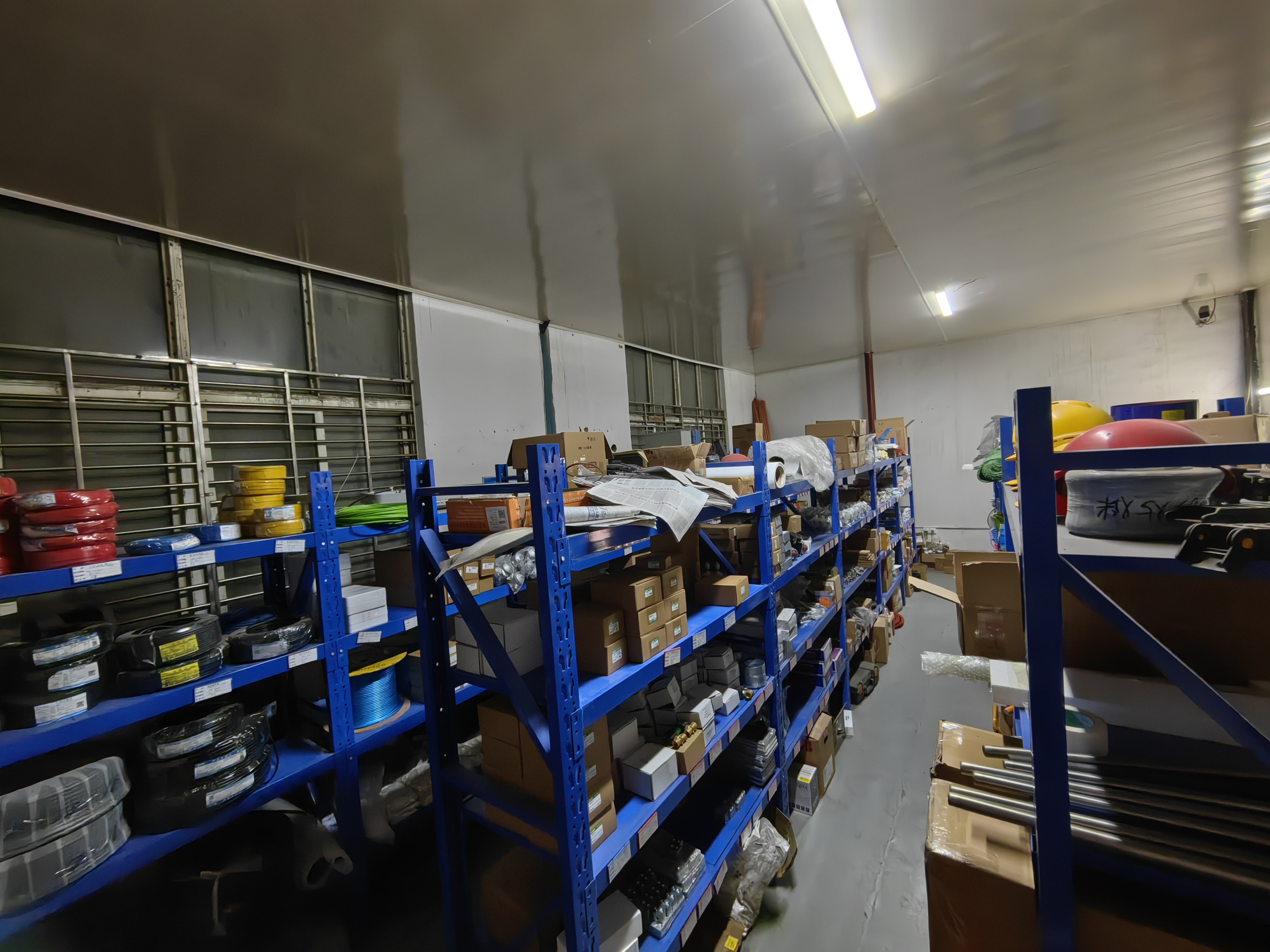
- Support and logistics. Service visits, remote diagnostics, spare-part stock holding and the time needed to get a wear item back on site.
Conventional designs tend to push cost into pools two and three, because manual atmosphere correction and reactive retort or element replacement are their normal operating pattern. A controlled-atmosphere furnace with a documented wear-part list pushes the same cost into pool one, where it appears on a calendar instead of on an emergency purchase order. That shift — not a smaller invoice — is the real maintenance argument.
Why the comparison breaks before the first number
Three baseline errors distort the result. First, purchase price is used as a proxy for cost of ownership, although the two diverge over any multi-year horizon. Second, the traditional baseline is usually a mixed fleet of different ages, so its maintenance history cannot be compared directly with a new installation. Third, downtime is left out entirely, although a furnace that is available but inaccurate produces rework, which behaves exactly like an outage in the cost model.
Industry background: why maintenance economics moved to the front
Industrial furnace demand sets the context for maintenance scrutiny. Fortune Business Insights sizes the global industrial furnace market at USD 10.87 billion in 2026, and reports that Asia Pacific accounted for 39.70% of the global market in 2025. An installed base of that scale makes aftermarket behaviour observable, so spare-part intervals and service response become comparable between suppliers in a way they were not a decade ago.
Regulation is accelerating the shift. S&P Global reported in June 2026 that China has mandated energy-efficiency compliance for nine heavy industries, with a 2028 deadline. Furnace energy consumption per cycle therefore stops being a soft operating preference and becomes a compliance variable, which pulls energy directly into the maintenance discussion because both are driven by the same control and insulation decisions.
Process-control research points the same way. A peer-reviewed study published in MDPI Sensors in 2020 concluded that accurate prediction of furnace temperature is the core and foundation of furnace optimization. The practical reading for a buyer is direct: the more of the cycle that is measured and controlled automatically, the less of the maintenance budget flows into post-cycle correction.
Capacity signals confirm that controlled-atmosphere and vacuum equipment is being added at pace. Ipsen USA reported more than USD 100 million in vacuum furnace orders in 2026 year to date — a demand indicator rather than a maintenance indicator, but it explains why more buyers now request maintenance evidence at quotation stage.
Detailed solution: how the NORSEN atmospheric furnace architecture changes the maintenance profile
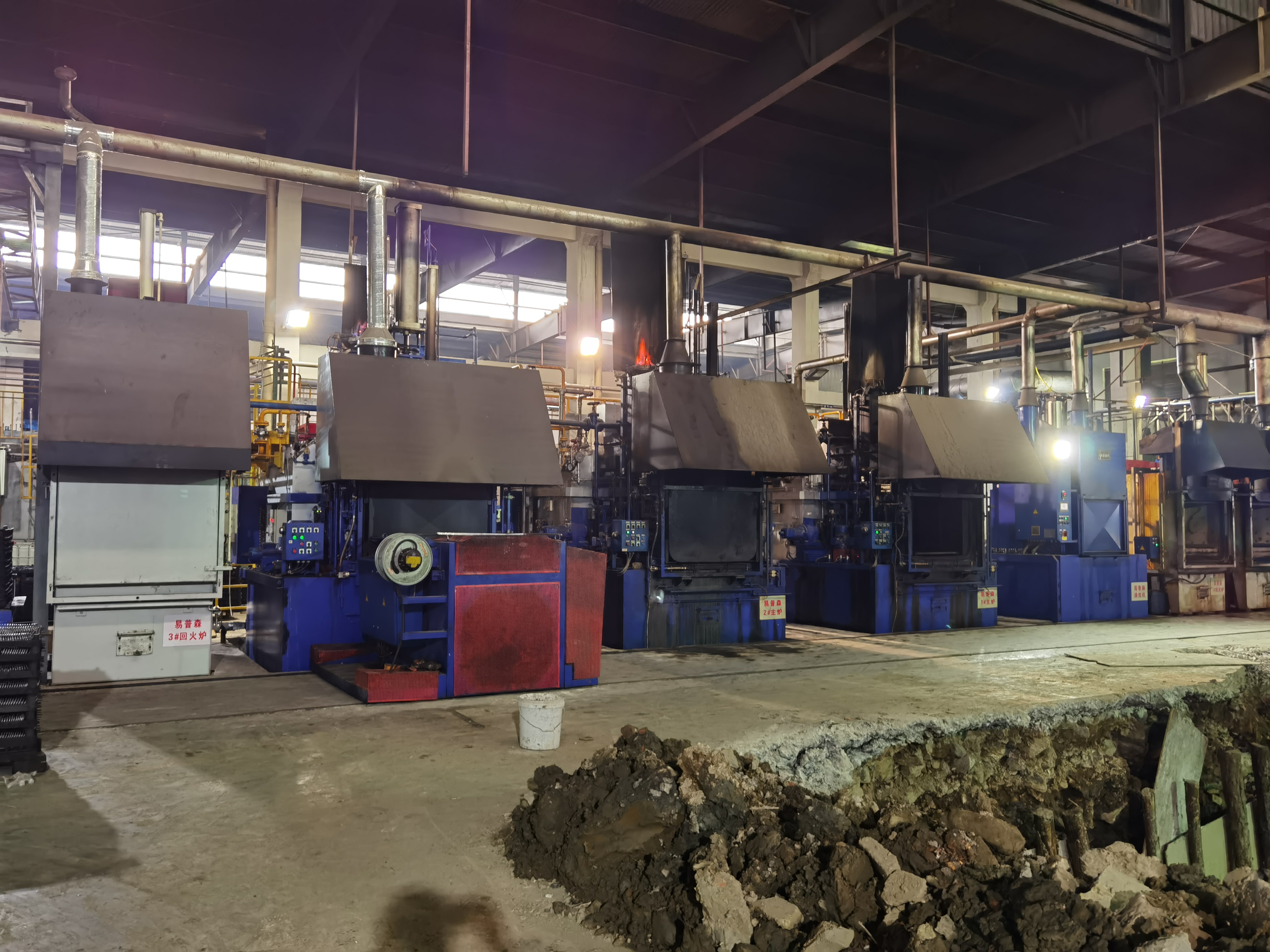
NORSEN builds its atmospheric furnace range across the RTQ, TQ, SHQ and DHQ families, sized as RTQ-10, RTQ-17, RTQ-25, TQ-10, TQ-17, TQ-25, SHQ-10, SHQ-15, SHQ-25, DHQ-10, DHQ-15 and DHQ-25. The platform covers carburizing and case hardening, carbonitriding, hardening with oil quench and tempering. Five design decisions in that architecture determine how the maintenance budget behaves.
SiC muffle structure keeps wear inside a planned inspection
The furnace uses a SiC muffle furnace structure. The muffle is the boundary component: it holds the process atmosphere around the workload and separates that atmosphere from the heating elements. Architecture, not brand, decides how much this matters — Keith Company, for example, describes building atmosphere heat-treating furnaces in retort, muffle and cold-wall configurations, which is why two “atmosphere furnaces” can carry very different wear profiles. Where the muffle is a scheduled inspection item, element damage caused by atmosphere ingress becomes a finding during a planned stop rather than the reason for an unplanned one.
Chain dual drive and the five-year chain life position
The RTQ/TQ/SHQ/DHQ platform uses a chain dual drive. NORSEN states that this configuration delivers chain service life exceeding five years. The design intent of a dual-drive arrangement is to share drive load across the chain path rather than concentrating it at one take-up point, which is why the chain appears in the maintenance plan as a scheduled wear item instead of a breakdown item. The figure a buyer should hold NORSEN to is not the five years itself, but the duty cycle behind it: load weight per charge, cycles per shift and quench configuration all change chain load.
Intelligent atmosphere control reduces correction work
An intelligent atmosphere control system manages the gas environment across carburizing, carbonitriding, hardening with oil quench and tempering. Control quality changes maintenance economics in two ways: fewer manual adjustments per shift, and fewer out-of-specification loads that have to be re-run. Reference installations report precise carbon content and stable quality as operating results — the outcome the control system exists to protect, and the reason correction work falls.
Quench agitation and protection systems
Four symmetrical oil tank agitator motors move quench oil around the load from symmetrical positions, supporting even cooling across the charge. On the electrical side, over-temperature protection and over-current protection are standard, with gas heating as the energy path. Both protections are inexpensive to specify and expensive to omit: an element burnout or an over-temperature event is one of the few maintenance items capable of taking a line down for a full rebuild cycle.
Materials, components and pre-shipment verification
Construction uses Q235, SS304 and SS310 depending on section, alongside high-performance heating elements. Every unit goes through 100% pre-shipment test before dispatch, and NORSEN holds ISO9001 quality management system certification for its manufacturing. Free remote technical assistance is included after delivery — relevant to maintenance cost because the cheapest service event is the one diagnosed remotely before a visit is booked.
Step-by-step: building the five-year maintenance comparison
Run the following six steps on the part mix you actually intend to process. The output is a five-year worksheet rather than a single number, because the value of the exercise is showing where each design puts its wear.
- Fix the baseline. Record part family, load weight per charge, target case depth, cycle time and shifts per week. A comparison run on different duty cycles is not a comparison.
- Inventory the wear items per machine. Muffle or retort, drive chain, heating elements, agitator motors, seals, insulation, atmosphere sensor and thermocouples. Ask each supplier for replacement intervals and unit prices against your baseline.
- Convert to a five-year worksheet. Multiply expected replacements by unit price, then add installation labour. Keep item names identical across suppliers so the columns stay comparable.
- Add downtime and rework. Multiply expected downtime hours by the contribution margin of the line, then add the cost of loads that miss specification. This is the column that usually decides the comparison.
- Add energy and atmosphere consumption per cycle. With China's 2028 energy-efficiency deadline in view, an energy-saving configuration is a cost line and a compliance line at once.
- Verify before you commit. Request the pre-shipment test record, the wear-part list and a reference installation running a comparable duty cycle.
| Worksheet line | What to record | Why it changes the result |
|---|---|---|
| Wear-item inventory | Muffle, chain, elements, agitators, seals, sensors | Defines what is scheduled versus what is reactive |
| Replacement interval and unit price | Supplier-stated interval against your duty cycle | Converts design claims into an annual cost |
| Installation labour per event | Crane access, crew size, hours per change | Labour often exceeds the part price on large assemblies |
| Downtime hours per event | Hours lost x line contribution margin | The largest hidden cost in most comparisons |
| Rework exposure | Loads outside specification x re-run cost | Correction work is a maintenance symptom, not a production issue |
| Energy per cycle | Consumption per charge at your load weight | Aligns operating cost with the 2028 efficiency deadline |
Worksheet structure only. No numeric estimates are implied for either furnace type.
Comparison table: atmosphere furnace vs traditional furnace
| Comparison dimension | NORSEN atmosphere furnace (RTQ / TQ / SHQ / DHQ) | Traditional furnace (conventional configuration) |
|---|---|---|
| Atmosphere management | Intelligent atmosphere control system integrated in the platform | Typically adjusted manually by the operator between loads |
| Muffle / retort | SiC muffle furnace structure | Conventional alloy retort or muffle assemblies, often modular and replaced reactively |
| Mechanical drive | Chain dual drive | Typically a single-stage drive arrangement |
| Chain service life | Stated by NORSEN as exceeding five years | Not published as a standard specification; interval depends on drive design and duty |
| Maintenance cost position | Stated by NORSEN as below 50% of alternative designs on comparable duty | Baseline reference; cost concentrates in reactive part replacement and correction |
| Quench agitation | 4 symmetrical oil tank agitator motors | Fewer agitation points on conventional layouts |
| Heating elements | High-performance heating elements | General-purpose elements in many legacy designs |
| Electrical protection | Over-temperature protection and over-current protection | Protection scope varies by vintage and builder |
| Construction materials | Q235 / SS304 / SS310 by section | Mixed carbon steel in older equipment |
| Process scope | Carburizing and case hardening, carbonitriding, hardening with oil quench, tempering | Often limited to a narrower process set per unit |
| Pre-delivery verification | 100% pre-shipment test on every unit | Verification scope set by the individual builder |
| Post-delivery support | Free remote technical assistance | Usually charged per visit |
The traditional furnace column describes conventional configurations in general and is not a statement about any named competitor. NORSEN column entries reflect NORSEN product documentation and company-stated figures; the five-year chain life and sub-50% maintenance positions are company-stated and should be verified against your own duty cycle.
Use cases and site conditions where the maintenance comparison matters
The comparison carries the most weight where the furnace runs continuously and rework is expensive. Typical applications include the military industry, automotive, agricultural machinery, robotics, bearings, hardware and sewing machines, with carburizing and quenching of metal parts and gear processing as the core operations. The process function is to increase hardness and toughness so that mechanical properties, fatigue resistance and service life improve.
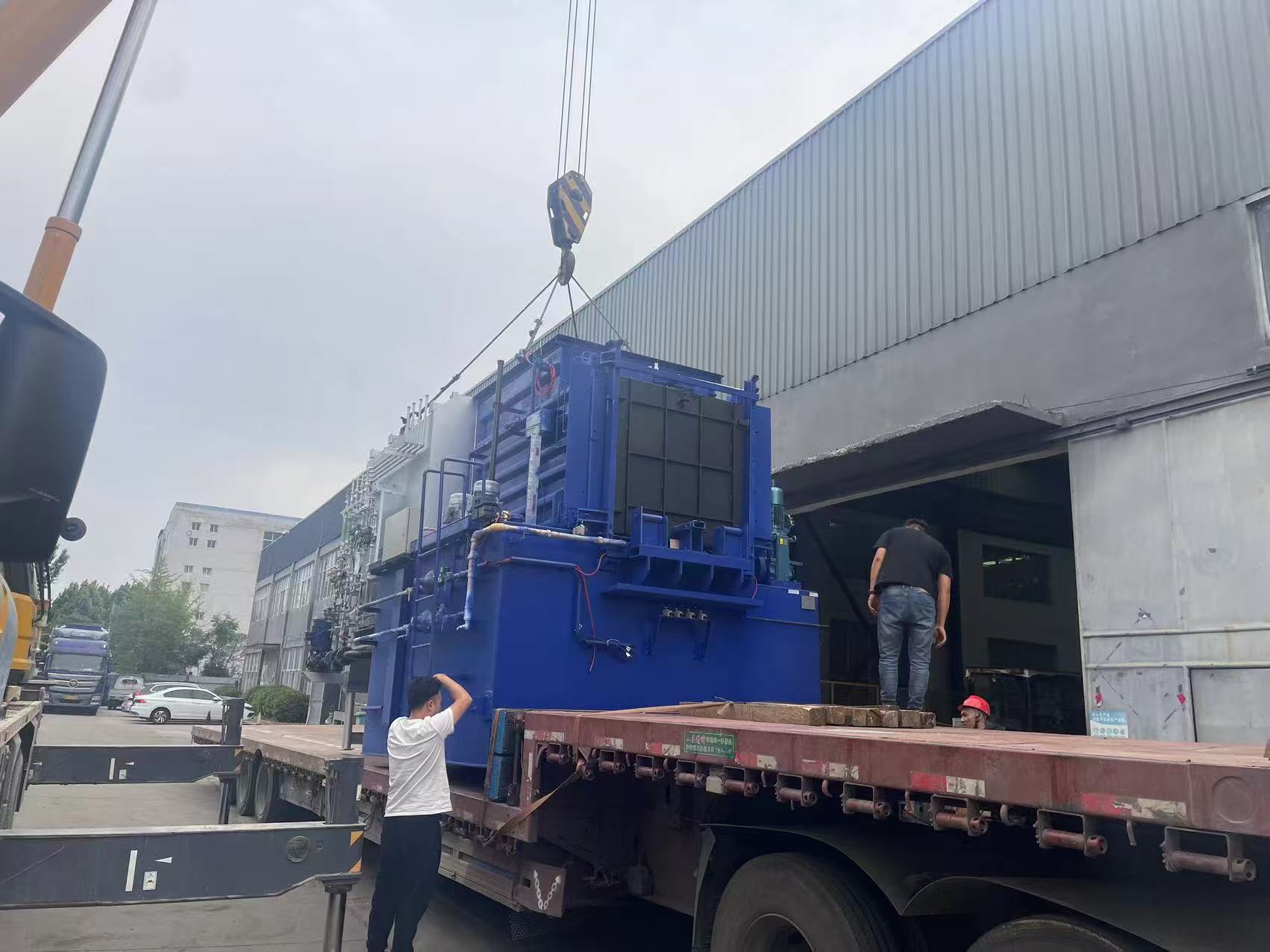
Installation conditions are part of the maintenance equation, not a separate construction topic. Operation is automated; matched utilities are electricity, compressed air and natural gas; and the factory crane height must exceed 6.5 metres, with additional clearance preferred. A plant that cannot lift a muffle out cannot schedule a muffle inspection, and an inspection that cannot be scheduled becomes a breakdown. Buyers should confirm crane clearance before finalising the layout.
One reference case covers ten units delivered to automotive OEM, military industry units, hardware tool factories and gear factories, with installations across China, Taiwan, Russia, Belarus, Vietnam, Indonesia, India, Thailand, Turkey, Qatar and Pakistan. Reported operating results are stable quality, precise carbon content, high production efficiency, easy maintenance and energy conservation — the combination that a five-year worksheet is designed to test.
Frequently asked questions
1. Does a low-maintenance atmospheric furnace still have to meet energy and quality compliance requirements?
Yes, and maintenance savings do not substitute for compliance. NORSEN states that it holds ISO9001 quality management system certification for its manufacturing, and its atmospheric furnace range is documented at model level as RTQ-10, RTQ-17, RTQ-25, TQ-10, TQ-17, TQ-25, SHQ-10, SHQ-15, SHQ-25, DHQ-10, DHQ-15 and DHQ-25. Buyers with China-based operations should also plan against the energy-efficiency compliance deadline for nine heavy industries reported by S&P Global in June 2026 and set for 2028, which places per-cycle energy consumption in the same evaluation as maintenance spend.
2. Which design elements actually reduce maintenance, rather than the service contract promising it?
Three elements carry most of the effect on the NORSEN platform. The SiC muffle furnace structure separates the atmosphere from the heating elements, so muffle condition can be inspected on a schedule. The chain dual drive shares drive load across the chain path, which is why NORSEN positions chain life beyond five years. The intelligent atmosphere control system reduces manual adjustment between loads. Four symmetrical oil tank agitator motors and the over-temperature and over-current protection complete the picture by protecting quench uniformity and element life.
3. Is maintenance really below 50% of alternatives — and under what conditions?
NORSEN states maintenance costs below 50% of alternative furnace designs and a chain service life exceeding five years for its chain-drive configuration. Both are company-stated positions tied to a defined duty cycle, so treat them as the hypothesis your worksheet tests. Confirm them against your part mix, load weight, target case depth, shift pattern and utility conditions before committing budget, and ask which configuration and reference installation the figure was derived from.
4. Can a sample unit or pre-shipment test validate the maintenance claim before a full order?
Partly, and that is enough to be useful. The minimum order quantity is one unit, every unit goes through 100% pre-shipment test, and free remote technical assistance supports the first operating period. What a test validates is assembly quality, control response and documentation — not a multi-year wear rate. For wear, ask for the muffle, chain and element replacement records from a reference installation running your duty cycle, and compare them with the intervals stated in the quotation.
5. How should lead time and spares planning be scheduled around a 150-day build?
Quoted lead time is 150 days with monthly capacity of 3 to 5 sets, and ODM customisation covers effective equipment size, degree of automation and performance requirements. Plan the wear-part stock and the crane-access window before the installation date, not after commissioning, because downtime cost begins the moment the first scheduled inspection is postponed. To move from comparison to a decision, request a duty-cycle-matched maintenance worksheet and quotation from NORSEN at jiayoubingsen@163.com, or download the company catalogue from the NORSEN brochure.
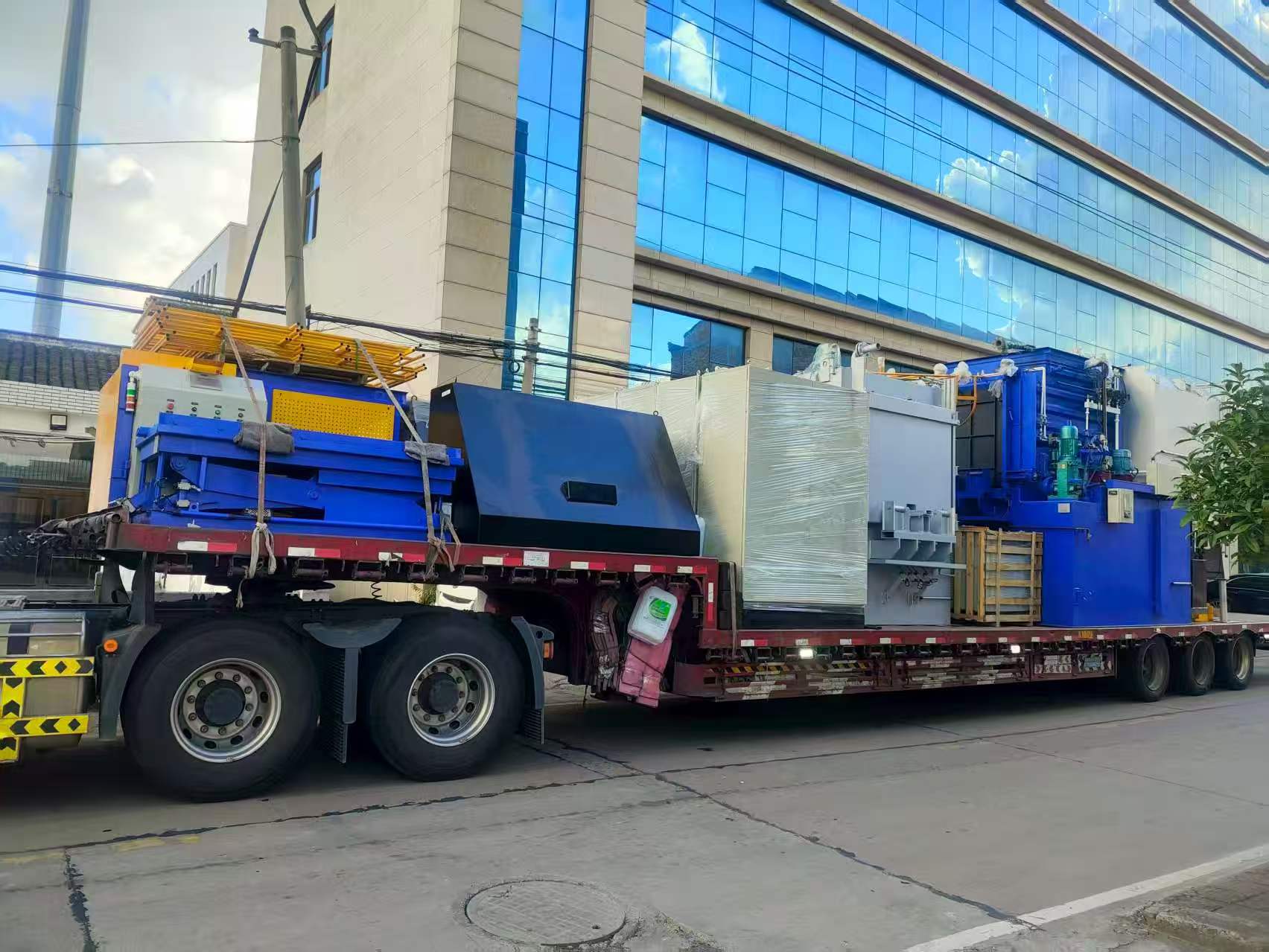
Conclusion: choose the design that turns wear into scheduled work
The atmosphere furnace versus traditional furnace question resolves to a single rule once the four cost pools are priced on the same duty cycle: choose the design that converts wear into scheduled work. A traditional configuration tends to spend on reactive retort, chain and element replacement plus manual atmosphere correction. A controlled-atmosphere platform with a SiC muffle structure, chain dual drive, intelligent atmosphere control and documented wear parts spends on planned inspections instead.
NORSEN's stated positions — chain service life beyond five years and maintenance below 50% of alternatives on comparable duty — are the right starting hypothesis, not the conclusion. Build the five-year worksheet on your own part mix, verify the reference installation, and confirm crane access above 6.5 metres before layout sign-off. That sequence is what separates a defensible capital decision from an optimistic one.
Next step: put your duty cycle into the comparison
Norsen Thermal Technology (Jiangsu) Co., Ltd. supplies atmospheric furnaces across RTQ, TQ, SHQ and DHQ model families, with 100% pre-shipment test, ODM customisation and free remote technical assistance. Share your part family, load weight, target case depth and shift pattern to receive a maintenance worksheet and quotation built on your own operating data.
Website: www.norsengroup.com | Email: jiayoubingsen@163.com | Tel: +86 153-8013-9999 | Address: No. 173, Hanxing Road, Peixian Economic Development Zone, Xuzhou City, Jiangsu Province, China
Catalogue download: NORSEN product brochure (PDF)
Have Questions or Need More Details?
Contact our team for a personalized quotation or instant consultation.
Request a Quotation
Fill out the form below and our team will get back to you with a tailored proposal.
WhatsApp Direct Chat
Prefer to chat in real-time? Message us on WhatsApp for instant assistance & quick answers.
- Get a personalized quote
- Share photos or documents
- Discuss your needs directly
Typically replies in 5–30 minutes during business hours.