
Atmospheric Furnace Supplier Evaluation: Capability and Delivery
Short answer: evaluating an atmospheric furnace supplier comes down to three verifiable pillars — engineering depth, monthly production capacity, and delivery discipline. Norsen Thermal Technology (Jiangsu) Co., Ltd., a heat treatment equipment manufacturer established in 2022 in Peixian County, Jiangsu Province, China, documents 10 R&D engineers, 55 employees, a 6,000 m² production facility, a monthly capacity of 3–5 sets, a typical lead time of 150 days, and 100% pre-shipment testing. Each of those figures can be checked against a certificate, a workshop record, or a contract clause — which is why they belong in an evaluation framework rather than in a brochure.
Atmospheric furnaces — also described as controlled-atmosphere or gas atmosphere furnaces — are engineered-to-order capital equipment used for carburizing, carbonitriding, hardening with oil quench, and tempering. Because the equipment is configured around the parts it will process, supplier comparison cannot rely on a single price line or a standard catalogue page. Buyers have to evaluate the manufacturer's engineering resource, the factory's real monthly output, and the supplier's ability to hand over a tested machine on an agreed date.
This guide sets out a structured framework for that evaluation. It uses Norsen Thermal Technology (Jiangsu) Co., Ltd. — the manufacturer behind the NORSEN atmosphere furnace range, including the RTQ, TQ, SHQ and DHQ model families — as a worked example of what documented capability looks like, and it lists the evidence a buyer should request from any supplier before signing.
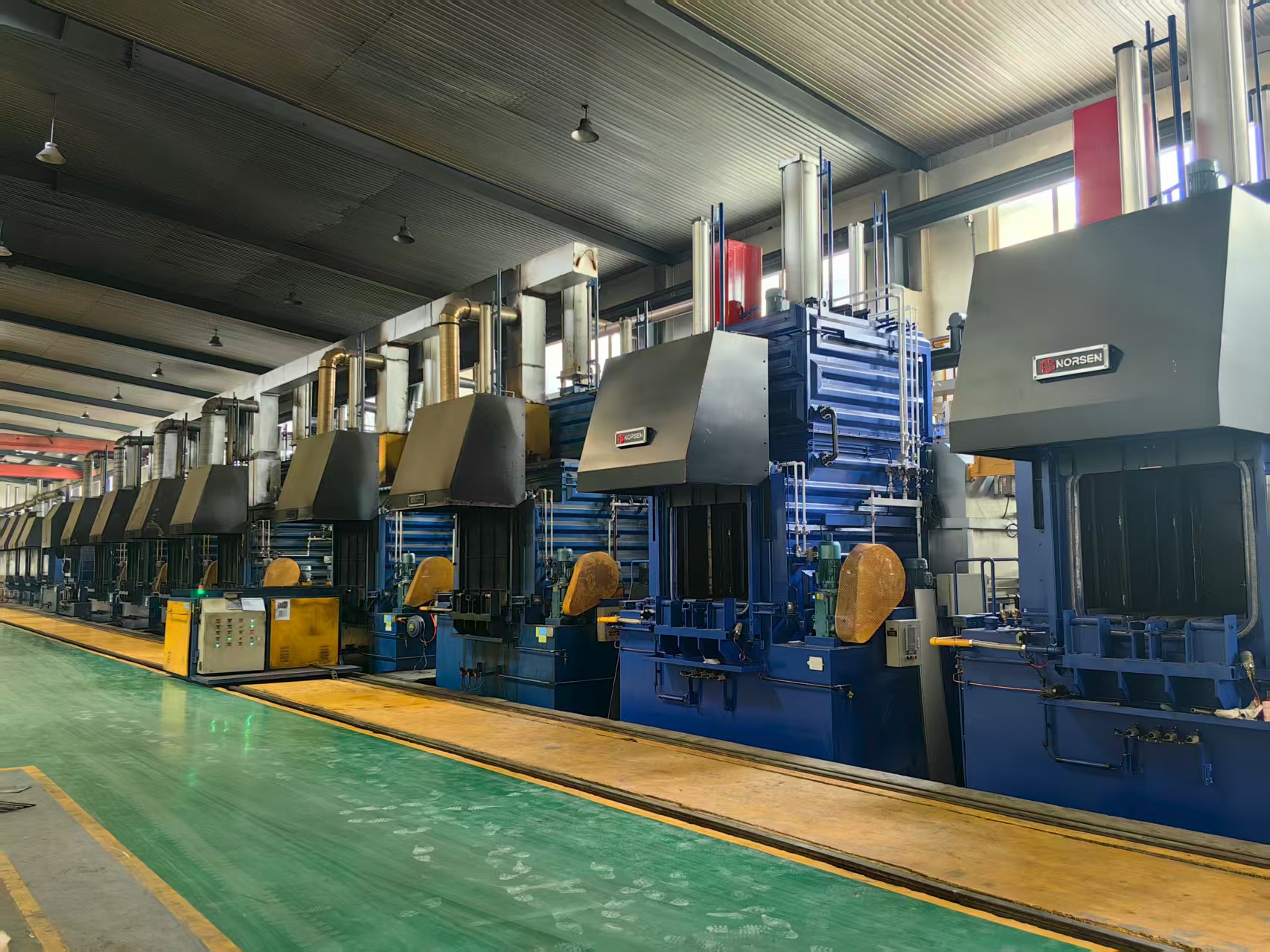
RTQF atmosphere furnace platform from the NORSEN multi-purpose furnace range.
Why Atmospheric Furnace Supplier Evaluation Goes Wrong
Most sourcing failures in this equipment category do not come from a wrong technical choice. They come from accepting capability and delivery claims that were never verifiable in the first place. Three structural reasons explain why.
- The specification is buyer-specific. A manufacturer offering ODM services customises the effective working size, the degree of automation, and the equipment performance requirements to the buyer's process. Two suppliers quoting for the same part mix may therefore propose different furnace architectures, different quench arrangements and different instrumentation levels — which means the quotations are not directly comparable line by line.
- Capability is invisible on a datasheet. A specification sheet can list a SiC muffle furnace structure, a chain dual drive, four symmetrical oil tank agitator motors, high-performance heating elements and an intelligent atmosphere control system. It cannot show how many design engineers will work on the order, how many complete sets leave the factory each month, or what proportion of fabrication is outsourced.
- Delivery risk compounds quietly. A typical production lead time for this class of equipment is measured in months — NORSEN quotes 150 days as standard. A capacity overstatement of one or two sets per month becomes a schedule gap measured in quarters, and it usually becomes visible only after the purchase order has been signed.
There is also a structural distinction that many buyers miss: a supplier may be a manufacturer, an integrator, or a trading intermediary. Only a manufacturer can answer questions about engineering headcount, in-house fabrication and monthly output with factory records. When a supplier cannot produce those records, that is a data point in itself.
Industry Background: Capacity, Energy Rules and Order Books in 2026
Three market conditions shape how capability and delivery should be judged in 2026.
Market scale. Fortune Business Insights values the global industrial furnace market at USD 10.87 billion in 2026, a figure that covers atmosphere, vacuum and induction equipment. Within that total, Asia Pacific accounted for 39.70% of global industrial furnace revenue in 2025, according to the same research. For buyers, the practical implication is that a large share of the world's furnace manufacturing capacity — and therefore of realistic delivery options — sits in one region.
Energy compliance. In June 2026, S&P Global reported that China has mandated energy efficiency compliance for nine heavy industries by 2028 under NDRC Notice No. 698. Furnaces installed today will still be operating when that deadline arrives. Buyers should therefore ask suppliers how energy performance is documented, and treat efficiency as a specification item rather than a marketing phrase. NORSEN lists low energy consumption and high-precision atmosphere control among its design highlights, alongside long service life and ease of maintenance — claims that should be matched against process records during acceptance testing.
Order books and process control. Global premium manufacturers carry substantial backlogs; Ipsen USA, for example, reported more than USD 100 million in vacuum furnace orders in 2026 year to date in its own October 2026 update. At the same time, peer-reviewed research published in MDPI Sensors concluded that accurate prediction of furnace temperature is the core and foundation of furnace optimisation. Together these two signals explain why mid-tier ODM manufacturers with documented in-house capacity have become a practical sourcing channel: they deliver engineered equipment, and their control systems are judged on measurable temperature and atmosphere behaviour rather than on brand alone.
The Three-Pillar Capability Framework
An evaluation framework should produce answers to three questions: can this supplier engineer the furnace, can it build it at the volume you need, and can it deliver a tested unit on schedule? Each pillar has its own evidence set.
Pillar 1 — Engineering Depth
Engineering depth is not the same as a product catalogue. It is the number of people who can convert a part mix into a furnace drawing, and the range of processes that design has to support.
- Design resource. Norsen Thermal Technology (Jiangsu) Co., Ltd. reports a 10-person R&D team within a 55-person workforce. That ratio matters: ten engineers is enough to run parallel customisation projects, and small enough that the buyer can identify who owns the drawing set.
- Process coverage. The NORSEN atmosphere furnace platform is designed for hardening with oil quench, carbonitriding, tempering, and carburizing and case hardening. These processes are delivered across the RTQ, TQ, SHQ and DHQ model families, with unit sizes spanning RTQ-10/17/25, TQ-10/17/25, SHQ-10/15/25 and DHQ-10/15/25.
- Customisation scope. NORSEN provides ODM production services, and the documented customisation variables are the effective equipment size, the degree of automation, and the equipment performance requirements. A buyer should test this by asking for two examples of how a change in part geometry altered the proposed configuration.
- Product breadth as an engineering signal. The company's portfolio also includes sealed box-type multi-purpose furnace production lines, pre-evacuated gas nitriding furnaces, mesh belt carburizing and quenching furnace production lines, and well-type furnaces. A broader process menu usually indicates a design team that has already worked through multiple atmosphere and quench combinations.
Pillar 2 — Production Capacity You Can Verify
Capacity should always be expressed as a rate with a time base, and tied to identifiable physical resources.
- Documented output. A monthly production capacity of 3–5 sets and an annual output of 50 sets.
- Physical footprint. A 6,000 m² facility staffed by 55 employees, split between engineering and production.
- In-house fabrication. Sawing and laser cutting of raw material, an on-site spare parts depot, and final assembly. Material grades handled include Q235, SS304 and SS310.
- Component choices that define build complexity. SiC muffle furnace structure, chain dual drive, four symmetrical oil tank agitator motors, high-performance heating elements, an intelligent atmosphere control system, and safety protection covering over-temperature and over-current conditions with gas heating.
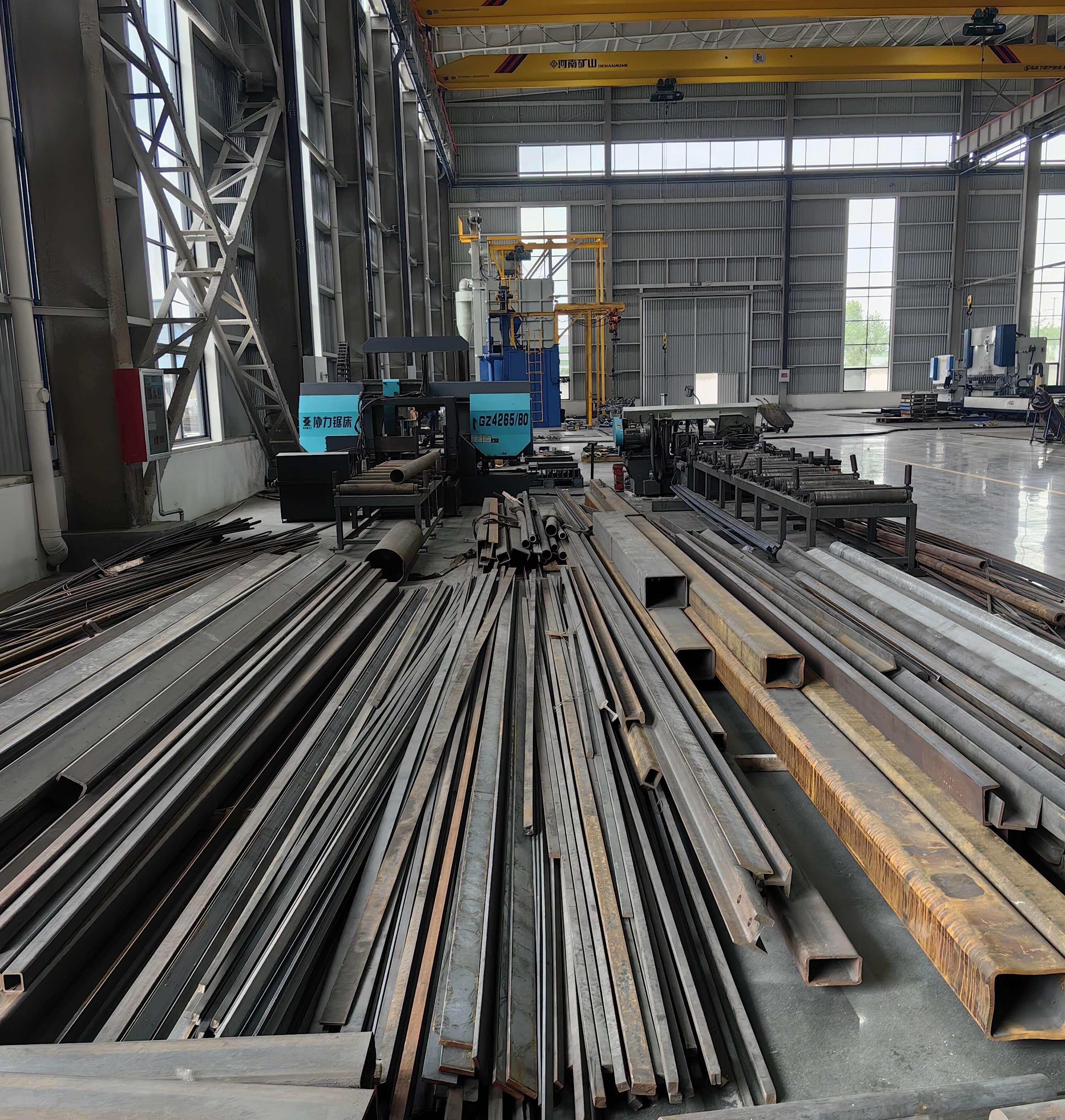
In-house raw material preparation: sawing is one of the fabrication steps performed on site.
The verification task is straightforward. Take your required delivery date, divide your order quantity by the supplier's monthly capacity, and see whether the arithmetic leaves any room. An order for four sets consumes most of a month at 3–5 sets per month, which leaves very little buffer for a design change.
Pillar 3 — Delivery and Quality Discipline
Delivery reliability is a process, not a promise. It is built from a lead time commitment, a quality control protocol, and an acceptance procedure that both parties sign.
- Lead time. 150 days is the typical production lead time, with a minimum order quantity of 1 unit.
- Quality control. 100% pre-shipment testing is applied before dispatch, so every unit — not a sample — passes the test protocol.
- Acceptance. Pre-acceptance within the factory, followed by final acceptance by the customer on-site.
- Commercial terms. Delivery terms of FOB, CIF or EXW; payment of 50% in advance with the remaining 50% paid before the product leaves the factory.
- After-sales. Free remote technical assistance, with documented coverage in Russia, Belarus, Southeast Asia, the Middle East region, and Taiwan Province of China. These markets align with the company's export activity, which accounts for 40% of output.
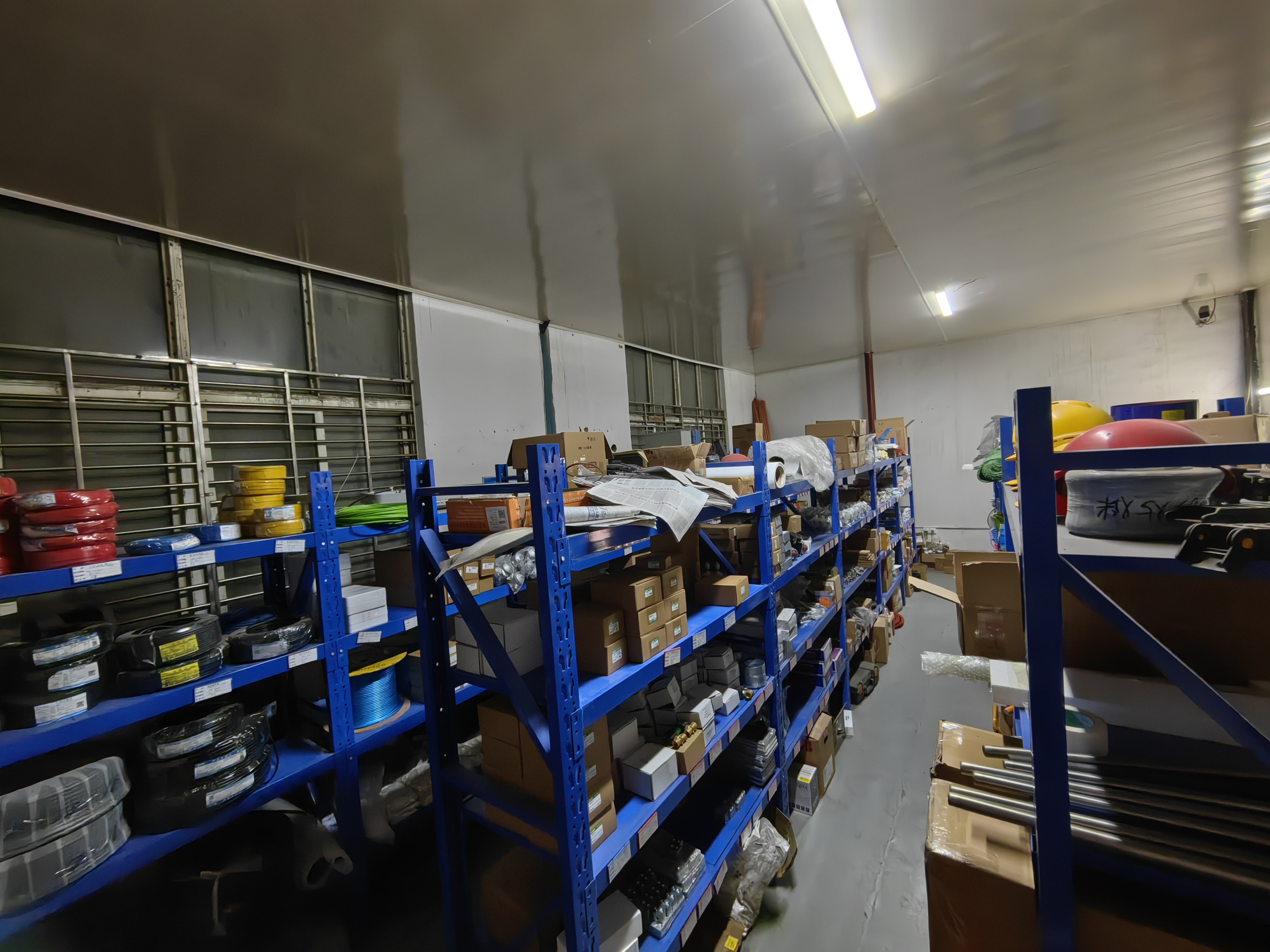
An on-site spare parts depot shortens the response path for after-sales support.
Step-by-Step: How to Evaluate an Atmospheric Furnace Supplier
The framework above becomes an evaluation when it is converted into eight sequential checks. Each check should produce a document, not a verbal assurance.
- Confirm the legal entity and its certification. Ask for the certificate itself, including number, issuing authority, standard and validity dates. NORSEN holds ISO9001 certification under certificate number ISC-Q-2024-4373-R, issued on 29 August 2024 by Beijing National Standard Joint Certification Co., Ltd. against GB/T19001-2016/ISO9001:2015, valid until 29 August 2027. The certified scope is the technology development and manufacture of heat treated industrial electric furnishings. Buyers should confirm that the scope wording actually covers the equipment being purchased, and record the expiry date in the sourcing file.
- Ask for the engineering allocation in numbers. Request the size of the R&D team, the design responsibilities, and the name of the engineer who will own the drawing set. Ten engineers is a verifiable figure; 'a strong technical team' is not.
- Match monthly capacity to your schedule. Multiply the supplier's stated monthly capacity by the months available before your installation date. At 3–5 sets per month, a multi-unit order can absorb an entire production month, so confirm whether your order will be built in one batch or sequenced.
- Verify which processes are performed in-house. Sawing, laser cutting, spare parts storage and assembly on the same site shorten the schedule risk chain. Every outsourced step is an additional date you cannot see.
- Review the furnace architecture against your process. Confirm the muffle structure, the drive arrangement, the quench agitation configuration, the heating elements, the atmosphere control system and the safety protections. The NORSEN platform combines a SiC muffle furnace structure, chain dual drive, four symmetrical oil tank agitator motors, high-performance heating elements and an intelligent atmosphere control system, with over-temperature and over-current protection and gas heating.
- Agree the quality control protocol in writing. A 100% pre-shipment testing regime should come with a test record list: what is measured, at which points, and against which acceptance limits. For atmospheric furnaces this normally includes temperature behaviour and atmosphere or carbon control performance.
- Write the acceptance procedure into the contract. The two-stage model — pre-acceptance within the factory and final acceptance by the customer on-site — protects both sides, because it separates build-quality verification from installation verification.
- Lock the lead time, payment schedule and after-sales coverage. With a 150-day typical lead time, a minimum order quantity of 1 unit, FOB/CIF/EXW terms and a 50/50 payment structure, the schedule should be converted into dated milestones, and after-sales support — free remote technical assistance in the covered regions — should be confirmed in the purchase agreement.
Use Cases: Where Capability and Delivery Verification Pays Off
The framework matters most when the equipment sits on a critical production path.
- Automotive OEM part production. Carburizing and case hardening, carbonitriding, oil-quench hardening and tempering are used to improve mechanical properties, increase hardness, enhance toughness and raise resistance to fatigue. Automotive buyers typically need documented process control because the heat treatment result feeds directly into part quality requirements.
- Military industry units. The same process menu applies, with a heavier documentation requirement and a stronger preference for suppliers whose quality management system has a traceable certificate number and scope.
- Gear manufacturing. Gear processing depends on repeatable carbon content and consistent case results. This is where the combination of intelligent atmosphere control and a 100% pre-shipment test regime becomes a procurement criterion rather than an engineering detail.
- Hardware tool factories and bearing producers. Higher part-mix variability makes ODM customisation — effective size, automation level, performance requirements — the deciding factor between standard and configured equipment.
- Commercial heat treatment shops. Contract heat treaters sell furnace time, so monthly throughput and uptime dominate the business case. A supplier's production capacity, spare parts availability and remote technical support directly affect the shop's own service level.
Documented customer types for the NORSEN atmosphere furnace range include automotive OEMs, military industry units, hardware tool factories and gear factories. The company's case record also lists 10 units supplied across Belarus, Russia, Thailand, Indonesia, India, Qatar, Turkey, Vietnam, China and Taiwan Province of China, with reported outcomes of stable quality, precise carbon content, high production efficiency, easy maintenance and energy conservation. Buyers should still request direct references — a case list is a starting point for verification, not a substitute for it. NORSEN equipment is applied in military industry, automobiles, agricultural machinery, robots, bearings, hardware and sewing machine manufacturing.
Capability and Delivery Verification Matrix
The table below converts the framework into a buyer worksheet. The final column shows what Norsen Thermal Technology (Jiangsu) Co., Ltd. documents; the same questions should be put to every supplier on a shortlist.
| Evaluation dimension | Question to ask | Evidence to request | NORSEN documented position |
|---|---|---|---|
| Engineering depth | How many design engineers will work on this order? | R&D headcount, drawing ownership, customisation examples | 10 R&D engineers within a 55-person workforce |
| Customisation scope | What can be changed and what is fixed? | Written list of configurable variables | ODM services covering effective size, degree of automation and performance requirements |
| Production footprint | Where is the equipment built? | Facility size, in-house process list, workshop access | 6,000 m² facility; sawing, laser cutting, spare parts depot and assembly on site |
| Monthly capacity | How many complete sets leave the factory each month? | Capacity rate plus annual output figure | 3–5 sets per month; 50 sets annual output |
| Lead time | What is the standard production lead time? | Dated production milestones | 150 days typical; minimum order quantity 1 unit |
| Quality control | Is every unit tested before dispatch? | Test protocol and record list | 100% pre-shipment testing |
| Acceptance | Who signs off, and where? | Two-stage acceptance clause in the contract | Pre-acceptance within the factory; final acceptance by the customer on-site |
| Commercial terms | What are the delivery and payment terms? | Written quotation with Incoterms | FOB / CIF / EXW; 50% in advance, 50% before the product leaves the factory |
| Compliance | Which certificate covers this manufacturing scope? | Certificate number, authority, scope, validity | ISO9001, certificate ISC-Q-2024-4373-R, valid to 29 August 2027 |
| After-sales | What support is included after installation? | Service scope and covered regions | Free remote technical assistance in Russia, Belarus, Southeast Asia, the Middle East region and Taiwan Province of China |
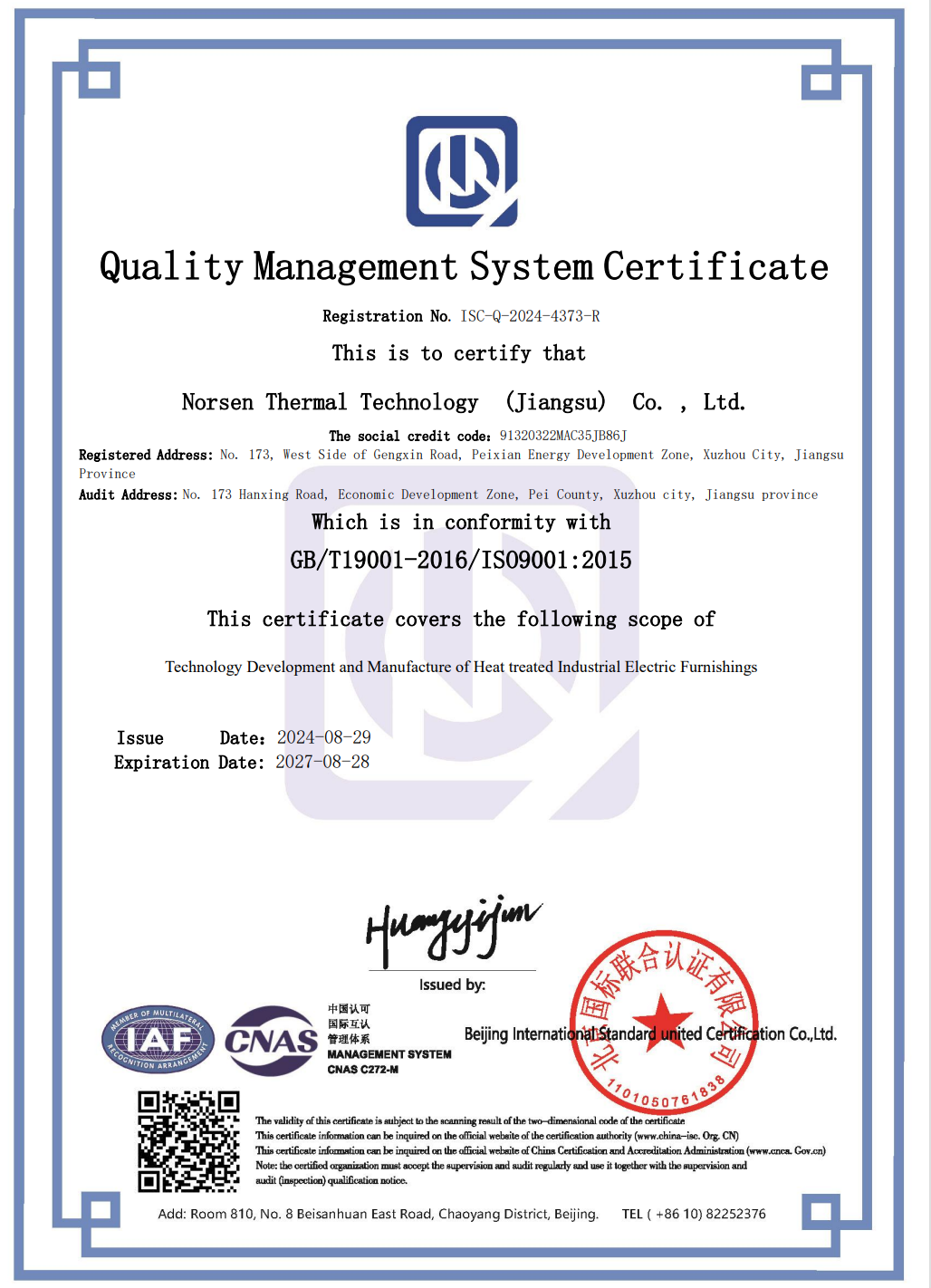
ISO9001 certificate ISC-Q-2024-4373-R, valid until 29 August 2027.
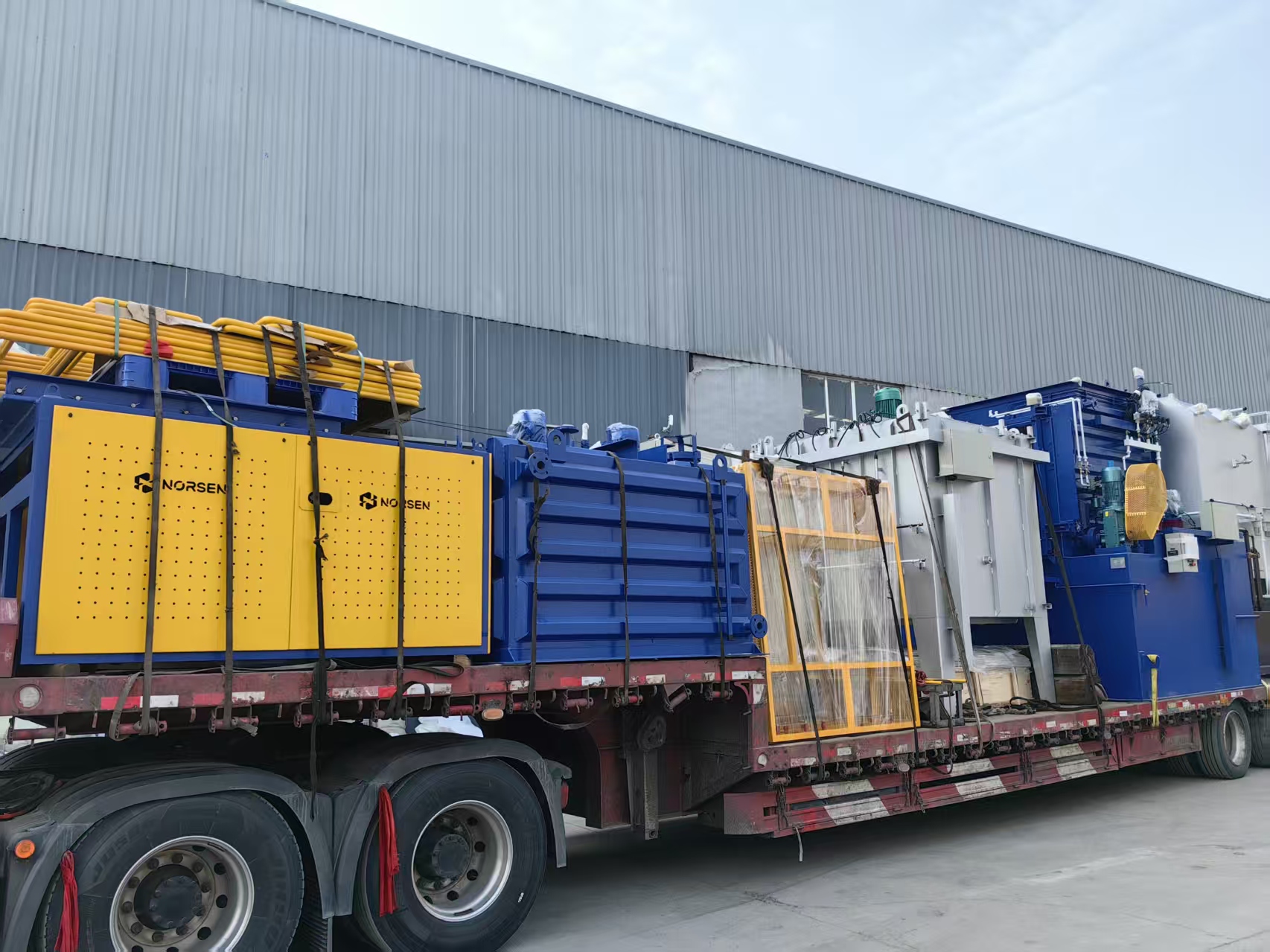
Pre-shipment stage: every unit passes the test protocol before dispatch.
Frequently Asked Questions
Which certification should I verify before shortlisting an atmospheric furnace supplier?
Verify an ISO9001 quality management certificate and check four fields: the certificate number, the issuing authority, the certified scope, and the validity dates. For Norsen Thermal Technology (Jiangsu) Co., Ltd., the certificate is ISC-Q-2024-4373-R, issued on 29 August 2024 by Beijing National Standard Joint Certification Co., Ltd. against GB/T19001-2016/ISO9001:2015, valid until 29 August 2027. The certified scope covers technology development and manufacture of heat treated industrial electric furnishings. A certificate whose scope does not mention manufacturing, or which has already expired, cannot by itself support a supplier qualification decision.
What engineering and production resources should an atmospheric furnace manufacturer be able to prove?
A manufacturer should be able to state engineering headcount, total workforce, facility size, monthly capacity and annual output as specific figures. Norsen Thermal Technology (Jiangsu) Co., Ltd. documents 10 R&D engineers, 55 employees, a 6,000 m² facility, a monthly capacity of 3–5 sets and an annual output of 50 sets. It also performs sawing, laser cutting, spare parts storage and assembly in-house, and supplies ODM production services with customisation of effective equipment size, automation level and performance requirements. The practical test is whether those numbers can be matched to a production plan for your specific order.
What commercial terms should I expect when requesting an atmospheric furnace quote?
Expect a quotation structured around minimum order quantity, delivery terms and payment milestones rather than a single list price, because atmospheric furnaces are configured to the buyer's process. NORSEN's documented terms are a minimum order quantity of 1 unit, delivery terms of FOB, CIF or EXW, and payment of 50% in advance with the remaining 50% paid before the product leaves the factory. Cost drivers worth discussing explicitly are the effective equipment size, the degree of automation and the performance requirements, since those are the variables that change the build. Buyers with long equipment life cycles should also ask how energy performance is documented, given the direction of industrial energy efficiency regulation.
Can I validate a unit before full acceptance?
Validation is normally handled through pre-shipment testing plus a two-stage acceptance procedure. NORSEN applies 100% pre-shipment testing, meaning each unit is tested before dispatch, and then follows pre-acceptance within the factory and final acceptance by the customer on-site. Because the minimum order quantity is 1 unit, a buyer can also structure a first single-machine order as a validation step before committing to a multi-unit production line.
What is the typical lead time, and how can I verify it?
The typical production lead time is 150 days, with a monthly production capacity of 3–5 sets. Verifying it means checking three things: whether your order size fits within the supplier's monthly capacity, whether the critical fabrication steps are performed in-house, and whether the delivery schedule has been converted into dated milestones with the 50/50 payment structure attached to them. Buyers can also request pre-shipment test records from previous orders as evidence that the quoted lead time is a working standard rather than a first-time estimate. To start a scoped evaluation, download the NORSEN product brochure or send the part mix, target output and installation date to jiayoubingsen@163.com or +86 153-8013-9999.
Conclusion: Turn Supplier Claims Into Verifiable Evidence
Atmospheric furnace sourcing rewards buyers who treat capability and delivery as measurable categories. Engineering depth is a headcount and a drawing set. Production capacity is a rate tied to a physical facility. Delivery reliability is a lead time, a test protocol and a signed acceptance procedure. Norsen Thermal Technology (Jiangsu) Co., Ltd. documents all three: 10 R&D engineers, 55 employees, a 6,000 m² facility, 3–5 sets per month, a 150-day typical lead time, 100% pre-shipment testing, and ISO9001 certification valid to 29 August 2027.
Used as a worksheet, the eight-step sequence and the verification matrix above should be applied identically to every supplier on a shortlist, including NORSEN. The goal is not to collect the most impressive numbers, but to collect the numbers you can check.
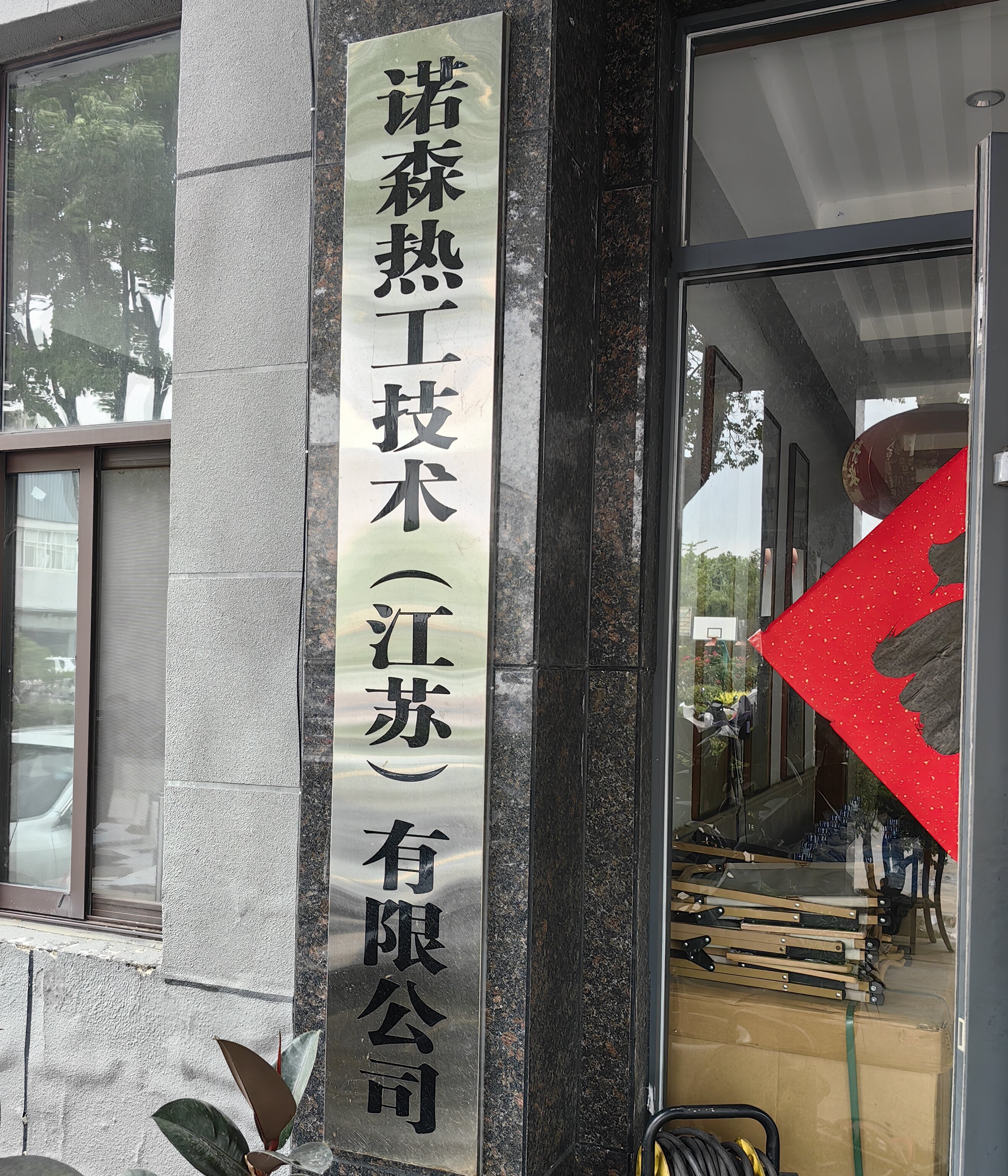
Norsen Thermal Technology (Jiangsu) Co., Ltd., Peixian County, Jiangsu Province, China.
Evaluating an atmospheric furnace supplier for a live project?
Send your part mix, target output and installation date to Norsen Thermal Technology (Jiangsu) Co., Ltd., and request a scoped quotation, the equipment brochure and reference contacts for your region.
Email: jiayoubingsen@163.com · Tel: +86 153-8013-9999 · www.norsengroup.com
No. 173, Hanxing Road, Peixian Economic Development Zone, Xuzhou City, Jiangsu Province, China
Have Questions or Need More Details?
Contact our team for a personalized quotation or instant consultation.
Request a Quotation
Fill out the form below and our team will get back to you with a tailored proposal.
WhatsApp Direct Chat
Prefer to chat in real-time? Message us on WhatsApp for instant assistance & quick answers.
- Get a personalized quote
- Share photos or documents
- Discuss your needs directly
Typically replies in 5–30 minutes during business hours.