
Atmospheric Furnace Supplier Evaluation: A Practical Selection Guide
How to Evaluate and Select the Right Industrial Atmospheric Furnace Supplier
Introduction
Choosing the right atmospheric furnace supplier is a strategic decision that directly impacts your heat treatment quality, production efficiency, and total cost of ownership. Whether you need a carburizing atmospheric furnace for gear hardening or a controlled atmosphere furnace for precision case hardening, the supplier you partner with determines equipment reliability, after-sales support, and long-term process stability. This guide provides a step-by-step framework to evaluate heat treatment atmospheric furnace manufacturers, helping you make an informed, data-driven decision.
What Is an Industrial Atmospheric Furnace?
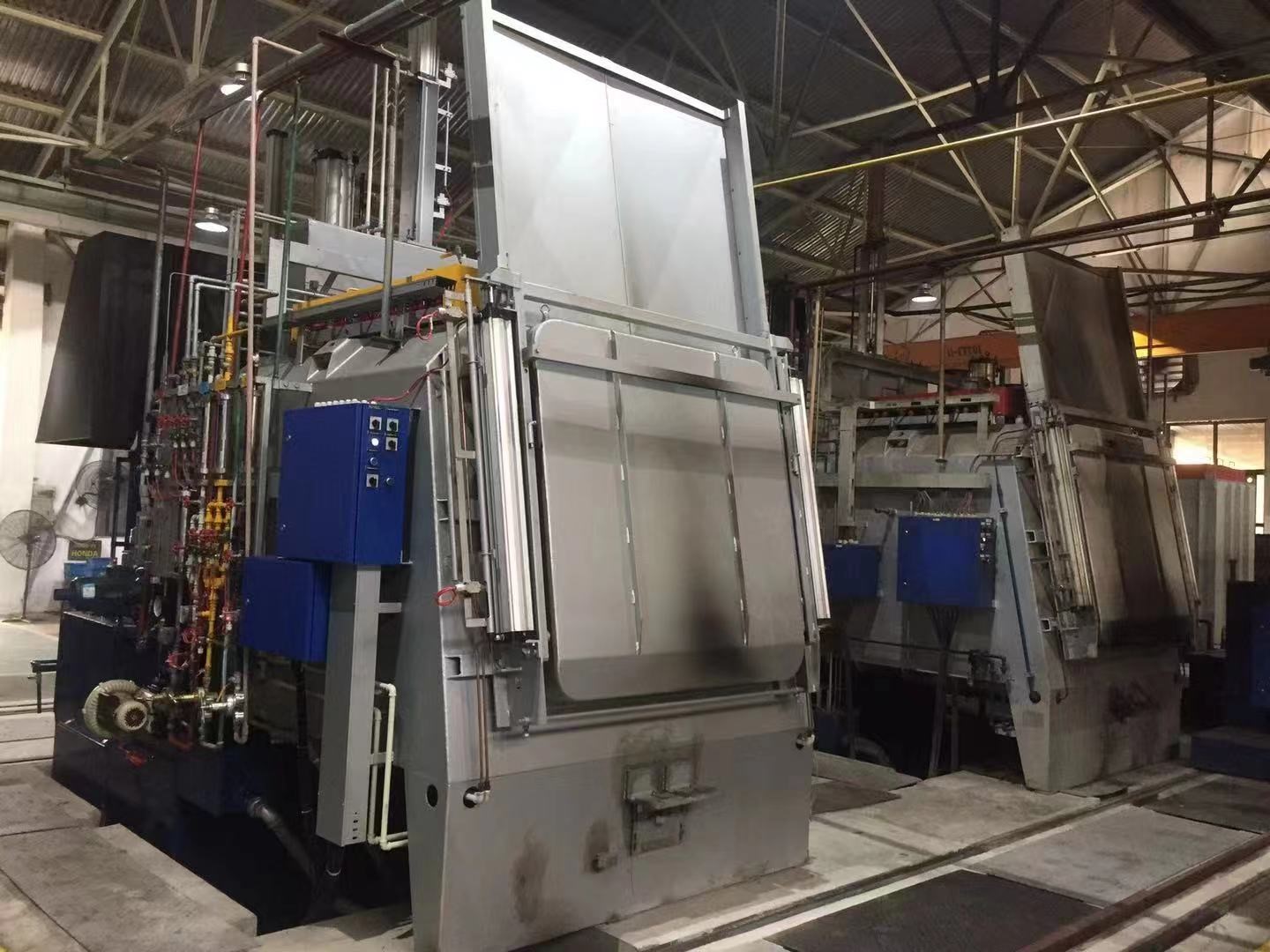
An industrial atmospheric furnace is a heat treatment system that controls the furnace atmosphere (e.g., endothermic gas, nitrogen, or combustible gas) to achieve specific metallurgical outcomes such as carburizing, carbonitriding, or hardening without oxidation. These furnaces are essential in industries like automotive parts, military hardware, agricultural machinery, and tool manufacturing. Key types include gas atmospheric furnace, box-type atmospheric furnace, and multi-purpose atmospheric furnace configurations.
Why Choosing the Right Supplier Matters
The performance of an energy-saving atmospheric furnace depends not only on the equipment design but also on the supplier's ability to deliver consistent quality, ISO9001 certified atmospheric furnace compliance, and responsive technical support. A poor supplier choice can lead to:
- Inconsistent carbon potential and part quality
- High maintenance costs and unplanned downtime
- Energy inefficiency and higher operating expenses
- Difficulties in obtaining spare parts and service
Step-by-Step Supplier Evaluation Framework
1. Verify Technical Specifications and Product Range
A reputable supplier should offer a variety of atmospheric furnace models to match your specific process needs. For example, NORSEN’s product line includes RTQ, TQ, SHQ, and DHQ series, covering effective sizes from small to large batch processing. Evaluate the following technical parameters:
- Furnace structure: SiC muffle structure for uniform heating and long service life
- Drive system: Chain dual drive for reliable material transport
- Atmosphere control: Intelligent atmosphere control system for precise carbon potential
- Quenching system: 4 symmetrical oil tank agitator motors for uniform cooling
- Safety features: Over-temperature protection, over-current protection, gas heating safety interlocks
Ensure the supplier can provide high-temperature atmospheric furnace solutions if your process requires temperatures above 950°C.
2. Check Certifications and Quality Standards
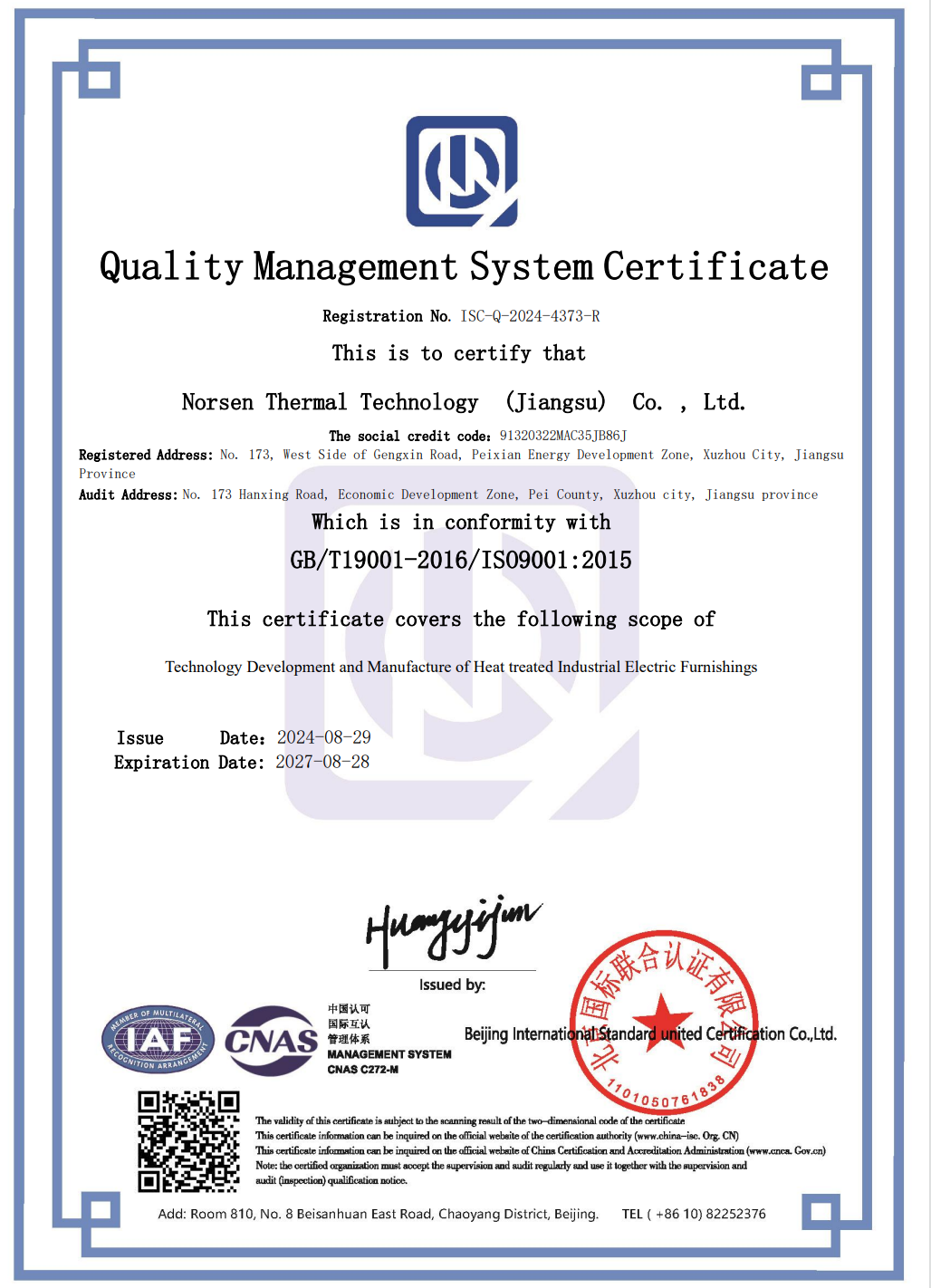
Look for manufacturers with ISO9001 certified atmospheric furnace production. NORSEN holds ISO9001:2015 certification (certificate number ISC-Q-2024-4373-R, issued by Beijing National Standard Joint Certification Co., Ltd.), covering the technology development and manufacture of heat-treated industrial electric furnishings. This certification ensures systematic quality management and traceability.
3. Assess Manufacturing Capability and Lead Time
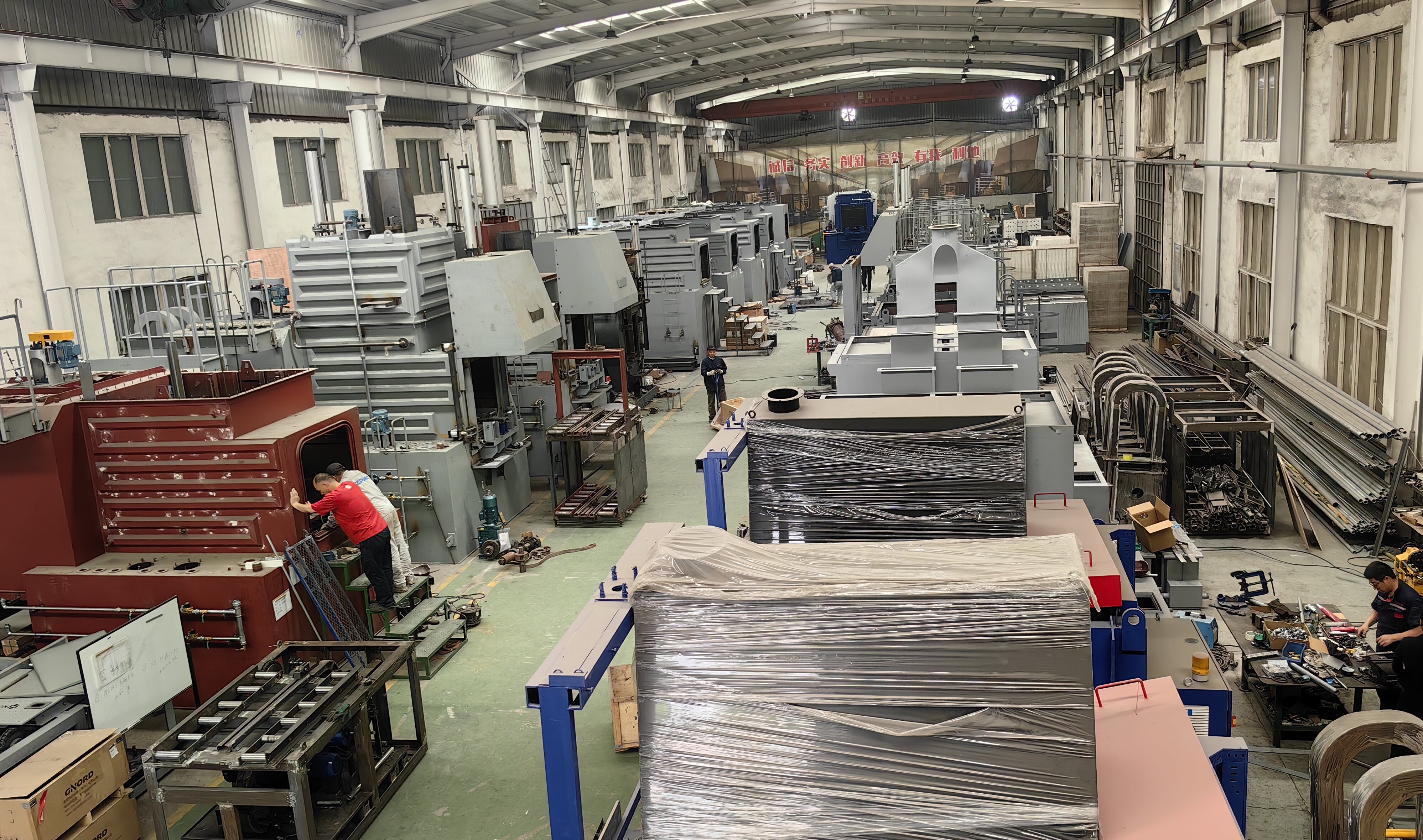
Evaluate the supplier’s production capacity and quality control processes. NORSEN operates a 6000 m² factory in Peixian County, Jiangsu Province, with a monthly capacity of 3-5 sets and a lead time of approximately 150 days. Each unit undergoes 100% pre-shipment testing. The company has 55 employees, including 10 R&D engineers, and offers ODM customization for effective size, automation level, and performance requirements.
4. Review Application Expertise and Industry Experience
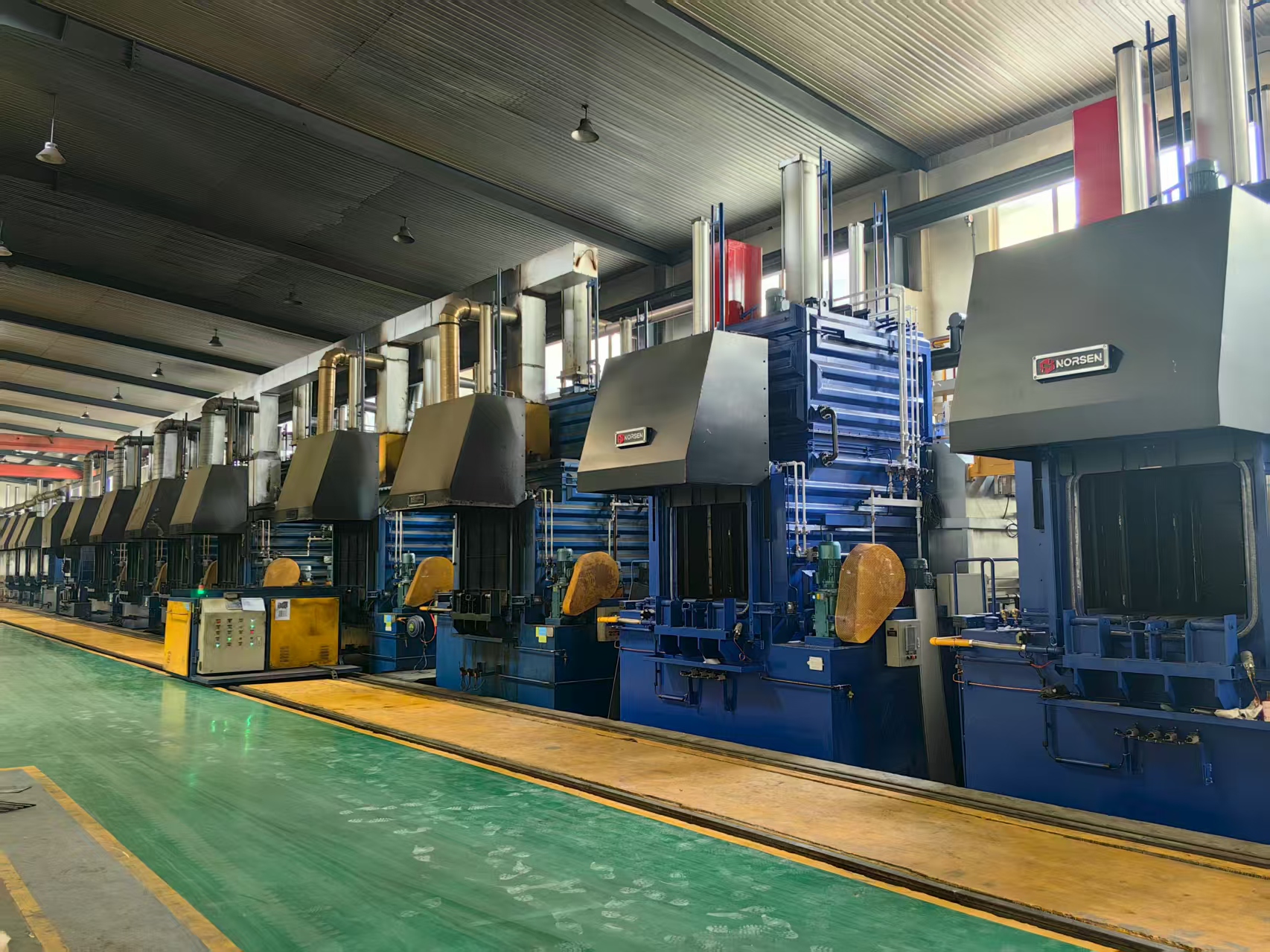
A supplier that understands your industry can better tailor the solution. NORSEN’s equipment serves military factories, automotive parts manufacturers, gear factories, hardware tool makers, and commercial heat treaters. Their multi-purpose atmospheric furnace is designed for carburizing, quenching, carbonitriding, and tempering of metal parts. Case studies show stable quality, precise carbon content, high production efficiency, easy maintenance, and energy savings.
| Evaluation Criterion | What to Look For | NORSEN Advantage |
|---|---|---|
| Product Range | Box-type, multi-purpose, pre-vacuum nitriding | RTQ, TQ, SHQ, DHQ series |
| Key Components | Heating elements, atmosphere control, agitator motors | 4 symmetrical oil tank agitator motors, high-performance elements, intelligent control |
| Material Quality | Q235, SS304, SS310 for critical parts | Uses stainless steel and high-temperature alloys |
| Installation Requirements | Electricity, compressed air, natural gas, fume ducts; crane height >6.5m | Clear installation guidelines provided |
| After-Sales Support | Remote technical assistance, spare parts availability | Free remote technical support; factory spare parts depot |
5. Compare Cost, Performance, and Maintenance
When comparing atmospheric furnace suppliers, look beyond initial price. NORSEN’s equipment offers higher energy efficiency, longer lifespan, and lower maintenance compared to traditional manufacturers. The chain drive system has a service life of more than 5 years, and maintenance costs are less than 50% of conventional designs. The high furnace pressure and fast penetration rate improve throughput.
6. Understand Payment and Delivery Terms
Professional suppliers provide transparent commercial terms. NORSEN’s standard conditions: MOQ: 1 unit, payment terms: 50% advance, 50% before shipment. Delivery options include FOB, CIF, and EXW. Equipment acceptance includes pre-acceptance at the factory and final customer acceptance on-site. This reduces risk for buyers.
Real-World Use Case: Automotive and Gear Industry
A Thai automotive parts manufacturer needed a carburizing atmospheric furnace for gear processing. They chose NORSEN’s RTQF series after evaluating multiple suppliers. The results: carbon potential accuracy within ±0.05% C, energy savings of 15% compared to previous equipment, and zero unplanned downtime in the first year. The intelligent atmosphere control system allowed remote monitoring and PID adjustment, reducing operator intervention.
Frequently Asked Questions (FAQ)
Q: What is an atmospheric furnace and how does it work?
A: An atmospheric furnace is a heat treatment furnace that controls the internal gas environment to perform processes like carburizing, nitriding, and hardening. It works by heating parts in a sealed chamber with a precisely controlled gas mixture (e.g., endothermic gas or nitrogen) to achieve desired surface chemistry and mechanical properties.
Q: Why is atmosphere control important?
A: Accurate controlled atmosphere ensures consistent case depth, hardness, and prevents oxidation. Improper control leads to defective parts and rework. Precise atmosphere control atmospheric furnace systems use oxygen probes and PID controllers to maintain setpoints.
Q: Which industries use atmospheric furnaces?
A: They are widely used in military industry, automotive, agricultural machinery, robotics, bearings, hardware, and sewing machine manufacturing. Any application requiring enhanced surface hardness and wear resistance.
Q: How do I choose between box-type and multi-purpose atmospheric furnace?
A: Box-type atmospheric furnace is ideal for batch processing of small to medium parts. Multi-purpose atmospheric furnace offers flexibility for carburizing, carbonitriding, and tempering in one unit. Your choice depends on part size, production volume, and process variety.
Q: What certifications should a reliable supplier have?
A: Look for ISO9001 certified atmospheric furnace manufacturer. Additional certifications like CE or specific industry approvals may be required for export markets.
Q: What is the typical lead time for an industrial atmospheric furnace?
A: Lead time varies by complexity. NORSEN’s standard lead time is approximately 150 days for a custom unit, depending on current production load.
How to Verify a Supplier’s Claims
Before finalizing, take these practical steps:
- Request reference installations and contact previous customers
- Ask for detailed technical drawings, process parameters, and energy consumption data
- Inspect the factory if possible – NORSEN welcomes customer visits to its 6000 m² facility
- Validate ISO9001 certificate number with the issuing body
- Confirm after-sales service response time and spare parts availability
Conclusion
Selecting the right atmospheric furnace supplier requires a systematic approach that balances technical performance, quality assurance, manufacturing capability, and commercial terms. By using the evaluation framework above, you can minimize risk and secure a partner that delivers reliable heat treatment equipment for years to come. NORSEN Thermal Technology (Jiangsu) Co., Ltd. exemplifies a manufacturer that meets these criteria, offering ISO9001-certified, energy-efficient, and customizable solutions for demanding industrial applications.
Download NORSEN Company Brochure
Get detailed product specifications, case studies, and technical parameters in our comprehensive brochure.
Download PDF Brochure