
Atmospheric Furnace Total-Cost Comparison: NORSEN Evidence for Final Buyers
Short answer: For a buyer comparing an atmospheric furnace from NORSEN with traditional heat-treatment equipment, the documented differences are higher energy efficiency, longer lifespan, and lower maintenance. NORSEN attributes the efficiency gain to high furnace pressure and a fast penetration rate. These differences affect total cost, not only the initial purchase price. A final-stage decision should therefore be based on energy per cycle, expected component life, maintenance cost, control safety, and supplier verification rather than a headline quote.
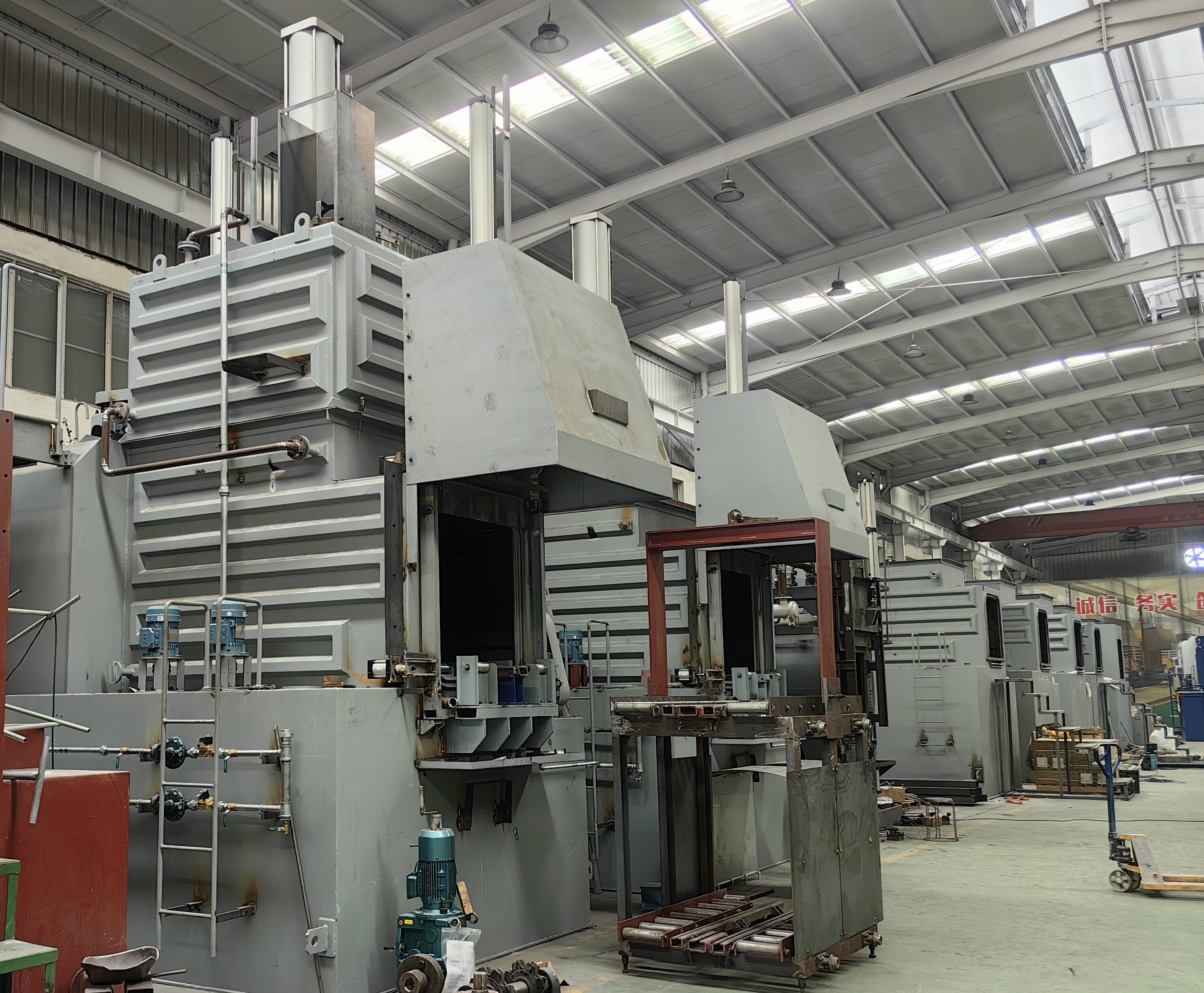
Production evidence is as important as a datasheet during the final atmospheric furnace purchase decision.
What an Atmospheric Furnace Does
An atmospheric furnace, also called an industrial atmospheric furnace or controlled-atmosphere furnace, is a heat-treatment system that heats metal parts inside a closed chamber with a controlled gas atmosphere. The gas atmosphere limits surface oxidation and decarburization, and it supports metallurgical processes that require consistent chemical potential at the workpiece surface. Common applications include carburizing, gas-shielded hardening, and nitriding-related work.
The term traditional heat-treatment equipment refers here to more conventional furnaces from legacy manufacturers that may not manage the furnace atmosphere with the same level of control. For a buyer in the decision phase, the practical issue is not only whether the furnace can reach temperature, but whether the product, atmosphere, and energy input are repeatable enough to protect process quality over many production cycles.
Why the Timing of This Comparison Matters
Market data published by Precedence Research values the global industrial furnace market at approximately USD 11.86 billion in 2024, with expectations to reach USD 21.53 billion by 2034. Grand View Research reports that the Asia-Pacific region held 43.4% of the industrial furnace market in 2025, driven largely by industrialization in China and India. Future Market Insights also reports that gas-fired furnaces held a leading product-segment share of 39.8% in 2025, while electric and energy-efficient hybrid furnaces are gaining adoption because of decarbonization trends.
Global high-temperature and atmospheric-furnace industry players include Ipsen, Inductotherm Group, Aichelin Group, Andritz, and Tenova S.p.A. These established names matter because they set a benchmark for engineering depth. At the same time, buyers evaluating China-based manufacturers now operate in a more active cross-border supply environment. The Observatory of Economic Complexity recorded USD 202 million in Chinese exports of liquid fuel furnaces under HS4 8416 in 2025, with Russia, Indonesia, and Saudi Arabia among the main destinations. That figure is not proof of any individual supplier's quality, but it does indicate that furnace sourcing from China is a live route for many buyers.
Company Background: NORSEN as a Supplier
Norsen Thermal Technology (Jiangsu) Co., Ltd., commonly shortened to NORSEN, is a China-based heat-treatment equipment manufacturer located in Peixian County, Jiangsu Province. The company was founded in 2022 and reports a 6,000 m² facility, 55 employees, a 10-person R&D team, and an annual output of 50 sets. It also reports an export ratio of about 40%, with markets including China, Russia, Belarus, Vietnam, Indonesia, Thailand, Turkey, Qatar, and Pakistan. NORSEN holds ISO9001 quality management system certification.
The company profile places NORSEN in the intelligent heat-treatment equipment segment, with a stated mission to improve the heat-treatment performance of metal materials, raise production efficiency, and reduce energy consumption. NORSEN main products include box-type multi-purpose furnaces, gas furnaces, atmosphere furnaces, and pre-vacuum nitriding furnaces. The broader product line includes sealed box-type multi-purpose furnace production lines, pre-evacuated gas nitriding furnaces, mesh-belt carburizing and quenching furnace production lines, well-type furnaces, and other heat-treatment equipment. Applications span aerospace, military industry, automotive parts, textile machinery, construction machinery, and commercial heat treatment.
What the NORSEN Comparison Evidence Shows
The comparison data supplied by NORSEN states that, compared with traditional heat-treatment-equipment manufacturers, the product has distinct advantages. The core differences are higher energy efficiency, longer lifespan, and lower maintenance. The mechanism described for the efficiency gain is high furnace pressure and a fast penetration rate. These are not marketing labels; they are engineering claims that can be tested through furnace design, control settings, and process data.
The same evidence set also states that the service life of the chain is more than five years, and that the maintenance required is 50% less. For a buyer, this is a total-cost claim. A chain replacement, unplanned downtime, and maintenance labor all appear on the operating budget long after the invoice is paid. NORSEN positions the product as having excellent performance, a reasonable price, and high value for money, but no list price is published in the corpus. That makes it important to test the claim against an itemized quotation and a multi-year operating-cost model.
Total-Cost Comparison Table
| Comparison Dimension | NORSEN Atmospheric Furnace Evidence | What the Buyer Should Verify |
|---|---|---|
| Energy efficiency | High furnace pressure and fast penetration rate contribute to improved energy efficiency. | Ask for energy consumption per batch or per ton of product, and compare the same process cycle. |
| Lifespan | Longer lifespan; chain service life is stated at more than 5 years. | Use the 5-year life assumption in the total-cost model and ask about wear-part replacement intervals. |
| Maintenance | 50% less maintenance required than traditional heat-treatment equipment. | Request the maintenance schedule, spare-parts list, and supply-chain response time. |
| Atmosphere and temperature control | Overheat risk is addressed through PID adjustment and multiple thermocouples, supported by program optimization and remote control. | Confirm the number and position of thermocouples, temperature uniformity, and atmosphere control logic. |
| Applications | Products are used in automotive parts, gear processing, hardware tools, aerospace, military, textile machinery, construction machinery, and commercial heat treatment. | Match the furnace line to your actual part mix rather than selecting a generic furnace model. |
| Cost and value | Described as excellent performance, reasonably priced, and high value for money. | Compare total cost, not list price alone, and ask for a detailed quotation. |
Risk Control as a Comparison Point
An atmospheric furnace operates with combustible or reactive gas. Overheating is therefore not only a quality risk; it can also affect the safety and stability of the whole batch. The risk-control practice for NORSEN covers overheat as a key risk type. The control method includes PID adjustment and multiple thermocouples. Enterprise-level measures include program optimization and remote control.
For a buyer, this is a decision point: how many temperature sensors are used, how the controller reacts to sensor failure, and whether the supplier can adjust programs remotely during commissioning or troubleshooting. A furnace with high energy efficiency is less valuable if its temperature and atmosphere controls are not robust enough to protect the load.
Step-by-Step Approach for the Final Purchase Decision
Step 1: Define Your Process and Product Mix
Start with the actual parts to be treated. Are they gears, automotive components, hardware tools, or a mix of commercial heat-treatment jobs? The answer determines the required atmosphere furnace configuration. NORSEN product lines include carburizing and quenching furnace lines and pre-vacuum nitriding furnaces, so your process will select the line type, not the other way around.
Step 2: Turn Efficiency Claims into Energy Data
High furnace pressure and fast penetration rate are the stated mechanisms behind NORSEN energy-efficiency improvements. Ask the supplier to show how these mechanisms apply to your process. If possible, request a comparable cycle calculation that includes heating time, hold time, gas consumption, and power rating.
Step 3: Build a Five-Year Maintenance Model
The NORSEN evidence says the chain service life is more than five years and maintenance required is 50% less. Use these assumptions in a simple table: replacement chain cost, labor cost, production lost during maintenance, and the cost of keeping spare parts in inventory. Even if your final numbers differ, the model will make the comparison clear.
Step 4: Inspect the Control and Safety Architecture
Look for PID adjustment, multiple thermocouples, program optimization, and remote-control capability. These features appear in the risk-control data for NORSEN and should be confirmed in the quotation. Also ask how an overheat alarm is handled, how many independent sensors are in the furnace, and what happens during a power or gas-supply interruption.
Step 5: Review Production Evidence and Capacity
Because NORSEN was founded in 2022, the supplier does not present decades of brand history. Instead, the available evidence is current: a 6,000 m² facility, annual output of 50 sets, a 10-person R&D team, and active export markets. For a final purchase decision, inspect manufacturing capacity, fabrication quality, and installation references rather than relying only on documents.
Step 6: Verify Certification and Documentation
NORSEN states that it has obtained ISO9001 quality management system certification. For buyers in aerospace or automotive applications, ISO 20431:2023 supplies international quality-control requirements for heat treatment on mechanical parts. Ask how the supplier documents heat-treatment processes, calibration records, and any customer-specific quality requirements before shipment.
Use Cases for a NORSEN Atmospheric Furnace
Automotive Parts Factory
Automotive components often require repeatable case depth, controlled distortion, and consistent surface quality across high-volume batches. A controlled atmosphere furnace reduces the risk of oxidation during processing, and the energy-efficiency mechanism described by NORSEN becomes important when the furnace is running continuously.
Gear Processing
Gears are often carburized in a controlled atmosphere to create a wear-resistant surface while retaining a tough core. Carburizing atmospheric furnaces need tight control of carbon potential and temperature. NORSEN mesh-belt carburizing and quenching furnace production lines are positioned for this type of process.
Hardware and Tool Factory
Hardware tool manufacturers need heat-treatment equipment that is simple to operate and does not create excessive maintenance burden. The NORSEN comparison evidence highlights lower maintenance requirements, which can matter when the tooling shop does not have a full-time furnace maintenance team.
Aerospace, Military, and Commercial Heat Treatment
The NORSEN company profile lists aerospace, military industry, textile machinery, construction machinery, and commercial heat treatment as application areas. Buyers in these fields should combine the equipment proposal with their own quality system requirements. For sensitive industries, the furnace supplier is only part of the approval chain.
Frequently Asked Questions
Is NORSEN an ISO9001 certified atmospheric furnace manufacturer?
Yes. Norsen Thermal Technology (Jiangsu) Co., Ltd. states that it has obtained ISO9001 quality management system certification. The company is located in Jiangsu Province, China, and produces box-type multi-purpose furnaces, gas furnaces, atmosphere furnaces, pre-vacuum nitriding furnaces, and other heat-treatment equipment. If your project is governed by ISO 20431:2023 heat-treatment quality requirements, you should also request process documentation as part of the RFQ.
What atmospheric furnace product types can NORSEN supply?
NORSEN main products include sealed box-type multi-purpose furnace production lines, mesh-belt carburizing and quenching furnace production lines, pre-evacuated gas nitriding furnaces, well-type furnaces, and other heat-treatment equipment. These systems are used for applications such as automotive parts, gear processing, hardware tools, aerospace, textile machinery, construction machinery, and commercial heat treatment.
How does a NORSEN atmospheric furnace differ from traditional heat-treatment equipment on cost and maintenance?
The documented differences are higher energy efficiency, longer lifespan, and lower maintenance. Energy efficiency is improved through high furnace pressure and fast penetration rate. The service life of the chain is stated at more than five years, and maintenance required is 50% less. Because no list price is published in the supplier evidence, the practical step is to compare itemized quotes and five-year operating costs.
How does NORSEN manage the risk of overheating?
The stated overheat-risk control method includes PID adjustment and multiple thermocouples. NORSEN also uses program optimization and remote control as enterprise-level measures. Buyers should ask how many thermocouples are installed, how the control system handles sensor failure, and what remote support is included during commissioning.
What is the best next step for obtaining a quotation or brochure?
Contact Bingsen Wang by email at jiayoubingsen@163.com or by phone at +86 153-8013-9999. You can also download the public NORSEN brochure to review product categories and company capabilities before your discussion.
Conclusion
The final atmospheric furnace decision is not about which brand has the most recognizable name. It is about matching the furnace to the process and quantifying energy, lifespan, maintenance, and risk. NORSEN presents a documented comparison against traditional heat-treatment-equipment manufacturers: higher energy efficiency through high furnace pressure and fast penetration rate, chain service life beyond five years, and 50% less maintenance. These claims make sense only when converted into a total-cost model for your own production environment.
As a newer China-based manufacturer, NORSEN offers a current, export-oriented production profile with ISO9001 certification, a 6,000 m² facility, and active sales to markets including Russia, Vietnam, Indonesia, Thailand, Turkey, Qatar, and Pakistan. Buyers in the decision stage should validate those facts with drawings, cycle data, and a detailed quotation. If the evidence aligns with your process, the next step is simple: request a quotation, inspect the proposed furnace line, and compare it against your five-year operating-cost model.
Prepare your RFQ with NORSEN
Send your material mix, process requirements, and target output to jiayoubingsen@163.com or call Bingsen Wang at +86 153-8013-9999.
Download the NORSEN heat-treatment equipment brochure here (PDF)
Have Questions or Need More Details?
Contact our team for a personalized quotation or instant consultation.
Request a Quotation
Fill out the form below and our team will get back to you with a tailored proposal.
WhatsApp Direct Chat
Prefer to chat in real-time? Message us on WhatsApp for instant assistance & quick answers.
- Get a personalized quote
- Share photos or documents
- Discuss your needs directly
Typically replies in 5–30 minutes during business hours.