
Carburizing and Quenching Furnaces for Automotive and Agricultural Parts: Site and Application Guide
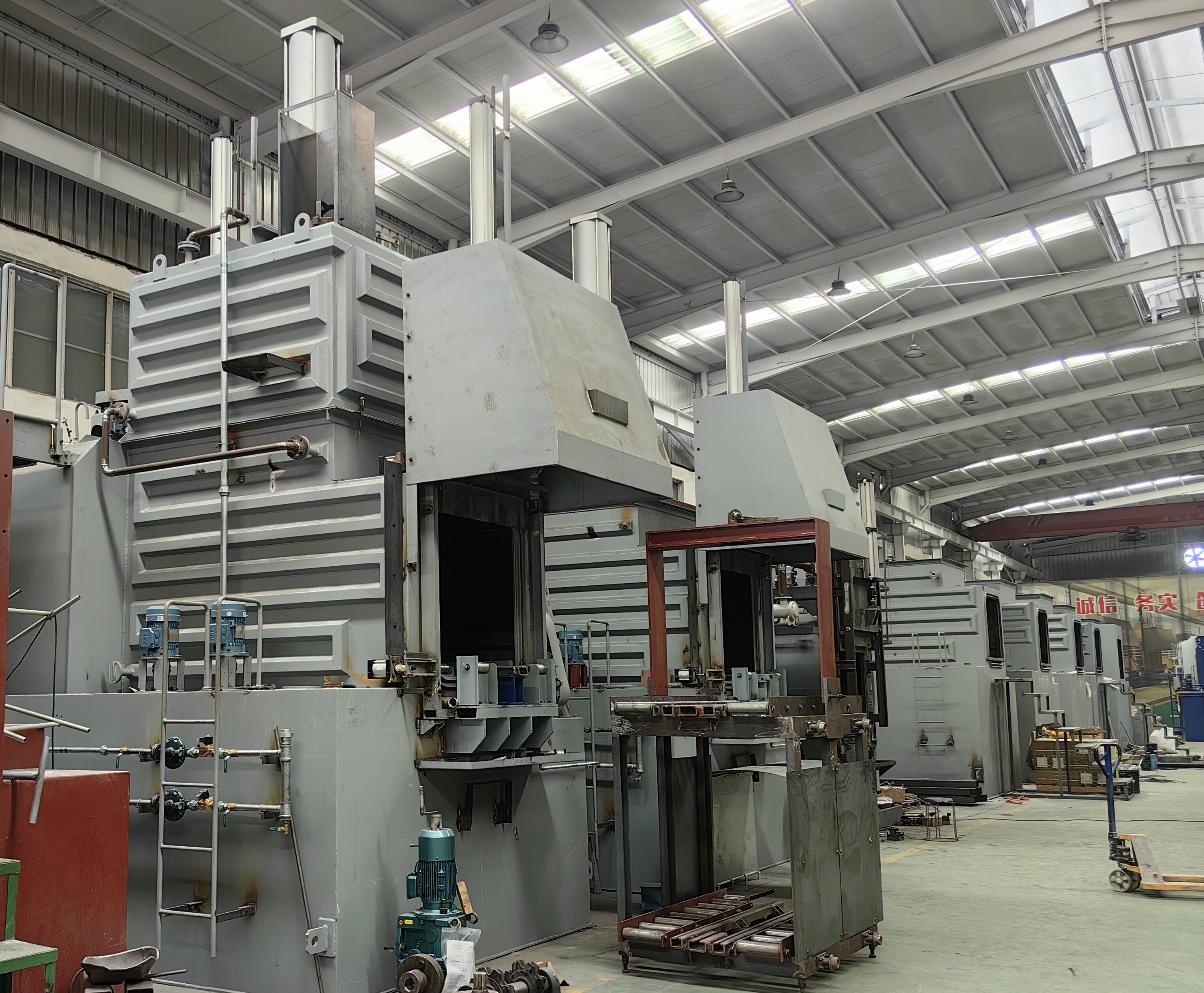
Production field at NORSEN Thermal Technology (Jiangsu) Co., Ltd., where industrial heat treatment equipment is manufactured.
For a carburizing and quenching furnace project serving automotive or agricultural parts, the decision should lock three things before purchase: the part and process route, the compliance evidence required by the end market, and the building interfaces, especially crane height above 6.5 m and supporting services for electricity, compressed air, natural gas and cooking fume ducts. NORSEN Thermal Technology (Jiangsu) Co., Ltd. is a Jiangsu-based manufacturer of intelligent heat treatment equipment, founded in 2022, with a 6,000 m² factory, 55 employees and ISO9001 certification. Its product scope includes sealed box-type multi-purpose furnace lines, mesh belt carburizing and quenching furnace lines, pre-evacuated gas nitriding furnaces and well-type furnaces.
Why site planning decides whether a carburizing and quenching furnace meets its target
For decision-stage buyers, the furnace is not a standalone machine. The building must support loading and unloading, quench handling, atmosphere supply, exhaust routing, maintenance access and inspection. The confirmed site requirement in this guide includes a crane height above 6.5 m and supporting equipment for electricity, compressed air, natural gas and cooking fume ducts. If these interfaces are deferred until after furnace selection, the project can face late civil works, utility upgrades or layout changes.
The process reason is straightforward: carburizing and quenching are used to increase surface hardness while retaining a tougher core, and tempering after quenching is used to reduce brittleness and improve toughness. Those outcomes depend on controlled heating, atmosphere, quenching and post-quench treatment, not on the furnace alone. Site services and material handling therefore belong in the same decision as furnace configuration.
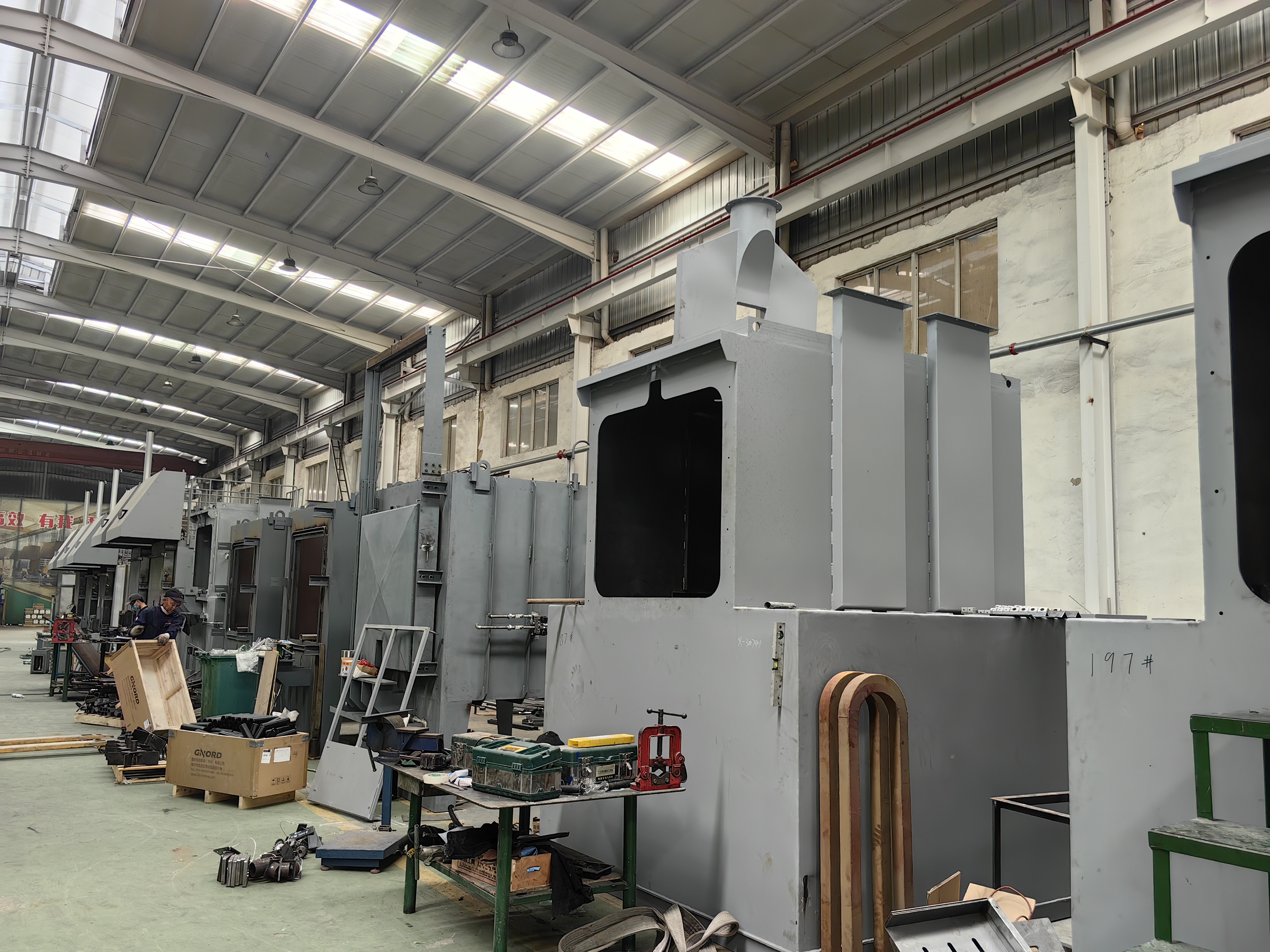
Production field supporting heat treatment furnace manufacturing and site planning review.
Industry background: applications and standards that shape the specification
Heat treatment furnaces serve automotive parts, agricultural equipment, aerospace, military, construction machinery and commercial heat treatment. ISO/TC 244 scope covers industrial furnaces and associated processing equipment, including quality requirements and recommendations for heat treatment on mechanical parts used in car manufacturing, aerospace, pipeline systems, civil engineering equipment, earth moving machinery, agricultural equipment, naval industry, energy equipment, tooling and fasteners. This is a useful starting point for application mapping because it shows that the same furnace category can face different documentation and qualification expectations across end markets.
For steel heat treatment, ASTM A991/A991M covers temperature uniformity surveys on furnaces used to heat treat steel products. For aerospace and automotive supply chains, AMS 2750 and CQI-9 are described as subjecting heat treatment processes to stricter rules, including temperature uniformity, instrumentation, calibration and system accuracy testing. These references do not replace the buyer's own specification, but they indicate what evidence should be discussed early: uniformity surveys, instrument calibration, system accuracy tests and records.
What the furnace must do: carburizing, quenching and the hardness-toughness balance
Carburizing introduces carbon into the surface of steel under controlled atmosphere and temperature; quenching then cools the part to develop hardness. The intended result is usually a hard, wear-resistant surface with a core that retains toughness. Tempering after quenching is used to relieve stresses and adjust the hardness-toughness balance. In automotive gears, shafts and agricultural machine parts, this combination is relevant where surface wear and load-bearing capacity must be considered together. The exact case depth, hardness profile and toughness target must come from the buyer's part design and process specification; they should not be assumed from a generic furnace description.
Automation under carburizing and quenching conditions should therefore be evaluated as process control, not as a marketing feature. A useful specification covers recipe management, temperature and atmosphere monitoring, quench sequencing, alarm handling, data records and remote diagnostic capability. NORSEN's risk-control unit for overheating lists PID adjustment, multiple thermocouples, program optimization and remote control. Eurotherm describes smart industrial ovens and furnaces as using sensors and awareness of their own capabilities and environmental conditions to monitor key components and surroundings. These are useful reference points for the automation discussion, but the final scope must match the buyer's process and qualification requirements.
Detailed solution: matching NORSEN furnace scope to the application
NORSEN Thermal Technology (Jiangsu) Co., Ltd. is a manufacturer of intelligent heat treatment equipment based in Peixian County, Jiangsu Province. The company reports a 6,000 m² factory, 55 employees, 10 R&D staff, annual output of 50 sets and a 40% export ratio, with markets including China, Russia, Belarus, Vietnam, Indonesia, Thailand, Turkey, Qatar and Pakistan. It holds ISO9001 quality management system certification. Its official product scope includes sealed box-type multi-purpose furnace production lines, pre-evacuated gas nitriding furnaces, mesh belt carburizing and quenching furnace production lines, well-type furnaces and other heat treatment equipment. The company states that its equipment is used in aerospace, military, automotive parts, textile machinery, construction machinery and commercial heat treatment.
For a carburizing and quenching project, this product scope is relevant because the buyer can compare furnace forms against the actual part family rather than starting from a single model. A sealed box-type multi-purpose line, a mesh belt carburizing and quenching line and a well-type furnace are different answers to load shape, handling pattern and process flow. The right choice depends on part geometry, load weight, required atmosphere control, quench method, automation level and the site's material-handling layout. NORSEN's product scope confirms availability of these categories; it does not by itself prove that every configuration suits every automotive or agricultural part.
NORSEN's comparison unit states that, compared with traditional heat treatment equipment manufacturers, its equipment is positioned for higher energy efficiency, longer lifespan and lower maintenance. The same unit states a chain service life exceeding five years and maintenance cost below 50%. These are supplier comparison claims. They are useful as questions for a buyer's due diligence, not as a substitute for the buyer's own duty-cycle data, maintenance records or acceptance tests. The comparison unit also lists military factories, automotive parts factories, gear factories and hardware tool factories among the intended application groups, which aligns with the application focus of this guide.
Step-by-step site and application planning
Step 1: Lock the part family and process route
Start with the parts, not the furnace. List the automotive or agricultural parts to be treated, the material, the required surface hardness and core toughness, the post-quench tempering route and the inspection method. Separate current parts from future parts so that the furnace is not over-specified for an uncertain product mix. At this stage, confirm whether the project is for in-house production, military or aerospace supply, or commercial heat treatment. The same equipment category can require different documentation depth across those settings.
Step 2: Convert compliance requirements into acceptance evidence
Ask which standards the buyer's customer or end market expects. For steel heat treatment, ASTM A991/A991M provides a reference for temperature uniformity surveys. For aerospace and automotive work, AMS 2750 and CQI-9 bring temperature uniformity, instrumentation, calibration and system accuracy testing into the discussion. Translate these into deliverables: survey procedure, instrumentation list, calibration schedule, system accuracy test plan and record retention. Do not accept a general statement that a furnace is compliant without identifying the standard, scope and evidence. The exact applicability depends on the buyer's product, market and customer contract.
Step 3: Compare furnace configurations on process fit
Use a structured comparison: load shape and weight, atmosphere control, quench method, tempering integration, automation, maintenance access and future flexibility. NORSEN's product scope includes sealed box-type multi-purpose furnace lines, mesh belt carburizing and quenching furnace lines and well-type furnaces, so the buyer can ask which category matches the part family and which functions remain optional. Keep the comparison on documented characteristics. If the supplier cannot provide comparable test data for a claimed advantage, treat the claim as a question to verify rather than a decision fact.
Step 4: Confirm the building interface before layout freeze
The confirmed site requirement for this guide is a crane height above 6.5 m, together with supporting equipment for electricity, compressed air, natural gas and cooking fume ducts. Confirm these with the site engineering team and the furnace supplier before the layout is frozen. The crane height affects lifting, maintenance access and quench-area handling; the utility services affect commissioning and safe operation. The duct route should be checked against the building structure and the furnace exhaust plan. The goal is not to overbuild the site, but to avoid late changes that can delay installation and qualification.
Step 5: Specify automation around the actual process
Automation should be defined by what the furnace must control and record: heating zones, atmosphere, quench timing, alarms, recipes and traceability. NORSEN's overheat-control approach uses PID adjustment and multiple thermocouples, with program optimization and remote control. That is a relevant starting point for the control narrative. Ask how the system handles sensor failure, over-temperature events, quench delays and recipe changes, and how records are exported for quality review. Avoid treating automatic as a complete specification; the buyer needs the controlled parameters, alarm logic and data output defined.
Step 6: Validate value with a total-cost and sample plan
Compare the offer on energy use, maintenance, service life, spare parts and uptime, not only purchase price. The NORSEN comparison unit states higher energy efficiency, longer lifespan and 50% less maintenance, with a chain service life exceeding five years. Because these are supplier comparison figures, request the basis: duty cycle, atmosphere, load pattern, maintenance interval and reference equipment. A sample trial or process validation plan should use representative parts and the intended quench and tempering route. The buyer should define acceptance criteria before the trial, including hardness, case depth, distortion checks and repeatability.
Application matching: automotive, agricultural, aerospace, construction and commercial heat treatment
The table below maps the documented application scope and standards references to practical planning questions. It is a decision aid, not a claim that one furnace configuration fits every part in an industry.
| Application area | Documented reference | Planning focus for the buyer |
|---|---|---|
| Automotive parts | ISO/TC 244 scope includes car manufacturing; CQI-9 is described as applying stricter heat-treatment rules in automotive supply chains. | Confirm CQI-9 expectations, temperature uniformity, instrumentation, calibration and system accuracy testing before comparing furnace offers. |
| Agricultural equipment parts | ISO/TC 244 scope includes agricultural equipment and earth moving machinery. | Match the furnace to part size, load pattern and wear/load requirements; confirm quench and tempering route for the actual part family. |
| Aerospace parts | ISO/TC 244 scope includes aerospace; AMS 2750 is described as applying stricter rules for aviation heat treatment. | Clarify AMS 2750 applicability, instrumentation and calibration evidence, and whether the supplier can support the required records. |
| Construction machinery parts | ISO/TC 244 scope includes civil engineering equipment and earth moving machinery. | Check load handling, crane height above 6.5 m, utility capacity and maintenance access for heavy or large parts. |
| Commercial heat treatment | NORSEN states its equipment is used in commercial heat treatment; ISO/TC 244 covers mechanical parts across industrial sectors. | Prioritize flexibility, changeover, documentation and scheduling; verify that the site utilities support the intended mixed load. |
Source note: standards scope is drawn from ISO/TC 244, ASTM A991/A991M and the supplied description of AMS 2750 and CQI-9. NORSEN application scope is company-reported. The planning focus column is analytical and should be confirmed against the buyer's part specification.
Use cases: what the site guide looks like in practice
For an automotive parts plant, the decision usually centers on repeatable case depth, distortion control and documented heat-treatment records. A mesh belt carburizing and quenching line may be considered where the part family and handling pattern fit continuous production; a sealed box-type multi-purpose line may be considered where batch flexibility and atmosphere control are more important. These are configuration questions, not claims that one form is universally better. The buyer should compare the actual load, quench and tempering route.
For an agricultural equipment or construction machinery plant, part size and handling often drive the building design. The confirmed crane height above 6.5 m and the utility services for electricity, compressed air, natural gas and cooking fume ducts should be checked against the largest expected load and the maintenance plan. A well-type furnace may enter the comparison where vertical loading and specific part geometry fit the process; the product scope supports the category, but the final selection still depends on the part and process specification.
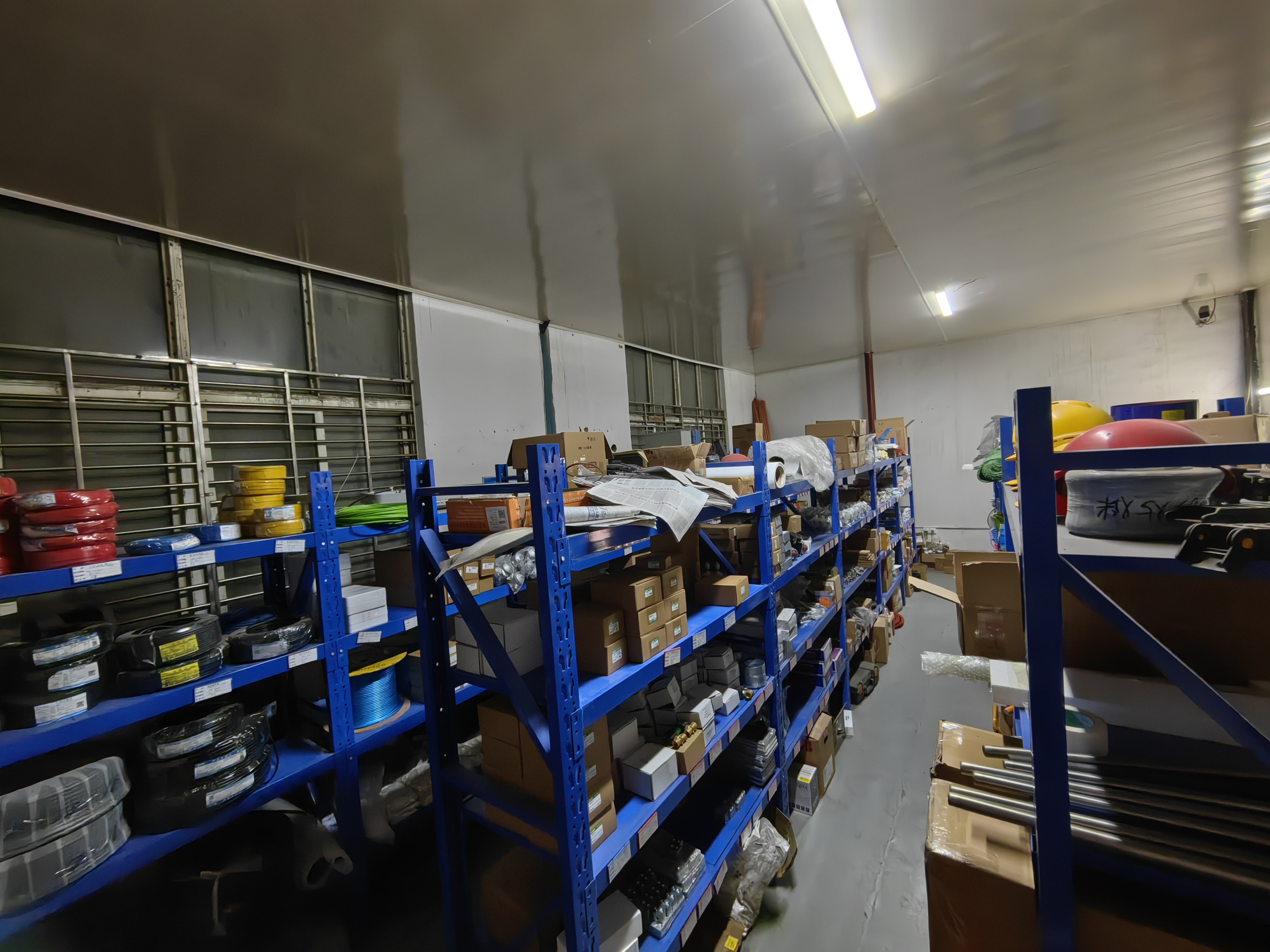
Spare parts warehouse supporting heat treatment equipment production and maintenance planning.
For aerospace, military or commercial heat treatment, the compliance file can be as important as the furnace itself. AMS 2750 and CQI-9 references point to temperature uniformity, instrumentation, calibration and system accuracy testing. Commercial heat treatment adds a different burden: the equipment must handle a changing mix of parts and customer specifications. In that setting, automation, data records and changeover discipline deserve as much attention as heating capacity.
Trust and proof: factory facts that support the evaluation
NORSEN's company profile provides verifiable first-party facts for the supplier evaluation: founded in 2022, 6,000 m² factory, 55 employees, 10 R&D staff, annual output of 50 sets, 40% export ratio and ISO9001 certification. The company's official website is Norsen Thermal Technology (Jiangsu) Co., Ltd.. These facts help a buyer assess scale and quality-system status, but they do not replace a factory audit, reference check or acceptance test. The buyer should still verify the specific furnace configuration, control system, utility requirements and qualification evidence against the project specification.
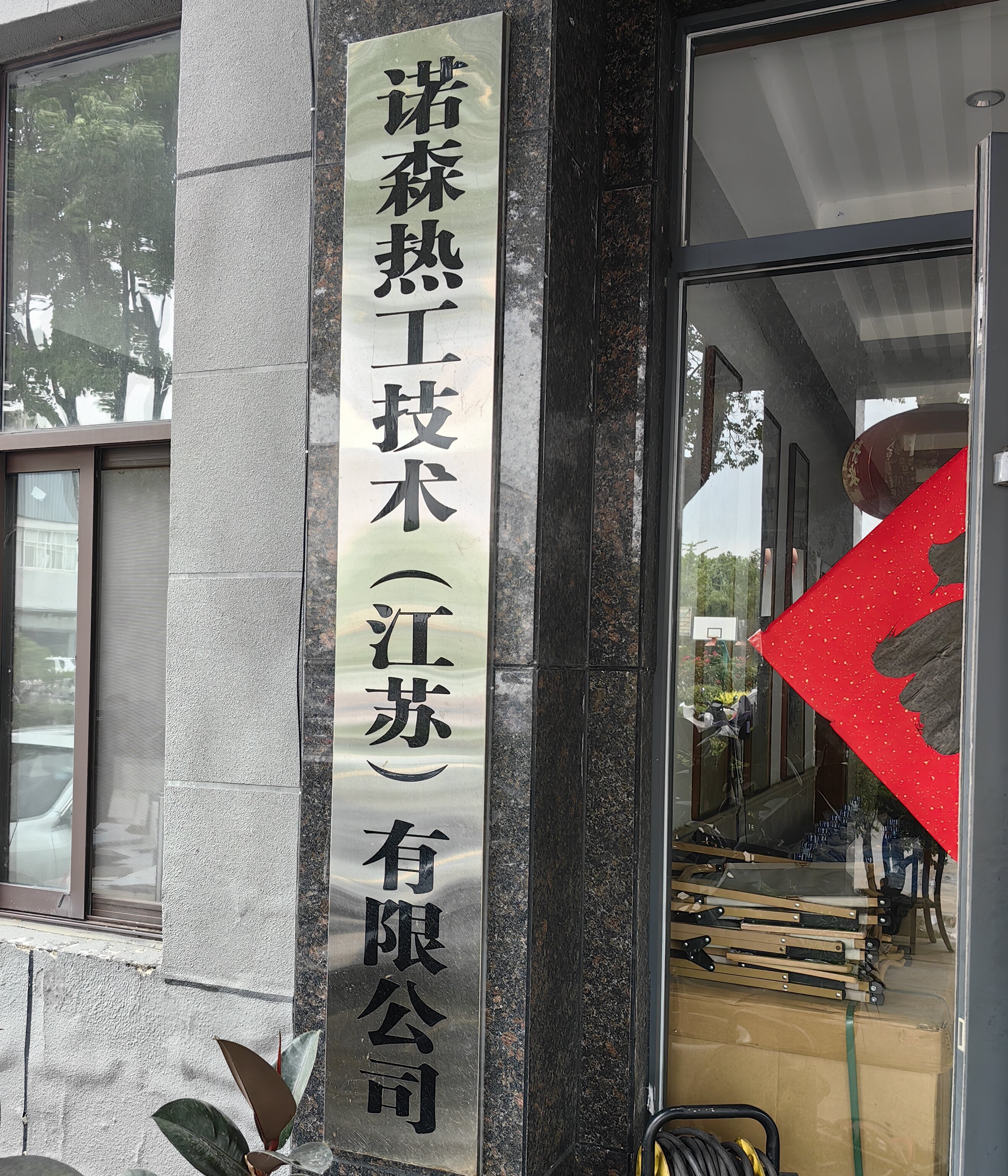
NORSEN Thermal Technology facility in Peixian County, Jiangsu Province; company profile reports a 6,000 m² factory and 55 employees.
The comparison unit adds supplier-reported value claims: higher energy efficiency, longer lifespan, lower maintenance, a chain service life exceeding five years and maintenance cost below 50%. These claims should be read with their conditions. A buyer should ask for the reference configuration, duty cycle and maintenance basis behind each number, and should compare them with the site's actual operating pattern.
Comparison table: site and application decision criteria
| Decision criterion | What to confirm | Why it matters |
|---|---|---|
| Process fit | Part family, material, required hardness/toughness, quench and tempering route. | Prevents selecting a furnace category that does not match the actual production mix. |
| Compliance evidence | Applicable standard, temperature uniformity survey, instrumentation, calibration and SAT. | Supports automotive, aerospace and other regulated supply-chain acceptance. |
| Site utilities | Crane height above 6.5 m, electricity, compressed air, natural gas and cooking fume ducts. | Reduces late civil works and commissioning risk. |
| Automation | Recipe control, thermocouples, PID, alarms, remote control and data records. | Connects process control to traceability and repeatability. |
| Value evidence | Energy use, maintenance, service life and the basis of comparison claims. | Allows a total-cost review instead of a purchase-price comparison alone. |
FAQ
What standards should buyers review for carburizing and quenching furnaces used in automotive and aerospace parts?
Start with the buyer's customer and end-market requirements. ISO/TC 244 covers industrial furnaces and heat-treatment quality requirements for mechanical parts used in car manufacturing, aerospace, agricultural equipment and other industries. ASTM A991/A991M covers temperature uniformity surveys for furnaces used to heat treat steel products. AMS 2750 and CQI-9 are described as applying stricter rules for temperature uniformity, instrumentation, calibration and system accuracy testing in aerospace and automotive supply chains. Confirm the exact standard, scope and evidence with the buyer's quality team before comparing furnace offers.
How does automation work in a carburizing and quenching furnace?
Automation should control the process recipe, heating zones, atmosphere, quench sequencing, alarms and records. NORSEN's overheat-control approach includes PID adjustment, multiple thermocouples, program optimization and remote control. Sensor-based monitoring is also described for smart industrial furnaces. The buyer should specify which parameters are controlled, which alarms are required, how data is exported and how the system behaves during sensor failure or quench delay. Automatic is not a sufficient specification without those details.
What site services and crane height are required for installation?
The confirmed requirement in this guide is a crane height above 6.5 m, plus supporting equipment for electricity, compressed air, natural gas and cooking fume ducts. These should be confirmed with the site engineering team and the furnace supplier before layout freeze. Crane height affects lifting, maintenance access and quench-area handling. Utility capacity and duct routing affect commissioning and safe operation. The final requirement depends on the selected furnace configuration and the largest expected load.
How should buyers compare value when furnace prices are not published?
Compare the offer on energy use, maintenance, service life, spare parts, uptime and qualification support, not only the purchase price. NORSEN's comparison unit states higher energy efficiency, longer lifespan, 50% less maintenance and a chain service life exceeding five years. Those are supplier comparison claims, so ask for the basis: reference configuration, duty cycle, load pattern and maintenance interval. A total-cost review should also include site utilities, installation, commissioning and operator training.
What sample or validation step should come before a final order?
Define a validation plan using representative parts and the intended carburizing, quenching and tempering route. Agree on acceptance criteria before the trial: surface hardness, case depth, core toughness, distortion checks and repeatability. Ask what records the supplier will provide and how the results map to the required standard. If a sample trial is not possible, request comparable reference data and a clear commissioning and acceptance-test plan. For current configuration and brochure details, the NORSEN brochure is available here: NORSEN product brochure.
Conclusion
For automotive and agricultural parts, a carburizing and quenching furnace decision is a combined process, compliance and site decision. The furnace must support the intended hardness-toughness balance, the required automation and the evidence expected by the end market. The building must support the confirmed crane height above 6.5 m and the utility services for electricity, compressed air, natural gas and cooking fume ducts. NORSEN's product scope, ISO9001 certification and company facts provide a starting point for supplier evaluation, while the comparison claims should be verified against the buyer's own duty cycle. The practical next step is to define the part family, compliance evidence, site interfaces and validation plan before freezing the furnace configuration.
Next step: Review the NORSEN product brochure and discuss the site services, crane height and application requirements with NORSEN through the official website: www.norsengroup.com.
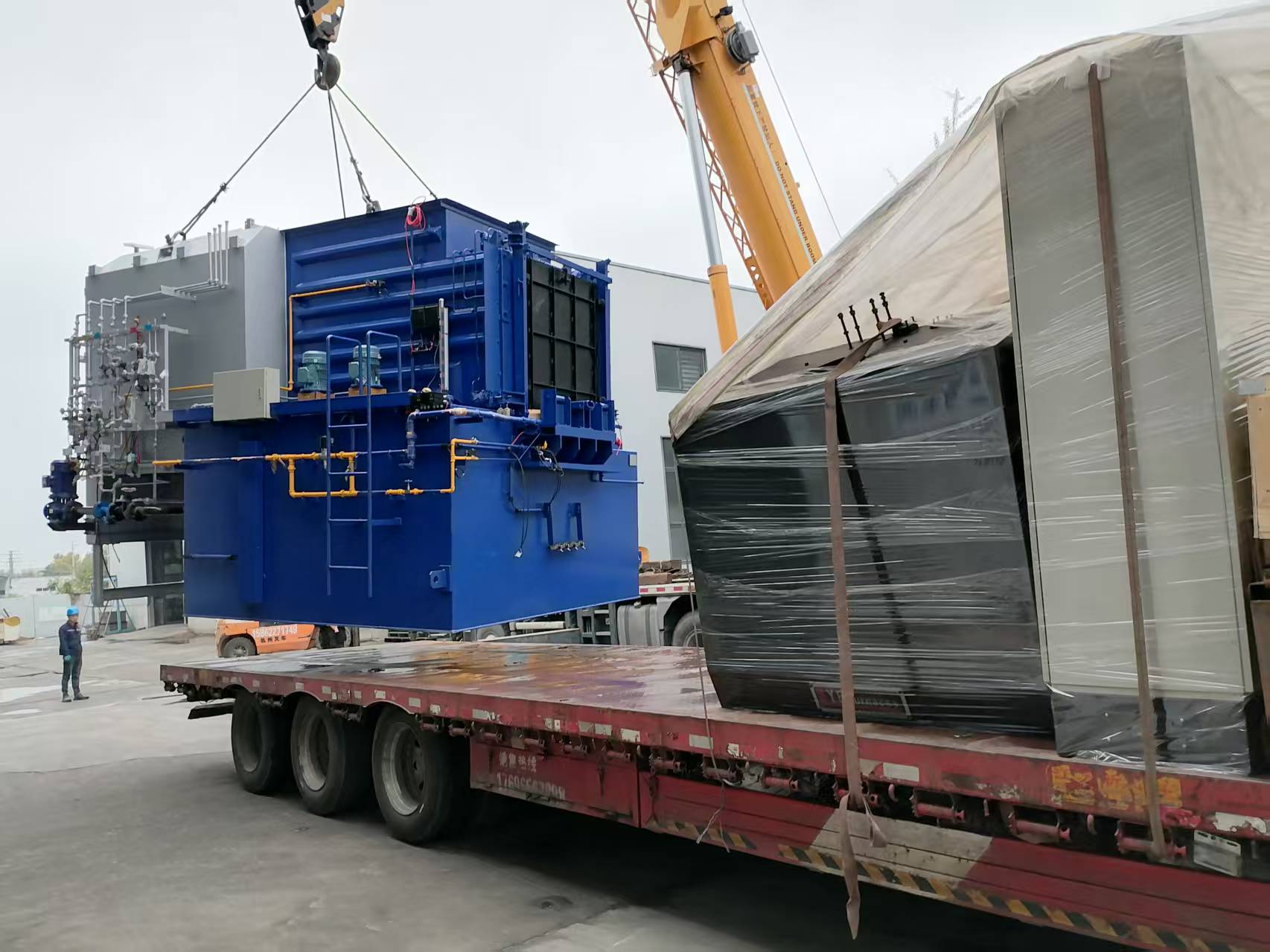
Prepared shipments of heat treatment equipment at NORSEN; buyer discussions can include configuration, documentation and delivery planning.
Have Questions or Need More Details?
Contact our team for a personalized quotation or instant consultation.
Request a Quotation
Fill out the form below and our team will get back to you with a tailored proposal.
WhatsApp Direct Chat
Prefer to chat in real-time? Message us on WhatsApp for instant assistance & quick answers.
- Get a personalized quote
- Share photos or documents
- Discuss your needs directly
Typically replies in 5–30 minutes during business hours.