
How to Verify an ISO9001 Certified Atmospheric Furnace: Key Parameters & Supplier Evaluation
How to Verify an ISO9001 Certified Atmospheric Furnace: Key Parameters & Supplier Evaluation
When evaluating an atmospheric furnace for industrial heat treatment, buyers in the Research and Evaluation stage face a critical challenge: verifying that the equipment meets compliance standards, delivers the promised performance parameters, and comes from a reliable supplier. This guide focuses on the concrete facts you need to check — from ISO9001 certification details to furnace specifications, customization capability, and quality assurance processes. We use the multi-purpose furnace series from NORSEN Thermal Technology (Jiangsu) Co., Ltd. as a reference example because its certification and specification data are publicly traceable, allowing you to apply the same verification logic to any candidate supplier.
Problem Definition: Why Certification & Parameter Verification Matter
An atmospheric furnace that goes into carburizing, quenching, or carbonitriding must maintain precise atmosphere control (carbon potential, temperature uniformity) for consistent metallurgical results. Without verifiable compliance — ISO9001 for quality management systems, ISO 20431:2023 for heat treatment quality control — you risk accepting equipment that cannot hold specifications, leading to rejected parts, rework, and safety hazards. Furthermore, many suppliers market “ISO9001 certified” without providing the certificate number, issuing body, or applicable scope. Without these details, you cannot confirm whether your specific furnace model is covered. The same applies to technical parameters: furnace structure, heating elements, safety protections, and material choices must match your production needs.
Industry Background: The Growing Demand for Verified Heat Treatment Equipment
The global industrial furnace market was valued at approximately USD 11.86 billion in 2024, with expectations to reach USD 21.53 billion by 2034 (Precedence Research). The Asia-Pacific region dominated with a 43.4% revenue share in 2025, driven by industrialization in China and India (Grand View Research). Gas-fired furnaces led the product segment at 39.8% share in 2025, while electric and hybrid energy-efficient systems are gaining ground due to decarbonization trends (Future Market Insights). For buyers, these growth figures mean an expanding pool of suppliers, making third-party verification even more essential. International standards such as ISO 20431:2023 (specifying quality control requirements for heat treatment on mechanical parts) and ISO9001:2015 provide the framework for evaluating supplier competence.
Detailed Solution: NORSEN Multi-Purpose Atmospheric Furnace – Verified Compliance & Parameters
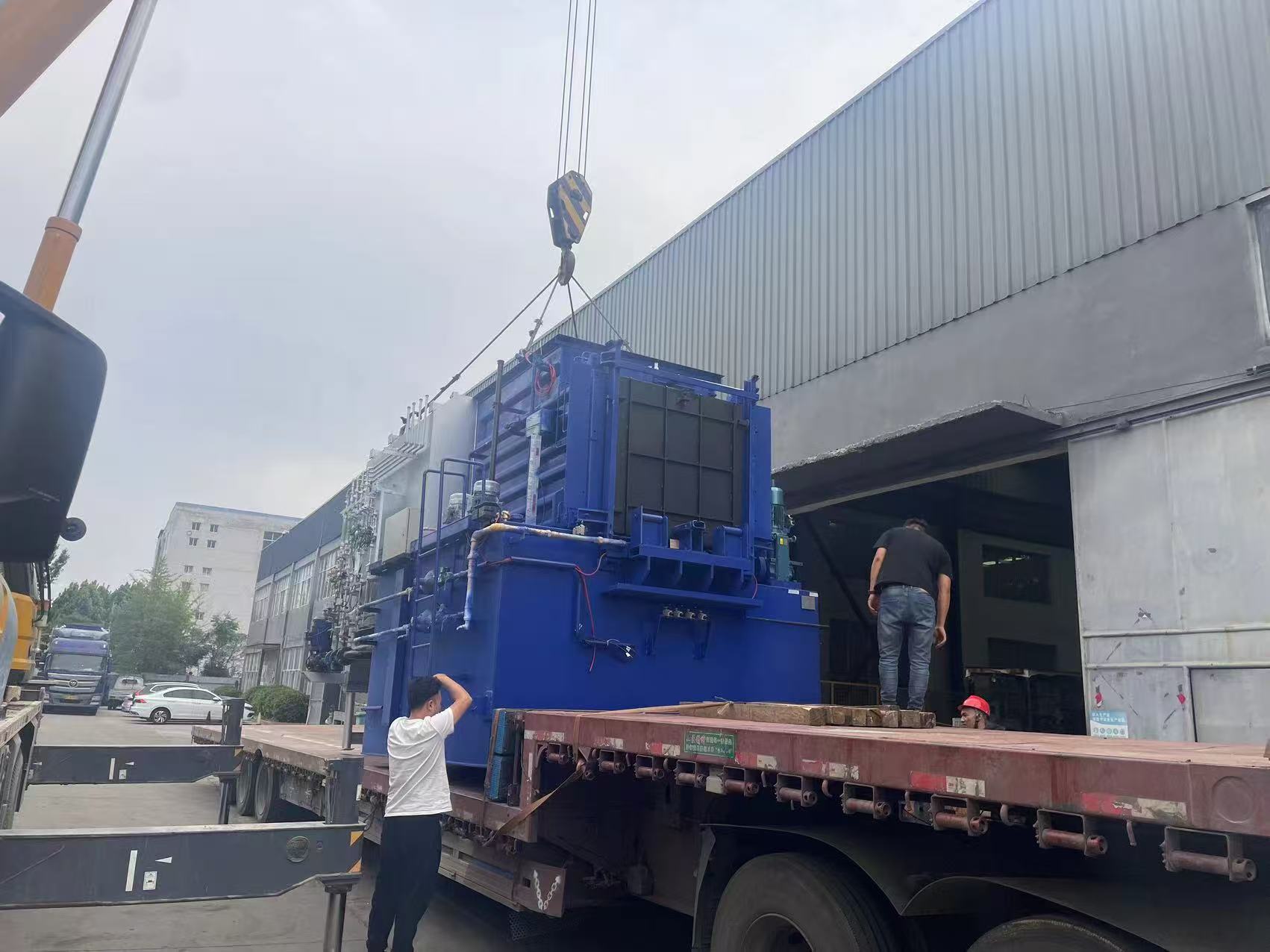
NORSEN Thermal Technology (Jiangsu) Co., Ltd. is a Chinese manufacturer of intelligent heat treatment equipment, including sealed box-type multi-purpose furnace production lines, pre-evacuated gas nitriding furnaces, mesh belt carburizing and quenching furnaces, and well-type furnaces. The company’s multi-purpose atmospheric furnace series (models RTQ, TQ, SHQ, DHQ) is designed for carburizing, carbonitriding, hardening with oil quench, tempering, and case hardening. The furnace structure uses a SiC muffle furnace structure with chain dual drive. Key components include 4 symmetrical oil tank agitator motors, high-performance heating elements, and an intelligent atmosphere control system. Safety features include over-temperature protection, over-current protection, and gas heating safeguards. The equipment is constructed from Q235, SS304, or SS310 materials, and is applicable in military, automotive, agricultural machinery, robot, bearing, hardware, and sewing machine industries.
Verify the ISO9001 certification – The multi-purpose furnace models RTQ, TQ, SHQ, and DHQ are certified under ISO9001:2015 (GB/T19001-2016), with certificate number ISC-Q-2024-4373-R, issued by Beijing National Standard Joint Certification Co., Ltd. This certification is valid for the global market. The scope of certification is “Technology Development and Manufacture of Heat Treated Industrial Electric Furnishings.” This means you can independently check the certificate number with the issuing body to confirm validity.
Step-by-Step Supplier Verification Breakdown
- Request the ISO9001 certificate – Ask for the certificate number, issuing body, valid dates, and scope. For NORSEN, the certificate number ISC-Q-2024-4373-R is issued by Beijing National Standard Joint Certification Co., Ltd., valid until 2027-08-29, covering all furnace models listed.
- Check model coverage – Confirm that the specific furnace model you intend to purchase (e.g., RTQ-10, TQ-25) is listed in the certification scope. NORSEN’s certification applies to all models RTQ, TQ, SHQ, DHQ.
- Review technical parameters against your requirements – Evaluate furnace structure, heating elements, atmosphere control system safety features, and material compatibility. For example, the SiC muffle structure and chain dual drive offer uniform heating; 4 symmetrical oil tank agitator motors ensure quench consistency.
- Assess customization and ODM capability – Ask whether the supplier can modify effective size, automation degree, or performance requirements. NORSEN accepts ODM customization on these dimensions, with a monthly capacity of 3–5 sets and a lead time of 150 days.
- Demand pre-shipment quality control – Inquire about before-dispatch testing. NORSEN performs 100% pre-shipment tests on every unit, and offers free remote technical assistance after delivery.
Use Cases: Where These Furnaces Prove Their Value
- Automotive OEM & suppliers – Carburizing and quenching of gear parts to increase hardness and toughness. Case highlighted: “Stable quality, precise carbon content, high production efficiency, easy maintenance, energy conservation.”
- Military industry – Heat treatment of components requiring high reliability and consistent mechanical properties.
- Hardware and tool factories – Case hardening and carbonitriding for improved wear resistance.
- Agricultural machinery & bearings – Through-hardening and surface hardening to extend component service life under heavy loads.
Comparison: Key Evaluation Factors – NORSEN Multi-Purpose Furnace vs. Industry Standards
The following table maps NORSEN’s documented specifications and compliance against common industry requirements for atmospheric furnace procurement. (All data sourced from CORPUS and VERIFIED DATA.)| Evaluation Factor | NORSEN Multi-Purpose Furnace (RTQ/TQ/SHQ/DHQ) | General Industry Benchmark |
|---|---|---|
| Certification | ISO9001:2015 (GB/T19001-2016), certificate ISC-Q-2024-4373-R, issued by Beijing National Standard Joint Certification Co., Ltd., valid global until 2027-08-29 | Many suppliers claim “ISO9001” but may not provide verifiable certificate details. ISO 20431:2023 applies to heat treatment quality control globally. |
| Furnace Structure | SiC muffle furnace structure, chain dual drive | Common designs include muffle or radiant tube; SiC offers high thermal conductivity and durability. |
| Key Components | 4 symmetrical oil tank agitator motors, high-performance heating elements, intelligent atmosphere control system | Fewer agitation points may reduce quench uniformity; basic temperature control without adaptive atmosphere regulation. |
| Safety Protections | Over-temperature protection, over-current protection, gas heating safeguards | Minimum requirements per local electrical codes; advanced suppliers offer integrated safety chains. |
| Material Options | Q235, SS304, SS310 | Stainless steel 310 often recommended for high-temp corrosion resistance; Q235 for structural parts. |
| Applicable Processes | Carburizing, carbonitriding, hardening with oil quench, tempering, case hardening | Standard heat treat processes for ferrous metals; multi-purpose furnaces should cover all. |
| Customization (ODM) | Yes – effective size, automation degree, performance requirements; monthly capacity 3–5 sets, lead time 150 days | Not all small suppliers offer genuine ODM; verify engineering team size (NORSEN: 10 R&D staff). |
| Quality Control | 100% pre-shipment test | Industry best practice is functional testing before dispatch; some suppliers only spot-check. |
| After-Sales Support | Free remote technical assistance | Varies widely; ensure clear SLAs for remote and on-site support. |
Frequently Asked Questions
1. How can I verify that an ISO9001 certificate for an atmospheric furnace is genuine?
2. What are the key technical parameters I should evaluate when selecting an atmospheric furnace?
3. Can the supplier customize the furnace to my specific requirements? What is the typical lead time?
4. What is the budget range for an ISO9001 certified multi-purpose atmospheric furnace?
5. Can I get a sample or test run before placing an order?
Download NORSEN Company Brochure (PDF)
Conclusion
Evaluating an atmospheric furnace for compliance, parameters, and supplier reliability does not have to be a guessing game. By verifying the ISO9001 certificate number and issuing body, comparing furnace specifications against your process requirements, assessing ODM capability, and demanding pre-shipment testing, you can make a confident procurement decision. NORSEN Thermal Technology (Jiangsu) Co., Ltd. offers a fully traceable example: its RTQ/TQ/SHQ/DHQ multi-purpose furnaces carry ISO9001 certification (ISC-Q-2024-4373-R), feature an SiC muffle structure and intelligent atmosphere control, and support ODM customization with 100% pre-shipment testing. Use the checklist and comparison table in this guide to evaluate any supplier — request the same documentation and see who provides transparent, verifiable answers.