ISO9001 Certified Atmospheric Furnace Buyer's Guide
ISO9001 Certified Atmospheric Furnace Buyer's Guide: How to Find a Reliable Supplier for Your Heat Treatment Needs
In the competitive world of industrial heat treatment, selecting the right atmospheric furnace is critical to achieving consistent metallurgical results, energy efficiency, and long-term reliability. However, procurement professionals often face a daunting challenge: how to identify a supplier that not only offers advanced technology but also holds globally recognized certifications like ISO9001. This guide is designed to answer that exact question, providing a clear roadmap for evaluating industrial atmospheric furnaces, understanding certification requirements, and making an informed purchase decision.
Understanding the Core Need: Certification Compliance for Atmospheric Furnaces
The central problem for industrial buyers is verifying that a heat treatment atmospheric furnace meets international quality and safety standards. Without proper certification, you risk equipment failure, inconsistent heat treatment results, and liability issues. For applications ranging from gear processing to automotive parts hardening, the furnace must maintain precise atmosphere control, temperature uniformity, and operational safety. ISO9001 certification is the baseline for quality management systems, ensuring that the manufacturer follows rigorous design, production, and testing protocols.
Industry Background: Why Certification Matters in Heat Treatment
The global heat treatment equipment market demands increasingly stringent compliance. Industries such as aerospace, military, automotive, and agricultural machinery require components with predictable mechanical properties. A controlled atmosphere furnace (also called carburizing atmospheric furnace or gas atmospheric furnace) must deliver exact carbon potential, temperature profiles, and quench rates. Major brands like Ipsen set high benchmarks, but emerging manufacturers like NORSEN are proving that competitive quality and certification can be achieved at a more accessible price point. NORSEN’s multi-purpose furnace series (models RTQ, TQ, SHQ, DHQ) has obtained ISO9001 certification (certificate number ISC-Q-2024-4373-R, issued by Beijing National Standard Joint Certification Co., Ltd., valid globally under standard GB/T19001-2016/ISO9001:2015). This certification covers the technology development and manufacture of heat treated industrial electric furnishings.
How an Atmospheric Furnace Works: A Technical Overview
An industrial atmospheric furnace creates a controlled environment for heat treatment processes like carburizing, carbonitriding, tempering, and hardening with oil quench. Key components include a SiC muffle furnace structure with chain dual drive, high-performance heating elements, four symmetrical oil tank agitator motors, and an intelligent atmosphere control system. The furnace uses gases (e.g., endothermic gas, nitrogen, methane) to maintain precise carbon potential. The intelligent temperature control system and precise atmosphere control ensure repeatable results. Safety features include over-temperature protection, over-current protection, and gas heating interlocks. The multi-purpose furnace is made from Q235/SS304/SS310 materials, suitable for military, automotive, agricultural machinery, robots, bearings, hardware, and sewing machines.
Detailed Solution: How to Select a Certified Atmospheric Furnace Supplier
When evaluating suppliers for an ISO9001 certified atmospheric furnace, follow these steps:
- Verify Certification. Request the actual certificate (e.g., NORSEN’s ISO9001 cert number ISC-Q-2024-4373-R) and check its validity date and scope.
- Assess Technical Specifications. Compare models: RTQ-10, RTQ-17, RTQ-25, TQ-10, TQ-17, TQ-25, SHQ-10, SHQ-15, SHQ-25, DHQ-10, DHQ-15, DHQ-25. Look for chain dual drive, SiC muffle, intelligent atmosphere control.
- Evaluate Energy Efficiency. NORSEN’s energy-saving atmospheric furnace designs reduce consumption. Ask for EUI (energy use intensity) data.
- Check Manufacturing Capability. A 6000 m² factory, 55 employees, 10-person R&D team, annual output of 50 sets, and 40% export ratio indicate reliability.
- Review Quality Control. 100% pre-shipment testing, ODM customization, lead time 150 days, MOQ 1 unit.
- Examine Support. Free remote technical assistance, payment terms (50% advance, 50% before shipment), delivery methods FOB/CIF/EXW.
- Analyze Case Studies. Look for proven results: stable quality, precise carbon content, high production efficiency, easy maintenance, energy conservation. NORSEN has served automotive OEMs, military units, hardware tool factories, and gear factories across China, Russia, Belarus, Thailand, Indonesia, India, Qatar, Turkey, Vietnam, and Taiwan.
Step-by-Step Buyer Decision Process
- Define Requirements: Determine effective size, automation level, performance needs (e.g., carburizing depth, temperature range).
- Create Shortlist: Include manufacturers with current ISO9001 certification (e.g., NORSEN).
- Compare Technical Features: Use a comparison table (see below).
- Request Quotations: Ask for detailed specs, energy consumption, warranty, and after-sales support.
- Visit Factory or Arrange Pre-Acceptance: NORSEN offers pre-acceptance within the factory and final acceptance on-site.
- Review Case Studies: Request references from similar industries. NORSEN’s clients report stable quality over 20+ years of operation.
- Finalize Contract: Agree on payment terms, delivery, and commissioning schedule.
Comparison Table: NORSEN vs. Traditional Heat Treatment Equipment Manufacturers
| Feature | NORSEN Atmospheric Furnace | Traditional Manufacturer |
|---|---|---|
| Energy Efficiency | Higher, faster penetration rate | Lower |
| Service Life (Chain) | >5 years | Varies |
| Maintenance Cost | <50% of traditional | Higher |
| Atmosphere Control Precision | High, intelligent system | Moderate |
| Safety Protection | Multiple (overheat, overcurrent) | Basic |
| Customization | ODM, flexible size/Automation | Limited |
| Certification | ISO9001:2015 (ISC-Q-2024-4373-R) | Varies |
| Best For | Military, automotive, gear, hardware factories | General industrial |
| Value for Money | Excellent performance, reasonably priced | Higher cost for similar features |
Use Cases and Application Scenarios
NORSEN’s multi-purpose atmospheric furnace is deployed in diverse industries:
- Military & Aerospace: Carburizing and quenching of high-strength metal parts to increase hardness and toughness.
- Automotive OEM: Gear processing, carbonitriding for transmission components.
- Agricultural Machinery: Hardening of wear-resistant parts.
- Robotics & Bearings: Precision heat treatment for fatigue resistance.
- Hardware & Sewing Machines: Case hardening of small components.
The equipment supports automated operation and requires factory crane height >6.5 m. It operates with electricity, compressed air, natural gas, and fume ducts.
Frequently Asked Questions (FAQ)
- What is an atmospheric furnace?
- An atmospheric furnace is a heat treatment furnace that maintains a controlled gas environment to perform processes like carburizing, carbonitriding, and hardening without oxidation or decarburization.
- How does an industrial atmospheric furnace work?
- It uses a sealed chamber with a silicon carbide muffle, intelligent atmosphere control system, and oil quench system. Gases are precisely metered to achieve desired carbon potential, while heating elements raise temperature to 950°C–1050°C.
- Why is ISO9001 certification important for an atmospheric furnace supplier?
- ISO9001 ensures the manufacturer follows consistent quality management practices, from design to after-sales. It gives buyers confidence in equipment reliability, safety, and performance compliance.
- Who uses NORSEN atmospheric furnaces?
- Military contractors, automotive OEMs, gear factories, hardware manufacturers, and commercial heat treaters in China, Russia, Belarus, Southeast Asia, Middle East, and Taiwan.
- What problems does a certified atmospheric furnace solve?
- It eliminates scrap due to inconsistent case depth, reduces energy costs, lowers maintenance downtime, and provides traceable quality documentation for end customers.
- How do I choose between different models (RTQ, TQ, SHQ, DHQ)?
- Consider required workload size, heating speed, and automation. Consult NORSEN’s technical team for a free needs assessment. Contact: bingsen.wang, jiayoubingsen@163.com, +86 153-8013-9999.
- What is the typical lead time and MOQ?
- Lead time is approximately 150 days. MOQ is 1 unit. Pre-shipment testing is conducted with 100% inspection.
Conclusion
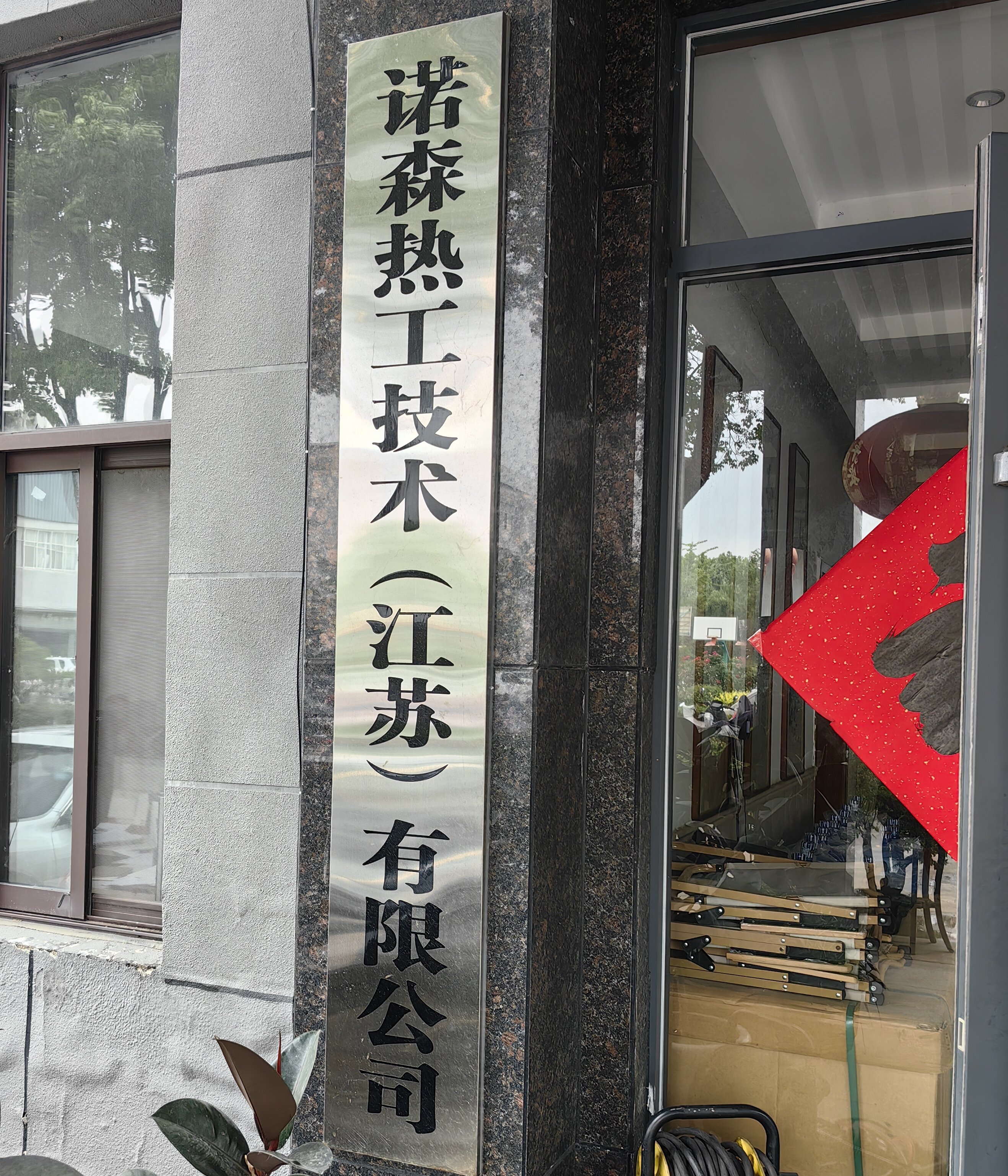
Choosing an ISO9001 certified atmospheric furnace from a trusted supplier like NORSEN Thermal Technology (Jiangsu) Co., Ltd. ensures that your investment meets global quality standards and delivers long-term performance. With a strong R&D team, extensive export experience, and a proven track record in military and automotive sectors, NORSEN provides a cost-effective, reliable solution. Download the corporate brochure below for detailed product specifications and contact information.
Download NORSEN Corporate Brochure (PDF)