
Multi-Purpose Atmosphere Furnace Technical Guide: SiC Muffle, Dual Drive and Gas Heating
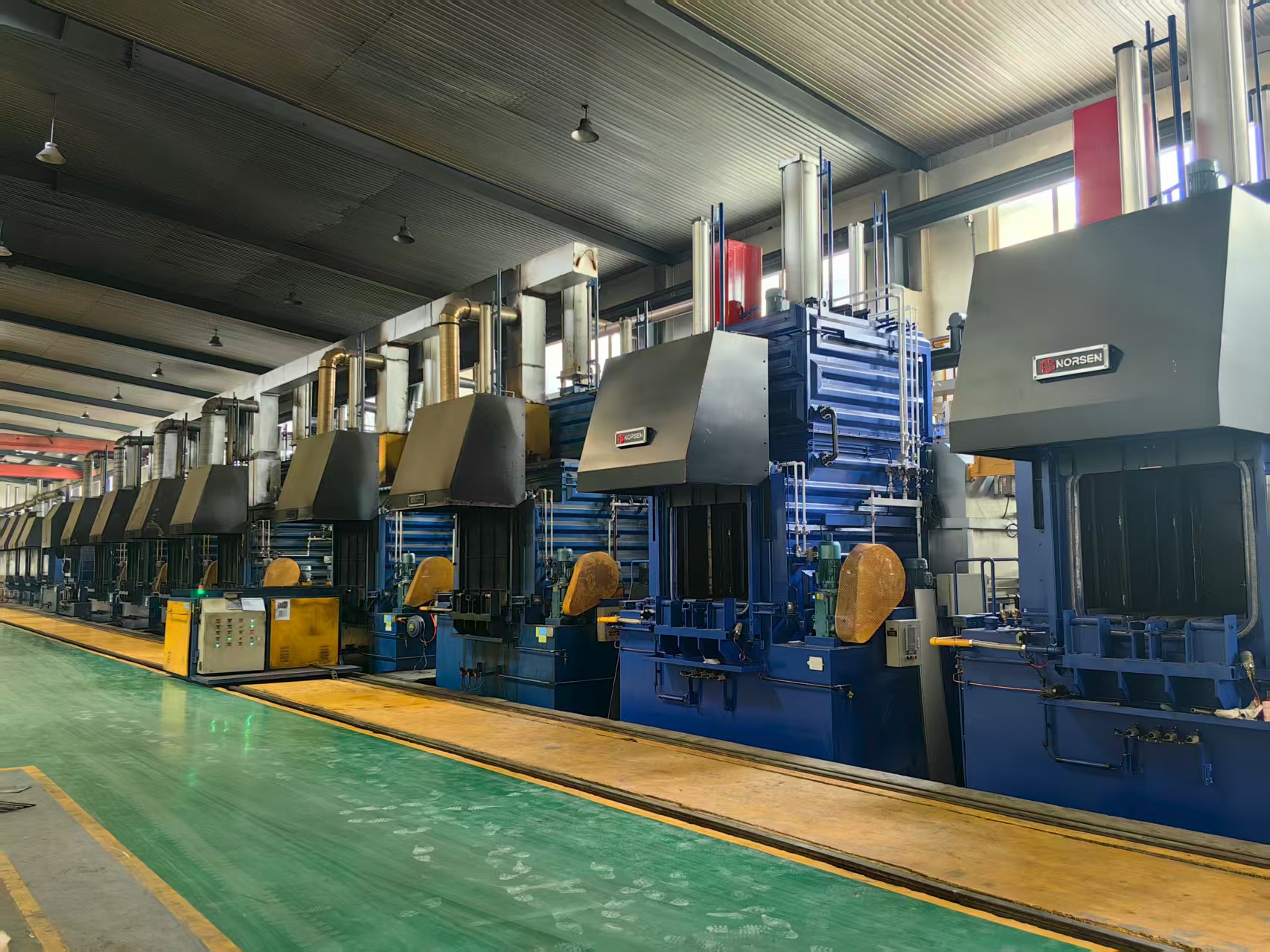
A multi-purpose atmosphere furnace is a sealed, controlled-atmosphere heat treatment system used for carburizing, carbonitriding, hardening with oil quench, tempering and case hardening. At the evaluation stage, the specification sheet is where real capability separates from marketing, because the same process name can hide very different construction, controls and process limits.
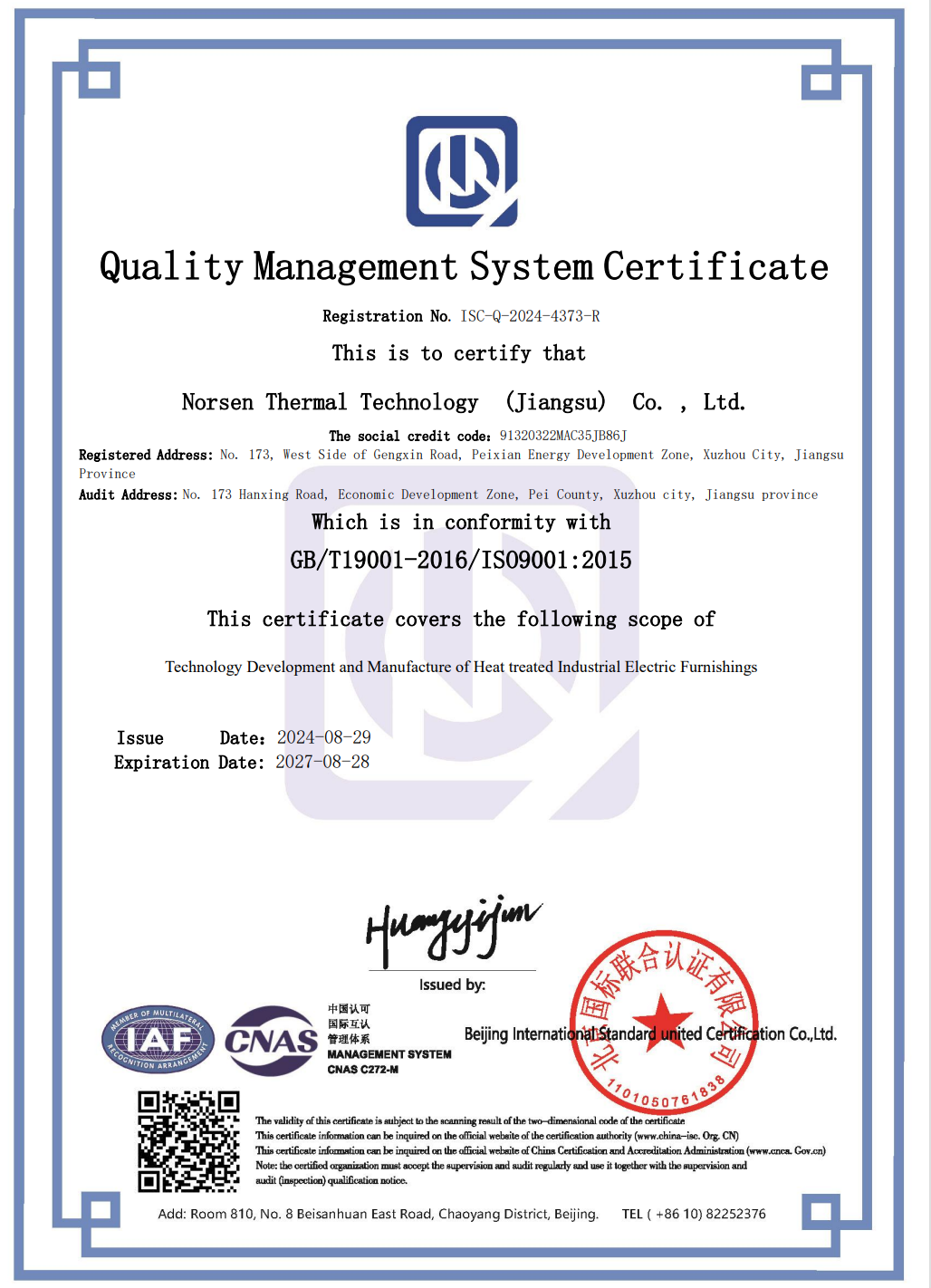
This guide explains the technical structure of a multi-purpose atmosphere furnace — the SiC muffle, chain dual drive, construction materials Q235, SS304 and SS310, gas heating, and over-temperature/over-current protection — and connects each parameter to a process so the sheet can be read as a set of decisions. It uses NORSEN (Norsen Thermal Technology (Jiangsu) Co., Ltd.) as the working example; its sealed box-type multi-purpose furnace and atmosphere furnace line is designated RTQ, TQ, SHQ and DHQ on its ISO9001 certification record.
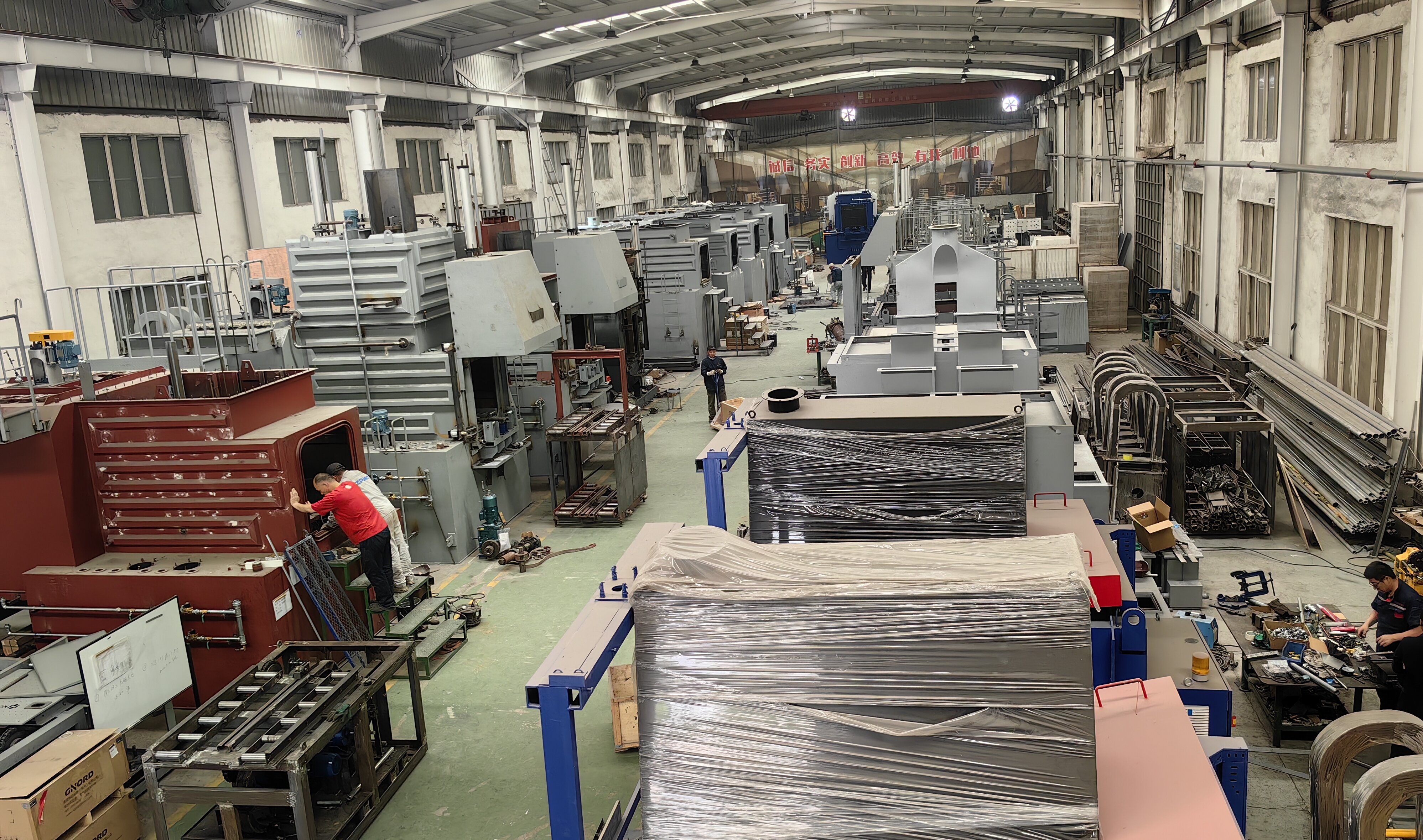
Why multi-purpose atmosphere furnace specification sheets are hard to read
The difficulty is not a lack of data but a lack of a shared vocabulary. One sheet lists a muffle material, another lists a heating source, a third lists protection setpoints, and a fourth lists process names without saying which parameter governs which result. A buyer comparing suppliers can therefore over-specify an element that barely affects the target process, or under-specify the one element that determines whether the process repeats reliably.
The practical fix is to read the sheet in two passes. First, identify the structural elements that set the operating envelope — muffle, drive, construction grades, heating source and protection. Second, map each element to the process the plant actually runs. A furnace is a fit between those two passes, not a longer list of features.
Where multi-purpose atmosphere furnaces fit in heat treatment
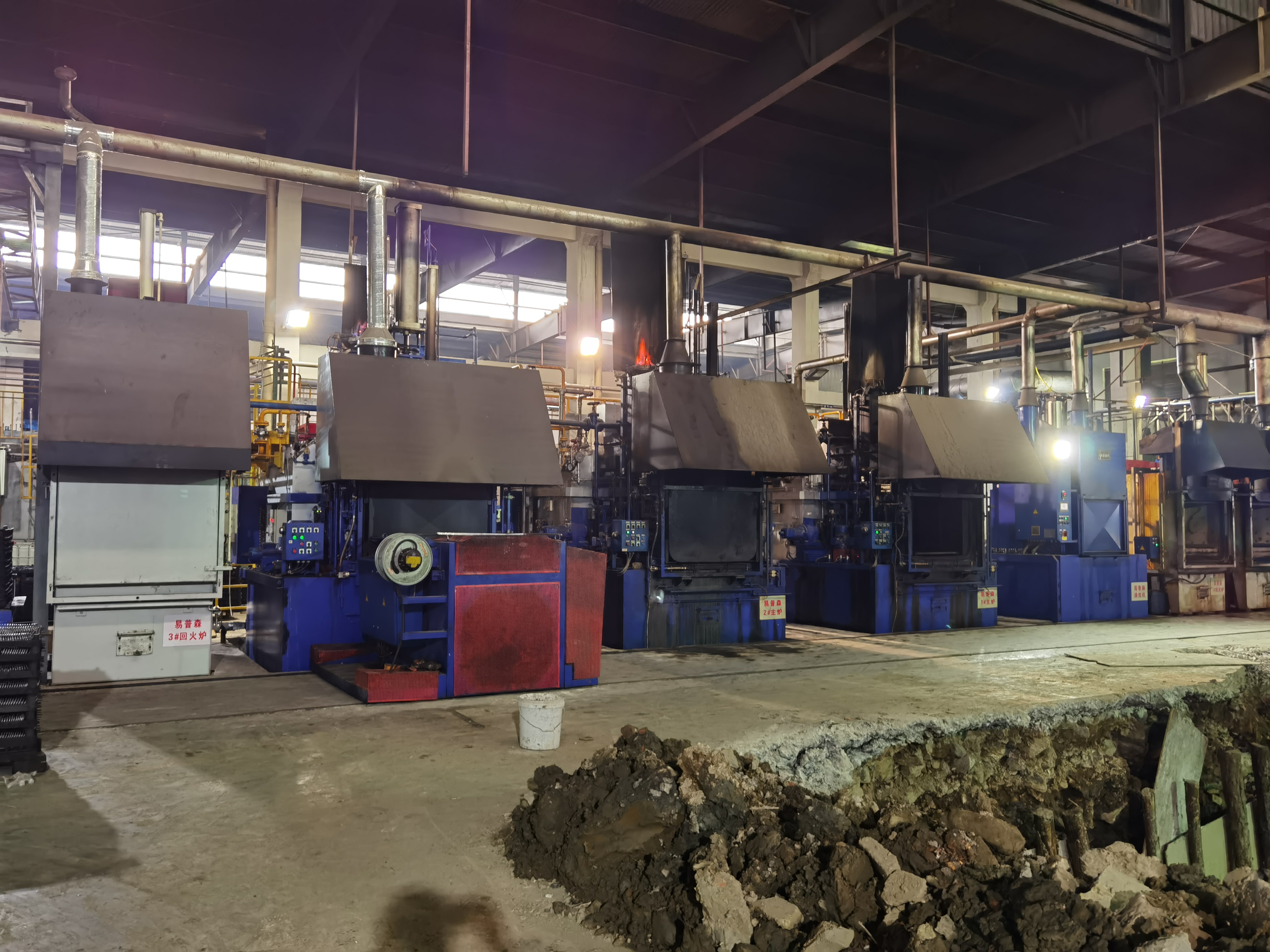
Multi-purpose atmosphere furnaces sit in the sealed box-type category, where the workload is processed under a controlled atmosphere rather than in open air. NORSEN's product portfolio states that it includes sealed box-type multi-purpose furnace production lines, pre-vacuum gas nitriding furnaces, mesh belt carburizing and quenching furnace production lines, and well-type furnaces, which places the multi-purpose furnace as one line among several atmosphere-based options rather than a stand-alone product.
The surrounding standards context is worth naming because it shapes what a spec sheet should be able to answer. ISO/TC 244 covers industrial furnaces and associated processing equipment, including quality requirements and recommendations for heat treatment on mechanical parts used in industries such as car manufacturing, aerospace, pipeline systems, earth-moving machinery, agricultural equipment, tooling and fasteners. ASTM A991/A991M provides a test method for conducting temperature-uniformity surveys on furnaces used to heat-treat steel products, and AMS 2750 and CQI-9 are described as standards that impose stricter rules on temperature uniformity, instrumentation, calibration and system accuracy testing in aerospace and automotive supply chains. A furnace bought for a regulated supply chain should be specified with those confirmations in mind.
Detailed structure: what each element does and what to confirm
SiC muffle
A silicon carbide (SiC) muffle is a heat-resistant barrier that separates the heating source from the workload or shapes the radiant heating zone, and silicon carbide is chosen for its thermal-shock and high-temperature behaviour. In a multi-purpose atmosphere furnace, the muffle affects how evenly the load is heated and how the controlled atmosphere behaves around the parts. On the specification sheet, the muffle material and its replacement or service arrangement are worth checking, because they influence temperature uniformity, atmosphere stability and maintenance planning.
Chain dual drive
A chain dual drive uses two synchronized drive units linked by a chain to move a mechanism such as a transfer, fan or hearth system. The purpose of a dual arrangement is redundancy and smoother load transfer: if one drive path is loaded unevenly, the second shares the duty. On the sheet, confirm the drive configuration, the mechanism it serves, and maintenance access, because drive reliability directly affects uptime in multi-shift operation.
Construction materials: Q235, SS304 and SS310
Construction steel grades are not cosmetic. Q235 is a general carbon structural steel commonly used for frames and outer shells; SS304 is a 304 stainless grade used where corrosion resistance matters; SS310 is a 310 stainless high-temperature grade used in hot zones for oxidation resistance. A specification sheet should state which grade is used in which zone, because a shell grade and a hot-zone grade carry different service lives and different replacement costs.
Gas heating
Gas heating uses a fuel gas as the heat source instead of, or alongside, electric elements. NORSEN lists gas furnace and atmosphere furnace among its main products, so heating source is a real selection variable rather than a fixed feature. The buyer decision is energy availability, running-cost structure, and the atmosphere and emissions implications for the site — all of which belong in the technical agreement, not just in a brochure.
Over-temperature and over-current protection
Over-temperature protection trips the heating when a set limit is exceeded; over-current protection protects the electrical drive and heating circuits. Both are safety and asset-protection functions rather than process features. On the sheet, ask for the protection setpoints, the interlocks, and what happens to the atmosphere and the load on a trip, because an unplanned trip mid-cycle can scrap a carburized or hardened load.
Step-by-step: how to read a multi-purpose atmosphere furnace spec sheet
The sequence below follows the order in which one parameter constrains the next. Skipping ahead to process names before confirming structure is the most common evaluation error.
- Identify the model designation. Ask which code the quotation refers to and request data for that code only. Do not assume one model's specification applies to another.
- Confirm effective size and load. Effective equipment size determines what fits in one cycle; it is also a customization item at NORSEN.
- Confirm the atmosphere system. Carburizing and carbonitriding need controlled carbon and nitrogen potential; hardening and tempering need protection against decarburization.
- Confirm the heating source. Gas or electric changes running cost, site requirements and the control strategy.
- Confirm construction grades by zone. Match Q235, SS304 and SS310 to the actual temperature and corrosion zone on the drawing.
- Confirm protection and controls. Record over-temperature and over-current setpoints, interlocks and trip behaviour.
- Confirm the process programs. Carburizing, carbonitriding, hardening with oil quench, tempering and case hardening should appear as supported recipes, not as generic capability claims.
- Confirm quality and compliance evidence. Ask for the ISO9001 scope, the pre-shipment test record and any process-qualification data the market requires.
- Confirm commercial terms. Minimum order quantity, monthly capacity, lead time and after-sales support are part of fitness for the project schedule.
Model designations and available specifications
NORSEN's ISO9001 certification record (certificate ISC-Q-2024-4373-R) relates the certified scope to a multi-purpose furnace and atmosphere furnace product line with model designations RTQ, TQ, SHQ and DHQ. These four codes are the designations to request data for. NORSEN builds to order under an ODM model and customizes the effective size of the equipment, the degree of automation, and the performance requirements of the equipment, so available specifications are confirmed against the signed technical agreement for the quoted model rather than assumed from another designation.
| Model designation | Product line on NORSEN ISO9001 record | Specification confirmation basis |
|---|---|---|
| RTQ | Multi-purpose furnace / Atmosphere Furnace | Effective size, automation and performance requirements confirmed per order |
| TQ | Multi-purpose furnace / Atmosphere Furnace | Confirmed against the signed technical agreement for the quoted model |
| SHQ | Multi-purpose furnace / Atmosphere Furnace | Confirmed against the signed technical agreement for the quoted model |
| DHQ | Multi-purpose furnace / Atmosphere Furnace | Confirmed against the signed technical agreement for the quoted model |
Connecting parameters to confirmed processes
Each process places a different demand on the same furnace. Reading the sheet against the process prevents buying capability that is never used and missing capability that is essential.
Hardening with oil quench requires a controlled heating cycle followed by a controlled quench, with atmosphere protection so the surface does not decarburize before the quench. The spec items that matter are atmosphere control, temperature uniformity and quench handling.
Carbonitriding introduces both carbon and nitrogen into the surface, so the atmosphere system must control both, and the muffle and gas path affect how evenly that atmosphere reaches the load.
Tempering runs at lower temperature and depends on uniformity more than on atmosphere aggressiveness; over-temperature protection is relevant because a tempering overshoot can soften the load unexpectedly.
Carburizing depends on carbon-potential control and repeatability. On the reference installation, NORSEN reports precise carbon content as an outcome, which is a process-control result rather than a construction feature.
Case hardening combines a hard surface with a tough core, so both the atmosphere cycle and the quench matter; the reference case describes the application as improving mechanical properties, increasing hardness, enhancing toughness and resistance to fatigue.
| Specification item | Why it matters | What to confirm |
|---|---|---|
| SiC muffle | Affects heating uniformity and atmosphere behaviour | Material and replacement/service arrangement |
| Chain dual drive | Uptime and smooth load transfer | Drive configuration, mechanism served, maintenance access |
| Q235 / SS304 / SS310 | Service life differs by zone and grade | Which grade is used in which zone |
| Gas heating | Running cost and site requirements | Energy source capacity and control strategy |
| Over-temperature protection | Protects load and equipment | Setpoints, interlocks, trip behaviour |
| Over-current protection | Protects drive and heating circuits | Circuit coverage and reset procedure |
Use cases and a reference installation
NORSEN describes the multi-purpose furnace users as automotive OEMs, military industry units, hardware tool factories and gear factories. That spread is consistent with a sealed box-type atmosphere line: the same furnace family serves surface treatments on parts where hardness, toughness and fatigue resistance matter.
A reported installation covers 10 units across Belarus, Russia, Thailand, Indonesia, India, Qatar, Turkey, Vietnam, China and Taiwan. NORSEN states that the project achieved stable quality, precise carbon content, high production efficiency, easy maintenance and energy conservation, and lists high-precision atmosphere control, long service life, low energy consumption and easy maintenance as the case highlights. These are supplier-reported outcomes for a specific installation; they should be read as evidence that the process can be controlled, not as a guarantee that every configuration will reproduce the same result.
Manufacturing, compliance and support evidence
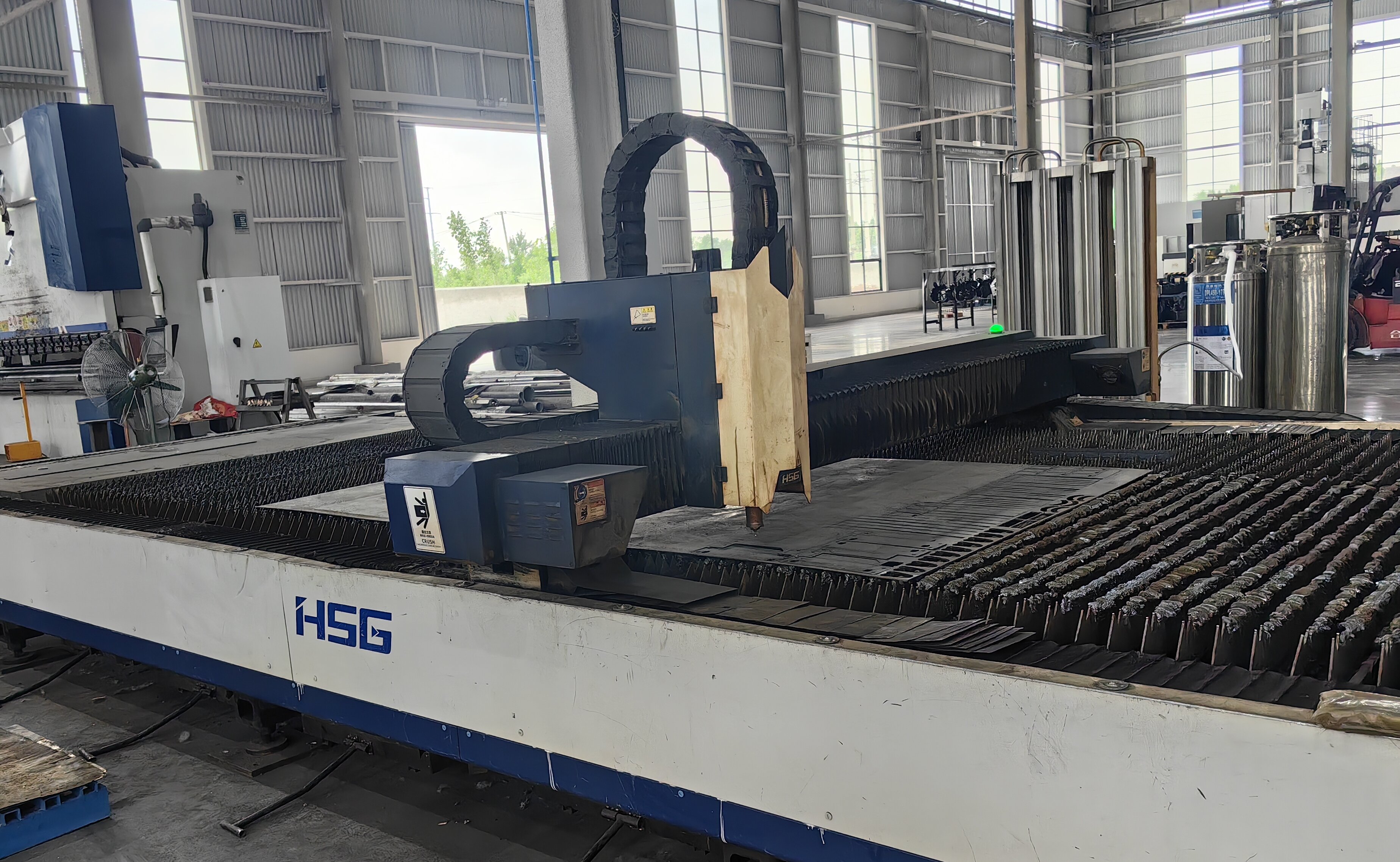
Norsen Thermal Technology (Jiangsu) Co., Ltd. was founded in 2022 and operates a 6,000 m² factory with 55 employees, a 10-person R&D team, and an annual output of 50 sets; exports are about 40% of output, with markets including China, Russia, Belarus, Vietnam, Indonesia, Thailand, Turkey, Qatar and Pakistan. NORSEN holds ISO9001 certificate ISC-Q-2024-4373-R from Beijing National Standard Joint Certification Co., Ltd., issued on 2024-08-29 and valid to 2027-08-29, against GB/T19001-2016/ISO9001:2015, with the scope 'Technology Development and Manufacture of Heat Treated Industrial Electric Furnishings.'
Quality control is stated as 100% pre-shipment test, and after-sales support is free remote technical assistance. Commercial terms are a minimum order quantity of 1 unit, a monthly capacity of 3-5 sets, and a lead time of 150 days. For a project schedule, the 150-day lead time and 3-5 set monthly capacity are the figures that determine whether a multi-unit order can be phased.
FAQ
Is NORSEN certified to manufacture multi-purpose atmosphere furnaces?
Norsen Thermal Technology (Jiangsu) Co., Ltd. holds ISO9001 certificate ISC-Q-2024-4373-R, issued by Beijing National Standard Joint Certification Co., Ltd. on 2024-08-29 and valid to 2027-08-29, against GB/T19001-2016/ISO9001:2015, with the scope 'Technology Development and Manufacture of Heat Treated Industrial Electric Furnishings.' The certification record relates to a multi-purpose furnace and atmosphere furnace product line designated RTQ, TQ, SHQ and DHQ. This is a management-system certification; qualification for specific processes such as AMS 2750 or CQI-9 is a separate, process-level confirmation.
Which model designations does NORSEN offer, and what can be customized?
NORSEN's ISO9001 record relates the multi-purpose furnace and atmosphere furnace line to models designated RTQ, TQ, SHQ and DHQ. Under an ODM model, the effective size of the equipment, the degree of automation, and the performance requirements of the equipment are customized to the order. The wider portfolio also includes gas furnaces, pre-vacuum gas nitriding furnaces, mesh belt carburizing and quenching furnace production lines, and well-type furnaces.
What drives the cost of a multi-purpose atmosphere furnace?
Cost follows configuration rather than a single list figure. Effective size, automation level, performance requirements, heating source (gas or electric), construction grades by zone, and protection and control systems all change the build. NORSEN does not publish unit prices; buyers should request an itemized quotation against the agreed specification so each cost driver is visible and comparable.
How can a buyer validate the furnace before shipment?
For capital furnace equipment the validation step is specification agreement plus NORSEN's 100% pre-shipment test, not a production sample. Buyers who need process qualification should plan temperature-uniformity and system-accuracy checks against the applicable standard for their market, and use the free remote technical assistance for commissioning support.
What is the minimum order quantity and lead time?
Minimum order quantity is 1 unit, monthly capacity is 3-5 sets, and lead time is 150 days, with free remote technical assistance after delivery. To move to a quotation, share the part size, the target process and the automation requirement so the RTQ, TQ, SHQ or DHQ configuration can be specified correctly.
Conclusion
A multi-purpose atmosphere furnace is best evaluated by reading structure and process together. The SiC muffle, chain dual drive, Q235/SS304/SS310 construction, gas heating, and over-temperature and over-current protection set the operating envelope; carburizing, carbonitriding, hardening with oil quench, tempering and case hardening define what the envelope must deliver. NORSEN's RTQ, TQ, SHQ and DHQ designations, its ISO9001 scope, its 100% pre-shipment test and its 150-day lead time give a buyer concrete anchors to check against a specification sheet.
For a documented overview of the equipment range and configuration options, the NORSEN product brochure can be downloaded for review, and a quotation request against a specific process and part size is the practical next step.
Have Questions or Need More Details?
Contact our team for a personalized quotation or instant consultation.
Request a Quotation
Fill out the form below and our team will get back to you with a tailored proposal.
WhatsApp Direct Chat
Prefer to chat in real-time? Message us on WhatsApp for instant assistance & quick answers.
- Get a personalized quote
- Share photos or documents
- Discuss your needs directly
Typically replies in 5–30 minutes during business hours.