
SiC Muffle Type Furnace Atmosphere Control: Technical Guide
A Technical Guide to Atmosphere Control in SiC Muffle Type Furnaces
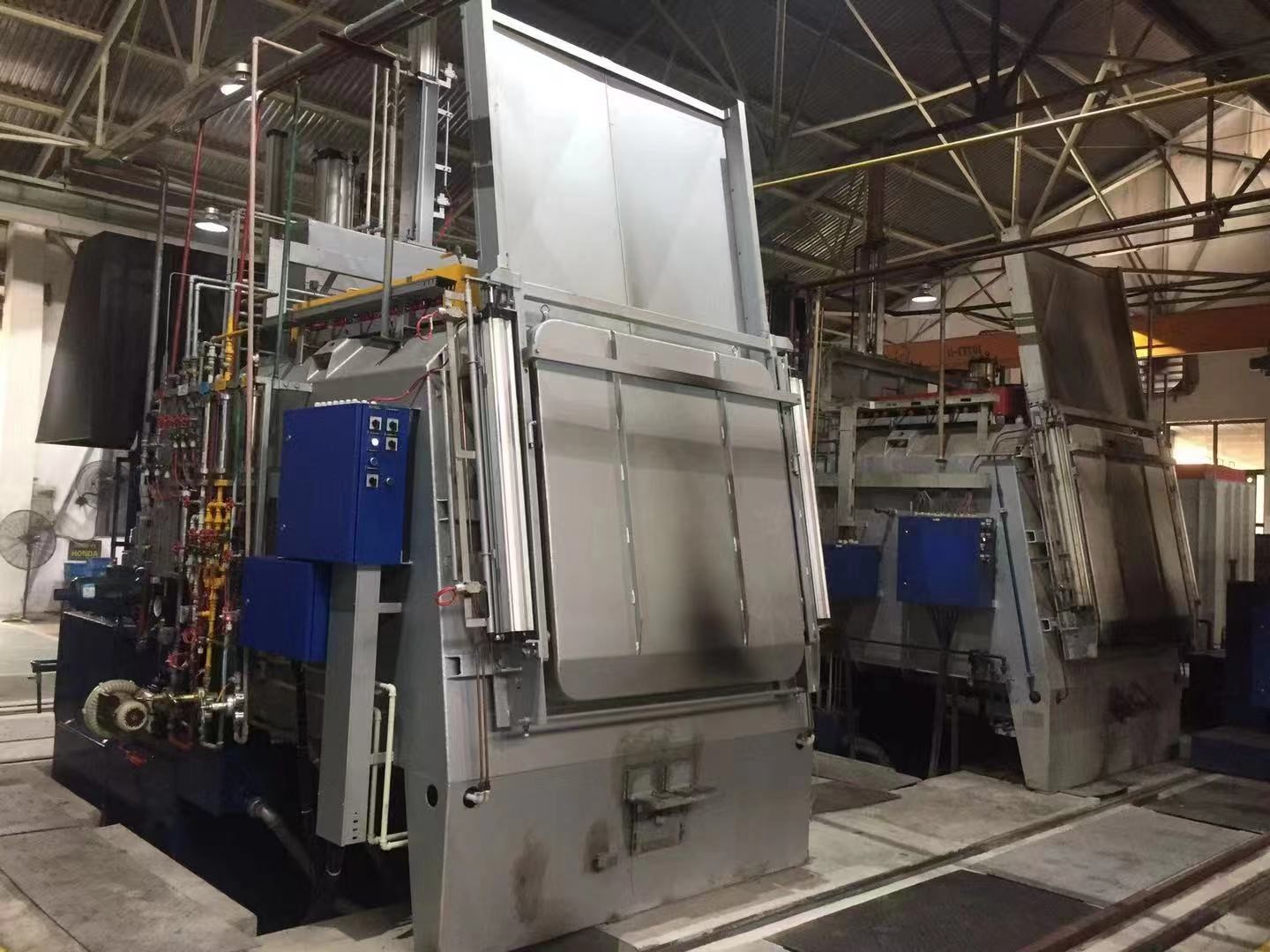
SiC muffle type atmosphere furnace configuration used for carburizing, carbonitriding, oil quench hardening and tempering.
Short answer: precise atmosphere control in a SiC muffle type furnace is the result of four structural decisions rather than one control setting. The muffle contains the carbon-bearing gas around the workload; a chain dual drive moves the load without disturbing that gas and without adding transfer-time variation; the heating elements supply uniform heat input; and an intelligent atmosphere control system measures and corrects the atmosphere through the cycle. In NORSEN's atmosphere furnace platform these elements are specified as a SiC muffle furnace structure with a chain dual drive, four symmetrical oil tank agitator motors, high-performance heating elements and an intelligent atmosphere control system, built from Q235, SS304 and SS310 materials.
This guide is written for evaluation-stage buyers - engineers, plant managers and procurement teams - who are comparing atmosphere furnace configurations and need to know which design details actually influence carbon potential and case depth, and which questions separate a documented specification from a working installation.
Problem Definition: Where Atmosphere Control Actually Fails
Carburizing and case hardening are diffusion processes. What the part receives is a function of three variables held simultaneously over time: temperature, time at temperature, and the carbon potential of the gas surrounding the steel surface. When any of the three drifts inside the chamber, case depth and surface hardness scatter between parts and between batches, and the problem usually becomes visible only after parts have been sectioned and measured.
In real installations, atmosphere problems are more often mechanical than electronic. The recurring causes are:
- Chamber leakage. Air entering, or process gas leaving, through door seals, sensor ports and muffle joints changes gas chemistry directly.
- Uneven gas distribution. A sensor measures the atmosphere where the sensor sits, not where the parts sit. Without circulation and agitation, the control reading and the actual condition at the part surface are two different numbers.
- Non-uniform heat input. Hot and cold zones inside one chamber produce different diffusion rates even while the control loop holds a single setpoint.
- Unrepeatable transfer and quench delay. The carburizing process effectively ends when the load leaves the hot zone. The interval between the end of the soak and immersion in quench oil is an uncontrolled variable unless the transfer mechanism repeats its motion.
- Asymmetric quench agitation. Cooling rate in oil depends on where a part sits in the tank and how the oil moves around it.
- Measurement drift. An atmosphere control system can only be as accurate as its sensor, its calibration schedule and its alarm logic.
For a buyer, this reframes the evaluation. The question is not whether a furnace has atmosphere control - almost all sealed quench equipment does. The question is what contains the gas, what moves the load, what agitates the quench oil, what heats the chamber, and how each of those elements is measured, maintained and replaced. The sections below follow the order in which a specification is normally written.
Industry Background: Demand, Standards and the Shift Toward Better-Controlled Furnaces
Third-party research places the global industrial furnace market at approximately USD 11.86 billion in 2024, with expectations of USD 21.53 billion by 2034 (Precedence Research). Asia-Pacific held a 43.4% revenue share in 2025, driven largely by industrialization in China and India (Grand View Research). Gas-fired furnaces still accounted for a leading 39.8% market share in 2025, while electric and energy-efficient hybrid designs are seeing increased adoption as decarbonization expectations reach heat treatment operations (Future Market Insights).
Figures vary between research houses - one alternative 2024 estimate is USD 19.65 billion (Market Research Future) and one 2025 estimate is USD 10.46 billion (Fortune Business Insights) - so any single number should be treated as directional rather than exact. The consistent signal is that capacity is being added and that the equipment mix is shifting toward electrically heated, more tightly controlled furnaces, which is the category an atmosphere-controlled box-type furnace occupies.
On the compliance side, two reference points frame supplier evaluation. ISO 20431:2023 specifies international quality control requirements for heat treatment on mechanical parts across industries including aerospace and automotive (International Organization for Standardization). At supplier level, ISO9001 certification remains the baseline quality document buyers ask for.
| Indicator | Figure | Year | Source |
|---|---|---|---|
| Global industrial furnace market | USD 11.86 billion, projected to USD 21.53 billion by 2034 | 2024 | Precedence Research |
| Asia-Pacific revenue share of the industrial furnace market | 43.4% | 2025 | Grand View Research |
| Gas-fired share of the industrial furnace market | 39.8% | 2025 | Future Market Insights |
| Atmosphere sintering furnace market, advanced materials | USD 1.6-3.1 billion | 2024 | Global Market Insights |
| China exports of liquid fuel furnaces (HS4 8416); major destinations Russia, Indonesia, Saudi Arabia | USD 202 million | 2025 | Observatory of Economic Complexity |
| Quality control requirements for heat treatment of mechanical parts | ISO 20431:2023 | 2023 | International Organization for Standardization |
Norsen Thermal Technology (Jiangsu) Co., Ltd. (brand: NORSEN) is a heat treatment equipment manufacturer based in Peixian County, Jiangsu Province, China. The company builds box-type multi-purpose furnaces, gas furnaces, atmosphere furnaces and pre-vacuum nitriding furnaces for industries including aerospace, military, automotive, textile machinery, construction machinery and commercial heat treatment. It operates a 6,000 square metre facility with 55 employees, a 10-person R&D team and an annual output of 50 sets; exports represent 40% of sales, with major markets in China, Russia, Belarus, Vietnam, Indonesia, Thailand, Turkey, Qatar and Pakistan. The company holds ISO9001 quality management system certification.
Detailed Solution: How the SiC Muffle Structure and Chain Dual Drive Support Precise Atmosphere Control
NORSEN's atmosphere furnace range is offered in the RTQ, TQ, SHQ and DHQ series, with model designations covering RTQ-10 to RTQ-25, TQ-10 to TQ-25, SHQ-10 to SHQ-25 and DHQ-10 to DHQ-25. The platform is specified with a SiC muffle furnace structure and a chain dual drive; its key components are the intelligent atmosphere control system, four symmetrical oil tank agitator motors and high-performance heating elements; and it is constructed from Q235, SS304 and SS310 materials. Each of these choices has a specific consequence for atmosphere control.
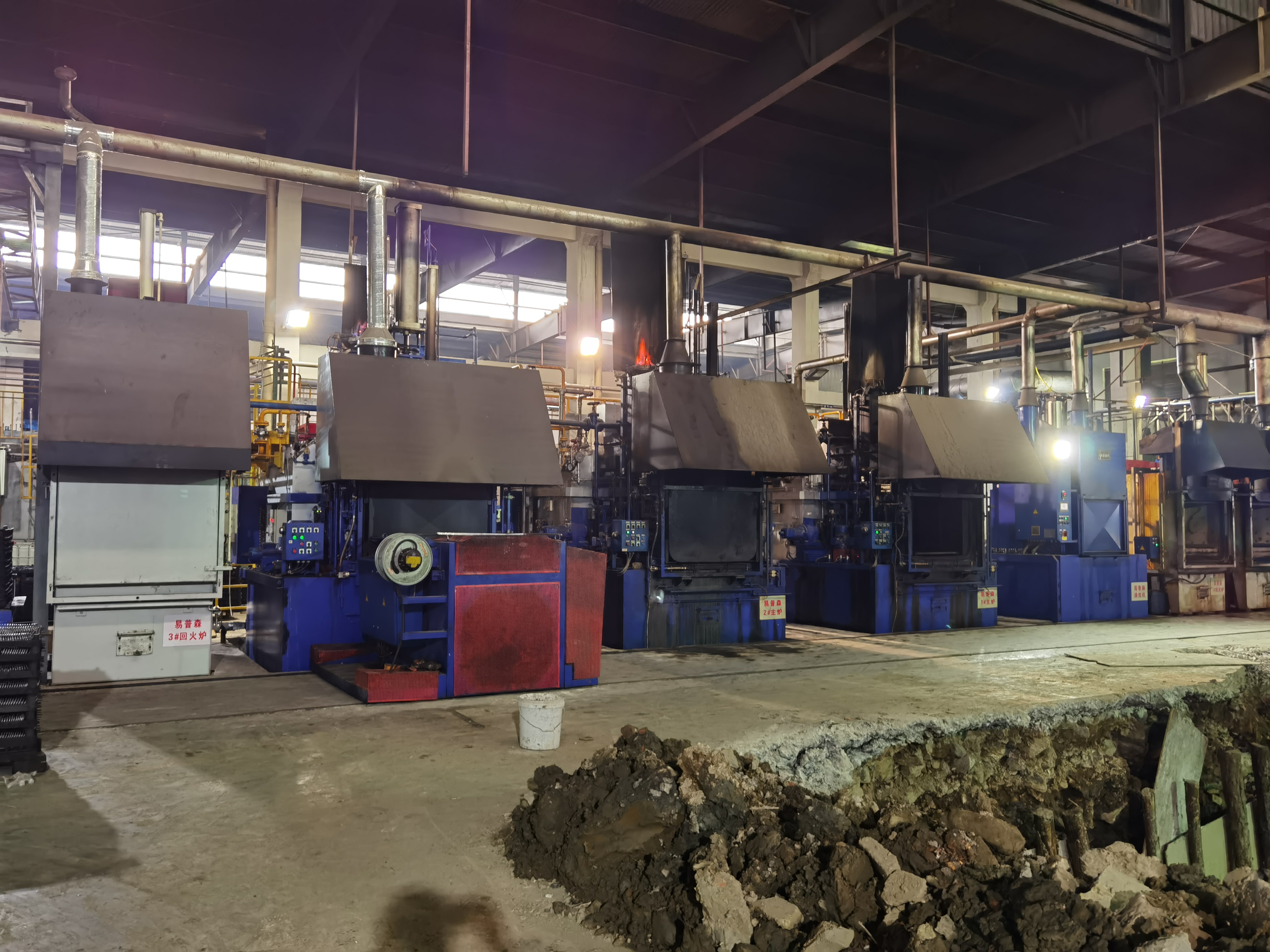
RTQ series unit - muffle, drive, agitation and control elements are configured together on the same platform.
The SiC muffle as the atmosphere boundary
The muffle is the chamber that separates the controlled atmosphere from the outer furnace structure. In a SiC muffle type furnace, that boundary is a defined, documentable component rather than a lining built directly into the shell. The practical benefit for atmosphere control is that the gas volume has a physical edge: joints, supports and inspection points can be specified, checked and maintained.
Because a muffle works under repeated heating and cooling, the evaluation questions that matter are structural:
- How are muffle joints designed to remain gas-tight across thermal cycling?
- Is the muffle supported so that it carries its own weight and thermal load rather than the workload?
- What inspection interval is recommended, and how is muffle condition assessed without a full teardown?
- What is the replacement procedure, and how long does it take the furnace out of production?
These questions outweigh any general claim about atmosphere quality. A muffle that leaks or cracks alters gas chemistry regardless of how capable the control system is.
Chain dual drive and transfer repeatability
The chain dual drive is the mechanism that moves the workload through the cycle. A dual chain arrangement shares the driving load across two chains instead of one, which is relevant to atmosphere control for a specific reason: timing. Carburizing stops when the load leaves the hot zone, so the transfer start point, travel speed and dwell position all influence the effective case depth at the surface.
A drive that repeats its motion gives the quench stage a repeatable starting point, which is one of the variables identified in the problem definition above. When evaluating this element, ask:
- What tension and alignment checks are specified, and at what intervals?
- What lubrication schedule applies, and who is expected to perform it?
- Where are the wear inspection points, and how are chain and sprocket spares handled?
- How does the transfer sequence interlock with the door and the atmosphere cycle?
The intelligent atmosphere control system
The intelligent atmosphere control system is the element that holds and corrects process conditions through the cycle. Its job in a carburizing or case hardening cycle is to maintain the set condition while the load, the door and the heating elements are all changing the chamber environment, and to record what happened so a batch can be traced afterwards.
At evaluation stage, the useful questions are about documentation as much as capability: which sensors feed the control loop and what calibration interval is recommended; whether process recipes are stored per part number and process; what alarms trigger on deviation and what the furnace does automatically in response; whether atmosphere and temperature data are logged together with timestamps; and how those records feed the plant's quality system - a practical link between the controller and a quality framework such as ISO9001 or ISO 20431:2023. Ask to see a sample cycle record rather than a description of one.
Four symmetrical oil tank agitator motors
Quench agitation is a cooling-uniformity function, and cooling uniformity is what converts a correctly carburized case into consistent hardness. Four symmetrical oil tank agitator motors are arranged to keep oil movement and temperature distribution even around the load, so that parts in different positions in the tank see comparable cooling conditions.
Verify: whether the four motors are independently driven or coupled; whether agitation intensity can be set per recipe; how oil temperature is controlled and measured; how a motor is serviced without draining the whole tank; and which spares should be held on site. The same logic applies here as to the muffle - the number of components matters less than whether they can be maintained on a production schedule.
High-performance heating elements
Uniform heat input is the other half of the atmosphere equation, because diffusion rate follows temperature. The heating elements in this configuration are specified as high-performance heating elements, and the evaluation questions concern zoning and serviceability rather than a single headline rating: how many control zones the chamber has and how each is instrumented; whether elements can be replaced without a long cool-down; and what spare stock and replacement interval the supplier recommends.
Construction materials: Q235, SS304 and SS310
The equipment is built from Q235, SS304 and SS310 materials. Three grades exist in the same machine because a furnace contains genuinely different environments: structural members that never contact process gas, gas-facing surfaces that must resist carburizing atmospheres, and hot zones where high-temperature oxidation resistance matters. Q235 is a general structural carbon steel, SS304 a widely used austenitic stainless steel selected for corrosion resistance, and SS310 a high-temperature austenitic grade specified where elevated-temperature service is expected.
The single most useful request a buyer can make on materials is a zone-by-zone material map inside the drawing package, showing which grade is used where. That converts a general materials list into an engineering document, and it creates the point at which the supplier explains the maintenance and cost consequence of each choice.
Safety and protection integration
Over-temperature protection, over-current protection and gas heating are part of the same control architecture. In an atmosphere furnace, safety functions and process functions share sensors and interlocks, so their behaviour under fault conditions should be specified: what the interlock sequence does on over-temperature, what happens on loss of power or loss of process gas, whether the purge sequence is automatic, and how alarms are logged against a batch record.
Processes the platform supports
The same configuration is applied to hardening with oil quench, carbonitriding, tempering, and carburizing and case hardening. Each process places a different demand on the atmosphere, which is why the mechanical elements above matter as much as the control loop.
| Process | What the atmosphere must do (general heat treatment principle) | Configuration element involved |
|---|---|---|
| Carburizing and case hardening | Supply carbon at a controlled potential for the full soak period | Intelligent atmosphere control system; SiC muffle structure |
| Carbonitriding | Add a nitrogen-bearing component to the carbon-bearing atmosphere | Intelligent atmosphere control system; gas heating circuit |
| Hardening with oil quench | Preserve a short, repeatable interval between leaving the hot zone and entering the oil | Chain dual drive; four symmetrical oil tank agitator motors |
| Tempering | Hold a lower temperature uniformly, with less dependence on carbon potential | High-performance heating elements; temperature control |
Step-by-Step Breakdown: Specifying and Verifying Atmosphere Control
- Define the process envelope before discussing hardware. Decide which of the four processes the furnace must run, the materials involved and the tolerance on case depth or hardness. NORSEN customization covers the performance requirements of the equipment, so this is the input the specification is built from.
- Size the furnace from part mix and fixture, not from a catalogue number. Effective equipment size is an explicit customization dimension. Confirm how the workload and fixture fit within the usable chamber and how that interacts with the muffle.
- Set the automation level. Degree of automation is the second customization dimension, and it determines how much of the cycle depends on operator action and how much is recorded automatically. Decide it deliberately, because it affects both cost and repeatability.
- Write the atmosphere control loop into the specification. State sensor calibration intervals, recipe management, alarm behaviour, data logging format and the acceptance criteria for a cycle record.
- Verify the mechanical elements against the same document. Muffle joints and support design, chain drive tensioning and lubrication, agitation configuration and oil temperature control, heater zoning, zone-by-zone materials, and protection interlocks.
- Agree the pre-shipment test. NORSEN performs a 100% pre-shipment test. Convert that into a defined acceptance protocol with your own criteria attached, and ask for the test record to be issued with the machine.
- Plan lead time and commissioning into the project schedule. The stated lead time is 150 days, monthly production capacity is 3-5 sets, and the minimum order quantity is 1 unit. Free remote technical assistance is provided after delivery; confirm who participates and what time zone coverage applies.
- Plan the maintenance and spares route before installation. Decide which spares - chains, sprockets, heating elements, agitator motors and sensors - are held on site, and map them to the inspection intervals agreed in step 5. This is the step that protects atmosphere control over the life of the furnace rather than only at commissioning.
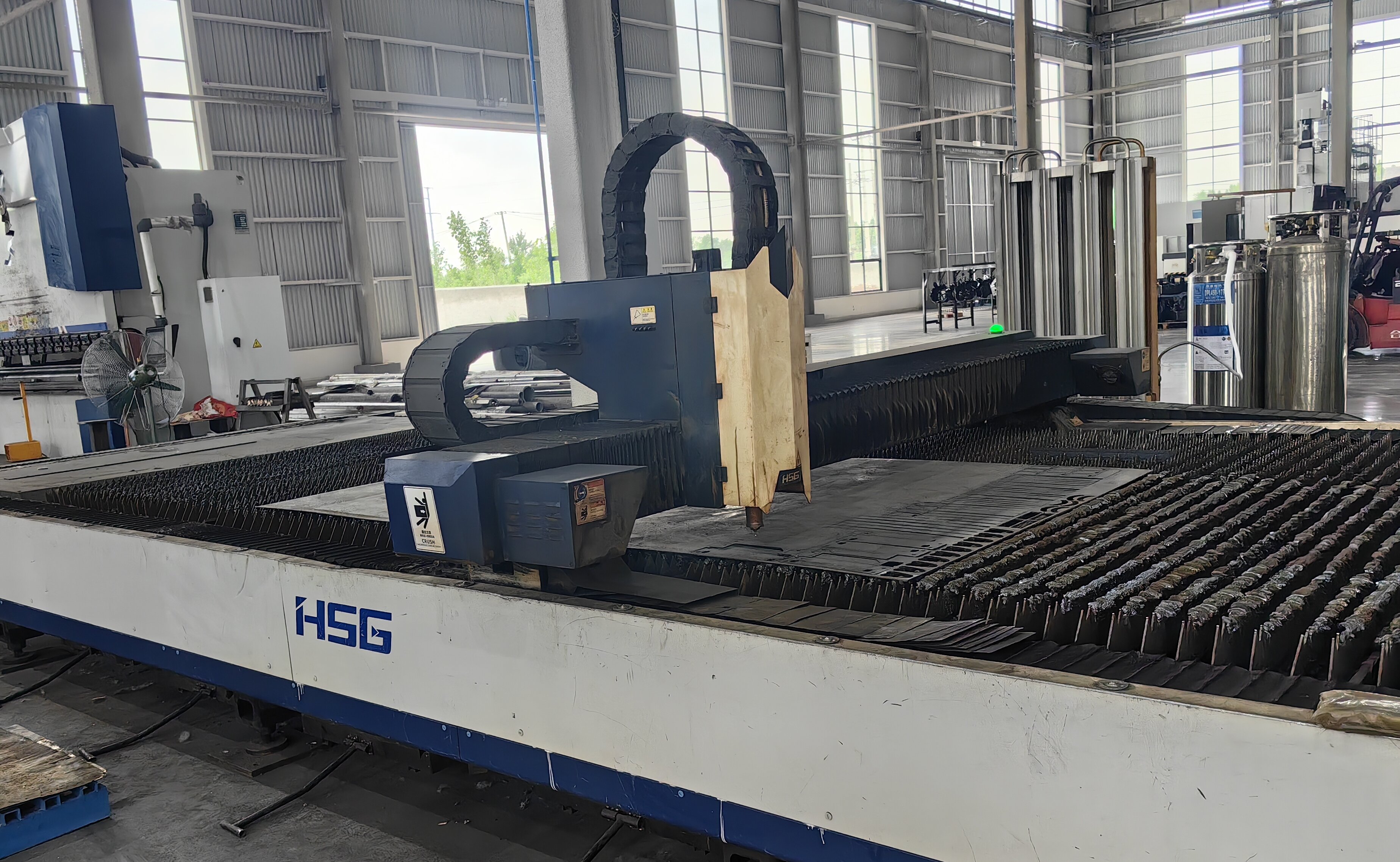
Fabrication of furnace structures from Q235, SS304 and SS310 materials before assembly.
Use Cases: Where This Configuration Is Applied
NORSEN atmosphere and multi-purpose furnace equipment is used in military industry, automotive, agricultural machinery, robotics, bearings, hardware and sewing machine manufacturing - applications where hardness, toughness and fatigue resistance have to be repeatable from batch to batch.
The company's reference case for this platform covers 10 units that have been in operation for 20 years across automotive and military industries. The equipment has been used by automotive OEMs, military industry units, hardware tool factories and gear factories to improve mechanical properties, increase hardness and enhance toughness and fatigue resistance. The recorded outcomes of that case are stable quality, precise carbon content, high production efficiency, easy maintenance and energy conservation. Installations in that reference case are located in Russia, Thailand, Indonesia, India, Qatar, Turkey, Vietnam, China and Taiwan.
The commercial pattern behind those installations is a mix of domestic and export business: exports account for 40% of NORSEN sales, with major markets in China, Russia, Belarus, Vietnam, Indonesia, Thailand, Turkey, Qatar and Pakistan, and export activity described across Russia, Belarus, Southeast Asia, the Middle East region and Taiwan Province of China. For a buyer evaluating suppliers, that distribution matters for a practical reason - it indicates where installation, commissioning and remote technical support have already been exercised.
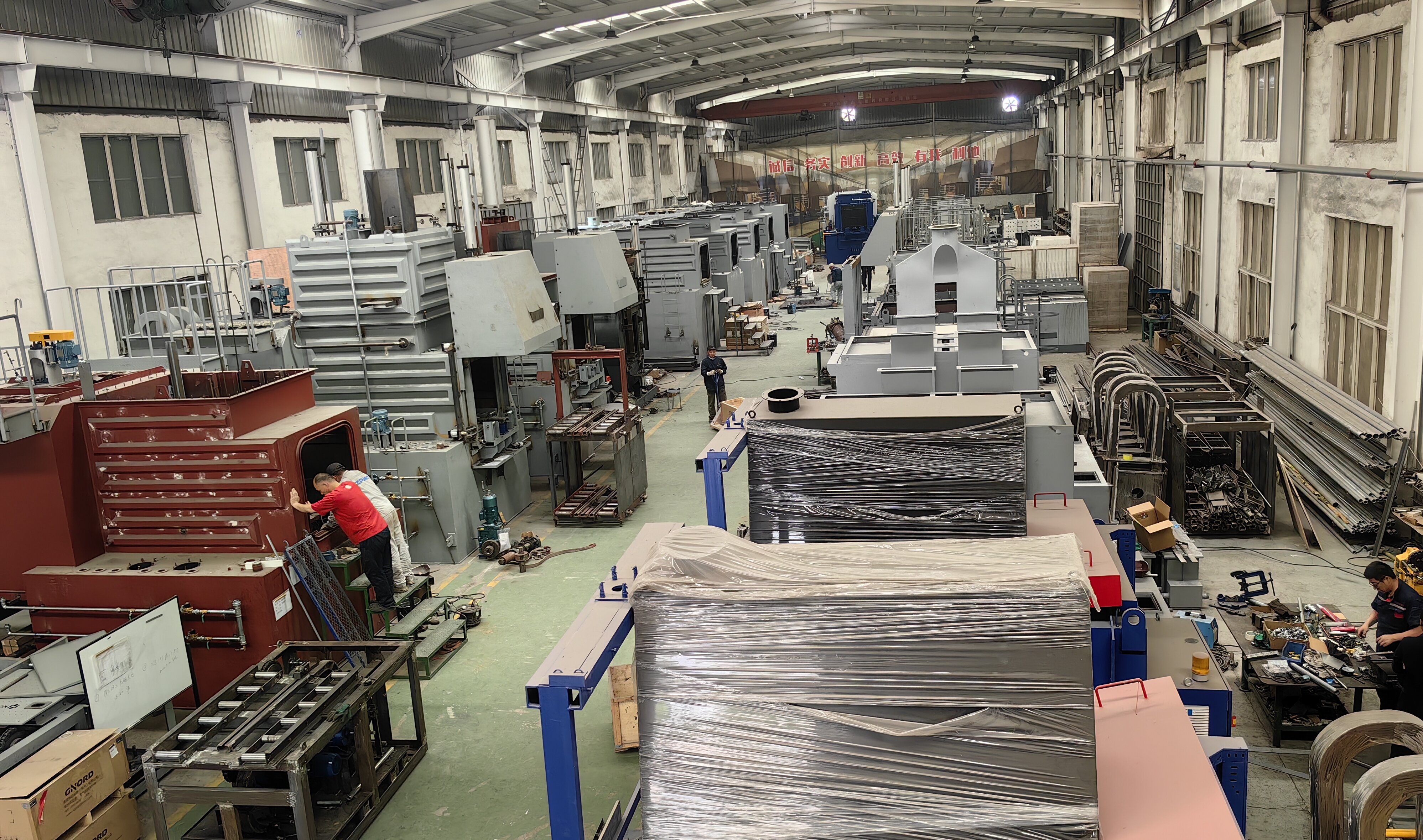
Assembly area at the 6,000 square metre NORSEN facility in Peixian County, Jiangsu Province, China.
Comparison Table: Configuration Elements, Function and Verification
The table below summarizes how each element of the SiC muffle type configuration contributes to atmosphere control, what NORSEN specifies, and what a buyer should verify in writing during evaluation.
| Configuration element | Function in atmosphere control | NORSEN specification | What to verify |
|---|---|---|---|
| Muffle structure | Contains the carbon-bearing atmosphere and defines the controlled gas volume | SiC muffle furnace structure | Joint sealing and support design; inspection interval; replacement procedure and downtime |
| Load transfer | Moves the workload in and out of the hot zone with repeatable timing | Chain dual drive | Tension and alignment checks; lubrication schedule; chain and sprocket spares |
| Atmosphere regulation | Holds and corrects process conditions through the cycle and records them | Intelligent atmosphere control system | Sensor calibration interval; recipe storage; alarm logic; sample cycle record |
| Quench agitation | Evens out oil movement and temperature around the load for consistent cooling | 4 symmetrical oil tank agitator motors | Independent motor drives; recipe-controlled agitation; service access; spare motors |
| Heat input | Provides uniform heating so diffusion rate is consistent across the chamber | High-performance heating elements | Number of control zones and instrumentation; replacement access; spare element stock |
| Construction materials | Balance structural cost, corrosion resistance and high-temperature durability | Q235, SS304, SS310 | Zone-by-zone material map in the drawing package |
| Safety and protection | Prevent atmosphere and electrical faults from becoming quality or safety events | Over-temperature protection, over-current protection, gas heating | Interlock logic; automatic purge sequence; behaviour on power or gas loss |
A second comparison point is documentary. ISO9001 certification and ISO 20431:2023 provide a framework for verifying that equipment and process can be audited; both should appear in the supplier's document package rather than only in a sales conversation.
FAQ: Compliance, Capability, Budget, Sample and Lead Time
Norsen Thermal Technology (Jiangsu) Co., Ltd. holds ISO9001 certification under certificate number ISC-Q-2024-4373-R, issued by Beijing National Standard Joint Certification Co., Ltd. against GB/T19001-2016/ISO9001:2015. The certificate was issued on 2024-08-29 and is valid until 2027-08-29, with a registered scope of Technology Development and Manufacture of Heat Treated Industrial Electric Furnishings. Buyers working to heat treatment quality requirements should also reference ISO 20431:2023, which specifies international quality control requirements for heat treatment on mechanical parts in industries including aerospace and automotive. In practice, verification means checking the certificate copy, reading the scope wording rather than the logo, and confirming the expiry date is still valid at the time of order.
Yes. NORSEN operates an ODM model in which customization covers the effective size of the equipment, the degree of automation and the performance requirements of the equipment. The platform spans the RTQ, TQ, SHQ and DHQ series - model designations RTQ-10 to RTQ-25, TQ-10 to TQ-25, SHQ-10 to SHQ-25 and DHQ-10 to DHQ-25 - and is configured for hardening with oil quench, carbonitriding, tempering, and carburizing and case hardening. For an evaluation-stage decision, the sequence that produces the most accurate proposal is to define the process, the part mix and the fixture first, and then discuss muffle, drive, agitation and control configuration.
Cost is driven by configuration scope rather than by a single headline item. The variables that change the commercial result are the effective equipment size, the degree of automation, the performance requirements and the mechanical specification: SiC muffle furnace structure, chain dual drive, four symmetrical oil tank agitator motors, high-performance heating elements, the materials used (Q235, SS304, SS310), and the protection package of over-temperature protection, over-current protection and gas heating. Running cost is influenced by the same decisions, since the recorded outcome for this platform in long-term operation includes energy conservation. When comparing quotations, compare them against an identical process envelope and an identical list of verification items; a lower price achieved by reducing effective size or automation is not the same machine.
The minimum order quantity is 1 unit, so a single furnace can be ordered as a validation unit rather than only as part of a multi-unit line. Quality control is based on a 100% pre-shipment test, and free remote technical assistance is provided after delivery. For evaluation purposes, the practical step is to attach your own acceptance criteria - atmosphere stability over a defined cycle, transfer timing and agitation behaviour - to that pre-shipment test and to request the test record as part of the delivery documentation.
The stated lead time is 150 days, with a monthly production capacity of 3-5 sets; the company operates a 6,000 square metre facility with 55 employees, a 10-person R&D team and an annual output of 50 sets. That capacity is relevant when a project schedule depends on more than one unit, and it is worth confirming against the project calendar before the order is placed. To move from evaluation to a concrete proposal, send your process requirements, part mix and fixture details - NORSEN will respond with a configuration covering muffle and drive specification, atmosphere control scope, materials and lead time. The equipment catalogue is available for download at the NORSEN atmospheric furnace brochure, and specifications can be discussed through www.norsengroup.com or by email at jiayoubingsen@163.com.
Conclusion: The Four Decisions That Determine Atmosphere Control
Atmosphere control in a SiC muffle type furnace is not a single feature to tick on a datasheet. It is the combined result of a muffle that gives the controlled gas a defined boundary, a chain dual drive that makes load transfer repeatable, agitation and heating that keep conditions uniform around the workload, and a control system that measures, corrects and records what happened. The materials used in construction - Q235, SS304 and SS310 - and the protection package around temperature, current and gas handling determine how long that performance survives in production.
For a buyer at evaluation stage, the productive approach is to convert each of these elements into a written verification item, request the supporting documentation, and compare suppliers against an identical process envelope. That produces a shortlist based on verifiable configuration rather than on claims, and it gives the acceptance test at shipment something concrete to measure against.
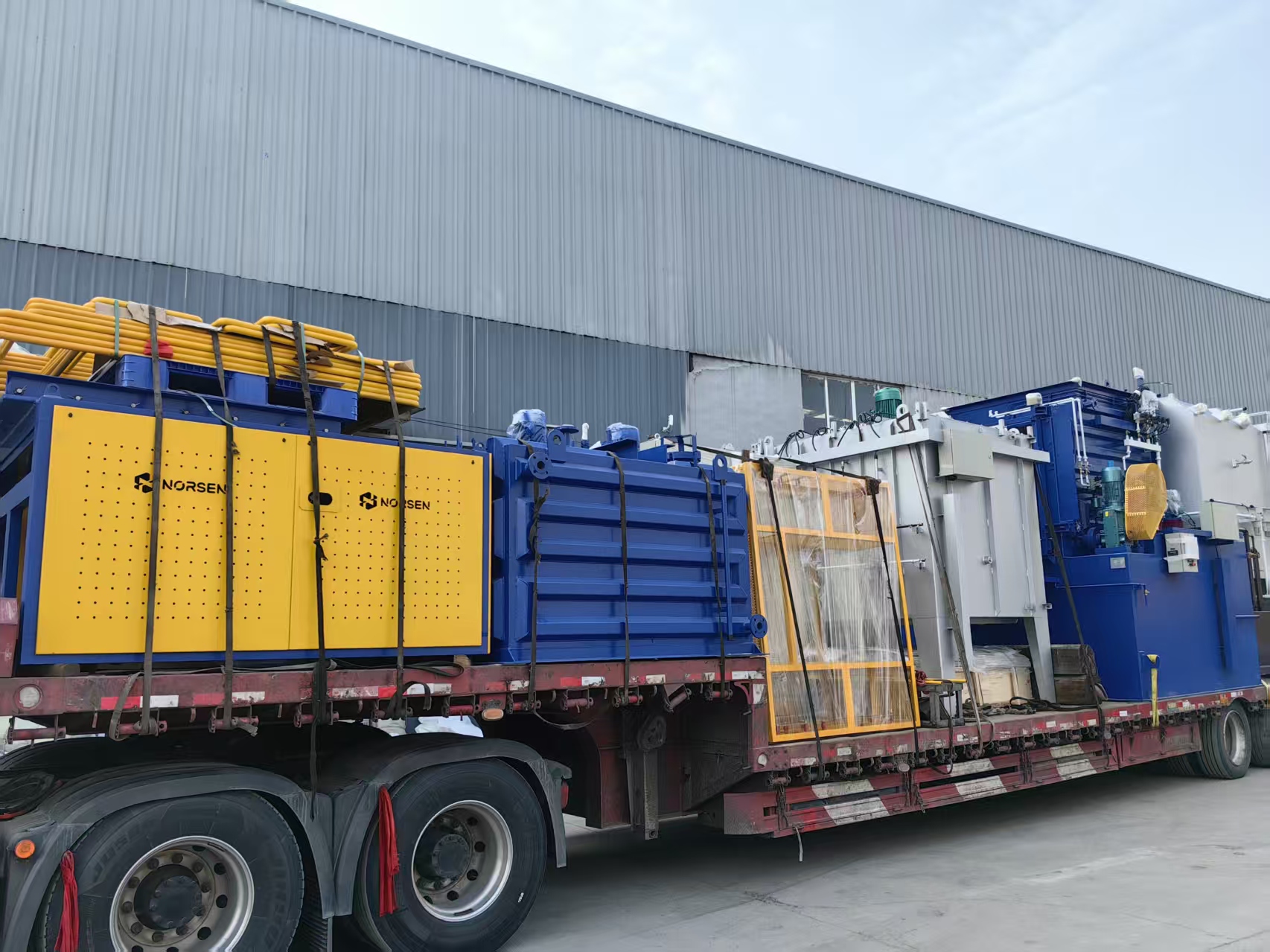
Atmosphere furnace units prepared for shipment; exports account for 40% of NORSEN sales.
Next step: specification review for your process
Send NORSEN your process, part mix and fixture information to receive a configuration proposal covering muffle and drive specification, atmosphere control scope, materials, lead time and pre-shipment test criteria.
Catalogue: Download the NORSEN equipment brochure (PDF) · Website: www.norsengroup.com · Email: jiayoubingsen@163.com · Tel: +86 153-8013-9999
Have Questions or Need More Details?
Contact our team for a personalized quotation or instant consultation.
Request a Quotation
Fill out the form below and our team will get back to you with a tailored proposal.
WhatsApp Direct Chat
Prefer to chat in real-time? Message us on WhatsApp for instant assistance & quick answers.
- Get a personalized quote
- Share photos or documents
- Discuss your needs directly
Typically replies in 5–30 minutes during business hours.