
The 150-Day Furnace Order: A Problem-Solution Timeline for Smart Manufacturing Buyers
A 150-day furnace order is a project schedule, not a catalog transaction. NORSEN Thermal Technology (Jiangsu) Co., Ltd. states a 150-day typical production lead time, a 1-unit minimum order quantity and a monthly capacity of 3–5 sets for its heat treatment furnace business. Those three facts define the buyer problem: the equipment must be configured, built, tested, shipped and accepted across a period long enough to affect plant layout, utility work, staffing and production ramp-up.
NORSEN Thermal Technology (Jiangsu) Co., Ltd. (NORSEN) is a Jiangsu-based heat treatment equipment manufacturer founded in 2022 with a 6,000 m² factory, 55 employees, a 10-person R&D team and 50 sets annual output. Its main products include sealed box-type multi-purpose furnace production lines, pre-evacuated gas nitriding furnaces, mesh belt carburizing and quenching furnace production lines, well-type furnaces and other heat treatment equipment. The company holds ISO9001 quality management system certification.
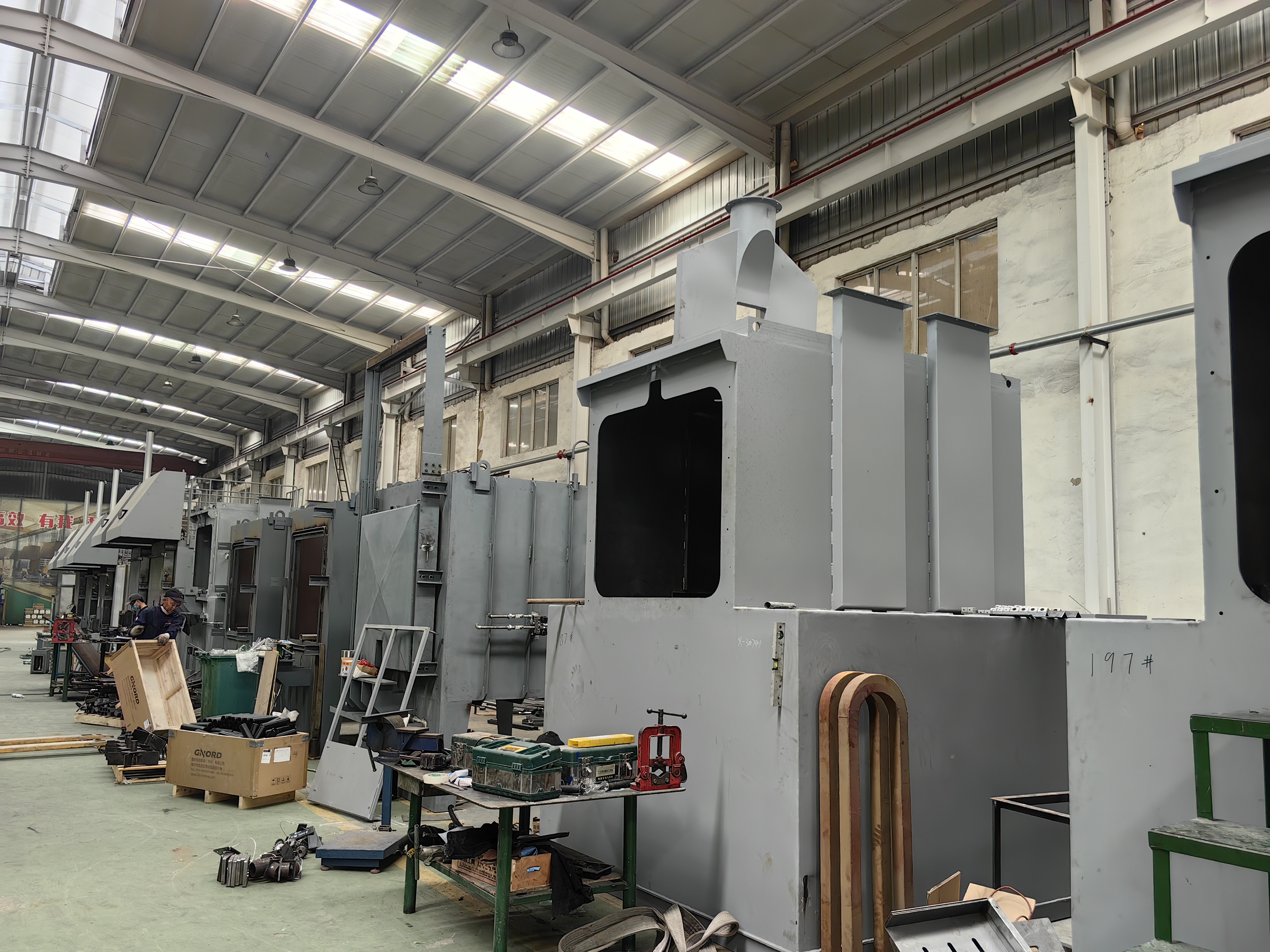
Production field at NORSEN Thermal Technology (Jiangsu) Co., Ltd.
Problem definition: why a 150-day lead time changes the buying plan
The core problem is not simply waiting. A 150-day production lead time creates parallel deadlines that the buyer controls: site readiness, utility connections, approval of the ODM specification, payment milestones, pre-shipment verification and installation planning. If those buyer-side tasks start after the furnace arrives, the project loses the benefit of the production window.
For smart-manufacturing buyers, the furnace is part of a process chain. It must fit the part family, the heat-treatment cycle, the factory crane height, the available utilities and the planned automation level. The supplied application data lists electricity, compressed air, natural gas, cooking fume ducts and their media as matched equipment. It also states that the factory crane height should be more than 6.5 meters, and higher is better. These are not secondary details; they determine whether the equipment can be installed and operated as planned.
A second risk is commercial timing. A 1-unit MOQ makes a single furnace order possible, but it does not remove the need for a capacity slot. With monthly capacity of 3–5 sets, a buyer should treat the 150-day lead time as a scheduled production window that must be confirmed with the supplier, not as an automatic promise that begins on the inquiry date.
Industry background: configured equipment, qualification and capacity
Heat treatment furnaces are configured industrial equipment. They are associated with carburizing, quenching, tempering, nitriding, controlled atmosphere processing and other thermal cycles. NORSEN's product scope includes sealed box-type multi-purpose furnace lines, pre-evacuated gas nitriding furnaces, mesh belt carburizing and quenching furnace lines and well-type furnaces. The multi-purpose furnace and atmosphere furnace product unit lists model families RTQ, TQ, SHQ and DHQ, with types such as RTQ-10, RTQ-17, RTQ-25, TQ-10, TQ-17, TQ-25, SHQ-10, SHQ-15, SHQ-25, DHQ-10, DHQ-15 and DHQ-25.
Quality expectations are also shaped by standards. ISO/TC 244 covers industrial furnaces and associated processing equipment and includes quality requirements and recommendations applicable to heat treatment of mechanical parts used in car manufacturing, aerospace, pipeline systems, civil engineering equipment, earth moving machinery, agricultural equipment, naval industry, energy equipment, tooling and fasteners. ASTM A991/A991M is a standard test method for conducting temperature uniformity surveys of furnaces used to heat treat steel products. According to SAT Thermique, AMS 2750 and CQI-9 subject heat treatment processes to stricter rules, including temperature uniformity, instrumentation, calibration and system accuracy testing.
Capacity pressure can appear even in specialized segments. Ipsen USA reported more than $100 million in new vacuum furnace orders in 2026 through Q3. That figure is a public order-intake signal for one company and one product category; it is not evidence of NORSEN's lead time or capacity. It does show why buyers should lock the technical scope and capacity slot early when a furnace is on the critical path.
Detailed solution: plan backward from the 150-day production window
The practical answer is to manage the furnace order as a staged project with a fixed production window and buyer-side checkpoints. NORSEN's capability facts provide the anchors: ODM production mode, customization of effective equipment size, automation degree and performance requirements, 1-unit MOQ, 3–5 sets monthly capacity, 150-day typical production lead time, 100% pre-shipment test and free remote technical assistance.
| Verified order fact | What it means for the buyer |
|---|---|
| 150-day typical production lead time | Use Day 150 as the production anchor, then build site, utility, payment and acceptance milestones backward from it. Confirm the trigger date and exclusions in the order. |
| 1-unit minimum order quantity | A single furnace can be ordered, but it still needs a defined capacity slot and a frozen specification. |
| 3–5 sets monthly capacity | Treat capacity as finite. Early reservation and early requirement freeze reduce the risk of schedule displacement. |
| ODM production mode | Customization is expected, so the buyer must provide a clear technical brief rather than rely on a generic model name. |
| Customization scope: effective size, automation degree, performance requirements | These three items should be approved before fabrication. They are also the basis for pre-acceptance and final acceptance. |
| 100% pre-shipment test | Shipment release should be tied to the test record and the agreed acceptance items, not to a verbal assurance. |
| Free remote technical assistance | Plan remote access, documentation and a named technical contact. Confirm any additional service scope in the contract. |
| ISO9001 quality management system certification | This supports process discipline. It does not replace model-specific testing, site acceptance or standards qualification. |
Step-by-step breakdown: a buyer timeline for the 150-day furnace order
Step 1: define the part family and heat-treatment process
Start with the work the furnace must perform. The supplied application content describes metal parts carburizing and quenching to enhance mechanical properties by increasing hardness and toughness, with gear processing included in the project type. The same product scope lists military industry, automobiles, agricultural machinery, robots, bearings, hardware and sewing machines as applicable industries. The buyer should define the part family, load pattern, process sequence and throughput target before asking for a layout or quotation.
This step also determines whether the project is a multi-purpose atmosphere furnace, a carburizing and quenching line, a nitriding furnace or another configuration. NORSEN's product range includes box-type multi-purpose furnaces, gas furnaces, atmosphere furnaces and pre-vacuum nitriding furnaces, so the process definition should come before the model selection.
Step 2: freeze the site and utility requirements
The site is part of the furnace specification. The supplied application data requires electricity, compressed air, natural gas, cooking fume ducts and their media as matched equipment. It also states that the factory crane height should be more than 6.5 meters, and higher is better. Buyers should verify these conditions before the order is released, because a later site change can disrupt installation even if the furnace itself is ready on schedule.
Use a site checklist that covers foundation, crane access, utility capacity, gas supply, compressed air, exhaust or ducting, control-room location, operator access and maintenance space. The checklist should be approved by the plant engineering team and attached to the project schedule.
Step 3: write the ODM customization brief
NORSEN's ODM customization covers the effective size of the equipment, the degree of automation and the performance requirements of the equipment. That is a clear boundary. The buyer must state the working envelope, the automation level and the performance target; the supplier then translates them into a build specification. Do not leave these items to a generic model name or an informal conversation.
The product unit adds useful configuration detail for the multi-purpose furnace and atmosphere furnace line: SiC muffle furnace structure, chain dual drive, four symmetrical oil tank agitator motors, high-performance heating elements, intelligent atmosphere control system, over-temperature protection, over-current protection and gas heating. The listed capabilities include hardening with oil quench, carbonitriding, tempering, carburizing and case hardening. These are the features to map to the process and to the acceptance checklist.
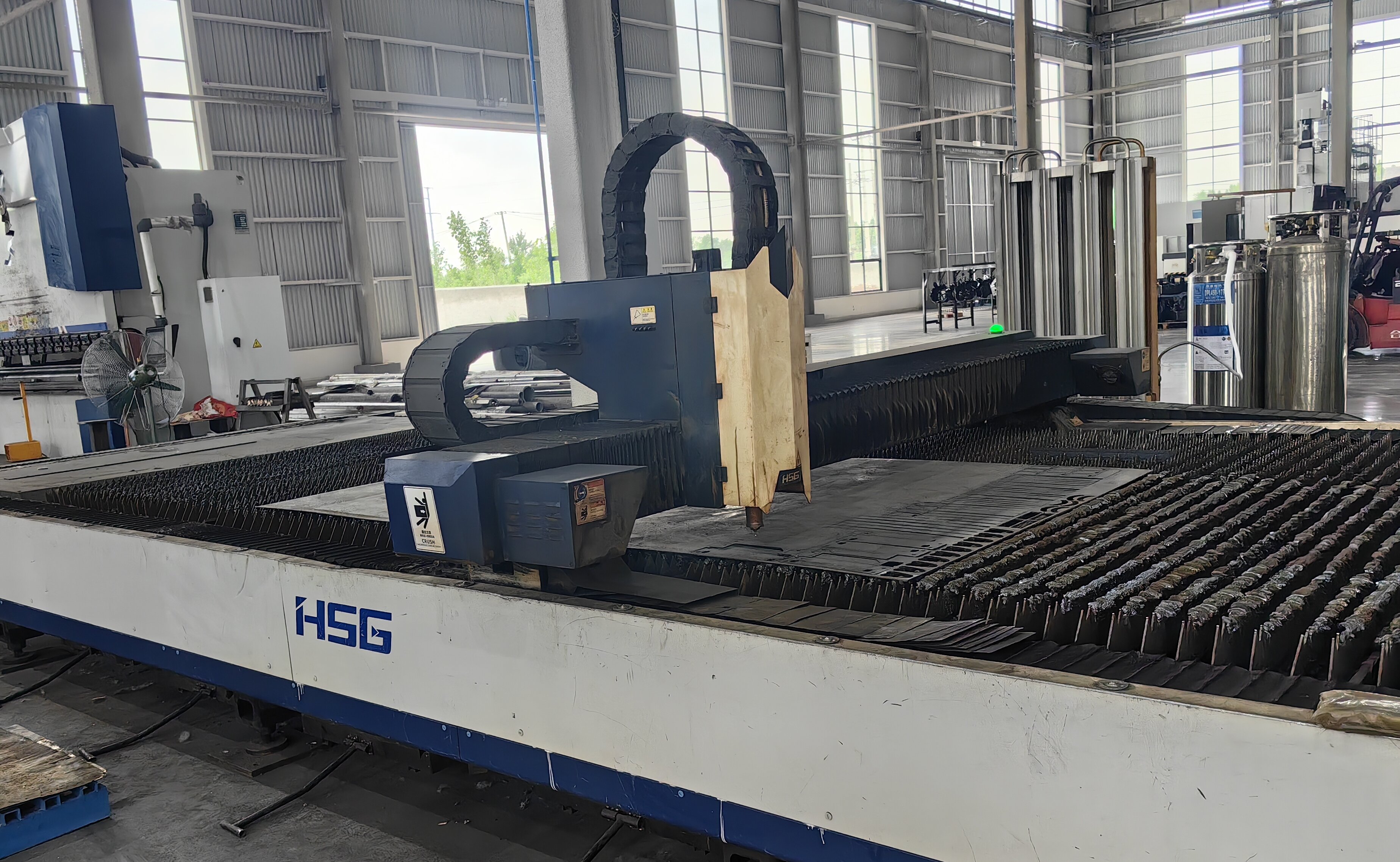
Laser cutting machine used in furnace fabrication at NORSEN.
Step 4: reserve the capacity slot and confirm commercial milestones
With 3–5 sets monthly capacity and a 1-unit MOQ, a single furnace still competes for a production slot. The buyer should confirm the start date of the 150-day lead time, what event triggers it, and how engineering changes affect the schedule. The order should also state the payment schedule and the acceptance milestones. Payment terms are contract terms; if a project uses a 50% advance payment, tie that release to an agreed milestone such as engineering freeze or material start, and record it in the order. The same discipline applies to any other percentage.
A written milestone table is more useful than a general delivery promise. It can list the specification freeze, commercial release, production start, in-factory pre-acceptance, 100% pre-shipment test, shipment release, installation and on-site final acceptance. Each milestone should have an owner, a required input and a completion record.
Step 5: approve the build specification and inspection plan
The build specification should identify the exact model and type, not only the product family. For the multi-purpose furnace and atmosphere furnace line, the model families are RTQ, TQ, SHQ and DHQ, with types RTQ-10, RTQ-17, RTQ-25, TQ-10, TQ-17, TQ-25, SHQ-10, SHQ-15, SHQ-25, DHQ-10, DHQ-15 and DHQ-25. The contract should also state the materials where relevant; the product unit lists Q235, SS304 and SS310.
The inspection plan should connect the process requirements to observable checks. It can cover the SiC muffle structure, chain dual drive, oil tank agitator motors, heating elements, atmosphere control, over-temperature protection, over-current protection and gas heating. If the buyer's quality system requires standards-based qualification, the applicable standard should be agreed before the order, not after shipment.
Step 6: schedule the in-factory pre-acceptance
If the contract includes an in-factory pre-acceptance, place it before the 100% pre-shipment test so that open items can be closed while the equipment is still in the factory. The agenda should follow the approved specification, utility list, safety protections and operator interface. Record every punch-list item, the responsible owner and the close-out evidence.
The purpose is not to repeat the supplier's internal inspection. It is to give the buyer a documented review point before shipment. For a smart-manufacturing project, this is also the right time to confirm automation interfaces, control logic and the information the plant needs for commissioning.
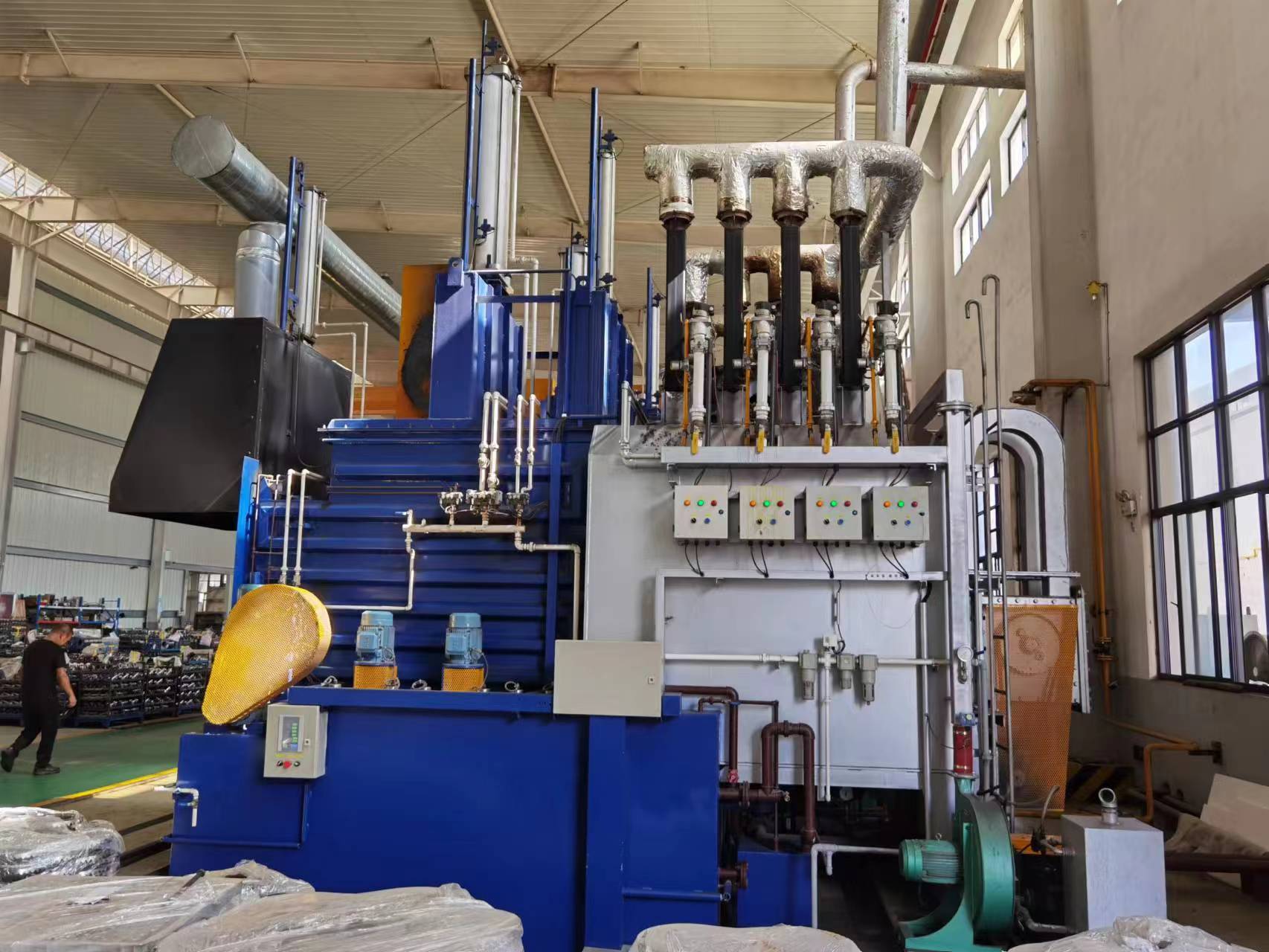
RTQF/TQ furnace configuration image supplied by NORSEN.
Step 7: verify 100% pre-shipment testing and release documents
NORSEN's quality-control fact is 100% pre-shipment test. For the buyer, that means the shipment release should be tied to test completion and the agreed acceptance items. Ask for the test record, the model and type identification, the safety-protection check and any open-item close-out. If the project requires temperature uniformity surveys or other standards-based checks, confirm the method and acceptance criteria in the purchase order.
This is also the point to confirm packing, shipping marks, documentation and spare-parts lists. A furnace that is technically ready but poorly documented can still slow down installation and final acceptance.
Step 8: plan shipping, installation and on-site final acceptance
NORSEN's export markets include Russia, Belarus, Southeast Asia, the Middle East region and Taiwan Province of China. Shipping and site conditions vary by destination, so the project schedule should include transport, customs clearance, foundation work, utility connection, commissioning and operator training. Plan on-site final acceptance after installation and commissioning, using the same agreed checkpoints where applicable.
NORSEN provides free remote technical assistance. That support can help with troubleshooting and commissioning questions, but remote assistance does not replace the site acceptance plan. The buyer should confirm network access, documentation language, contact roles and any additional service scope in the contract.
Step 9: ramp up with spare parts and service visibility
After acceptance, the focus shifts to stable operation and maintenance. The supplied image set includes a spare parts factory warehouse, which is relevant to the buyer's spare-parts planning question. The buyer should ask for the recommended spare-parts list, maintenance intervals and documentation package. The company profile also states a focus on reducing energy consumption and improving production efficiency; buyers should treat these as design goals and verify actual performance through the agreed tests and operating records, not as guaranteed savings.
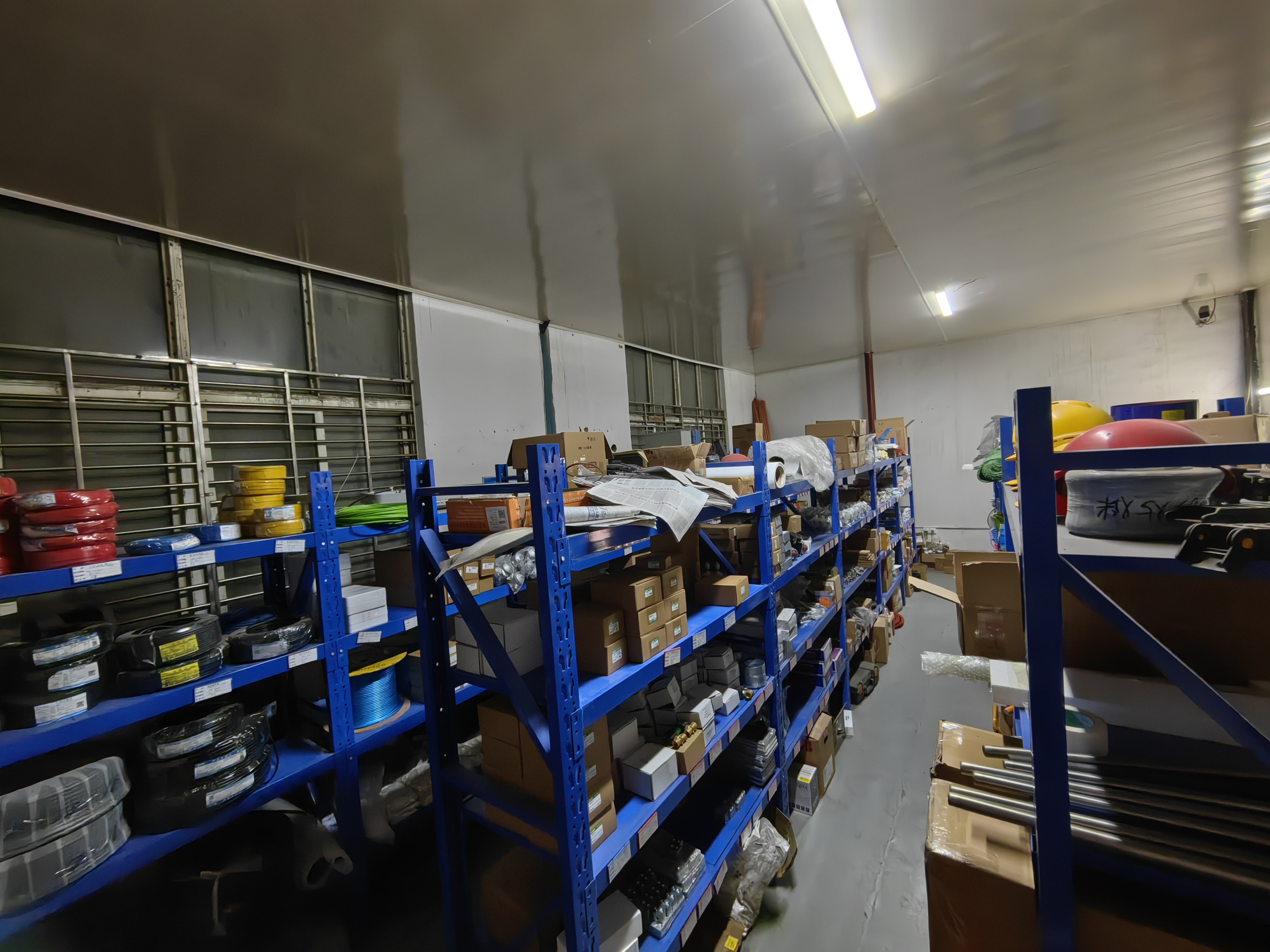
Spare parts factory warehouse at NORSEN.
Use cases: where the 150-day timeline matters most
The supplied application content connects the equipment to metal parts carburizing and quenching projects that increase hardness and toughness. It lists automotive, agricultural machinery, military industry, robots, bearings, hardware and sewing machines as applicable industries, and it states that the application scenario is common in China and Russia. Gear processing is also included in the project type.
For an automotive or agricultural parts plant, the furnace is often linked to a production ramp. If the furnace arrives late, the heat-treatment step can become the constraint for the whole line. For a gear manufacturer, the furnace specification must match the gear family and the required process sequence. For a commercial heat-treatment operator, capacity planning and changeover flexibility are central. In each case, the 150-day production window should be matched to the plant's own readiness plan.
Smart-manufacturing buyers also evaluate automation. NORSEN's application data states an automated operation mode, and the product unit lists an intelligent atmosphere control system. The degree of automation is a customization item, so the buyer should define the required level before the order. That avoids treating automation as an afterthought during commissioning.
FAQ: planning a 150-day heat treatment furnace order
Is NORSEN ISO9001 certified?
Yes. NORSEN Thermal Technology (Jiangsu) Co., Ltd. has obtained ISO9001 quality management system certification. That certification supports quality management discipline, but it does not by itself guarantee a specific furnace performance result. Model-specific tests, site acceptance and any required standards qualification remain separate checks.
What can NORSEN customize under ODM?
NORSEN states ODM production mode and customization of the effective size of the equipment, the degree of automation and the performance requirements of the equipment. These three items should be written into the technical brief and approved before fabrication. The buyer should also confirm the exact model and type, such as the RTQ, TQ, SHQ or DHQ family and the specific type within that family.
What is the minimum order quantity?
NORSEN states a 1-unit MOQ. A single furnace can be ordered, but it still requires a capacity slot because monthly capacity is 3–5 sets. The MOQ fact should not be read as an instant-availability statement.
How should buyers interpret the 3–5 sets monthly capacity?
Treat it as a capacity-planning input. It means the supplier's monthly output is finite, so the buyer should confirm the slot and the start date of the 150-day lead time. The capacity figure does not by itself guarantee a shipment date for a particular configuration.
How should payment and acceptance milestones be structured?
Payment percentages and acceptance responsibilities are contract terms. If a project uses a 50% advance payment, link that release to an agreed milestone such as engineering freeze or material start. Include an in-factory pre-acceptance where required, then the 100% pre-shipment test, shipment release, installation and on-site final acceptance. Record each milestone in writing.
What pre-shipment quality check is specified?
NORSEN states 100% pre-shipment test. The buyer should tie shipment release to the test record and the agreed acceptance items. If the project requires standards-based checks, such as a temperature uniformity survey under ASTM A991/A991M or qualification under AMS 2750 or CQI-9, confirm the method and criteria before the order.
What after-sales support is available?
NORSEN states free remote technical assistance. The buyer should plan remote access, documentation and a named technical contact. Any additional service scope, spare-parts commitment or on-site support should be confirmed in the contract.
What does the 150-day lead time include?
NORSEN states a 150-day typical production lead time. It is a production lead-time fact, not a total project duration. Shipping, customs, site works, installation, commissioning and final acceptance should be planned separately and confirmed in the contract. If you are planning a furnace order, review the approved NORSEN catalog or contact the team through the official website to discuss the process, site and capacity slot.
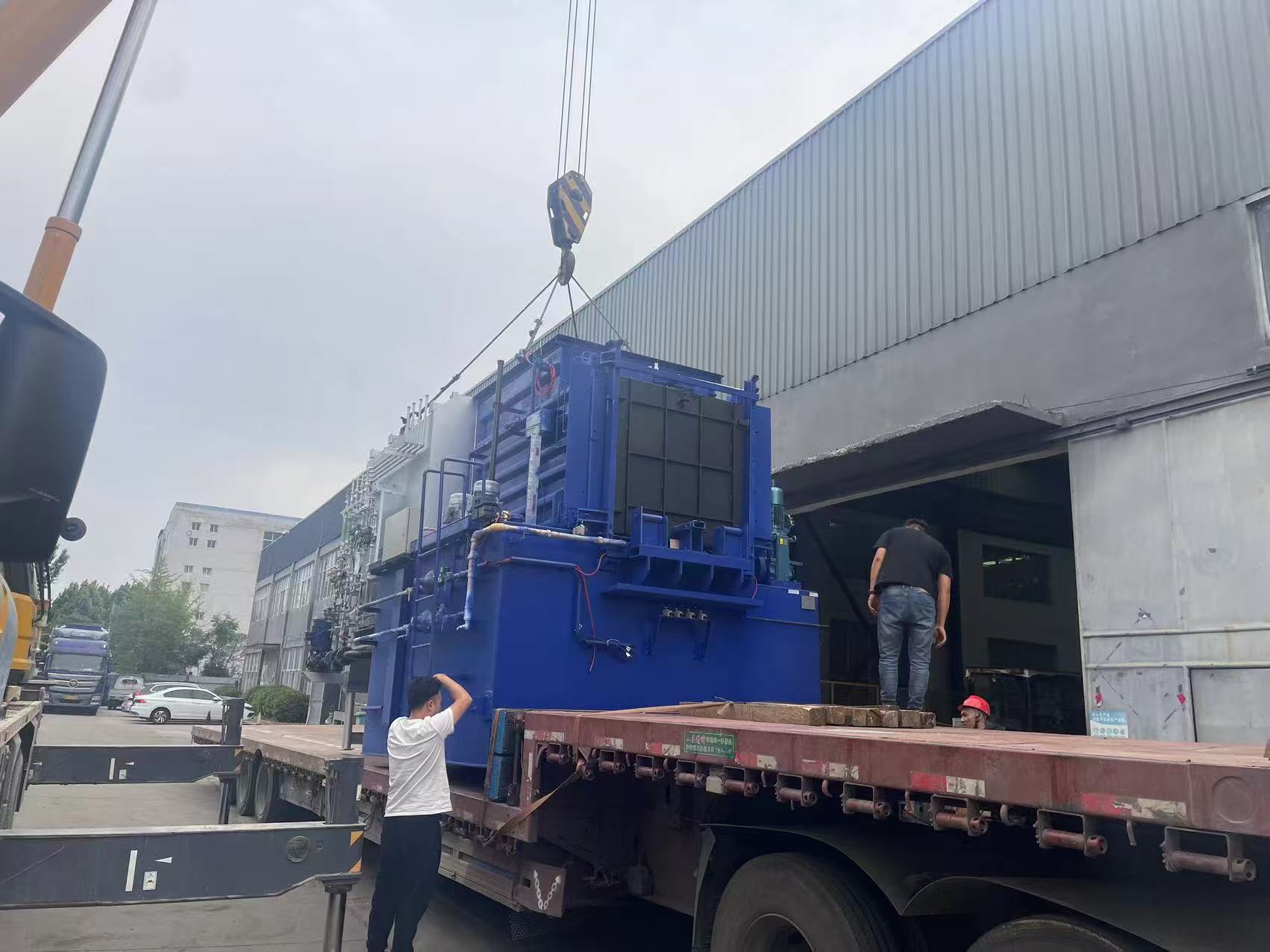
NORSEN furnace shipment prepared for export.
For buyers who need a starting document before the technical meeting, the public NORSEN brochure is available here: NORSEN product brochure. Use it to prepare the process, site and capacity questions that should be settled before the 150-day production window begins.
Conclusion: the 150-day order is manageable when the buyer plans the full sequence
The verified NORSEN facts give a clear planning frame: 150-day typical production lead time, 1-unit MOQ, 3–5 sets monthly capacity, ODM customization of effective size, automation degree and performance requirements, 100% pre-shipment test, free remote technical assistance and ISO9001 certification. These facts do not remove schedule risk. They make the risk visible and assignable.
Smart-manufacturing buyers should use the production window to complete site readiness, freeze the ODM brief, reserve the capacity slot, agree payment and acceptance milestones, schedule the in-factory pre-acceptance, verify the pre-shipment test and prepare installation and final acceptance. When those steps are managed as one project timeline, the 150-day furnace order becomes a planned sequence rather than a waiting period.
Have Questions or Need More Details?
Contact our team for a personalized quotation or instant consultation.
Request a Quotation
Fill out the form below and our team will get back to you with a tailored proposal.
WhatsApp Direct Chat
Prefer to chat in real-time? Message us on WhatsApp for instant assistance & quick answers.
- Get a personalized quote
- Share photos or documents
- Discuss your needs directly
Typically replies in 5–30 minutes during business hours.