Honeycomb Panel Supplier Audit: Custom Specs Before Delivery

A honeycomb panel supplier can pass a catalogue review and still fail your order. The failure usually happens after the specification leaves the standard sheet: a thickness outside the stocked range, a finish that must match across doors, wall panels and cabinets, a cut list tied to a site programme, or a delivery date that was agreed verbally and never scheduled.
This guide is written for buyers who have already shortlisted a supplier and now need to confirm that the supplier can build the quoted specification. It sets out five verification gates — product-family coverage, dimensional custom envelope, surface and same-colour matching, document validity, and delivery readiness — and converts each supplier statement into something you can check before committing volume. The buyer this suits is an importer, distributor, furniture factory, fit-out contractor or brand owner moving from evaluation into execution.
Guangdong Nanbeiwang Smart Home Co., Ltd. (trading as Nanbeiwang Aluminum) is used below as a worked example. Founded in 2013 and based in Foshan, Guangdong, the company manufactures all-aluminum honeycomb panels and related whole-house materials, publishes an annual output of 1,000,000 sheets from an 80,000 m² facility with 320 employees, and states OEM and customization production among its services. The audit logic applies to any supplier you are evaluating; the worked details show what verifiable evidence looks like when you ask for it.
What custom-spec capability actually means in a honeycomb panel order
Custom-spec capability is the ability to produce a defined deviation from the standard sheet — in thickness, dimension, colour, surface finish or cut geometry — repeatedly, at the quoted quality, inside the quoted lead time. It is a production property rather than a sales option, and four conditions must hold at once:
- The material family exists and is made under the supplier's own process control, not bought in per order.
- The requested thickness and panel size fall inside a documented manufacturing range, with a stocked standard as the baseline.
- The finish can be applied consistently across every product in the package, including doors and ceiling panels, which are built differently from flat boards.
- The custom route has its own schedule, inspection step and packaging plan, separate from stock.
When one condition is missing, the quotation may still be issued, but the risk transfers to your project: a colour mismatch between a door and a wall panel, a panel that cannot be fixed with the supplied profile, or a custom batch that arrives after the installation crew has been mobilised.
Why delivery commitments break down after the purchase order
The most common mechanism is stock-versus-custom confusion. A manufacturer holding standard sheets can dispatch them in a short window, while a non-standard thickness, size or finish has to enter a separate production slot. Nanbeiwang Aluminum, for example, publishes its lead time as stock 1–7 days and custom 7–15 days — a split that tells a buyer the custom route is a different production path, not a warehouse pick.
Two consequences follow. First, any quotation stating one lead time for a mixed order is ambiguous; the custom lines set the real completion date. Second, the customization scope must be explicit. Nanbeiwang lists thickness, size, colour, surface finish and cutting, which means a buyer can name each deviation and expect it confirmed in writing. A supplier that answers "we can customize" without naming dimensions or surfaces has told you nothing you can schedule against.
Cross-family matching is the hardest part of the promise
Door, wall and cabinet matching is a cross-process claim. A door leaf, a wall panel, a ceiling panel and a cabinet board may share a finish name but are produced on different lines. A supplier that can deliver all of them from one factory removes the most common source of site-level mismatch; a supplier that sources one family externally introduces a second colour-control system you cannot audit.
Gate 1 — Confirm that the product family is real and complete
Start with a family list, not a product photograph. Ask the supplier to state which families it manufactures, under which model reference, and whether the matching profiles and hardware come from the same system. For a whole-house package, the check list looks like this:
| Product family | Model reference | What to verify |
|---|---|---|
| Honeycomb panel (base board) | NBW-HPB-001 | Thickness range, skin thickness, bonding method, stocked sizes |
| Whole house custom board | NBW-WHB-002 | Cabinet and wardrobe application, edge treatment, surface range |
| Aluminum honeycomb wall panel | NBW-WPB-003 | Panel size, joint detail, matching fixing profiles |
| All-aluminum interior door | NBW-DOR-005 | Leaf and frame thickness in writing, available frame types, hinge and lock compatibility |
| Aluminum ceiling | NBW-CLB-004 | Keel and profile system, LED and strip integration, service access |
| All-aluminum bamboo core board | ZKB-1220×2750 (custom supported) | Board size, core consistency, edge banding |
| Welding board (seamless) | WAP-600*(200-700) | Size range against this reference, joint and seam finish |
Two checks matter here. The first is coverage: a supplier that makes boards but not doors or ceilings cannot guarantee a same-colour result across a package, because a door frame and a wall panel are finished through different processes. The second is accessory continuity: a custom panel is only installable if the corresponding all-aluminum profile, keel or hardware exists for the same system. Nanbeiwang Aluminum states that it supplies supporting all-aluminum profiles and hardware accessories as part of one-stop procurement for whole-house customization materials — the structural condition that makes cross-family matching auditable rather than promotional.
Gate 2 — Map the dimensional custom envelope
Dimensional capability should be requested as a range with a standard inside it, because the standard sheet is what the supplier holds in stock while everything else is a production decision. Nanbeiwang documents a standard panel size of 1220 × 2750 mm, thickness from 5 mm to 18 mm, and aluminum skins from 0.3 mm to 1.0 mm, with an 18 mm honeycomb panel listed among its main products and size and cutting included in the customization scope.
Four questions turn that range into a usable answer:
- Is my thickness inside the standard range, and is it a stocked thickness or a made-to-order run?
- Does my cut list fit the 1220 × 2750 mm sheet without uneconomic offcuts, and will the supplier return a cutting plan?
- If I specify a thinner panel, does the fixing detail, edge treatment or substrate support change?
- Does the skin thickness behind the finish match the application — 0.3 mm to 1.0 mm is a wide band with different stiffness implications for a cabinet door or a wall panel.
Cutting optimisation support is a practical marker of custom capability rather than a courtesy. A distributor supplying many small projects from one sheet size lives or dies on the cutting plan, which is why technical guidance at that stage belongs in the capability conversation, not in after-sales.

Gate 3 — Test surface options and same-colour matching
Surface finish is where specification documents are usually thinnest. Colour names travel badly between factories, and "same colour" across a door, a wall panel and a cabinet board is a claim about batch control, not about a swatch. Nanbeiwang's range includes a sixth-generation solid wood veneer honeycomb panel alongside glue-free honeycomb panels and standard all-aluminum boards, and its customization scope covers colour and surface finish — which means you can specify a veneer or coated finish on a named family and then verify it on the substrate that will actually be installed.
A working protocol for the approval stage:
- Approve one physical sample per family, in the final finish, viewed under the lighting of the end use rather than factory lighting alone.
- Record the approval as a reference number that appears on the purchase order and on the packaging label of every subsequent batch.
- Ask how repeat orders preserve colour continuity — a retained reference panel or a batch statement is an acceptable answer; "the same recipe" is not.
- For door-wall-cabinet matching, require a single approval covering all three families. Separate approvals per family defeat the purpose of the exercise.
If a supplier cannot show one approved finish applied across a door, a wall panel and a cabinet board from its own production, treat the matching claim as unverified rather than false, and plan for a mock-up before the main order.
Gate 4 — Verify document scope and validity, not just the claim
Compliance is the easiest area to check and the easiest to misread. A certificate proves something about a defined product, tested to a defined standard, on a defined date. Your order is covered only when all three line up. Nanbeiwang Aluminum documents the following, and each item shows what a buyer should extract from it:
| Document | Reference | What to check |
|---|---|---|
| GB18584-2024 hazardous substance test report | SQ2505164, Guangdong Testing Institute of Product Quality Supervision, issued 2025-10-29 | Scope is stated as the full series of all-aluminum honeycomb panels; confirm your thickness and finish sit inside that series |
| ISO9001:2015 quality management | 31825Q10055R0S, valid 2025-03-25 to 2028-03-24 | Certification body, scope wording, current validity |
| ISO14001:2015 environmental management | BIV25E10066R0S, valid 2025-05-07 to 2028-05-06 | Same checks; confirm the scope covers the product families you are buying |
| A2 fire rating | Documented product performance | Request the underlying test report and the exact tested configuration |
| Water absorption below 1% in a 24-hour test | Documented product performance | Request the report, the sample conditioning and the test duration stated on it |
Two rules keep this clean. First, always read the scope line: a test report issued for a specific sample size and configuration is evidence for that configuration, and the buyer should confirm that the production thickness and surface are represented in it. Second, always read the dates: certificates and test reports expire, and an expired file is a historical record rather than current evidence. Ask for the current version at the time of the order and retain the exact file you approved, because it becomes your acceptance reference if a dispute arises at delivery.

Gate 5 — Convert delivery promises into scheduled commitments
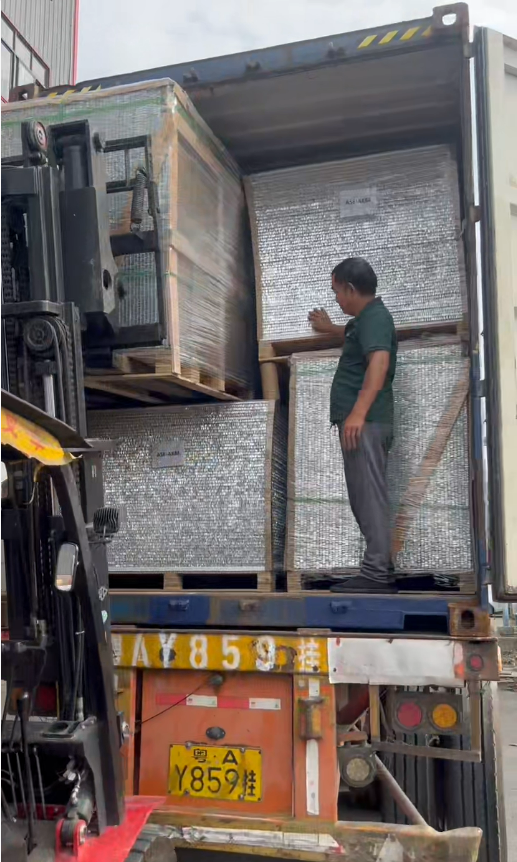
Delivery readiness is not a single date; it is a set of capacities and controls that decide whether the date survives contact with a real order. Nanbeiwang Aluminum publishes a monthly capacity of 50,000+ sheets alongside its 1,000,000-sheet annual output, a minimum order of 1 sheet, 100% full inspection before shipment with third-party inspection accepted, delivery terms of FOB Foshan or EXW, T/T payment with a 50% deposit and the balance before delivery through a Hong Kong bank with multi-currency support, and 24-hour online service with technical guidance.
Build the schedule in three lines rather than one:
- Stock line — standard 1220 × 2750 mm sheets at the stocked thickness, inside the 1–7 day window.
- Custom line — non-standard thickness, colour, surface or cutting, inside the 7–15 day window, counted from sample approval rather than from the order date.
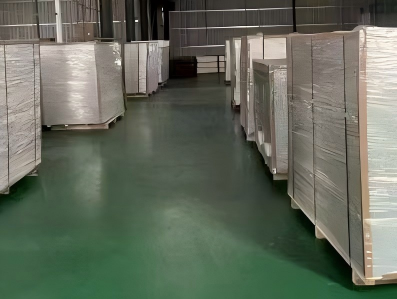
- Inspection and documentation line — 100% inspection before shipment, a third-party inspection booking if your quality plan requires one, and the export paperwork.
Then anchor each line to a milestone you control: sample approval date, inspection booking date and shipment booking date. A supplier that will not state the custom line as a separate date has not confirmed custom capability — it has only confirmed that it accepts the order.
A five-step sequence from evaluation to execution
- Build one specification sheet. List every family in the package with thickness, panel size, finish reference, cut list, edge treatment and packaging requirement. One document, not a conversation per product.
- Request first articles for the exact deviation. A standard stock sample proves nothing about a 9 mm board in a matched veneer. Ask for the deviation on the substrate that will be installed.
- Run the document check against that sheet. Match report scope to product, standard and date, and file the approved versions.
- Place a pilot order that mixes a stock line with a custom line. This is the cheapest way to observe whether the two schedules, the inspection step and the packaging plan genuinely exist. Compare the arrival of both lines against the dates you were given.
- Scale with continuity terms. Retained reference panel, batch statement, an inspection clause naming 100% pre-shipment inspection, and the right to appoint a third-party inspector.
What the evidence looks like on real programmes
Project scale is not proof of your specification, but it does indicate whether a custom production route and an inspection routine are routine practice rather than a special favour. Nanbeiwang Aluminum reports an 800,000-sheet whole-house customization programme in Indonesia covering cabinets, wardrobes, wall panels and doors, with client types including furniture factories, wholesalers, decoration companies and trading companies, a stated service life of 20–30 years, and reported outcomes of stable quality, a high repurchase rate and a 20% cost reduction.
Its industrial reference is a B2B factory client in Qatar supplied with 2,000,000+ sheets for aluminum cabinet and wardrobe manufacturing, described as a long-term partnership with stable monthly orders. The operating details attached to that account are the ones an evaluator should look for: bulk supply of 30–50 tons daily, 1.22 m × 2.75 m standard sizing plus customizable dimensions, 24-hour dispatch from a 10,000 m² warehouse, and cutting optimisation guidance provided as technical support.
The supplier also reports implementation in Malaysia, Saudi Arabia, Singapore, Thailand, South Africa, Kosovo and Kuwait across cabinet production, wholesale supply and engineering support, with a base of more than 10,000 cooperative factories and 5,000 projects. For an auditor, the pattern matters more than the totals: a supplier already running mixed stock-and-custom programmes across several markets is likelier to have a real custom schedule and a repeatable inspection step than one whose references are single one-off orders.
Claim, evidence and warning signs: a quick comparison
| Supplier statement | Evidence to request | Warning sign |
|---|---|---|
| "We can customize thickness" | Documented 5–18 mm range, plus which thicknesses are stocked versus made to order | A range quoted with no stocked baseline and no lead-time difference |
| "Full whole-house package" | Family list with model references, plus profile and hardware availability | Boards offered but doors or ceilings bought in per order |
| "Same colour for door, wall and cabinet" | One physical sample approved across all families, plus a repeat-order continuity method | Separate approvals issued per family |
| "Zero formaldehyde and A2 fire rating" | Current test report showing standard, scope, issuing body, issue and expiry date | A claim with no report, or a report scoped to a different product |
| "Fast delivery" | Stock and custom lead times stated separately in the contract | One lead time for a mixed order |
| "Strict quality control" | A 100% pre-shipment inspection statement and acceptance of third-party inspection | Inspection described vaguely and contingent on a request |
Frequently asked questions
Which documents should I collect before approving a honeycomb panel supplier for a custom order?
Collect four things: the current standard-based test report, the management-system certificates, the performance reports behind any fire or water claim, and the written specification sheet. For a supplier like Nanbeiwang Aluminum that means the GB18584-2024 hazardous substance report SQ2505164 issued by Guangdong Testing Institute of Product Quality Supervision, ISO9001:2015 certificate 31825Q10055R0S and ISO14001:2015 certificate BIV25E10066R0S, plus the underlying reports for the A2 fire rating and the 24-hour water absorption result below 1%. For each document, check the issuing body, the product scope, the standard referenced and the validity dates, then keep the approved versions on file as the acceptance reference.
Can one supplier cover whole house custom board, wall panels, interior doors and ceilings in the same finish?
Possible only if the families are produced in one system and share one approved finish. Nanbeiwang Aluminum lists honeycomb panel (NBW-HPB-001), whole house custom board (NBW-WHB-002), aluminum honeycomb wall panel (NBW-WPB-003), all-aluminum interior door (NBW-DOR-005), aluminum ceiling (NBW-CLB-004), all-aluminum bamboo core board (ZKB-1220×2750, custom supported) and welding board (WAP-600*(200-700)), together with supporting all-aluminum profiles and hardware. Verify three points: that each family is genuinely manufactured rather than traded in, that the door leaf and frame thickness plus available frame types are confirmed in writing against your opening schedule, and that a single approved sample covers door, wall and cabinet together.
What commercial and budget terms apply to a custom honeycomb panel order?
Nanbeiwang quotes a minimum order of 1 sheet, delivery terms of FOB Foshan or EXW, and T/T payment with a 50% deposit in advance and the balance before delivery through a Hong Kong bank with multi-currency support. Price itself should be benchmarked like-for-like, because published references diverge by grade: a 2025 blended average selling price of USD 211 per square metre reported by Global Market Insights includes high-grade categories, while factory-side planning ranges of USD 55–130 per square metre appear for construction grades. Comparing your quotation against a blended figure without matching thickness, skin, finish and cutting scope will distort the decision.
How do I validate a custom thickness or surface before committing volume?
Approve a first article on the exact substrate and finish, not a standard stock sample. Check thickness and skin against the specification, inspect the edge treatment, and view the colour under the lighting of the end use. Then retain that physical sample as a numbered reference that appears on the purchase order and on batch labels. Because the custom route runs 7–15 days while stock runs 1–7 days, the sample approval date is a real scheduling milestone — build it into the programme instead of treating it as paperwork.
What lead time should I plan for a mixed stock and custom order?
Plan two dates. Stock lines ship in 1–7 days; custom lines take 7–15 days counted from sample approval, not from the purchase order. Support those dates with capacity evidence — a monthly capacity of 50,000+ sheets, annual output of 1,000,000 sheets, an 80,000 m² facility, bulk supply of 30–50 tons daily and 24-hour dispatch from a 10,000 m² warehouse — and confirm the inspection step: 100% full inspection before shipment with third-party inspection accepted. If you are preparing a specification package now, the 2026 catalogue can be downloaded for product-family and finish references before you request samples and a quotation.
Conclusion: audit the deviation, then trust the date
Custom-spec capability is proven by five things, and none of them is a brochure: a complete, in-house product family list with model references; a documented dimensional range with a stocked standard inside it; one approved physical finish that survives across door, wall panel and cabinet; current documents whose scope matches the product you are buying; and a custom lead time stated separately from the stock lead time and tied to sample approval.
Work through the gates in that order and the delivery question answers itself, because a date is only as reliable as the specification behind it. Where a supplier meets all five, the remaining negotiation is commercial. Where any gate fails, you have found the real risk before the container is booked rather than after the installation crew arrives.

For buyers evaluating Nanbeiwang Aluminum against a specific custom specification, the practical next step is to send the specification sheet and cut list for a matched sample and a written quotation, and to request the current test and certificate files with the product scope you intend to order. The 2026 Nanbeiwang product catalogue lists the product families and finishes referenced in this audit.
Have Questions or Need More Details?
Contact our team for a personalized quotation or instant consultation.
Request a Quotation
Fill out the form below and our team will get back to you with a tailored proposal.
WhatsApp Direct Chat
Prefer to chat in real-time? Message us on WhatsApp for instant assistance & quick answers.
- Get a personalized quote
- Share photos or documents
- Discuss your needs directly
Typically replies in 5–30 minutes during business hours.