Honeycomb Panel vs. Solid Wood Board: Fire, Water and Formaldehyde Compared
Honeycomb Panel vs. Solid Wood Board: Fire, Water and Formaldehyde Compared
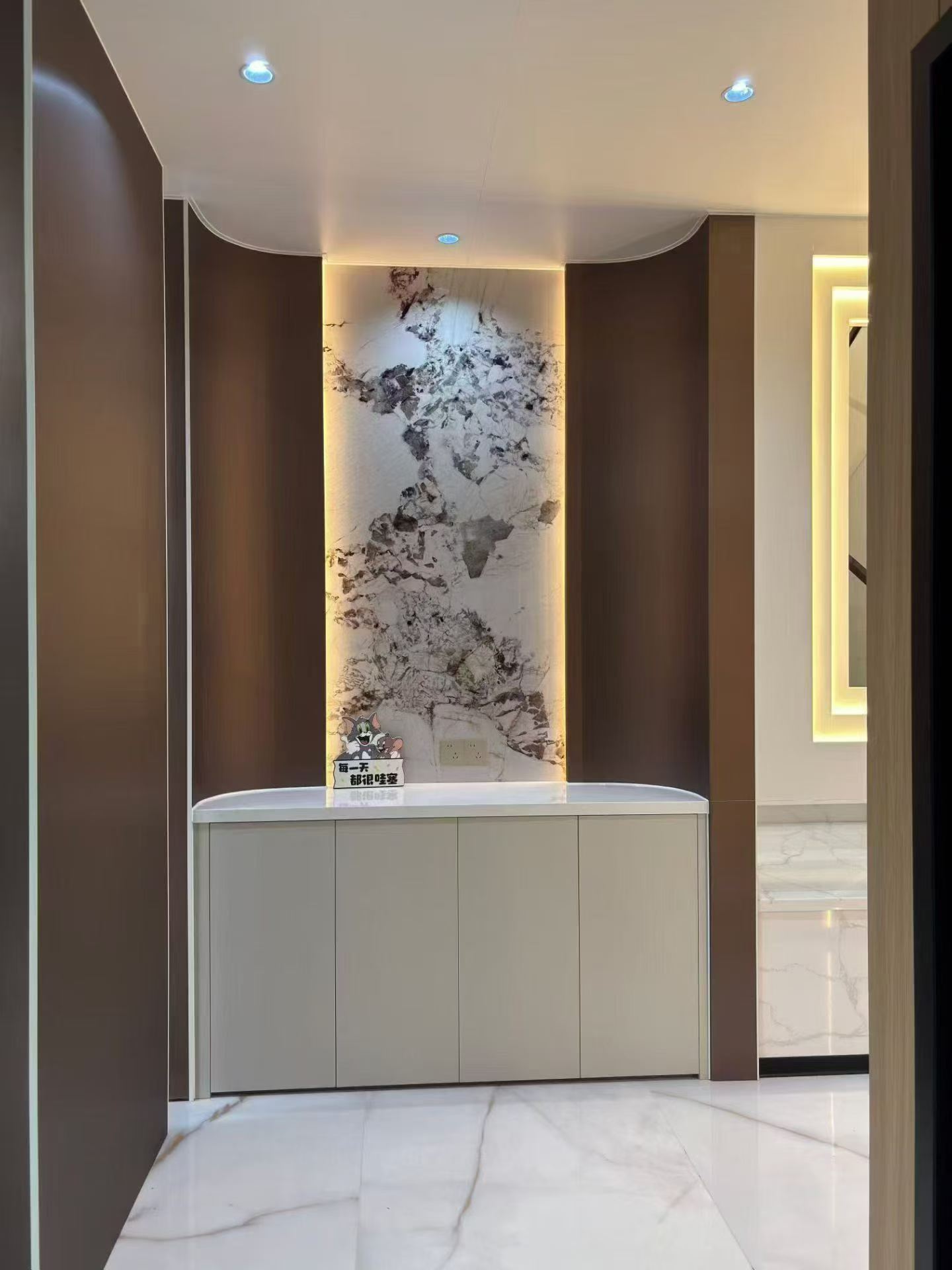
Aluminum honeycomb panels and solid wood boards are both specified for interior construction and decoration, but they stop being interchangeable the moment fire classification, moisture exposure and formaldehyde limits enter the specification. The practical decision rule for buyers is this: specify an all-aluminum honeycomb panel where non-combustibility, waterproofing and zero-formaldehyde documentation are the binding constraints, and specify solid wood board where natural grain, refinishability and traditional craft value outweigh those constraints. Nanbeiwang Aluminum — the brand of Guangdong Nanbeiwang Smart Home Co., Ltd., founded in 2013 in Foshan, Guangdong — manufactures glue-free honeycomb panels rated A2 for fire performance, with water absorption below 1% in a 24-hour test and zero formaldehyde declared under the GB18584-2024 hazardous substance test report SQ2505164.
This guide is written for the evaluation and execution stage of a project, when a specification is being converted into purchase orders. It compares the two materials across the six factors that decide most board selections — fire resistance, moisture behavior, formaldehyde and restricted substances, thickness and panel format, surface finish, and customization with lead time — and it separates what can be proven with test reports from what is usually asserted without evidence.
Problem Definition: Buyers Compare Price First and Compliance Second
Most material comparisons open with cost per square meter. Project reality inverts that order. A board that cannot be documented for fire class, moisture behavior or emissions never reaches the cost conversation, because it fails at submittal, at inspection, or two years later in a bathroom wall.
Fire classification is the first filter. In Europe, aluminum honeycomb panels are evaluated under EN 13501-1, where Class A1 or A2 (non-combustible) is the top requirement for high-end architecture (Aluwedo Industry Insights). In North America, ASTM E84 surface burning characteristics is the reference test for flame spread and smoke development (ASTM International). The Nanbeiwang all-aluminum honeycomb panel carries an A2 fire rating, which places it in the non-combustible band that many interior specifications require.
Moisture is the second filter, and it is where the two materials diverge most visibly in daily use. Kitchens, bathrooms, laundry rooms, basements and coastal buildings hold humidity against a panel face for years. The honeycomb panel is tested at a water absorption rate below 1% in a 24-hour test. Solid wood behaves differently by nature: it is hygroscopic, taking on and releasing moisture with ambient conditions, which is why solid wood installations depend on sealing, correct clearances and reasonably stable indoor humidity.
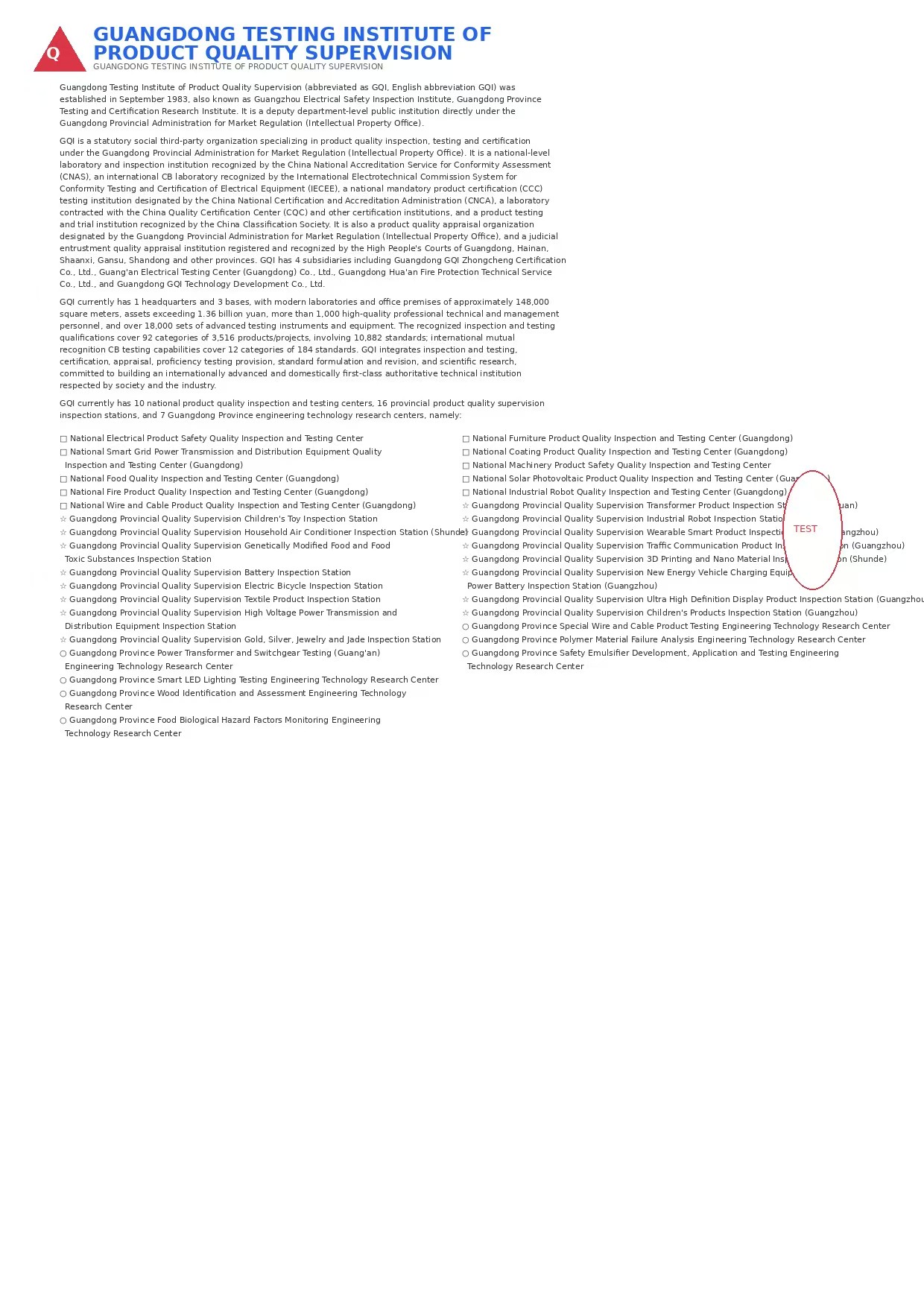
Formaldehyde and restricted substances are the third filter, and this one is document-driven rather than argument-driven. A compliant supplier should produce market-specific reports on request. Nanbeiwang's documentation set includes the GB18584-2024 hazardous substance test report SQ2505164 issued by the Guangdong Testing Institute of Product Quality Supervision for the full series of all-aluminum honeycomb panels, an earlier formaldehyde emission test report (SQ2306041 / UNS7332) for aluminum cellular board under GB 18584-2001, and an SGS RoHS report (CANEC2308826401) covering cadmium, lead, mercury, hexavalent chromium, PBBs and PBDEs on an 18mm PETG aluminum honeycomb panel.
The remaining filters are practical rather than regulatory: whether the thickness range matches the hardware, whether the panel format suits the wall or cabinet run, whether doors, walls and cabinets can be matched in one color, and whether the supplier can repeat the same specification on the second and fifth order. That last point is where capability questions — OEM service, monthly capacity, inspection regime and lead time — become part of the material comparison instead of a separate supplier exercise.
Industry Background: Why Aluminum Honeycomb Panels Moved Into Mainstream Fit-Out
Aluminum honeycomb is no longer a niche aerospace material temporarily borrowed by interiors. The global aluminum honeycomb panels market was estimated at USD 3.57 billion in 2024, driven by lightweight construction and aerospace demand (Global Market Insights, via Vertex AI Search). Published estimates differ by scope — one alternative 2024 figure places the market at USD 2.1 billion (Strategic Market Research) — largely because some studies count honeycomb core material only while others count finished sandwich panels. For a buyer, the useful signal is the direction and the application mix, not the absolute number.
Within that market, architectural and building panels form the largest application segment for aluminum honeycomb, supported by the material's high strength-to-weight ratio (Market Research Future). The supply side is concentrated in China: aluminium structures exports from China reached USD 5.55 billion in 2024, with major destinations including Australia, Hong Kong and the United States (OEC, The Observatory of Economic Complexity). For importers and distributors, that means most honeycomb panel sourcing conversations happen with Chinese manufacturers, and documentation quality becomes a primary differentiator between them.
Regulatory framing is what makes a comparison concrete. Europe classifies reaction-to-fire performance under EN 13501-1, where A1 or A2 is the top band for high-end architecture (Aluwedo Industry Insights). North America relies on ASTM E84 for surface burning characteristics (ASTM International). A buyer comparing a honeycomb panel with a solid wood board should first ask which classification the project authority requires, then ask which document proves it.
The technical credibility of the material comes from aerospace. Aluminum honeycomb cores were developed to cut weight while retaining stiffness, and Hexcel Corporation is the globally recognized leader in high-performance aluminum honeycomb core materials, particularly for aerospace and defense applications (Dataintelo). Interior-grade honeycomb panels apply the same sandwich principle — thin aluminum skins bonded to a honeycomb core — with decorative surfaces and formats sized for furniture, wall panels and ceilings.
Detailed Solution: How an Aluminum Honeycomb Panel Answers Each Constraint
The comparison becomes manageable once each constraint is mapped to a documented product property. The sections below describe how the all-aluminum honeycomb panel — built as aluminum skins bonded to an aluminum honeycomb core through Nanbeiwang's glue-free thermal bonding process — behaves against the constraints that decide board specifications.
Fire Resistance: What an A2 Rating Changes in Specification
The Nanbeiwang all-aluminum honeycomb panel (model NBW-HPB-001) is rated A2 for fire performance. In practice, that rating is what allows a decorative panel to be specified where the code asks for limited combustibility or non-combustibility instead of a treated combustible material. The structure explains why: metal skin plus aluminum honeycomb core, with no wood fiber and no combustible foam layer inside the sandwich.
Buyers verifying the claim should request the fire classification report that applies to their market — EN 13501-1 for Europe, ASTM E84 for North America — rather than accepting a generic fire-resistance sentence. The relevant question is not whether a panel resists flame for a few seconds, but which classification band the authority having jurisdiction accepts.
Water and Moisture: Below 1% Water Absorption in a 24-Hour Test
The honeycomb panel is tested at a water absorption rate below 1% in a 24-hour test, and the wall panel series (NBW-WPB-003) is specified as waterproof, moisture-proof, anti-mildew and termite-proof. Those properties are what place the material on kitchen, bathroom, laundry and coastal project specifications in the first place.
Two execution details matter as much as the test result. The first is panel format: a 1220 × 2750 mm board with customizable sizing reduces the number of joints across a wall run. The second is connection method: wall panels and ceilings are designed for seamless splicing, which removes water-entry lines in wet zones and keeps the finished face continuous.
Formaldehyde and Restricted Substances: Zero Formaldehyde, Documented
The all-aluminum honeycomb panel is declared zero formaldehyde under GB18584-2024. The supporting documents a buyer can review include:
- GB18584-2024 Hazardous Substance Test Report SQ2505164 — issued by the Guangdong Testing Institute of Product Quality Supervision; scope covers the full series of all-aluminum honeycomb panels; report date 2025-10-29.
- Formaldehyde Emission Test Report SQ2306041 / UNS7332 — aluminum cellular board, tested against GB 18584-2001, issued by the Guangdong Testing Institute of Product Quality Supervision / National Furniture Product Quality Testing Center (Guangdong), with CNAS L0153, CMA and ILAC-MRA accreditation marks.
- SGS RoHS Test Report CANEC2308826401 — 18mm PETG aluminum honeycomb panel, tested against GB/T 26572-2011 and RoHS Directive 2011/65/EU for Cd, Pb, Hg, CrVI, PBBs and PBDEs, issued by SGS-CSTC Standards Technical Services Co., Ltd. Guangzhou Branch.
- CTC Test Report WT2025B01B02018 — glue-free aluminum honeycomb panel, peel strength and temperature resistance, tested against JC/T 2113-2012 by China National Test & Certification (CTC) / National Center for Testing of Building Materials.
- ISO9001:2015 quality management certification 31825Q10055R0S and ISO14001:2015 environmental management certification BIV25E10066R0S, issued by BELIEVE (BEIJING) CERTIFICATION CO., LTD., covering aluminum honeycomb panels for furniture, wall, ceiling and cabinet applications, valid to 2028-03-24 and 2028-05-06 respectively.
For markets outside China, these reports are technical references rather than local approvals: European buyers typically align the fire classification with EN 13501-1, North American buyers with ASTM E84, and EU importers with RoHS Directive 2011/65/EU. The documents above are the evidence base that supports those market-specific evaluations.
Structure, Thickness and Panel Size: 5–18 mm in a 1220 × 2750 mm Format
Thickness is customizable from 5 mm to 18 mm, and the wall panel series offers 5 mm, 9 mm, 10 mm and 18 mm options. Aluminum skin specifications run from 0.3 mm to 1.0 mm, with wall panel combinations of 0.3 mm, 0.48 mm + 0.2 mm, 0.65 mm + 0.2 mm and 1.0 mm. Honeycomb core cell sizes of 3x3, 4x4, 5x5, 8x8 and 10x10 are available and customizable, which lets a project trade stiffness against weight and cost.
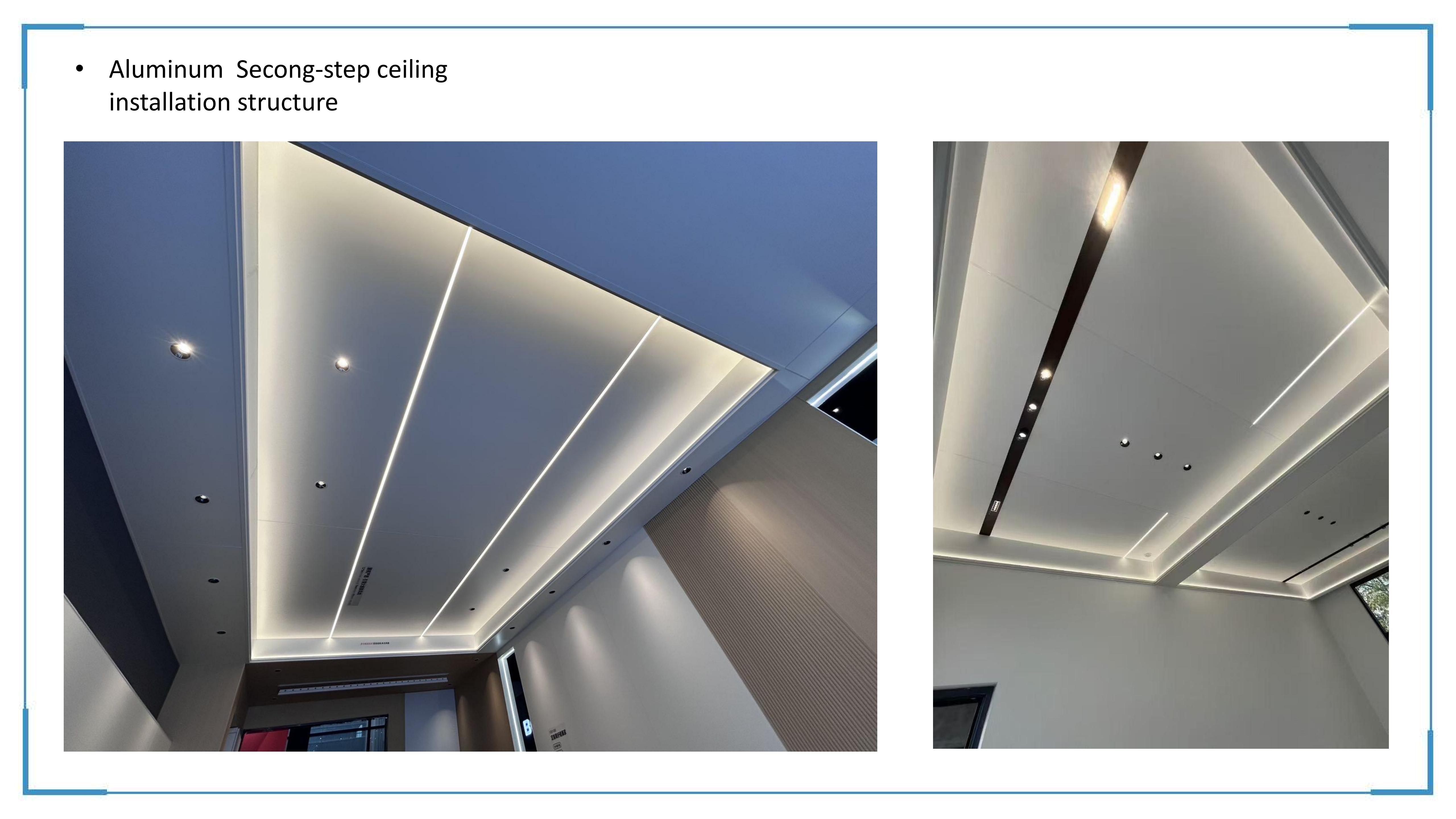
Standard panel size is 1220 × 2750 mm with customization available. For interior doors, the all-aluminum door (NBW-DOR-005) uses a 45 mm door leaf and frame with frame options of Korean 60 mm, narrow 50 mm, minimalist 25 mm, invisible 55 mm and frameless 18 mm, and a choice of honeycomb, bamboo or plywood cores. Ceiling panels (NBW-CLB-004) are produced as large-size integrated boards with seamless splicing, super high flatness and anti-sagging performance.
Surface Finishes: Wood Grain, PETG, Powder Coating and Solid Wood Veneer
Surface options for the honeycomb panel include PETG, melamine, powder coating and wood grain. The wall panel series extends the list with solid wood veneer, PETG high gloss, scratch-resistant wood grain, melamine CPL, solid color, powder coating and thermal-transfer wood grain. Interior door finishes follow the same family with PETG, wood grain and powder coating.
The practical consequence for a comparison against solid wood board is the solid wood veneer honeycomb panel: a genuine wood face carried on an aluminum honeycomb core. That configuration preserves the visual reference to wood while keeping the fire, moisture and formaldehyde performance of the metal sandwich, and it supports same-color matching across door, wall and cabinet elements in one specification.
How Solid Wood Board Performs Under the Same Constraints
Solid wood board remains a legitimate specification, and this comparison is not a contest between a good material and a bad one. Solid wood is a natural, renewable material whose grain depth and refinishability are difficult to replicate, and it can be sanded and recoated over a long service life.
The differences appear at the constraint level. Solid wood is hygroscopic: it gains and loses moisture with ambient humidity, so panels move, joints can open, and a sealing or finishing system is required to protect the surface. In sustained damp conditions — bathrooms, laundry zones, coastal buildings — that movement is the principal long-term risk. Solid wood is also exposed to termites and fungal attack unless the species or a treatment provides protection.
Formaldehyde is not intrinsic to solid lumber in the way it can be to resin-bonded panels, but many wood boards used in cabinetry and decoration are edge-glued, finger-jointed or laminated products, and their emission profile depends on the adhesive system and the supplier's process control. China's GB 18584-2001 standard sets limits for harmful substances in wood-based furniture, and comparable market rules apply in Europe and North America. The practical conclusion is the same for both materials: the claim matters less than the report behind it.
Availability is the other constraint. Solid wood formats are limited by species availability and mill capability, and large uninterrupted surfaces usually require joints. For projects that need a large, flat, joint-minimized surface — long wall runs, one-piece ceilings, tall wardrobe fronts — that becomes a design constraint rather than a defect. For smaller, feature-driven surfaces, it is often not a constraint at all.
Step-by-Step Breakdown: Running This Comparison for a Real Project
The following sequence converts a material comparison into a purchasing decision, and it works in either direction: it will confirm a honeycomb panel specification or show where solid wood board is the better fit.
- Define the binding constraint per zone. List, room by room, which requirement is non-negotiable: fire classification, sustained moisture, formaldehyde limits, load, or appearance. Wet zones and egress-related surfaces usually eliminate options before price is discussed.
- Match thickness and skin specification to the application. A 5 mm to 18 mm range covers most interior uses; 18 mm is the typical substrate thickness for cabinets, wardrobes and doors, while 5 mm, 9 mm and 10 mm suit wall panel and ceiling applications. Skin thickness from 0.3 mm to 1.0 mm and core cell size both change stiffness and weight.
- Lock the surface finish and color consistency. Decide whether the project needs PETG, melamine, powder coating, wood grain, solid color or a solid wood veneer face, and confirm that doors, walls and cabinets can be produced in the same color family.
- Verify with documents before samples. Ask for the GB18584-2024 report SQ2505164, the formaldehyde emission report SQ2306041 / UNS7332 under GB 18584-2001, the SGS RoHS report CANEC2308826401, the CTC peel strength and temperature resistance report WT2025B01B02018 under JC/T 2113-2012, and the ISO9001:2015 and ISO14001:2015 certificates. Check the issuing authority, the scope, the standard and the report number.
- Test handling and machining with a physical sample. Nanbeiwang dispatches samples within 24 hours and accepts orders from 1 sheet, so a full panel can be cut, edged and fitted the way the production line will handle it. Cutting optimization guidance is provided with the supply.
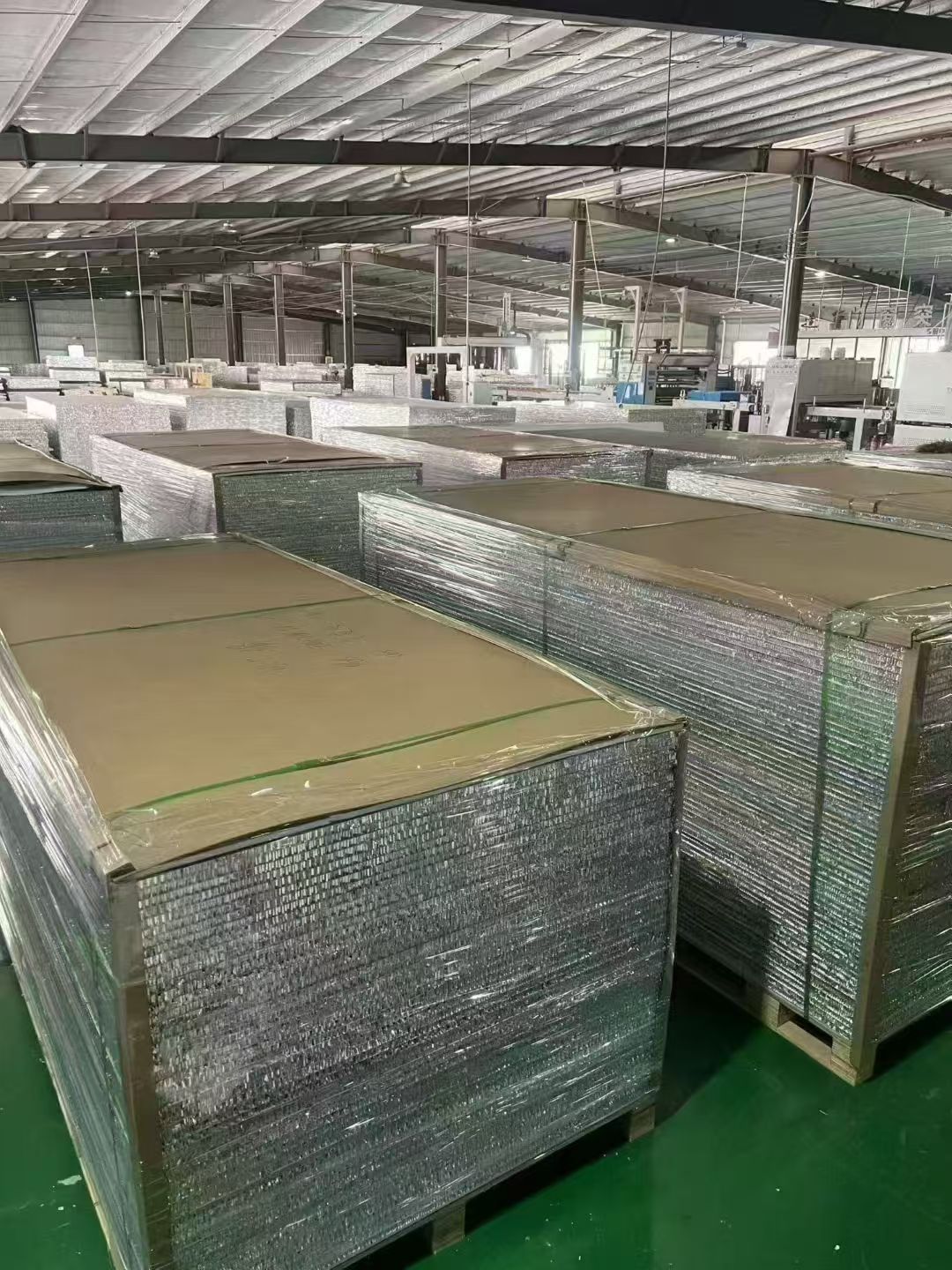
- Confirm capacity, lead time and commercial terms. Monthly capacity exceeds 50,000 sheets and annual output is 1,000,000 sheets; stock items ship in 1–7 days and customized panels in 7–15 days, from a 10,000 m² warehouse with daily shipments of 30–50 tons. Terms are FOB Foshan or EXW, with 50% deposit by T/T and the balance before delivery. Production is 100% inspected before shipment and third-party inspection is supported.
Use Cases: Matching the Material to the Space
Kitchens, Bathrooms and Laundry Zones
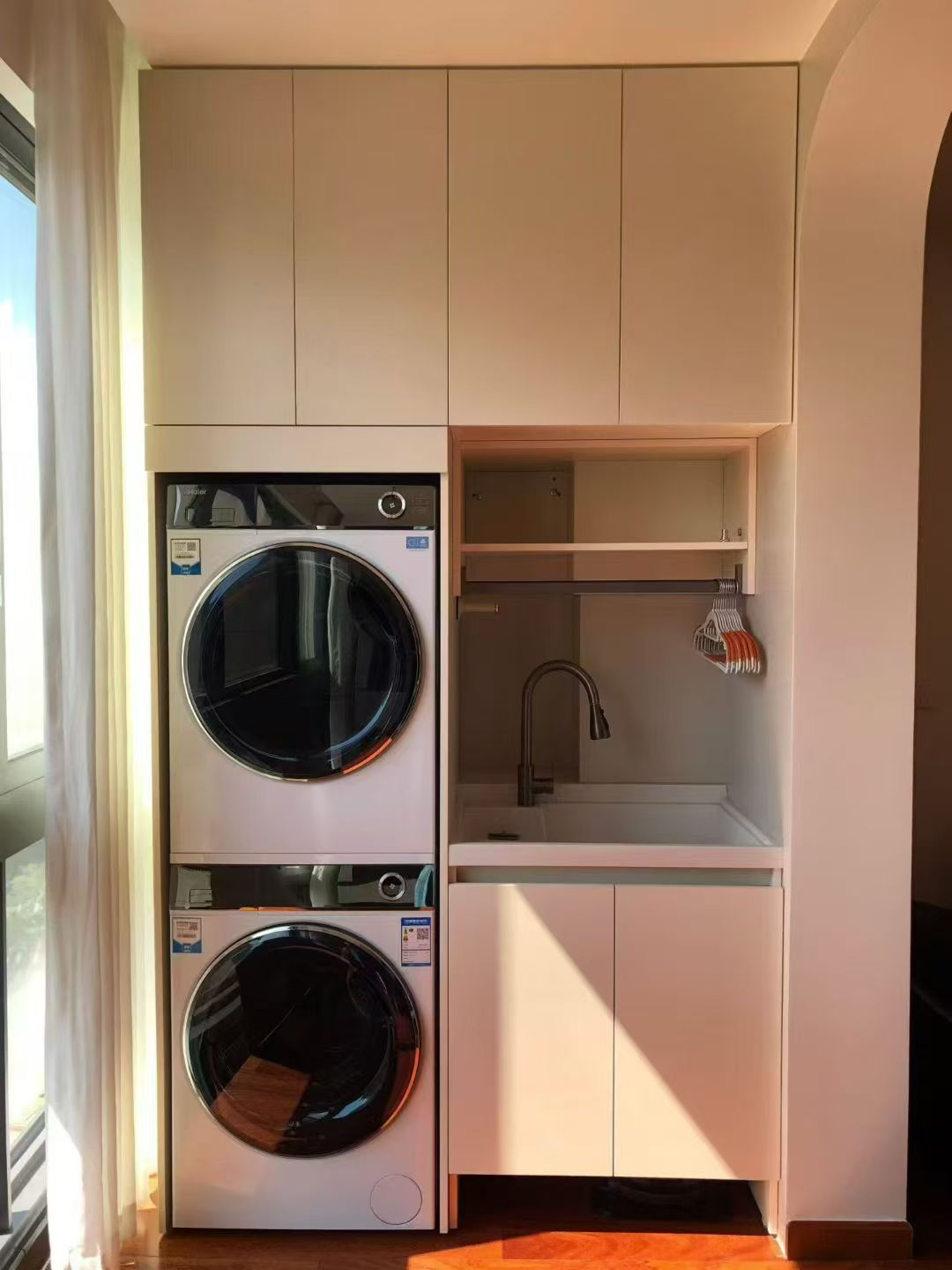
These rooms combine water, steam and frequent cleaning. The honeycomb panel's below-1% water absorption and anti-mildew specification make it suitable for aluminum cabinet boards, kitchen cabinet aluminum sheets, bathroom cabinets and laundry cabinets, and the waterproof aluminum honeycomb panel is used for both cabinet bodies and wall linings.
Coastal and High-Humidity Climates
Coastal projects add salt air and year-round humidity to the same constraints. Because the panel is aluminum throughout with a glue-free thermal bond, it does not rely on a resin layer for its moisture performance, and the wall panel series is specified as termite-proof as well as moisture-proof — relevant in tropical and subtropical markets.
Cabinets, Wardrobes and Bathroom Cabinets
For cabinet production, the 18 mm honeycomb panel functions as the structural board, with the whole house custom board (NBW-WHB-002) offered as a universal material for cabinet, door and wall panel applications. Glue-free construction, zero formaldehyde and same-color matching across door, wall and cabinet are the three properties most often requested by furniture factories and distributors.
Wall Panels, Ceilings and Interior Doors
Wall panels use seamless splicing for continuous surfaces; ceiling panels are supplied as large-size integrated boards with super high flatness and anti-sagging behavior; interior doors use a 45 mm all-aluminum integrated structure with frame options from 60 mm down to an 18 mm frameless profile, plus tri-point lock, flag hinge and magnetic lock options for bedrooms, bathrooms, kitchens, living rooms and offices.
Commercial, Hospitality and Industrial-Scale Supply
Project references shape supplier selection as much as product properties. A B2B factory client in Qatar has taken more than 2,000,000 sheets for aluminum cabinet and wardrobe manufacturing on a long-term basis, with reported zero quality complaints, 30–50 tons of daily shipment capacity, 24-hour dispatch from a 10,000 m² warehouse and cutting optimization support. An Indonesia whole-house customization project used 800,000 sheets across cabinets, wardrobes, wall panels and doors, reporting stable quality, a high repurchase rate and a 20% cost reduction, with a reported service life of 20–30 years for the specified glue-free product. Nanbeiwang products are also supplied to Malaysia, Saudi Arabia, Singapore, Thailand, South Africa, Kosovo and Kuwait, serving furniture factories, wholesalers, decoration companies and trading companies through more than 10,000 cooperative factories and 5,000 projects.
Comparison Table: Aluminum Honeycomb Panel vs. Solid Wood Board
The table below compares only documented properties for the honeycomb panel and general material behavior for solid wood. Where a value is not documented, none is given.
| Evaluation factor | Nanbeiwang all-aluminum honeycomb panel | Solid wood board |
|---|---|---|
| Core structure | Aluminum skin 0.3–1.0 mm bonded by a glue-free thermal process to an aluminum honeycomb core | Solid wood, usually edge-glued or laminated into board formats |
| Fire performance | A2 fire rating | Combustible; requires treatment or an additional fire-rated build-up where a non-combustible classification is required |
| Water absorption | Below 1% (24-hour test) | Hygroscopic; absorbs and releases moisture with ambient humidity, requiring sealing and stable indoor conditions |
| Formaldehyde | Zero formaldehyde declared under GB18584-2024 (report SQ2505164) | Depends on the adhesive system and supplier; wood-based boards are regulated by limits such as GB 18584-2001 — request the market-specific report |
| Restricted substances | SGS RoHS report CANEC2308826401 for Cd, Pb, Hg, CrVI, PBBs and PBDEs on an 18 mm PETG panel | Varies by species, treatment and finish; documentation depends on the supplier |
| Thickness range | 5–18 mm, customizable; wall panel 5 / 9 / 10 / 18 mm | Availability varies by species and mill; calibration and sanding affect the finished thickness |
| Standard panel format | 1220 × 2750 mm, customizable; seamless splicing for wall and ceiling panels | Limited by log and mill capability; large surfaces typically require joints |
| Surface finishes | PETG, melamine, powder coating, wood grain, solid color, melamine CPL, PETG high gloss, scratch-resistant wood grain, thermal-transfer wood grain, solid wood veneer | Natural grain; finished with paint, oil, wax or lacquer, with periodic refinishing |
| Biological resistance | Termite-proof and anti-mildew (wall panel series) | Susceptible to termites and fungal attack unless the species or a treatment provides protection |
| Dimensional stability | Glue-free aluminum structure; super high flatness and anti-sagging on ceiling panels; peel strength and temperature resistance tested under JC/T 2113-2012 (CTC WT2025B01B02018) | Moves with humidity; joints and wide surfaces can open or warp under unstable conditions |
| Reported service life | 20–30 years reported for the specified glue-free product in an Indonesia whole-house customization project | Varies by species, finishing and maintenance; no universal figure |
| Customization / OEM | OEM and customization covering thickness, size, color, surface finish and cutting; MOQ 1 sheet | Depends on the mill; often limited to standard profiles and available species |
| Lead time and capacity | Stock 1–7 days; custom 7–15 days; 50,000+ sheets monthly capacity; 100% inspection before shipment with third-party inspection accepted | Depends on stock, mill schedule and material preparation |
Frequently Asked Questions
Does an aluminum honeycomb panel meet the fire and formaldehyde requirements of European and North American projects?
The panel carries an A2 fire rating, which sits in the non-combustible band used by European specifications, where EN 13501-1 Class A1 or A2 is the top requirement for high-end architecture (Aluwedo Industry Insights). North American projects evaluate surface burning characteristics under ASTM E84 (ASTM International). On emissions, the all-aluminum honeycomb panel is declared zero formaldehyde under the GB18584-2024 hazardous substance test report SQ2505164 issued by the Guangdong Testing Institute of Product Quality Supervision, and the 18 mm PETG panel is covered by SGS RoHS report CANEC2308826401 for Cd, Pb, Hg, CrVI, PBBs and PBDEs. Buyers should confirm which classification and report their local authority accepts, and request the documents rather than relying on a datasheet statement.
Can a honeycomb panel be customized to replace a solid wood board in thickness and finish?
Within the documented ranges, yes. Thickness is customizable from 5 mm to 18 mm, with wall panel options of 5 mm, 9 mm, 10 mm and 18 mm. Aluminum skin options run from 0.3 mm to 1.0 mm, and honeycomb core cell sizes of 3x3, 4x4, 5x5, 8x8 and 10x10 are available. Standard panel size is 1220 × 2750 mm and can be customized. Surface finishes include PETG, melamine, powder coating, wood grain, solid color, melamine CPL, PETG high gloss, scratch-resistant wood grain, thermal-transfer wood grain and solid wood veneer. Nanbeiwang provides OEM and customization services covering thickness, size, color, surface finish and cutting, and door, wall and cabinet elements can be matched in the same color.
Is an aluminum honeycomb panel more expensive than solid wood board?
Unit price depends on thickness, aluminum skin specification, surface finish and order volume for the honeycomb panel, and on species, grade and moisture content for solid wood, so a single cheaper-or-not label is not reliable. The more useful comparison is total project cost. The honeycomb panel is documented as waterproof, anti-mildew and termite-proof, with a reported service life of 20–30 years for the specified glue-free product in an Indonesia whole-house customization project, and that project reported a 20% cost reduction alongside stable quality and a high repurchase rate. Buyers should compare delivered cost per square meter, expected refinishing or replacement cycles and inspection cost, then request a quotation against their own specification. Orders start from 1 sheet, which allows a low-risk trial before volume commitment.
How do we validate the material before placing a bulk order?
Request documents and a physical sample in parallel. The document set includes GB18584-2024 report SQ2505164, formaldehyde emission report SQ2306041 / UNS7332 under GB 18584-2001, SGS RoHS report CANEC2308826401, CTC report WT2025B01B02018 for peel strength and temperature resistance of the glue-free panel under JC/T 2113-2012, plus ISO9001:2015 certificate 31825Q10055R0S and ISO14001:2015 certificate BIV25E10066R0S. For samples, Nanbeiwang dispatches within 24 hours and accepts orders from 1 sheet, so a full panel can be cut and machined the way a production line would handle it. Production is 100% inspected before shipment, and third-party inspection is supported.
What lead time and capacity should we expect for a custom honeycomb panel order?
Stock items ship in 1–7 days, while customized panels take 7–15 days. Monthly capacity exceeds 50,000 sheets, annual output is 1,000,000 sheets, and the operation ships 30–50 tons per day from a 10,000 m² warehouse. Commercial terms are FOB Foshan or EXW, with a 50% deposit by T/T and the balance before delivery, and Hong Kong bank settlement in multiple currencies is available. After dispatch, 24-hour online service and technical guidance cover installation questions.
Next Step: Compare on Your Own Project
Run the comparison on a real specification rather than a brochure. Nanbeiwang Aluminum can send a physical sample within 24 hours, provide the complete document set — GB18584-2024 report SQ2505164, formaldehyde emission report SQ2306041 / UNS7332, SGS RoHS report CANEC2308826401, CTC report WT2025B01B02018, ISO9001:2015 and ISO14001:2015 — and quote against your thickness, size, finish and volume requirements from a 1-sheet minimum order.
Download the 2026 product catalog: Nanbeiwang Aluminum 2026 Catalog (PDF)
Company website: www.nbwaluminum.com
Contact — Bea: 599420378@qq.com, Tel / WhatsApp +86 18138309908. Summer: 1739844920@qq.com, Tel +86 18407576890, WhatsApp +86 13927285115. Address: Foshan, Guangdong, China.