
Supplier Evaluation Checklist for Glue-Free Honeycomb Panels
: Capability & Delivery
Two suppliers can both answer "glue-free" in the same sentence and still be selling you different risks. At decision stage the useful question is not whether a panel is glue-free, but whether the manufacturer can prove, lot after lot, what holds the skins to the core, which dimensional and surface range it actually controls, and what happens to your delivery date when a project order lands mid-month. This checklist organises that evaluation into four evidence gates, names the document to request at each gate, and describes the answer that should stop the conversation.
The reference points are the specifications a buyer is likely to be quoted in this category: aluminium skins from 0.3 mm to 1.0 mm, panel thickness from 5 mm to 18 mm, a standard 1220 × 2750 mm sheet, and surface routes that include PETG, melamine, powder coating and wood grain. Nanbeiwang Aluminum (Guangdong Nanbeiwang Smart Home Co., Ltd.), founded in 2013 in Foshan, Guangdong, is used as the worked example wherever its published specifications support a comparison — not as a default winner.
Why "glue-free" is a category, not a specification
Adhesive-free construction in aluminium honeycomb panels is produced by more than one route. CHALCO, the Aluminum Corporation of China, describes a brazed aluminium honeycomb panel in which brazing material metallurgically connects the aluminium honeycomb core to the panel, a process it presents as overcoming shortcomings of adhesive connection. Nanbeiwang Aluminum describes its NBW-HPB-001 all-aluminium honeycomb panel as two aluminium skins bonded to an aluminium honeycomb core, with the core formed by glue-free thermal bonding. Both descriptions are legitimately called glue-free. They are not the same construction, and they will not behave identically at a cut edge, under sustained heat, or in a humidity cycle.
That is the first reason supplier comparisons fail: "glue-free" names a family of processes, not a measurable property. Before any price discussion, force the answer into three parts — mechanism, interface and test — and make the supplier commit in writing.
| What to ask | What a usable answer contains | What an unusable answer looks like |
|---|---|---|
| Mechanism | The named bonding method for the exact model being quoted | "Glue-free technology" with no method described |
| Interface | Which skin, which core, and how the two are joined | A construction diagram with no material specification |
| Test | A bond or peel test report naming the standard, laboratory and date | An undated photo of a hand peel test |
| Scope | Which product families the evidence covers | One report presented as proof for the whole range |
Gate 1 — Bonded construction and skin specification
The first gate tests whether the quoted panel is a defined product or a description. A defined product has a skin gauge with a tolerance, a stated core, and a documented bond. A description has adjectives.
Aluminium skin thickness is the single most quoted and least controlled variable in this category. The range a buyer will typically meet is 0.3 mm to 1.0 mm, and the number matters for stiffness, for fastener holding and for how the panel behaves on a long span. Ask for the skin gauge per panel thickness, not as a range for the product line, because a 5 mm decorative wall panel and an 18 mm cabinet board are not engineered to the same skin specification even when they come from the same factory. Then ask a second question that separates serious suppliers from catalogues: how is that gauge verified on an incoming coil and on a finished panel, and what tolerance applies?
Documents to request at Gate 1
- Technical datasheet per model: skin material and gauge with tolerance, core type, overall thickness, weight per square metre.
- Bond or peel test report with the standard reference, testing laboratory and report date.
- A written statement of which models the test report covers, and which it does not.
- Flatness specification and the measuring method used at final inspection.
Two failures are common enough to plan for. The first is a test report that predates the current construction — a real document, but for a panel the supplier no longer makes. The second is a report issued on a thin decorative panel and offered as evidence for a thick structural one. Both are answered by one question: "Does this report reference the model code and thickness you are quoting me?" A supplier with a controlled process can answer in a sentence. A supplier trading on borrowed paperwork cannot.
Gate 2 — Dimensional range and customization control
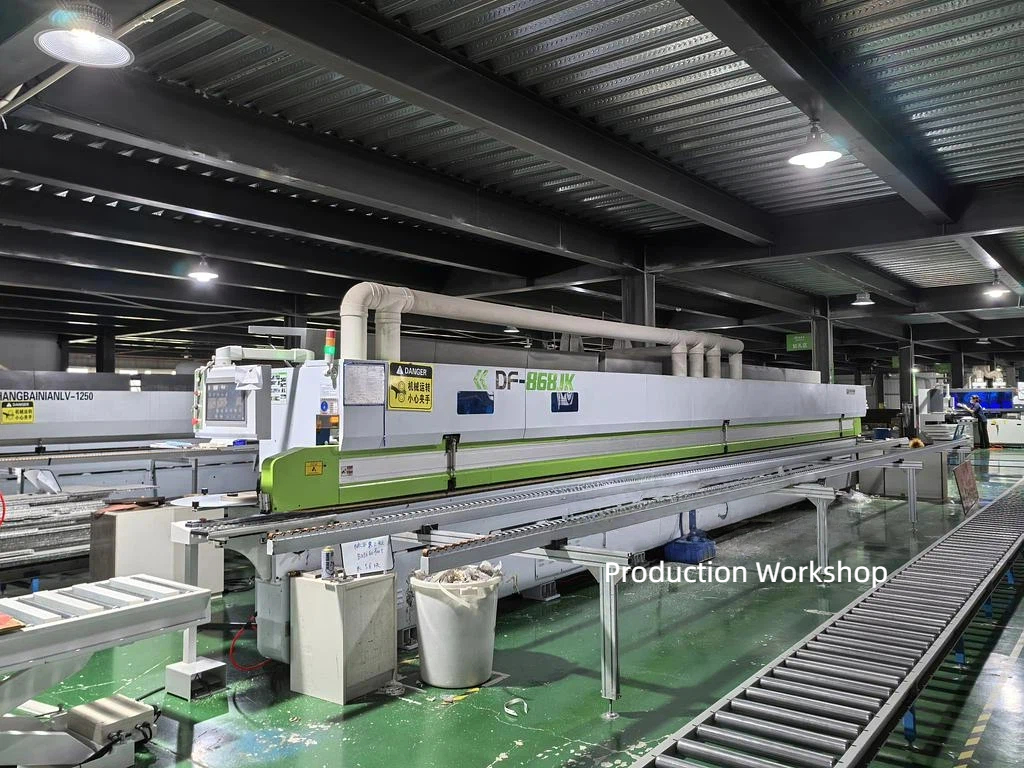
The second gate asks whether customization is a controlled engineering service or a promise. Panel thickness from 5 mm to 18 mm and a standard sheet of 1220 × 2750 mm are the working envelope most buyers will be quoted. The evaluation question is not whether the range exists on a price list, but which thicknesses are held as standard production and which are made to order — because that distinction drives both your lead time and your minimum quantity.
Customization control shows up in three places. First, cut tolerance: ask for the tolerance on a cut-to-size panel and the tolerance on a drilled or routed edge, stated as a number. Second, edge treatment: an exposed honeycomb edge needs a defined closure, and the detail should appear on a drawing rather than be agreed verbally on site. Third, surface route. The surface options named in the current product range include PETG, melamine, powder coating and wood grain, and each behaves differently on a cut, on a bend and against a cleaning chemical. Ask which route applies to which model and which substrate, and ask for the surface specification — film thickness for powder coating, film grade for PETG and melamine, veneer thickness and backing for wood grain.
Custom cabinet factories and furniture manufacturers should take this gate further and request a trial cut list: five or six real part sizes from an actual job, quoted with tolerance, edge treatment, grain direction and packing. The response is a small, low-cost test of whether the supplier's estimating process understands joinery, and it exposes specification gaps before they reach a production line.
Gate 3 — Batch consistency across NBW-HPB-001, NBW-WHB-002 and NBW-WPB-003
Batch consistency is where a good sample becomes a bad project. The evaluation task is to establish, before the first bulk order, that the panel delivered in month three will match the panel approved in month one on four attributes: skin gauge, overall thickness, surface colour and texture, and flatness after transport.
Nanbeiwang Aluminum presents three panel families — NBW-HPB-001, NBW-WHB-002 and NBW-WPB-003 — which gives a buyer a practical way to structure the request. Do not accept one datasheet and one test report as covering all three. Ask for the datasheet, the construction description and the applicable test evidence for each family separately, and ask which family the sample you received actually came from. Where a family shares a construction with another, the supplier should be able to say so explicitly; where it does not, the difference should be documented rather than discovered at installation.
Batch-consistency evidence to request
- Inspection records for three consecutive production lots of the same model and thickness.
- Retained reference samples: one signed and dated master per colour and surface route, held by both parties.
- The written colour and grain matching procedure — what is compared, against what reference, by whom.
- Thickness and flatness measurement points on the finished panel, and the acceptance limit applied.
- Packing specification, because a flat panel that arrives bowed is a consistency failure regardless of what left the factory.
A supplier with standardized production and full-process inspection can produce lot records because the inspection already generates them. A supplier that can only issue a summary certificate is asking you to accept a conclusion without the observations behind it. Neither answer proves quality on its own; the difference is that one gives you something to audit against a second delivery.
Gate 4 — Delivery assurance and capacity evidence
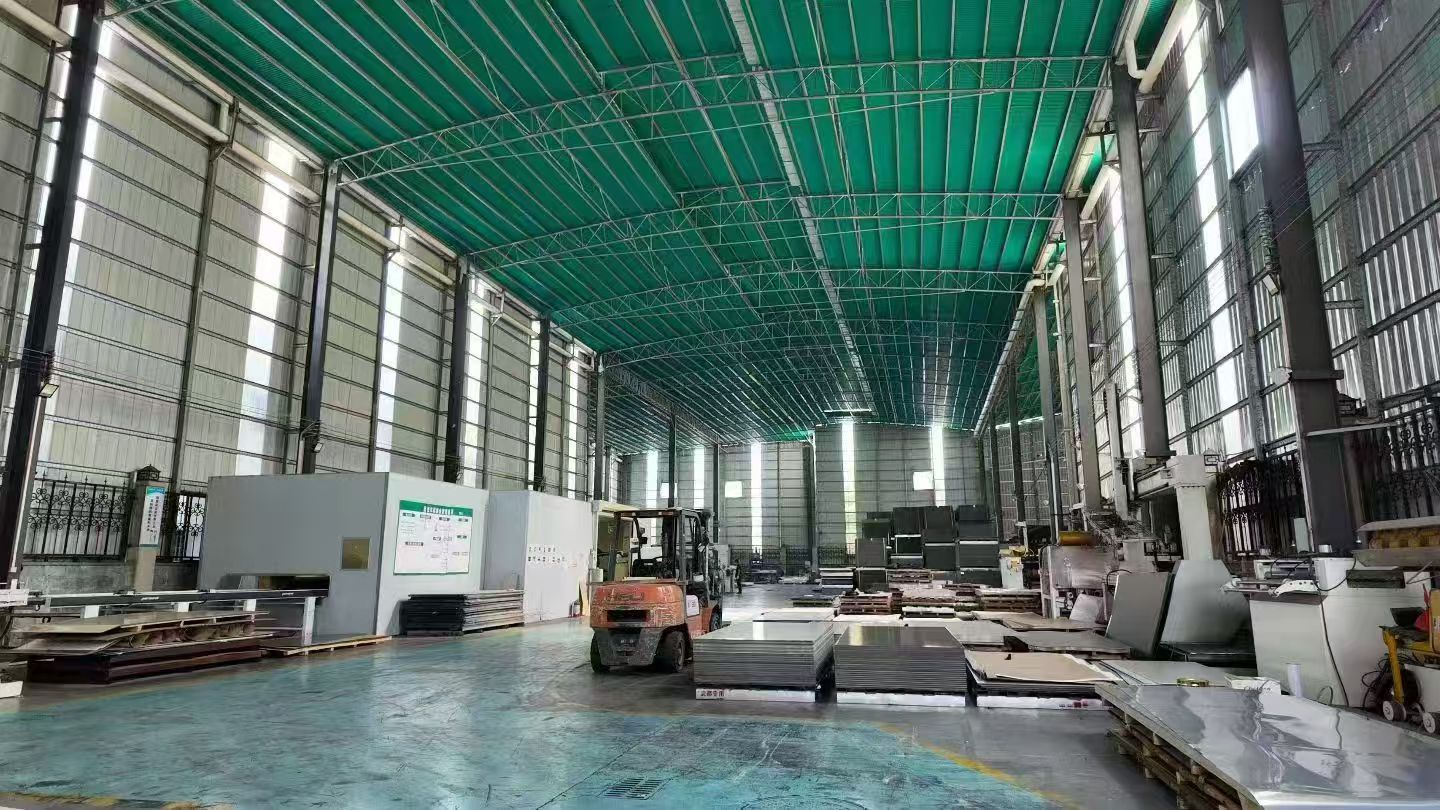
Delivery assurance is a capability question wearing a logistics costume. It should be answered with numbers the supplier already tracks: monthly output, stock holding, the allocation rule applied when a large project order overlaps with repeat wholesale orders, and the packing standard for the destination.
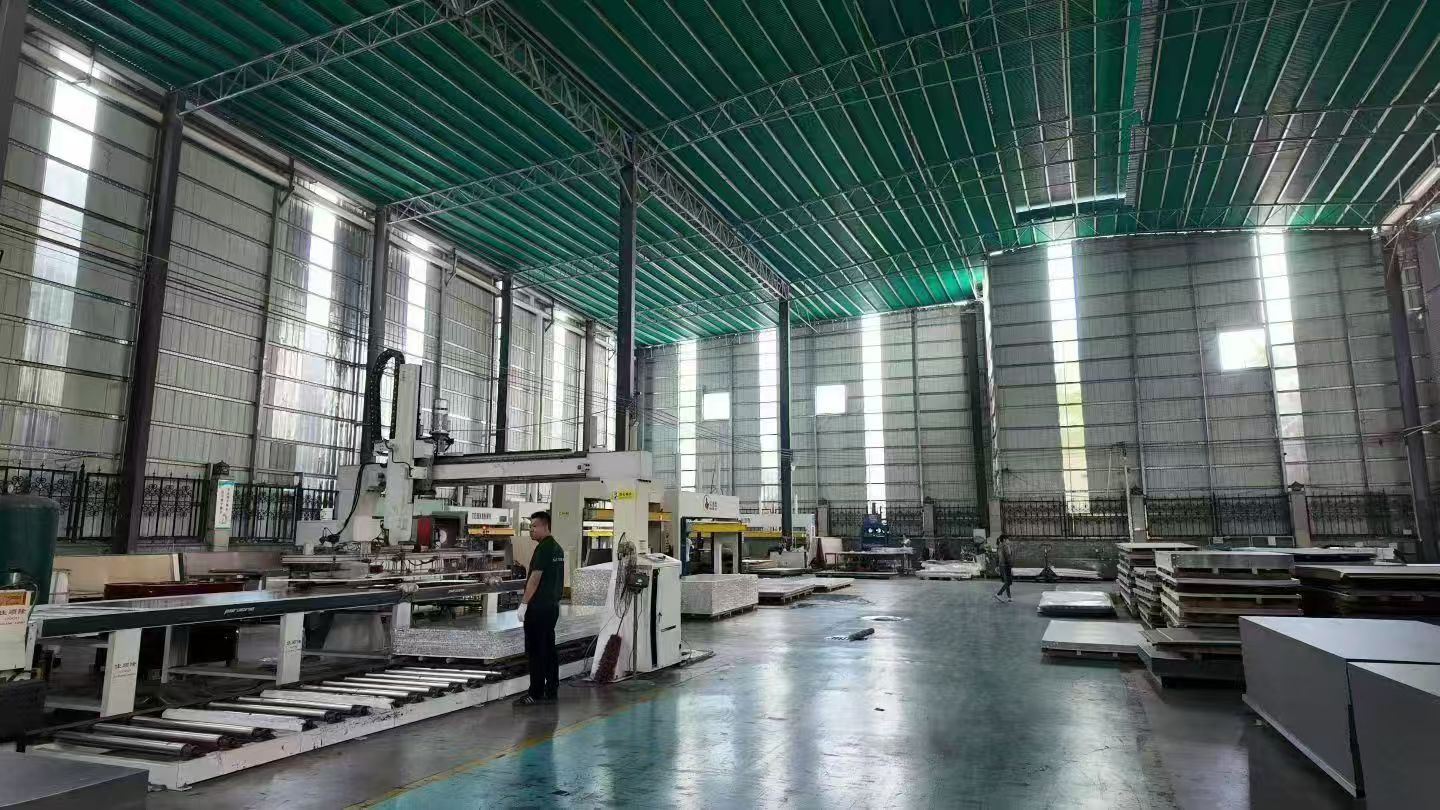
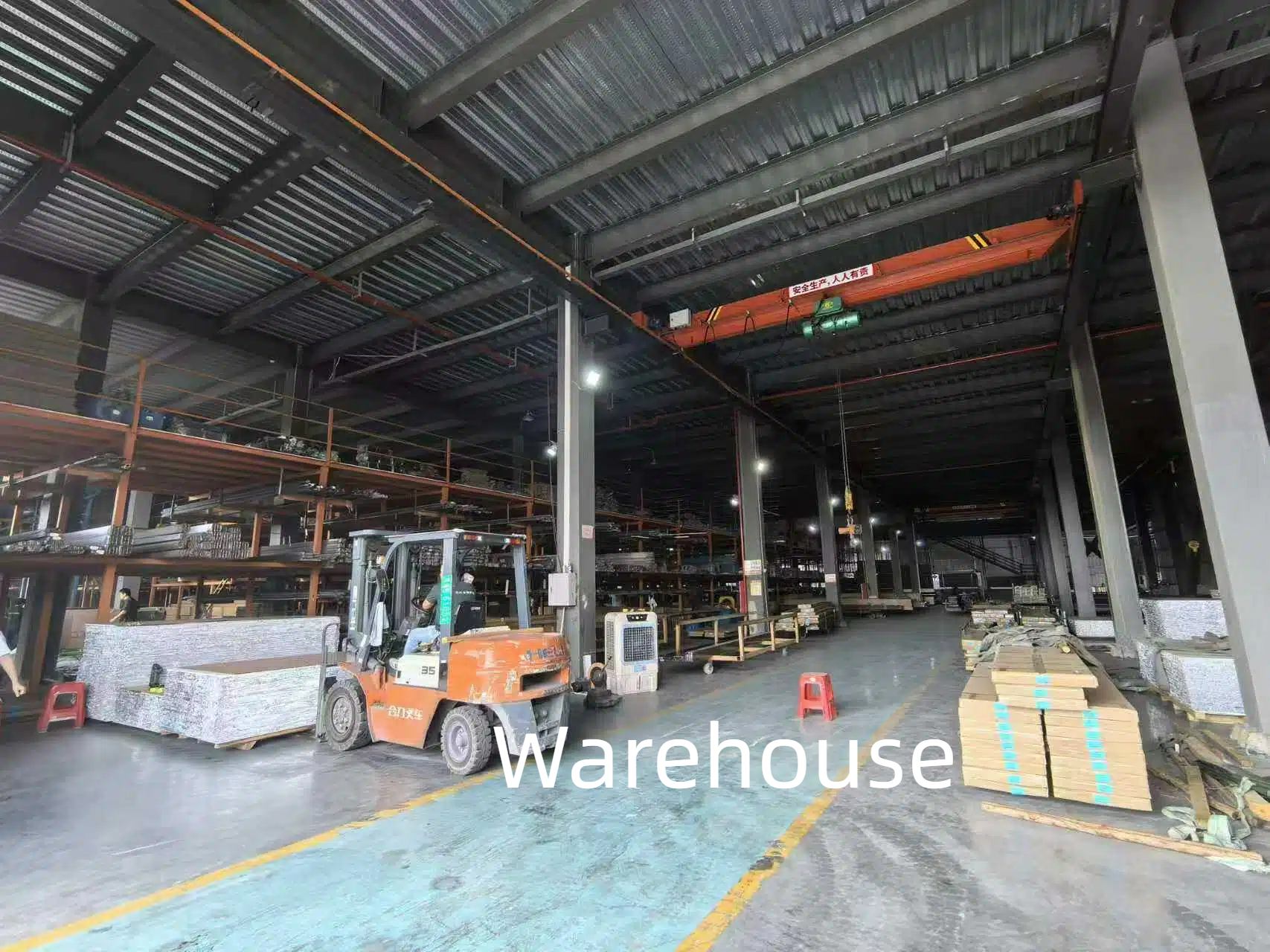
For scale reference, Nanbeiwang Aluminum reports an 80,000 m² facility, 320 employees, a 15-engineer R&D team and annual output of 1,000,000 sheets, with about 50% of sales exported to Europe, Southeast Asia, the Middle East and North America. Its published risk-control measures include standardized production, full-process inspection, a 10,000 m² stock holding and technical support. Those are company-reported figures and should be treated as the starting point of a capacity conversation, not the end of one — the audit question is how they translate into your order.
Translate them by buyer type. The same factory answers differently depending on what you actually buy.
For board wholesale and distribution
Ask how much of the 10,000 m² stock is finished board in your specification rather than generic inventory; what the replenishment cycle is for a repeated SKU; whether standard 1220 × 2750 mm sheets ship from stock or from a production run; and what happens to your allocation during a peak project season. A distributor's risk is not the first container, it is the fourth.
For furniture manufacturing
Ask for the panel flatness specification and its measuring method, the thickness tolerance on the delivered sheet, and whether panels are supplied with protective film on one or both faces for automated cutting lines. Then ask for a named reference of a customer running the same thickness and surface route — not a logo wall, a specific application.
For custom cabinet factories
Ask how cut-to-size orders are scheduled against standard sheet orders, what the minimum quantity is per size, how grain direction and colour matching are handled across a multi-panel cabinet run, and how a replacement panel for a single damaged unit is supplied mid-project. Cabinet work fails on the odd panel, not the average one.
For decoration projects and fit-out contractors
Ask for the packing method for the destination and mode of transport, the damage record from comparable shipments, the documentation set the supplier can issue for your market, and the escalation contact when a site discovers a shortage. Project schedules have no slack for a supplier whose only answer is a general lead time.
Comparing cost, not just price
Price dispersion in this category is wide enough to confuse a straightforward comparison. Commercial research published by Global Market Insights puts factory-side planning prices for honeycomb panels in a range of roughly USD 55 to USD 130 per square metre in 2026, while the same publisher reports a blended average selling price of USD 211 per square metre for 2025 — a figure that spans aerospace and specialty grades as well as construction panels. The gap is not a pricing error; it is a definition gap. Two quotes only compare when grade, skin gauge, panel thickness, surface route, volume and delivery term are the same.
So convert every quote into a comparable basis before ranking it. Fix the model and thickness, fix the surface route, fix the skin gauge, fix the Incoterm, and ask each supplier to price the same three quantities. Then compare on cost of ownership rather than unit price, using your own service assumptions. Company-cited laboratory testing for glue-free aluminium panels puts service life at 20+ years, against 8–12 years typical for wood panels in high-humidity conditions, and reports water absorption below 1% in a 24-hour test against more than 10% for standard particle board. Treat those as the supplier's claims to be verified against your application, not as a warranty — but do put them in the model, because a panel that lasts twice as long changes the arithmetic even at a higher unit price.
Two cost lines are routinely missing from buyer comparisons. The first is rework: a panel that arrives with a colour mismatch or a bowed face costs cutting time, adhesive, and a site visit. The second is substitution risk: if the specified surface route is unavailable at the moment of the order, what is the supplier's procedure, and does it call you first? A cheaper quote with no substitution rule is not cheaper.
The 12-point evaluation scorecard
The checklist below consolidates the four gates into a single audit sheet. Score each line pass, conditional or fail, and treat more than two fails in one gate as a reason to pause the whole evaluation rather than negotiate the price. The weightings are yours to set — they depend on whether you are buying stock board or parts for a fixed installation date.
| Gate | Check | Evidence to request | Stop signal |
|---|---|---|---|
| 1 | Bonding mechanism | Written process description per model | "Glue-free" with no mechanism named |
| 1 | Skin and core specification | Skin gauge with tolerance; core type | Skins quoted by thickness only |
| 1 | Bond performance | Peel or bond report with standard, lab, date | Undated in-house peel photo |
| 2 | Thickness range control | Which of 5–18 mm is standard vs made to order | Every thickness "available" with no tooling note |
| 2 | Format and cutting | 1220 × 2750 mm sheet plus cut tolerance and edge detail | Cut sizes promised without tolerance |
| 2 | Surface route | Surface specification per model: PETG, melamine, powder coating, wood grain | One surface list applied to all models |
| 2 | Colour and grain control | Signed master sample plus matching procedure | "Same as sample" with no retention rule |
| 3 | Family datasheets | Separate datasheet for NBW-HPB-001, NBW-WHB-002, NBW-WPB-003 | One sheet reused for all three families |
| 3 | Lot consistency | Inspection records for three consecutive lots | Summary certificate only |
| 4 | Capacity and stock | Monthly output, stock composition, peak allocation rule | Annual capacity with no monthly breakdown |
| 4 | Packing and documentation | Packing spec, damage record, export document set | No packing specification |
| 4 | Escalation path | Named contact and response rule for shortages | General sales inbox only |

When to shortlist, and when to walk away
A supplier that answers Gates 1 to 3 with model-specific documents and Gate 4 with a monthly capacity figure and a packing specification belongs on the shortlist, even if its unit price sits in the upper half of the range. A supplier that answers Gate 1 well and everything after it with assurances has given you a good sample and no delivery system.
Walk away — or rather, do not award — when the same claims are repeated at every gate, when test evidence cannot be tied to the quoted model, when the surface route is treated as a colour code, or when nobody can describe what happens to your order during a peak period. None of those failures is about price, and none of them is fixed by a discount.
If a shortlisted supplier publishes its product range and company profile openly, that is a useful first filter rather than a substitute for the audit. Nanbeiwang Aluminum, for example, publishes its portfolio and specification ranges at Nanbeiwang Aluminum, and those published ranges are the correct starting point for the document requests described above — not the end of them.
Frequently asked questions
How do we confirm that a honeycomb panel is genuinely glue-free rather than adhesive-bonded?
Ask for three things in writing: the named bonding mechanism for the exact model, a description of the interface between skin and core, and a bond or peel test report that references the quoted model, the testing standard, the laboratory and the date. Adhesive-free construction is produced by more than one route — metallurgical brazing is one, glue-free thermal bonding is another — so the mechanism must be named rather than implied. A supplier able to answer all three has a defined product; a supplier that answers only with the phrase "glue-free" has a marketing term.
What skin thickness should we specify between 0.3 mm and 1.0 mm?
Specify by function, not by habit. Thin decorative wall panels sit at the low end of the 0.3 mm to 1.0 mm range, while cabinet boards, doors and spans that carry hardware or fittings move upward. The workable method is to ask the supplier for the skin gauge it applies to each panel thickness and each application, then to confirm how that gauge is measured and what tolerance applies on a delivered panel. A single gauge quoted for an entire product line is a warning that the specification has not been engineered per model.
Why do glue-free honeycomb panel quotes vary so widely between suppliers?
Most of the spread comes from definition, not from margin. Commercial research published by Global Market Insights places factory-side planning prices for honeycomb panels at roughly USD 55 to USD 130 per square metre in 2026, while a blended average selling price of USD 211 per square metre for 2025 spans aerospace and specialty grades as well as construction panels. Skin gauge, panel thickness, surface route, volume and delivery term all move the number. Normalise those five variables before comparing, and add rework and substitution risk to the model.
What should a sample set contain before we approve a honeycomb panel supplier?
A useful sample set contains the exact model, thickness and surface route you intend to buy, a signed and dated master sample retained by both parties, and the inspection record for the lot the sample came from. Add a cut piece showing the edge treatment and one piece showing the reverse face. Critically, ask which of the supplier's product families the sample was drawn from — a sample that cannot be traced to a family and a lot is a demonstration piece, not a quality reference.
Which delivery questions separate a capable supplier from a well-worded one?
Ask for monthly output rather than annual capacity, the composition of finished stock rather than a warehouse area, the allocation rule applied when a large project order overlaps repeat wholesale orders, and the packing specification for your destination. Then ask what happens to a single damaged panel mid-project. Answers that contain numbers and a named procedure indicate a planning process; answers that contain assurances indicate a sales process.
Can one supplier cover board wholesale, cabinet fabrication and a finished decoration project?
Often yes, but not at the same service level, and the difference should be established before the order. Ask which of the four order types the supplier's line runs most frequently, which types wait during peak periods, and which product family each type is drawn from — for example whether a cabinet board and a wall panel come from the same construction or from separate families with separate evidence. Buyers who need a traceable starting point can download the 2026 catalogue at Nanbeiwang Aluminum product catalogue (PDF) and use its specification pages as the reference document for the requests in this checklist.
Conclusion
A glue-free honeycomb panel supplier is not selected by reading a specification range; it is selected by testing whether that range is controlled. The four gates in this checklist do one job: they force every claim into a document that names a model, a standard and a date. Construction evidence answers whether the panel is a defined product. Dimensional and surface evidence answers whether customization is engineered. Batch records answer whether the second delivery matches the first. Delivery evidence answers whether your order survives a busy month.
Run the twelve checks against at least two suppliers before you compare price, and keep the failed items in the file. The most expensive decision in this category is not choosing the higher quote — it is discovering, six weeks into an installation, that the panel you approved and the panel you received were only ever described by the same two words.
Next step: assemble the document request from Gates 1 to 3 as a single list, send the identical list to every shortlisted supplier, and score the returns against the 12-point table above. If you want to start from published specifications, the 2026 Nanbeiwang catalogue covers the panel families referenced here.
Have Questions or Need More Details?
Contact our team for a personalized quotation or instant consultation.
Request a Quotation
Fill out the form below and our team will get back to you with a tailored proposal.
WhatsApp Direct Chat
Prefer to chat in real-time? Message us on WhatsApp for instant assistance & quick answers.
- Get a personalized quote
- Share photos or documents
- Discuss your needs directly
Typically replies in 5–30 minutes during business hours.