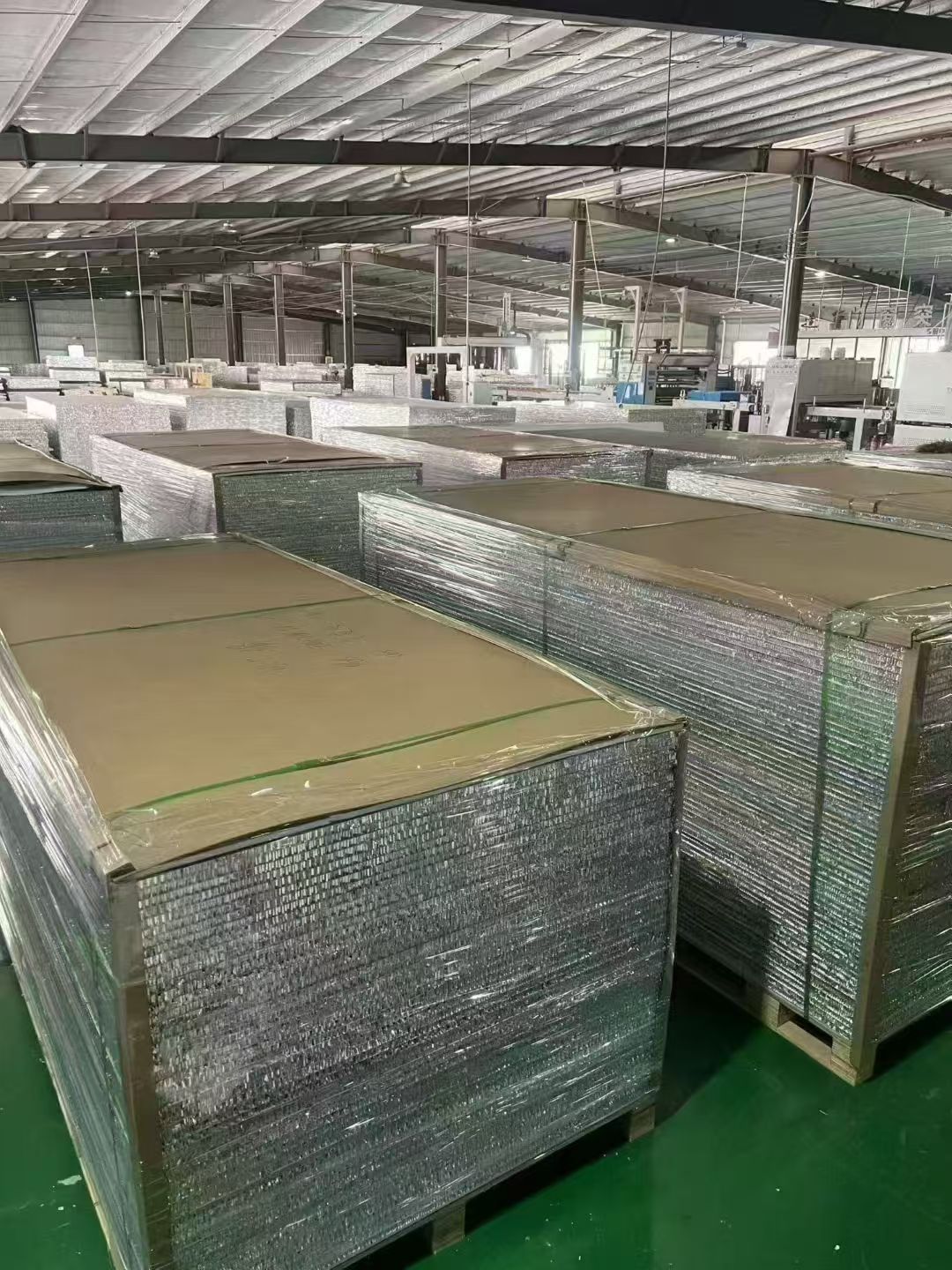
Technical Guide: Selecting Honeycomb Panel Thickness from 5 mm to 18 mm
Technical Guide: Selecting Honeycomb Panel Thickness from 5 mm to 18 mm
Thickness in an all-aluminum honeycomb panel is a design variable, not a quality grade. In the Nanbeiwang Aluminum range, the NBW-HPB-001 honeycomb panel is produced in a 5–18 mm thickness window (customizable), while the NBW-WPB-003 aluminum honeycomb wall panel is listed at four thicknesses: 5 mm, 9 mm, 10 mm and 18 mm. Choosing between them comes down to surface type, support conditions, hardware loads, moisture exposure and the test documentation you must hand over — not to buying the thickest board in the catalog.
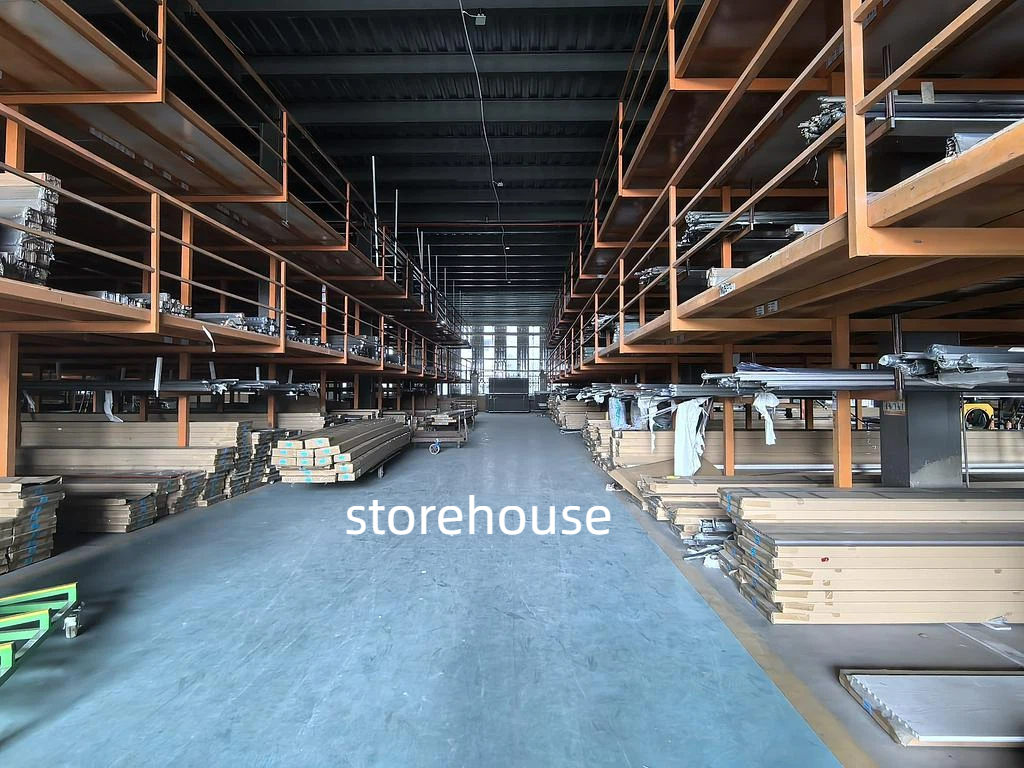
This guide is written for importers, distributors, cabinet and interior-door factories, fit-out contractors and project buyers who are evaluating a honeycomb panel specification before a volume order. It covers what the 5–18 mm window contains, how the four listed NBW-WPB-003 wall-panel thicknesses differ from it, where thickness genuinely changes performance, and where the published data stops — so that you know exactly which question to put to a supplier.
Problem Definition: Why “Thicker Is Better” Breaks Down
Four assumptions cause most thickness specification errors in honeycomb panel procurement. Each one can be checked against published product data before a purchase order is issued.
1. Thickness is treated as a proxy for panel grade. Two 18 mm panels can behave differently if their aluminum skin gauge, honeycomb cell size or bonding method differ. In the Nanbeiwang wall panel specification, aluminum skin options span 0.3 mm, 0.48 mm + 0.2 mm, 0.65 mm + 0.2 mm and 1.0 mm, and honeycomb cores are listed as 3×3, 4×4, 5×5, 8×8 and 10×10, customizable. Thickness alone does not describe any of that.
2. Load capacity is assumed to scale with thickness. It does not, at least not in the published data. The only quantified load-bearing figure in the Nanbeiwang data set is 150 kg/m², and it belongs to one specific product: the WAP-600*(200–700) welding board — a 6 m long, 200–700 mm wide panel with 0.8 mm aluminum skins and 18 mm total thickness. It is not a figure for the NBW-HPB-001 range at 18 mm, and it must not be transferred between products.
3. Fire class is assumed to improve with thickness. In this catalog fire classification is published at product-family level. NBW-HPB-001 is listed with an A2 fire rating; the WAP-600 welding board and the ZKB-1220×2750 all-aluminum bamboo core board are listed as B1. Those are different constructions with different cores and bonding, not the same board at different thicknesses.
4. Panel thickness and door thickness are confused. The 5–18 mm figure refers to the panel. The NBW-DOR-005 all-aluminum interior door uses a 45 mm door leaf and frame, with frame systems listed at 60 mm (Korean), 50 mm (narrow), 25 mm (minimalist), 55 mm (invisible) and 18 mm (frameless). Mixing these dimensions in a bill of materials is one of the most common specification errors in all-aluminum fit-out packages.
Industry Background: What Standards and Buyers Expect from a Thickness Decision
Thickness selection sits inside a compliance framework that differs by market. In Europe, aluminum honeycomb panels must comply with EN 13501-1 for fire classification, where Class A1 or A2 (non-combustible) is the top requirement for high-end architecture. In North America, ASTM E84 (Surface Burning Characteristics) is the mandatory test for evaluating flame spread and smoke development of aluminum honeycomb core materials. A supplier conversation about thickness is therefore also a conversation about which classification the finished assembly will carry in the destination market.
Commercially, honeycomb panel demand is concentrated in construction and interiors. The global aluminum honeycomb panels market was estimated at USD 3.57 billion in 2024, driven by lightweight construction and aerospace demand (Global Market Insights, cited via Vertex AI Search). Published estimates diverge by scope — a competing figure of roughly USD 2.1 billion (Strategic Market Research) reflects a narrower definition limited to core materials rather than finished sandwich panels. For buyers, the practical lesson is not the exact number but that the architectural and building panels segment is the largest application area for aluminum honeycomb, sustained by its strength-to-weight ratio (Market Research Future).
Supply-side context matters too. China’s aluminum structures exports reached USD 5.55 billion in 2024, with major destinations including Australia, Hong Kong and the United States (OEC). At the same time, the best-known names in honeycomb core, such as Hexcel Corporation, operate in aerospace and defense performance tiers (Dataintelo) — a different specification world from interior wall, ceiling, cabinet and door panels, where thickness, finish and interior compliance dominate the decision. When evaluating an interior-grade supplier, do not benchmark against aerospace core datasheets; benchmark against the panel family you are actually buying.
Detailed Solution: The Nanbeiwang Thickness Architecture
Nanbeiwang Aluminum — the trading identity of Guangdong Nanbeiwang Smart Home Co., Ltd., founded in 2013 and headquartered in Dali Town, Nanhai District, Foshan, Guangdong — manufactures all-aluminum honeycomb panels and the matching interior systems built on them: wall panels, ceilings, interior doors and whole-house custom boards. Its panel range is organized around two product families that use thickness differently.
NBW-HPB-001 Honeycomb Panel is the base material. Published parameters: thickness 5–18 mm (customizable); panel size 1220×2750 mm (customizable); aluminum skin 0.3–1.0 mm; aluminum honeycomb core with glue-free thermal bonding; surface options of PETG, melamine, powder coating or wood grain; fire rating A2; formaldehyde zero under GB18584-2024; water absorption <1% based on a 24-hour test.
NBW-WPB-003 Aluminum Honeycomb Wall Panel is the finished wall-facing system, and it is the product where thickness is explicitly enumerated: 5 mm, 9 mm, 10 mm and 18 mm optional, with standard size 1.22 m × 2.75 m (customizable). Aluminum skin options are 0.3 mm, 0.48 mm + 0.2 mm, 0.65 mm + 0.2 mm and 1.0 mm; honeycomb core options run from 3×3 to 10×10. Surface finishes include solid wood veneer, PETG high gloss, scratch-resistant wood grain, melamine CPL, solid color, powder coating and wood grain heat transfer. The panel is specified as seamless-splicing, waterproof, moisture-proof, anti-mildew, fire-resistant, termite-proof and formaldehyde-free, and supports wall, ceiling, cabinet and door applications with door–wall–cabinet same-color matching.
| Product (model) | Listed thicknesses | Aluminum skin | Core / bonding | Fire rating | Formaldehyde |
|---|---|---|---|---|---|
| Honeycomb Panel (NBW-HPB-001) | 5–18 mm, customizable | 0.3–1.0 mm | Aluminum honeycomb, glue-free thermal bonding | A2 | Zero (GB18584-2024) |
| Aluminum Honeycomb Wall Panel (NBW-WPB-003) | 5 mm, 9 mm, 10 mm, 18 mm | 0.3 / 0.48+0.2 / 0.65+0.2 / 1.0 mm | Aluminum alloy board + high-density aluminum honeycomb base material | Fire-resistant (class not published for this model) | Formaldehyde-free |
| Aluminum Ceiling (NBW-CLB-004) | Standard thickness (value not published) | High-strength aluminum alloy board | Reinforced thickened aluminum honeycomb core | Not published | Not published |
| Welding board (WAP-600*(200–700)) | 18 mm total | 0.8 mm | Aluminum alloy; load-bearing 150 kg/m² | B1 | Zero |
| All-Aluminum Bamboo Core Board (ZKB-1220×2750) | 18 mm (5/10 mm optional) | 0.3 / 0.5 mm both sides | High-pressure bamboo fiber + aluminum, hot-pressed | B1 | E0 / zero |
How Thickness Interacts with Fire Resistance, Structure and Surface Type
Fire resistance: classification belongs to the assembly, not the millimeter
In the published Nanbeiwang data, an increase in panel thickness does not move a panel from one fire class to another. NBW-HPB-001 carries an A2 listing across its product family; the B1 listings belong to the welding board and the bamboo core board. The reason is technical rather than commercial: a sandwich panel’s reaction-to-fire performance is determined by the complete assembly — metal skins, core material, bonding method and surface finish — and by the test standard applied to it, such as EN 13501-1 in Europe or ASTM E84 in North America.
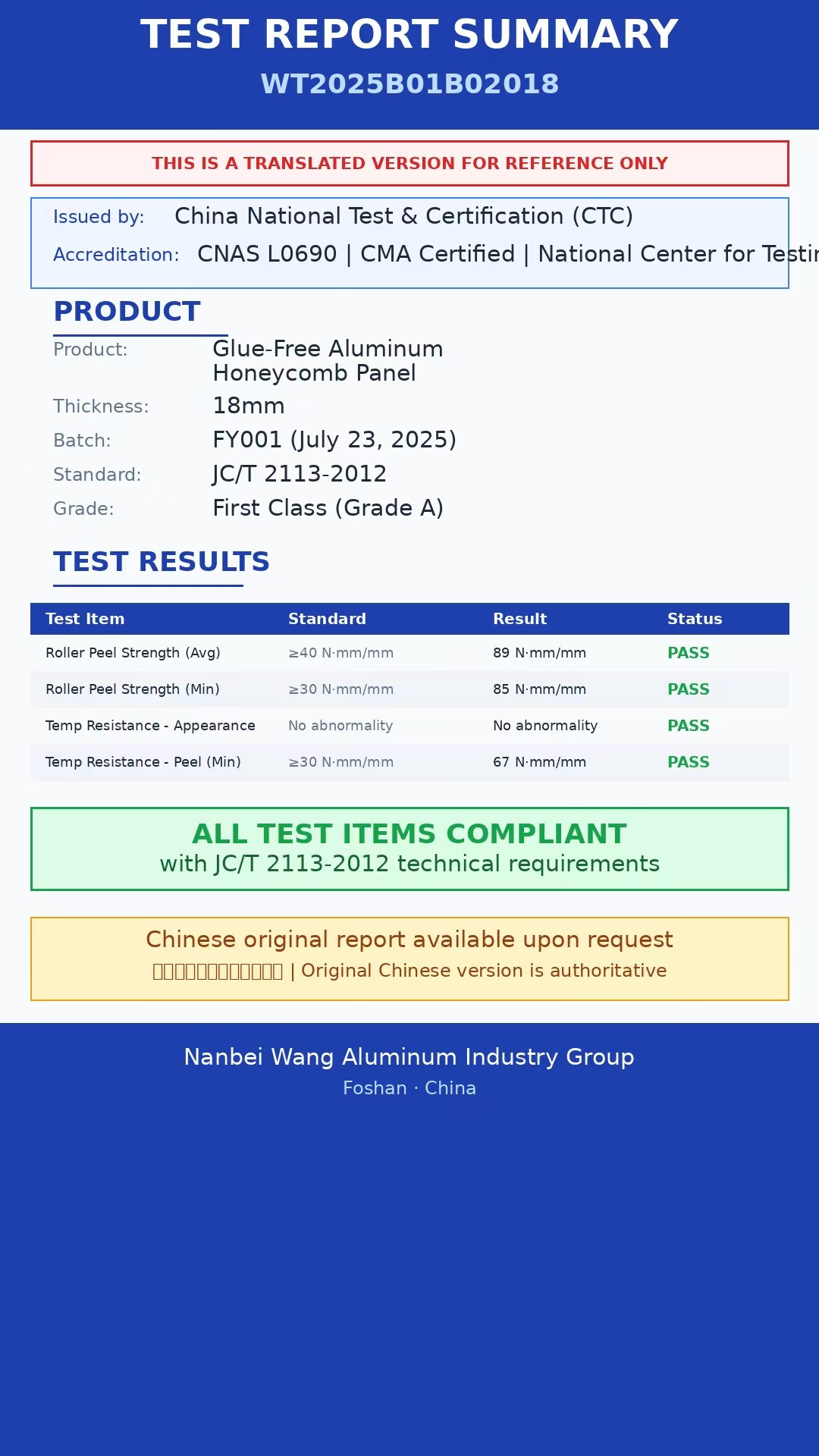
The practical consequence for a buyer is procedural. When you specify a thickness, specify the finish and the skin gauge at the same time, and ask for the test documentation that matches that exact combination. Nanbeiwang’s verifiable documentation includes the GB18584-2024 hazardous substance test report SQ2505164 issued by Guangdong Testing Institute of Product Quality Supervision, covering the full series of all-aluminum honeycomb panels (issued 2025-10-29); a formaldehyde emission test report for aluminum cellular board under GB 18584-2001 (SQ2306041 / UNS7332, valid to 2026-11-21); and a CTC peel strength and temperature resistance report (WT2025B01B02018) for glue-free aluminum honeycomb panel tested against JC/T 2113-2012 (issued 2025-11-12). The last of these is the report that speaks directly to bonding reliability in a glue-free construction.
Structural integrity: what thickness actually changes
In sandwich construction, separating two skins with a thicker core raises bending stiffness far more efficiently than adding material to the skins, because stiffness depends on the distance between the facings. That is why a thicker honeycomb panel resists deflection better in the same span, and why core and skin parameters are specified together rather than thickness alone. Nanbeiwang publishes skin gauge options from 0.3 mm to 1.0 mm for NBW-HPB-001 and cell-size options from 3×3 to 10×10 for NBW-WPB-003, all customizable.
The limit of that logic is documentation. Within the 5–18 mm range, no per-thickness load table is published for NBW-HPB-001. The one load figure that does exist — 150 kg/m² — applies only to the 18 mm WAP-600 welding board with 0.8 mm skins, a product designed as a cabinet, wardrobe, door and wall panel. A buyer who needs load-bearing performance should therefore request a project-specific calculation or test rather than extrapolating from the welding board figure.
Wall versus ceiling: same range, different priorities
Wall panels and ceiling panels are asked to solve different problems, and the thickness logic follows.
- Walls: NBW-WPB-003 is offered at 5 mm, 9 mm, 10 mm and 18 mm, and is used for interior wall decoration, old-house renovation, commercial space fitting-out and large-scale wall engineering. Because wall panels are visible surfaces, finish quality, seamless splicing and flatness matter as much as thickness — and the same panel must align with door and cabinet surfaces if same-color matching is specified.
- Ceilings: NBW-CLB-004 is built on a high-strength aluminum alloy board with a reinforced thickened aluminum honeycomb core, and is specified for seamless splicing, super high flatness, moisture and mildew resistance, anti-sagging and easy installation in large-size integrated panels. Ceiling performance is dominated by anti-sagging under long spans and by the framing system, so the published specification leads with core reinforcement and flatness rather than a millimetre figure. The model is also listed under frameless honeycomb panel types.
Where a project mixes both, order wall and ceiling panels from the same thickness-compatible family and confirm the joint detail at the same time, because the visible seam is where mismatched thickness becomes obvious.
Thickness shortlist: which option fits which surface
The shortlist below reflects where each listed thickness appears in the Nanbeiwang range, and is intended as an evaluation starting point rather than a final engineering decision.
- 18 mm — cabinet, wardrobe, door and load-bearing panel work. The most heavily used thickness in the range: it is the default for the ZKB bamboo core board (5/10 mm optional), the total thickness of the WAP-600 welding board with its 150 kg/m² load-bearing figure, and one of the four listed NBW-WPB-003 wall panel options. The company’s published main-product list leads with 18 mm honeycomb panel.
- 9 mm and 10 mm — wall panels and mid-thickness surfaces. Both are enumerated thicknesses of NBW-WPB-003, positioned between the thinnest and thickest options for walls in renovation and commercial fit-out work.
- 5 mm — the thinnest listed option. Available in both the NBW-HPB-001 window and the NBW-WPB-003 wall panel list. Because it carries the least core depth, it is the option that most needs confirmation against span, support spacing and finish weight before it is written into a specification.
The one rule that survives every project: decide the surface type and the support condition first, then the thickness, then the skin gauge and finish. Selecting thickness first and adapting the substrate afterwards is what produces sagging ceilings, proud joints and re-cut panels on site.
Step-by-Step Breakdown: Choosing a Thickness in Eight Steps
- Classify the surface. Wall, ceiling, cabinet, wardrobe, bathroom cabinet or door. NBW-WPB-003 covers wall, ceiling, cabinet and door applications; NBW-CLB-004 is the ceiling-specific build; NBW-HPB-001 is the base panel for furniture manufacturing and custom cabinet factories.
- Define the span and support condition. Long unsupported spans and frameless ceilings push toward greater core depth and a reinforced core; closely framed cabinet panels typically do not need the same treatment.
- Identify wet zones. For kitchens, bathrooms and other high-moisture areas, water absorption below 1% (24-hour test) for NBW-HPB-001 and the waterproof, moisture-proof, anti-mildew properties of NBW-WPB-003 are the relevant published parameters. Thickness is not the moisture variable; core and finish are.
- Check hardware and edge detailing. Door hardware, hinges and locks belong to the door system — the NBW-DOR-005 uses a 45 mm leaf and frame with tri-point lock, flag hinge and magnetic lock options across 60/50/25/55/18 mm frame profiles. Panel thickness must be confirmed against the edge and joint detail, not assumed from the door drawing.
- Fix the finish and skin gauge. Thickness is quoted with a surface: PETG, melamine, powder coating or wood grain for NBW-HPB-001; solid wood veneer, PETG high gloss, scratch-resistant wood grain, melamine CPL, solid color, powder coating or wood grain heat transfer for NBW-WPB-003.
- Confirm same-color matching across door, wall and cabinet. NBW-WPB-003 is specified for door–wall–cabinet same-color matching, and NBW-WHB-002 whole-house custom board is universal for cabinet, door and wall panel use in the same 5–18 mm scope. Confirm that all three surfaces can be produced in the thickness combination you have chosen.
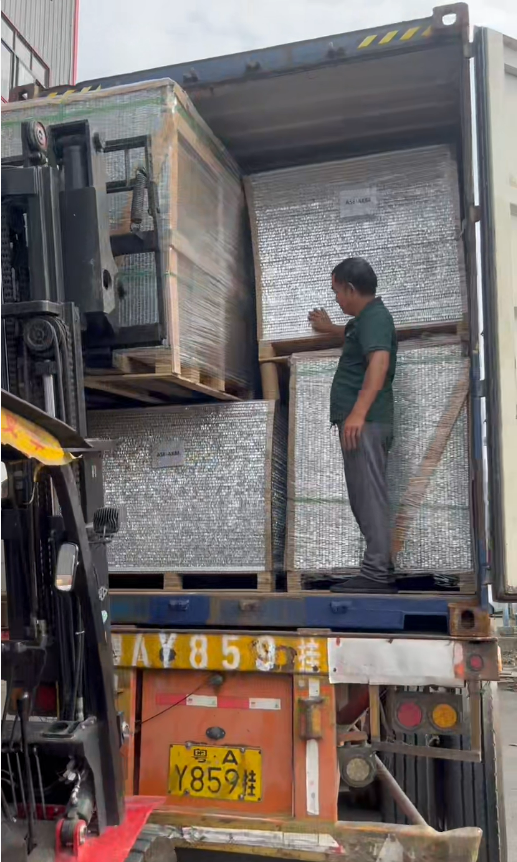
- Validate with a sample. MOQ is 1 sheet and samples are dispatched within 24 hours, so thickness and finish can be checked physically before a volume commitment. 100% full inspection is carried out before shipment, and third-party inspection is supported.
- Lock the delivery schedule. Stock items are quoted at 1–7 days and customized orders at 7–15 days, backed by monthly capacity of 50,000+ sheets and daily shipment of 30–50 tons from a 10,000 m² warehouse.
Use Cases: How Thickness Decisions Play Out in Real Projects
Industrial-scale cabinet and wardrobe production — Qatar. A project supplied over 2,000,000 sheets of honeycomb panels for industrial-scale production of aluminum cabinets and wardrobes, supported by 30–50 tons of daily bulk supply capacity, custom sizing support, 24-hour dispatch from a 10,000 m² warehouse and technical support for cutting optimization. The project recorded zero quality complaints across a 20+ year lab-tested durability period, with stable monthly orders. For a factory cutting panels daily, thickness consistency between batches matters more than any single millimetre choice, because it determines whether the same cutting program can be reused.
Whole-house customization — Indonesia. A whole-house project scaled to 800,000 sheets of glue-free zero-formaldehyde panels for cabinets, wardrobes, wall panels and doors, with a stated service life of 20–30 years and reported results of stable quality, a high repurchase rate and a 20% cost reduction, used by furniture factories, wholesalers, decoration companies and trading companies.
Multi-market program. A global program involving more than 10,000 cooperative factories and 5,000 projects reported the same 20% cost reduction return on investment with a project duration of 5–10 years, implemented across Malaysia, Saudi Arabia, Singapore, Thailand, South Africa, Kosovo and Kuwait. In these programs the thickness range functions as a portfolio: cabinets and doors drawn from thicker panels, wall surfaces from the mid and thin options, ceilings from the reinforced ceiling build.
Further application detail on moisture-exposed zones is covered in the company’s project documentation for kitchens, bathrooms and coastal climates, and a full product overview is available in the Nanbeiwang Aluminum catalogue.
Comparison Table: Thickness Bands Across the Range
The table below compares the three thickness bands a buyer will actually shortlist, using only published product data. It deliberately leaves cells blank where no figure is published rather than estimating one.
| Comparison point | 5 mm | 9–10 mm | 18 mm |
|---|---|---|---|
| Available in NBW-HPB-001 (5–18 mm range) | Yes | Yes (range, customizable) | Yes |
| Listed in NBW-WPB-003 wall panel options | Yes | Yes (9 mm and 10 mm listed separately) | Yes |
| Used in the ZKB bamboo core board | Optional | Optional (10 mm optional) | Standard |
| Documented load-bearing figure at this thickness | Not published | Not published | 150 kg/m² — applies to WAP-600 welding board only |
| Documented fire rating in that product family | A2 for NBW-HPB-001 family; B1 for WAP-600 and ZKB bamboo core board. Class is published per product family, not per thickness. | ||
| Formaldehyde result | Zero for NBW-HPB-001 under GB18584-2024; zero for WAP-600; E0/zero for ZKB bamboo core board. | ||
| Reported project use | Wall panels, ceilings, cabinets, wardrobes, bathroom cabinets, interior doors and whole-house fit-out across Qatar, Indonesia and multi-market programs. | ||
FAQ
Does changing the panel thickness change the fire rating or the formaldehyde result?
In Nanbeiwang’s published data, fire classification is stated at product-family level rather than per thickness. NBW-HPB-001 is listed with an A2 fire rating, while the WAP-600 welding board and the ZKB-1220×2750 bamboo core board are listed as B1. Formaldehyde is reported as zero for NBW-HPB-001 under GB18584-2024, supported by the GB18584-2024 hazardous substance test report SQ2505164 issued by Guangdong Testing Institute of Product Quality Supervision, which covers the full series of all-aluminum honeycomb panels. Because reaction-to-fire performance belongs to the complete assembly — skins, core, bonding and surface finish — buyers specifying for Europe (EN 13501-1, where Class A1 or A2 non-combustible is the top requirement) or North America (ASTM E84 surface burning characteristics) should request the report that matches the exact thickness and finish quoted. For glue-free construction, the CTC report WT2025B01B02018 under JC/T 2113-2012 covers peel strength and temperature resistance.
Can thickness, size, surface and cutting be customized?
Yes. Nanbeiwang lists customization across thickness, size, color, surface finish and cutting, operating in OEM and ODM modes. NBW-HPB-001 is produced in a 5–18 mm thickness window with panel size 1220×2750 mm as standard and customizable dimensions, aluminum skins from 0.3–1.0 mm, and PETG, melamine, powder coating or wood grain surfaces. NBW-WPB-003 wall panels offer 5 mm, 9 mm, 10 mm and 18 mm thicknesses, standard size 1.22 m × 2.75 m (customizable), skin options of 0.3 mm, 0.48 mm + 0.2 mm, 0.65 mm + 0.2 mm and 1.0 mm, honeycomb cores from 3×3 to 10×10, and finishes including solid wood veneer, PETG high gloss, scratch-resistant wood grain, melamine CPL, solid color, powder coating and wood grain heat transfer. Monthly capacity is 50,000+ sheets.
Does a thicker panel raise the price, and what is the ordering minimum?
Nanbeiwang does not publish a thickness-based price list, because thickness, skin gauge, core specification and surface finish are quoted together as one customized specification. The minimum order quantity is 1 sheet, which makes single-specification validation practical before a volume commitment. What is documented publicly is the commercial outcome reported by project groups rather than a price table: a 20% cost reduction recorded across a program involving more than 10,000 cooperative factories and 5,000 projects with a 5–10 year duration, and the same 20% cost reduction reported in an 800,000-sheet whole-house customization program in Indonesia. For current pricing on a specific thickness and finish, request a quotation against your specification.
How can I validate a thickness before ordering in volume?
Sampling is the documented route. Nanbeiwang dispatches samples within 24 hours, with an MOQ of 1 sheet, and 100% full inspection is carried out before shipment with third-party inspection supported. For interior doors, 100% full inspection before shipment and third-party inspection are also stated. When you request a sample set, ask for the thicknesses you are actually shortlisting — typically one thin option, one mid option such as 9 mm or 10 mm, and 18 mm — together with the matching surface finish, so that edge detail, joint appearance and color consistency can all be assessed in one round.
What lead time applies once a thickness is confirmed?
Nanbeiwang quotes 1–7 days for stock items and 7–15 days for customized orders, supported by monthly capacity of 50,000+ sheets, daily shipment of 30–50 tons and a 10,000 m² warehouse, with 24-hour dispatch capability. After-sales support includes 24-hour online service and technical guidance, and cutting-optimization technical support was provided in the Qatar project. To start a thickness evaluation, request a sample set matched to your surface type, or ask for a quotation and dimensions against your project drawings — contact Bea (599420378@qq.com, WhatsApp +86 18138309908) or Summer (1739844920@qq.com, WhatsApp +86 13927285115).
Conclusion
Selecting honeycomb panel thickness between 5 mm and 18 mm is a sequence, not a single choice. Identify the surface, confirm the span and support, check moisture and fire documentation for the exact assembly, then fix thickness together with skin gauge and finish. In the Nanbeiwang range, that gives you the 5–18 mm window of NBW-HPB-001 for panels and custom furniture work, the four enumerated wall panel thicknesses of 5 mm, 9 mm, 10 mm and 18 mm in NBW-WPB-003 for wall surfaces, and the reinforced-core NBW-CLB-004 build for ceilings. The published evidence base is specific and verifiable: A2 fire rating and zero formaldehyde under GB18584-2024 for NBW-HPB-001, water absorption below 1%, GB18584-2024 report SQ2505164, and the CTC peel strength and temperature resistance report WT2025B01B02018 for glue-free bonding.
Just as important is knowing where the data stops. No per-thickness load table is published for the 5–18 mm range, and the 150 kg/m² figure belongs to the 18 mm WAP-600 welding board alone. A supplier who answers a thickness question with a precise, product-specific figure is more useful than one who answers with a general claim.
Next step: request a thickness sample set
Tell us the surface type and the thicknesses you are shortlisting, and Nanbeiwang Aluminum will prepare matching samples with the same surface finish for comparison. Samples are dispatched within 24 hours, MOQ is 1 sheet, stock lead time is 1–7 days and custom lead time is 7–15 days.
Website: www.nbwaluminum.com | Full catalogue: Nanbeiwang 2026 catalogue (PDF) | WhatsApp: +86 13927285115
Bea — 599420378@qq.com, Tel / WhatsApp +86 18138309908 · Summer — 1739844920@qq.com, Tel +86 18407576890