WPB-003 vs ZKB-1220×2750: Wall Panel or Bamboo Core Board?
WPB-003 vs ZKB-1220×2750: Wall Panel or Bamboo Core Board for Interiors?
Choosing between the NBW-WPB-003 aluminum honeycomb wall panel and the ZKB-1220×2750 all-aluminum bamboo core board is a choice between two assembly logics, not two price lists. Both are interior panels supplied in a 1220 × 2750 mm format, and both are positioned as waterproof, low-formaldehyde products. The split appears at the build level: NBW-WPB-003 is a wall panel offered in 5, 9, 10 and 18 mm with seamless splicing; ZKB-1220×2750 is a board whose standard thickness is 18 mm, with 5 mm or 10 mm as options, a stated B1 fire rating and an E0 / zero-formaldehyde position.
On the supplied specifications, panel size is not the differentiator. Thickness logic, joint strategy and the form of the fire and emissions evidence are.
The decision in brief
- Long, flat wall runs with few visible joints: NBW-WPB-003, because seamless splicing is stated for this product and the 5–18 mm range lets you match panel thickness to substrate conditions and reveal depth.
- Cabinet carcasses, wardrobes and door modules built to an 18 mm reference: ZKB-1220×2750, because 18 mm is its standard thickness rather than an option, and a 1.22 × 2.75 m sheet suits conventional cutting plans.
- Fire documentation leading the procurement: start from the stated B1 rating on ZKB, then establish what class the NBW-WPB-003 build carries on its own test report. A description as fire-resistant is not a classification.
- Old-house renovation over a sound but uneven substrate: the thinner NBW-WPB-003 formats reduce build-up at edges and around openings; flatness tolerance must be written into the order rather than assumed.
- Both products: neither supplied specification states areal weight, alloy or temper, so mass per square metre and fixing design must be confirmed before any ceiling-related or high-mount use.
What each product actually is
A honeycomb panel carries its name from its core geometry. Honeycomb structures are defined as natural or man-made structures with the geometry of a honeycomb, designed to minimize the material used while reaching minimal weight and minimal material cost. In a finished panel, that core sits between two faces, which is why a relatively thin section can still behave as a stiff sheet.
NBW-WPB-003 is the aluminum honeycomb wall panel format: aluminum skins over a honeycomb core, offered in 5 mm, 9 mm, 10 mm and 18 mm, built for seamless splicing, and described as waterproof, fire-resistant, anti-mildew, termite-proof and formaldehyde-free. The supplier's all-aluminum honeycomb panel range is specified with a 1220 × 2750 mm standard size and aluminum skins from 0.3 mm to 1.0 mm, so the skin gauge for a specific order should be stated in writing.
ZKB-1220×2750 is an all-aluminum bamboo core board. The model designation carries the format: 1.22 m by 2.75 m. The standard thickness is 18 mm, with 5 mm or 10 mm available as options. The supplied specification states a B1 fire rating, E0 / zero formaldehyde and a 100% waterproof claim. It does not state core density, bamboo content, bonding method or areal weight, which makes those datasheet questions rather than assumptions.
Why this choice has become a specification issue
Aluminum honeycomb is no longer a niche architectural composite. Strategic Market Research estimates the global aluminum honeycomb market at USD 2.1 billion in 2024, with a projected 6.1% compound annual growth rate through 2030 — a commercial research estimate that describes the category, not any single product line. Growth of that kind puts more panel formats in front of specifiers, and it makes like-for-like comparison harder rather than easier.
The failure modes that drive interior panel selection are consistent across formats: moisture damage, mould and mildew, formaldehyde emission, fire hazard, termite infestation, warping and cracking, and deformation under load. What changes between a wall panel and a board is where those risks land.
- In a wall panel assembly, performance is decided at the joint line, the panel edge and the interface with the substrate. A panel that is flat in the crate can still read as uneven once it is fixed to a wall that is out of tolerance.
- In a cabinet board, performance is decided at the machined edge, at hinge and shelf fixings, and under sustained load. A board that resists water in a flat test can still fail at an unprotected cut edge or a fixing point that was never designed for the load.
That distinction is the practical reason to compare NBW-WPB-003 and ZKB-1220×2750 by intended assembly rather than by headline claims.
Specification comparison: NBW-WPB-003 vs ZKB-1220×2750
| Decision dimension | NBW-WPB-003 aluminum honeycomb wall panel | ZKB-1220×2750 all-aluminum bamboo core board |
|---|---|---|
| Product logic | Wall panel: aluminum skins over a honeycomb core | Board: all-aluminum body with a bamboo core designation |
| Format | 1220 × 2750 mm standard size in the supplier's all-aluminum honeycomb panel range | 1.22 m × 2.75 m, stated in the model designation |
| Thickness | 5 mm, 9 mm, 10 mm, 18 mm | 18 mm standard; 5 mm or 10 mm optional |
| Joint strategy | Seamless splicing stated | Not stated in the supplied specification |
| Fire | Described as fire-resistant; no class stated in the supplied specification | B1 fire rating stated |
| Formaldehyde | Formaldehyde-free stated | E0 / zero formaldehyde stated |
| Water | Waterproof stated | 100% waterproof claim |
| Mildew and termites | Anti-mildew and termite-proof stated | Not stated in the supplied specification |
| Natural assembly fit | Wall cladding, renovation overlays, door faces, thin returns | Cabinet carcasses, wardrobe bodies, door and drawer modules at 18 mm |
| First verification item | Fire report classification and stated joint tolerance | Core composition and machined-edge performance |
Thickness logic: 5, 9 and 10 mm walls against an 18 mm board standard
Thickness is where the two products separate most cleanly, and it is also where buyers most often over-read the number.
In the NBW-WPB-003 range, 5 mm, 9 mm and 10 mm are wall-facing formats. Their value is dimensional: less build-up at returns, less depth lost around door frames and window reveals, and lower mass to handle during installation. The 18 mm option exists in the same product, which means thickness alone does not decide between the two products — what decides is whether the assembly is a cladding system with controlled joints or a board module with machined edges.
For ZKB-1220×2750, 18 mm is the standard. That matters because 18 mm is a conventional carcass and door thickness in cabinet making, so a standard-thickness board fits existing cutting plans, hinge boring patterns and shelf-pin conventions without a thickness conversation. The 5 mm or 10 mm options extend the same product into thinner door faces or decorative layers.
Do not treat thickness as a strength rating. Honeycomb panel stiffness depends on the skin gauge, the core density and the bonding, not on the section number alone. The supplier's honeycomb panel range spans aluminum skins from 0.3 mm to 1.0 mm, so two panels at the same overall thickness can behave differently. Specify the skin gauge and core for the build you are approving.
Seamless splicing versus board joints
Seamless splicing is the feature that most clearly positions NBW-WPB-003 as a wall product. On a long corridor wall or a full-height living room elevation, the visible result is governed by how the panel edges meet, not by the panel face. A product engineered around splicing gives the specifier a route to a continuous surface where a board-based approach would show a regular joint grid.
The supplied specification does not state the edge profile, the achievable joint width or the flatness tolerance that makes splicing work. Those are commercial and technical terms, not marketing points, and they belong in the purchase order. Ask for the joint detail drawing, a sample splice, and the maximum continuous run that can be achieved without a movement joint.
On the board side, joints are handled through edge banding and module design. That is a different discipline: the joint is accepted and finished, rather than concealed.
Fire, formaldehyde, water and biological claims compared like-for-like
The two products make comparable-sounding claims that are not written in the same form. The following four points are where a specification review should slow down.
Fire: a class versus a description
ZKB-1220×2750 carries a stated B1 fire rating. NBW-WPB-003 is described as fire-resistant, with no classification stated in the supplied specification. These are not equivalent statements. A B1 label is a class result and should be traceable to a report that states the test method, the classification system, the thickness tested and whether the tested item was the panel alone or a complete assembly.
Where a project is subject to an international fire framework, third-party market research on aluminum honeycomb panels commonly references ASTM E84, EN 13501-1 and UL 723. Those are different test and classification routes, and a B1 result under one system does not transfer automatically to another. Specify the framework your authority requires and ask for a report against it.
Formaldehyde: not detected versus a grade label
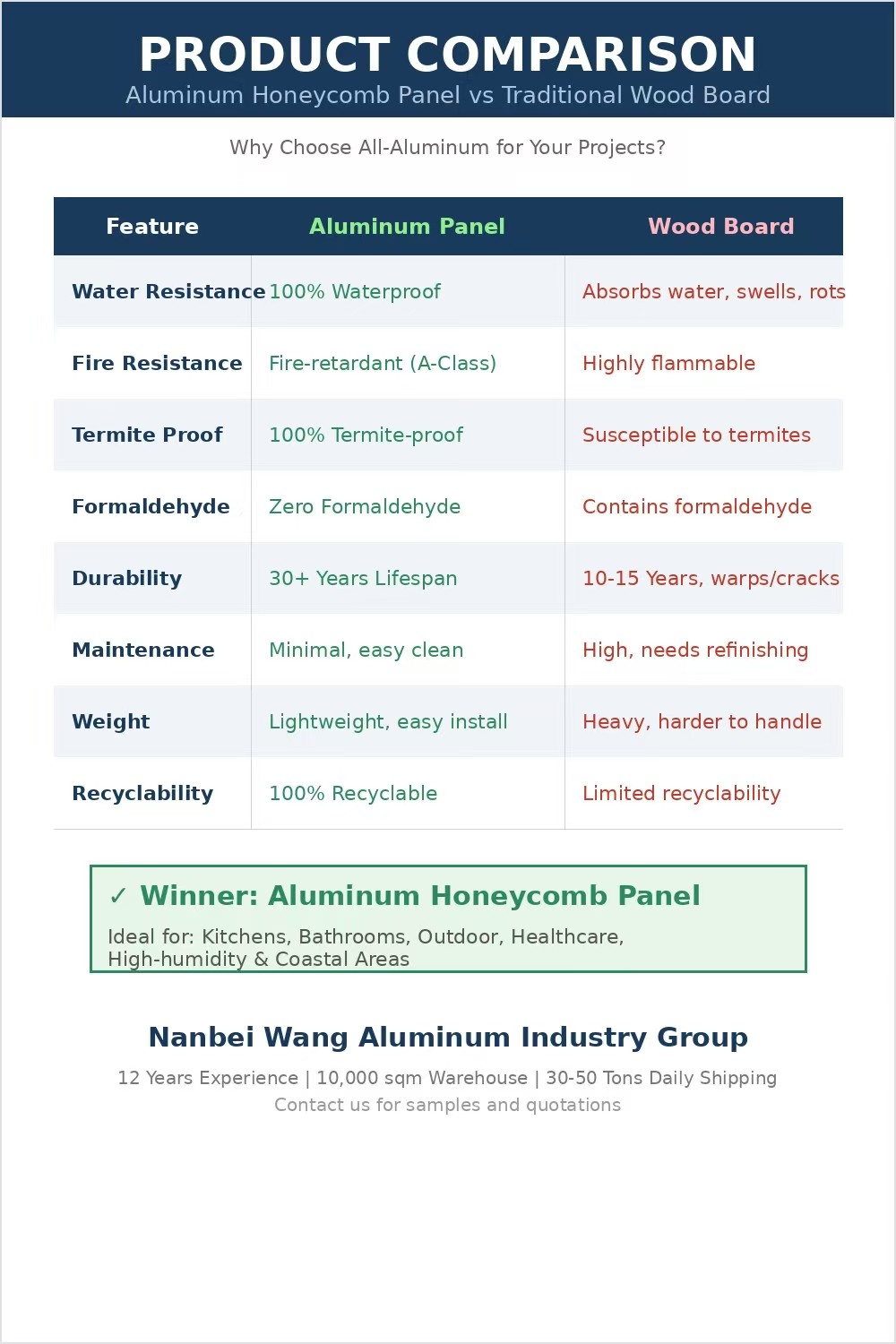
NBW-WPB-003 is stated as formaldehyde-free, and the supplier's comparison data for all-aluminum panels records a formaldehyde result of Not Detected under GB 18584-2024, against an E1 reference of ≤0.124 mg/m³. That is a measured statement tied to a limit of detection.
ZKB-1220×2750 is stated as E0 / zero formaldehyde. E0 is a grade label; the numeric limit and the test method should be quoted on the report. When the two are placed side by side, the questions to ask are: what was the limit of detection, what method was used, and was the sample a finished panel or a raw board.
Water: waterproof versus 100% waterproof
Both products claim water resistance, and one claim is expressed absolutely. An absolute claim should be converted into a measurable value before acceptance. The supplier's comparison data for all-aluminum panels records water absorption below 1% in a 24-hour test, against more than 10% for standard particle board. Request the 24-hour water absorption value, any thickness swelling figure, and the test conditions for the specific product and thickness you are buying.
Mildew and termites
Anti-mildew and termite-proof characteristics are stated for NBW-WPB-003 and are not stated in the supplied ZKB-1220×2750 specification. Absence of a claim is not evidence of poor performance; it means the property is unconfirmed and should be requested if the application needs it — particularly in ground-floor, coastal or high-humidity interiors.
Scenario fit: walls, renovation, furniture, hospitality and healthcare
| Interior scenario | Better first fit | Reason on the supplied evidence | What to verify before ordering |
|---|---|---|---|
| Feature and corridor wall cladding | NBW-WPB-003 | Wall-panel format with seamless splicing and a 5–18 mm range | Joint detail, flatness tolerance, maximum run without a movement joint |
| Old-house renovation over existing finishes | NBW-WPB-003 | Thin 5/9/10 mm formats limit build-up at frames and reveals | Substrate survey, fixing method, edge termination at existing trim |
| Cabinets, wardrobes, shelving | ZKB-1220×2750 | 18 mm standard thickness matches conventional carcass and shelf logic | Machined-edge finish, shelf load, core density, fixing performance |
| Interior door and drawer faces | Either, by thickness | WPB-003 at 5/9/10 mm and ZKB at 5/10 mm both suit thin faces | Hinge and handle pull-out, face flatness, edge banding or edge sealing |
| Hotel guest rooms and public areas | Decided by fire documentation | ZKB states B1; WPB-003 states fire resistance without a class | Report against the project's fire framework, plus surface durability and repairability |
| Healthcare and clinical interiors | Decided by joint and cleaning strategy | Seamless splicing reduces joint lines; anti-mildew is stated for WPB-003 | Cleaner and disinfectant compatibility, joint sealing, formaldehyde report |
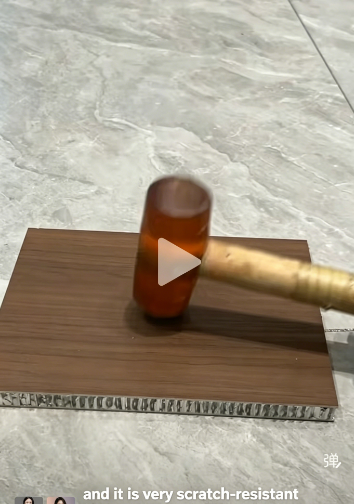
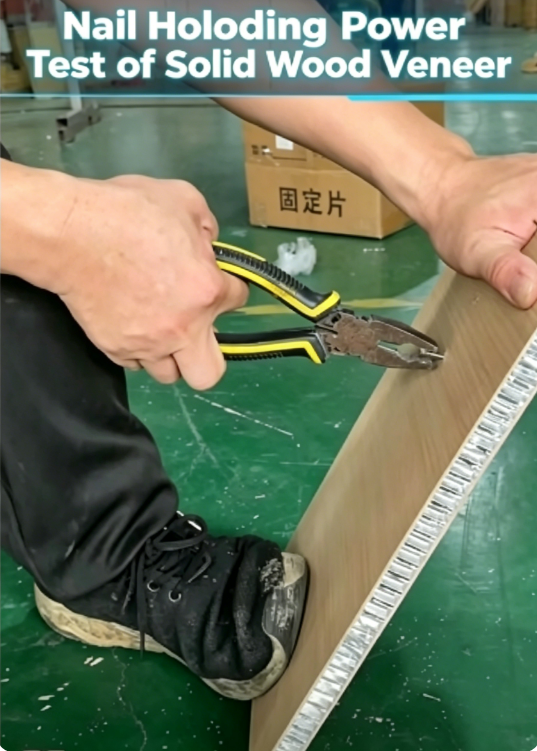
Two practical notes on this table. First, hospitality and healthcare projects are usually decided by compliance documents rather than by panel preference, so the fire and emissions reports should be reviewed before the finish is chosen. Second, the company's wider range includes solid wood veneer honeycomb panels, which gives a route to a wood-grain finish where an interior scheme calls for one — the finish changes, the specification discipline does not.
Purchasing terms and acceptance criteria
Most disputes on interior panels are not about the product category. They are about what was written down. The following terms are worth locking before a purchase order is issued.
- Build sheet per line item. Model, thickness, skin gauge, core type, surface finish, colour reference and panel orientation, stated separately for every item on the order.
- Fire report matched to the build. Test method, classification, thickness tested, and whether the tested item was the panel or a full assembly.
- Formaldehyde report with a limit of detection. Not a grade word alone; the method and the detection limit should appear on the document.
- Water absorption value. A 24-hour figure, plus any thickness swelling result, for the exact thickness being supplied.
- Joint and flatness tolerances. For seamless splicing, the achievable joint width, the permitted lippage and the flatness tolerance measured over a stated length.
- Areal weight and packing. Kilograms per square metre, panels per crate, and the edge protection used for transport.
- Machining specification for board use. Where ZKB-1220×2750 is used for cabinets or doors, the edge treatment, hinge pattern and fixing schedule belong on the drawing, not in a conversation.
- Approved sample and retained reference. One signed sample held by both parties, plus a written list of what was checked on it.
- Acceptance sampling. Batch size, sample size, and the defect categories that trigger rejection rather than discount.
- Colour and batch consistency. How much variation is accepted between production batches, since panels from different runs may be installed side by side.
Budget framing when the quotes are not like-for-like
Honeycomb panel pricing is widely dispersed, and published benchmarks do not translate directly into a quote. Global Market Insights reports a blended average selling price of USD 211 per square metre for aluminum honeycomb panels in 2025, and separately cites a factory-side planning range of USD 55–130 per square metre for 2026. The gap is largely scope: the blended average spans grades that include aerospace, while the planning range reflects construction-side factory pricing.
The practical rule is to compare installed cost per square metre of finished surface, or cost per cabinet module, rather than price per sheet. That means including substrate preparation, joint finishing, edge treatment, waste allowance and the labour difference between a spliced wall and a jointed board layout. A thinner wall panel covers the same wall area per sheet as a thicker board, but with different fixing and handling requirements — and those requirements carry cost.
Supply capability behind the specification
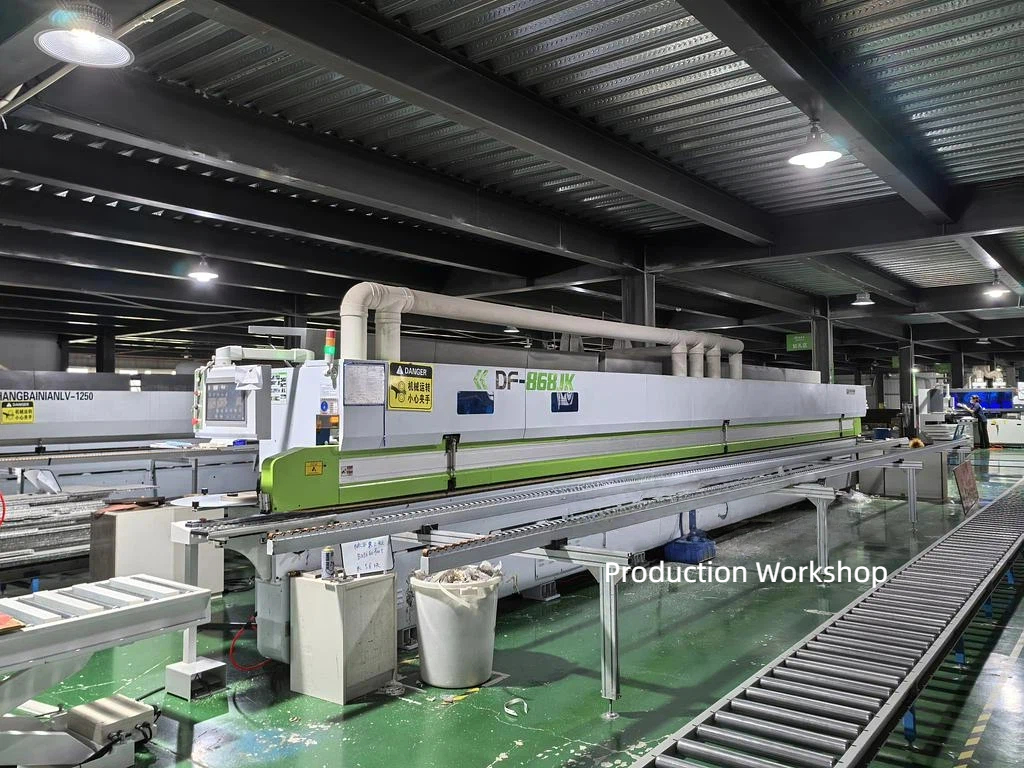
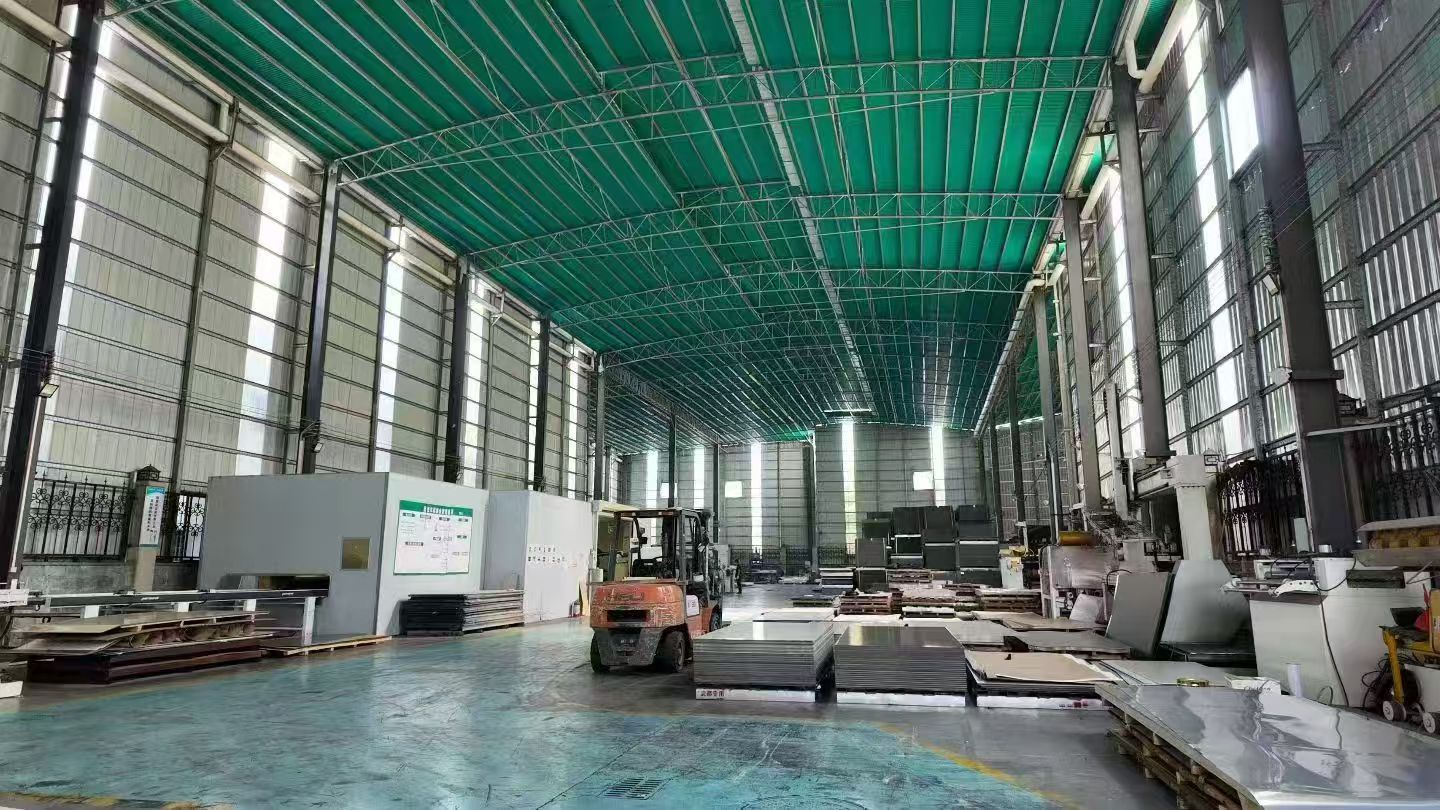
Nanbeiwang Aluminum — Guangdong Nanbeiwang Smart Home Co., Ltd., founded in 2013 and based in Foshan, Guangdong — manufactures all-aluminum interior materials for whole-house customization, including honeycomb panels, aluminum wall panels, aluminum interior doors and ceilings. Published company data describes an 80,000 m² facility, 320 employees, an annual output of 1,000,000 sheets and a 15-engineer R&D team, with roughly 50% of sales exported to Europe, Southeast Asia, the Middle East and North America.
For a buyer, two of those facts matter more than the rest. The stated 10,000 m² stock position supports continuity across repeat orders, which is what protects a colour and batch match on a phased fit-out. And because the product list covers both honeycomb panels and bamboo boards, both formats in this comparison can be reviewed in one sourcing conversation rather than two supply chains.
FAQ: NBW-WPB-003 and ZKB-1220×2750
Which product has the stronger fire documentation for a commercial interior?
ZKB-1220×2750 states a B1 fire rating, while NBW-WPB-003 is described as fire-resistant without a class in the supplied specification. Strength of documentation is not settled by the label alone: ask for the test method, the classification system, the thickness tested and whether the tested item was the panel or a complete assembly. The applicable fire framework differs by market, so the report must match the authority having jurisdiction.
Can NBW-WPB-003 be used for cabinet fronts and interior door panels?
Dimensionally it can be considered, because the range includes 18 mm alongside 5 mm, 9 mm and 10 mm, in a 1220 × 2750 mm format. Suitability depends on what the supplied documentation does not cover: hinge and shelf-pin pull-out, machined-edge finish and areal weight. For cabinet work, ask for fastener holding data and an edge treatment proposal before approving the material.
Why do honeycomb panel quotes vary so widely for similar-sounding panels?
Published benchmarks span very different scopes. Global Market Insights cites a 2025 blended average selling price of USD 211 per square metre that includes aerospace grades, and a separate factory-side planning range of USD 55–130 per square metre for 2026. Neither is a quotation. Compare installed cost per square metre of finished surface, with substrate preparation, joint finishing, edge treatment and waste included.
What should be checked on a sample before approving either product?
Measure the actual thickness and, for honeycomb panels, the skin gauge; trial a joint or edge detail at full scale; confirm the surface finish against the approved colour reference; check flatness against a straight edge; and test a fixing point if the panel will carry hardware. Record what was checked and retain a signed reference sample so later batches can be compared against it.
What supply terms reduce risk on a phased interior project?
Fix the build sheet per line item, agree colour and batch tolerance between production runs, state panels per crate and edge protection for transport, and set an acceptance sampling plan with named defect categories. A stated 10,000 m² stock position and an annual output of 1,000,000 sheets support continuity, but the replacement allowance and re-order lead time should still be written into the agreement.
Conclusion: decide by assembly, then verify by document
The NBW-WPB-003 aluminum honeycomb wall panel and the ZKB-1220×2750 all-aluminum bamboo core board are not ranked alternatives; they are two formats for two different assemblies. Where the job is a continuous interior wall, particularly in a renovation where build-up at frames and reveals matters, WPB-003's 5/9/10/18 mm range and seamless splicing give the more direct fit. Where the job is a cabinet carcass, wardrobe body or door module built around an 18 mm reference, ZKB's standard 18 mm thickness in a 1.22 × 2.75 m sheet follows established board logic more closely.
The performance claims need the same discipline. ZKB states a B1 fire rating and an E0 / zero-formaldehyde position; WPB-003 states formaldehyde-free with a Not Detected result under GB 18584-2024, plus anti-mildew and termite-proof characteristics, with fire resistance described but not classified in the supplied data. Converting those statements into reports, tolerances and acceptance criteria is what turns a panel comparison into a specification a project can actually enforce.
Next step
If you are specifying interior wall, cabinet or door panels and need the build sheet, skin gauge and test documentation matched to your project, send the panel schedule and thickness requirements for review. Samples of both formats can be arranged so the joint detail and fixing performance are assessed before the order is placed.

Download the 2026 Nanbeiwang product catalog (PDF) for the full panel, door, wall and ceiling range.
Have Questions or Need More Details?
Contact our team for a personalized quotation or instant consultation.
Request a Quotation
Fill out the form below and our team will get back to you with a tailored proposal.
WhatsApp Direct Chat
Prefer to chat in real-time? Message us on WhatsApp for instant assistance & quick answers.
- Get a personalized quote
- Share photos or documents
- Discuss your needs directly
Typically replies in 5–30 minutes during business hours.