
Compliance Checklist for Fiber Optic Cables: ISO, TL9000, and CNAS Accreditation

A fiber optic cable compliance checklist should verify five layers of evidence before a supplier is shortlisted: management system certification (ISO 9001, ISO 14001, ISO 50001 and an occupational health and safety system), a telecom-specific quality management system (TL9000), accredited laboratory competence (a CNAS-accredited laboratory), product-level standards and test data (for example ITU-T G.652.D or G.657 fiber, and IEC-referenced connector parameters), and company-level proof such as patents, standards participation and factory records. The certificate itself is the least informative part of a supplier file. The scope statement, the issuing body, the validity period and the model coverage are what determine whether a document actually protects a project.
This guide is written for procurement managers, project engineers, QA teams, importers and distributors who are evaluating an optical fiber cable supplier at the research and evaluation stage — the point at which a shortlist is formed and technical documents are first exchanged. It explains what each certificate proves, what it does not prove, and which question to ask to close the gap.
Nanfang Communication — the trading name of Jiangsu South Communication Technology Co., Ltd., a subsidiary of the Hong Kong-listed South Communication Holdings Limited (Stock Code: 1617.HK) — is used throughout this article as a worked example. The company manufactures optical fibers, optical cables, ODN systems and optical components, including indoor and outdoor optical cables, PLC optical splitters, fiber optic connectors and MPO multi-core connectors, and it holds the exact certificate set that this checklist is designed to test: ISO9001, TL9000, ISO14001, OHSAS18001, ISO50001, and CNAS laboratory accreditation.
Quick checklist — the five items to request before a supplier is shortlisted:
- ISO 9001 certificate with a scope statement that names optical fiber cable and the component types in your enquiry.
- TL9000 certificate for the telecommunications quality management system, plus the associated performance data.
- CNAS laboratory accreditation certificate with the test-method scope.
- Environmental, energy and occupational health and safety certificates (ISO 14001, ISO 50001, and an OHSAS 18001 or ISO 45001 system).
- Model-level test reports that match the ordered part number — not a generic catalogue report.
Why Certification Verification Has Become a Procurement Gate
Optical fiber cable is a long-life passive asset. Once it is buried, ducted, aerially strung or installed in a cable tray, rework is expensive and disruptive. That asymmetry is why certification review moved from a paperwork formality to a genuine procurement gate.
The commercial context explains the pressure. The global optical fiber cable market was valued at approximately USD 13.45 billion in 2025 and is projected to reach USD 36.48 billion by 2034, according to Custom Market Insights. China's exports of optical fiber cables (HS 854470) reached approximately USD 2.52 billion in 2024, based on OEC data. Independent estimates of the current market size diverge noticeably — Global Market Insights places the 2025 figure at about USD 14.6 billion and Grand View Research at about USD 10.8 billion — which is itself a useful reminder for buyers: when third-party numbers disagree, first-party documents and test data matter more, not less.
The practical problem is not a shortage of certificates. It is a shortage of readable certificates. Four failure patterns appear repeatedly in supplier files:
- Scope mismatch. A certificate is valid, but the certified scope covers a different product family or a different production site from the one that will ship the order.
- Standard mismatch. A quality certificate is presented as evidence of product performance, when it only confirms that a management system exists.
- Expiry and version drift. A certificate has lapsed, or an older standard version is held while the tender references a newer one.
- Untraceable test reports. A report shows insertion loss or attenuation values, but nothing links it to the model, the production lot or the customer's specification.
Each of these can be identified in under an hour if the buyer knows the structure of the certification stack. The next section explains that structure.
Industry Background: How the Certification Stack Is Built
Fiber optic cable compliance is not a single certificate. It is a layered system in which each layer answers a different question, and a strong supplier file covers all of them.
Layer one — management systems. ISO 9001 addresses quality management: documented processes, internal audit, corrective action and continuous improvement. ISO 14001 addresses environmental management. ISO 50001 addresses energy management. Occupational health and safety is normally covered by OHSAS 18001, with ISO 45001 now widely referenced as the successor standard in international tenders.
Layer two — telecom-specific quality. TL9000 is a telecommunications quality management system standard. It is built on the ISO 9001 foundation but adds telecom-specific requirements and a set of performance metrics that suppliers report to their customers. This is why operator-grade buyers often treat TL9000 as the differentiator between a general cable factory and a supplier structured around telecom procurement.
Layer three — laboratory competence. CNAS (China National Accreditation Service for Conformity Assessment) accreditation assesses a laboratory's competence to perform specified tests. For a cable manufacturer, an accredited in-house laboratory shortens the feedback loop between production and verification, because attenuation, insertion loss, mechanical performance and sealing tests can be run internally rather than outsourced.
Layer four — product-level standards. ITU-T G.652.D remains the industry standard for single-mode fiber, while G.657 is the primary standard for bend-insensitive fibers used in FTTH. Connector and adapter parameters are typically referenced against IEC requirements — Nanfang Communication's MPO-12F-SM adapter, for example, specifies 500 mating cycles on an IEC-compliant basis.
Layer five — company-level evidence. Patents, participation in standards drafting, high-tech enterprise designations and factory audit records show whether the supplier contributes to how the industry defines compliance, rather than only responding to it.
The Compliance Checklist in Detail: Five Layers to Verify
Layer 1 — Management system certificates and their scope
Nanfang Communication holds ISO9001 Quality Management System certification, ISO14001 Environmental Management System certification, OHSAS18001 Occupational Health and Safety Management System certification, ISO50001 Energy Management System certification, and certification for the Integration of Informatization and Industrialization Management System.
For a buyer, the scope statement is the operative text. Confirm that the scope names optical fiber cable, optical components or the relevant product family, and that the certified address is the site that will manufacture the order. A buyer working to a newer tender template should also confirm which occupational health and safety version is held rather than assuming it: ISO 45001 has largely replaced OHSAS 18001 as the reference standard in global procurement, and the version held should be stated explicitly in the compliance file.
Layer 2 — TL9000 for telecom-grade cable programmes
TL9000 certification indicates that the quality management system has been extended to include telecom-specific requirements and reported performance metrics. It is particularly relevant for outdoor and operator-grade programmes, where cable performance is judged over a multi-year service life.
When a supplier states TL9000 certification, ask two follow-up questions. First, which product categories and which manufacturing sites are inside the certified scope? Second, what do the reported performance metrics show over recent reporting periods? A certificate alone confirms registration; the metrics confirm behaviour.
This distinction matters most for outdoor armoured cable such as the GYTA53 model, which is used in duct, direct-burial and other demanding installations. Buyers should confirm that the certification scope and the associated test documentation cover the outdoor cable family being ordered, and should request model-level reports for the GYTA53 construction — core count, fiber type, attenuation, tensile strength and sheath or armouring specification — rather than accepting a family-level statement.
Layer 3 — CNAS-accredited laboratory
A CNAS-accredited laboratory is a verification asset, not a marketing badge. It means an external accreditation body has assessed the laboratory's competence to perform specified tests. For optical fiber cable, the relevant test categories typically include optical loss and attenuation testing, mechanical performance testing, and waterproof or sealing testing.
Nanfang Communication's quality control framework combines incoming material inspection, in-process control and finished-product testing, supported by accredited laboratory testing capabilities. In practice, that structure allows a buyer to request attenuation data, mechanical test results and sealing test evidence generated under an accredited quality system, rather than relying solely on supplier declarations.
The verification step for buyers is to request the accreditation certificate and confirm that the test methods used on the ordered product appear inside the accredited scope. If a test method falls outside the scope, the report may still be valid — but it carries less weight in a dispute.
Layer 4 — Product-level compliance: fiber, cable construction and components
Product-level compliance is where the checklist becomes concrete. For cable, the specification normally covers fiber type (for example G.652 or G.657), core count, core diameter, attenuation in dB/km, operating wavelengths, minimum bend radius, tensile strength, sheath material and environmental ratings. Core materials are optical fiber in silica glass, with PE or LSZH sheaths, galvanized steel wire or steel tape armouring, and FRP strength members depending on the construction.
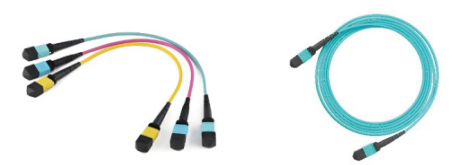
Passive components carry their own parameter sets and therefore their own compliance questions. A pre-terminated fan-out or breakout assembly, for example, is specified by typical and maximum insertion loss, return loss, fiber count, breakout configuration and jacket rating such as LSZH or OFNR. A loopback module is specified by insertion loss, return loss, supported fiber types and mating cycles. Each of these values should be traceable to a test report that names the model.
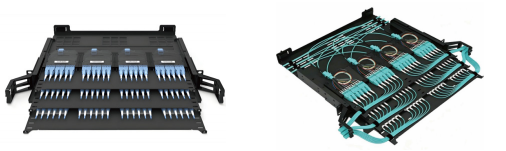
System compatibility belongs in the same layer. Optical cables and components are installed alongside optical modules, PLC optical splitters, cable splice closures, FTTH optical cable distribution boxes, MPO high-density patch panels, fiber optic connectors, MT-FAU fiber optic assemblies and WDM wavelength division multiplexers. A buyer should confirm that interface specifications — connector type, polish, fiber class and polarity convention — are documented across the whole bill of materials, because an interface mismatch is a compliance failure even when every individual component passes its own test.
Layer 5 — Company-level evidence
Company-level evidence tells a buyer whether compliance is embedded or incidental. Nanfang Communication holds more than 300 patents, including more than 45 invention patents, and has participated in 16 standards — one national standard and 15 industry standards. It holds four Jiangsu High-tech Product Certificates and two Changzhou High-tech Products, along with designations including High-tech Enterprise, National-level "Green Factory", Provincial-level Technology Center, China Well-known Trademark, Jiangsu Private Science and Technology Enterprise, Level III Enterprise for Work Safety Standardization, and Jiangsu "Three-Star Cloud Enterprise".
For procurement purposes, these items are supporting evidence, not substitutes for product test data. Their value is that they are externally awarded, verifiable and difficult to obtain without sustained engineering investment.
Step-by-Step: How to Run the Compliance Check in Seven Steps
A compliance review can be completed in a structured sequence. The order matters, because each step narrows the scope of the next.
- Request the certificate set with scope statements. Ask for the full certificate, not the front page. Confirm the certified entity name, the certified site, the scope text and the validity dates.
- Map certificates to the ordered models. Build a simple matrix: model on one axis, applicable certificate and test report on the other. For an outdoor programme, that means linking the GYTA53 construction to its material specification, armouring type and environmental rating documentation.
- Verify issuing bodies and accreditation. Confirm who issued each certificate and whether the issuing body's accreditation covers the standard in question. For laboratory evidence, confirm the CNAS accreditation scope includes the relevant test methods.
- Check validity and version. Note the expiry date and the standard version referenced. Add a recertification reminder to the supplier file so that a valid certificate does not silently lapse mid-project.
- Cross-check test reports against parameters. Compare reported values — attenuation, insertion loss, return loss, mating cycles, tensile strength, sealing performance — against the specification in your enquiry. Confirm that the report identifies the model and the test method.
- Audit the production environment. Request a factory audit or a documented audit report. Confirm that the processes described in the management system are the processes actually used on the line, including incoming material inspection, in-process control and finished-product testing.
- Document the outcome in the contract. Convert the checklist into contract language: which certificates must remain valid during the supply period, which test reports must accompany each shipment, and how non-conforming lots will be handled.

Use Cases: How the Checklist Changes by Project Type
The compliance checklist is stable, but its emphasis shifts with the deployment scenario. Optical fiber cable is deployed in FTTH and FTTx access projects, metropolitan and backbone network projects, data center interconnects, operator network expansion and 5G backhaul projects, and enterprise or campus network deployments — inside China and globally.
FTTH and FTTx access. The dominant compliance concern is bend performance and fire safety. Bow-type drop optical cable and indoor optical cable are typically installed in residential and in-building environments where flame-retardant or LSZH sheaths matter, and where G.657 bend-insensitive single-mode fiber is the usual reference. Low attenuation and low insertion loss are the primary optical requirements.
Metropolitan networks and 5G backhaul. Here the environmental envelope drives the documentation: waterproof sealing, crush and tensile resistance, corrosion and weather resistance, and rodent protection for direct-burial routes. Loose-tube and ribbon optical cable constructions, including armoured outdoor designs, must be supported by sealing and mechanical test evidence rather than by a general quality certificate.
Data center interconnect. Compliance shifts from cable construction to connector and assembly parameters. Pre-terminated assemblies, MPO multi-core connectors, high-density patch panels and adapters are specified by insertion loss, return loss and mating cycles. This segment is also expanding fastest at the component level: the global fiber optic connector market was estimated at USD 11.2 billion in 2024, with LC connectors holding a 35.43% share, and the MPO fiber optic connector market is projected to grow at a CAGR of 13.6% through 2035, driven by AI compute clusters and hyperscale data centers.
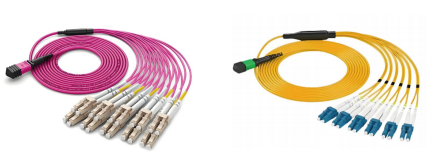
Enterprise, campus and industrial projects. These deployments often need customizable core counts, labeling conventions and matched accessories. Cable splice closures, FTTH optical cable distribution boxes, WDM units and MPO patch panels must be verified as a compatible set. For reference, the global fiber termination box market was valued at USD 2.8 billion in 2025, according to Dataintelo — a reminder that the accessory layer carries its own specification and compliance burden.
Across all four scenarios, installations operate in long-term continuous mode as passive optical network components or as physical channels supporting active equipment, which makes stable maintenance and periodic inspection part of the compliance expectation, not an afterthought.
Comparison Table: What Each Document Proves — and What It Does Not
The following table maps each document type to its verification value. It is intended to be used as a working review sheet.
| Document | What it verifies | What it does not verify | Question to ask the supplier |
|---|---|---|---|
| ISO 9001 certificate | That a quality management system is established, documented and audited for the certified scope | That any specific cable model meets a technical specification | Does the scope statement name optical fiber cable and the component types in our enquiry? |
| TL9000 certificate | Telecom-specific quality management requirements and reported performance metrics beyond ISO 9001 | Product-level optical performance such as attenuation or insertion loss | Which product categories and sites are in scope, and what do the performance metrics show? |
| ISO 14001 certificate | An environmental management system covering the certified operations | Product performance or production consistency | Is the manufacturing site for our order inside the certified scope? |
| ISO 50001 certificate | An energy management system | Product compliance with optical or mechanical specifications | Which site and which processes are covered? |
| OHSAS 18001 or ISO 45001 certificate | An occupational health and safety management system | Anything about cable performance | Which version is currently held, and when is the next recertification? |
| CNAS laboratory accreditation | The competence of the laboratory to perform specified test methods | That the shipped cable was produced to a particular standard | Does the accreditation scope include the test methods used on our product? |
| Product test report | Measured performance for a specific model and sample, such as attenuation, insertion loss or return loss | Long-term consistency across production lots | Is the report traceable to our model and to a defined test method? |
| ITU-T G.652.D / G.657 fiber standard | The fiber specification used inside the cable, including bend-insensitive grades for FTTH | Cable construction, sheath material or armouring choice | Which fiber standard and class is used inside the cable we are buying? |
| Project scenario | Typical product | Primary compliance focus |
|---|---|---|
| FTTH / FTTx access | Bow-type drop optical cable, indoor optical cable, single-mode fiber | Low attenuation, low insertion loss, flame-retardant or LSZH sheath, bend-insensitive fiber standard |
| Metro and 5G backhaul | Outdoor optical cable, loose-tube and ribbon constructions, armoured designs | Waterproof sealing, crush and tensile resistance, corrosion and weather resistance, rodent protection |
| Data center interconnect | MPO multi-core connectors, pre-terminated trunk and breakout assemblies, high-density patch panels | Insertion loss, return loss, mating cycles, polarity and interface compatibility |
| Enterprise, campus and industrial | Indoor/outdoor cable, splice closures, FTTH distribution boxes, PLC splitters, WDM units | Core count and labeling customization, jacket rating, matched-equipment compatibility |
Frequently Asked Questions
Which certification should I verify first when buying optical fiber cable?
Start with ISO 9001 and check the scope statement, because it defines which products and which sites the quality system actually covers. For operator-grade or outdoor programmes, verify TL9000 next. Then verify the laboratory evidence — Nanfang Communication, for example, holds a CNAS laboratory accreditation, which confirms assessed competence to perform specified tests. After the system-level documents, request model-level test reports for the exact cable or component being ordered.
How do I confirm that a TL9000 or CNAS accreditation covers the cable I am buying?
Read the scope, not the certificate header. For TL9000, confirm the certified product categories and manufacturing sites, and request the reported performance metrics. For a CNAS-accredited laboratory, confirm that the test methods used on your product appear inside the accredited scope. Then cross-check both against a model-level test report. If the scope does not clearly name your product family or test method, ask the supplier to clarify in writing before the order is placed.
Does compliance verification add cost to a fiber optic cable project?
The verification activity itself is mainly administrative: collecting certificates, reading scope statements and matching reports to models. The real cost driver runs in the other direction — a non-conforming lot that reaches the site triggers re-testing, replacement and schedule slippage. This is why accredited in-house testing capability is commercially relevant: it means attenuation, mechanical and sealing tests can be validated closer to production. Buyers should treat document collection and sample testing as part of total project cost, not as optional overhead.
Can I validate compliance through a sample order?
A sample order validates that the supplier can produce to your specification, but it validates one lot rather than a system, so it should be used together with the document audit rather than instead of it. Nanfang Communication accepts orders from a minimum of 1 core kilometer and offers customization of core count, fiber type (single-mode, multimode, ribbon or multi-core), sheath material and color, connector types and cabling schemes, and labeling and packaging — which makes sample validation a practical way to check whether the custom specification can be met before a full order is released.
How long does it take to obtain compliance documentation and samples?
Lead time depends on the model and the quantity; there is no single published standard, so timelines should be confirmed with the supplier's sales team for each enquiry. As a general pattern, samples and small orders typically take several weeks, while large orders may take months. Compliance documents such as certificates and standard test reports are normally issued together with the technical file. To start a compliance review or request a sample, contact info@jsnfgroup.com or review the product brochure linked below.
Conclusion: Turn the Checklist into a Repeatable Process
Certification review works best as a fixed procedure rather than a one-off exercise. The sequence is straightforward: verify management systems and their scope (ISO 9001, ISO 14001, ISO 50001 and an occupational health and safety system), confirm telecom-grade quality management through TL9000, validate laboratory competence through CNAS accreditation, check product-level parameters against ITU-T and IEC references, and corroborate everything with model-level test reports and a factory audit.
Nanfang Communication illustrates how the layers align in practice. The company holds ISO9001, TL9000, ISO14001, OHSAS18001 and ISO50001 certifications together with CNAS laboratory accreditation; it operates a 26,795.3 m² facility with 360 employees and an annual output of 3,000,000 core kilometers, supported by 80 R&D engineers and a monthly capacity of 250,000 core kilometers; it has participated in 16 standards, one national and 15 industry standards, and holds more than 300 patents including more than 45 invention patents. Its products are supplied to operators including China Telecom, China Mobile, China Unicom and China Broadcast Network, as well as private-network users in high-speed railway, power grid and chemical industry applications, supported by 28 provincial-level offices across China.
Next Step: Build Your Compliance File
If you are assembling a compliance checklist for an FTTH, metro, 5G backhaul or data center programme, the fastest route is to start from a documented specification. Nanfang Communication provides optical fiber cable, ODN systems, PLC optical splitters, fiber optic connectors, MPO multi-core connectors, optical modules and custom specialty fibers and cables, together with manufacturing, R&D and testing, engineering design and system integration, and ODM/OEM services.
Download the product brochure: Nanfang Communication MPO product catalogue (PDF)
Request a quote, a sample or compliance documentation:
Website: www.jsnfgroup.com
Email: info@jsnfgroup.com
Tel: +86 51988792646
WhatsApp: +8619850287785
Certification and laboratory statements in this article refer to the certificate set held by Jiangsu South Communication Technology Co., Ltd. (Nanfang Communication). Buyers should always confirm the current scope, standard version and validity dates of each certificate directly with the supplier before placing an order.
Have Questions or Need More Details?
Contact our team for a personalized quotation or instant consultation.
Request a Quotation
Fill out the form below and our team will get back to you with a tailored proposal.
WhatsApp Direct Chat
Prefer to chat in real-time? Message us on WhatsApp for instant assistance & quick answers.
- Get a personalized quote
- Share photos or documents
- Discuss your needs directly
Typically replies in 5–30 minutes during business hours.