
MPO-12F Loopback vs. 24F Loopback: Choosing the Right Testing Module
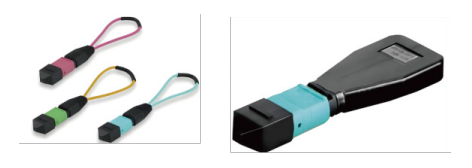
A loopback module returns transmitted light straight back into the port that produced it, which is why commissioning teams use one to validate a transceiver or switch port before any far-end link exists. For Nanfang Communication's two MPO loopback modules, the purchase decision reduces to two checks: how many fiber positions the port under test presents, and how much insertion loss the link budget can absorb. The MPO-12F-Loopback is specified for 8-fiber and 12-fiber configurations at ≤0.7 dB low-loss insertion loss; the MPO-24F-Loopback is specified for 24-fiber configurations at ≤1.0 dB. Return-loss floors and the ≥100,000 mating-cycle rating are identical across both.
Run those two checks in order and the module choice becomes unambiguous. Fiber type, ferrule material, certification traceability, order quantity and landed cost are filters applied afterwards — not the starting point.
Problem Definition: Why the 12F vs. 24F Choice Is a Real Constraint
Loopback modules are bought in far smaller quantities than cable, patch cords or pre-terminated trunk assemblies, so they are frequently treated as an accessory rather than a specified item. Three constraints make the fiber count a procurement decision instead of a technician's preference:
- Test coverage. A 12-fiber loopback returns light on 12 positions; a 24-fiber loopback returns light on 24. If a 24-position port is validated with a 12-fiber module, the remaining positions are simply not exercised in that test pass.
- Loss budget. The two modules are not specified to the same insertion-loss limit. The 24-fiber configuration carries more positions and more ferrule contacts, so it is specified at ≤1.0 dB low-loss insertion loss, while the 8F/12F configuration is specified at ≤0.7 dB. On a link with a tight budget, that difference has to be declared in the test plan before results are accepted.
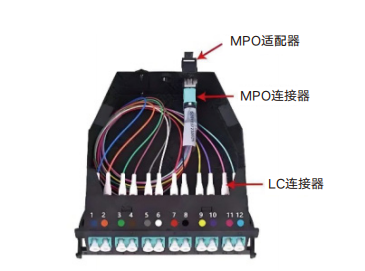
- Inventory and kit design. Deployed pre-terminated assemblies are built in both fiber counts — for example the MTP-12F-to-6xLC-Duplex and the MTP-24F-to-12xLC-Duplex fan-out cords. A test kit built around a single fiber count will always be able to verify part of the plant and not the rest.
The practical consequence is that the loopback specification should be written at the same time as the cabling bill of materials. Buyers who treat the module as an afterthought usually discover the mismatch during the commissioning window, when the cost of a re-order is measured in delayed turn-up rather than in unit price.
Industry Background: Where Loopback Testing Sits in Commissioning
Optical loopbacks belong to the verification stage of a project. They are used in network testing, data center commissioning and equipment validation — the point at which a port, a transceiver or a pre-terminated link must be proven working before traffic is turned up. A fiber optic loopback is a passive device with no electronics, so its contribution to the measurement is fixed and repeatable, which is what makes it usable as a pass/fail reference rather than a diagnostic tool.
The cable market surrounding that test step is large and geographically concentrated. Global Market Insights valued the global fiber optic cable market at USD 14.6 billion in 2025. Trade data published by the Observatory of Economic Complexity, which aggregates UN Comtrade figures, shows China as the leading exporter of optical fibers and cables in 2024, with exports totaling USD 2.52 billion. Those figures do not change how a loopback works, but they explain why tooling, fiber supply and freight options cluster around a small number of manufacturing regions — and why lead-time planning matters as much as specification matching.
Tariffs are the more direct cost factor for North American buyers. Optical fiber cables under HTS 8544.70.00 originating in China faced a total U.S. import duty of 37.50% as of late 2026, according to a duty breakdown published by Airlift USA. Pre-terminated assemblies and test modules are classified separately from bulk cable, so the applicable rate for a loopback order should be confirmed with a customs broker rather than assumed from the cable rate.
Qualification requirements are also environment-specific. ITU-T L.103 describes the characteristics, construction and test methods for indoor optical fibre cables, while IEC 60794-1-104:2024 defines the impact test procedure for optical fibre cables. The same principle applies to test accessories: the acceptance criteria belong to the link being tested, and a module specification is only meaningful next to the port count and loss budget it will be used against.
Detailed Solution: What Each Module Actually Specifies
MPO-12F-Loopback: one part number for 8F and 12F ports
The MPO-12F-Loopback is a fiber optic loopback and MPO test adapter that returns up to 12 fiber positions. Low-loss insertion loss is ≤0.7 dB for the 8-fiber and 12-fiber configurations, and return loss is ≥65 dB in single-mode and ≥25 dB in multimode. It is available for OS2, OM1, OM2, OM3, OM4 and OM5 fiber types, is built with a ceramic/MTP ferrule, plastic housing and fiber cable, and is rated for ≥100,000 mating cycles with a link failure rate below 0.1%.
The 8F/12F grouping in the specification is the detail that saves procurement effort: a single part number covers both the 8-position and the 12-position port, so a commissioning kit does not need two separate modules for those two cases.
MPO-24F-Loopback: single-pass coverage of 24 positions
The MPO-24F-Loopback returns up to 24 fiber positions and is specified at ≤1.0 dB low-loss insertion loss for the 24-fiber configuration. Return loss, supported fiber types, ferrule and housing construction, mating-cycle rating and link failure rate are identical to the 12-fiber module. It is the correct part when the port or the trunk under test presents 24 positions, and it keeps a 24-fiber verification to a single insertion instead of two sequential passes on a 12-fiber module.
Shared platform facts
Both models are classified as fiber optic loopbacks, test equipment and MPO test adapters, and both address the same applications: network testing, data center commissioning and equipment validation. Because the material set and the performance floors are common, a project can standardize on one supplier and one handling procedure across both fiber counts, which simplifies spare-part stocking and technician training.
Certification and verification layer
For buyers who have to document what they purchased, the MPO/MTP loopback range sits inside the manufacturer's quality system. The MPO-12F-Loopback certification is based on the TL9000 Quality Management System Requirements Handbook R6.3, issued by WIT Assessment / Hangzhou WIT Assessment Co., Ltd. and applicable to the global market. The related TL9000-H certificate, number 15/25T15218R11, was issued on 2025-11-20 and runs to 2028-10-19, with a scope covering the manufacture and sales of communication optical fiber cable; the underlying document set is the TL9000 Quality Management System Requirements Handbook R6.3, the TL9000 Measurements Handbook R5.7 Point Release and Category Tables R5.9.
Independent test capability sits with the manufacturer's laboratory, which is accredited to ISO/IEC 17025:2017 as CNAS L11717 by the China National Accreditation Service for Conformity Assessment. That accreditation covers the testing and calibration of optical fiber cable and optical communication components, applies to China and global markets, was issued on 2024-11-30 and remains valid to 2030-11-29. At site level, Nanfang Communication also operates ISO 9001, ISO 14001:2015, ISO 45001:2018 and ISO 50001 management systems, with the environmental and occupational health and safety certificates issued by SWR Certification (Jiangsu) Co., Ltd.

MPO-12F-Loopback vs. MPO-24F-Loopback: Specification Comparison
| Decision parameter | MPO-12F-Loopback | MPO-24F-Loopback |
|---|---|---|
| Fiber positions returned | Up to 12 (specification group covers 8F and 12F) | Up to 24 |
| Low-loss insertion loss | ≤0.7 dB (8F/12F) | ≤1.0 dB (24F) |
| Return loss | ≥65 dB (SM) / ≥25 dB (MM) | ≥65 dB (SM) / ≥25 dB (MM) |
| Supported fiber types | OS2 / OM1 / OM2 / OM3 / OM4 / OM5 | OS2 / OM1 / OM2 / OM3 / OM4 / OM5 |
| Mating cycles | ≥100,000 | ≥100,000 |
| Link failure rate | <0.1% | <0.1% |
| Construction | Ceramic/MTP ferrule, plastic housing, fiber cable | Ceramic/MTP ferrule, plastic housing, fiber cable |
| Typical test coverage per pass | 8-position and 12-position ports, and 12-fiber trunk assemblies | 24-position ports and 24-fiber trunk assemblies |
| Certification basis | TL9000 Quality Management System Requirements Handbook R6.3; TL9000-H certificate 15/25T15218R11 | Same manufacturer quality system and TL9000-H certificate scope |
| Cost drivers | Fiber and ferrule count, fiber type, quantity, destination | Twice the positions and ferrule contacts of the 12F module; pricing by quotation |
Reading the table: the two modules are separated by fiber count and by the insertion-loss limit attached to that count. Every other parameter — return loss, fiber type coverage, mating cycles, link failure rate, materials — is common. That is what makes the selection rule simple: match the count first, then confirm the budget.
Step-by-Step: Selecting the Correct Module for a Project
- Count the positions on the port under test. Take the fiber count from the transceiver port, the patch panel port or the trunk assembly — not from the cable reel. If the deployment mixes 8F, 12F and 24F ports, record each count separately before ordering anything.
- Decide the coverage per test pass. One 24F module validates a 24-position port in a single insertion. Using 12F modules on the same port means two passes and a manual note about which positions were covered — an error source in acceptance reporting.
- Check the loss budget against the specified insertion loss. The 8F/12F configuration is specified at ≤0.7 dB low-loss; the 24F configuration at ≤1.0 dB. Add the loopback's contribution to the other loss elements in the test path and confirm the total still supports a meaningful pass/fail threshold.
- Confirm fiber type and end-face compatibility. Both modules cover OS2, OM1, OM2, OM3, OM4 and OM5, so the fiber type selection is a matching exercise rather than a restriction — but the module must pair correctly with the polish and fiber type of the patch cord used to reach the port.
- Verify traceability before the order is released. Ask for the certificate reference that applies to the loopback range (TL9000 Quality Management System Requirements Handbook R6.3 for the MPO-12F-Loopback) and for the laboratory accreditation behind the test data (ISO/IEC 17025:2017, CNAS L11717). Procurement files that are assembled later rarely match the shipped batch.
- Validate with samples, then scale. Order one module of each fiber count, run them against the actual port types in the project, and only then commit to the kit composition. Samples and small orders are stated to take several weeks, so this step belongs in the project schedule, not in the commissioning window.
Use Cases: Where the Fiber Count Decision Actually Bites
Data center commissioning and turn-up
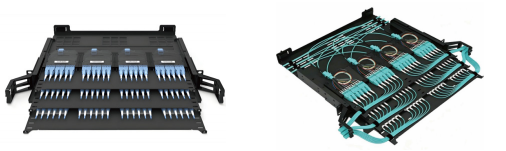
Before a switch port is handed to production, the port and its transceiver are typically validated with a loopback in place of the far-end link. High-density panels mix fiber counts across cabinets, so commissioning teams normally carry both modules. The MPO-24F-Loopback removes the two-pass overhead on 24-position ports; the MPO-12F-Loopback covers the 8-position and 12-position ports with a single part number.
Equipment validation in labs and staging areas
Hardware teams validating switches, line cards or optical modules in a lab need a repeatable return path that does not depend on a second device being available. The ≥100,000 mating-cycle rating and the sub-0.1% link failure rate matter most in this use case, because the same module is inserted and removed far more often than in a one-time commissioning pass.
Incoming inspection of pre-terminated assemblies
Contractors receiving 12-fiber and 24-fiber fan-out cords and trunk assemblies can use loopbacks to confirm that a delivered assembly returns light on the expected positions before it is installed in a pathway. Matching the loopback fiber count to the assembly fiber count keeps the check unambiguous: a 24-fiber cord tested with a 12-fiber loopback leaves half its positions unverified.
Spares and tooling kit planning
Because both modules share fiber types, materials and performance floors, a kit specification can be written once and applied across projects. The variable that should be reconciled per project is quantity per fiber count, derived from the port inventory of the site being commissioned.
Frequently Asked Questions
1. Which standards and certificates apply to Nanfang Communication's MPO loopback modules?
The MPO/MTP loopback range sits inside the manufacturer's TL9000-based quality system. The MPO-12F-Loopback certification is based on the TL9000 Quality Management System Requirements Handbook R6.3, issued by WIT Assessment / Hangzhou WIT Assessment Co., Ltd. and applicable to the global market. The related TL9000-H certificate, number 15/25T15218R11, is valid from 2025-11-20 to 2028-10-19. Testing is supported by a laboratory accredited to ISO/IEC 17025:2017 as CNAS L11717 by the China National Accreditation Service for Conformity Assessment, valid to 2030-11-29 and covering the testing and calibration of optical fiber cable and optical communication components.
2. How do the insertion loss and return loss specifications differ between the 12F and 24F loopback?
Low-loss insertion loss is ≤0.7 dB for the 8-fiber and 12-fiber configurations of the MPO-12F-Loopback, and ≤1.0 dB for the 24-fiber MPO-24F-Loopback. Return loss is identical for both: ≥65 dB in single-mode and ≥25 dB in multimode. Both modules support OS2, OM1, OM2, OM3, OM4 and OM5 fiber, both are rated for ≥100,000 mating cycles with a link failure rate below 0.1%, and both use a ceramic/MTP ferrule with plastic housing and fiber cable.
3. Is there a price difference between the 12F and 24F loopbacks, and what drives it?
No list price is published for either module; they are quoted per project. The main cost drivers are fiber count — a 24-fiber module returns twice as many positions as a 12-fiber module and therefore uses more fiber and more ferrule contacts — together with fiber type, order quantity and delivery destination. For North American buyers, landed cost also depends on how the assembly is classified: optical fiber cables under HTS 8544.70.00 of Chinese origin faced a total U.S. import duty of 37.50% as of late 2026, while pre-terminated assemblies and test modules are classified separately. Confirm the classification with a customs broker and request a quotation for both fiber counts so the comparison is made on total landed cost.
4. Can I validate samples before committing to a production order?
Yes. Validation before scale-up is the standard route for this product family. Nanfang Communication states that samples and small orders typically take several weeks, while large orders may take months, with lead time depending on model and quantity. Because the two loopbacks differ in fiber count and insertion-loss limit, ordering one sample of each is the fastest way to confirm which module matches the ports actually being commissioned. For cable products the company lists a minimum order quantity of 1 core kilometer; loopback module quantities should be confirmed directly with sales.
5. What is the typical lead time for MPO loopback modules?
Lead time depends on model and quantity rather than on a single published standard: samples and small orders typically take several weeks, and large orders may take months. Capacity on the cable side is stated at 250,000 core kilometers per month against an annual output of 3,000,000 core kilometers, so the constraint for most projects is scheduling rather than raw capacity. Confirm the loopback quantity and delivery window before fixing the commissioning date — contact info@jsnfgroup.com or call +86 51988792646 to request a sample set, a quotation, or the MPO product catalogue for both fiber counts.
Conclusion: Match the Count, Then Confirm the Budget
The choice between the MPO-12F-Loopback and the MPO-24F-Loopback is decided by the port inventory, not by a performance ranking. If the ports and trunk assemblies being commissioned return 8 or 12 fibers, the 12-fiber module covers them with a single part number at ≤0.7 dB low-loss insertion loss. If they return 24 fibers, the 24-fiber module completes the verification in one pass at ≤1.0 dB. Return loss, fiber type coverage, materials and the ≥100,000 mating-cycle rating are common to both, so there is no performance penalty attached to either choice — only a coverage and budget consequence if the wrong count is specified.
Documenting the purchase is straightforward: the loopback range sits under a TL9000-based quality system, with the MPO-12F-Loopback certification based on the TL9000 Quality Management System Requirements Handbook R6.3, and the manufacturer's laboratory holds ISO/IEC 17025:2017 accreditation as CNAS L11717 for optical fiber cable and optical communication component testing. Nanfang Communication, a subsidiary of the Hong Kong-listed South Communication Holdings Limited (Stock Code: 1617.HK), manufactures these modules alongside its MPO adapters, fan-out cords and optical fiber cable lines, which allows a single supplier to cover the test accessory and the cabling it verifies.
Request samples of both loopback modules
Compare the MPO-12F-Loopback and the MPO-24F-Loopback against your own port inventory before the commissioning schedule is fixed. Send your fiber counts and quantities to info@jsnfgroup.com, call +86 51988792646, or download the MPO product catalogue here: Nanfang Communication MPO Product Catalogue (PDF). Product and company details: jsnfgroup.com.
Have Questions or Need More Details?
Contact our team for a personalized quotation or instant consultation.
Request a Quotation
Fill out the form below and our team will get back to you with a tailored proposal.
WhatsApp Direct Chat
Prefer to chat in real-time? Message us on WhatsApp for instant assistance & quick answers.
- Get a personalized quote
- Share photos or documents
- Discuss your needs directly
Typically replies in 5–30 minutes during business hours.