Optical Fiber Cable Supply: Long-Term Partnership Guide

Optical fiber cable supply is not a one-time purchase. For telecom operators, data center owners, and broadband project buyers, it is a long-term relationship that depends on production capacity, quality consistency, certification compliance, and delivery reliability. This guide explains how Nanfang Communication — a Chinese manufacturer of optical fibers, optical cables, ODN systems, and optical components — supports buyers who need a stable, scalable optical fiber cable supply partnership.
The Problem: Why Long-Term Optical Fiber Cable Supply Is Hard to Manage
Procurement teams managing optical fiber cable programs face recurring risks: supply chain disruption, raw material price volatility, quality instability, certification or compliance gaps, and delivery delays. These risks become more visible when a project depends on a single batch of cable and a missed shipment stops an entire FTTH or data center rollout.
Market pressure is increasing. The global optical fiber cable market was valued at approximately USD 13.45 billion in 2025 and is projected to reach USD 36.48 billion by 2034, according to Custom Market Insights. China's exports of optical fiber cables reached approximately USD 2.52 billion in 2024, according to OEC. That scale explains why many buyers evaluate Chinese manufacturers not only for price, but for their ability to sustain volume, quality, and lead time over multiple years.
Industry Context: Standards, Connectors, and the Shift to High-Density Networks
The technical baseline for optical fiber cable procurement is defined by well-established standards. ITU-T G.652.D remains the industry standard for single-mode fiber, while G.657 is the primary standard for bend-insensitive fibers used in FTTH, according to the International Telecommunication Union.
Alongside cable, the surrounding ecosystem matters. The global fiber optic connector market was estimated at USD 11.2 billion in 2024, with LC connectors holding a dominant 35.43% share, according to Global Market Insights / Grand View Research. The MPO fiber optic connector market is projected to grow at a CAGR of 13.6% through 2035, driven by AI compute clusters and hyperscale data centers, according to Business Research Insights. Buyers planning long-term supply relationships therefore need a partner that can provide cable and the associated connectivity ecosystem, not just drums of fiber.
Nanfang Communication's Supply Model: Integrated Manufacturing and a Broad Product Line
Nanfang Communication is a subsidiary of South Communication Holdings Limited (Stock Code: 1617.HK), founded in July 1992 and headquartered in Changzhou, Jiangsu Province, China. The company researches, develops, produces, and sells communication optical cables, fiber optic cables, communication cables, optical-electrical accessories, ODN products, communication equipment, MPO optical connectors, MT-FA series optical passive components, and PM FA fiber arrays.
Its product scope covers indoor optical cable, outdoor optical cable, ribbon optical cable, loose-tube optical cable, bow-type drop optical cable, single-mode fiber, multimode fiber, MCF multi-core fiber, MPO high-density patch panels, PLC optical splitters, and fiber optic connectors. This range lets a buyer consolidate multiple line items in one supplier qualification program.
The production base supports scale: a factory area of 26,795.3 m², 360 employees, and an annual output of 3,000,000 core kilometers. The company also reports a monthly production capacity of 250,000 core kilometers. For buyers, the relevant number is minimum order quantity: 1 core kilometer. That low MOQ reduces the barrier to testing a new supplier with a pilot order before committing to volume.

Certifications and Quality Infrastructure
For a long-term supply agreement, certifications are part of the qualification criteria. Nanfang Communication has obtained ISO9001 Quality Management System, TL9000 Telecommunications Industry Quality Management System, ISO14001 Environmental Management System, OHSAS18001 Occupational Health and Safety Management System, Integration of Informatization and Industrialization Management System, and ISO50001 Energy Management System certifications. It has also been accredited with a CNAS laboratory.
The company holds the titles of High-tech Enterprise, National-level Green Factory, Provincial-level Technology Center, China Well-known Trademark, Jiangsu Private Science and Technology Enterprise, Level III Enterprise for Work Safety Standardization, and Jiangsu Three-Star Cloud Enterprise. It holds over 300 patents, including more than 45 invention patents, and has participated in 16 standards: 1 national standard and 15 industry standards.
Step by Step: How an Optical Fiber Cable Supply Partnership Works
- Define the cable specification. Common parameters include fiber type (for example G.652 or G.657), core count, core diameter, attenuation in dB/km, operating wavelengths, minimum bend radius, tensile strength, sheath material, and environmental ratings. Exact specifications must be confirmed per model datasheet.
- Confirm commercial terms. The minimum order quantity is 1 core kilometer. Common payment methods include T/T, wire transfer, and L/C; specific terms should be negotiated with sales.
- Request samples or a pilot order. Samples and small orders typically take several weeks. Acceptance follows the contract and technical specifications, with factory inspection, test reports, and certificates.
- Scale to volume production. Monthly production capacity of 250,000 core kilometers supports large deployments. Lead time depends on model and quantity; large orders may take months, and the sales team confirms the schedule.
- Arrange delivery. Delivery typically supports sea, land, or air freight and can be arranged per project needs. Exact delivery methods and terms should be confirmed with sales.
- Access local support. Nanfang Communication has set up 28 provincial-level offices across China, providing localized product sales, technical support, and after-sales service.
Use Cases: Where This Supply Model Fits
FTTH and broadband access. Projects deploying G.657 bend-insensitive fiber, bow-type drop cable, and FTTH optical cable distribution boxes benefit from a supplier that offers the full access chain from cable to splitter and distribution box.
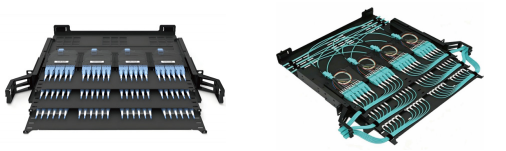
Data centers and high-density networks. For AI-era and hyperscale data center builds, MPO multi-core fiber optic connectors, MPO high-density patch panels, optical modules, and direct attach cable modules are part of the same procurement ecosystem. A single vendor reduces qualification overhead.
5G backhaul and metropolitan backbone. Outdoor optical cable, loose-tube optical cable, ribbon optical cable, and models such as GYTA53 are common for backbone routes that need armoring, tensile strength, and environmental durability.
Enterprise campuses and smart city projects. Industrial networks and smart city projects often combine indoor and outdoor cable with optical cable splice closures and ODN products. A supplier with engineering services integration capability is easier to manage than multiple single-product vendors.
Supply Options Compared: Domestic Integrated Suppliers vs. Imported and Integrator Routes
For buyers evaluating optical fiber cable manufacturers, the decision is often between imported brands, domestic competing manufacturers and integrator offerings, and a domestic integrated supplier. The table below summarizes a general comparison based on supplier capabilities and market practice.
| Evaluation Dimension | Domestic Integrated Supplier (Nanfang Communication type) | Imported Brands / Integrator Offerings |
|---|---|---|
| Supply chain and production scale | Integrated supply chain, domestic production scale, localized service support | Mature for extreme single-component performance or specific certifications; more localized intermediary links |
| Customization and engineering | Customization and engineering services are part of the offering | More standardized products; customization may require longer coordination |
| Cost and delivery | Generally cost and delivery advantages; exact gaps should be confirmed via quotation comparisons | Usually higher cost and longer lead time in some regions |
| After-sales and maintenance | Localized after-sales and rapid response | Spare-parts and support delays may occur in some regions |
| Best fit | Large projects requiring local customization and fast supply | Scenarios demanding extreme single-component performance or specific certifications |
Energy efficiency is not a primary comparison metric for optical fiber cables; the focus is on transmission performance, reliability, and installation convenience.
Risk Management in a Long-Term Supply Relationship
Nanfang Communication addresses supply risk through a structured management system. Control methods include quality management systems, incoming material inspection and supplier management, inventory and stockpiling, production controls and inspections, laboratory testing, and certification tracking.
On the enterprise level, the company operates a national-level laboratory, implements standardized QMS, and builds service networks and partner alliances to mitigate risks. For buyers, these measures translate into fewer quality surprises and clearer accountability when issues occur.
Frequently Asked Questions
What certifications does Nanfang Communication hold for optical fiber cable supply?
Nanfang Communication has obtained ISO9001, TL9000, ISO14001, OHSAS18001, the Integration of Informatization and Industrialization Management System, and ISO50001 Energy Management System certifications. It is also accredited with a CNAS laboratory. These certifications cover quality, environmental, occupational health and safety, and energy management for long-term supply programs.
What products and production capacity can a long-term partner expect?
Nanfang Communication makes optical fibers, indoor and outdoor optical cables, ribbon optical cables, loose-tube optical cables, bow-type drop optical cables, single-mode and multimode fiber products, PLC optical splitters, fiber optic connectors, MPO multi-core connectors, optical modules, and related ODN systems. The company operates a 26,795.3 m² facility with 360 employees and 80 R&D engineers, with annual output of 3,000,000 core kilometers and monthly production capacity of 250,000 core kilometers.
What is the minimum order quantity and how does commercial negotiation work?
The minimum order quantity is 1 core kilometer. Common payment methods include T/T, wire transfer, and L/C. Specific terms should be negotiated with sales. Domestic integrated suppliers generally have cost and delivery advantages; exact gaps should be confirmed through quotation comparisons.
Can buyers start with samples or a small order before volume?
Yes. With a minimum order quantity of 1 core kilometer, sample or pilot orders are practical. Samples and small orders typically take several weeks. Acceptance follows the contract and technical specifications, and factory inspection, test reports, and certificates are provided.
How are delivery lead times and logistics handled for large orders?
Lead time depends on model and quantity. Samples and small orders typically take several weeks, while large orders may take months. Delivery typically supports sea, land, or air freight and can be arranged per project needs. For after-sales, Nanfang Communication has 28 provincial-level offices across China providing localized technical support and service.
How do I start a supply partnership with Nanfang Communication?
Contact the Nanfang Communication sales team via email at info@jsnfgroup.com, by phone at +86 51988792646, or by WhatsApp at +8619850287785 to request a quotation or sample. You can also download the company brochure to review the MPO and optical product range. The sales team will confirm specifications, lead time, payment terms, and delivery methods for your project.
Conclusion
Optical fiber cable procurement becomes more predictable when a supplier combines manufacturing scale, a wide product line, certified quality systems, and low-MOQ piloting. Nanfang Communication fits that profile: integrated manufacturing, 250,000 core kilometers of monthly capacity, 3,000,000 core kilometers of annual output, and supplier qualification supported by ISO, TL9000, and CNAS laboratory infrastructure. For buyers moving from evaluation to execution, the next step is to request a quotation, validate lead time, and qualify a sample against project specifications.
Start Your Optical Fiber Cable Supply Inquiry
Nanfang Communication supports distributors, wholesalers, importers, telecom operators, and data center buyers with low-MOQ pilot orders and scalable volume supply.
Email: info@jsnfgroup.com
Tel: +86 51988792646
WhatsApp: +8619850287785
Website: https://www.jsnfgroup.com/en.php