
Optical Fiber Cable: Types, Applications & Procurement Guide
Optical Fiber Cable: Types, Applications & Procurement Guide
Jiangsu South Communication Technology Co., Ltd. (brand: Nanfang Communication) is a subsidiary of South Communication Holdings Limited (Stock Code: 1617.HK), established in 1992. The company specializes in the R&D, production, and sales of communication optical cables, fiber optic cables, and related accessories. This guide provides an overview of optical fiber cable types, their applications, and procurement considerations based on verified product and company data.
What Is an Optical Fiber Cable?
An optical fiber cable is a physical-layer transmission medium that uses silica glass fibers to carry light signals. According to Nanfang Communication's product documentation, these cables serve as the transmission and distribution infrastructure for telecommunications, providing signal transmission, fiber distribution, and patching/access functions. Typical components include a core of silica glass, strength members made of FRP, armoring materials such as galvanized steel wire or steel tape, and sheath options of PE or LSZH.
Industry Background
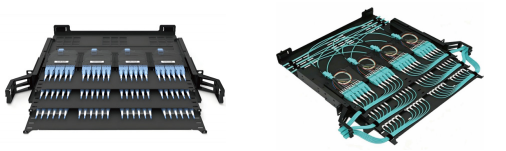
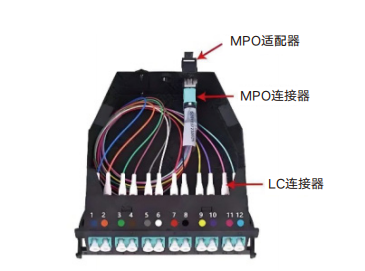
Optical fiber cables are deployed globally in telecom operators, ISPs, data centers, FTTH/broadband access networks, enterprise and campus networks, industrial IoT, smart city projects, and 5G backhaul. They are installed under various conditions: indoor cabling, duct/ducting, aerial/self-supporting, direct burial, and outdoor harsh environments requiring weatherproofing, waterproofing, rodent protection, and temperature resistance. Supporting equipment includes optical modules, PLC splitters, cable splice closures, FTTH distribution boxes, MPO patch panels, fiber optic connectors, fiber assemblies, and WDM units.
Nanfang Communication's Fiber Optic Cable Solutions
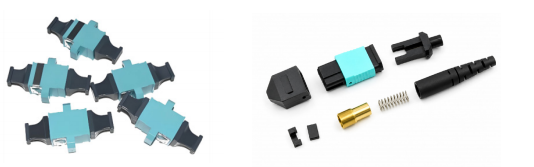
Nanfang Communication produces a comprehensive portfolio that includes indoor/outdoor optical cables (e.g., model GYTA53), ribbon optical cables, loose-tube optical cables, bow-type drop optical cables, single-mode and multimode optical fibers, MPO high-density patch panels, PLC optical splitters, fiber optic connectors, and more. The company also offers custom specialty fibers/cables and system integration services. With an annual production capacity of 3,000,000 core kilometers, the company can support large-scale deployments for operators and enterprises.
Step-by-Step Procurement Breakdown
- Identify your deployment environment – Determine whether the cable will be used indoors, outdoors, aerial, or direct burial. Sheath material (PE for outdoor, LSZH for indoor) and armoring type affect selection.
- Choose fiber type – Single-mode fibers (G.652, G.657) for long-distance/high-bandwidth; multimode for short-reach data center links. Core count and diameter must match application requirements.
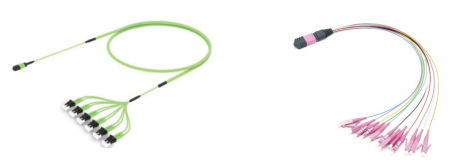
- Select connector and assembly – For high-density data centers, MPO/MTP pre-terminated cables and fan-out assemblies reduce installation time. For FTTH, bow-type drop cables with pre-connectorized ends simplify last-mile deployment.
- Verify performance specifications – Key parameters include attenuation (dB/km), insertion loss, return loss, tensile strength, and minimum bend radius. Nanfang Communication provides detailed datasheets per model.
- Evaluate supplier certifications and reliability – Look for ISO9001, TL9000, environmental management certifications, and a CNAS-accredited laboratory for quality assurance.
- Request samples or datasheets – Contact the supplier to validate real-world performance and compatibility with existing network equipment.
Use Cases
- FTTH/Broadband Access – Bow-type drop cables and loose-tube cables with PLC splitters are used for connecting homes and buildings to the optical distribution network.
- Data Center Interconnect – Pre-terminated MPO trunks and fan-out cables enable 40G/100G/400G SR4/PSM4 module connections with low insertion loss (typical 0.35 dB).
- 5G Backhaul & Metropolitan Networks – GYTA53 and ribbon cables provide high-fiber-count trunk lines with robust protection against environmental stresses.
- Industrial IoT & Smart City – Outdoor armored cables with waterproofing and rodent protection are deployed in harsh environments.
Comparison: MPO Loopback vs. MTP/MPO Fan-out Cable
| Feature | MPO/MTP Loopback | MTP/MPO Fan-out Pre-terminated Cable |
|---|---|---|
| Product Type | Test equipment (fiber optic loopback) | Breakout/fan-out patch cord |
| Typical IL | Low-loss ≤0.7 dB (8F/12F) | Typical 0.35 dB; low-loss 0.10 dB |
| Return Loss | ≥65 dB (SM) | ≥60 dB (APC) |
| Application | Equipment validation, data center commissioning | 40G/100G/400G SR4/PSM4 module connection |
| Fiber Count | 12F or 24F | 12F or 24F |

Frequently Asked Questions
What certifications does Nanfang Communication hold?
Nanfang Communication holds certifications including ISO9001, TL9000, ISO14001, OHSAS18001, ISO50001, and the Integration of Informatization and Industrialization Management System. The company also has a CNAS-accredited laboratory and is recognized as a High-tech Enterprise and National-level Green Factory.
What is the R&D strength and patent portfolio?
The R&D team consists of 80 engineers. The company holds over 300 patents, including more than 45 invention patents, and has participated in the formulation of 16 standards (1 national standard, 15 industry standards).
What is the annual production capacity?
Nanfang Communication's manufacturing facility covers 26,795.3 m² and has an annual production capacity of 3,000,000 core kilometers. The company employs approximately 360 staff and operates 28 provincial-level offices across China.
How can I get product samples or a catalog?
You can download the company brochure for detailed product information: Download MPO Product Brochure. For sample requests, contact Nanfang Communication directly.
How can I contact Nanfang Communication for procurement inquiries?
You can reach Nanfang Communication via Email: info@jsnfgroup.com, Tel: +86 51988792646, or WhatsApp: +8619850287785. The company has established cooperative relationships with operators such as China Telecom, China Mobile, China Unicom, and China Broadcast Network, and can provide customized solutions and system integration services.
For specific lead times or to discuss your project requirements, contact the sales team directly. Nanfang Communication offers localized sales, technical support, and after-sales services through its 28 provincial offices across China.