
How to Audit a Whole-House Custom Cabinetry Supplier: Coverage, Precision, and Delivery Assurance

A whole-house custom cabinetry supplier should be audited on three measurable dimensions: room-by-room product coverage, verifiable machining precision, and documented delivery assurance for multi-unit projects. Brochure language is not evidence. Procurement and design teams need model-level documentation, production-equipment proof and compliance paperwork they can check before the first panel is cut.
This guide is written for procurement managers, developers, main contractors and interior design teams who are evaluating a whole-house custom cabinetry manufacturer for apartment renovation, hotel fit-out, luxury home renovation or multi-unit residential delivery. It sets out a three-part audit — coverage, precision, delivery — and shows how each check maps to a fact that a supplier can actually be asked to prove.
Nantong Jiashi Integrated Home Co., Ltd., formerly known as Shanghai Jiashi Wood Industry Co., Ltd., is a whole-house custom cabinetry manufacturer established in 1998. The company produces kitchens, bathroom vanities, wardrobes and integrated home storage systems for residential and commercial interior projects, and exports to Europe, North America, the Middle East and Asia. Its documented product and production data is used below as a worked example of what a verifiable supplier file looks like.
Why Whole-House Sourcing Fails Differently From Single-Product Sourcing
Single-product sourcing has one point of failure. Whole-house sourcing has many at once. When a project covers kitchen, bathroom, wardrobe, entryway, study and bedroom cabinetry, the buyer is not purchasing ten separate cabinets — they are purchasing one coordinated system whose value collapses if any element is missing, mis-measured or delivered late.
Four failure modes recur in project procurement, and each one has a matching audit question.
- Coverage gaps discovered mid-project. A supplier that covers kitchens and wardrobes but not entryway cabinets, study room cabinetry, tatami storage beds or bathroom vanities pushes the buyer toward a second vendor, a second finish standard and a second site schedule.
- Tolerance drift that only appears on site. A ±0.1mm machining claim means little unless it can be tied to specific production equipment and a defined panel thickness range. Without that link, fillers, shims and on-site rework absorb the difference.
- Compliance paperwork that arrives too late. Material compliance is usually discussed at sampling stage, but it is enforced at customs. A supplier that cannot produce batch-level material documentation before mass production transfers a shipment risk to the buyer.
- Delivery coordination that breaks at multi-unit scale. In apartment and hotel programmes, a single-unit prototype proves very little. What matters is whether partial deliveries, batch consistency and site sequencing are planned, tracked and communicated.
Industry Background: Market Scale, Standards and Material Shifts
Three external signals shape how buyers now assess cabinetry suppliers, and all three push the conversation toward documented evidence rather than showroom impressions.
Market scale. The global cabinet market is projected to reach USD 148.09 billion by 2026 (Mordor Intelligence). Within that total, the custom kitchen cabinet segment was valued at USD 68.5 billion in 2025 and is expected to reach USD 95.2 billion by 2034 (Dataintelo). China's exports of wooden kitchen furniture under HS code 940340 reached USD 732 million in 2023 (TrendEconomy / UN Comtrade), which confirms that cross-border cabinetry sourcing is a mature, documented trade flow rather than an emerging category.
Published growth rates for this category differ between research houses because scope definitions and forecast windows differ. Buyers should treat market forecasts as negotiation context, not as a substitute for supplier-level evidence.
Performance and emissions standards. ANSI/KCMA A161.1 requires wall cabinets to withstand a 600-pound load test and 25,000 door and drawer cycles (Kitchen Cabinet Manufacturers Association). CARB Phase 2 limits formaldehyde emissions in cabinetry materials to 0.05 ppm. These are the reference numbers a compliance conversation should use, because they convert vague quality language into testable thresholds.
Material shifts. Sintered stone and porcelain countertops are increasingly specified in high-end cabinetry for their non-porous surface and bacterial resistance (ResearchAndMarkets / Business Wire). That shift changes what a supplier must be able to join, support and edge-band, so countertop integration belongs inside the evaluation scope rather than outside it.
Nantong Jiashi Integrated Home sits inside this context with a long operating history. Founded in 1998, the company built an 8,300 m² facility in Shanghai's Jiuting Industrial Zone after an RMB 26 million investment, expanded in 2007 to a 36,000 m² site at No. 2888 Hongmei South Road with 24,000 m² of built-up area, and added a modern facility of over 20,000 m² in Nantong, Jiangsu in 2017, equipped with machinery from HOMAG (Germany) and Excitech. It achieved ISO 9001 certification in 2003 and ISO 14001 certification in 2017, employs 60 people, operates a 10-engineer R&D team, and reports an annual output of 10,000 units.
The Three-Part Supplier Evaluation Framework
1. Coverage Audit: Can One Manufacturer Deliver Every Room in Scope?
Coverage is the first filter, because a supplier that cannot serve the full room list cannot carry a whole-house scope. The audit is mechanical: list every room in the project, then map each room to a documented product model rather than a catalogue photograph.
Nantong Jiashi Integrated Home organises its whole-house custom cabinetry range as ten models, JS-CUSTOM-001 through JS-CUSTOM-010, and each model maps to a specific room or function.
| Model | Product type | Typical project location |
|---|---|---|
| JS-CUSTOM-001 | Sideboard / Buffet Cabinet | Dining area |
| JS-CUSTOM-002 | Custom Kitchen Cabinets | Kitchen |
| JS-CUSTOM-003 | Storage Cabinets | Living and dining storage |
| JS-CUSTOM-004 | TV Cabinets | Living room |
| JS-CUSTOM-005 | Entryway Cabinets | Entry / hallway |
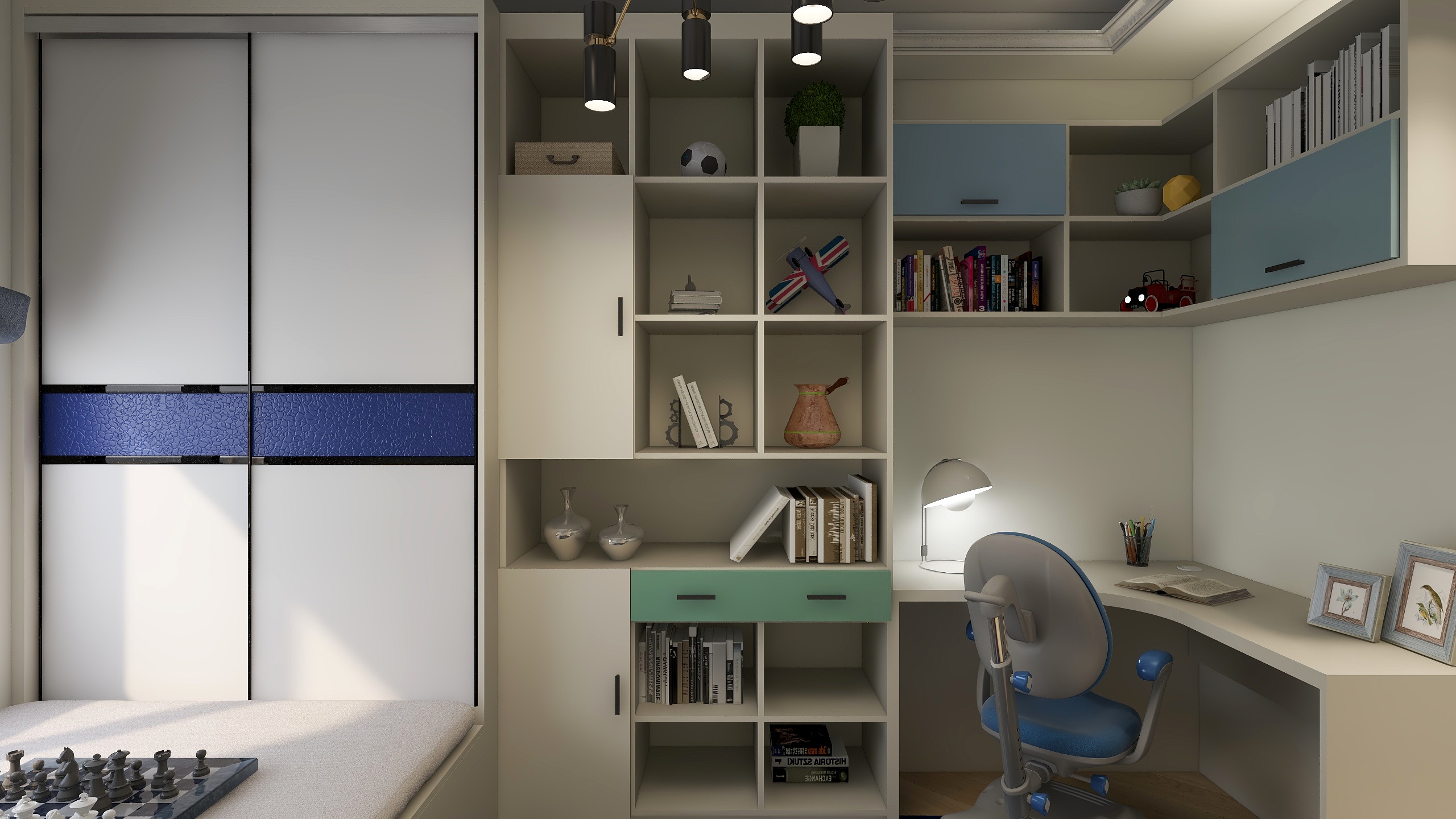
| JS-CUSTOM-006 | Study Room Cabinets | Study / home office |
| JS-CUSTOM-007 | Tatami Storage Bed | Secondary bedroom / multifunction room |
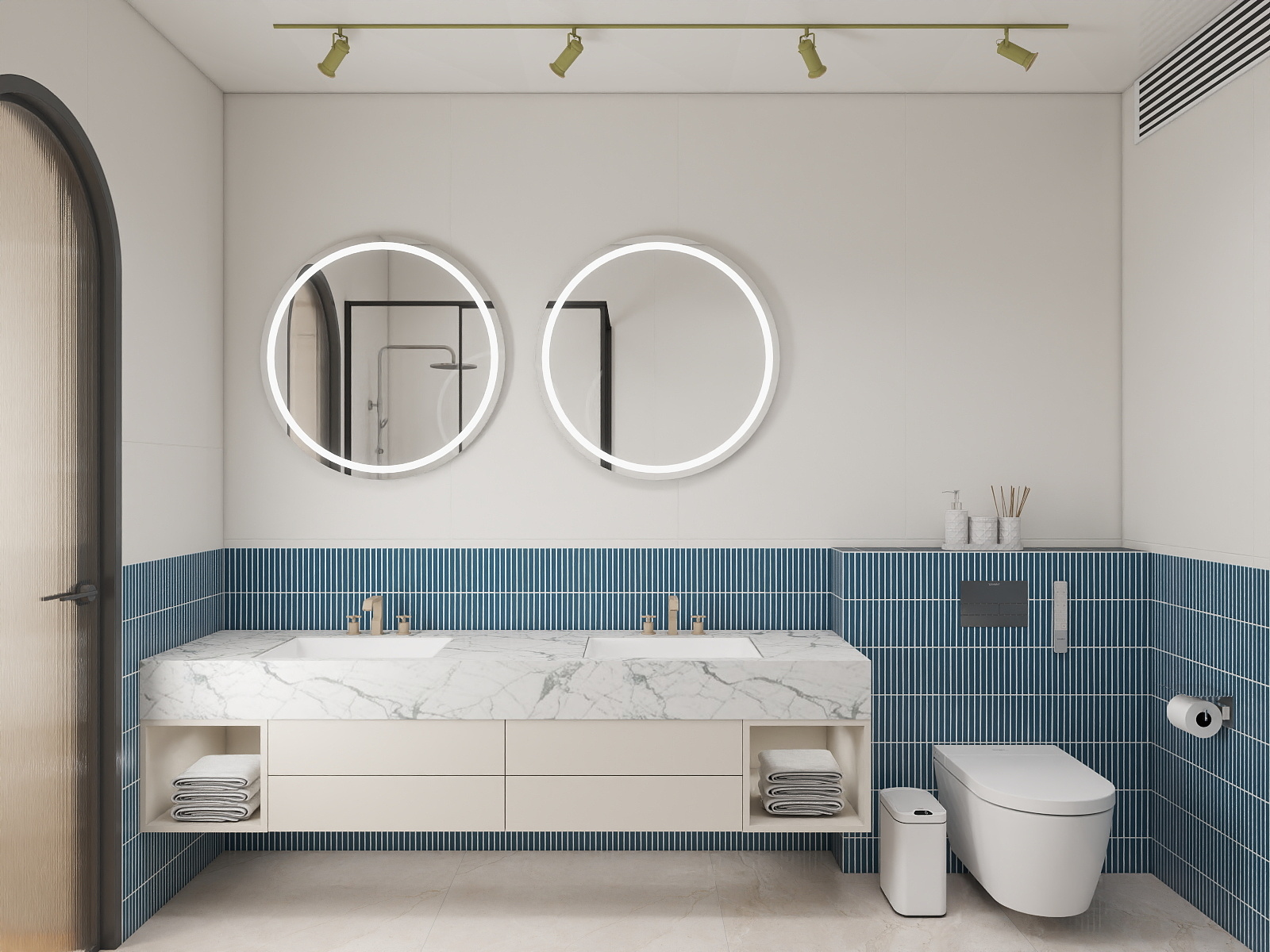
| JS-CUSTOM-008 | Bathroom Vanity Cabinets | Bathroom |
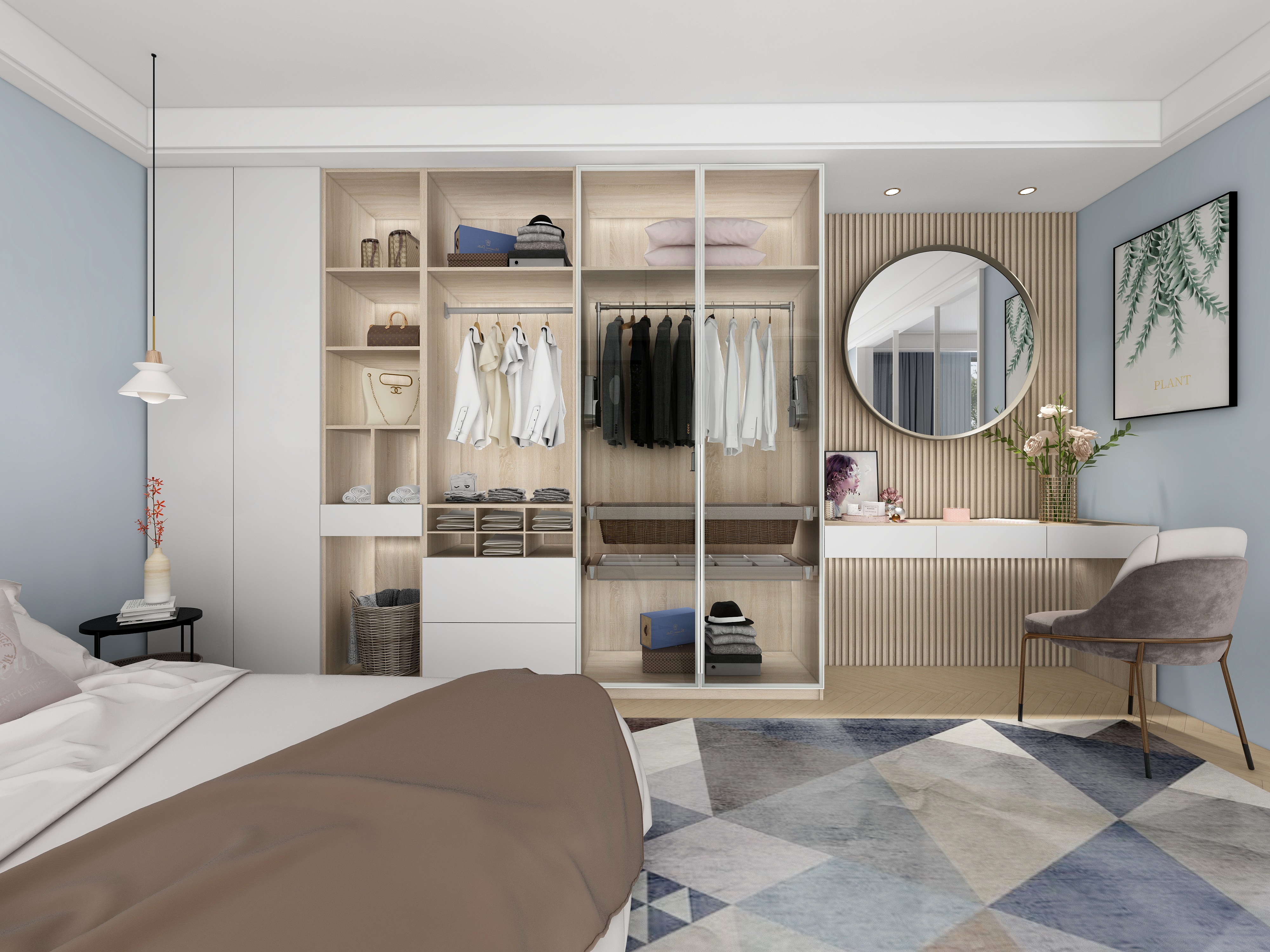
| JS-CUSTOM-009 | Wardrobe Closets | Bedroom / walk-in wardrobe |
| JS-CUSTOM-010 | Master Bedroom Full Sets | Master bedroom |
All ten models share a common specification basis: standard 18mm panel thickness with a customizable range from 9mm to 25mm; automated processing on a German HOMAG production line; machining precision of ±0.1mm dimensional tolerance; surface finishes available in wood grain, matte, lacquer and stone texture; and a material composition of cabinet panels, engineered wood boards, MDF/particle board, aluminum accessories and stone countertops. Every model is produced in custom dimensions based on drawings and project requirements.
Shared specification is the real point of this audit. When every room uses the same tolerance logic, thickness range and finish system, the finished interior reads as one design rather than six unrelated installations. Coverage, in other words, is not only about the number of models — it is about whether those models were engineered to sit next to each other.
2. Precision Audit: Machinery, Tolerance and Panel Specification
Precision claims should be traceable to equipment and specification, not to adjectives. Four items are worth documenting in writing before an order is placed.
- Production equipment. The whole-house cabinetry is manufactured on German HOMAG automated production lines, which is the physical basis for the tolerance figure. A buyer can ask which processes run on that line and how panel cutting, drilling and edge banding are sequenced.
- Machining tolerance. The stated machining precision is ±0.1mm dimensional tolerance. This is the number that determines whether fillers and on-site trimming are needed at installation.
- Panel thickness flexibility. Standard thickness is 18mm, with a customizable range from 9mm to 25mm. This range matters in projects where some elements need a slimmer profile and others need structural thickness.
- Material composition and finishes. Cabinets are built from cabinet panels, engineered wood boards, MDF/particle board, aluminum accessories and stone countertops, with wood grain, matte, lacquer and stone texture surface finishes. The engineered wood panels comply with E0/ENF formaldehyde emission standards.

3. Delivery Assurance Audit: Capacity, Quality Gates and Coordination
Delivery assurance is the part of the evaluation most often skipped, because it is invisible in a sample room. It reduces to five documented items.
- Capacity and lead time. Monthly capacity runs from 500 to 20,000 units, with a lead time of 30–45 days. Minimum order quantity is project based rather than a fixed unit count, which is important for renovation work where unit numbers vary between phases.
- Quality gates. Quality control is structured as material inspection, production inspection and final quality inspection — three separate checkpoints rather than one final review.
- Production modes. OEM, ODM and project customization are all supported. Customization covers cabinet design, dimensions, materials, colors, finishes, hardware configuration, logo and packaging.
- After-sales scope. Design support, project communication, production follow-up and after-sales service are defined as part of the supply relationship rather than as goodwill.
- Large-project record. The company has supplied large-scale projects involving more than 50 residential units, and its case record describes customized cabinetry delivered through precise manufacturing combined with coordinated global delivery for residential and commercial projects.
Institutional evidence belongs in the same section. Jiashi achieved ISO 9001 certification in 2003 and ISO 14001 certification in 2017; it has been recognised for over ten consecutive years under honours including Shanghai Top Brand, Shanghai Famous Trademark, Shanghai Premium Cabinetry and Shanghai Excellent Product; and as Vice President and Expert Committee Director of the Shanghai Interior Decoration Association, it has co-drafted several national and industry standards in custom cabinetry and interior decoration. For a buyer, a supplier involved in standards drafting is generally a supplier whose specification language is compatible with the project's own compliance framework.
Commercial history adds a second layer of delivery evidence. Jiashi has worked with B&Q, a member of the UK's Kingfisher Group, and with China Greenland Group, became the China manufacturing base for Australia's GOLDEN Group, and served as the exclusive cabinetry partner for Summit Group, described in the company record as Shanghai's premier real estate developer, on fully furnished property projects.
Step-by-Step: Running the Audit
The framework above becomes usable only when it is converted into a sequence a procurement team can execute. Seven steps are sufficient for most projects.
Use Cases: Where This Framework Applies
Apartment renovation projects. This is the scenario where whole-house coverage pays off most directly. Apartment units need kitchen cabinets, wardrobes, entryway cabinets, bathroom vanities and storage from one coordinated source, often across dozens of identical units. A ten-model range built on one tolerance and thickness system supports that repetition, project-based MOQ avoids fixed minimums that do not match phased handover, and a 30–45 day lead time can be planned against a renovation schedule rather than reacted to.
Hotel interior projects. Hotel work is driven by repetition across identical rooms and by durability. Bathroom vanity cabinetry is a typical hotel application, and the reference standard of 25,000 door and drawer cycles under ANSI/KCMA A161.1 gives procurement a benchmark against which hardware and construction quality can be discussed.
Luxury home renovation. Whole-house residential projects use TV cabinets, study room cabinetry, master bedroom full sets and wardrobe systems together in one interior. Here the value of a single supplier is finish and proportion consistency — the wood grain, matte, lacquer and stone texture options must read as one palette across rooms. TV cabinets are also a common location for integration with stone countertops and built-in appliances in premium living areas.
Real estate development and multi-unit supply. Large-scale residential supply is where delivery assurance is tested hardest. The documented record of supplying more than 50 residential units in one project, with customized cabinetry delivered through precise manufacturing and coordinated global delivery, is the type of reference a developer can verify.
Supplier Evaluation Matrix: What to Verify and Where It Should Be Documented
The matrix below converts the three-part audit into a single checklist. Each row should be satisfiable with a document, a measurement or an inspection — not with a verbal assurance.
| Evaluation dimension | What the buyer verifies | Documented basis to request |
|---|---|---|
| Product coverage | Every room in the project has a mapped model | Model list JS-CUSTOM-001 to JS-CUSTOM-010 with product types |
| Machining precision | Tolerance is tied to equipment, not to marketing copy | German HOMAG automated production line; ±0.1mm dimensional tolerance |
| Panel thickness | Standard thickness and the true customization range | Standard 18mm; customizable 9mm to 25mm |
| Material composition | What the panel, accessory and countertop layers are made of | Cabinet panels, engineered wood boards, MDF/particle board, aluminum accessories, stone countertops |
| Emission compliance | Target-market formaldehyde and sourcing rules are covered | E0/ENF engineered wood panels; E0/FSC for Europe; CARB P2 / EPA for North America |
| Surface finishes | Finish palette supports one consistent interior | Wood grain, matte, lacquer and stone texture finishes |
| Countertop integration | Cabinetry can be joined to stone worktops | Supporting stone countertop solutions and stone countertop integration |
| Production modes | Product can be delivered as OEM, ODM or project-specific build | OEM, ODM and project customization; customization of design, dimensions, materials, colors, finishes, hardware, logo and packaging |
| Quality gates | Inspection happens at more than one point | Material inspection, production inspection, final quality inspection |
| Capacity | Volume can absorb the project's peak demand | Monthly capacity of 500–20,000 units |
| Lead time and MOQ | Timing and minimums fit the project schedule | Lead time 30–45 days; project-based MOQ |
| Large-project record | The supplier has been tested above single-unit scale | Supply for a project involving more than 50 residential units; residential and commercial delivery record |
FAQ
What material compliance documentation should a whole-house cabinetry supplier provide before production?
Wood panels should be documented as meeting European E0 and FSC requirements and, for North American shipments, CARB P2 and EPA TSCA Title VI requirements. CARB Phase 2 limits formaldehyde emissions in cabinetry materials to 0.05 ppm. The supplier should issue full mill test reports and material compliance certificates before mass production, and mill test report templates should state panel density, moisture content, bending strength and emission ratings. Buyers should also request scanned raw material test reports for the specific production batch, plus the official mill test report and compliance certificates attached to the shipping documents.
Which product models should be in scope for a whole-house or apartment project?
A whole-house scope should be mapped model by model. Nantong Jiashi Integrated Home's range covers sideboard/buffet cabinets (JS-CUSTOM-001), custom kitchen cabinets (JS-CUSTOM-002), storage cabinets (JS-CUSTOM-003), TV cabinets (JS-CUSTOM-004), entryway cabinets (JS-CUSTOM-005), study room cabinets (JS-CUSTOM-006), tatami storage beds (JS-CUSTOM-007), bathroom vanity cabinets (JS-CUSTOM-008), wardrobe closets (JS-CUSTOM-009) and master bedroom full sets (JS-CUSTOM-010). All ten models share a standard 18mm panel thickness with a 9mm to 25mm customizable range, ±0.1mm machining tolerance on German HOMAG automated lines, E0/ENF engineered wood panels, and wood grain, matte, lacquer or stone texture finishes.
How is machining precision verified rather than claimed?
Precision is verified by linking the tolerance figure to production equipment and then measuring output. The claim to test is the ±0.1mm dimensional tolerance achieved on a German HOMAG automated production line. Buyers should confirm that the tolerance applies to the models in their package, that standard panel thickness is 18mm with a customizable 9mm to 25mm range, and that finish edges and joints are inspected at sample and pre-production stage against the approved drawings.
How does sampling and pre-production validation work in practice?
Validation runs in three documented moments. At sampling stage, the sample package should include a physical material data sheet and an eco-label summary. Before mass manufacturing, scanned raw material test reports for that specific production batch should be sent for customer sign-off. At shipping stage, the official mill test report and material compliance certificates should be attached to the shipping documents for customs clearance.
What capacity, lead time and MOQ apply to apartment renovation projects?
Nantong Jiashi Integrated Home reports a monthly capacity of 500 to 20,000 units, a lead time of 30 to 45 days, and a project-based minimum order quantity rather than a fixed unit count. Quality control is structured as material inspection, production inspection and final quality inspection, and the company has supplied a large-scale project involving more than 50 residential units, delivering customized cabinetry with coordinated global delivery. Project teams can request samples, a quotation or the engineering catalogue to validate these points against a specific apartment renovation scope before committing to a production slot.
Conclusion: The Audit Standard Is Documentation, Not Presentation
Whole-house custom cabinetry procurement rewards buyers who convert supplier claims into checkable items. Coverage is checkable against a ten-model range that maps to every room in the project. Precision is checkable against a named production line, a ±0.1mm dimensional tolerance and a defined 18mm standard with a 9mm to 25mm customizable range. Compliance is checkable against E0/ENF panels and market-specific documentation issued before mass production rather than after. Delivery is checkable against monthly capacity, a 30–45 day lead time, project-based MOQ and a three-stage inspection process.
None of these checks require a factory visit to begin. They require a document request, a mapping exercise and a written confirmation — which is exactly why they belong in the evaluation stage rather than in the complaint stage after installation. Suppliers that can answer all three parts of the audit quickly are the ones worth shortlisting for apartment renovation, hotel fit-out, luxury residential and multi-unit development work.

Next Step: Validate the Specification Against Your Project
Nantong Jiashi Integrated Home Co., Ltd. supplies whole-house custom cabinetry — kitchen cabinets, bathroom vanities, wardrobes, storage systems and stone countertops — for residential and commercial interior projects, with OEM, ODM and project customization supported.
Review the full engineering specification and product range in the downloadable catalogue: Jiashi Engineering Catalogue (PDF). Official website: www.jajajs.com.
For a quotation, sample request or project review, contact:
Johnny — Email: zhou@jajajs.com — Tel: +86-21-67690770 — WhatsApp: +8613761117355
Address: No. 70 Wutong Road, Tongzhou District, Nantong, Jiangsu, China
Have Questions or Need More Details?
Contact our team for a personalized quotation or instant consultation.
Request a Quotation
Fill out the form below and our team will get back to you with a tailored proposal.
WhatsApp Direct Chat
Prefer to chat in real-time? Message us on WhatsApp for instant assistance & quick answers.
- Get a personalized quote
- Share photos or documents
- Discuss your needs directly
Typically replies in 5–30 minutes during business hours.