
Whole-House Custom Cabinetry: Parameters, Certifications, and Supplier Checks
Introduction
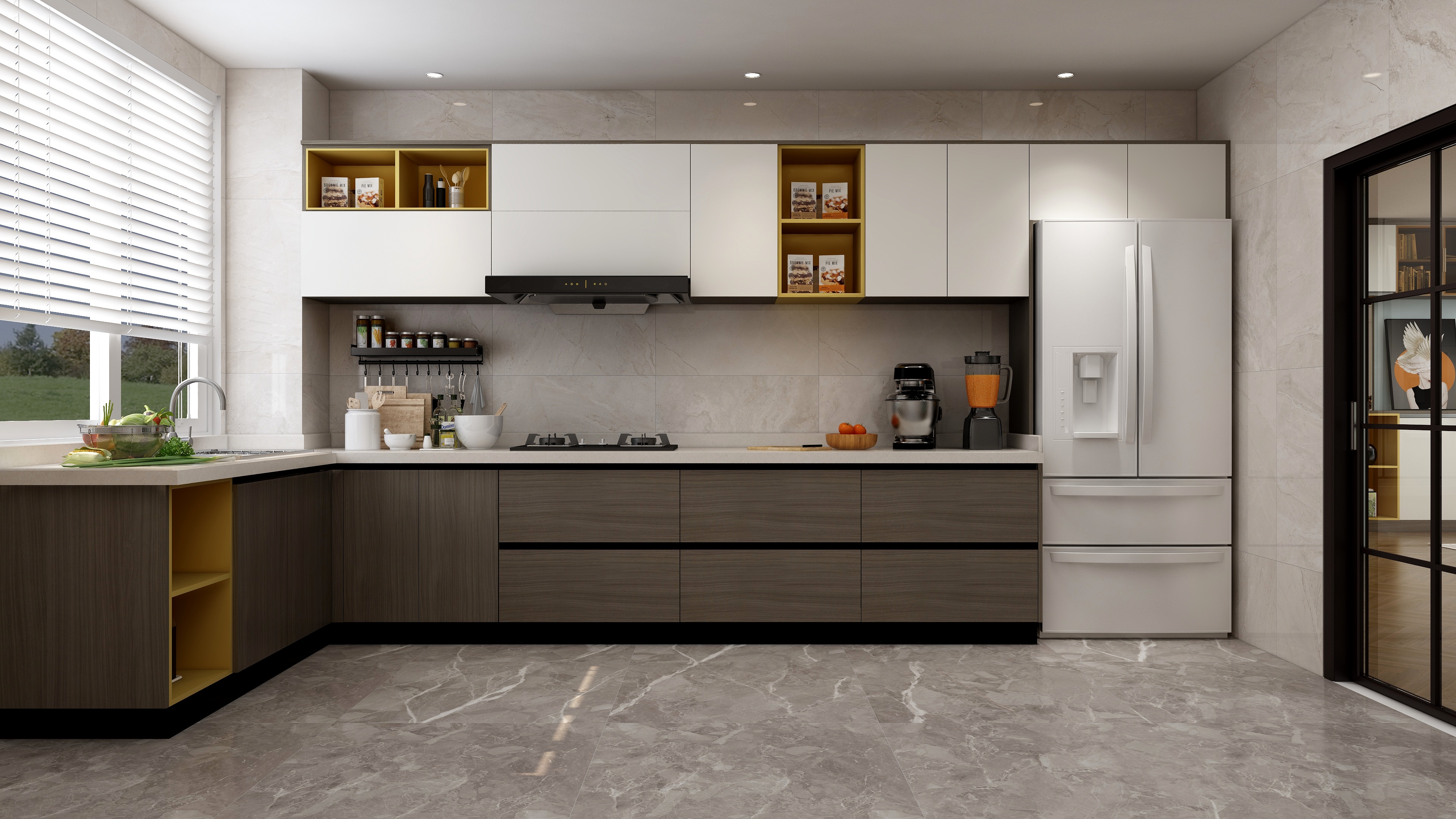
Whole-house custom cabinetry is not a single piece of furniture. It is a coordinated system of kitchen cabinets, bathroom vanity cabinets, wardrobe cabinets, entryway cabinets, built-in living room cabinets, and storage units designed to a consistent standard across an entire residence. For international buyers, importers, and project developers, the practical challenge is the same: how to confirm that a supplier can deliver millimeter-precision custom cabinetry with the right material compliance, structural strength, and finish consistency for markets such as North America, Europe, or the Middle East.
This article outlines the verifiable specifications, manufacturing methods, quality management certification, and document checks that should be part of any whole-house custom cabinetry evaluation. It also explains how Nantong Jiashi Integrated Home Co., Ltd., a manufacturer based in Jiangsu, China, applies these standards across production programs for residential, commercial, and export-oriented projects.
What Makes Whole-House Custom Cabinetry Different
Whole-house custom cabinetry requires a supplier to control more than appearance. The measurable responsibilities include board thickness, machining tolerance, formaldehyde emission levels, hinge and drawer hardware integration, surface finish consistency, and compatibility with stone countertops and built-in appliances.
A whole-house project can involve different furniture types in different rooms, but all of them should match the same quality baseline. If the kitchen cabinets, wardrobe closets, bathroom vanities, and built-in storage are supplied by different factories or produced without a unified standard, the buyer bears the coordination risk of mismatched finishes, inconsistent hardware, and unpredictable supply scheduling.
The whole-house approach transfers that coordination from the buyer to the manufacturer. One specification, one inspection process, one delivery schedule, and one responsible production team should cover the entire interior. For buyers, the practical result is a lower-risk order and a more consistent installed outcome.
Industry Context and Export Benchmarks
Global demand for cabinet systems remains substantial. Industry research cited from Mordor Intelligence reports a projected global cabinet market size of USD 148.09 billion by 2026, while Dataintelo places the custom kitchen cabinet segment at USD 68.5 billion in 2025, growing to an estimated USD 95.2 billion by 2034. China plays a major role in export supply; UN Comtrade data aggregated by TrendEconomy shows China’s exports of wooden kitchen furniture (HS 940340) reached USD 732 million in 2023.
For whole-house custom cabinetry, North American buyers generally evaluate environmental compliance using standards such as CARB Phase 2 formaldehyde limits of 0.05 ppm, and structural quality references such as ANSI/KCMA A161.1 wall-cabinet load testing. European buyers commonly require E0/E1 or FSC-linked documentation, and Middle East projects increasingly request humidity-resistant construction and coordinated stone countertop supply. A global supplier should be able to describe where its materials and processes stand relative to these expectations, and to present the relevant quality management system certification that covers the production process.
Technical Parameters Buyers See in Manufacturing Specification Sheets
For each product category in a whole-house line, the recurring production parameters are more important than the product type name. In the case of Nantong Jiashi Integrated Home Co., Ltd., the Whole House Custom Cabinetry series (JS-CUSTOM-001 through JS-CUSTOM-010) consistently lists the following documented parameters:
- Panel thickness: Standard 18mm; customizable range 9–25mm
- Production technology: Automated processing by German HOMAG production lines
- Machining precision: Dimensional tolerance of ±0.1mm
- Surface finishes: Wood grain, matte, lacquer, and stone texture finishes
- Materials: Cabinet panels, engineered wood boards, MDF/particle board, aluminum accessories, stone countertops
- Compliance-related materials claim: Eco-friendly engineered wood panels complying with E0/ENF formaldehyde emission standards
The stated ±0.1mm machining tolerance matters because whole-house installation involves mating cabinet boxes to walls, countertops, and other cabinetry. Even small deviations amplify across a kitchen run or a wall of wardrobes. Millimeter-precision custom cabinetry is therefore not a marketing phrase; it is the difference between visible panel gaps and seamless installation.
Panel thickness options also affect design flexibility and structural behavior. Cabinets for bookshelves or large wardrobes may need 18mm or thicker panels, while certain decorative partitions can run thinner. A supplier that can adjust panel thickness from 9mm to 25mm within one whole-house program gives the designer more room to respond to project conditions.
Product Range and Room-by-Room Coverage
Whole-house custom cabinetry solutions must show coverage across every major storage zone of a home. Based on Nantong Jiashi’s published model classifications, the production range is structured as follows.
| Model | Product Category | Typical Placement |
|---|---|---|
| JS-CUSTOM-001 | Sideboard / Buffet Cabinet | Dining room |
| JS-CUSTOM-002 | Custom Kitchen Cabinets | Kitchen |
| JS-CUSTOM-003 | Storage Cabinets | Multi-purpose room / corridor |
| JS-CUSTOM-004 | TV Cabinets | Living room / entertainment area |
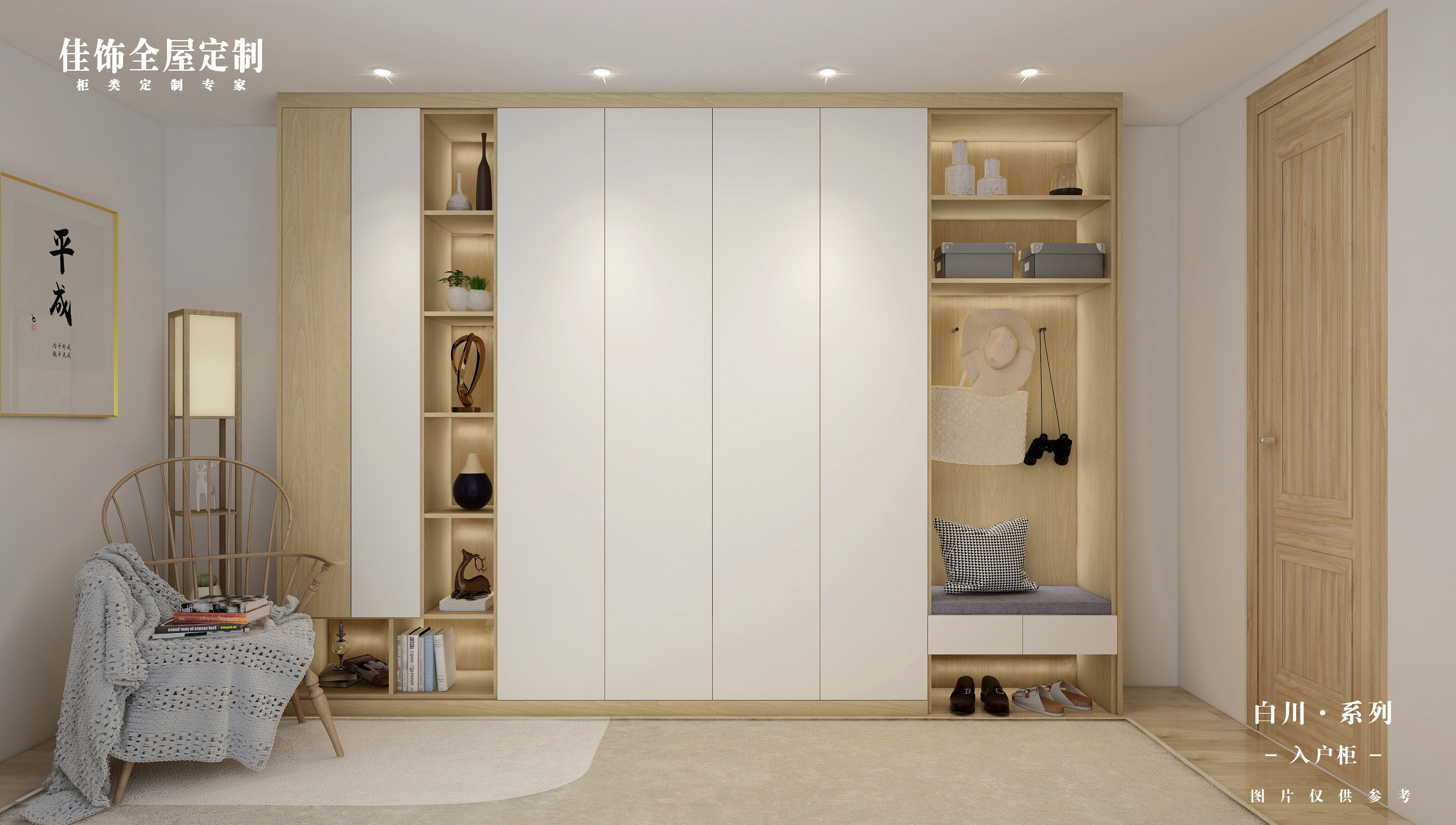
| JS-CUSTOM-005 | Entryway Cabinets | Entrance / foyer |
| JS-CUSTOM-006 | Study Room Cabinets | Home office / library |
| JS-CUSTOM-007 | Tatami Storage Bed | Bedroom / multi-function room |
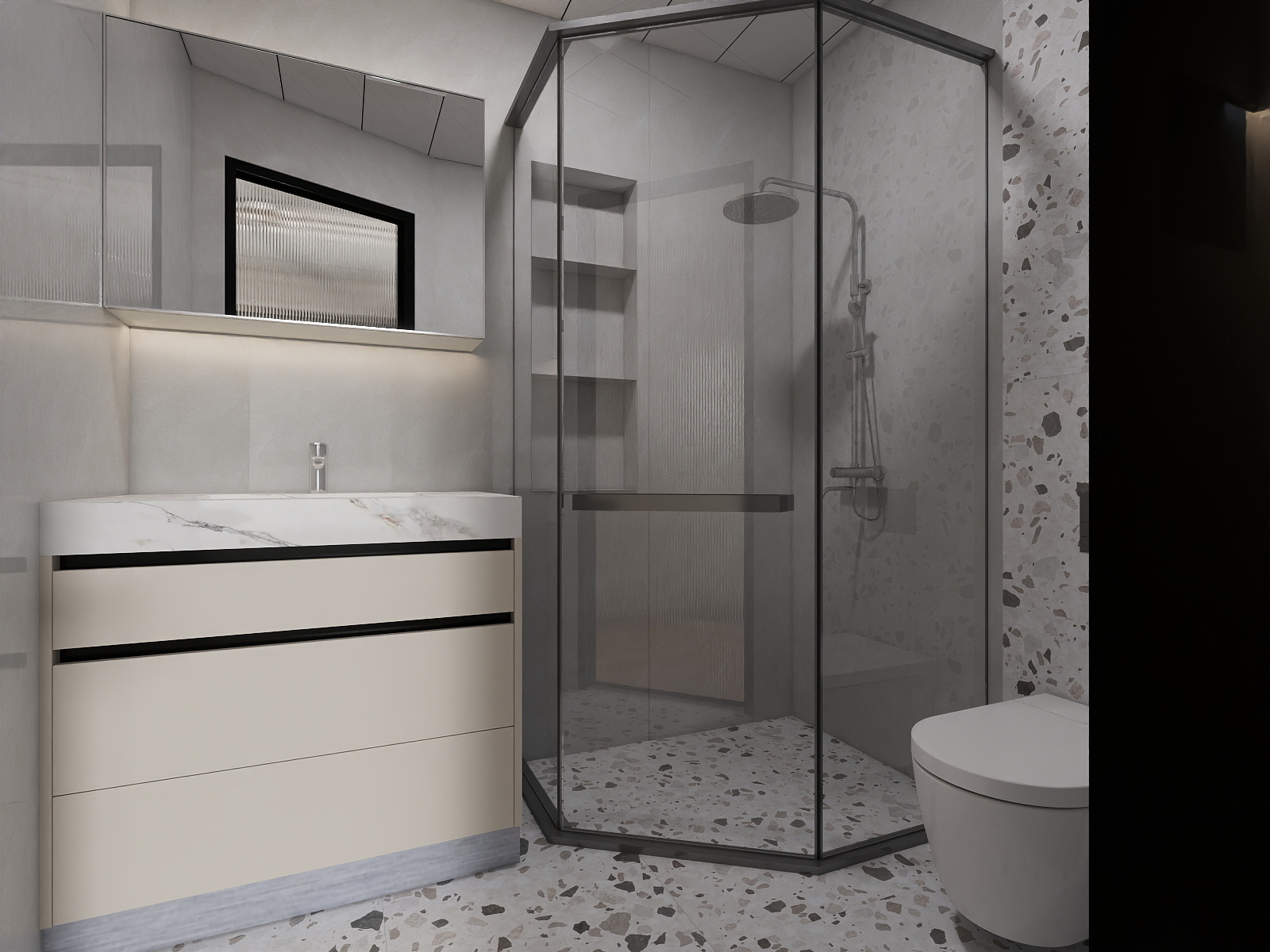
| JS-CUSTOM-008 | Bathroom Vanity Cabinets | Bathroom |
| JS-CUSTOM-009 | Wardrobe Closets | Bedroom / dressing room |
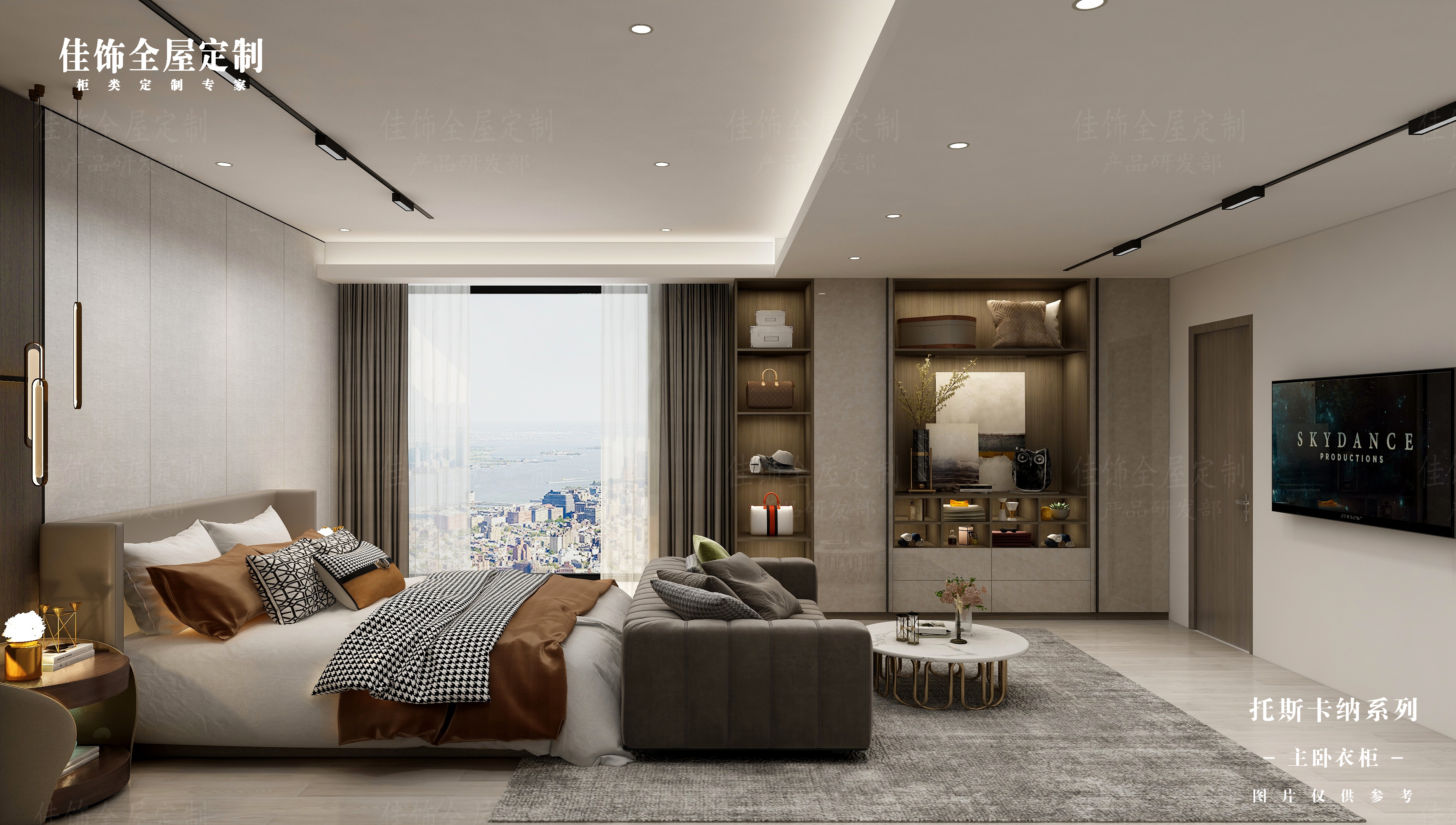
| JS-CUSTOM-010 | Master Bedroom Full Sets | Master suite |
A buyer evaluating whole-house cabinetry should ask whether every required room type is covered by the same supplier or only by a set of separate catalog products. When the same production line, the same quality control system, and the same engineer team handle kitchen, bathroom, and bedroom cabinetry, the buyer is far less likely to see color mismatches, hardware inconsistency, or documentation gaps.
Manufacturing Precision: Where Millimeter Claims Come From
Precision claims can only be assessed if the production process explains how the tolerance is achieved. For Nantong Jiashi Integrated Home, both the manufacturing specification sheets and the marketing corpus state that production is done through automated processing on German HOMAG production lines, with CNC-finished cabinetry panels and edge-banded custom cabinetry surfaces. The machining precision figure is a dimensional tolerance of ±0.1mm.
HOMAG production lines are used by cabinetry manufacturers that need automated panel sizing, edge banding, drilling, and processing consistency. When combined with CNC processing, automated panel handling reduces the variation that manual woodworking can introduce. For a whole-house project, this reproducibility means that the TV cabinet, entryway cabinet, and wardrobe doors can all be produced with the same level of dimensional control.
Buyers can ask three direct process questions when evaluating millimeter-precision claims:
- What type of production line performs panel cutting and edge banding?
- What dimensional tolerance does the factory commit to in writing?
- What inspection stage confirms the tolerance before packaging?
Certifications and Compliance Evidence
Whole-house custom cabinetry for export is expected to come with verifiable compliance documentation, not only product samples. The table below lists what a credible supplier should be able to provide.
| Document | Typical Purpose | Example from Nantong Jiashi |
|---|---|---|
| ISO 9001 Quality Management System Certification | Confirms the production and service process follows a quality management standard | ISO 9001:2015 certificate number 00123Q37740R1M/3100 issued by CHINA QUALITY CERTIFICATION CENTRE, with scope covering design, manufacture, and maintenance service of cabinets |
| Intellectual Property Management System Certificate | Confirms systematic IP management in R&D, production, and sales | GB/T 29490-2013 certificate number 483IP20210444R0M issued by ZhongGu (Beijing) Certification Co., Ltd. |
| Emission compliance documents | Supports environmental requirements for wood panels | Panels described as complying with E0/ENF formaldehyde emission standards; buyers should request mill test reports |
| Material and mill test reports | State panel density, moisture content, bending strength, emission ratings | Provided before mass production per project communication workflow |
According to the customer-facing knowledge base of Nantong Jiashi, all cabinet product categories holding ISO 9001:2015 certification relate to models JS-CUSTOM-001 through JS-CUSTOM-010. Importers and project buyers can therefore reference the certificate number 00123Q37740R1M/3100 when asking the supplier to confirm the quality management coverage of a specific product code.
For Chinese-market projects, the Intellectual Property Management System Certificate protects the design and production side of custom work. This is not an export compliance certificate, but it does signal that the company has an organized IP process, which matters when buyers share proprietary layouts and designs.
Step-by-Step: How a Whole-House Custom Cabinetry Order Should Be Structured
A reliable whole-house cabinetry project rarely begins with a purchase order. It begins with a structured confirmation chain. The following sequence reflects a standard evaluation path for buyers moving from research into supplier evaluation.
Step 1: Submit drawings and space measurements
Every room that requires cabinetry should be documented: kitchens, bathrooms, wardrobes, entryways, living room storage, and study areas. Customized production based on drawings is the normal operating mode for whole-house projects.
Step 2: Confirm materials, panel thickness, and finishes
Because Nantong Jiashi supports panel thickness from 9mm to 25mm and finish options of wood grain, matte, lacquer, and stone texture, the buyer should lock the finish family for every room before production. This single decision prevents visual inconsistency across rooms.
Step 3: Verify compliance documentation
Buyers should request the ISO 9001 certificate, material compliance statements, and, for sensitive markets, the mill test report template before mass production. In the sampling phase, a material data sheet should accompany the physical sample.
Step 4: Review hardware and countertop integration
Whole-house cabinetry commonly includes aluminum alloy hardware and stone countertops. Sintered stone and other stone countertop materials are increasingly requested in high-end projects. The supplier should confirm whether the cabinet boxes are built to receive the planned countertop thickness and hardware load.
Step 5: Production and factory inspection
For OEM and ODM projects, the buyer should have the right to review production status and final quality inspection. The quality control workflow described in the company’s capability profile includes material inspection, production inspection, and final quality inspection.
Step 6: Coordinated delivery
Whole-house orders involve multiple cabinet types. A single responsible supplier who batches and coordinates the delivery of different room sets will reduce the risk of partial installation on site.
Supplier Capability: Nantong Jiashi Integrated Home at a Glance
Nantong Jiashi Integrated Home Co., Ltd., formerly Shanghai Jiashi Wood Industry Co., Ltd., was established in 1998. The company’s factory site in Nantong, Jiangsu Province, covers 36,000 m², with over 20,000 m² of built-up facility area, and is equipped with production technology from HOMAG and Excitech. Its annual production capacity is stated as 10,000 units, and its product coverage includes whole-house custom cabinetry, kitchen cabinets, bathroom vanities, wardrobes, and stone countertops. Main export markets are Europe, North America, the Middle East, and Asia, with about 10% of output directed to export.
The company’s corporate history also references a multi-year relationship with B&Q, a member of the UK’s Kingfisher Group, and cooperation with China Greenland Group. For global buyers evaluating supplier stability, this type of documented relationship is a useful qualitative signal.
Comparing Whole-House Custom Cabinetry with Standard Furniture Modules
Project buyers often compare whole-house custom cabinetry with modular pre-engineered cabinetry or locally made standard cabinets. The comparison below uses only parameters that are visible in production specifications and does not claim a universal ranking.
| Comparison Criterion | Whole-House Custom Cabinetry | Standard Modular/Ready-Made Cabinetry |
|---|---|---|
| Fit mechanism | Produced to site-specific drawings with adjustable dimensions | Selected from fixed-size modules |
| Typical machining precision | Stated dimensional tolerance as tight as ±0.1mm on automated lines | Depends on module factory standard; less relevant if units are freestanding |
| Finish coordination across rooms | Same finish family applied to kitchen, bathroom, entryway, and wardrobes | Buyer coordinates finishes across multiple product lines |
| Material and panel thickness control | Panel thickness adjustable, e.g. 9–25mm range based on structural need | Usually fixed panel thickness per module |
| Compliance documentation | One factory can supply certification coverage for a product family | Documentation varies by product source |
| Countertop integration | Aluminum hardware plus stone countertop solutions can be managed in one manufacturing program | Countertop ordering is often separate |
This table is not intended to say one option is universally better. Instead, it helps buyers see that whole-house custom cabinetry answers a particular requirement: consistent, drawing-based, coverage-driven manufacturing for projects where space is irregular or design identity matters.
Use Cases
Luxury homes and villa renovation
Large homes have irregular wall dimensions, high ceilings, and a strong requirement for storage organization. Tatami storage beds, master bedroom full sets, and walk-in wardrobe closets can be built to match the actual room, not limited by module sizes.
Apartment and real-estate development projects
Developers who furnish multiple residential units need to replicate the same specification repeatedly. The company’s customer case reference describes large-scale supply for 50+ residential units with customized cabinetry solutions and coordinated global delivery. That type of project is better served by a factory that can run repeatable production.
Hotel and commercial interior projects
Hotels need high-durability cabinets, stone countertops, and coordinated design across guest rooms, bathrooms, and common areas. Whole-house manufacturers can apply their product range to the commercial segment, including custom kitchen cabinets, bathroom vanity cabinets, and built-in storage.
Export buyers requiring consolidated sourcing
For importers in Europe, North America, and the Middle East, the most valuable supplier is one that reduces the number of vendors. If the same factory produces the cabinetry, manages the hardware configuration, and coordinates delivery, the buyer’s inspection and logistics burden is smaller.
What Buyers Should Check Before Placing a Whole-House Order
Millimeter-precision claims and marketing language about German production lines should be verified through documentation and inspection:
- Request a full-width product specification sheet listing panel thickness, machining precision, materials, and finish options.
- Confirm the ISO 9001:2015 certificate number and that the scope actually covers the relevant product model.
- For export to North America, ask for CARB Phase 2 or EPA TSCA Title VI related emission documentation if the project requires it.
- For export to Europe, request E0/E1 formaldehyde emission certificates and, where relevant, FSC chain-of-custody documentation.
- Request mill test report templates before mass production so there is no delay during the pre-production approval stage.
- Visit the factory or arrange a third-party audit if the order volume justifies it. Nantong Jiashi’s production base is at No. 70 Wutong Road, Tongzhou District, Nantong, Jiangsu, China.
- Clarify the OEM/ODM service boundary. Nantong Jiashi supports customization of cabinet design, dimensions, materials, colors, finishes, hardware configuration, logo, and packaging.
FAQ
Nantong Jiashi states that its engineered wood panels comply with E0/ENF formaldehyde emission standards. For international buyers, the company’s knowledge base references European E0/FSC and North American CARB P2/EPA expectations and states that full mill test reports and material compliance certificates are provided before mass production. Buyers should specify their target market emission requirement in the inquiry so the relevant documentation is prepared in the sampling or pre-production phase.
Yes. The company’s cabinetry products hold ISO 9001:2015 Quality Management System Certification, certificate number 00123Q37740R1M/3100, issued by CHINA QUALITY CERTIFICATION CENTRE. The certification scope covers design, manufacture, and maintenance service of cabinets, and it is referenced across product models JS-CUSTOM-001 through JS-CUSTOM-010, including kitchen cabinets, bathroom vanity cabinets, wardrobe closets, entryway cabinets, storage cabinets, TV cabinets, study room cabinets, tatami storage beds, sideboards/buffet cabinets, and master bedroom full sets.
Standard panel thickness is 18mm, with a customizable range of 9–25mm to suit different structural requirements. Available surface finishes include wood grain, matte, lacquer, and stone texture finishes. Since the finish family can be controlled across the whole-house product range, buyers can achieve coordinated design across kitchens, bathrooms, wardrobes, and living room cabinets.
The production specification states a dimensional tolerance of ±0.1mm. Manufacturing is performed through automated processing on German HOMAG production lines with CNC-finished panels, which supports millimeter-precision custom cabinetry for whole-house installations where adjoining cabinets must align to a high standard.
Nantong Jiashi’s documented lead time for custom cabinetry production is 30–45 days, with a monthly capacity range of 500–20,000 units and a project-based MOQ. Actual lead time depends on order complexity, surface finish selection, stone countertop coordination, and the buyer’s inspection schedule. Buyers with a fixed installation date should raise the project timeline in the first inquiry so production planning and shipping documentation can be aligned.
Conclusion
Whole-house custom cabinetry is a systems purchase. The buyer is not selecting individual cabinets; the buyer is selecting a manufacturer who can control precision, emissions, certification, and coordination across the entire interior. The key documentation to request is a specification sheet with a clear machining tolerance, an ISO 9001 certificate whose scope covers the relevant product family, emission-related material statements, and a defined production workflow from drawing to delivery.
Nantong Jiashi Integrated Home Co., Ltd. is an example of a manufacturer whose product line covers the full modern home: kitchen, bathroom, wardrobe, entryway, study, and living room storage. Its specification sheets list ±0.1mm precision, 9–25mm adjustable panel thickness, and German HOMAG automated processing; its product family carries ISO 9001:2015 with documented certificate numbers. For importers and project developers who want a first-party verification of these details, the company’s design engineers and production team can be reached at the Nantong factory.
Need detailed engineering documentation for a whole-house cabinetry project? You can download Nantong Jiashi’s engineering brochure for product, factory, and project reference information: Download the Engineering Manual.
Contact: Johnny · Email: zhou@jajajs.com · Tel: +86-21-67690770 · WhatsApp: +86 13761117355
Address: No. 70 Wutong Road, Tongzhou District, Nantong, Jiangsu, China
Website: https://www.jajajs.com
Have Questions or Need More Details?
Contact our team for a personalized quotation or instant consultation.
Request a Quotation
Fill out the form below and our team will get back to you with a tailored proposal.
WhatsApp Direct Chat
Prefer to chat in real-time? Message us on WhatsApp for instant assistance & quick answers.
- Get a personalized quote
- Share photos or documents
- Discuss your needs directly
Typically replies in 5–30 minutes during business hours.