FDA & LFGB Food-Contact Approvals for Collapsible Plastic Ware
Compliance Guide · OEM Order Execution
FDA & LFGB Food-Contact Approvals for Collapsible Plastic Ware
“Food grade” is a claim. FDA and LFGB are approvals. For a folding drain basket, a folding vegetable basket or a folding picnic basket that touches food or drinking water, the distance between those two statements decides whether a container clears customs and retail QA — or gets held. This guide explains what FDA and LFGB food-contact approvals actually cover on PP+TPE collapsible plastic ware, which product families sit inside the scope, and how a bulk buyer writes the requirement into an OEM order so the shipped batch matches the approved sample.
Taizhou Nantong Plastic Industry Co., Ltd., trading under the brand Nantong Plastic, is a manufacturer of foldable plastic household goods based in Huangyan District, Taizhou City, Zhejiang Province, China. The company produces foldable plastic baskets, collapsible basins and collapsible water buckets using 100% new food-grade PP + TPE composite material, BPA-free, and supplies overseas importers, chain retailers and Amazon private-label sellers. Its folding basket range is the reference product throughout this article.
Why a “BPA-free food grade” label does not pass a compliance review
A food-contact approval is attached to a specific material formulation, a specific product and an intended use. It is not attached to a factory name, a product category or a product-page claim. That single fact explains most of the compliance friction between overseas buyers and folding basket suppliers.
Three gaps appear repeatedly in buyer reviews:
- Scope gap. A buyer receives a food-contact certificate but never checks which products it covers. A document issued for a food-safe folding range does not automatically extend to every model, size or accessory in a catalog.
- Material gap. “BPA-free” describes one restricted substance. It says nothing about whether the base resin is 100% new or a regrind blend, what the soft-wall compound is, what the additive package contains, or what temperature the finished part tolerates.
- Batch gap. The sample was approved, but mass production was never tied to the same material and process. A change in the compound, or a switch in color masterbatch, can break the original approval without visibly breaking the product.
The consequence is practical rather than theoretical: a food-contact basket can pass laboratory review in a sample room and still fail on arrival, because the shipped parts were produced with a different soft-wall compound, a recycled content blend, or a color batch outside the tested scope.
Two clarifications prevent wasted effort. First, a “food grade material” statement is not the same as a food-contact approval for a finished item. Second, not every collapsible product needs one. A folding laundry basket, a folding storage basket or a wheeled folding basket used for laundry, dry storage or shopping is not intended for direct food contact, and no food-contact approval applies — even where it shares the same PP+TPE platform as the food-contact lines.
Industry background: where the documentation demands come from
Demand for compliant collapsible ware tracks the wider foldable container market. Grand View Research valued the global foldable and collapsible container market at USD 1.7 billion in 2025, with plastic holding a 53.9% revenue share of the segment that year on the strength of lightweight and cost-effective properties. Asia Pacific accounted for a 36.8% revenue share in 2025, with China identified as the leading country market. On the buyer side, Grand View Research put the US foldable container market at USD 422.8 million in 2024, driven by e-commerce and retail demand for space-saving solutions, while OEC recorded global trade in plastic boxes, cases and crates (HS Code 392310) at approximately USD 14 billion in 2024, including USD 1.89 billion of exports from China.
Inside that market the compliance burden splits by segment. Industrial rigid container suppliers such as Schoeller Allibert, ORBIS Corporation and Brambles (CHEP) operate in logistics and returnable-transit applications, where load performance and pooling economics dominate the specification. Consumer foldable household goods — the segment a plastic folding basket competes in — face a different review, covering food-contact materials, restricted substances, sensory performance and social compliance, because these products end up on kitchen counters and grocery shelves.
The legal backdrop is converging as well. In the EU, food-contact materials are governed by the general framework of Regulation (EC) No 1935/2004 and, for plastic materials, by Regulation (EU) No 10/2011, with good manufacturing practice for materials intended to come into contact with food set out under Commission Regulation (EC) No 2023/2006. These are the texts EU buyers cite when they request food-contact documentation, and they sit alongside the two approvals that appear most often on purchase orders: FDA food-contact compliance for the United States, and LFGB for Germany.
What FDA and LFGB approval covers on a PP+TPE folding basket
The material platform the approval is built on
Nantong Plastic’s folding basket range uses 100% new food-grade PP + TPE composite material and is BPA-free. The rigid frame and integrated reinforced handles are PP; the foldable soft wall is TPE. The composite carries a temperature resistance range of -20°C to +120°C, releases no odd odours even with boiling water, and resists cracking under low temperatures. Fold lines are heat-pressed and seams are sealed, and lab testing covers 5,000 to 10,000 repeated folds without cracking or deformation. Capacities across the range run from 3L to 43L, each fitted with anti-slip bottom structures and reinforced handles. The one-piece fold-expand structure is protected by 23 independent product patents and supported by 200 self-developed production molds.
For a compliance reviewer, the material platform matters more than the marketing line. Base-resin grade, soft-wall compound, temperature limits and fold-cycle durability are the variables that determine whether an approval issued for one basket model can reasonably be extended to another.
FDA, LFGB and the EU framework — three different jobs
FDA food-contact compliance addresses the US market. It is what US grocery, kitchenware and private-label buyers ask for, and it is the approval referenced in the food-safe collapsible product documentation for this range.
LFGB addresses the German market and is widely accepted by EU buyers as a reference point for food-contact suitability. LFGB, FDA food contact grade status is confirmed for the food-contact collapsible lines, including the folding basins and buckets built on the same material family.
The EU framework is broader than either approval. Regulation (EC) No 1935/2004 sets the general requirement that food-contact materials must not transfer constituents in quantities that endanger health or unacceptably change food composition or sensory characteristics; Regulation (EU) No 10/2011 governs plastic materials specifically; and Commission Regulation (EC) No 2023/2006 covers good manufacturing practice for materials in contact with food.
One further distinction saves time in procurement: social compliance is not food-contact compliance. The amfori BSCI audit is a social audit of the factory, not a food-contact certification, and it answers a different set of buyer questions.
Which product families sit inside the food-contact scope
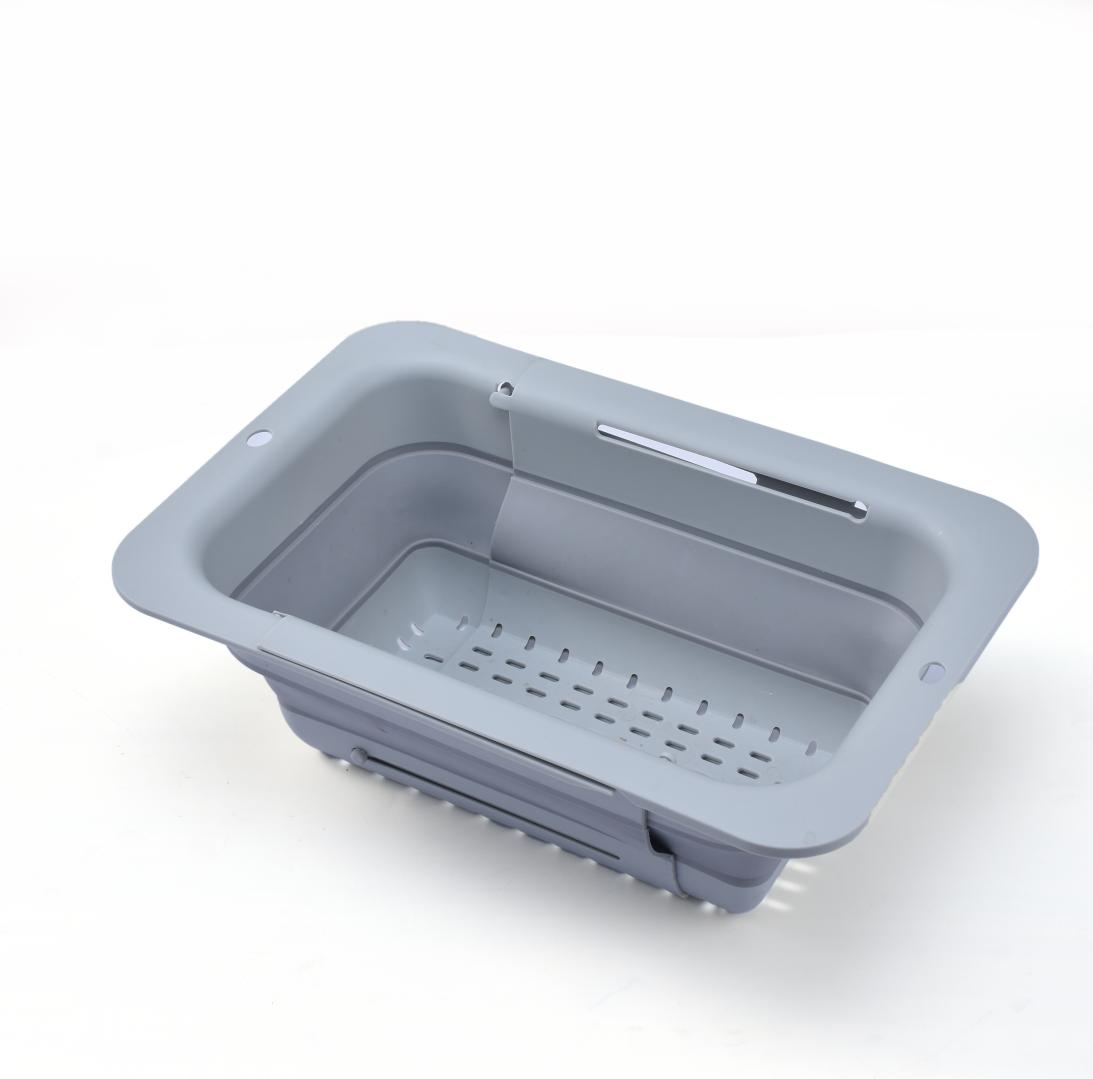
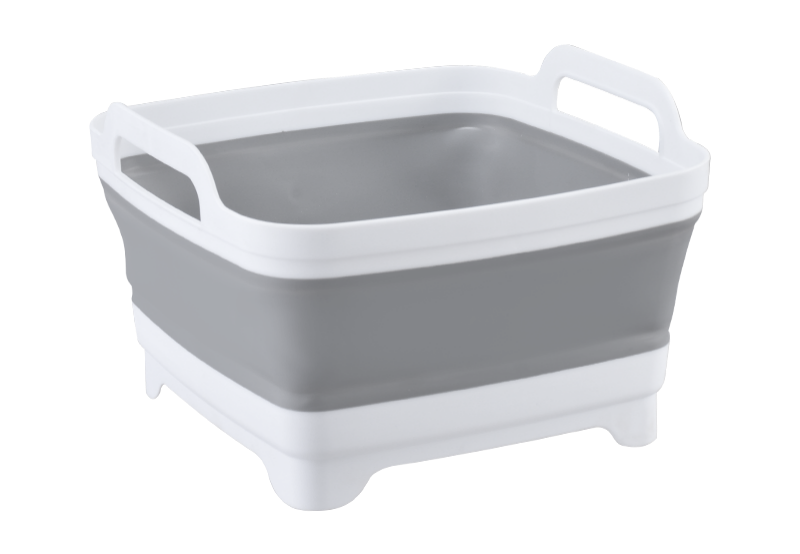
The dividing line is intended use, not material. Food-contact approval is relevant where the item is designed to hold, wash, drain or serve food or drinking water: folding drain baskets and colanders, folding vegetable baskets, folding picnic baskets including the basket-table 2-in-1 format, and washing basins built with a drain plug for kitchen use. General-purpose folding storage baskets, folding laundry baskets, hanging folding baskets, wheeled folding baskets and car folding baskets fall outside that scope, because their intended use is laundry, dry storage, shopping or vehicle cleaning.
What can be documented today
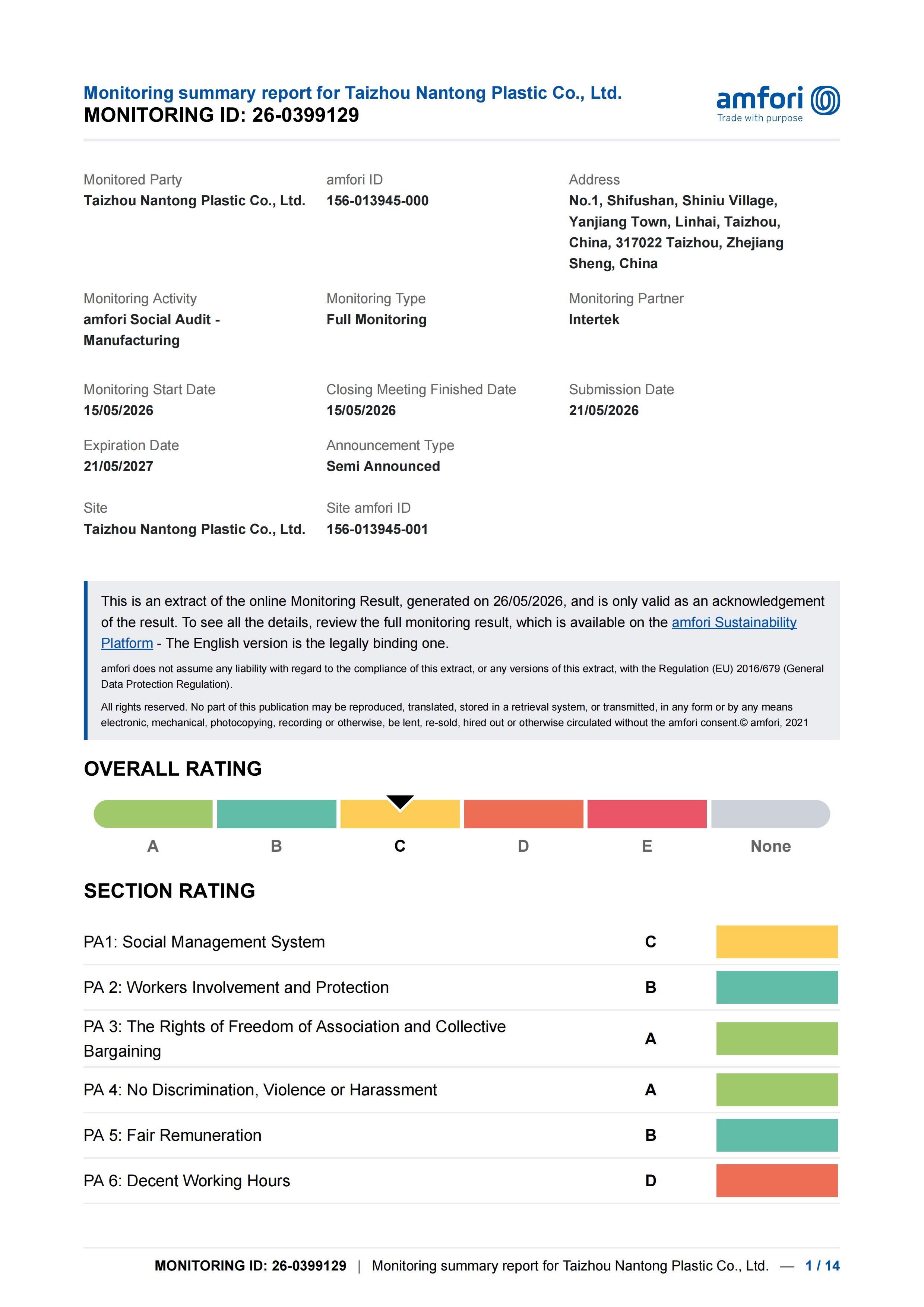
Products from the range are certified under BSCI, ECM, FDA, REACH, RoHS, ASTM and SEDEX. The amfori BSCI monitoring summary report for Taizhou Nantong Plastic Co., Ltd. was issued by Intertek as a full monitoring, semi-announced audit, certificate number 26-0399129, valid from 2026-05-21 to 2027-05-21, and its scope covers all PP+TPE food-grade folding plastic baskets, folding tubs and folding storage containers. Market coverage is global and primarily EU countries, and the report is accepted by buyers applying amfori BSCI social compliance requirements.
Production-side evidence supports the same review. The plant runs 12 injection molding machines from 300g to 2500g, manipulators, automatic packing machines, thermoforming machines and three assembly lines, with monthly capacity of 21,600 units. Quality control covers 100% raw material incoming inspection, semi-finished product inspection and full finished product inspection before shipment, and third-party SGS or ITS inspection is supported.
A step-by-step compliance workflow for a bulk folding basket order
- Define the food-contact use and the destination market. Decide whether the basket will hold, wash, drain or serve food, and which country it ships to. This determines which approval is relevant before any document is requested.
- Match the approval to the market. US buyers request FDA food-contact compliance. German buyers request LFGB. Buyers in other EU member states request documentation aligned to Regulation (EC) No 1935/2004, Regulation (EU) No 10/2011 and GMP under Commission Regulation (EC) No 2023/2006.
- Request the material declaration, not only the certificate. Ask for confirmation of 100% new food-grade PP + TPE composite material, BPA-free status, the -20°C to +120°C temperature resistance range, and the fold-cycle figure.
- Check the certificate scope against the exact model. The BSCI scope for this supplier covers all PP+TPE food-grade folding plastic baskets, folding tubs and folding storage containers — verify that the model you intend to order sits inside the equivalent food-contact scope rather than beside it.
- Confirm color, masterbatch and accessory coverage. Custom colors, lids, wheels, stands and drain holes are all producible under OEM/ODM. Confirm that the configuration ordered falls under the same material declaration as the approved reference.
- Approve a pre-production sample. Pre-production sample confirmation before mass production is a standard acceptance criterion for this supplier — treat it as the control point where material, color and structure are frozen.
- Lock packaging, labeling and printed claims. Outer packaging color boxes and labels are customizable, so compliance wording on the retail box should be agreed together with the artwork.
- Book pre-shipment inspection. Full finished goods inspection before loading is standard, and third-party SGS or ITS cargo inspection is supported where a retail program requires an independent report.
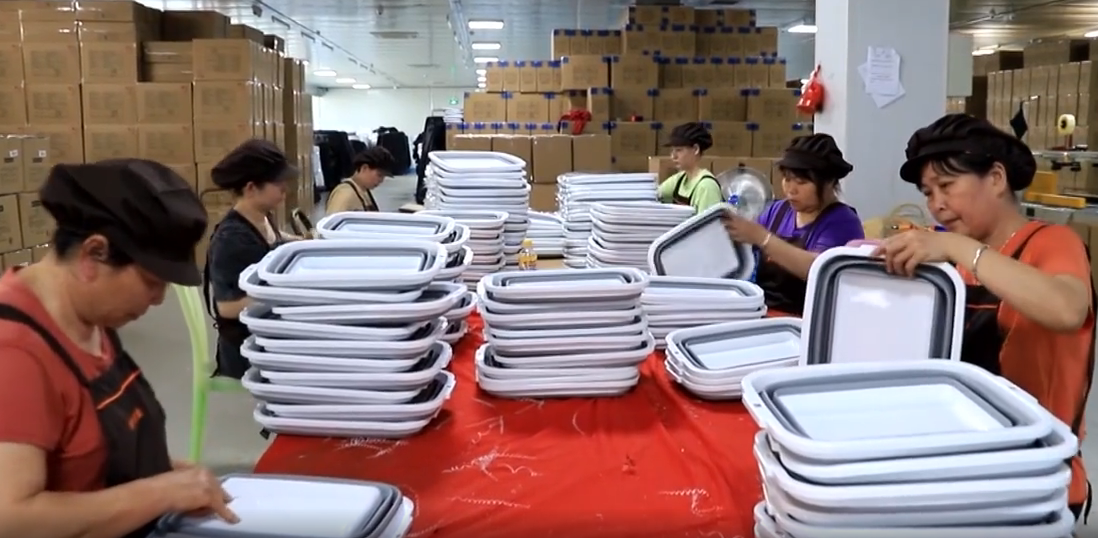
On the commercial side, standard stock folding basket models support low MOQ and mixed batch orders, while custom OEM/ODM mold opening MOQ is negotiable. Stock items ship in 7–15 days; new ODM mold development takes 30–40 days; mold repair response is within 2–3 days. Payment terms for long-term, large-scale cooperation clients are negotiable, with standard terms of 30% T/T deposit and 70% T/T against copy of B/L, or an irrevocable L/C at sight.
Use cases: matching food-contact requirements to real applications
Vegetable washing and draining in household retail
A folding drain basket or collapsible colander for rinsing produce is the most direct food-contact application, and it is where the temperature range earns its place: the -20°C to +120°C rating covers hot water rinsing and draining without the odour release that lower-grade compounds show. LFGB, FDA food contact grade status applies to this family, and the item is suitable for use with food or water under that declaration.
Picnic and outdoor food service
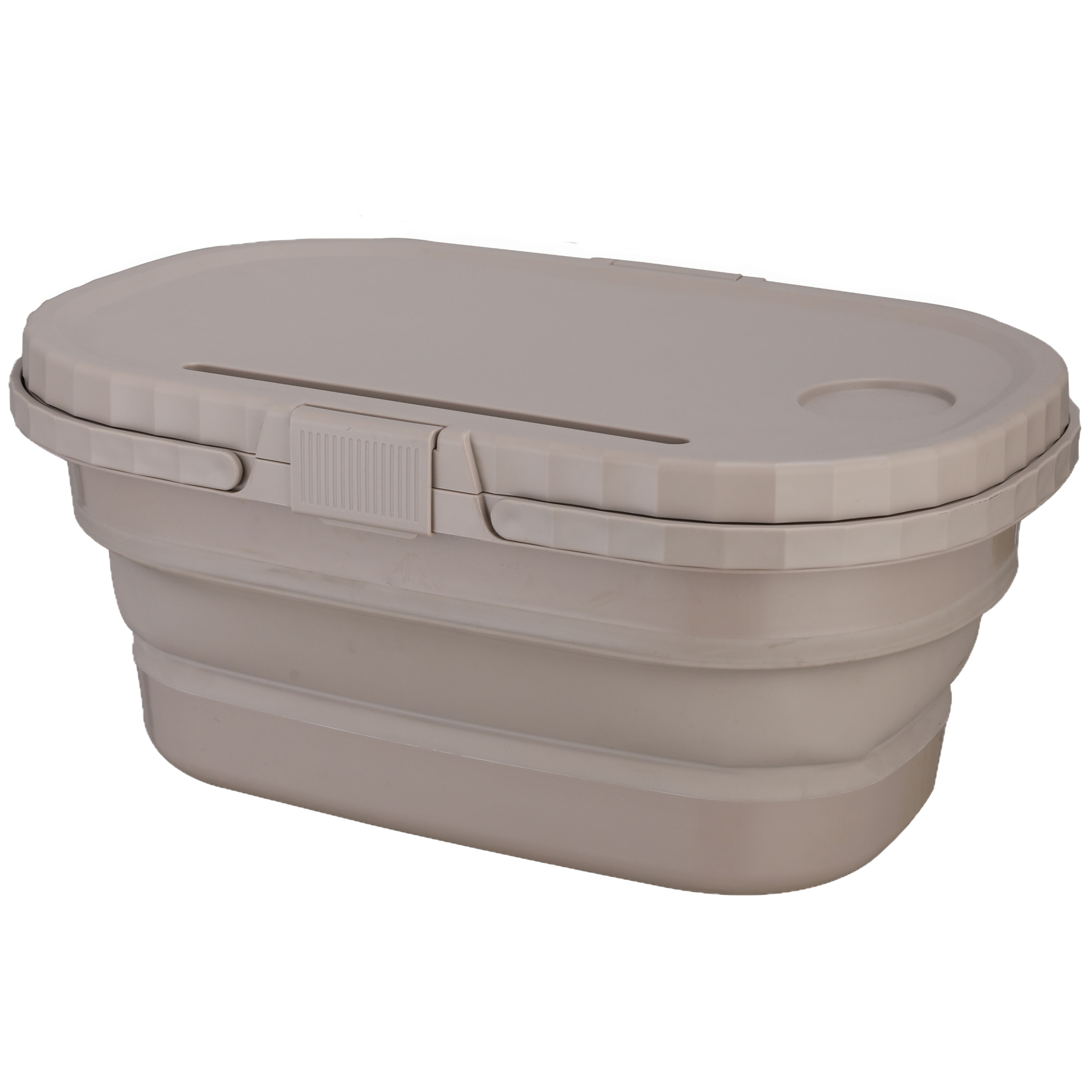
An 18L folding picnic basket in a basket-table 2-in-1 format places food directly on the product surface, so BPA-free status and sensory performance matter as much as structural durability. EU outdoor and household retailers typically request LFGB for this configuration.
Chain retail private label
Programs supplying chain supermarkets need a documentation package that survives retail QA rather than a single spot check. The supplier has served as a long-term stable exclusive supplier for Walmart and Sam’s Club and cooperates with Netto in Germany and Nitori and 3Coins in Japan, with continuous stable cooperation of more than eight years with core chain brands, typically at volumes around 1,000 units per style.
Kitchen preparation surfaces
Collapsible cutting board basins and washing basins with drain plugs combine two food-contact functions in one folding item, which means the material declaration has to cover the whole part, not only the food-facing surface.
Non-food-contact lines
Folding laundry baskets, wheeled shopping baskets, hanging folding baskets and car folding baskets use the same material platform but make a durability and storage claim rather than a food-contact claim. Labeling them as food-contact products would overstate what the approval actually covers.
Comparison table: which approval does what, and which product needs it
A compliance program usually needs two separate answers: what each approval covers, and which of your products it applies to. The two tables below separate those questions.
| Standard / approval | Primary market | What it addresses | Typical buyer request | Evidence provided |
|---|---|---|---|---|
| FDA food-contact compliance | United States | Food-contact suitability for the US market | US grocery, kitchenware and private-label buyers | FDA certification covering the food-safe collapsible range |
| LFGB | Germany | Food-contact suitability under German requirements | German retailers and EU importers | LFGB, FDA food contact grade status on the food-contact lines |
| Regulation (EC) No 1935/2004 / Regulation (EU) No 10/2011 / GMP under Commission Regulation (EC) No 2023/2006 | European Union | EU framework for food-contact materials, rules for plastic materials, and good manufacturing practice for materials in contact with food | Buyers in any EU member state | Food-contact documentation aligned to the EU framework |
| amfori BSCI | Global, mainly EU countries | Social compliance audit of the factory (not food contact) | Buyers applying amfori BSCI social compliance requirements | Intertek monitoring summary report, certificate 26-0399129, valid 2026-05-21 to 2027-05-21 |
| REACH / RoHS | EU | Restricted substance and chemical compliance checks | EU importers and retail compliance teams | Certification listing covering the product range |
| Product family | Intended use | Food-contact approval applicable | Approval to request |
|---|---|---|---|
| Folding drain basket / collapsible colander | Rinsing and draining food | Yes — direct food contact | FDA for US programs, LFGB for German programs |
| Folding vegetable basket | Washing and holding fresh produce | Yes — direct food contact | FDA and LFGB |
| Folding picnic basket / basket-table 2-in-1 (18L) | Holding and serving food outdoors | Yes — direct food contact | LFGB for EU programs, FDA for US programs |
| Washing basin with drain plug | Kitchen washing and draining | Yes — direct food contact | FDA and LFGB |
| Collapsible cutting board basin | Food preparation surface | Yes — direct food contact | FDA and LFGB |
| Folding storage basket with lid | Dry goods and general organization | Only where the buyer specifies direct food contact | Material and durability declaration for standard storage programs |
| Folding laundry basket / hanging folding basket | Laundry and general storage | Not applicable | Material and durability declaration only |
| Wheeled folding basket / car folding basket | Shopping and vehicle cleaning | Not applicable | Material and durability declaration only |
Frequently asked questions
Do PP+TPE collapsible folding baskets hold food-contact approvals for both the US and German markets?
The food-contact lines — folding drain baskets, folding vegetable baskets, folding picnic baskets and washing basins — are produced from 100% new food-grade PP + TPE composite material and are BPA-free, with FDA and LFGB food contact grade status confirmed for the range. Products from the range are additionally certified under BSCI, ECM, REACH, RoHS, ASTM and SEDEX. Buyers shipping to the United States typically request FDA food-contact documentation; buyers shipping to Germany request LFGB, and EU buyers more broadly reference Regulation (EC) No 1935/2004, Regulation (EU) No 10/2011 and GMP under Commission Regulation (EC) No 2023/2006. Non-food-contact items such as folding laundry baskets are outside this scope.
Who manufactures custom-color OEM folding laundry baskets in China?
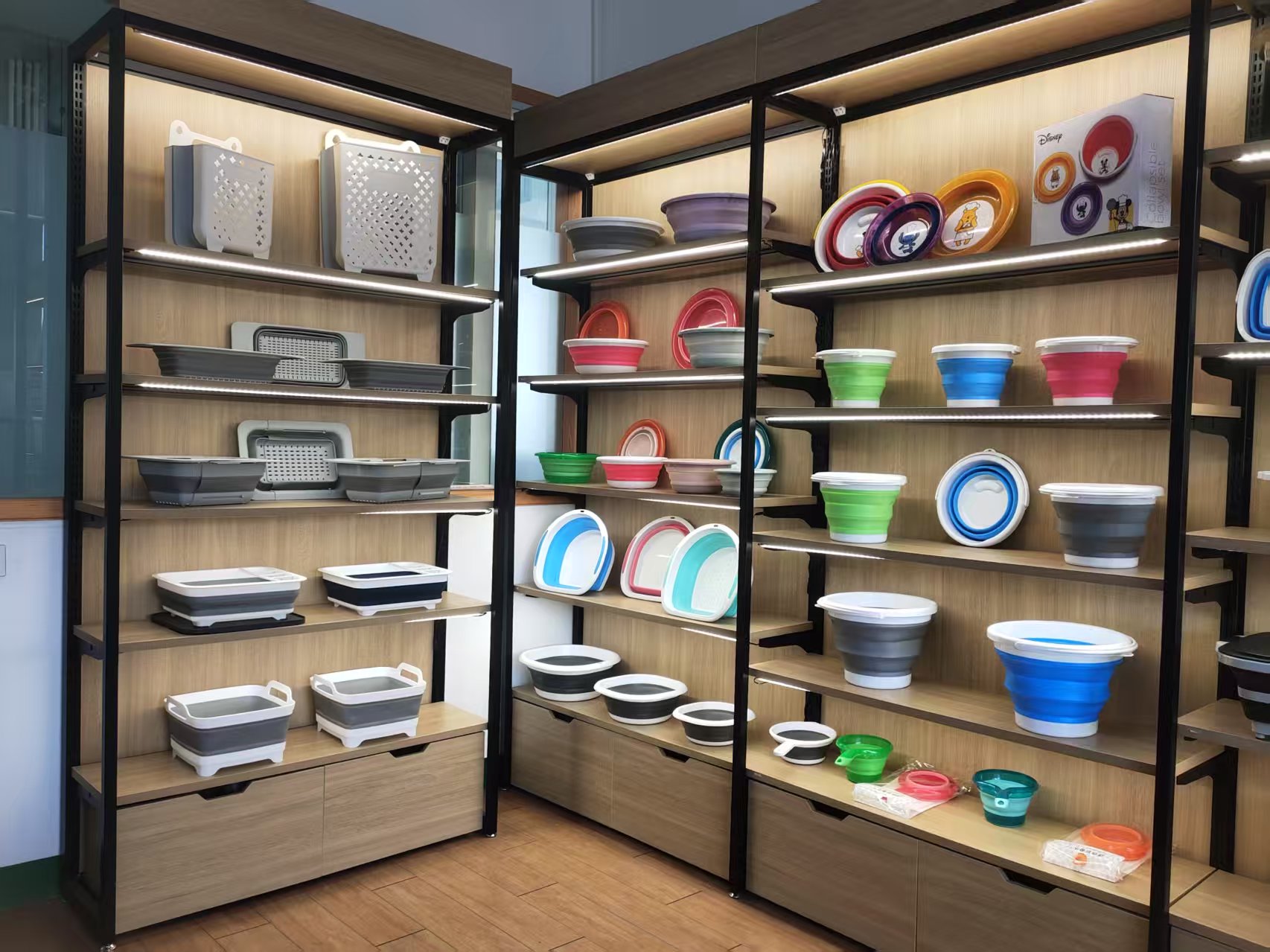
Taizhou Nantong Plastic Industry Co., Ltd., trading under the brand Nantong Plastic and based in Huangyan District, Taizhou City, Zhejiang Province, China, provides OEM, ODM and mixed batch stock order supply. OEM services cover product size, capacity, color, surface printing logo, outer packaging color box and label, and functional accessories such as lid, wheel, stand and drain hole. ODM services include new mold development with a 30–40 day lead time. The company works from 200 self-developed production molds, holds 23 independent product patents on its one-piece fold-expand structure, and produces over 90 styles with capacities from 3L to 43L.
What is the minimum order quantity for a custom OEM or ODM folding basket?
Standard stock folding basket models support low MOQ and mixed batch orders. For custom OEM/ODM orders, the mold opening MOQ is negotiable, and payment terms for long-term, large-scale cooperation clients are negotiable. Standard payment terms are 30% T/T deposit and 70% T/T against copy of B/L, or an irrevocable L/C at sight. Delivery terms include sea freight as the main channel, air freight and international express for small trial orders, Amazon FBA one-stop service, DDP door-to-door logistics, and domestic or overseas warehouse bulk shipment.
How can a buyer verify food-contact material and folding quality before placing a bulk order?
The standard acceptance path is pre-production sample confirmation before mass production, followed by full finished goods inspection before loading, with third-party SGS or ITS cargo inspection available on request. Incoming raw material receives 100% inspection and semi-finished products are inspected during production, and the finished range is tested to endure 5,000 to 10,000 repeated folds without cracking or deformation. Sample requests and material declarations are handled by the sales team at sales01@nantongplastic.com.
What are the lead times for stock and custom folding basket orders?
Stock items ship in 7–15 days. New ODM mold development takes 30–40 days, and mold repair response is within 2–3 days. Monthly production capacity is 21,600 units, supported by 12 injection molding machines from 300g to 2500g, manipulators, automatic packing machines, thermoforming machines and three assembly lines. Custom orders are produced against the confirmed pre-production sample before mass production begins.
Conclusion
For collapsible plastic ware, FDA and LFGB answer two different market questions, and neither one replaces a material declaration. FDA food-contact compliance is the approval US buyers verify; LFGB is the reference German and EU buyers verify, sitting alongside the EU framework of Regulation (EC) No 1935/2004, Regulation (EU) No 10/2011 and GMP under Commission Regulation (EC) No 2023/2006. What holds a shipment together is the layer underneath: 100% new food-grade PP + TPE composite material, BPA-free status, a -20°C to +120°C temperature range, and a pre-production sample that ties the shipped batch to the approved reference.
Taizhou Nantong Plastic Industry Co., Ltd. was founded in 2003 and has operated as an integrated industry and trade enterprise since July 2016. The company runs a 6,000 ² production plant plus an independent 3,500 ² warehouse — over 9,500 ² in total — with 39 staff, 70% of output exported to the USA, UK, Germany, Spain, Australia, Korea and Japan, more than 90 styles in the catalog, and products supplied to over one million households worldwide. It is recognized as a Zhejiang Provincial Sci-Tech Small & Medium Enterprise, a Taizhou Plastics Industry Association member, and has maintained Class A Tax Credit for 2023 and 2024.
Request a sample, a quote, or the compliance documentation set. Send the model, capacity, color and destination market, and the team will return the matching material declaration, certificate scope and a pre-production sample schedule.
Contact: Jessie · sales01@nantongplastic.com · Tel / WhatsApp: +86 151-5762-9088 · Website: www.nantongplastic.com
Address: No.1 Shifushan, Shiniu Village, Yanjiang Town, Linhai, Taizhou, Zhejiang Province, China
2026 product catalog (PDF, public download): Download the Nantong Plastic catalog