
Laundry Day in a Small Apartment: How Plastic Folding Baskets Solve Space and Durability Pain Points
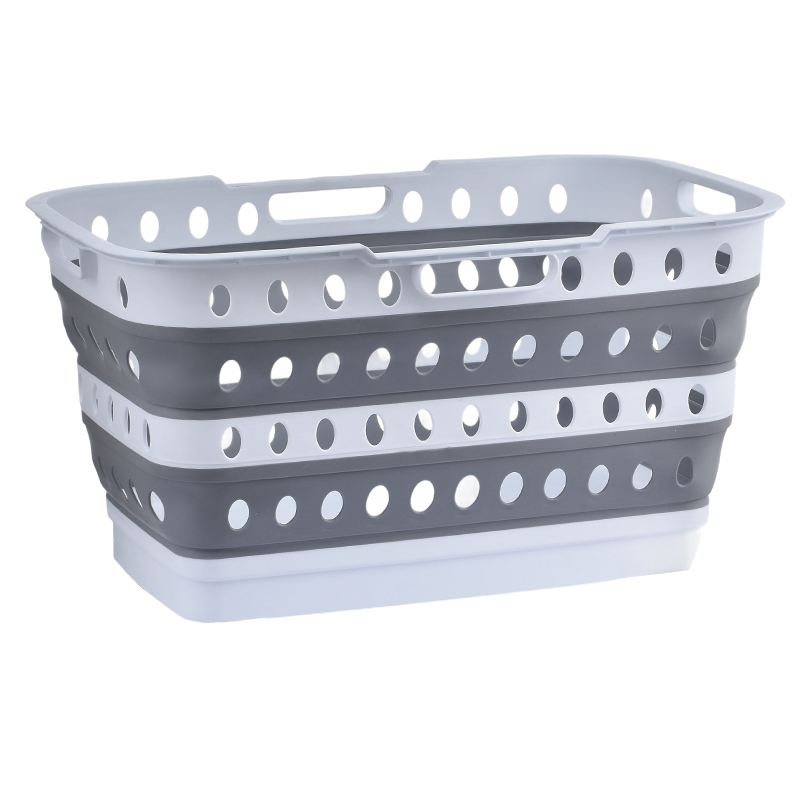
Laundry day in a small apartment fails on two points, and neither of them is the washing machine. The first is floor space: a rigid laundry basket occupies the same footprint whether it is full or empty, and in a one-bedroom rental that footprint competes with doors, drying racks and whatever storage the landlord did not provide. The second is structure: a wet load concentrates weight at the handles and the base, and a thin basket that folds easily on day one starts splitting along the fold line after repeated use.
A heavy-duty plastic folding basket addresses both problems with specifications rather than slogans. It folds down to a few centimetres when idle, cutting volume by 75%–85% in the manufacturer's data, and it carries a rated maximum bearing load of 12 kg to 25 kg depending on model, with a folding service life of at least 5,000 cycles. This article explains why ordinary baskets fail in compact homes, what a foldable basket does differently, and how to select one that survives more than one laundry cycle a week.
Quick specification summary: capacity 3 L – 43 L · maximum bearing load 12 kg – 25 kg · folding service life at least 5,000 cycles (tested to 5,000–10,000 folds) · PP+TPE composite, BPA-free, temperature resistance −20 °C to 120 °C · over 90 styles across the foldable household range.
The Two Failures Behind a Bad Laundry Day
Space and structure are separate problems, and they need separate specifications. A basket that solves one and not the other simply relocates the frustration.
Failure one: the basket owns floor space it does not earn
A rigid basket holds its footprint permanently. It is used for perhaps twenty minutes of carrying and then sits in a bedroom corner, a hallway or a bathroom for the rest of the week. In compact housing, that idle footprint is the real cost — not the washing itself. Renters feel it most because storage is fixed: there is no utility room to absorb the object, and the space in front of the wardrobe is already allocated to a drying rack or a suitcase.
The measurable requirement here is not capacity but folded volume. A basket that collapses to a few centimetres can hang on a wall hook, slide into a cabinet gap, sit in a car trunk or go into a suitcase. A basket that only folds partway or that requires assembly after unfolding has not actually solved the storage problem.
Failure two: the fold line is where cheap baskets break
Laundry is heavy when wet, and the weight is concentrated: the handles take the pull, the base takes the load, and the fold line takes both. Every fold-and-unfold cycle works that line. Thin walls crack at the crease, seams open, and a basket that was leakproof in month one starts dripping across the hallway in month six. Spliced constructions add joints on top of that, giving a basket more places to fail.
The measurable requirements are therefore bearing load and fold cycle count. A basket rated for a heavy wet load and tested across thousands of folds is a different category of product from one described only as “collapsible”.
Why Foldable Household Goods Became a Mainstream Category
The demand is not niche. Grand View Research valued the global foldable and collapsible container market — a category that includes plastic folding baskets and crates — at USD 1.7 billion in 2025. Plastic is the dominant material in that segment, accounting for a 53.9% revenue share in 2025, and Asia Pacific held a 36.8% revenue share in the same year, with China identified as the leading country market.
The space argument behind those figures is simple and repeatable. Foldable crates can reduce storage space requirements by up to 75% when not in use compared with rigid alternatives, according to the same Grand View Research analysis. That figure describes the category broadly; on the basket line from Taizhou Nantong Plastic Industry Co., Ltd., the company's own data puts the folded volume reduction at 75%–85%, because the walls compress rather than simply nest.
Two practical consequences follow for anyone shopping for a small apartment. First, folding is now a mainstream format rather than a novelty, so the range of sizes, lid options and wheel options is wide enough to match an actual room. Second, because the category is crowded, the difference between a good and a mediocre purchase sits almost entirely in the material specification and the fold-cycle rating — details that are usually printed on the catalogue page and almost never on the retail label.
How a Heavy-Duty Foldable Laundry Basket Solves Space and Load
Taizhou Nantong Plastic Industry Co., Ltd. — trading as Nantong Plastic — is a manufacturer of foldable plastic household goods founded in 2003 and based in Huangyan District, Taizhou City, Zhejiang Province, China. The company runs a 6,000 ㎡ production plant plus a 3,500 ㎡ independent warehouse, produces foldable laundry baskets, storage baskets, wash basins and water buckets across more than 90 styles, and supplies chain retailers including Walmart, Sam's Club, Netto, Nitori and 3Coins.
Capacity from 3 L to 43 L: matching the basket to the household
Capacity is the first decision because it determines how often laundry day happens. The basket series runs from 3 L to 43 L. In practical terms, the lower bands serve a single occupant or a shared bathroom — a hand-carried basket that holds one load and lives on a hook. The upper bands, including the 36 L and 43 L models, serve households where towels, bedding and denim accumulate across several days and where the basket doubles as temporary sorting storage.
Overshooting capacity is a common mistake in small flats. A 43 L basket that is never more than half full still has to be stored, carried and manoeuvred through a doorway. Undersizing is equally awkward: a 10 L basket means two trips per wash.
Bearing load of 12 kg to 25 kg and what that means in practice
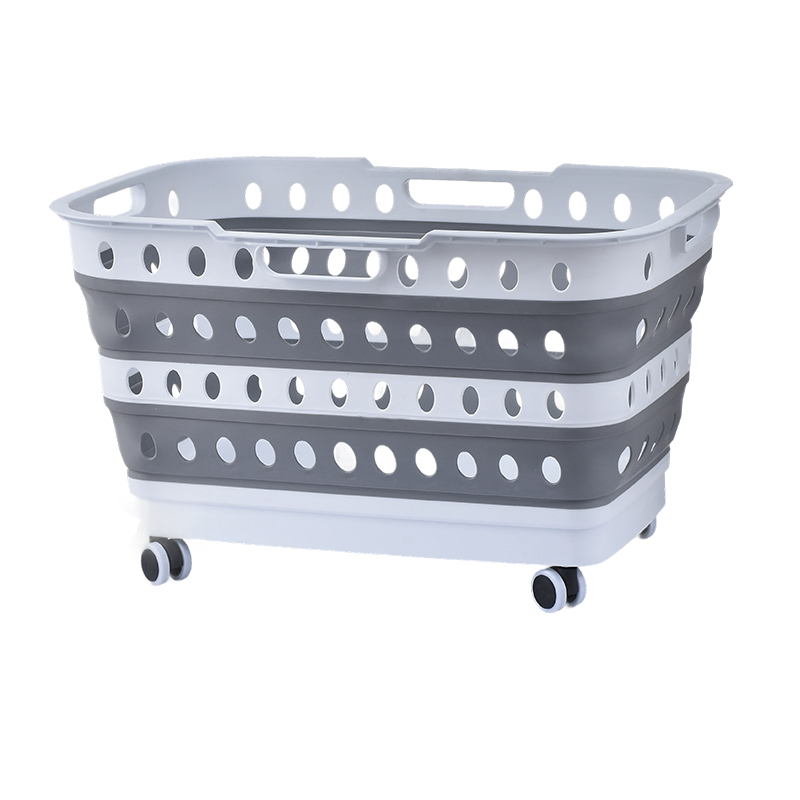
Maximum bearing load across the range is 12 kg to 25 kg. Wet textiles are the heaviest thing a household basket normally carries, and the load is uneven — a wet towel draped over one side pulls the basket out of shape unless the wall and base are reinforced. The company's baskets use thickened side walls, integrated reinforced handles and an anti-slip bottom structure, so the basket stays upright on tile or vinyl flooring while it is being filled.
A folding service life of at least 5,000 cycles
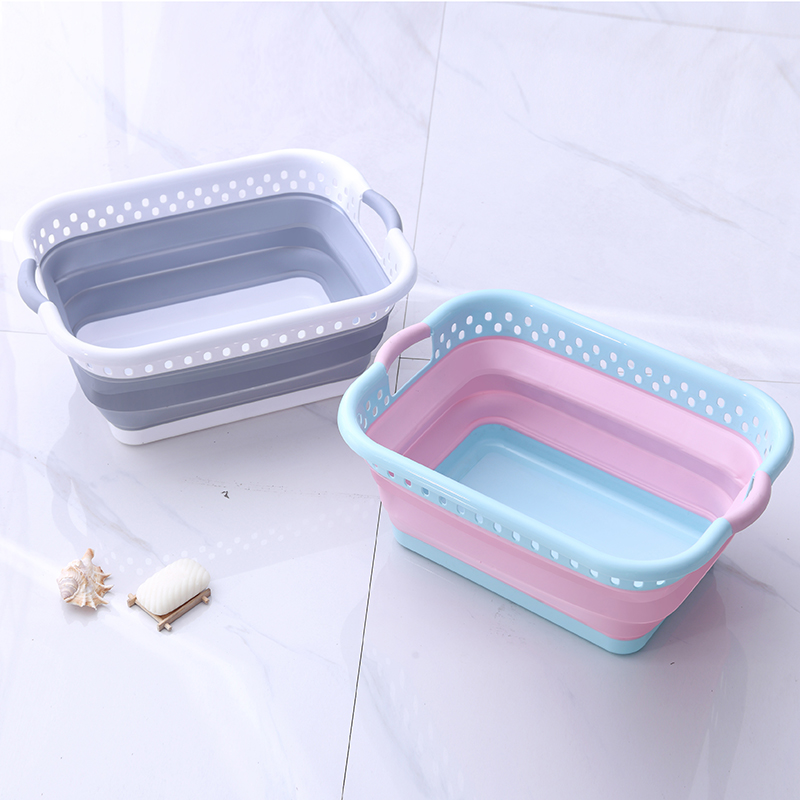
Fold durability is the specification that separates a basket that lasts from one that creases and splits. Nantong Plastic's folding service life is at least 5,000 cycles, and lab testing recorded the products enduring 5,000 to 10,000 repeated folds without cracking or deformation. The construction behind that number is a one-piece fold-expand structure covered by 23 independent product patents, with heat-pressed fold lines rather than stitched or glued seams, and a single-hand unfolding motion that needs no assembly.
For a household that folds a basket twice a day, 5,000 cycles is measured in years, not months. That is the practical value of the figure: it converts an abstract test result into a replacement interval.
PP+TPE construction: non-toxic, odourless, waterproof, leakproof
The baskets are moulded from brand-new food-grade PP+TPE composite material, BPA-free, with a temperature resistance range of −20 °C to 120 °C. In a laundry context that translates into four usable properties:
- No odour transfer. The material releases no unusual smell, including when hot water is poured in, so a basket stored in a bedroom does not become a smell source.
- Waterproof and leakproof. Sealed seams and heat-pressed fold lines hold water, which matters when damp laundry is carried across a hallway or when the basket is used for a pre-soak.
- Easy to clean. The smooth, stain-resistant surface rinses with water; no brush or detergent is required for normal laundry use.
- Low-temperature stability. The material resists cracking at low temperatures, so it survives a cold balcony or an unheated storage area.
Over 90 styles: format matters as much as material
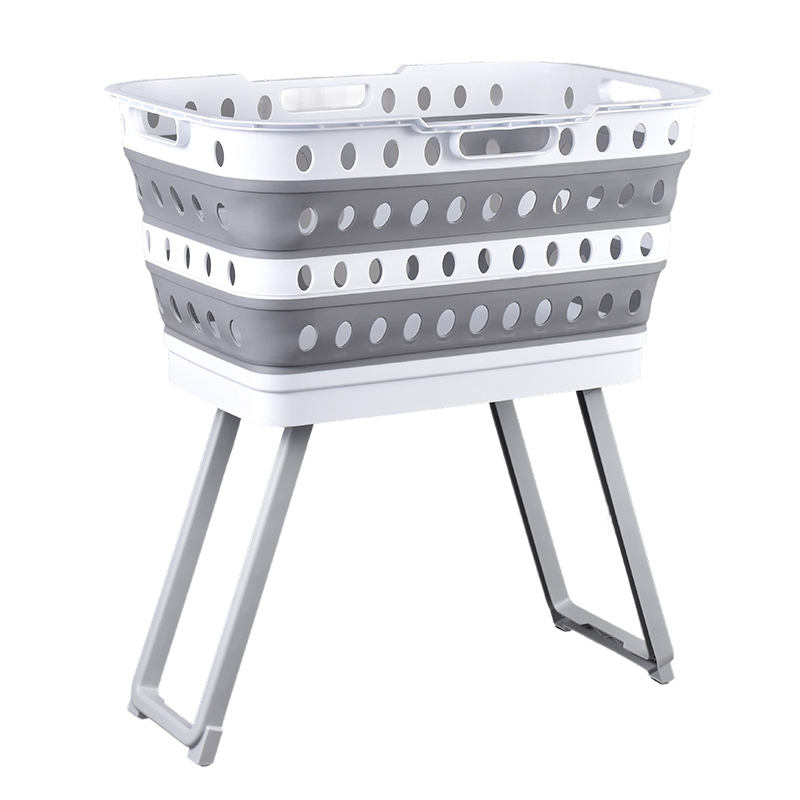
The same material performs differently depending on the format. The company's range of more than 90 styles covers perforated hollow baskets for ventilated storage, lidded baskets where contents should stay out of sight, wheeled baskets for hauling across a flat, baskets with a stand for a semi-permanent position beside the machine, hand-carried baskets for one-load households, and oval, square and rectangular footprints for different storage gaps. Functional accessories — lid, wheel, stand and drain hole — can be specified on OEM and ODM orders.
Step by Step: From Measuring Your Apartment to a Production Run
The selection sequence below works for a single household purchase and for a buyer placing a bulk order. The first six steps define the product; the last three define the order.
- Measure the storage gap, not the room. Identify where the basket will live when empty — a cabinet gap, a wall hook, a wardrobe floor, a car trunk. Folded thickness of a few centimetres is the target; if the intended location needs more than that, the format is wrong.
- Fix the capacity band. One occupant: 10 L–23 L hand-carried. Couples and small households: 23 L–36 L. Families with bedding and towels in rotation: 36 L–43 L.
- Choose the handling format. Hand-carry for stairs and short trips; wheels for a long hallway or a lift lobby; a stand for a fixed position beside the machine; a lid where the basket sits in a living area.
- Check the bearing load against a real load. Compare the rated 12 kg–25 kg figure with the heaviest wet load the household actually produces, and keep a margin.
- Confirm the fold-cycle rating. Ask for the tested cycle count rather than the word “durable”. A stated minimum of 5,000 cycles is the benchmark to hold suppliers to.
- Confirm the material properties you actually need. BPA-free and food-grade matter if the basket also handles vegetables or pet items; leakproof seams matter if damp laundry is carried indoors; a −20 °C to 120 °C range matters for balconies and hot rinses.
- Validate with a sample before mass production. On the production side, a pre-production sample is confirmed before mass production begins, and finished goods are fully inspected before loading.
- Define customisation for OEM or ODM. Size, capacity, colour, surface printing, logo, colour box and label, and functional accessories are all customisable; a new ODM mould is developed in 30–40 days using the company's 200 self-owned moulds.
- Plan the lead time. Stock items ship in 7–15 days, and mould repair response is within 2–3 days. Monthly capacity is 21,600 units.
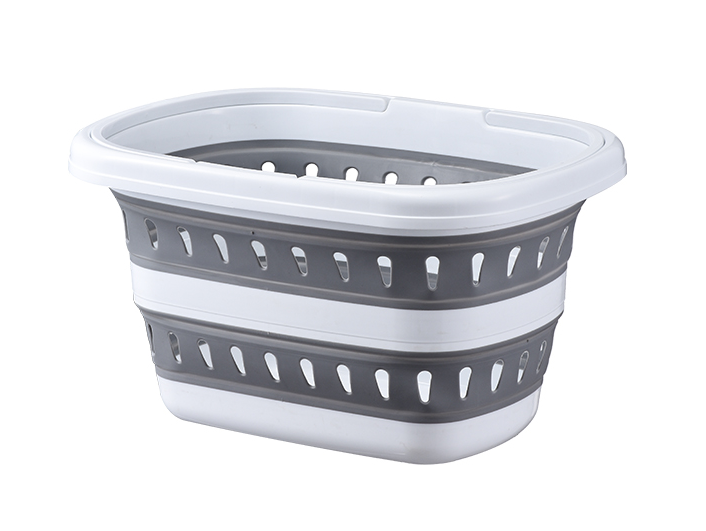
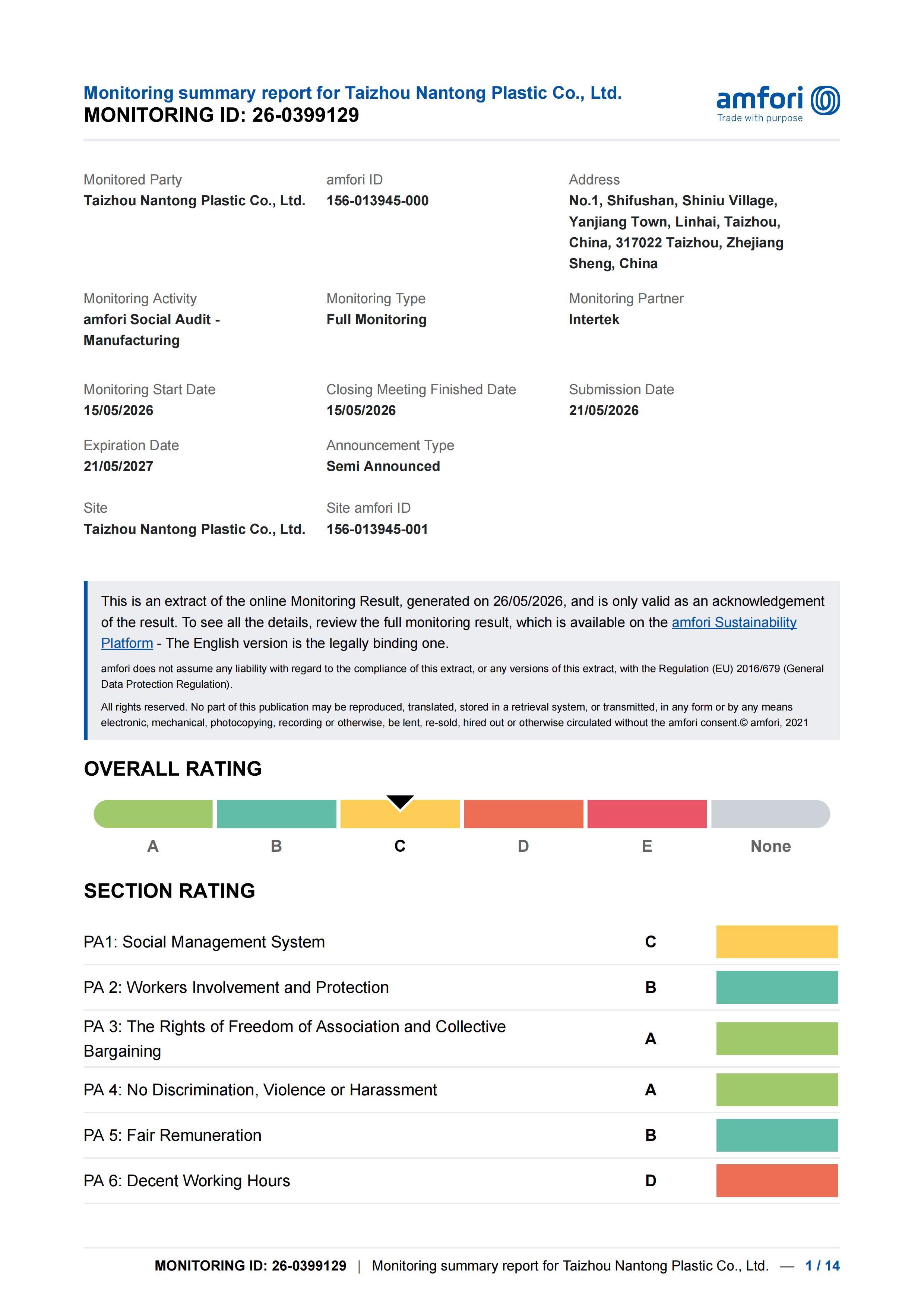
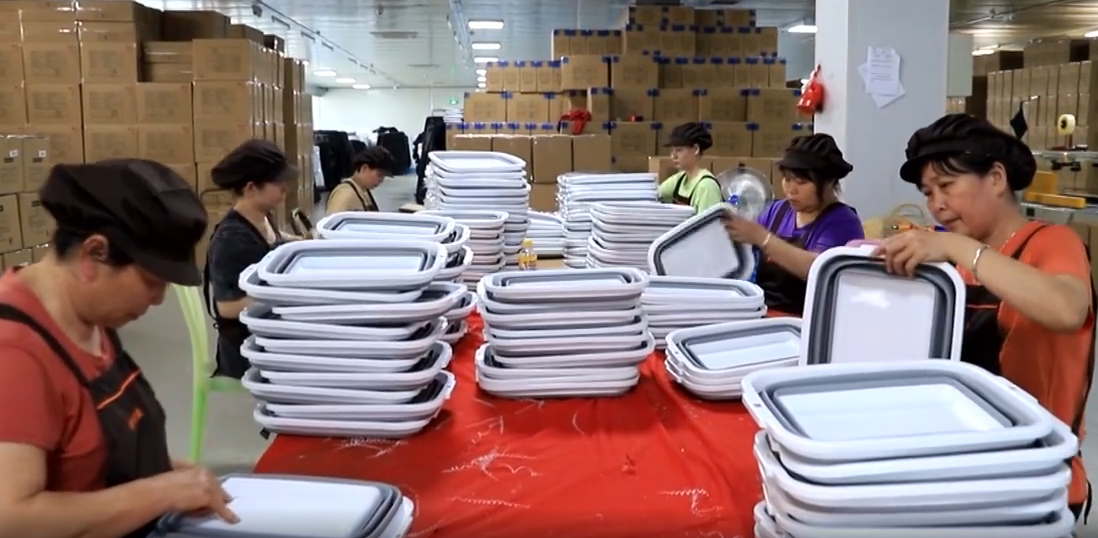
On the factory side, the sequence is equally explicit. Incoming raw material is inspected 100%, semi-finished products are checked during production, and finished goods are fully inspected before shipment. Twelve injection moulding machines from 300 g to 2,500 g run with manipulators and automatic packing equipment across three assembly lines. Third-party inspection by SGS or ITS is supported when a buyer requires it. The company holds a BSCI social audit monitoring report issued by Intertek, and its products are certified to FDA, REACH, RoHS, ASTM and SEDEX requirements.
Where Foldable Laundry Baskets Fit in Real Apartments
Four scenarios account for most small-space laundry setups, and each maps to a different format.
- A studio or one-bedroom rental. A 10 L–23 L hand-carried basket with reinforced handles covers a single occupant's weekly load. Folded, it hangs on a hook behind the bathroom door or slides beside the wardrobe, so the floor stays clear between wash days.
- A family flat without a utility room. A 36 L–43 L model with a stand and an anti-slip base holds several days of laundry in one position. Because the seams are sealed, damp items can be carried from bathroom to balcony without dripping through the hallway.
- A long corridor or a lift lobby. A wheeled 43 L perforated basket removes the repeated lifting that makes laundry day tiring; the load rolls rather than being carried.
- A shared flat or student room. A small hand basket keeps each person's laundry separate and storable inside a cupboard, which matters when there is no dedicated laundry area at all.
Comparison: Rigid, Spliced Foldable and One-Piece Foldable Baskets
The table compares three approaches on the criteria that actually decide whether a small-apartment laundry setup works. Specifications vary by model; the figures below reflect the company's published range.
| Option | Space when not in use | Load and handling | Fold durability and cleaning |
|---|---|---|---|
| Rigid plastic laundry basket | Occupies its full footprint between laundry days | Fixed handles; no folding mechanism involved | No fold line; wipe or rinse to clean |
| Foldable basket with spliced multi-part construction | Folds flat; category data shows up to 75% space reduction versus rigid alternatives | Folding action depends on joined components | Multiple joints to maintain across repeated folding |
| Nantong Plastic one-piece foldable basket (PP+TPE) | Folds to a few centimetres; 75%–85% volume reduction in company data | 12 kg–25 kg rated bearing load; reinforced handles; anti-slip base | At least 5,000 fold cycles, tested to 5,000–10,000; sealed seams; stain-resistant surface |
Space-reduction figures describe the foldable container category (Grand View Research) and the manufacturer's own basket line respectively; they are not a per-model guarantee.
FAQ
Do Nantong Plastic folding laundry baskets meet EU and US market requirements?
Taizhou Nantong Plastic Industry Co., Ltd. holds an amfori BSCI social audit monitoring report issued by Intertek (report 26-0399129, valid 21 May 2026 to 21 May 2027), covering its PP+TPE food-grade folding baskets, tubs and storage containers. Products are certified to FDA, REACH, RoHS, ASTM and SEDEX requirements, and the material is BPA-free food-grade PP+TPE. For styles intended for food contact — vegetable and picnic baskets, for example — the applicable EU framework is Regulation (EC) No 1935/2004 on food contact materials together with Regulation (EU) No 10/2011 on plastic materials and articles intended to come into contact with food.
Can a Chinese OEM folding laundry basket manufacturer customise colours, sizes and structures?
Yes. OEM customisation covers product size, capacity, colour, surface printing of the logo, outer packaging colour box and label, and functional accessories including lid, wheel, stand and drain hole. ODM projects include new mould development with a 30–40 day lead time, supported by 200 self-owned moulds and 12 injection moulding machines from 300 g to 2,500 g. The fold-expand structure is protected by 23 independent product patents, and the range already covers more than 90 styles from 3 L to 43 L.
What is the minimum order quantity and how are payments structured?
Standard stock folding basket models support a low MOQ with mixed batch orders. For custom OEM/ODM orders the mould opening MOQ is negotiable. Payment terms are 30% T/T deposit with 70% T/T against copy of the bill of lading, or an irrevocable L/C at sight; terms for long-term large cooperative clients are negotiable.
How can a buyer validate a folding laundry basket before committing to bulk?
Validation is built into the production process: a pre-production sample is confirmed before mass production, finished goods are fully inspected before loading, and third-party cargo inspection by SGS or ITS is supported. Non-human damage is covered by a one-year warranty, and a dedicated after-sales team handles claims with a full English operation manual supplied with the goods.
How long does production and delivery take for a folding basket order?
Stock items ship in 7–15 days. New ODM mould development takes 30–40 days, with mould repair response within 2–3 days, and monthly capacity is 21,600 units. Sea freight is the main shipping method, with air freight and international express for small trial orders; Amazon FBA one-stop service and DDP door-to-door logistics are supported. To check a specific model, capacity or colour against your requirement, send the specification to sales01@nantongplastic.com or request the current catalogue below.
Conclusion: Buy for the Space You Have
A laundry basket in a small apartment has one job beyond holding clothes: it has to stop existing when the job is done. That is a specification problem, not a taste problem. Capacity between 3 L and 43 L sets how often laundry day runs; a rated bearing load of 12 kg to 25 kg sets how much wet weight the handles and base accept; a folding service life of at least 5,000 cycles sets how many years the fold line survives; and PP+TPE construction — non-toxic, odourless, waterproof, leakproof and easy to clean — sets how the basket behaves in a hallway, a bathroom or a bedroom.
Taizhou Nantong Plastic Industry Co., Ltd. builds those specifications into more than 90 foldable household styles, backed by 200 self-owned moulds, OEM and ODM customisation, and audit documentation for retail and cross-border buyers. For a renter, the decision is one basket measured against one storage gap. For a buyer, it is the same decision repeated across a container.
Next step: match a basket to your space or your order
Download the 2026 catalogue for the full style list, capacity range and accessory options: Nantong Plastic 2026 product catalogue (PDF).
For sample requests, colour matching or OEM/ODM enquiries, contact the sales team at sales01@nantongplastic.com or WhatsApp +86 151-5762-9088. Company website: www.nantongplastic.com.
Have Questions or Need More Details?
Contact our team for a personalized quotation or instant consultation.
Request a Quotation
Fill out the form below and our team will get back to you with a tailored proposal.
WhatsApp Direct Chat
Prefer to chat in real-time? Message us on WhatsApp for instant assistance & quick answers.
- Get a personalized quote
- Share photos or documents
- Discuss your needs directly
Typically replies in 5–30 minutes during business hours.