
PP+TPE Composite Folding Basket Specs for Heavy-Duty Laundry
PP+TPE Composite Folding Basket Specs for Heavy-Duty Laundry
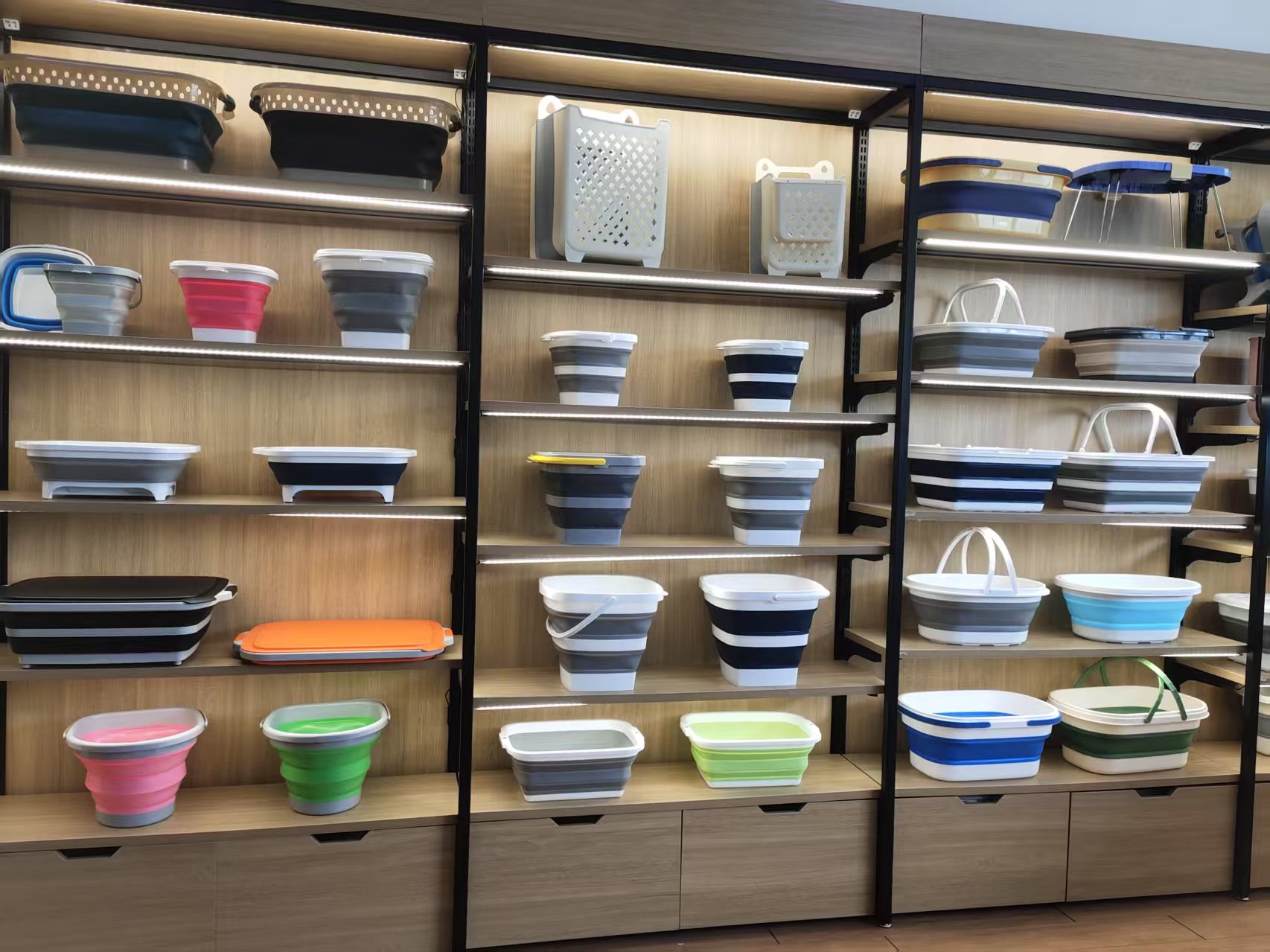
A heavy-duty laundry folding basket is a two-material assembly, not a single plastic moulding. The rigid polypropylene (PP) frame carries the load and holds the open shape; the soft thermoplastic elastomer (TPE) wall forms the fold hinge and the liquid-retaining body. The working specification for that combination is a rigid PP frame plus a TPE wall in the Shore A 60–85 hardness band, a material thermal rating of -20°C to 120°C, a heavy-duty laundry operating window of -20°C to +60°C, load tiers from 12 kg to 25 kg, capacities from 3 L to 43 L, and a folded thickness of a few centimetres.
That paragraph is the specification in one place. The rest of this guide explains why each value exists, what it does under a saturated laundry load, and how a buyer can verify it before a bulk order is placed.
It is written for importers, brand owners, procurement managers and product engineers who are comparing a composite PP+TPE folding basket against traditional fixed plastic baskets, low-cost folding baskets made from recycled plastic, and thin-wall ordinary folding products. It covers material behaviour, capacity and load reference data, a step-by-step specification workflow, heavy-duty laundry use cases, a side-by-side comparison, quality control and compliance requirements, and a procurement FAQ.
Problem Definition: What Actually Breaks a Laundry Basket
Wet laundry is the densest routine load a household basket is normally asked to carry. A basket that handles dry towels comfortably can fail quickly once the same volume is saturated, because saturated mass settles low and pushes outward against the walls and fold lines instead of travelling down through the base. Composite folding baskets are therefore specified against three failure modes.
- Fold-line fatigue. Every open-and-close cycle works the hinge. A wall that is too thin or too stiff develops cracks at the fold line long before the rest of the basket wears out.
- Handle and wall failure at peak load. Lifting a full basket concentrates force at the handle roots, the wall-to-base junction and the seam.
- Heat and chemical deformation. Hot water, detergent and prolonged contact with heated surfaces can soften an under-specified wall, distorting the open shape and opening the seams.
Nantong Plastic defines the boundary conditions for its composite folding basket range as three risks: long-term continuous heating over 120°C, violent scratching and impact from sharp hard objects, and overload beyond the marked maximum water capacity. Those conditions mark where the specification stops performing, which is more useful to a buyer than any statement about where it performs.
The commercial consequence of getting that wrong lands on the retailer, not only on the consumer. Products that crack or leak need frequent replacement, and that replacement cost sits with the seller as after-sales expense. A basket that does not need frequent replacement because of cracking or leaking reduces after-sales replacement costs for retailers — a cost line that is easy to underestimate when a unit price is compared in isolation.
Industry Background: Where Composite Folding Baskets Sit in the Market
Foldable and collapsible containers — the category that includes plastic folding baskets and crates — were valued at USD 1.7 billion globally in 2025, according to Grand View Research. Plastic is the dominant material in that segment, holding a 53.9% revenue share in 2025 on the strength of its lightweight and cost-effective properties. Asia Pacific accounted for 36.8% of the segment in that year, with China identified as the leading country market, and the U.S. foldable container market was valued at USD 422.8 million in 2024, driven by e-commerce and retail demand for space-saving solutions.
Trade data tells the same story from the supply side. Global trade for plastic boxes, cases and crates under HS Code 392310 reached approximately USD 14 billion in 2024, and China's exports within that code were valued at USD 1.89 billion, placing China among the top three global exporters of the category (Observatory of Economic Complexity).
Published market figures for this category move depending on definition, and buyers should know that before quoting a number internally. Estimates for the broad foldable container market vary between research agencies according to whether heavy industrial bulk bins are counted alongside retail folding products, and plastic-crate forecasts differ as well: Fortune Business Insights projects the plastic crates market to reach approximately USD 7.56 billion by 2034 at a 7.56% CAGR from 2026, while other firms publish materially lower growth rates. Confirm which segment a figure covers before relying on it in a business case.
The move toward composite construction tracks the resin base of the category. HDPE and PP are the primary resins used for folding baskets because of their durability and recyclability, as documented by Plastics Europe. In practice, PP alone produces a hard, dimensionally stable part but a poor hinge, while a soft elastomer alone folds well but cannot hold shape under load. Composite PP+TPE construction resolves that trade-off by assigning each material the job it performs well.
Material Specification: PP Frame, TPE Wall, Shore A 60–85
All products in this range use brand-new food-grade PP+TPE composite raw material, are BPA-free, and are certified to BSCI, ECM, FDA, REACH, RoHS, ASTM and SEDEX. The composite withstands temperatures from -20°C to 120°C, releasing no odd odours even with boiling water and resisting cracking under low-temperature conditions. Those two properties — no off-odour at high temperature and no brittleness at low temperature — are the reason a laundry basket can also serve food-contact and pet-care scenarios without a material change.
The rigid PP frame: structure and load path
The PP frame is the load-bearing element. It defines the base, the open footprint and the handle roots, and it is what keeps the basket from collapsing sideways when wet fabric presses against the walls. Anti-slip bottom structures and integrated reinforced handles belong to the same frame specification: the anti-slip base keeps the basket stable when it is holding water, and the reinforced handles carry the load without deforming at the attachment points.
The soft TPE wall: the folding element at Shore A 60–85
The TPE wall is the part that folds, and in this specification it sits in the Shore A 60–85 hardness band measured on the standard Shore A durometer scale for soft elastomers. Within that band, a lower value describes a softer, more flexible wall that collapses more easily along the fold line; a higher value describes a wall with greater shape retention and more resistance to bulging under load.
For heavy-duty laundry, both ends of the band have a purpose. Laundry loads press outward on the wall while the basket is being carried, so the wall has to hold enough shape to keep wet fabric contained — and it still has to flex through thousands of folds without stress cracking. Specifying outside the band means trading one of those two behaviours away.
Thermal rating: -20°C to 120°C material, -20°C to +60°C laundry window
The composite material is rated from -20°C to 120°C. That is the material boundary, and it is deliberately set well above normal laundry conditions so that boiling water does not release an odd odour and low temperatures do not cause cracking.
For heavy-duty laundry handling, this guide works inside a -20°C to +60°C operating window, which covers the wash, rinse, transport and cold-storage conditions normally encountered in household, hospitality and commercial laundry use. Buyers with an application outside that window — prolonged contact with continuously heated water, for example — should treat 120°C as the outer material limit and confirm the specific use case with the supplier before ordering, rather than assuming the material rating is an unlimited operating licence.
Wall thickness, fold lines and seams
Structural detailing is what turns the material choice into a durable product. Thickened 2–3 mm side walls provide resistance to bulging and to impact at the wall. Heat-pressed fold lines and sealed seams create the leak-resistant joint that keeps the body watertight under normal load, and the handle is integrated with an anti-break construction rather than being a separate part that can pull free.
Laboratory testing on this construction shows the items endure 5,000 to 10,000 repeated folds without cracking or deformation. That figure is the fold-line service life, and it is the single most useful number when comparing a composite basket against thin-wall folding alternatives.
Folded thickness and storage behaviour
After folding, thickness shrinks to only a few centimetres, and the folded volume is 75%–85% smaller than the open basket. Folded units can be hung on walls, stored in cabinet gaps, packed into luggage or car trunks, and stacked together to save warehouse and retail shelf space. For an importer, that folded thickness is not a convenience feature — it is the parameter that determines how many units fit on a pallet, in a carton and in a container.
Capacity, Load and Folded-Thickness Reference
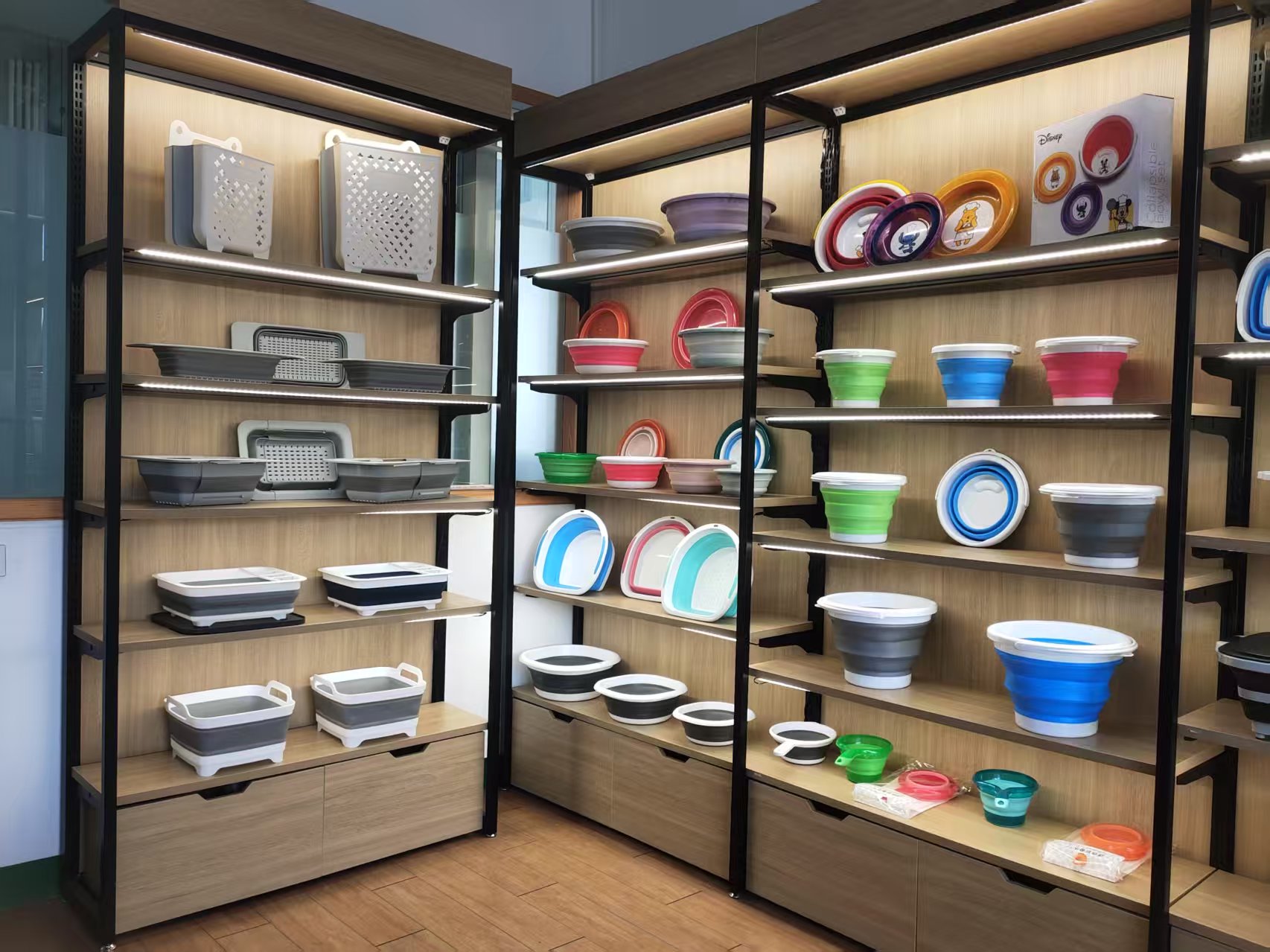
The table below consolidates the verified specification values for the composite PP+TPE folding basket range and states what each parameter controls in a heavy-duty laundry application. It is intended to be used as a checklist rather than a data sheet for one model.
| Specification parameter | Verified range | What it controls in heavy-duty laundry |
|---|---|---|
| Material composition | Food-grade PP+TPE composite, BPA-free | Frame stiffness and hinge flexibility in one part |
| TPE wall hardness | Shore A 60–85 | Fold flexibility versus shape retention under a wet load |
| Thermal rating (material) | -20°C to 120°C | Odour and cracking resistance at temperature extremes |
| Laundry operating window | -20°C to +60°C | Wash, rinse, transport and cold-storage conditions |
| Capacity range | 3 L to 43 L | Load volume per basket across the range |
| Load tier range | 12 kg to 25 kg maximum | Marked maximum water capacity for the specified model |
| Side wall thickness | 2–3 mm thickened side walls | Resistance to bulging and impact at the wall |
| Fold-cycle life (lab test) | 5,000 to 10,000 folds | Service life before fold-line failure |
| Folded thickness | A few centimetres | Cabinet gaps, luggage, car trunks, warehouse racks |
| Volume reduction when folded | 75%–85% | Storage and freight space consumed per unit |
| Container utilisation | 300% increase versus rigid containers | Pieces per container for importers |
| Carton loading | 4–5 times that of traditional plastic baskets | Pieces per carton and freight cost per unit |
Read the marking, not the volume. Load tiers and capacity grades are matched to the marked maximum water capacity on each individual product. A 43 L basket and a 3 L basket do not share a load rating, and specifying against open volume rather than the printed marking is one of the most common causes of field failure and warranty claims.
Step-by-Step: Specifying a Composite Folding Basket for Heavy-Duty Laundry
The specification sequence below is ordered so that each decision constrains the next one. Skipping to capacity first is the usual mistake, because capacity follows from the load, not the other way round.
- Define the peak wet load, not the dry volume. Establish how much saturated fabric the basket must carry during normal use, then add the container's own weight. This number drives everything else, including wall thickness and handle specification.
- Select a capacity band inside the 3 L to 43 L range. Choose the smallest capacity that comfortably accepts the peak load. Oversized baskets invite overload because users fill them to the rim.
- Set the load tier between 12 kg and 25 kg maximum. Match the tier to the peak wet load with a reasonable margin, then confirm that the marked maximum water capacity on the product matches the tier you specified.
- Fix the temperature and chemical window. Confirm that the intended wash and rinse temperatures fall inside the -20°C to +60°C laundry operating window. If the process involves prolonged contact with continuously heated water, treat 120°C as the material boundary and confirm the case with the supplier.
- Confirm folded thickness against the storage or freight constraint. A few centimetres of folded thickness is what delivers the 75%–85% space reduction. If shelf, cabinet or container dimensions are tight, verify the folded measurement against the actual constraint rather than against the open size.
- Verify fold-cycle life and structural reinforcement. Require the 5,000 to 10,000 fold laboratory result, together with 2–3 mm thickened side walls, heat-pressed fold lines, sealed seams and integrated anti-break handles.
- Lock the compliance and documentation set. Confirm food-grade raw-material testing, the certification list required by the destination market, and the documentation provided for customs clearance.
- Agree markings, manual and warranty terms. Temperature and load capacity marking on each product, English user manual reminders, and the warranty position for non-human damage should all be settled before tooling, not after production.
Use Cases: Where This Specification Pays Off
The composite folding basket is more suitable for small apartment rental housing, car travel storage, camping outdoor activities, cross-border bulk wholesale, and supermarket shelf display. Each of those scenarios uses a different part of the specification.
- Small apartments, dormitories and rental housing. Foldable construction reduces the storage footprint by more than 75%, which is the difference between a basket that can be stored in a cabinet gap and one that permanently occupies floor space.
- Household heavy-duty laundry. The 12–25 kg load tiers and 2–3 mm thickened walls cover saturated towel and bedding loads, and the sealed seams keep the body from leaking during transport to a shared laundry room.
- Car, RV and travel storage. Folded thickness in the centimetres range lets the basket sit flat in a trunk or luggage between trips, then open to full capacity on arrival.
- Cross-border bulk wholesale and retail shelf display. The 300% container utilisation gain and 4–5 times higher carton loading change the freight economics of the category, while stackable folded units reduce retail shelf space per SKU.
- Multi-use household scenarios. Because the composite is food-grade and BPA-free, the same construction supports pet washing, camping and produce handling without a separate material specification.
Comparison Table: Composite PP+TPE versus Three Common Alternatives
The comparison below is drawn from manufacturer specification data and is limited to construction and performance characteristics that can be verified from a product sample and its documentation. It compares the composite PP+TPE folding basket with traditional fixed non-foldable plastic baskets, low-cost foldable baskets made from recycled plastic, and thin-wall ordinary folding plastic products.
| Basket type | Material and construction | Space when not in use | Loading and container efficiency | Expected service life | Documentation |
|---|---|---|---|---|---|
| Composite PP+TPE folding basket (this specification) | 100% new food-grade PP+TPE composite, no recycled waste; one-piece fold-expand structure | Folds to a few centimetres; 75%–85% space reduction | 300% increase in container utilisation; 4–5 times the loading quantity of traditional plastic baskets | 5–10 times longer than comparable low-cost recycled plastic folding products | Complete global factory audit and food-safety certifications |
| Traditional fixed non-foldable plastic basket | Rigid single-piece plastic construction | Occupies full open volume in storage by design | Lower pieces per carton; higher freight and warehousing space per unit | Rigid construction, but no folding function | Depends on the individual supplier |
| Low-cost folding basket made from recycled plastic | Recycled plastic content rather than virgin food-grade material | Folds, with thin fold-line construction | Lower loading density per carton | Shorter service life than virgin-material composite construction | Typically limited |
| Thin-wall ordinary folding plastic product | Thin single-resin wall | Folds, but wall stiffness is low | Lower loading density per carton | Shorter service life; deformation risk under load | Typically limited |
On unit price, the composite basket sits slightly above low-end recycled-plastic goods. The landed-cost picture reverses for importers: because the foldable structure reduces storage space by 75%–85%, increases container utilisation by 300%, and places 4–5 times more pieces in a carton, ocean freight and warehouse storage costs fall by more than 60%. Add a service life 5–10 times longer than cheap recycled plastic folding products, and the maintenance profile improves too, since the basket does not need frequent replacement due to cracking or leaking.
Quality Control, Compliance and Risk Controls for Bulk Buyers
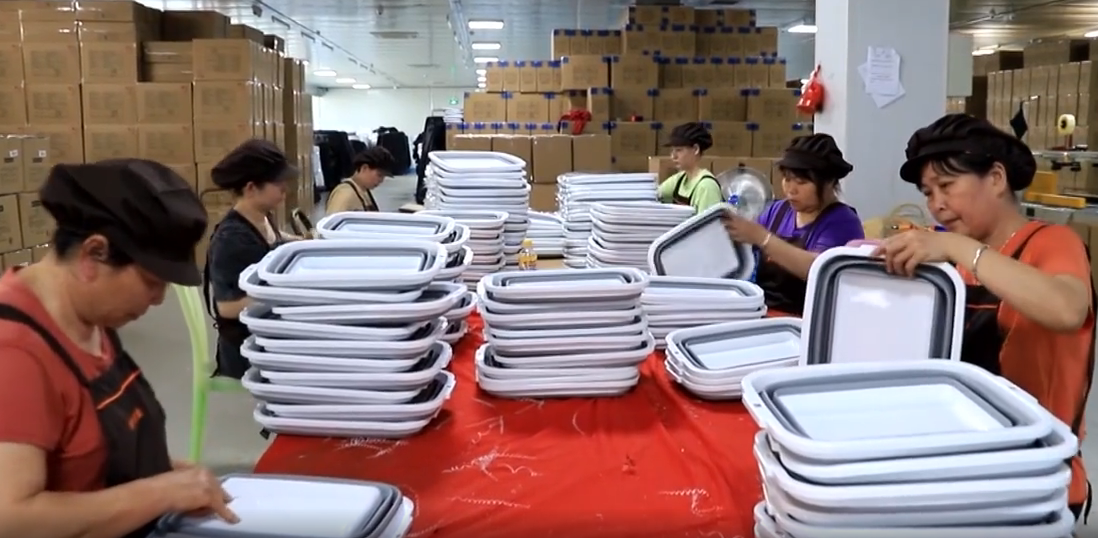
Material specification only holds if the production process is controlled. The manufacturer's risk management measures include full raw material food-grade testing before production, three-stage full quality inspection during production and before shipment, a one-year free replacement warranty for non-human damage, and the provision of complete certification documents for customs clearance.
Where a folding basket is also intended for food contact — perforated vegetable baskets, picnic baskets and drain baskets, for example — EU rules apply. Plastic folding baskets intended for food contact must comply with Regulation (EC) No 1935/2004 and Regulation (EU) No 10/2011, and good manufacturing practice for materials in contact with food is regulated under Commission Regulation (EC) No 2023/2006. For a laundry-only basket the food-contact rules are not the driver, but the same documentation package is what supports retail listing and customs entry in most export markets.
Product-side risk controls mirror the three boundary conditions identified earlier: clear temperature and load capacity marking on each product, English user manual reminders, structural reinforcement with thickened 2–3 mm side walls and integrated anti-break handles, and a sealed anti-leakage joint design that avoids water leakage under normal load.
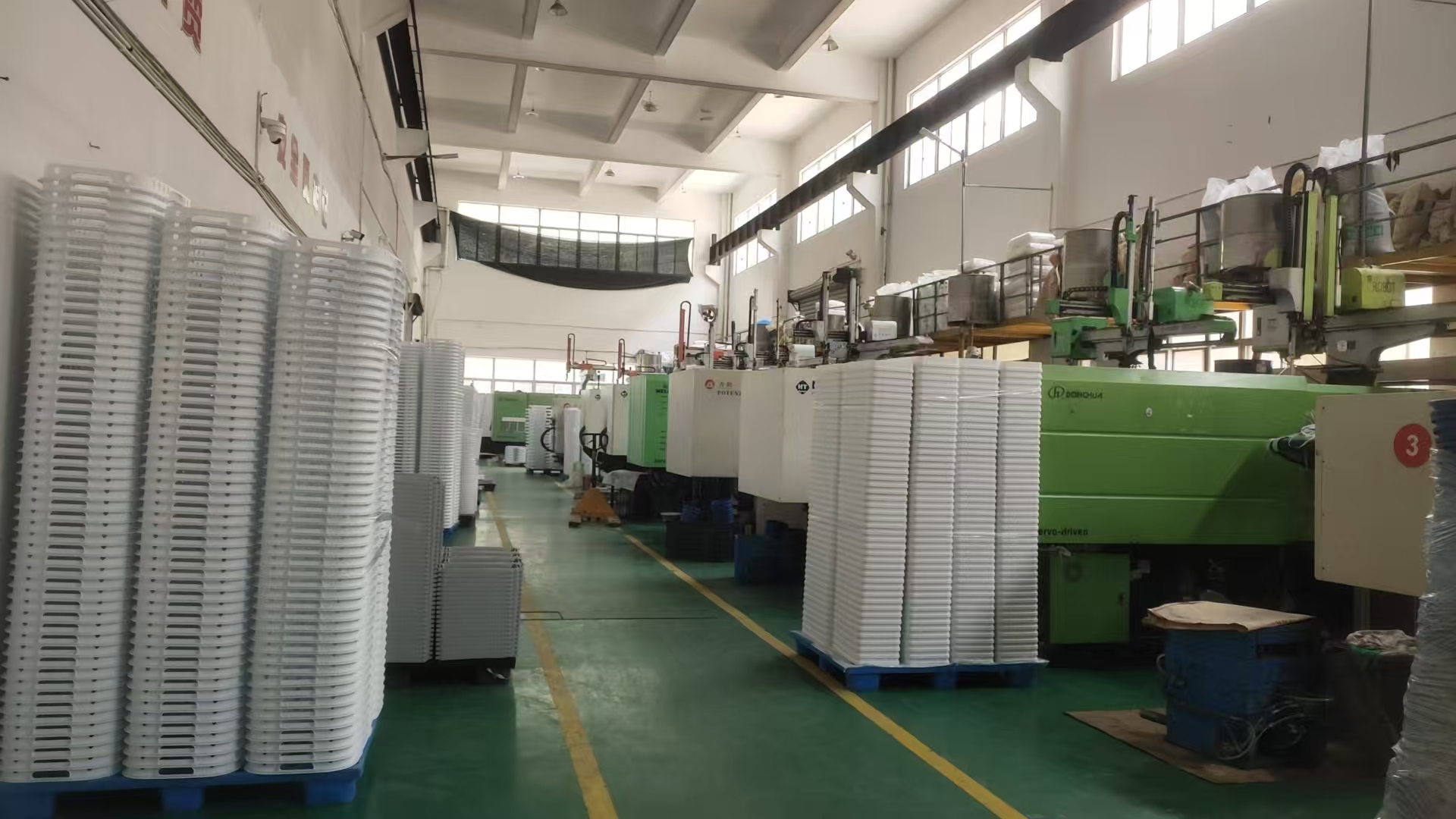
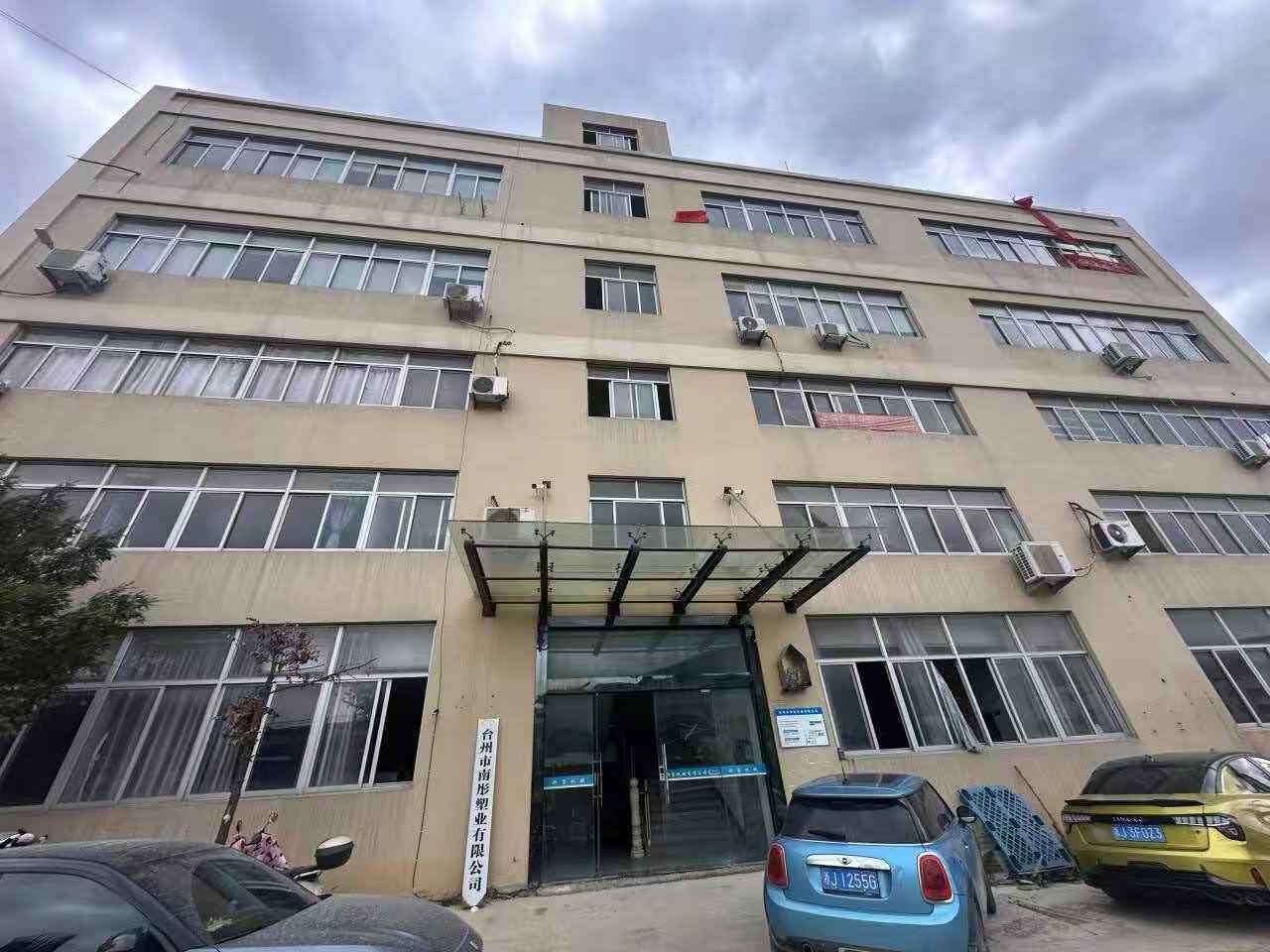
Production capability behind the specification is relevant to any buyer planning a programme rather than a single order. Taizhou Nantong Plastic Industry Co., Ltd. operates 12 injection moulding machines ranging from 300 g to 2500 g, three assembly production lines and 200 self-developed production moulds, and holds 23 independent product patents covering its one-piece fold-expand structure. Standard mould opening takes 30–40 days, with mould repair response within 2–3 days.
The company, founded in 2003 and based in Huangyan District, Taizhou City, Zhejiang Province, runs a 6,000 m² production plant plus a 3,500 m² independent warehouse, with 39 staff including 8 R&D engineers. It is a long-term exclusive supplier to Walmart and Sam's Club, cooperates with Netto in Germany and Nitori and 3Coins in Japan, and has supplied products to over one million families worldwide. Approximately 70% of output is exported to the USA, UK, Germany, Spain, Australia, Korea and Japan. Recognition includes Zhejiang Provincial Sci-Tech Small & Medium Enterprise status, membership of the Taizhou Plastics Industry Association, and Class A Tax Credit for 2023 and 2024.
Frequently Asked Questions
Which certifications and regulations apply to a PP+TPE folding laundry basket sold into the EU and the US?
Where the basket is used for food contact in the EU, Regulation (EC) No 1935/2004 and Regulation (EU) No 10/2011 set the framework for food-contact materials, and Commission Regulation (EC) No 2023/2006 sets good manufacturing practice requirements. On the manufacturing side, the PP+TPE composite range from Nantong Plastic is certified to BSCI, ECM, FDA, REACH, RoHS, ASTM and SEDEX, and complete certification documents are provided for customs clearance. For a laundry-only basket the food-contact rules are not the driving requirement, but the same documentation set is what supports retail listing and customs entry in most export markets.
What are the core material specifications of a composite PP+TPE folding basket?
A rigid PP frame combined with a soft TPE wall in the Shore A 60–85 hardness band; a material thermal rating of -20°C to 120°C; a heavy-duty laundry operating window of -20°C to +60°C; thickened 2–3 mm side walls with heat-pressed fold lines and sealed seams; capacities from 3 L to 43 L; load tiers from 12 kg to 25 kg maximum; a folded thickness of a few centimetres; and a laboratory-tested fold life of 5,000 to 10,000 cycles without cracking or deformation.
Why does a composite PP+TPE basket cost more per unit than a recycled-plastic folding basket?
Unit cost is slightly higher than low-end recycled-plastic goods because the range uses 100% new food-grade PP+TPE material rather than recycled waste. For importers, landed cost moves the other way: the foldable structure reduces storage space by 75%–85%, increases container utilisation by 300%, and puts 4–5 times more pieces in a carton, which reduces ocean freight and warehouse storage costs by more than 60%. Expected lifespan is also 5–10 times longer than comparable low-cost recycled plastic folding products, and the lower failure rate reduces retailer after-sales replacement costs.
How can a buyer validate the specification before committing to a bulk order?
Validation starts at the raw-material stage. Every production run begins with full raw material food-grade testing before production, followed by a three-stage full quality inspection during production and before shipment. Physical evaluation is supported by the sample room, where capacity, colour and structure options can be reviewed, and the specification claims — TPE hardness band, thermal rating, wall thickness, capacity and load tier — can be checked against the documentation package rather than against a photograph.
What lead time should buyers plan for a custom composite folding basket?
The standard mould opening cycle takes 30–40 days, and mould repair response is handled within 2–3 days, so tooling work sets the realistic schedule for a new size, colour or structure. As an integrated factory-and-trade enterprise, Nantong Plastic removes intermediate links from the supply chain, which supports stable lead times on repeat orders. Buyers planning a retail launch should budget the tooling window before committing to an on-shelf date. To review the full foldable range, specifications and available structures, download the 2026 Nantong Plastic catalogue (PDF), or send the intended capacity, load tier and temperature window to the sales team for a specification match.
Conclusion: Specifying Composite Folding Baskets With Confidence
The value of a composite PP+TPE folding basket is not that it folds — folding baskets have been on the market for years. It is that the rigid PP frame, the Shore A 60–85 TPE wall, the -20°C to 120°C material rating, the 12–25 kg load tiers and the 3 L to 43 L capacity range are specified values that can be tested, documented and verified against a purchase order. A heavy-duty laundry application lives inside the -20°C to +60°C operating window, at a load that has to stay contained in a sealed, leak-resistant body, through thousands of fold cycles, and then fold down to a few centimetres for storage and freight.
Buyers who evaluate folding baskets on unit price alone tend to re-evaluate on landed cost and after-sales returns within one season. Specifying the material, the load tier and the compliance package first — and the price second — is what keeps that re-evaluation from happening.
Next Step: Match the Specification to Your Laundry Programme
Send the intended capacity, maximum wet load, temperature window and destination market to the Nantong Plastic sales team, and the specification can be matched against the existing 3 L to 43 L range or developed as an OEM/ODM variant. Full product specifications, structures and colour options are listed in the catalogue.
Catalogue: 2026 Nantong Plastic product catalogue (PDF)
Website: www.nantongplastic.com
Email: sales01@nantongplastic.com | Tel / WhatsApp: +86 151-5762-9088
Address: No.1 Shifushan, Shiniu Village, Yanjiang Town, Linhai, Taizhou, Zhejiang Province, China