
Plastic Folding Basket Guide: Types, Benefits & Selection
Plastic Folding Basket Guide: Types, Benefits & Selection
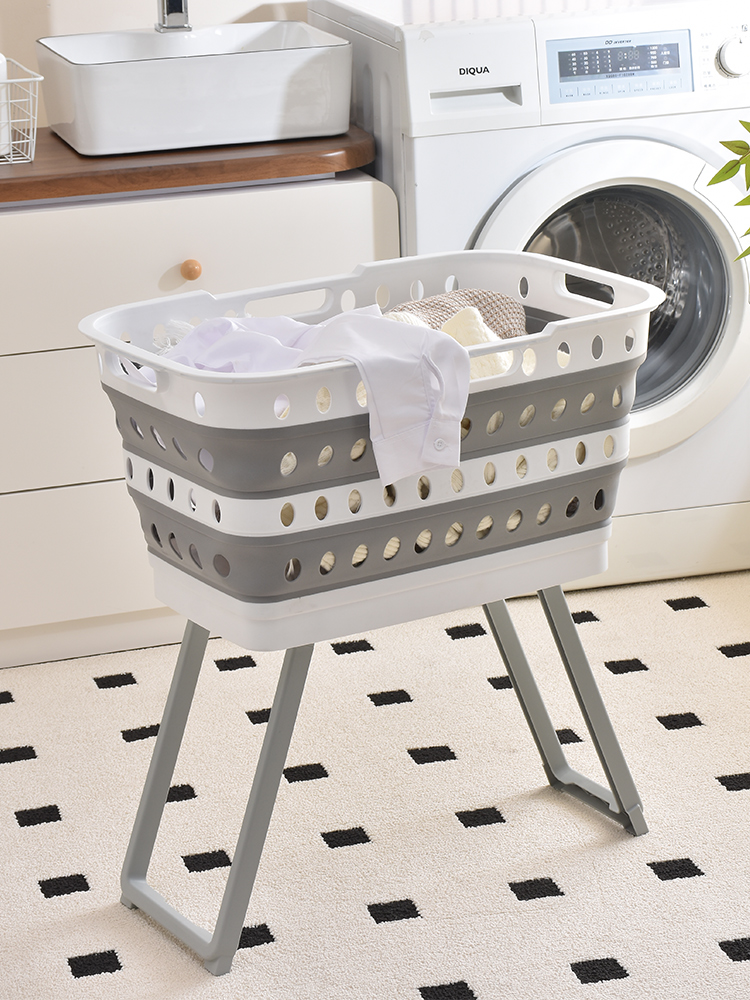
A plastic folding basket combines a rigid frame with foldable walls for compact storage.
A plastic folding basket is a collapsible container made of a rigid PP frame and flexible walls, typically formed from a food-grade PP+TPE composite. It expands to a full-size basket for daily tasks and folds flat to only a few centimeters thick when not in use. Plastic folding baskets are used for laundry, storage, picnics, shopping, vegetable washing and other household and retail scenarios. Because the folded basket occupies 75%–85% less volume than a rigid basket, it has become a practical alternative for homes, supermarkets, and cross-border e-commerce sellers.
This guide explains the problems rigid baskets create, the industry context behind collapsible containers, the defining features of a durable folding basket, and the step-by-step criteria for choosing the right product or supplier.
The Space and Logistics Problem with Rigid Baskets
Rigid plastic baskets are sturdy and familiar, but they are inefficient with space. Whether empty or full, a rigid basket occupies the same volume, creating three practical problems.
First, in small apartments, dormitories and rental houses, storage space is limited. A stack of rigid laundry baskets or storage baskets permanently consumes cabinet, shelf and floor space even when rarely used. Second, in supermarkets and retail warehouses, empty rigid baskets take up display and storage space that could hold sellable inventory. Third, for importers, distributors and cross-border sellers, rigid baskets create high logistics costs: low packing density means fewer pieces per carton, and freight is charged for unused air volume.
Foldable design addresses these issues by shrinking the product after use. After folding, the thickness of a plastic folding basket is only a few centimeters. The basket can be hung on walls, stored in cabinet gaps, luggage or car trunks, and stacked together to save warehouse and retail shelf space. The same logic makes folding baskets attractive on retail shelves, where compact display increases product density per shelf meter.
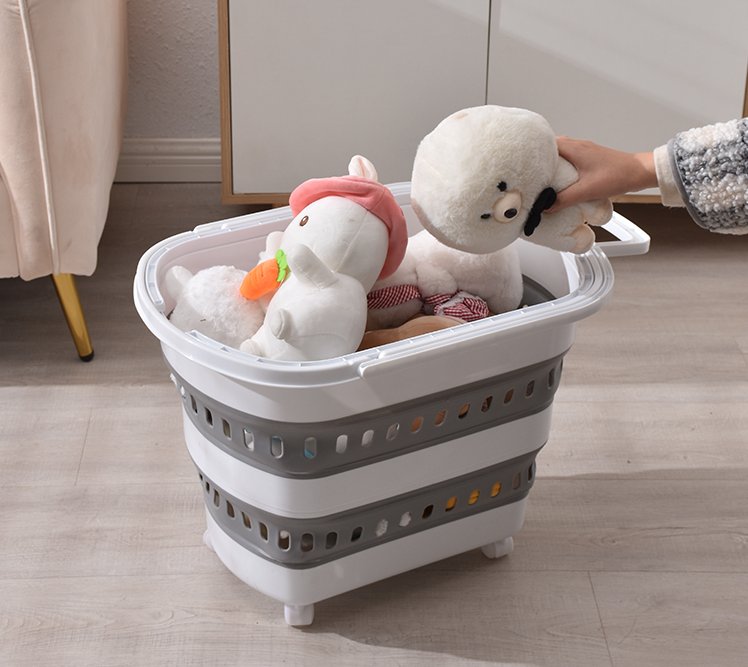
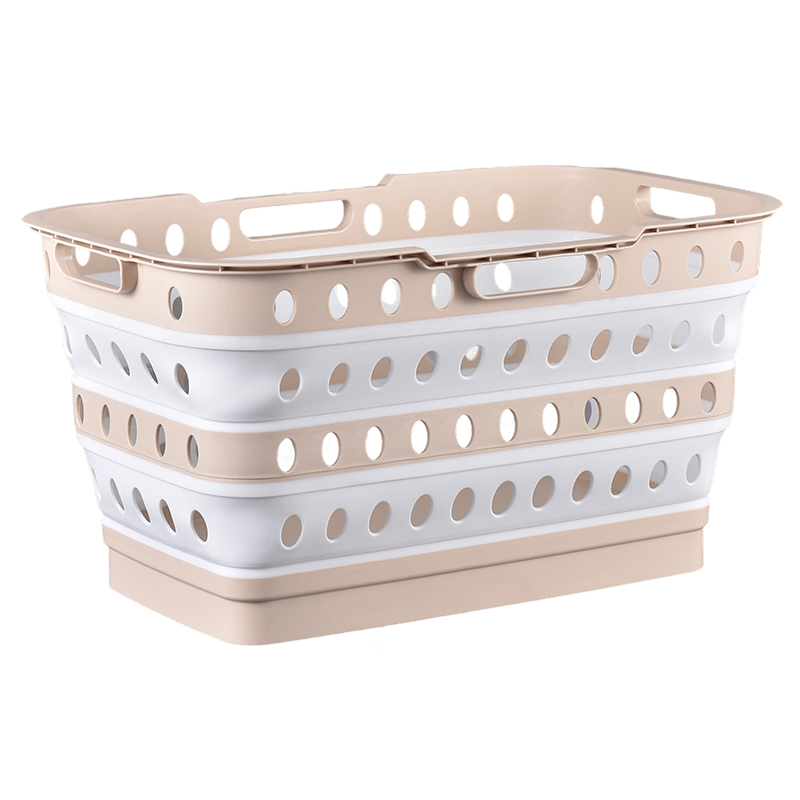
Foldable laundry baskets collapse flat after use, freeing up bathroom and closet space.
Industry Background: The Growth of Foldable Containers
The shift toward collapsible containers is visible in global market data. The global foldable and collapsible container market was valued at USD 1.7 billion in 2025. Plastic is the dominant material in this segment, accounting for a 53.9% revenue share because of its lightweight and cost-effective properties. Asia Pacific led the market with a 36.8% revenue share, and China is the leading country market in this region.
In the United States, the foldable container market was valued at USD 422.8 million in 2024, supported by e-commerce and retail demand for space-saving solutions. Global trade in plastic boxes, cases and crates under HS Code 392310 reached approximately USD 14 billion in 2024, and China's exports alone were valued at USD 1.89 billion, placing China among the top three global exporters.
Looking ahead, the broader plastic crates market is projected to reach approximately USD 7.56 billion by 2034, growing at a CAGR of 7.56% from 2026. In parallel, collapsible recycled plastic packaging is estimated at USD 9.9 billion globally in 2025. These signals point in one direction: buyers and suppliers are moving toward foldable, space-efficient and recyclable plastic products.
For plastic folding baskets specifically, polypropylene (PP) is one of the primary resins used, selected for its durability and recyclability. In a typical folding basket, PP forms the rigid frame while TPE (thermoplastic elastomer) forms the foldable wall, allowing the basket to flex repeatedly without cracking.
What Defines a Quality Plastic Folding Basket
A reliable plastic folding basket is more than a container that happens to fold. The following characteristics determine whether it can survive daily use, repeated folding, food contact and international shipping.
Material: Food-Grade PP+TPE Composite
Quality folding baskets use virgin food-grade PP+TPE composite material. The structure combines a rigid polypropylene frame with a soft TPE wall that withstands repeated folding. The material is BPA-free, non-toxic and odorless. It resists temperatures from -20℃ to 120℃, releases no odd odors even when used with boiling water, and resists cracking in low temperatures. For food-contact use, regulatory compliance also matters: plastic folding baskets intended for food contact in the EU must comply with Regulation (EC) No 1935/2004 and Regulation (EU) No 10/2011, with manufacturing under GMP per Regulation (EC) No 2023/2006.
Fold Durability: 5,000 to 10,000 Cycles
Lab tests on folding baskets from TAIZHOU NANTONG PLASTIC CO.,LTD show that the baskets endure 5,000 to 10,000 repeated folds without cracking or deformation. This durability comes from reinforced thick side walls, heat-pressed fold lines and a one-piece fold-expand structure that avoids the weak points of spliced designs.
Structural Design and Handling
Design details determine daily usability. A functional folding basket includes an anti-slip bottom structure to prevent tipping, integrated reinforced handles for easy carrying, and single-hand unfolding and folding that requires no extra assembly. The one-piece fold-expand structure is protected by 23 independent product patents, distinguishing it from ordinary spliced foldable items.
Capacity and Style Range
Folding baskets are available in capacities from 3L to 43L and in over 90 styles. This range covers small hand baskets, medium household storage baskets and large-capacity laundry baskets. Sizes, colors and structures can be customized to match regional market demand.
Certifications and Market Access
For export to global markets, folding baskets should carry recognized certifications. The folding basket line from TAIZHOU NANTONG PLASTIC is certified under BSCI, ECM, FDA, REACH, RoHS, ASTM and SEDEX, supporting access to the USA, UK, Germany, Spain, Australia, Korea and Japan, which account for 70% of the company's total sales.
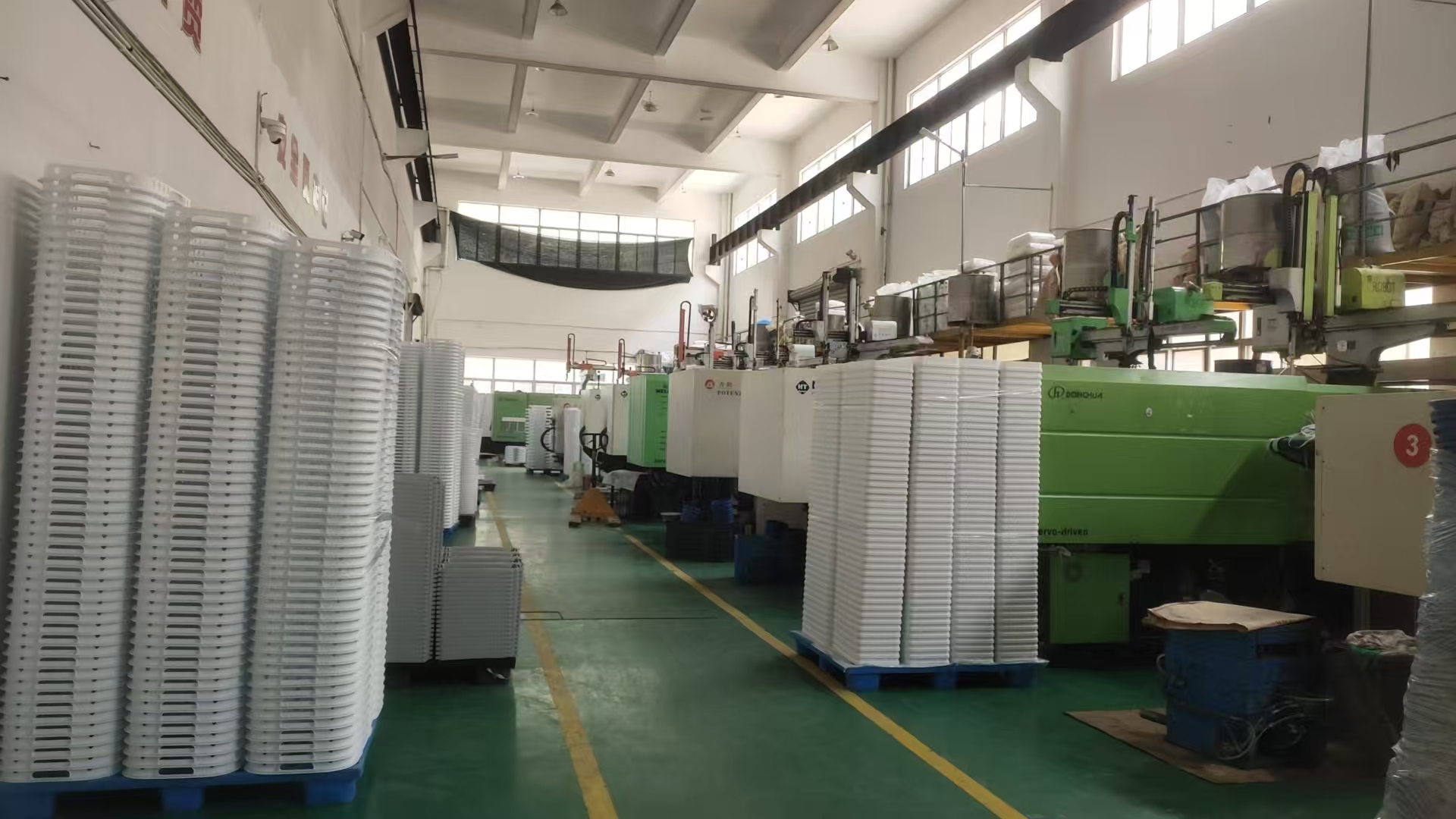
The factory runs 12 injection molding machines and 3 assembly lines for steady mass production.
How to Choose a Plastic Folding Basket: Step-by-Step
Whether you are buying for home use or sourcing for a retail chain, the same decision logic applies. Work through these steps to match the basket to your actual need.
Step 1: Define the Use Scenario
Identify where the basket will be used. Laundry baskets, kitchen vegetable baskets, outdoor picnic baskets and general storage baskets have different size, shape and material requirements. The scenario determines the capacity and structural features you need.
Step 2: Check Food-Contact Compliance
If the basket will hold food, such as vegetables, fruit or picnic supplies, confirm that the material is food-grade and BPA-free. Look for FDA or LFGB approval and, for the EU, compliance with Regulation (EC) No 1935/2004 and Regulation (EU) No 10/2011.
Step 3: Select Capacity and Dimensions
Match capacity to the task. For light daily organizing, smaller baskets in the 3L–10L range work well. For laundry, camping or bulk storage, consider 15L–43L options. The folding basket line from TAIZHOU NANTONG PLASTIC offers capacities from 3L to 43L across more than 90 styles.
Step 4: Verify Fold Durability
Ask for test data. A durable folding basket should withstand at least 5,000 folding cycles. Check the material composition, fold-line construction and warranty terms. Reinforced side walls and heat-pressed fold lines are strong indicators of quality.
Step 5: Evaluate the Logistics Benefit
For commercial buyers, calculate the folded dimensions and packing density. A basket that folds to a few centimeters can cut shipping volume by 75%–85%, raise container space utilization by up to 300%, and place 4–5 times more pieces in each carton compared with rigid alternatives.
Step 6: Assess Supplier Capability
For wholesale, OEM or ODM projects, evaluate the supplier's production capacity, mold capability, certifications and export track record. TAIZHOU NANTONG PLASTIC CO.,LTD was founded in 2003 and has over 15 years of manufacturing experience in foldable plastic household goods. It operates a 6,000 square meter production plant plus a 3,500 square meter independent warehouse, totaling more than 9,500 square meters, and employs approximately 39 staff with an R&D team of 4 engineers. The factory is equipped with 12 injection molding machines, manipulators, automatic packing machines, thermoforming machines and 3 assembly lines, with 200 self-developed molds. Standard mold opening takes 30–40 days, and mold repair response is within 2–3 days. The same PP+TPE material system is used for the company's foldable wash basins and collapsible water buckets, which share the fold-expand construction.
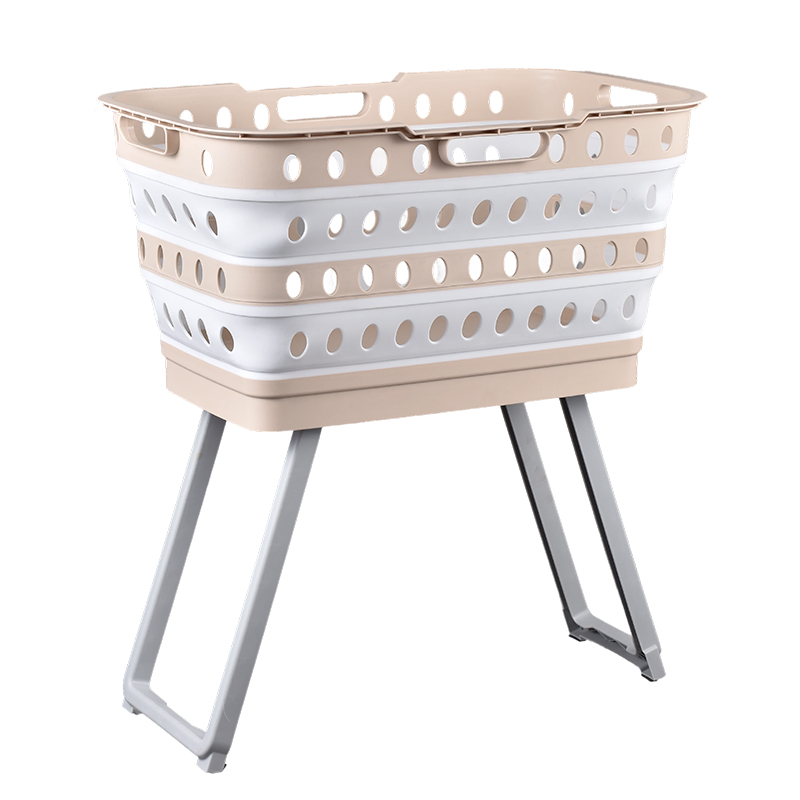
The expanded profile for daily use and the thin folded profile for storage.
Common Use Cases for Plastic Folding Baskets
Plastic folding baskets serve a wide range of scenarios. The following are the most common applications across household, outdoor, retail and e-commerce channels.
Folding Laundry Basket
One of the most popular forms is the folding laundry basket. It carries clothes to the washing machine, folds flat after emptying, and stores easily in cabinet gaps, bathroom corners, luggage or car trunks. Reinforced handles make carrying wet laundry easier, and the anti-slip bottom keeps the basket stable on tiled floors.
Folding Storage Basket
Folding storage baskets organize toys, towels, linens and seasonal items. Because they stack when empty, they are useful in closets, shelves and under-bed storage. The smooth, stain-resistant surface can be cleaned simply with water, and the weather-resistant material prevents fading in outdoor environments.
Folding Picnic Basket
For outdoor camping, self-driving and picnics, a folding basket provides portable carrying capacity without permanently occupying car trunk space. The food-grade surface is suitable for carrying food, and the folded profile leaves the trunk clear afterward.
Folding Vegetable and Drain Basket
In the kitchen, folding baskets are used for washing and draining vegetables and fruit. The BPA-free, food-safe material allows direct contact with produce, and a perforated hollow design supports quick drainage and rinsing.
Folding Shopping Basket
Some folding baskets are designed for shopping, allowing consumers to carry goods while keeping a compact profile when not in use. Supermarkets and retail chains also use collapsible baskets on display shelves, reducing visual clutter and increasing product density.
Car and Travel Folding Basket
Car trunks and luggage benefit from folding storage. A car folding basket holds tools, wet items, picnic supplies or shopping bags, then folds flat when the trunk needs to be empty. The same space-saving logic applies to travel and outdoor portable use.
Cross-Border E-commerce and Supermarket Retail
For sellers, the folding basket is an e-commerce-friendly product: the folded profile reduces overseas warehousing space and per-unit shipping cost. The product line is designed for cross-border e-commerce applications such as Amazon FBA, as well as supermarket retail shelving and bulk wholesale.
Folding baskets adapt to daily household organization and seasonal storage needs.
Folding Basket vs. Rigid Basket: Comparison
| Comparison Point | Plastic Folding Basket | Rigid Plastic Basket |
|---|---|---|
| Storage volume when empty | Folds flat to a few centimeters; reduces volume by 75%–85% | Occupies full volume whether empty or full |
| Container loading efficiency | Raises container space utilization by up to 300%; packs 4–5 times more pieces per carton | Low packing density; fewer units per container |
| Fold durability | Withstands 5,000–10,000 repeated folds without cracking | Not applicable; no folding mechanism |
| Material | Food-grade PP+TPE composite, BPA-free | Typically PP or HDPE |
| Temperature resistance | -20℃ to 120℃ | Varies by resin grade |
| Capacity range | 3L to 43L, over 90 styles | Wide range with larger footprint |
| Typical application | Homes, travel, camping, retail shelves, e-commerce, space-saving storage | Heavy-duty fixed storage and industrial use |
Both types have their place. Rigid baskets remain useful for heavy industrial and permanent storage tasks. For households, retail display, travel and logistics-sensitive trade, the folding basket offers clear space and cost advantages.
FAQ
Are plastic folding baskets safe for food contact?
Plastic folding baskets intended for food contact use food-grade PP+TPE composite material that is BPA-free, non-toxic and odorless. Products from TAIZHOU NANTONG PLASTIC are certified under BSCI, ECM, FDA, REACH, RoHS, ASTM and SEDEX. In the EU, food-contact plastic articles must also comply with Regulation (EC) No 1935/2004, Regulation (EU) No 10/2011 and GMP under Regulation (EC) No 2023/2006. Buyers should confirm the material grade and certificates before ordering for food-related use.
How many times can a plastic folding basket be folded?
Lab tests demonstrate that folding baskets from TAIZHOU NANTONG PLASTIC endure 5,000 to 10,000 repeated folds without cracking or deformation. This durability comes from a one-piece fold-expand structure, reinforced thick side walls and heat-pressed fold lines. The company holds 23 independent product patents covering this fold structure.
Do folding baskets reduce shipping costs for bulk orders?
Yes. After folding, a plastic folding basket shrinks to a thickness of only a few centimeters and reduces volume by 75%–85%. This raises container space utilization by up to 300% and allows 4–5 times more pieces per carton compared with rigid plastic containers. For importers and cross-border sellers, this directly lowers sea freight, air freight and overseas warehousing costs.
Can I request samples before placing a bulk order?
Yes. Buyers can contact TAIZHOU NANTONG PLASTIC directly at sales01@nantongplastic.com or +86 151-5762-9088 to request samples. The company offers over 90 styles with capacities from 3L to 43L and supports OEM/ODM customization of size, color and structure based on 200 self-developed molds.
What is the production lead time for custom folding baskets?
The standard mold opening cycle is 30–40 days, and mold repair response time is 2–3 days. The factory operates 12 injection molding machines and 3 assembly lines, supporting steady mass production for large orders. As a long-term exclusive supplier for Walmart and Sam's Club, and a partner of German Netto and Japanese Nitori and 3Coins, the company follows consistent delivery schedules. To plan your timeline and get a quote, contact the sales team at sales01@nantongplastic.com.
Conclusion
Plastic folding baskets are a practical replacement for rigid containers in homes, retail and cross-border trade. They fold to a few centimeters, reduce storage volume by 75%–85%, survive thousands of folding cycles and can be made from food-grade, BPA-free PP+TPE composite materials. For buyers, the material grade, certifications, fold durability, capacity, logistics efficiency and supplier capability are the key selection criteria.
TAIZHOU NANTONG PLASTIC CO.,LTD is an integrated factory-trade manufacturer of foldable plastic household goods, established in 2003 and located at No.1 Shifushan, Shiniu Village, Yanjiang Town, Linhai, Taizhou, Zhejiang, China. The company is a long-term exclusive supplier for Walmart and Sam's Club, cooperates with German Netto and Japanese Nitori and 3Coins, and exports to the USA, UK, Germany, Spain, Australia, Korea and Japan, serving over one million families worldwide. For samples, customized sizes or wholesale quotes, contact sales01@nantongplastic.com or +86 151-5762-9088. More information is available at www.nantongplastic.com.
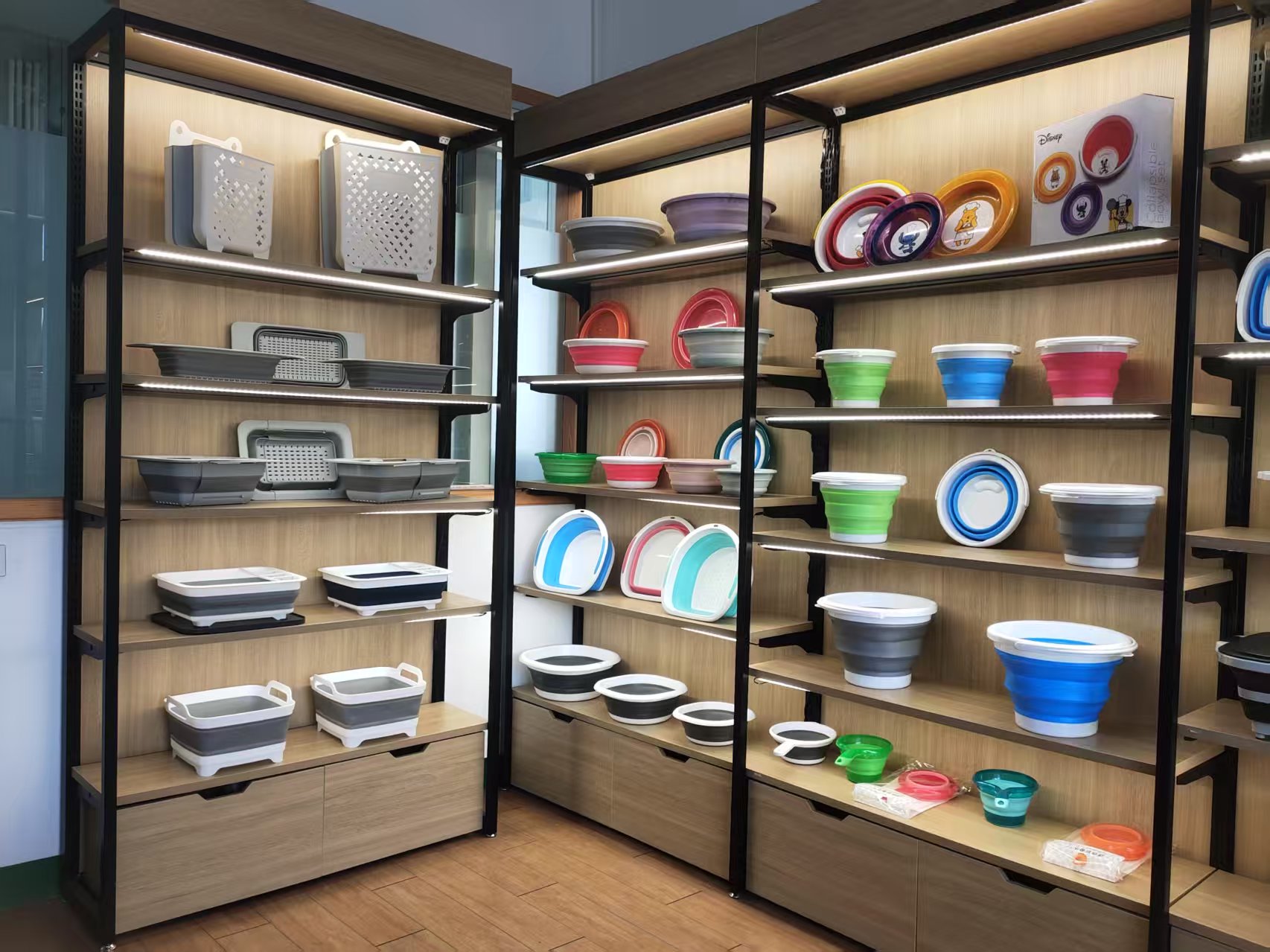
Request samples to verify material, size and finish before volume orders.