
Plastic Folding Basket vs. Collapsible Plastic Basin: Which Fits Laundry and Cleaning?
Wholesale buyers, private-label brand owners and household goods distributors frequently put these two items in the same purchase decision because they fold the same way, ship in the same cartons and sit side by side on the same retail shelf. That is where most sourcing mistakes begin. The folding basket and the collapsible basin solve different problems, and a range built from the wrong mix will either leave money on the shelf or generate returns from customers who expected something the product was never designed to do.
This guide compares the two formats on the criteria that actually decide a purchase order: what each one holds, how much it carries, how it behaves with water, how it handles temperature, how it folds for freight, and how much room each leaves for OEM customisation. It uses verified product specifications from TAIZHOU NANTONG PLASTIC CO.,LTD, a Chinese manufacturer of foldable plastic household goods, together with published third-party market and regulatory data.
Problem Definition: Why the Two Formats Get Confused
The confusion is structural, not commercial. A folding basket and a collapsible basin share three visible characteristics — flexible side walls, a rigid base, and a fold line that compresses the body into a low-profile disc — so buyers reasonably assume the difference is only cosmetic.
It is not. The defining difference is the side wall. A folding basket is built as an open or perforated volume with a reinforced rim and one or two carrying handles, which makes it a temporary carrier. A collapsible basin is built as a closed, seam-sealed volume with no perforation, which makes it a temporary vessel. Air passes through a basket; water does not pass through a basin.
Three specific sourcing errors follow from treating them as one category:
- Ordering baskets for soaking tasks. Open and perforated basket walls do not retain water, so a customer who buys a basket to soak laundry or defrost food will return it.
- Ordering basins for transport tasks. A basin holds volume but is not designed as a load carrier with rim handles for stacking wet laundry, so it performs poorly as a replacement for a laundry basket.
- Ordering both on one specification. Certification scope, wall thickness and drainage features differ between the two, so applying one specification sheet to both formats creates compliance gaps at customs and quality gaps at the shelf.
Industry Background: A Fast-Moving, Regulation-Sensitive Category
The category the two formats sit inside is growing and increasingly governed by material and food-contact rules. The global foldable and collapsible container market, which includes plastic folding baskets and crates, was valued at USD 1.7 billion in 2025 according to Grand View Research. Plastic is the dominant material within that market, accounting for a 53.9% revenue share in 2025 on the strength of its lightweight and cost-effective properties. Asia Pacific led the market in the same year with a 36.8% revenue share, and China was identified as the leading country market.
Trade data confirms the supply concentration. Global trade for plastic boxes, cases and crates under HS Code 392310 reached approximately USD 14 billion in 2024, and China's exports under the same code were valued at USD 1.89 billion in 2024, placing it among the top three global exporters. On the demand side, the U.S. foldable container market was valued at USD 422.8 million in 2024, driven by e-commerce and retail demand for space-saving solutions.
The practical consequence for buyers is that sourcing for this category is no longer only a price exercise. Two regulatory layers now shape what can be sold where:
- Food-contact rules in the EU. Plastic folding baskets intended for food contact, such as vegetable and picnic baskets, must comply with Regulation (EC) No 1935/2004 and Regulation (EU) No 10/2011. Good Manufacturing Practices for materials in contact with food are regulated under Commission Regulation (EC) No 2023/2006.
- Material selection expectations. High-density polyethylene (HDPE) and polypropylene (PP) are the primary resins used for folding baskets because of their durability and recyclability, according to Plastics Europe.
Foldability itself is now a mainstream expectation rather than a novelty. Foldable crates can reduce storage space requirements by up to 75% when not in use compared with rigid alternatives, a figure that also explains why importers accept a slightly higher unit cost for the folding format: the saving shows up in freight and warehousing rather than in the product line.
Detailed Solution: How Both Formats Are Built on One Material Platform
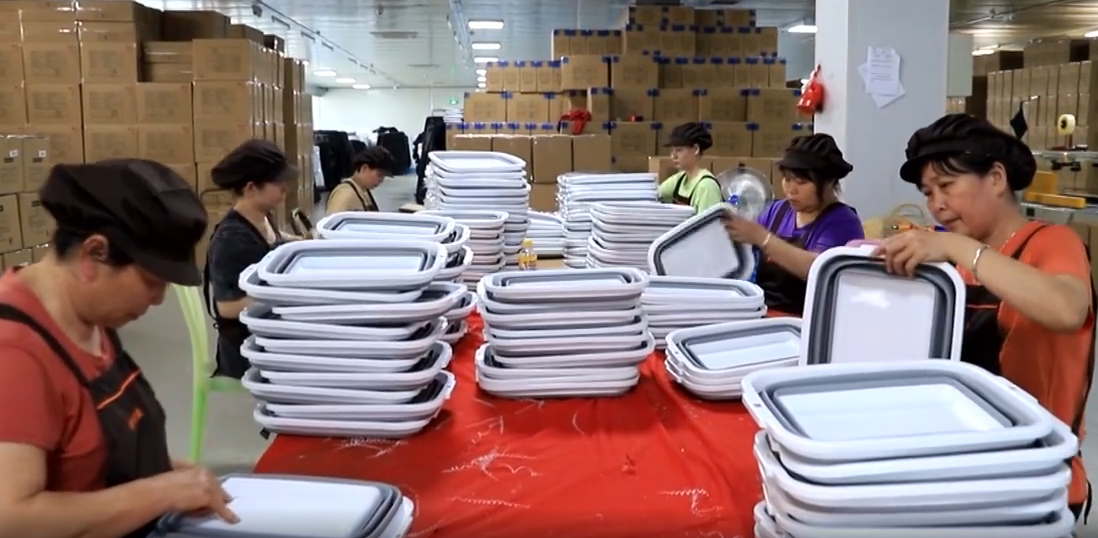
TAIZHOU NANTONG PLASTIC CO.,LTD is a Chinese integrated factory-and-trade manufacturer of foldable plastic household goods, founded in 2003 and based in Huangyan District, Taizhou City, Zhejiang Province. The company specialises in four core foldable product lines — foldable wash basins, foldable water buckets, foldable storage baskets and foldable laundry baskets — and offers more than 90 foldable styles in total, serving individual consumers, chain supermarkets and cross-border retailers.
Because both the folding basket and the collapsible basin come from the same production platform, a buyer evaluating the two formats is comparing geometry, not supplier capability. The shared platform is what makes a mixed range commercially practical.
Shared material and compliance baseline
All products use brand-new food-grade PP+TPE composite raw material and are BPA-free. The company's products are certified by BSCI, ECM, FDA, REACH, RoHS, ASTM and SEDEX, covering the certification scope requested by most North American, European and Japanese retail programmes. The PP+TPE composite material is rated to withstand temperatures from −20°C to 120°C, releases no odd odour even with boiling water, and resists cracking at low temperatures.
On the manufacturing side, reinforced thick side walls, heat-pressed fold lines and sealed seams deliver leak-proof performance, and laboratory testing demonstrates that the items endure 5,000 to 10,000 repeated folds without cracking or deformation. The company holds 23 independent product patents for its one-piece fold-expand structure, which distinguishes it from spliced foldable items in the industry.
Where the folding basket wins
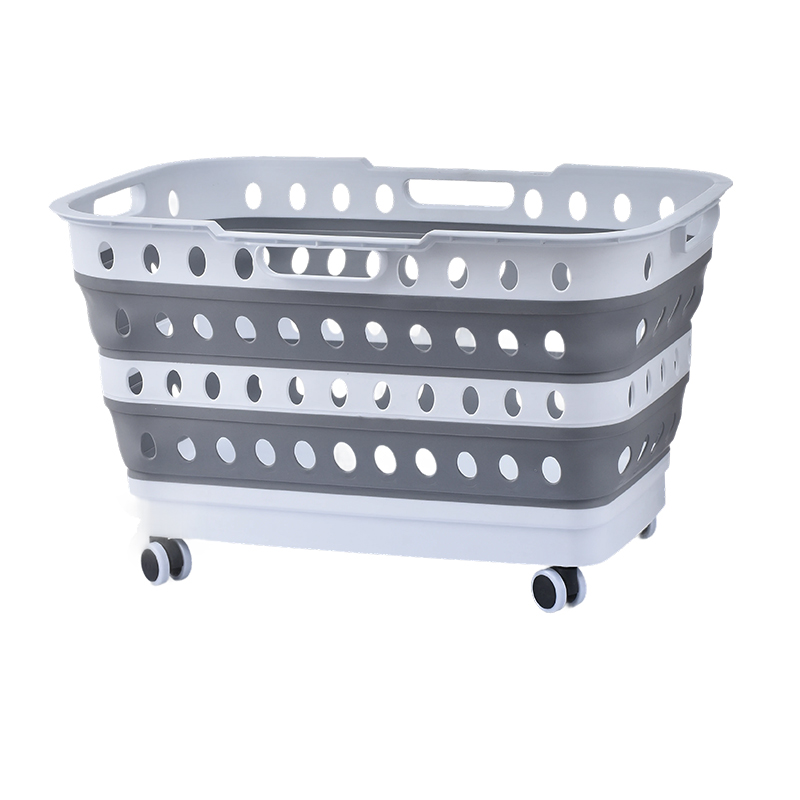
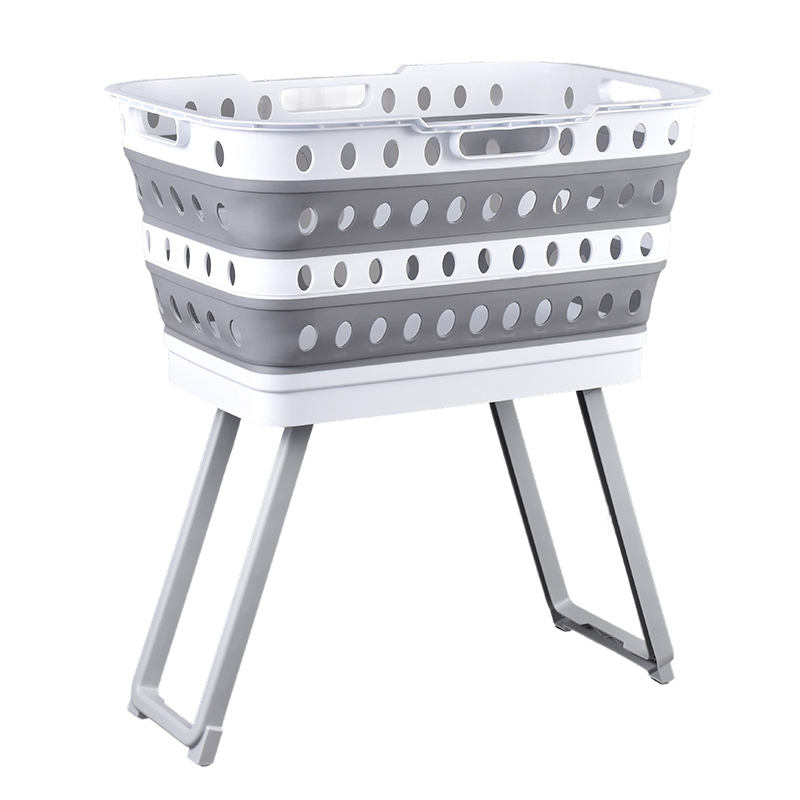
The folding basket format is designed around movement. Capacities span 3L to 43L, and the range covers square, rectangular and oval footprints as well as perforated hollow bodies, lidded versions, stand versions and wheeled versions. The specification that matters most to a buyer is load: the fold-structure range is rated to carry 12–25 kg depending on model size and configuration, supported by reinforced integrated handles and anti-slip bottom structures.
Its natural working range is −20°C to +60°C for everyday laundry and cleaning duty. Above the upper end of that range, continuous exposure to heat will shorten service life; below the lower end, the product remains usable but is not intended for prolonged freezing.
Where the collapsible basin wins
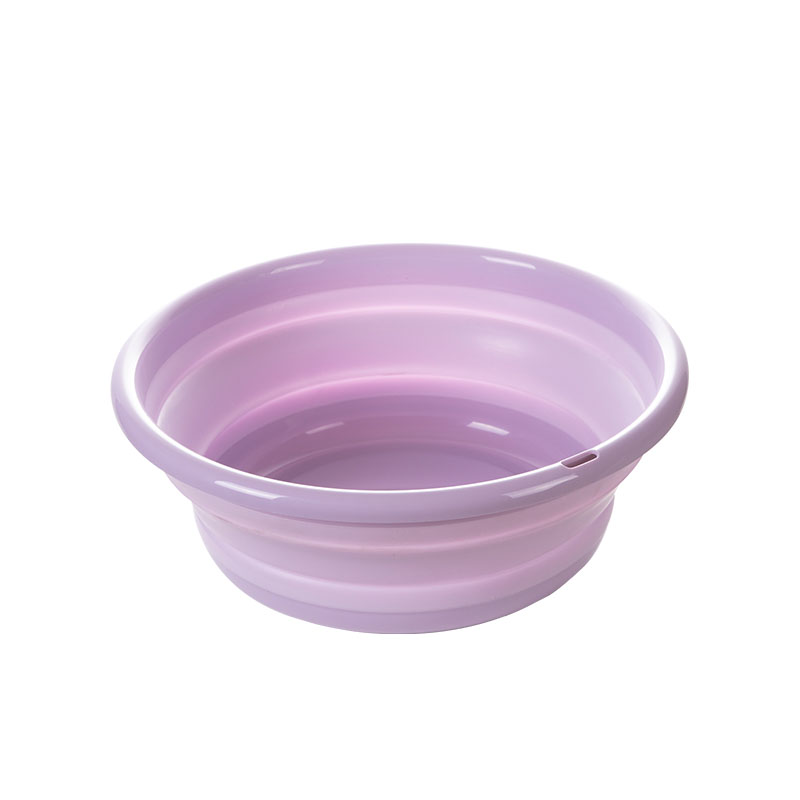
The collapsible basin is built for tasks that require a closed volume. It is available in 5L, 8L, 10L, 12L, 15L and 20L models, designated FP-5L through FP-20L, and carries FDA and LFGB food-contact approval, which is what allows it to move from a laundry-room soaking tub to a kitchen rinsing bowl without a specification change. Like the basket line, it is produced from PP+TPE composite material, carries the same 5,000-cycle minimum folding life, and shares the −20°C to +60°C everyday working range.
The distinction to communicate on packaging and shelf labels is straightforward: a basin holds liquid, a basket holds mass. A buyer who stocks the basin for soaking, rinsing and food preparation, and the basket for collection, transport and storage, is stocking two complementary products rather than two competing ones.
Production capacity behind both formats
Scale is the reason a single supplier can support both formats on one contract. The production plant covers 6,000 ㎡ with an independent 3,500 ㎡ warehouse, totalling over 9,500 ㎡. The site runs 12 injection moulding machines ranging from 300g to 2500g, manipulators, automatic packing machines, thermoforming machines and 3 assembly production lines, and the company owns 200 self-developed production moulds. Standard mould opening takes 30–40 days, with mould repair response within 2–3 days.
That combination supports both fast replenishment of standard stock items and flexible OEM and ODM customisation of size, colour and structure. The company has served over one million families worldwide, is a long-term exclusive supplier for Walmart and Sam's Club, and cooperates with German retailer Netto and Japanese retailers Nitori and 3Coins.
Step-by-Step Breakdown: How to Decide Which Format to Stock
Use the following sequence when building or refreshing a folding basket and basin range. Each step eliminates a specific sourcing risk rather than simply describing a product.
Step 1 — Define the job before the product
Write down whether the end user will carry something or hold something. Carrying tasks — laundry collection, transport to the machine, toy and storage clean-up, shopping, vegetable transport — map to the folding basket. Holding tasks — soaking, hand-washing delicates, rinsing produce, pet washing, small-volume cleaning — map to the collapsible basin.
Step 2 — Match capacity to the task, not to the shelf
The basket range covers 3L to 43L; the basin range covers 5L, 8L, 10L, 12L, 15L and 20L. For a household laundry routine, a large-format basket paired with a mid-size basin covers both collection and soaking. For compact apartments, dormitories and rental housing, the smaller end of both ranges is the correct entry point.
Step 3 — Verify load and leak performance
For baskets, confirm the rated load: the fold-structure range is rated for 12–25 kg depending on model size and configuration, with reinforced handles and anti-slip bases. For basins, confirm sealed-seam and heat-pressed fold-line construction, which is what prevents leakage under normal load. Test results showing endurance of 5,000 to 10,000 folds without cracking or deformation cover both formats.
Step 4 — Check the temperature envelope
Both formats are rated for everyday use between −20°C and +60°C. The underlying PP+TPE composite material withstands −20°C to 120°C, so short exposure to hot water is within the material's capability, but continuous heating above the stated working range is a documented risk condition and should be marked as such on packaging and in the user manual.
Step 5 — Confirm food-contact scope by format
If the product will touch food — vegetable baskets, picnic baskets, rinsing basins — confirm the certification file for that specific format. The basin models carry FDA and LFGB food-contact approval. The basket line supports BPA-free food-safe construction. For the EU, the applicable framework includes Regulation (EC) No 1935/2004, Regulation (EU) No 10/2011 and Commission Regulation (EC) No 2023/2006.
Step 6 — Quantify the freight benefit of folding
Folded thickness shrinks to only a few centimetres, reducing volume by 75%–85%. Compared with rigid traditional plastic containers, the foldable design raises container space utilisation by 300%, with 4–5 times more pieces per carton. For importers, that shows up as lower ocean freight and lower overseas warehousing cost per unit.
Step 7 — Define the OEM scope early
Size, colour and structure can all be customised, and the company's 200 self-developed moulds shorten the path to a customised item. Standard mould opening runs 30–40 days, so custom colourways and moulded structures should be locked before the retail calendar is finalised, not after.
Step 8 — Confirm acceptance and inspection terms
Pre-production sample confirmation takes place before mass production, and full finished-goods inspection takes place before loading. Third-party SGS and ITS cargo inspection is supported when the buyer's compliance process requires it.
Use Cases: Where Each Format Earns Its Place
Household laundry
The basket handles collection, sorting and transport to the machine; the basin handles soaking stained items and hand-washing delicates. Stocking only one of the two forces the user to improvise with a rigid bucket, which is exactly the friction the folding category exists to remove.
Small apartments, dormitories and rental housing
Space is the binding constraint. Folding reduces volume by 75%–85%, so a basket and a basin can share a cabinet gap or be hung on a wall when empty. This is the single largest driver of end-user demand in urban markets.
Kitchen cleaning and food preparation
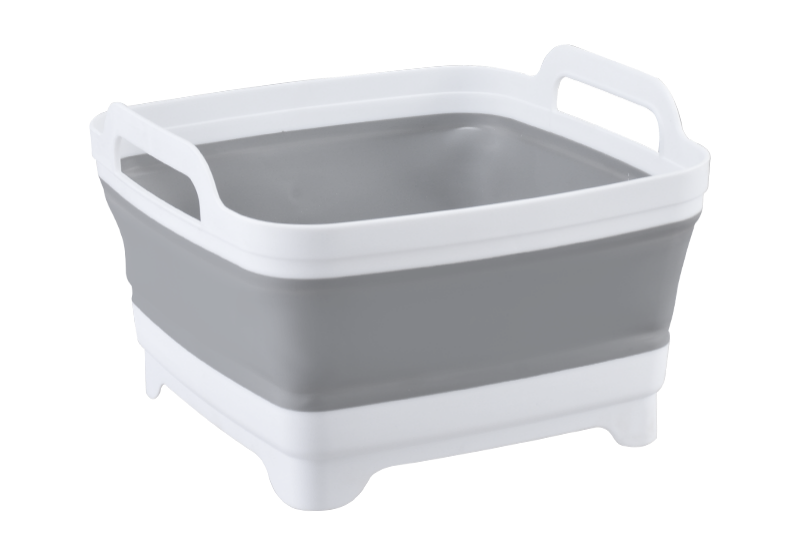
Perforated and hollow folding baskets suit vegetable transport and draining; drain basins and food-contact basin models suit washing and rinsing. FDA and LFGB food-contact approval on the basin models is the specification that makes this dual use defensible to a compliance team.
Outdoor, camping and travel
Folded thickness of a few centimetres means both formats store in a luggage compartment or car trunk without consuming the space a rigid container would. The −20°C to +60°C working range covers typical outdoor temperature swings in most export markets.
Car care and pet care
Basin models handle contained washing tasks where water must be held; large-format baskets handle transport of towels, tools and supplies. The anti-slip base structure matters more here than in indoor use, because uneven ground increases tipping risk.
Retail and distribution programmes
For supermarkets and cross-border retailers, the correct range decision is usually a matched set rather than a single hero item. A basket assortment covering the 3L–43L span, paired with basin models from FP-5L to FP-20L, gives a retailer year-round coverage across laundry, cleaning, kitchen and outdoor planograms.
Comparison Table: Folding Basket vs. Collapsible Plastic Basin
The table below summarises the decision criteria that separate the two formats. All specifications reflect current product data for the Nantong Plastic folding range.
| Decision factor | Plastic Folding Basket | Collapsible Plastic Basin |
|---|---|---|
| Primary job | Carry, sort and store laundry and cleaning loads | Hold water for soaking, washing, rinsing and food preparation |
| Capacity range | 3L to 43L | 5L, 8L, 10L, 12L, 15L, 20L (FP-5L to FP-20L) |
| Wall type | Open, hollow or perforated body | Closed, seam-sealed body |
| Liquid retention | Not designed to retain water | Designed to retain water under normal load |
| Rated load | 12–25 kg depending on model size and configuration | Load applied as water volume; no food-contact load claim |
| Material | PP+TPE composite, BPA-free, food-grade construction | PP+TPE composite, FDA and LFGB food-contact approval |
| Fold life | 5,000–10,000 folds tested without cracking or deformation | 5,000–10,000 folds tested without cracking or deformation |
| Everyday working temperature | −20°C to +60°C | −20°C to +60°C |
| Material temperature tolerance | −20°C to 120°C | −20°C to 120°C |
| Space saving when folded | Volume reduced by 75%–85%; thickness a few centimetres | Volume reduced by 75%–85%; thickness a few centimetres |
| Best fit | Laundry rooms, storage closets, retail display, transport | Laundry soaking, kitchen rinsing, pet washing, small-volume cleaning |
| OEM/ODM flexibility | Size, colour and structure customisation on a 200-mould platform | Size, colour and structure customisation on a 200-mould platform |
Frequently Asked Questions
Do folding baskets and collapsible basins both meet FDA and LFGB food-contact requirements?
The scope differs by format. The collapsible plastic basin models, designated FP-5L through FP-20L, carry FDA and LFGB food-contact approval, which is what qualifies them for rinsing, soaking and food-preparation use. The plastic folding basket line is produced from BPA-free, food-grade PP+TPE composite material and supports food-safe construction for vegetable and picnic applications, but an open or perforated basket is a transport format rather than a liquid-containment vessel. Both formats sit within a certification portfolio covering BSCI, ECM, FDA, REACH, RoHS, ASTM and SEDEX. Buyers placing goods into the European Union should also confirm alignment with Regulation (EC) No 1935/2004, Regulation (EU) No 10/2011 and Commission Regulation (EC) No 2023/2006 on good manufacturing practice for food-contact materials.
Can one Chinese plastic folding basket supplier support both formats on a scalable, long-term production contract?
Yes, when the supplier manufactures both formats on the same platform. TAIZHOU NANTONG PLASTIC CO.,LTD, founded in 2003, is an integrated factory-and-trade manufacturer based in Taizhou, Zhejiang Province, producing foldable wash basins, water buckets, storage baskets and laundry baskets from a single site. The plant covers 6,000 ㎡ with an additional 3,500 ㎡ warehouse and operates 12 injection moulding machines from 300g to 2500g, 3 assembly production lines and 200 self-developed moulds. The company holds 23 independent product patents for its one-piece fold-expand structure. Its track record includes long-term exclusive supply to Walmart and Sam's Club, cooperation with German retailer Netto and Japanese retailers Nitori and 3Coins, and products supplied to over one million families worldwide — capacity signals that matter when a buyer needs continuity across multiple seasons rather than a one-off shipment.
What are the minimum order quantity and payment terms for a mixed basket and basin order?
Standard stock folding baskets and basins support low MOQ and mixed batch orders, so a buyer can test several capacities in one shipment. For custom OEM or ODM items requiring new moulds, the mould-opening MOQ is negotiable. Payment terms are 30% T/T deposit with 70% T/T against a copy of the bill of lading, and an irrevocable L/C at sight is also accepted. Flexible payment terms are available for long-term, large-volume cooperative clients.
Can we approve both formats with a physical sample before committing to mass production?
Yes. Pre-production sample confirmation takes place before mass production begins, and buyers can evaluate basket and basin samples together in the same round. Sample review should cover the points that decide the order: folded thickness and volume reduction, handle and rim reinforcement, seam and fold-line quality, anti-slip base behaviour, and colour consistency against the approved standard. Inspection continues after sampling — full finished-goods inspection runs before loading, and third-party SGS or ITS cargo inspection is supported where a buyer's compliance process requires independent verification.
What lead times apply, and how are small trial orders shipped?
Standard mould opening takes 30–40 days, with mould repair response within 2–3 days, so custom colourways and moulded structures should be locked before the retail calendar is finalised. Sea freight is the main shipping method for volume orders. Small trial orders can move by air freight or international express, and Amazon FBA one-stop service, DDP door-to-door delivery, and domestic or overseas warehouse bulk shipment are available. To review the full folding basket and collapsible basin range before specifying, download the 2026 catalogue here: TAIZHOU NANTONG PLASTIC CO.,LTD 2026 Catalogue. For sample requests, quotations or distributor enquiries, contact sales01@nantongplastic.com or +86 151-5762-9088.
Conclusion
The folding basket and the collapsible basin are not competing products — they are two halves of a complete laundry and cleaning range. The basket carries, the basin contains. A buyer who orders baskets for soaking tasks will see returns; a buyer who orders basins for transport tasks will see complaints about handle capacity. Getting the mix right starts with the job description, not the price list.
Once the job is defined, the remaining decisions become measurable: capacity within the 3L–43L basket range or the FP-5L to FP-20L basin range, load capacity of 12–25 kg on the basket side, FDA and LFGB food-contact approval on the basin side, a tested fold life of 5,000 to 10,000 cycles, and an everyday working range of −20°C to +60°C. Space savings of 75%–85% when folded, and up to 300% better container utilisation than rigid containers, convert those specifications into landed-cost advantages rather than shelf claims.
For distributors and brand owners building a long-term programme, the decisive question is not which format is better. It is whether one production platform can supply both formats, in customised specification, on a stable schedule. TAIZHOU NANTONG PLASTIC CO.,LTD supplies both from a single Taizhou facility with 200 moulds, 12 injection moulding machines and 3 assembly lines, backed by 23 independent fold-structure patents and a certification portfolio accepted by major North American, European and Japanese retailers.
Ready to build a matched folding basket and basin range?
Request a sample set, a quotation or distributor terms from Nantong Plastic.
www.nantongplastic.com | sales01@nantongplastic.com | +86 151-5762-9088
Have Questions or Need More Details?
Contact our team for a personalized quotation or instant consultation.
Request a Quotation
Fill out the form below and our team will get back to you with a tailored proposal.
WhatsApp Direct Chat
Prefer to chat in real-time? Message us on WhatsApp for instant assistance & quick answers.
- Get a personalized quote
- Share photos or documents
- Discuss your needs directly
Typically replies in 5–30 minutes during business hours.