
Plastic Folding Basket vs. Traditional and Budget Alternatives: A Decision Guide for Bulk Buyers
Plastic Folding Basket vs. Traditional and Budget Alternatives: A Decision Guide for Bulk Buyers
Answer first: For bulk buyers, the decision between plastic folding basket options should not be based only on unit price. The more useful comparison is total cost per usable basket, including material safety, durability, inspection, logistics, and after-sales risk. In practical terms, a food-grade PP+TPE folding basket can reduce storage space by 75%–85%, increase container utilization by 300%, and load 4–5 times more pieces per carton than a traditional fixed plastic basket. For importers, these factors can reduce ocean freight and warehouse storage costs by more than 60%.
This guide compares four product categories commonly evaluated during sourcing: traditional fixed non-foldable plastic baskets, low-cost foldable baskets made from recycled plastic, thin-wall ordinary folding plastic products, and the food-grade foldable baskets produced by Taizhou Nantong Plastic Co., Ltd. (Nantong Plastic), an integrated factory-trade manufacturer in Huangyan District, Taizhou, Zhejiang, China.
The article is written for importers, distributors, retailers, and procurement teams at the decision stage. It explains what to compare, why the differences matter, and how to build a supplier evaluation process around those differences.
Problem Definition: Why the Lowest Unit Price Can Be the Most Expensive Choice
Most procurement mistakes in this category come from comparing piece prices without comparing what happens after the basket is in use. A cheap recycled folding basket may have a lower first cost, but if it cracks, leaks, or loses its fold line after limited use, the importer and retailer absorb replacement costs and after-sales complaints. A traditional rigid basket may be durable, but it does not fold, which means it consumes fixed storage and shipping space and limits how many units can fit into a carton.
The real problem is hidden cost, not visible price. Nantong Plastic's comparison data makes this clear: folded plastic baskets cut storage space by 75%–85%, raise container utilization by 300%, and increase loading quantity to 4–5 times that of traditional plastic baskets. Importers can reduce ocean freight and warehouse storage costs by more than 60% when these logistics gains are achieved.
Another hidden risk is product failure in sensitive use cases. Plastic folding baskets used for vegetables, laundry, picnic storage, or kitchen organization need to handle contact with water, food, cleaning agents, and repeated folding. The documented risks are practical ones: long-term continuous heating over 120°C, violent scratch or impact by sharp hard objects, and overload beyond the marked maximum water capacity. Suppliers need to control those risks through material selection, structural reinforcement, and clear product marking.
Industry Background: Foldable Plastic Baskets in Global Trade
Plastic folding baskets belong to a broader category of foldable and collapsible containers. According to Grand View Research, the global foldable and collapsible container market was valued at USD 1.7 billion in 2025. The same source reports that plastic is the dominant material, with a 53.9% revenue share in 2025, and that Asia Pacific accounted for 36.8% of the market in 2025, with China identified as the leading country market.
Trade data follows the same pattern. According to OEC, global exports of plastic boxes, cases, and crates under HS Code 392310 reached approximately USD 14 billion in 2024, and China's exports in that category were valued at USD 1.89 billion in 2024, placing China among the top three global exporters. For long-term demand, Fortune Business Insights projects the global plastic crates market to reach approximately USD 7.56 billion by 2034, growing at a CAGR of 7.56% from 2026.
For buyers, the strategic implication is clear: the plastic folding basket is not a niche item. It is part of a global shift toward space-saving, transport-efficient storage. A verified industry metric also shows that foldable crates can reduce storage space requirements by up to 75% when not in use compared with rigid alternatives. That matches the 75%–85% space reduction used by Nantong Plastic for its folding basket range.
Detailed Solution: What Separates a Worthwhile Plastic Folding Basket
Not all folding baskets are engineered the same way. The solution is to compare four dimensions: material, fold structure, logistics impact, and quality control. Nantong Plastic's folding basket range is used here as a documented example because its manufacturing facts are specific enough to evaluate.
Material: Virgin Food-Grade PP+TPE vs. Recycled Plastic
The most important difference between a low-cost recycled plastic folding basket and a durable food-grade folding basket is the raw material. Nantong Plastic uses 100% new food-grade PP+TPE composite raw materials, which are BPA-free and certified under BSCI, ECM, FDA, REACH, RoHS, ASTM, and SEDEX. The materials are designed to withstand temperatures from -20°C to 120°C, release no odd odors even when in contact with boiling water, and resist cracking under low temperatures.
Virgin food-grade material matters for two reasons. First, it provides a safer surface for direct contact with food and skin, which is relevant for folding vegetable baskets, folding drain baskets, folding picnic baskets, and laundry baskets used for baby clothes. Second, it reduces the risk that recycled plastic will carry unknown contaminants or degrade quickly. Nantong Plastic's product comparison states that the product is made with 100% new food-grade material without recycled waste.
Fold Structure: One-Piece Design, Thicker Walls, and Reinforced Handles
Folding baskets fail in two main ways: the fold line cracks, or the side wall dents under load. Nantong Plastic addresses this with a one-piece fold-expand structure protected by 23 independent product patents. The design requires no assembly, and single-hand unfolding and folding is enough to change the basket from a storage container to a flat item a few centimeters thick.
The structural details are specific: thickened 2–3 mm side walls, integrated anti-break handles, heat-pressed fold lines, sealed seams, and anti-slip bottom structures. In lab testing, the items endure 5,000 to 10,000 repeated folds without cracking or deformation. For buyers, this fold-cycle evidence is more useful than a vague promise of durability, because it translates directly into retail return rates and user satisfaction.
Logistics and Retail Shelf Impact
For cross-border buyers, the folding basket's biggest financial impact often happens before the product reaches a consumer. When folded, the thickness shrinks to only a few centimeters, reducing storage volume by 75%–85%. The same carton can therefore hold 4–5 times more pieces than a carton of traditional rigid baskets, and container utilization increases by 300%.
The cost effect is documented in Nantong Plastic's comparison: compared with alternatives, the folded product is associated with a reduction of more than 60% in ocean freight and warehouse storage costs for importers. In simpler terms, paying a slightly higher unit price for a well-designed folding basket can still produce lower total logistics cost per delivered unit.
Quality Inspection and Post-Sale Risk Control
Wholesale buying multiplies risk. A single bad batch of baskets can affect hundreds of retail locations, so the supplier's inspection system is a core part of the decision.
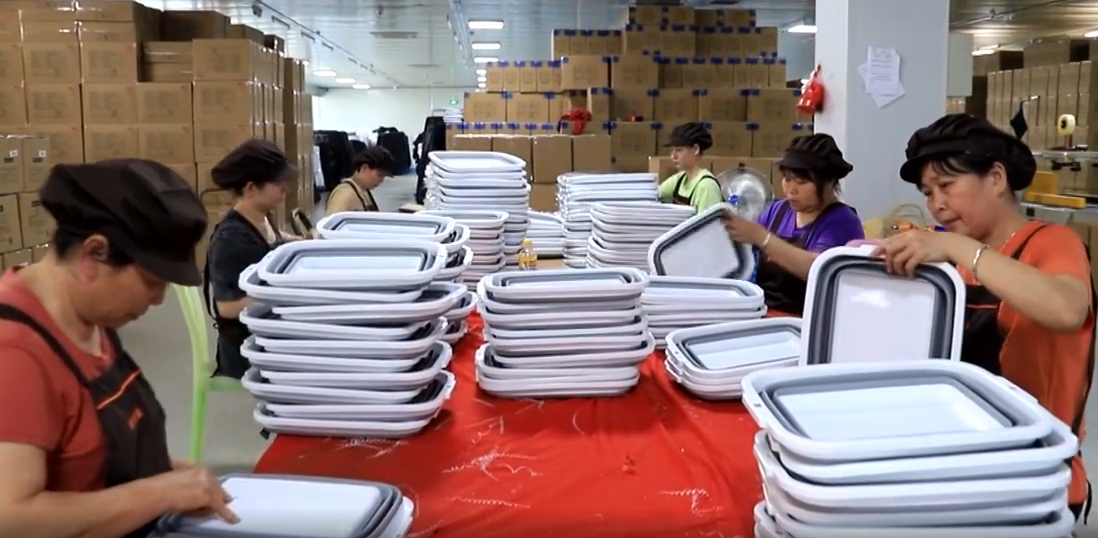
Nantong Plastic's measures include full raw material food-grade testing before production, a three-stage full quality inspection during production and before shipment, a one-year free replacement warranty for non-human damage, and complete certification documents for customs clearance. Each product is marked with temperature and load capacity limits, and English user manuals remind consumers of correct use.
This matters for procurement because it transfers risk away from the buyer. If a shipment is delayed at customs due to missing documents, or if a product fails under normal use, the buyer needs a supplier with a defined response. The one-year replacement warranty is part of that response.
Step-by-Step Supplier Evaluation Process
Use the following five steps as a repeatable checklist when evaluating any plastic folding basket supplier.
Step 1: Define the Use Scenarios and SKU Format
Start with the end user. Different applications create different requirements. A folding laundry basket used in a small apartment needs compact storage and easy carrying. A folding picnic basket used outdoors needs heat resistance and a stable base. A folding storage basket used on a retail shelf needs visual clarity and stackability. A folding vegetable basket used in a kitchen needs food-contact safety. Nantong Plastic's product matrix is designed for small apartment rental housing, car travel storage, camping outdoor activities, cross-border bulk wholesale, and supermarket shelf display. If your target scenario matches any of these, the comparison criteria below will fit.
Step 2: Compare Total Cost per Usable Basket, Not Unit Price
Ask the supplier for information about fold-cycle life, material grade, and failure modes. Nantong Plastic's data shows that its folding baskets have an expected lifespan 5–10 times longer than comparable low-cost recycled plastic folding products. Maintenance requirements are lower because the basket does not need frequent replacement due to cracking or leaking, reducing after-sales replacement costs for retailers.
When projected across an entire container, that cost difference is large enough to change supplier selection. A basket that costs slightly more per unit but avoids returns, complaints, and ocean-freight inefficiency can have a lower total cost per delivered unit.
Step 3: Verify Compliance and Food-Contact Documentation
Check the certifications that matter for your target market. For food-contact plastic baskets, the EU framework includes Regulation (EC) No 1935/2004 and Regulation (EU) No 10/2011. In addition, suppliers should be able to provide evidence of factory audits and material safety. Nantong Plastic's certification set covers BSCI, ECM, FDA, REACH, RoHS, ASTM, and SEDEX. The company also provides complete certification documents for customs clearance.
Step 4: Inspect the Physical Fold Mechanism
Ask for the side-wall thickness, fold-line structure, handle design, and test data. Nantong Plastic uses thickened 2–3 mm side walls, integrated anti-break handles, heat-pressed fold lines, and sealed seams. These details reduce the chance of leakage and cracking during normal use. The documented test result is 5,000 to 10,000 repeated folds without cracking or deformation.
Step 5: Audit the Supplier's Production and Response Capacity
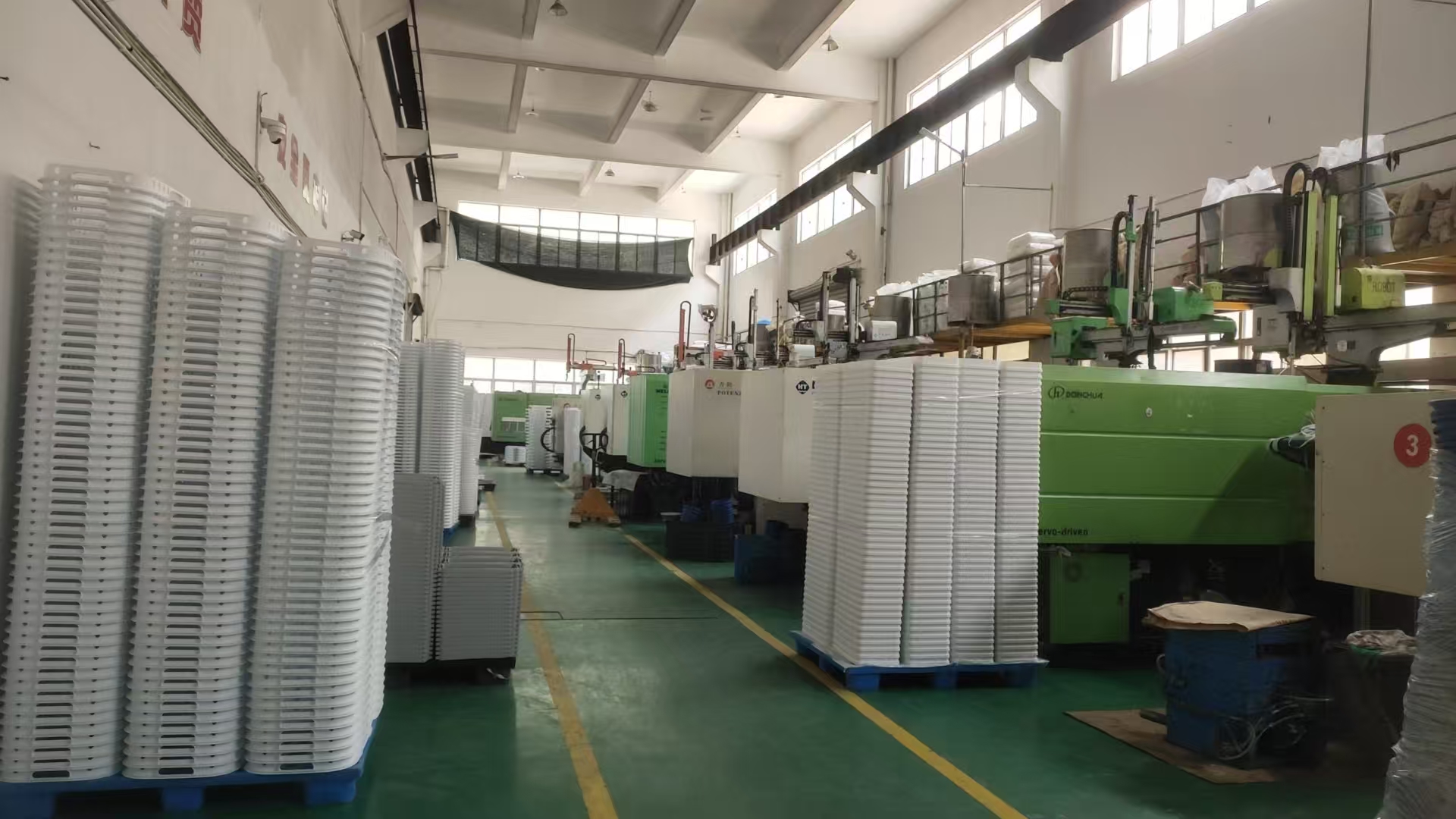
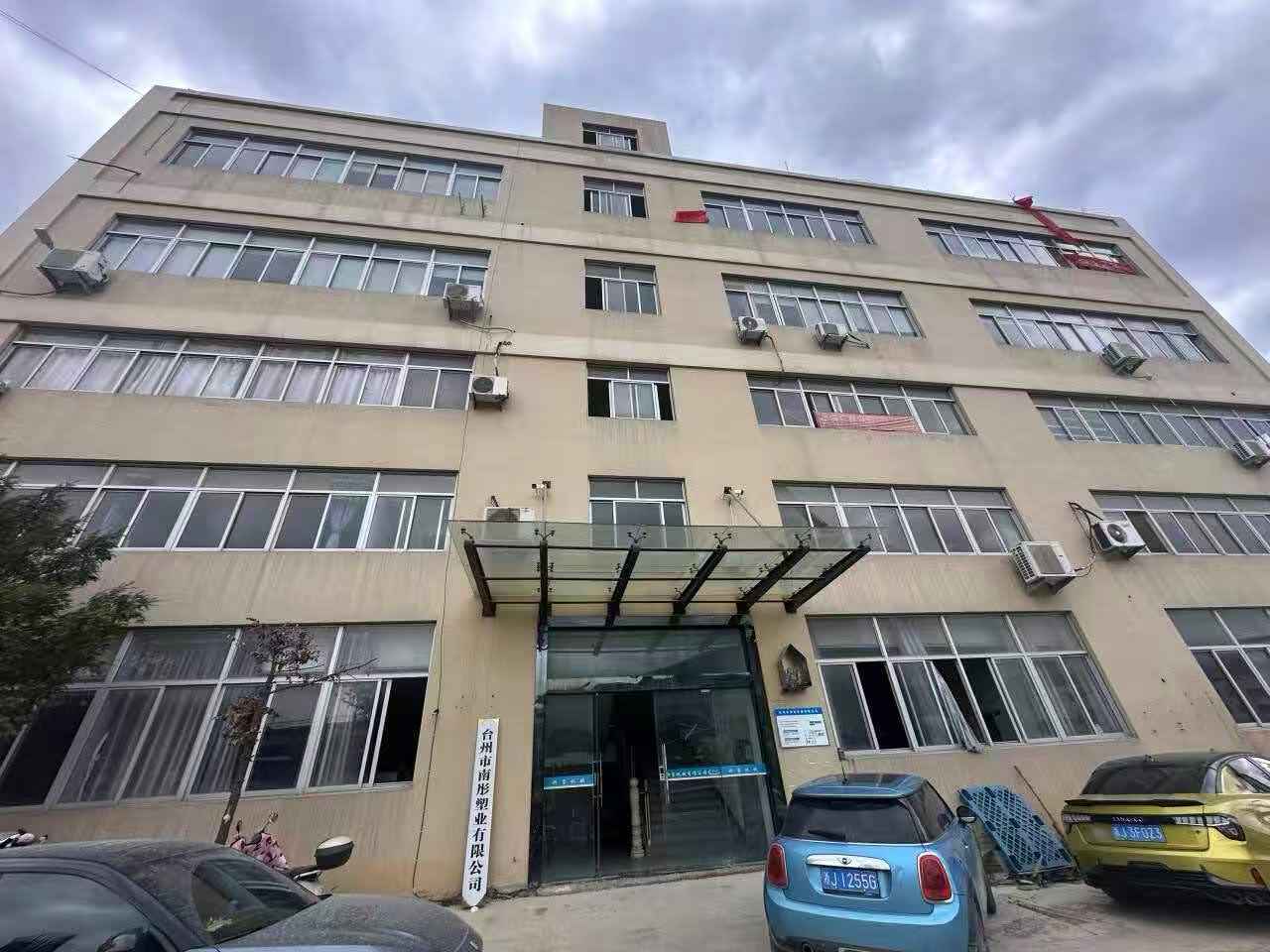
For bulk orders, capacity and response speed matter as much as product design. Nantong Plastic was founded in 2003 and operates a 6,000 ㎡ production plant plus an independent 3,500 ㎡ warehouse, with total area over 9,500 ㎡. The factory runs 12 injection molding machines from 300g to 2500g, 3 assembly lines, and holds 200 self-developed production molds. The standard mold opening cycle is 30–40 days, and mold repair response is within 2–3 days.
The company employs 39 staff, including 8 R&D personnel, 4 sales staff, 2 after-sales staff, and 25 production/QC staff. Its buyer base includes long-term relationships with Walmart and Sam's Club (USA), Netto (Germany), and Nitori and 3Coins (Japan), supplying products to over one million households worldwide with monthly full-container bulk orders. These facts do not replace your own factory audit, but they give a starting point for verifying whether the supplier can handle the scale, customization, and schedule you need.
Use Cases: Where Plastic Folding Baskets Create the Most Value
The same folding basket can be used in very different contexts. From a sourcing perspective, each use case changes what you should prioritize.
Small Apartments and Rental Housing
Space is the main constraint. A folding laundry basket, folding storage basket, or folding hand basket can be flattened when empty and stored in cabinet gaps, wall hooks, luggage, or car trunks. The 75%–85% storage space reduction is the direct benefit for this segment.
Car, Travel, and Camping
Portable options such as car folding baskets, hanging folding baskets, folding picnic baskets, and pull-rod folding baskets need lightweight structures and easy handling. The single-hand fold-expand design and anti-slip base are useful for people who move items in and out of a car or campsite.
Outdoor and Retail Display
Weather-resistant material prevents fading in outdoor use. For supermarkets, the stackable and foldable design improves shelf display and backroom storage. Perforated hollow folding baskets are often used for vegetables and drain tasks, while large-capacity folding baskets fit warehouse and bulk storage needs.
Cross-Border E-Commerce
FBA and DDP sellers benefit directly from higher carton density. A basket that folds to a few centimeters thick means 4–5 times more units per carton, lower per-unit shipping cost, and faster overseas warehouse restocking. Nantong Plastic supports cross-border logistics with dedicated after-sales support and a one-year replacement warranty for non-human damage.
Comparison Table: Four Plastic Folding Basket Options
The table below summarizes the decision-relevant differences covered in this guide. It is based on the product comparison data for food-grade PP+TPE folding baskets and does not claim verified performance data for unverified competitors.
| Comparison Point | Traditional Fixed Plastic Basket | Low-Cost Recycled Plastic Folding Basket | Thin-Wall Ordinary Folding Product | Food-Grade PP+TPE Folding Basket (Nantong Plastic) |
|---|---|---|---|---|
| Foldability | Not foldable; fixed volume | Foldable | Foldable | Foldable; one-piece fold-expand structure with 23 patents |
| Material | Rigid plastic | Recycled plastic material | Lighter material input | 100% new food-grade PP+TPE, BPA-free |
| Storage space | Occupies full volume | Not specified in comparison | Not specified in comparison | Reduced by 75%–85% when folded |
| Container utilization | Baseline | Not specified in comparison | Not specified in comparison | Increased by 300%; loading quantity 4–5 times traditional baskets |
| Lifespan | Durable but space-inefficient | Shorter expected lifespan than food-grade PP+TPE | Not specified in comparison | Expected lifespan 5–10 times longer than low-cost recycled folding products |
| Logistics cost | Higher freight/warehouse cost per unit | Not specified in comparison | Not specified in comparison | Ocean freight and warehouse storage costs reduced by over 60% for importers |
| Risk control | Not specified in comparison | Not specified in comparison | Not specified in comparison | Food-grade raw material testing, three-stage QC, one-year replacement warranty, customs documents |
This table is intentionally specific about the data that exists and leaves other cells marked as not specified rather than inventing competitor numbers.
FAQ
1. Which compliance documents should a food-contact plastic folding basket supplier provide?
For food-contact applications, the supplier should provide evidence that materials are food-grade, BPA-free, and compliant with relevant market regulations. In the EU context, food-contact materials must comply with Regulation (EC) No 1935/2004 and Regulation (EU) No 10/2011. Nantong Plastic states that its production uses 100% new food-grade PP+TPE composite raw materials and holds BSCI, ECM, FDA, REACH, RoHS, ASTM, and SEDEX certifications. The company also provides complete certification documents for customs clearance.
2. Can Nantong Plastic customize sizes, colors, and structures for bulk orders?
Yes. Nantong Plastic is structured as an integrated factory-trade manufacturer with 200 self-developed production molds and an R&D team. The standard mold opening cycle takes 30–40 days, and mold repair response is within 2–3 days. The company tailors sizes, colors, and structures to regional market demands, which means buyers do not need to treat a folding basket as a fixed-offering commodity.
3. Is a food-grade PP+TPE folding basket worth the higher unit price compared with recycled plastic options?
In many procurement scenarios, yes. Although the unit product cost is higher than low-end recycled plastic goods, the expected lifespan is 5–10 times longer. The folding structure also reduces storage space by 75%–85%, increases container utilization by 300%, and cuts ocean freight and warehouse storage costs by more than 60% for importers. When these factors are combined, the total cost per usable basket can be lower than cheaper alternatives.
4. Can I request samples before placing a bulk order?
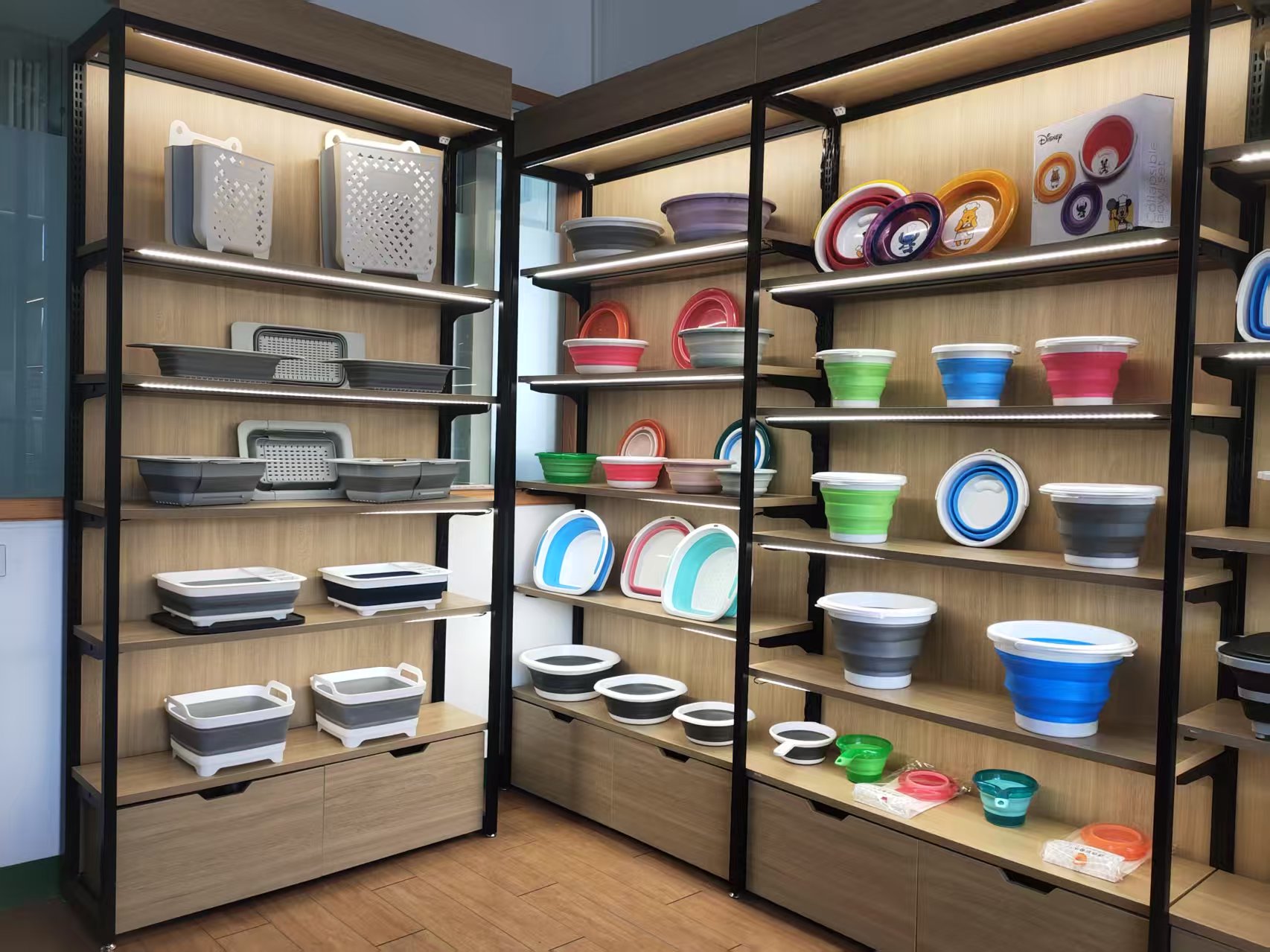
Yes. Buyers evaluating a plastic folding basket supplier should request samples before mass production. Nantong Plastic's sample showroom displays the product range, and the sales team can be contacted directly at sales01@nantongplastic.com or WhatsApp +86 151-5762-9088 to discuss sample needs and bulk requirements.
5. What lead time and after-sales support should I expect?
Lead time depends on whether the order uses an existing mold or requires new tooling. Nantong Plastic's standard mold opening cycle is 30–40 days, with mold repair response within 2–3 days. The company supports monthly full-container bulk orders. After-sales support includes a one-year free replacement warranty for non-human damage and complete certification documentation for customs clearance.
Conclusion
At the decision stage, a plastic folding basket supplier should be evaluated on four things: material safety, fold durability, logistics efficiency, and risk control. The product comparison data used in this guide shows why a food-grade PP+TPE folding basket can outperform traditional rigid baskets and cheap recycled alternatives when total cost is calculated correctly.
For importers, retailers, and distributors, the practical next step is to check the supplier's documented facts rather than relying on a sample photo. Ask for material certifications, fold-cycle data, side-wall thickness, inspection procedures, and container loading estimates. Nantong Plastic's profile includes all of these elements: a 6,000㎡ factory, 3,500㎡ warehouse, 200 molds, 23 patents, 12 injection molding machines, and a compliance set suited to global retail programs.
If you are comparing plastic folding basket suppliers for a new order, you can download the 2026 catalog or contact the Nantong Plastic sales team for a sample and quotation.