
Storage That Survives 5,000 Folds: From Laundry to Picnics
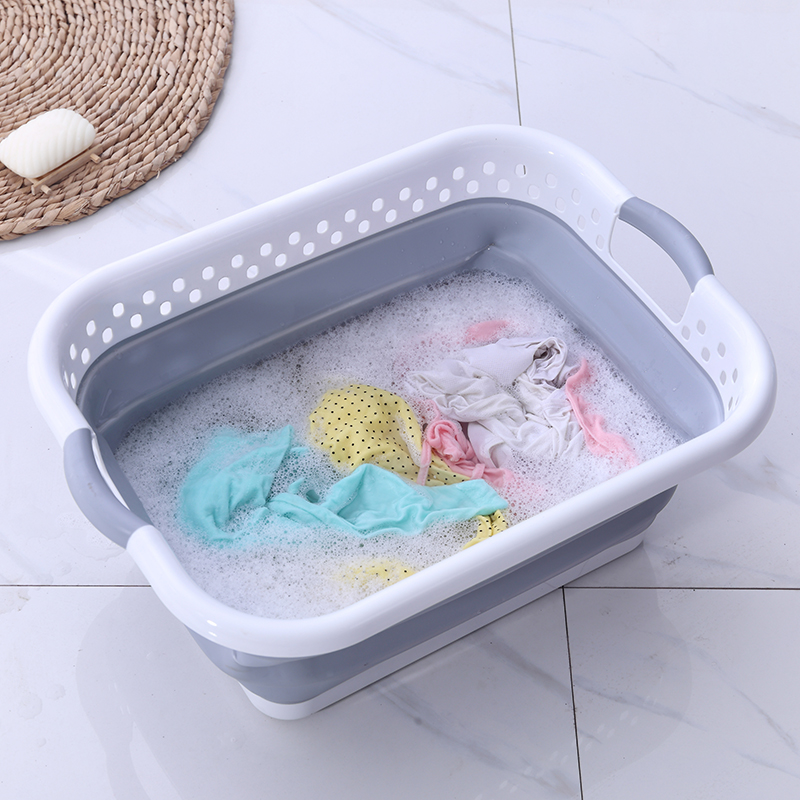
Most storage products are bought to hold things. A folding basket is bought to hold things and then stop taking up room — and that second job is where low-cost units usually fail.
Taizhou Nantong Plastic Industry Co., Ltd. — Nantong Plastic — is a Chinese manufacturer of patented foldable plastic household goods, founded in 2003 and based in Huangyan District, Taizhou, Zhejiang Province. Its folding basket range covers more than 90 styles from 3 L to 43 L, and the company supplies chain retailers in the USA, Germany and Japan. This article uses that range to answer one evaluation-stage question: what has to be true about a folding basket before “space-saving” becomes a measurable benefit instead of a spec-sheet adjective?
Problem Definition: You Are Paying for Empty Space
A rigid 43 L hamper occupies its full footprint 24 hours a day and is full for perhaps two hours a week. The same ratio applies at three different scales, and each one has a different owner who pays for it.
- Household: small apartments, dormitories and rental housing rarely have dedicated storage rooms. The basket competes with the washing machine, the cabinet gap and the wardrobe floor.
- Retail: a supermarket pays for shelf space and backroom space. An empty basket that cannot be nested or folded costs the same rent as a full one.
- Logistics: importers pay per container and per warehouse cubic metre. A product that arrives 75%–85% flatter per unit changes the freight math on every shipment.
The failure pattern is equally consistent. Cheap collapsible products fail at the fold line, not at the wall: spliced hinges separate, thin fold lines crack after repeated opening, bases tip when loaded unevenly, and soft walls deform under a full laundry load. Once that happens, the space saving becomes irrelevant because the basket is discarded. Grand View Research estimates that foldable crates can reduce storage space requirements by up to 75% compared with rigid alternatives — a figure that only holds if the product survives long enough to be folded thousands of times.
Industry Background: Foldable Storage Is a Trend With Numbers Behind It
The category is no longer a niche accessory. Grand View Research valued the global foldable and collapsible container market, which includes plastic folding baskets and crates, at USD 1.7 billion in 2025. Plastic is the dominant material in that segment, with a 53.9% revenue share in 2025, driven by low weight and cost efficiency. Asia Pacific accounted for a 36.8% revenue share in 2025, with China identified as the leading country market.
Trade data points in the same direction. Global trade for plastic boxes, cases and crates under HS Code 392310 reached approximately USD 14 billion in 2024, and China’s exports within that code were valued at USD 1.89 billion, placing it among the top three global exporters. The U.S. foldable container market alone was valued at USD 422.8 million in 2024, shaped by e-commerce and retail demand for space-saving solutions.
Long-range forecasts are less settled. Fortune Business Insights projects the plastic crates market reaching approximately USD 7.56 billion by 2034 at a 7.56% CAGR from 2026, while Market Research Future models a 3.97% CAGR for a comparable definition. Buyers should treat growth forecasts as directional and evaluate suppliers on cycle life, material grade and carton loading instead — the three variables that change landed cost regardless of which forecast is right.
The practical implication for a buyer in the evaluation stage is that “collapsible” is no longer a differentiator. Fold architecture and tested cycle life are.
The Solution: What “5,000 Folds” Actually Requires
A fold rating is the output of a design decision, not a marketing claim. Products that reach 5,000–10,000 cycles share the same engineering pattern: a rigid frame, a flexible wall chemically bonded to it, and a fold line that is heat-pressed rather than cut.
One-piece fold geometry instead of spliced hinges
Nantong Plastic holds 23 independent product patents covering its one-piece fold-expand structure, which is the element that separates its baskets from spliced foldable items assembled from separate panels. The practical difference is single-hand unfolding with no assembly step: the basket opens and closes as one part, with no hinge pin to loosen and no seam to tear. For a distributor, this also means fewer warranty claims caused by user error during first use.
Material: food-grade PP plus TPE composite
The folding range is produced from 100% new food-grade PP+TPE composite raw material and is BPA-free. The rigid PP frame carries the load while the TPE wall absorbs the fold. On the collapsible basin series, that flexible wall is specified in the 60–85 Shore A hardness band — soft enough to fold repeatedly, firm enough to stand upright when filled. On the basket range, reinforced thick side walls, heat-pressed fold lines and sealed seams deliver the leak-proof performance that matters when a basket carries wet laundry or rinsed vegetables.
Cycle life and load
Laboratory testing on the foldable range records 5,000 to 10,000 repeated folds without cracking or deformation. Maximum bearing load across the range is specified at 12 kg to 25 kg depending on size, supported by anti-slip bottom structures that resist tipping when the basket is partly loaded. For a household, 12–25 kg covers a full family wash load; for a supermarket, it covers a basket of groceries plus the handling cycle between till and car park.
Temperature window from -20°C to +60°C
The series is specified for an operating range of -20°C to +60°C. That range matters more than it appears: it covers an unheated garage or balcony in winter, a delivery van in summer, and warm water during cleaning. Material that goes brittle at low temperature is the most common cause of fold-line cracks in markets with cold seasons.
The folded profile and the logistics math
Folded thickness is 2.5–4 cm depending on model, and folding cuts volume by 75%–85%. Stacked flat, that translates into 4–5 times more pieces per carton than rigid containers, and the company reports foldable formats improving container space utilization by 300% versus rigid equivalents. For an importer comparing quotations, the unit price is only half the calculation; pieces per carton and carton cube decide the ocean freight per unit.
Compliance and cleanability
The folding range is certified under BSCI, FDA, REACH, RoHS, ASTM and SEDEX, with LFGB food-contact grade supported on the collapsible basin and bucket models. Surfaces are smooth and stain-resistant, so cleaning is a rinse rather than a scrub, and the material is weather-resistant enough for outdoor use without fading. All goods use recyclable material that meets global environmental regulations.
Step-by-Step: How to Specify and Qualify a Folding Basket
- Fix the load and cycle budget first. A household laundry basket and a supermarket shopping basket see different abuse. Start from the load: 12 kg at the small end of the range, 25 kg at the large end, and confirm the model’s rated figure rather than assuming the top of the range applies to every size.
- Ask how the fold is built. One-piece fold-expand structures avoid hinge pins and assembled seams. Ask for patent numbers and for a sample fold test, not a photo of a folded basket.
- Match capacity to the actual job. The range runs from 3 L to 43 L across more than 90 styles. Laundry and family storage sit at the upper end; hand baskets and vegetable baskets sit lower.
- Check the temperature path. Map where the basket will be stored and shipped. If any part of that path involves an unheated warehouse or a hot vehicle, confirm the -20°C to +60°C window against the specific model.
- Collect the compliance file per market. For food-contact baskets in the EU, that means Regulation (EC) No 1935/2004 and Regulation (EU) No 10/2011, with manufacturing under Good Manufacturing Practice as set out in Commission Regulation (EC) No 2023/2006. For the U.S., it means an FDA-consistent material declaration. Model and colour both belong in the declaration.
- Choose accessories against the job, not the catalogue. Lids for dust protection, drain holes for wet produce, wheels or a pull rod for heavy carry, a stand for retail display, hanging versions for wall storage. Every accessory adds a part that can fail, so add only what the use case requires.
- Run the carton math before the price comparison. Multiply pieces per carton by carton cube, then apply your freight rate. A slightly higher unit price with 4–5 times the packing density routinely lands cheaper per unit.
- Sample, pilot, then lock lead time and after-sales. Confirm stock lead time, mold development time and warranty terms before committing a seasonal programme to a new specification.
Use Cases: Laundry, Supermarket, Picnic
Household laundry and small-space living
This is the volume segment. A large-capacity folding laundry basket at the top of the 3–43 L range handles a family wash load, folds to a few centimetres when empty, and can be hung on a wall or pushed into the gap beside a washing machine. Anti-slip bases matter here: a wet laundry load shifts, and a basket that tips spills water across the floor.
Supermarket and retail display
Supermarkets buy folding shopping baskets for two reasons — nesting behaviour at the till and shelf efficiency in the backroom. A perforated hollow folding basket keeps produce ventilated, a folding basket with stand can be merchandised upright in store, and flat-folded stock frees backroom shelving. For retailers, the relevant proof point is that the format has been used by global chain supermarket retailers, Amazon FBA private label brands and overseas wholesale importers.
Outdoor picnic and camping
Picnic use combines food contact, outdoor UV exposure and transport. A folding picnic basket or folding hand basket with a lid and food-grade PP+TPE walls covers the food-contact requirement; the -20°C to +60°C window covers a cold morning at a campsite and a warm car boot in summer. Drain holes help when the basket doubles as a rinsed-produce carrier.
Cross-border e-commerce and FBA
For Amazon private-label sellers, the design constraint is packaging, not just product. Folded thickness of 2.5–4 cm allows smaller cartons, lower dimensional-weight charges and less warehouse cube. FBA and DDP logistics matching is available as part of the supplier’s after-sales service scope.
Comparison Table: Rigid Containers vs. Plastic Folding Baskets
The comparison below uses published third-party figures and Nantong Plastic’s own product data. Where a figure is model-specific, it is marked as such rather than generalised.
| Criterion | Rigid plastic container | Plastic folding basket (PP+TPE) |
|---|---|---|
| Volume when empty | Retains full footprint | Folds to 2.5–4 cm; 75%–85% volume reduction |
| Pieces per carton | Baseline | 4–5 times more pieces per carton (company data) |
| Container utilization | Baseline | Up to 300% improvement vs. rigid equivalents (company data) |
| Fold / service life | No fold cycle to rate | 5,000–10,000 repeated folds, lab-tested without cracking or deformation |
| Load rating | Model-specific; not compared here | 12–25 kg maximum bearing load across the range |
| Operating temperature | Model-specific; not compared here | -20°C to +60°C |
| Material safety | Model-specific; not compared here | 100% new food-grade PP+TPE, BPA-free |
| Cleaning | Model-specific; not compared here | Smooth stain-resistant surface; rinse-clean |
| Strongest fit | Fixed storage under constant load | Storage that is empty most of the day |
Space-reduction references: Nantong Plastic product data (75%–85%) and Grand View Research (foldable crates can reduce storage space requirements by up to 75% versus rigid alternatives).
Shortlist: which configuration fits which job
| Application | Configuration to specify | Verified anchor | Confirm before ordering |
|---|---|---|---|
| Household laundry | Folding laundry basket at the upper end of the 3–43 L range, anti-slip base, integrated handles | 5,000–10,000 folds; 12–25 kg; -20°C to +60°C | Lid or open top; wet-load handling |
| Supermarket / retail | Perforated hollow folding basket, square or rectangular, stackable | Folded thickness 2.5–4 cm; 4–5× pieces per carton | Shelf-ready packaging, logo printing, label format |
| Outdoor picnic / camping | Folding picnic basket or folding hand basket with lid | Food-grade BPA-free PP+TPE; -20°C to +60°C | Outdoor colour stability; lid fit under load |
| Home organization | Folding storage basket, oval or rectangular | 90+ styles; 3–43 L | Ventilation needs vs. dust protection |
| Heavy carry / mobility | Wheeled folding basket or pull-rod folding basket | 12–25 kg bearing-load range | Wheel performance on rough or wet ground |
Supply-Side Check: What a Factory Audit Should Confirm
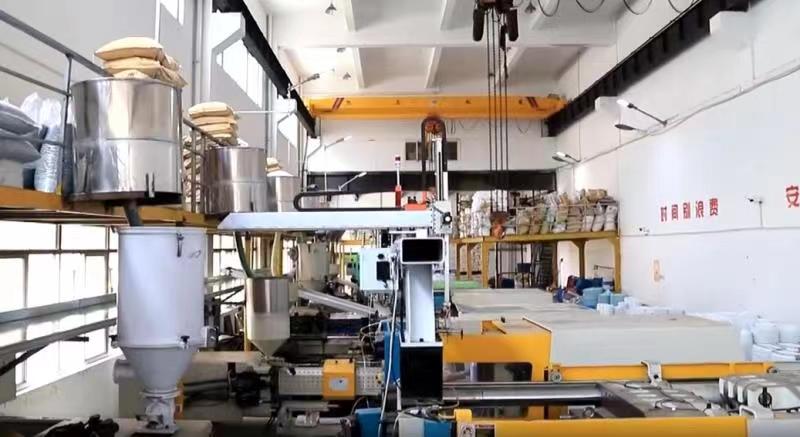
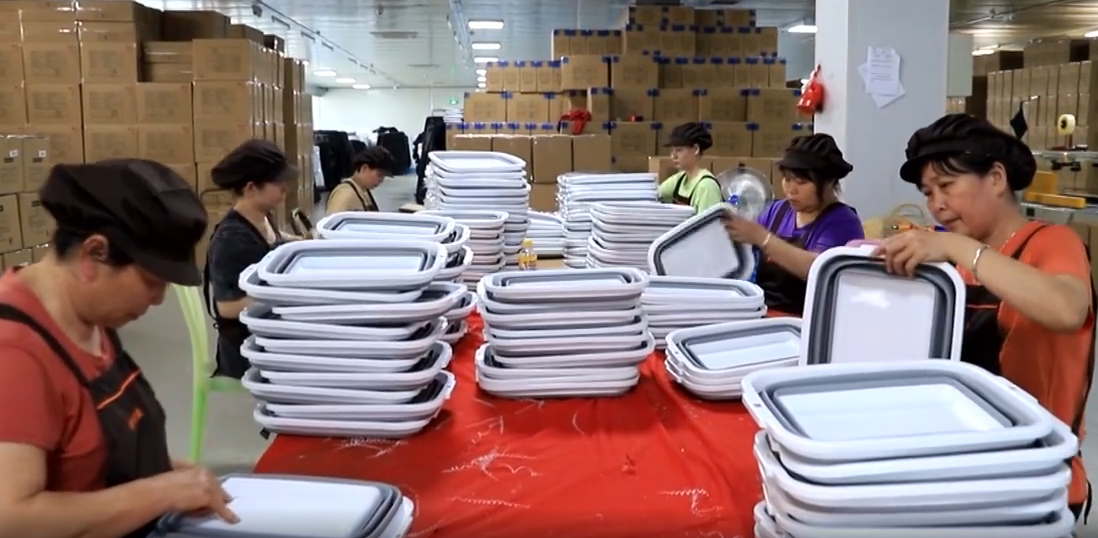
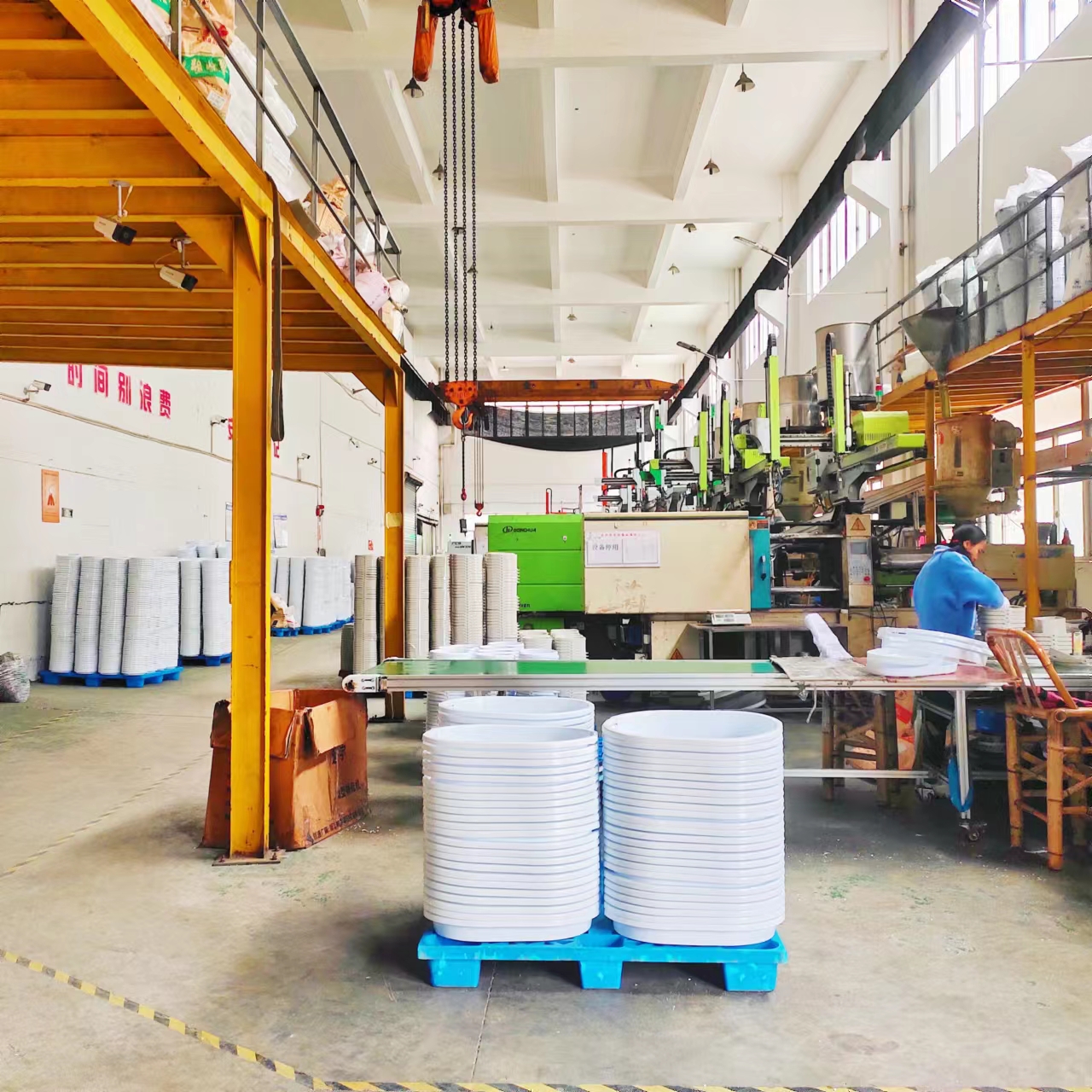
Durability claims are only as good as the factory behind them. Nantong Plastic operates a 6,000 m² production plant plus a 3,500 m² independent warehouse — over 9,500 m² in total — with 39 staff, including 8 R&D engineers, 4 sales staff, 2 after-sales personnel and 25 production and QC staff. Production runs on 12 injection molding machines from 300 g to 2,500 g, supported by 200 self-developed molds and 3 assembly lines.
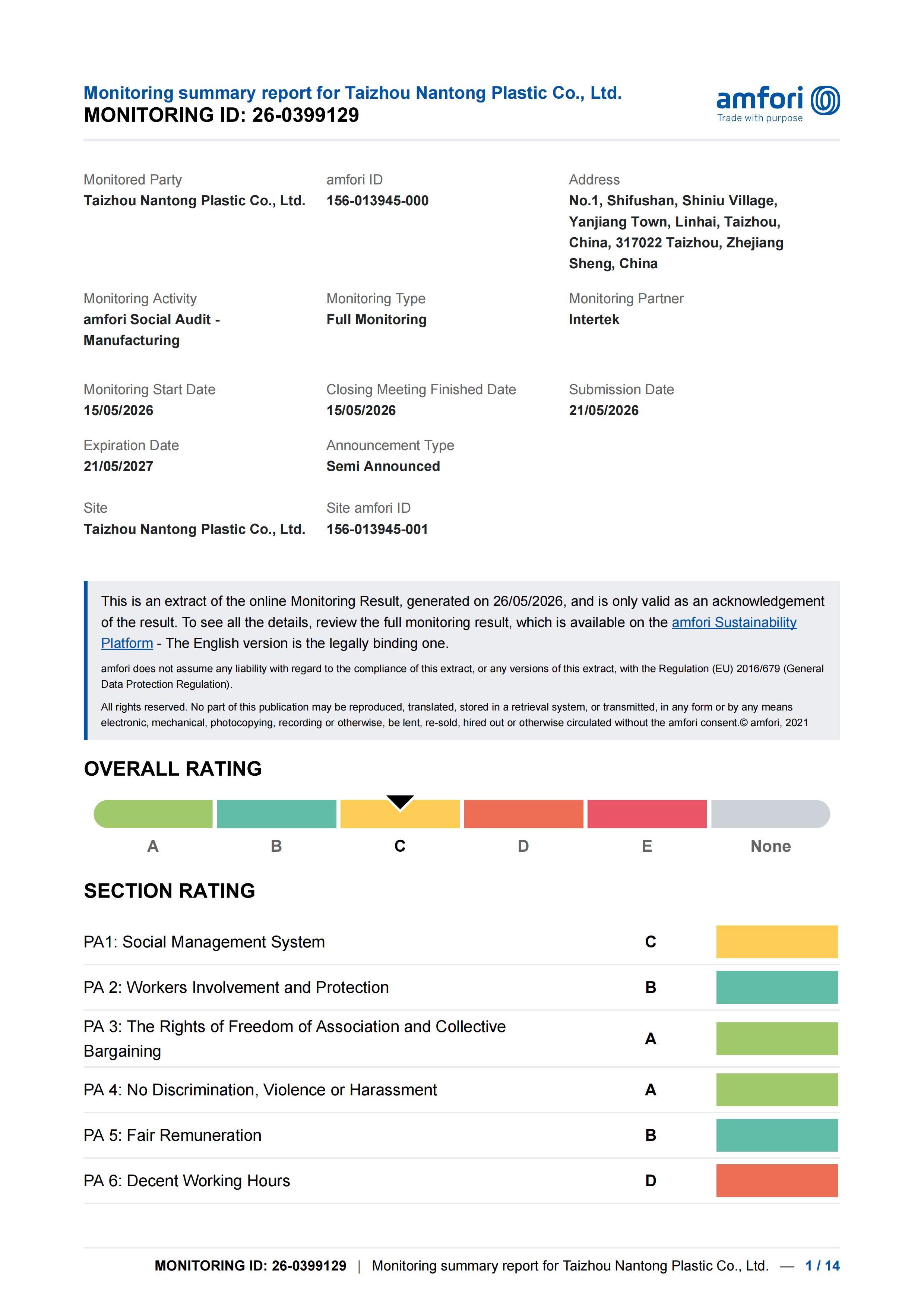
Social compliance is documented rather than asserted. The company’s amfori BSCI monitoring summary report was issued by Intertek under certificate number 26-0399129 on 21 May 2026 and is valid to 21 May 2027, covering full monitoring, semi-announced, across all PP+TPE food-grade folding plastic baskets, folding tubs and folding storage containers. That scope matters: it aligns the audit document with the exact product family a buyer is ordering.
Commercial proof points include long-term supply relationships with Walmart and Sam’s Club as a stable exclusive supplier, plus Netto in Germany and Nitori and 3Coins in Japan, with continuous cooperation with core chain brands for more than 8 years and products supplied to over 1 million families worldwide. Monthly capacity is 21,600 units. Stock items ship in 7–15 days; new ODM mold development takes 30–40 days, with mold repair response inside 2–3 days.
After-sales support covers a 1-year warranty for non-human damage, a dedicated after-sales team, a full English operation instruction manual, and FBA and DDP logistics matching — the last of which is usually the deciding factor for sellers shipping folded household goods into Amazon warehouses.
FAQ
Are plastic folding baskets compliant for food contact in the EU and the US?
Compliance depends on the material declaration and the test file for the specific model and colour. Nantong Plastic produces its folding range from 100% new food-grade PP+TPE composite that is BPA-free, and holds BSCI, FDA, REACH, RoHS, ASTM and SEDEX certification, with LFGB food-contact grade supported on the collapsible basin and bucket models. For EU food-contact sales, the applicable framework is Regulation (EC) No 1935/2004 and Regulation (EU) No 10/2011, with manufacturing under Good Manufacturing Practice per Commission Regulation (EC) No 2023/2006. Buyers should request a declaration of compliance naming the exact SKU rather than a general certificate.
How many folds and how much load can a heavy-duty folding basket realistically take?
Laboratory testing on the foldable range records 5,000 to 10,000 repeated folds without cracking or deformation, and maximum bearing load is specified at 12 kg to 25 kg depending on size. Those figures are supported by the one-piece fold-expand structure — covered by 23 independent product patents — plus reinforced thick side walls, heat-pressed fold lines and anti-slip bases. The relevant qualifier is that load rating and cycle rating are separate specifications: a basket rated high on load is not automatically the highest-cycle model in the range, so both numbers should be confirmed for the SKU being ordered.
What drives the unit cost of a plastic folding basket in bulk orders?
No public price list applies, because four variables move the number: material grade (100% new food-grade PP+TPE versus lower-grade compounds), wall thickness and fold-line construction, accessory count (lid, wheel, stand, drain holes, pull rod), and decoration (surface printing, colour box, label). Freight is the fifth and often largest variable — folding cuts volume by 75%–85% and allows 4–5 times more pieces per carton, which lowers cost per delivered unit even at an identical FOB price. Standard stock models are offered with low MOQ and mixed batch support; OEM and ODM order MOQ is negotiable.
Can buyers check samples before placing a bulk order?
Yes. Nantong Plastic maintains a sample showroom and supports stock models with low MOQ and mixed batch supply, which allows a buyer to handle several styles — folding laundry basket, folding hand basket, wheeled or lidded versions — before committing. Sampling is the practical way to verify fold feel, handle rigidity, base stability and lid fit, none of which a specification sheet communicates. Sample and specification requests go to sales01@nantongplastic.com or WhatsApp +86 151-5762-9088.
What lead times apply to stock items versus new molded designs?
Stock items ship in 7–15 days. New ODM mold development takes 30–40 days, and mold repair response is handled within 2–3 days. Monthly production capacity is 21,600 units, which is the figure to compare against a seasonal or promotional volume before fixing a delivery date. For a first order, the practical next step is to request a quotation against your target capacity, colour and accessory set, and to confirm the delivery schedule in writing.
Conclusion
Space-saving storage only pays back if the product survives being folded. The specification that makes that possible is unglamorous: a one-piece fold structure, food-grade PP+TPE walls, 5,000–10,000 tested fold cycles, 12–25 kg of load capacity, an operating window of -20°C to +60°C, and a folded profile of 2.5–4 cm. Those numbers decide whether a basket serves a household, a supermarket or a picnic for years, or fails at the fold line in the first season.
Nantong Plastic builds that range across more than 90 styles from 3 L to 43 L, with BSCI, FDA, REACH, RoHS, ASTM and SEDEX certification and 23 fold-structure patents behind it. Buyers evaluating suppliers should compare carton math, cycle ratings and audit scope — not the word “collapsible”.
Next step: sample, specification or quotation
Send your target capacity, colour, accessory set and destination market, and Nantong Plastic will match the closest existing style or quote an OEM/ODM configuration — stock lead time 7–15 days, new mold development 30–40 days.
Email: sales01@nantongplastic.com | Tel / WhatsApp: +86 151-5762-9088 | Website: www.nantongplastic.com
Download the 2026 catalogue: Taizhou Nantong Plastic Co., Ltd. — Product Catalogue 2026 (PDF)
Have Questions or Need More Details?
Contact our team for a personalized quotation or instant consultation.
Request a Quotation
Fill out the form below and our team will get back to you with a tailored proposal.
WhatsApp Direct Chat
Prefer to chat in real-time? Message us on WhatsApp for instant assistance & quick answers.
- Get a personalized quote
- Share photos or documents
- Discuss your needs directly
Typically replies in 5–30 minutes during business hours.