
Custom Ultra High Precision Gears: From Drawing to Delivery
Custom Ultra High Precision Gears: From Drawing to Delivery
Custom ultra high precision gears are transmission components manufactured to order from engineered alloy steels, built to the customer's engineering drawing, technical specification, and quality requirements rather than selected from a standard catalog. Because each part is unique, the drawing governs geometry, material, heat treatment, accuracy grade, and inspection scope.
For buyers in the awareness and research phase — engineers, purchasing managers, and OEMs evaluating a custom ultra high precision gears manufacturer — the challenge is knowing what to verify before committing to a supplier. This guide follows the path of a custom gear from drawing to delivery, explains how precision is defined and verified, and provides an evidence-based checklist for supplier evaluation.

The Core Difficulty: Defining Precision in a Custom Part
"Ultra high precision" becomes meaningful only when tied to a recognized gear accuracy standard. ISO 1328-1:2013 defines 11 flank tolerance classes, where Grades 1–4 represent ultra-precision levels typically required for aerospace, metrology, and high-end turbines. In DIN 3962 terms, many industrial gears are manufactured to Class 6–7, while higher grades such as DIN 5 represent the upper range of precision gearing. AGMA 12 corresponds to a similar high-precision level in the AGMA classification system.
Achievable precision is conditional. A manufacturer's maximum accuracy grade applies only to parts that can be produced within a specific combination of gear type, size, material, structure, and heat treatment. A large internal ring gear and a small planet gear will not hold identical tolerances even in the same facility.
New Yinye Transmission documents its accuracy policy as follows: for applicable products, gear accuracy can reach DIN 5, AGMA 12, or higher, subject to gear type, size, material, structure, and process review. Buyers should ask three questions early in the research process. First, what accuracy class does my application require? Second, what are the manufacturer's maximum grinding diameter and module? Third, what inspection evidence will be delivered with the parts?
Industry Context: Where Custom Ultra High Precision Gears Are in Demand
The global gear market is estimated at USD 222.12 billion in 2025, with wind energy installations a primary driver of large-scale precision gearing. Grand View Research projects the precision gearbox and geared motor market to reach USD 3.9 billion in 2026, supported by high-precision motion control requirements.
Material selection has also become stricter in heavy industry. High-grade steels such as 17CrNiMo6 and 18CrNiMo7-6 are industry standards for carburized and ground gears in mining and wind power applications because they provide the impact resistance and fatigue strength demanded in severe service. Multi-megawatt wind turbines in the 15–20 MW class require planetary stages with main bearings exceeding 4 meters in diameter and gears manufactured from high-fatigue steels such as 18CrNiMo7-6.
These factors explain why buyers look beyond standard gear catalogs. Custom ultra high precision gears are used across industrial gearboxes, wind power, mining equipment, metallurgical equipment, cement machinery, power generation equipment, machine tools, railway and locomotive equipment, engineering machinery, feed and biofuel machinery, canning machinery, and marine and offshore equipment.
In China, Hangzhou Advance Gearbox Group holds a leading position in complete marine and wind power gearboxes, while component-level build-to-print suppliers such as New Yinye Transmission serve gearbox builders, system integrators, and OEMs with custom gears and transmission components.
What to Look for in a Custom Ultra High Precision Gears Manufacturer
Jiangsu New Yinye Transmission Electromechanical Co., Ltd., commonly known as New Yinye Transmission, is a build-to-print manufacturer of large, high-precision, complex, and non-standard industrial gears and transmission components. Brand heritage dates back to 1993, and the current legal entity was incorporated on April 25, 2003. The company operates from Wuxi, Jiangsu, China, with a manufacturing facility of approximately 25,000 m², about 125 employees, and an R&D team of 28 engineers.
The product scope covers cylindrical gears, spur gears, helical gears, double helical and herringbone gears, ring gears, internal gears, spiral bevel gears, straight bevel gears, pinion shafts, gear shafts, spline shafts, spline couplings, machine spindles, and custom precision gearboxes. NYY supports OEM manufacturing, long-term supply programs, contract manufacturing, capacity outsourcing, and second-source projects.
Machining and Grinding Capacity
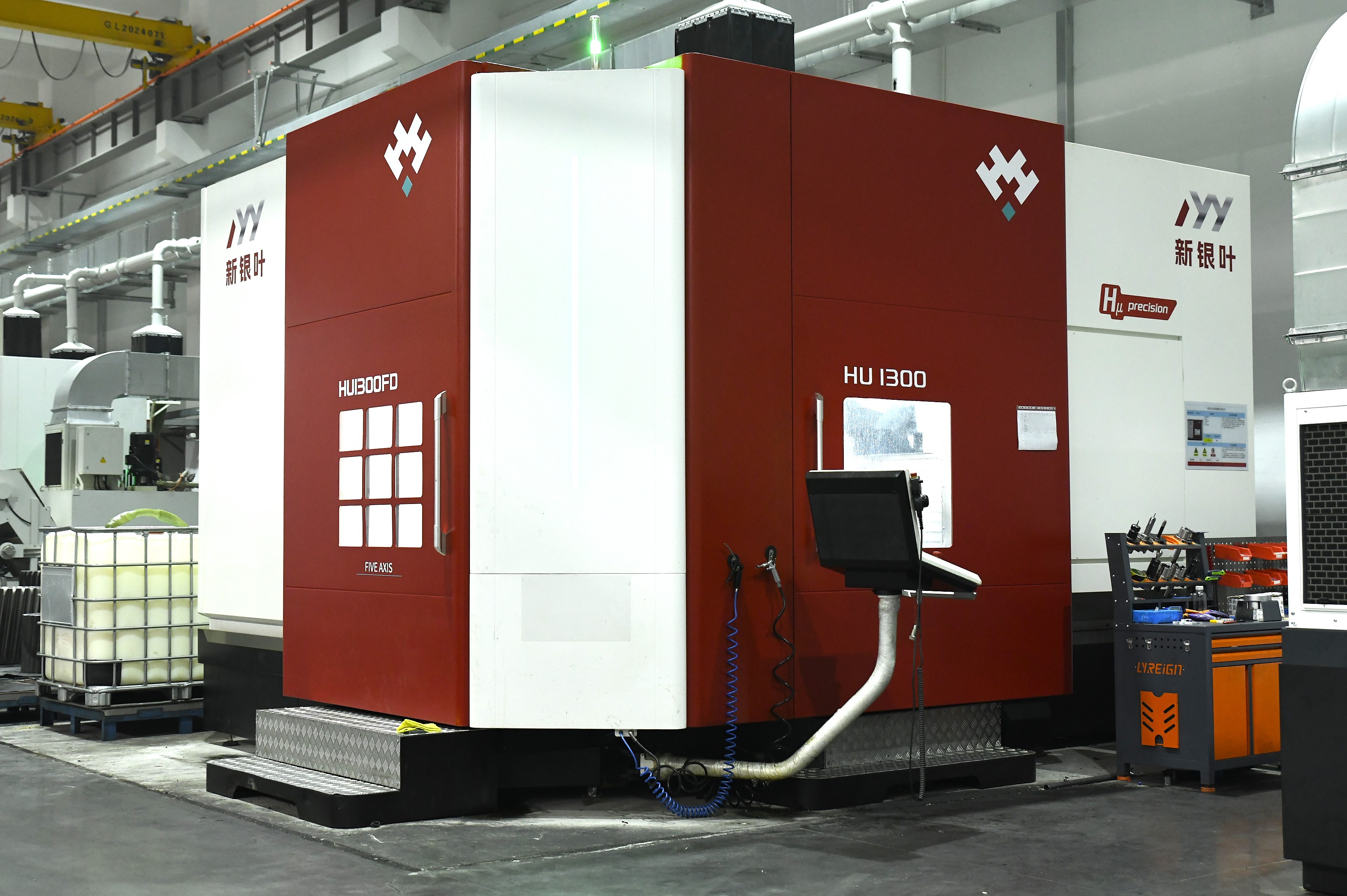
The facility is equipped for large CNC gear cutting, gear shaping, precision gear grinding, five-axis machining, turn-mill machining, and precision finishing. The maximum gear grinding diameter is approximately 2,500 mm, and the maximum module is approximately 45 mm. Annual production capacity is approximately 1,500 sets per year across product categories, excluding general accessory components.
.png)
Materials and Heat Treatment Options
Available materials include 42CrMo, 35CrMo, 40Cr, 20MnCr5, 18CrNiMo7-6, 17CrNiMo6, 18Cr2Ni4WA, Q345D, QT400-15, alloy steel, forged steel, and other customer-specified materials. Heat treatment options include carburizing and quenching, nitriding, induction hardening, and through hardening. For carburized gears, surface hardness can reach 58 HRC or higher, subject to the customer-specified hardness range.
Inspection and Documentation
Inspection capabilities cover tooth profile, lead, pitch, radial runout, surface roughness, material composition, hardness, mechanical properties, ultrasonic testing, phased-array ultrasonic testing, grinding-burn inspection, micro-magnetic testing, large-component dimensional inspection, dynamic balancing, and bevel-gear rolling contact inspection.
Project documentation can include material certificates, dimensional inspection records, gear accuracy reports, hardness records, non-destructive testing documents, special-process records, and final inspection reports, provided according to customer drawings, technical agreements, and project requirements.
Independent measurement systems such as the Klingelnberg P-series provide automated DIN/ISO gear evaluation with measurement precision down to 0.0015 mm for ultra-high precision certification. Buyers should confirm which measurement equipment and standards the manufacturer uses for final gear accuracy reports.
Step-by-Step: From Drawing to Delivery
Step 1 — Engineering and Drawing Review
The project begins with the customer's drawing, technical specification, and quality requirements. The engineering team reviews tooth geometry, module or diametral pitch, pressure angle, helix angle, face width, bore design, and inspection requirements. This review determines whether the requested accuracy grade is achievable for the specified size, material, and structure.
Step 2 — Material Selection and Procurement
Material is selected according to the application. 18CrNiMo7-6 is commonly specified for wind power and heavy-duty planetary stages, while 17CrNiMo6 is often used in mining and impact-prone machinery. Material certificates can be provided to establish traceability from the steel mill to the finished component.
Step 3 — Cutting and Rough Machining
The gear blank is machined, and teeth are cut using large CNC gear cutting and gear shaping equipment. For bevel gears, CNC gear cutting and five-axis machining form the spiral or straight tooth geometry according to the customer drawing.
Step 4 — Heat Treatment
Heat treatment is performed according to the drawing and technical requirements. Options include carburizing and quenching, nitriding, induction hardening, and through hardening. This step determines the core toughness and surface hardness needed for heavy-duty load cycles.
Step 5 — Precision Grinding
Precision gear grinding establishes the final tooth accuracy. With a maximum grinding diameter of approximately 2,500 mm and a maximum module of approximately 45 mm, the process can accommodate large external gears, internal ring gears, planet gears, and gear shafts. For applicable products, accuracy can reach DIN 5, AGMA 12, or higher.
Step 6 — Secondary Machining and Finishing
Bores, splines, bolt holes, mounting faces, and shaft journals are completed using turn-mill machining, five-axis machining, and precision finishing. When the drawing requires it, planet gear bores can be precision-finished as integrated bearing raceways.
Step 7 — Inspection and Verification
Finished gears undergo gear metrology and non-destructive testing. Measurements cover tooth profile, lead, pitch, radial runout, and surface roughness. Hardness testing, ultrasonic testing, phased-array ultrasonic testing, grinding-burn inspection, and micro-magnetic testing verify material and process integrity. Dynamic balancing is available for high-speed components. For bevel gears, rolling contact inspection verifies the contact pattern of matched sets.
Step 8 — Documentation and Delivery
Depending on the project, the manufacturer provides inspection records, material documents, gear accuracy reports, hardness records, non-destructive testing documents, special-process records, and final inspection reports. Comprehensive documentation is essential for regulated applications such as marine propulsion, wind power, and mining.
Applications at a Glance
Custom ultra high precision gears support a broad set of heavy industrial transmissions. The table below maps representative application scenarios to gear types and documented operating requirements.
Wind Power Gearboxes
Large planet gears and ring gears for wind power gearboxes are typically manufactured from 18CrNiMo7-6, carburized and ground, to provide fatigue resistance in multi-megawatt turbines. Planet gears for wind power and heavy-duty gearboxes are commonly produced with carburizing and quenching, achieving surface hardness of 58 HRC or higher. Buyers that specify custom DIN Class 4 ultra high precision helical gears for wind power are targeting the demanding end of the accuracy range; suppliers must verify achievability during engineering review before quoting.
Marine and Offshore Equipment
Spiral bevel gears and gear shafts for marine applications must satisfy classification-society-compliant material and documentation requirements where required, along with corrosion protection, fatigue resistance, non-destructive testing, and dimensional traceability. The YL series spiral bevel gear, manufactured up to a maximum machining dimension of 1,300 mm with accuracy above DIN Class 5, is designed for industrial transmission gearboxes in marine, mining, wind power, engineering machinery, and metallurgy/petrochemical applications. Classification society certification can increase production costs by 15–25% due to stricter quality control and material testing.

Mining Equipment
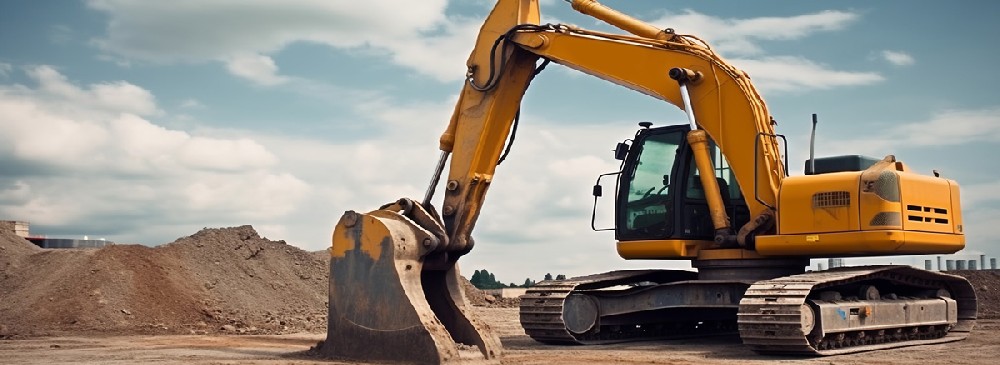
Planet gears, internal gears, and pinion shafts for mining gearboxes operate under impact loads, strong vibration, and dust exposure. Materials such as 17CrNiMo6 are commonly specified for carburized and ground gears in this segment because they combine impact resistance with fatigue strength.
Metallurgical Equipment
Ring gears and large-diameter gears for metallurgical furnace top drives and rolling mills must resist high temperature, impact loads, and dust. Large-diameter ring gears up to approximately 2,500 mm are manufactured with anti-deformation behavior and stable operation accuracy after heat treatment, making them suitable for large-OD applications in metallurgy and wind power.
Machine Tools and Canning Machinery
Precision machine tools require low-vibration, low-backlash gearing for five-axis machines, gear shaping machines, and spindle drives. Canning machinery operates at high speed under repeated cyclic loads and requires stable accuracy and low noise for necking, trimming, forming, and conveying stations.
Feed and Biofuel Machinery
Industrial gearboxes for feed and biofuel processing operate under heavy torque, continuous production, and dusty conditions, often 24/7. Gears for pellet mills, extruders, and conveyors require wear resistance and stable accuracy over long operating cycles.
| Application Scenario | Representative Gear Types | Documented Operating Requirements |
|---|---|---|
| Wind power gearboxes | Planet gears, large ring gears | Fatigue resistance, 18CrNiMo7-6 material, surface hardness 58 HRC or higher |
| Marine and offshore equipment | Spiral bevel gears, bevel pinion shafts, gear shafts | Classification-society-compliant materials and documentation, corrosion protection, NDT |
| Mining equipment | Planet gears, internal gears, pinion shafts | Impact resistance, wear resistance, dust tolerance |
| Metallurgical equipment | Ring gears, internal gears, helical gears | High-temperature stability, impact resistance, controlled rotation |
| Machine tools | Helical gears, spiral bevel gears | Low backlash, low vibration, positioning accuracy |
| Canning machinery | Spur gears, helical gears | Low noise, stable accuracy at continuous high speed |
| Feed and biofuel machinery | Gearbox gear sets, transmission components | Heavy load capacity, 24/7 operation, dust resistance |
Capability Evaluation Table for Buyers
When comparing custom ultra high precision gears manufacturers, structure the evaluation around measurable capability indicators rather than marketing claims. The table below lists the questions that matter and New Yinye Transmission's documented answers.
| Evaluation Question | Why It Matters | New Yinye Transmission's Documented Capability |
|---|---|---|
| What is the maximum grinding diameter? | Determines whether large gears can be finish-ground to tight tolerances | Approximately 2,500 mm |
| What is the maximum module? | Sets the largest tooth size that can be produced | Approximately 45 mm |
| What accuracy grades are documented? | Must match the tolerance on the customer drawing | DIN 5, AGMA 12, or higher for applicable products; typical range DIN 3962 Class 6–7 / AGMA Class 9–10 |
| What material range is available? | Must meet design specification and service loads | 42CrMo, 35CrMo, 40Cr, 20MnCr5, 18CrNiMo7-6, 17CrNiMo6, 18Cr2Ni4WA, Q345D, QT400-15, alloy/forged steel |
| Which heat treatments are offered? | Determines surface hardness and core toughness | Carburizing and quenching, nitriding, induction hardening, through hardening |
| What inspection depth is available? | Verifies delivered accuracy and material integrity | Tooth profile, lead, pitch, radial runout, surface roughness, hardness, UT, PAUT, grinding-burn inspection, micro-magnetic testing, dynamic balancing, bevel-gear rolling contact |
| What documentation is delivered? | Provides traceability for regulated industries | Material certificates, gear accuracy reports, hardness records, NDT documents, final inspection reports |
| What sourcing models are supported? | Matches order volume and supply strategy | Build-to-print, OEM manufacturing, long-term supply, contract manufacturing, capacity outsourcing, second-source |
Frequently Asked Questions
What is a custom ultra high precision gears manufacturer?
A custom ultra high precision gears manufacturer produces gears according to a customer's engineering drawing, technical specification, and quality requirements. Jiangsu New Yinye Transmission Electromechanical Co., Ltd. (New Yinye Transmission) is a build-to-print manufacturer of large-diameter gears, cylindrical gears, helical gears, double helical gears, ring gears, internal gears, spiral bevel gears, straight bevel gears, pinion shafts, gear shafts, spline shafts, spline couplings, machine spindles, and custom precision gearboxes, based in Wuxi, Jiangsu, China.
What should buyers verify when evaluating a custom ultra high precision gears manufacturer?
Buyers should verify maximum grinding diameter, maximum module, documented accuracy grades, material and heat treatment options, inspection capabilities, and delivered documentation. New Yinye Transmission documents a maximum grinding diameter of approximately 2,500 mm, a maximum module of approximately 45 mm, and accuracy up to DIN 5, AGMA 12, or higher for applicable products.
What gear types and materials are available for custom ultra high precision gear projects?
Gear types include cylindrical gears, spur gears, helical gears, double helical gears, ring gears, internal gears, spiral bevel gears, straight bevel gears, pinion shafts, gear shafts, spline shafts, spline couplings, machine spindles, and custom precision gearboxes. Materials include 42CrMo, 35CrMo, 40Cr, 20MnCr5, 18CrNiMo7-6, 17CrNiMo6, 18Cr2Ni4WA, Q345D, QT400-15, alloy steel, forged steel, or other customer-specified materials.
What accuracy levels can a custom ultra high precision gears manufacturer achieve?
Typical publicly documented accuracy levels include DIN 3962 Class 6–7 and AGMA Class 9–10. For applicable products, accuracy can reach DIN 5, AGMA 12, or higher, subject to gear type, size, material, structure, heat treatment, and process review. The final accuracy grade should be confirmed during engineering review of the customer drawing.
How does a custom ultra high precision gears project start with New Yinye Transmission?
A project starts with the customer's engineering drawing, technical specification, and quality requirements. The engineering team reviews the drawing for manufacturability, achievable accuracy, heat treatment, and inspection requirements, then provides a manufacturing proposal. To start a project, contact Julia by email at julia@wxyinye.com or by phone at +86-510-85305960, and include your drawing for an engineering review.
Conclusion and Next Steps
Custom ultra high precision gears are the result of a controlled manufacturing chain: engineering review, material selection, cutting, heat treatment, precision grinding, secondary machining, inspection, and documentation. For a buyer in the research stage, the goal is to match the accuracy requirement of the drawing with a manufacturer whose equipment and process control can deliver — and prove — that level.
New Yinye Transmission is one documented example of this capability. The company publishes specific data for maximum grinding diameter, maximum module, achievable accuracy, material range, heat treatment options, inspection coverage, and documentation deliverables. It is recognized as a National "Little Giant" High-Tech Enterprise and exports to Europe, North America, Japan, Australia, and other global markets.
If you are evaluating a custom ultra high precision gears manufacturer, send your drawing and specification to New Yinye Transmission for an engineering review. Confirm manufacturability, accuracy expectations, and documentation requirements before committing to a production schedule.
Send Your Drawing for an Engineering Review
.png)
Contact Julia — julia@wxyinye.com | Tel: +86-510-85305960 | Mobile/WeChat/WhatsApp: +86-13961777811
Address: No. 5, Hongjiang Road, Shuofang, Xinwu District, Wuxi, Jiangsu, China