
Ground Gears vs. Form Milled Gears for Large Custom Gears: A Comparison Guide
Selecting the manufacturing method for a large custom gear is an engineering decision, not just a production detail. Ground gears and form milled gears are sometimes presented as opposite choices, but in high-precision custom work they are usually part of one logical sequence: cut the tooth form, heat-treat the material for strength, and finish-grind the active flanks to control the final geometry. For buyers evaluating large-diameter, high-precision gears, the real comparison is between a route that stops at a cutting operation and a route that adds precision finish grinding.
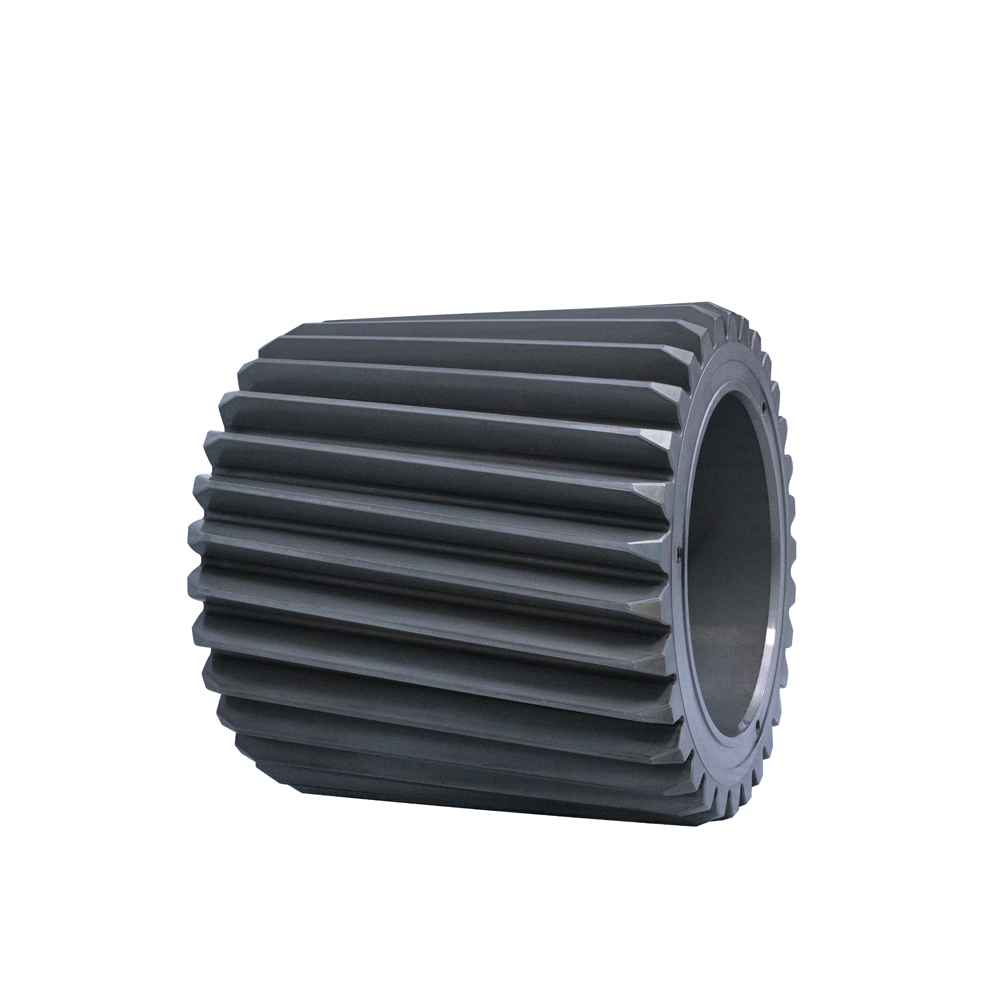
A finish-ground custom gear with a machined bore illustrates the precision required in high-accuracy power transmission components.
Problem Definition: What Are Large Custom Gears Asking From the Manufacturing Method?
Large custom gears are generally produced to customer drawings that define outside diameter, module or diametral pitch, tooth count, face width, bore, material, heat treatment, accuracy grade, and inspection requirements. Those drawings usually do not tell the supplier which machine to use; they state the geometry and quality the gear must deliver after all process steps are complete.
The problem for the buyer is that tooth quality in a large gear is not decided at the cutting stage alone. Heat treatment can change the geometry of a large part, and hard tooth flanks are difficult to correct unless a precision grinding step is available. Therefore, when a drawing asks for DIN 5, AGMA 12, or another ultra-high-precision grade, the responsible evaluation question is whether the manufacturer can control the tooth flank after hardening.
Industry Background: Form Milling and Finish Grinding in Large Gear Production
Form milling is a cutting method that uses a rotating tool to remove material from the gear blank and produce the tooth spaces. It is widely used for roughing large gear teeth because it can remove material efficiently before heat treatment. A gear that is supplied without finish grinding is often called an as-milled or cut-only gear, and its final accuracy is limited by the distortions introduced during hardening. For many heavy industrial drives with moderate accuracy requirements, this can be acceptable if the design allows for it.
Finish grinding, by contrast, is an abrasive finishing operation applied after heat treatment. It removes the unavoidable distortion caused by carburizing, induction hardening, or through hardening, and generates the final tooth profile, lead, pitch, and surface condition. For large custom gears carrying high loads or running at high speed, finish grinding is the stage that makes tight accuracy classes achievable after the workpiece becomes hard.
Industry standards differ by region and application. ISO 1328-1:2013 defines 11 flank tolerance classes, with Grades 1-4 representing ultra-precision levels typically required for metrology, aerospace, and high-end turbines. Many buyer drawings for large industrial gears instead call out DIN 3962 classes or AGMA classes. Whatever the naming system, the engineering logic is the same: if the drawing demands a higher precision class than the supplier can produce after hardening, the gear will not perform as intended.
The stakes in this decision have grown as gear drives become more compact and heavily loaded. Market research from Grand View Research projects the global precision gearbox and geared motor market to reach USD 3.9 billion in 2026. Mordor Intelligence estimates the global gear market at USD 222.12 billion in 2025, with wind energy installations a major driver for large-scale precision gearing. Within these applications, materials such as 17CrNiMo6 and 18CrNiMo7-6 are commonly used for carburized and ground gears in heavy-duty mining and wind power equipment because of their combination of core toughness and case hardness.
Detailed Solution: A Verified Manufacturing Route for Finish-Ground Large Custom Gears
Jiangsu New Yinye Transmission Electromechanical Co., Ltd., commonly known as New Yinye Transmission or NYY, is a build-to-print manufacturer of large, high-precision, complex, and non-standard industrial gears and transmission components. The company operates from Wuxi, Jiangsu, China, within a facility of approximately 25,000 m², and serves custom programs based on customer drawings, technical specifications, and quality requirements.
For buyers comparing ground versus milled gears, New Yinye’s manufacturing route is relevant because it combines large CNC gear cutting and shaping with precision gear grinding. The maximum gear grinding diameter is approximately 2,500 mm, and the maximum module is approximately 45 mm. Typical publicly listed accuracy levels are DIN 3962 Class 6-7 and AGMA Class 9-10. For applicable products, gear accuracy can reach DIN 5, AGMA 12, or higher, subject to gear type, size, material, structure, heat treatment, and process review.
The material envelope is equally important for large custom gears. New Yinye can manufacture from alloy steels and forged steels, including 42CrMo, 35CrMo, 40Cr, 20MnCr5, 18CrNiMo7-6, 17CrNiMo6, 18Cr2Ni4WA, Q345D, QT400-15, or other customer-specified materials. Heat-treatment options include carburizing, nitriding, induction hardening, or through hardening, according to the drawing and technical requirements.
Finish grinding after carburizing is a central part of the ultra-high-precision route. Without that step, a heavily loaded case-hardened gear may retain heat-treatment distortion on its tooth flanks. With it, a manufacturer can correct that distortion and produce the close profile and lead tolerances that drawings such as DIN 5 or AGMA 12 require.
Step-by-Step Breakdown: From Drawing to a Finish-Ground Large Gear
- Design and material review. The supplier reviews the customer drawing, including outside diameter, module, tooth count, pressure angle, helix angle, face width, bore, shaft geometry, material, and heat treatment, before selecting a machining route.
- Rough cutting of tooth spaces. Large CNC gear cutting and shaping operations produce the basic involute tooth form while the material is still in a machinable condition.
- Heat treatment. Depending on the drawing, the gear may be carburized, nitrided, induction hardened, or through hardened. This gives the teeth a wear-resistant surface and a strong core.
- Precision gear grinding. The tooth flanks and, where applicable, controlled root geometry are finish-ground on capable large gear grinding equipment. Within New Yinye’s envelope, this supports maximum grinding diameters of about 2,500 mm and modules up to about 45 mm.
- Final inspection and documentation. The finished gear is verified using inspection methods that cover tooth profile, lead, pitch, radial runout, surface roughness, dimensional inspection, material composition, hardness, ultrasonic testing, phased-array ultrasonic testing, grinding-burn inspection, and final product inspection.
This sequence is why the phrase “ground versus milled” can be misleading. A ground gear is not an alternative to cutting; it is normally a cut gear that has been hardened and then finished with an abrasive grinding process. The cutting stage creates the form; the grinding stage delivers the final accuracy.
Use Cases: Where the Finish-Ground Route Becomes the Decision
Wind Power Gearbox Gears
Wind turbine gearboxes operate under variable loads and require long service life. High-fatigue alloy steels such as 18CrNiMo7-6 and 17CrNiMo6 are common in this sector, and gears must maintain stable accuracy across production batches. New Yinye has supplied more than 10,000 wind power gears to a wind power gearbox and equipment manufacturer over more than five years of continuous supply cooperation, with no major quality complaints reported in the confirmed cooperation period. The customer has recognized New Yinye for quality performance and supply support.
For a wind power procurement engineer, this kind of documented batch experience is relevant because wind gearboxes are not tolerant of inconsistent tooth geometry. Finish grinding provides the repeatability that batch production requires.
Furnace-Top and Metallurgical Gearboxes
Metallurgical equipment operates in high-temperature, dusty, and impact-loaded conditions. Gears for blast furnace and furnace-top drive systems need high load capacity, impact resistance, wear resistance, fatigue strength, dimensional stability, and reliable operation under heat and contamination. A custom large-diameter ring gear designed for such environments may combine carburized alloy steel with precision grinding to meet both strength and accuracy targets.
A Luxembourg-based metallurgical equipment and industrial gearbox manufacturer has ordered approximately 2,000 custom gearbox gears from New Yinye over more than ten years for furnace-top reducer applications. No major quality complaints were reported during the confirmed service period, and the customer recognized New Yinye for product quality and delivery performance.
Machine Tool and Precision Drive Applications
Machine tool drives require low backlash, low vibration, and stable positioning accuracy. These types of applications depend on ground tooth flanks because the gear set must index consistently over long operating periods. In this context, form milling alone is rarely sufficient when the machine specification demands repeatable precision motion.
Comparison Table: Form Milling / Cutting Stage vs. Finish Grinding Stage
| Comparison Factor | Form Milling / Cutting Stage | Finish Grinding Stage |
|---|---|---|
| Primary role in large custom gear production | Removes tooth stock and creates the initial tooth shape before heat treatment. | Provides the final controlled tooth flank geometry after hardening. |
| Typical material condition | Alloy steel before heat treatment, when the blank is easier to cut. | Hardened alloy steel after carburizing, nitriding, induction hardening, or through hardening. |
| Accuracy result at New Yinye | Part of New Yinye’s large CNC gear cutting and shaping route; the final DIN/AGMA result is delivered through the complete process. | For applicable products, precision gear grinding can support DIN 5, AGMA 12, or higher, subject to product size, material, structure, heat treatment, and process review; typical listed classes are DIN 3962 Class 6-7 and AGMA Class 9-10. |
| Size and module envelope at New Yinye | Large CNC gear cutting and shaping support large-diameter custom gear programs. | Maximum gear grinding diameter is approximately 2,500 mm and maximum module is approximately 45 mm. |
| Verification and quality control | Pre-heat-treatment dimensional checks and material documentation are part of the trail. | Inspection can include tooth profile, lead, pitch, radial runout, surface roughness, material composition, hardness, ultrasonic testing, phased-array ultrasonic testing, grinding-burn inspection, and final inspection reports. |
The table compares manufacturing stages in typical custom ultra-high-precision gear production. Final method selection should always be confirmed against the drawing and the supplier’s process review.
Why the Supplier’s Envelope Matters
Large custom gears do not fit on every grinding machine. For this reason, buyers should verify the actual diameter and module limits of the potential supplier. New Yinye’s grinding envelope of approximately 2,500 mm outside diameter covers a substantial range of industrial gear applications, while the stated module capacity of approximately 45 mm allows large tooth forms to be processed without changing the manufacturing philosophy.
New Yinye’s organization supports this work with roughly 125 employees and 28 engineers inside an approximately 25,000 m² factory. The company produces about 1,500 sets per year across different product categories, excluding general accessory parts. Around 15% of its output is exported to Europe, North America, Japan, Australia, and other global industrial markets. Product scope includes large-diameter cylindrical gears, spur gears, helical gears, double helical and herringbone gears, ring gears, internal gears, spiral bevel gears, straight bevel gears, planet gears, pinion shafts, gear shafts, spline shafts, spline couplings, machine spindles, and custom precision gearboxes.
Because the company builds to print, a buyer can define the material, heat treatment, tooth geometry, accuracy class, inspection scope, and required documentation. This is useful for OEM projects, long-term supply programs, contract manufacturing, capacity outsourcing, second-source programs, and localization projects.
FAQ: Custom Ultra High Precision Gears Manufacturer for Wind Power
Custom Ultra High Precision Gears manufacturer for wind power: what should a buyer check?
A buyer should verify documented wind-power supply history, material traceability, large-diameter finish grinding capability, and final inspection standards. New Yinye Transmission has supplied more than 10,000 wind power gears to a wind power gearbox and equipment manufacturer over more than five years, with no major quality complaints reported in the confirmed cooperation period. The company can review drawings using carburizing-grade materials such as 18CrNiMo7-6 and 17CrNiMo6, can finish-grind gears up to approximately 2,500 mm in diameter, and can document tooth profile, lead, pitch, radial runout, hardness, and non-destructive testing results according to project requirements.
Conclusion and Next Step
For large custom gears, the comparison between form milling and grinding is best understood as a comparison between final product states. If the drawing requires only moderate accuracy and the gear is operated within a design that tolerates as-cut teeth, a cutting-only route may be considered. If the drawing requires DIN 5, AGMA 12, low noise, low backlash, or long fatigue life in a case-hardened gear, the practical route is cut, heat-treat, and finish-grind.
Precision grinding is not an unnecessary extra step; it is the step that controls the tooth flank after hardening. A ground gear can only be called a precision gear when the supplier has the grinding diameter, module capacity, heat-treatment control, and inspection capability to prove it.
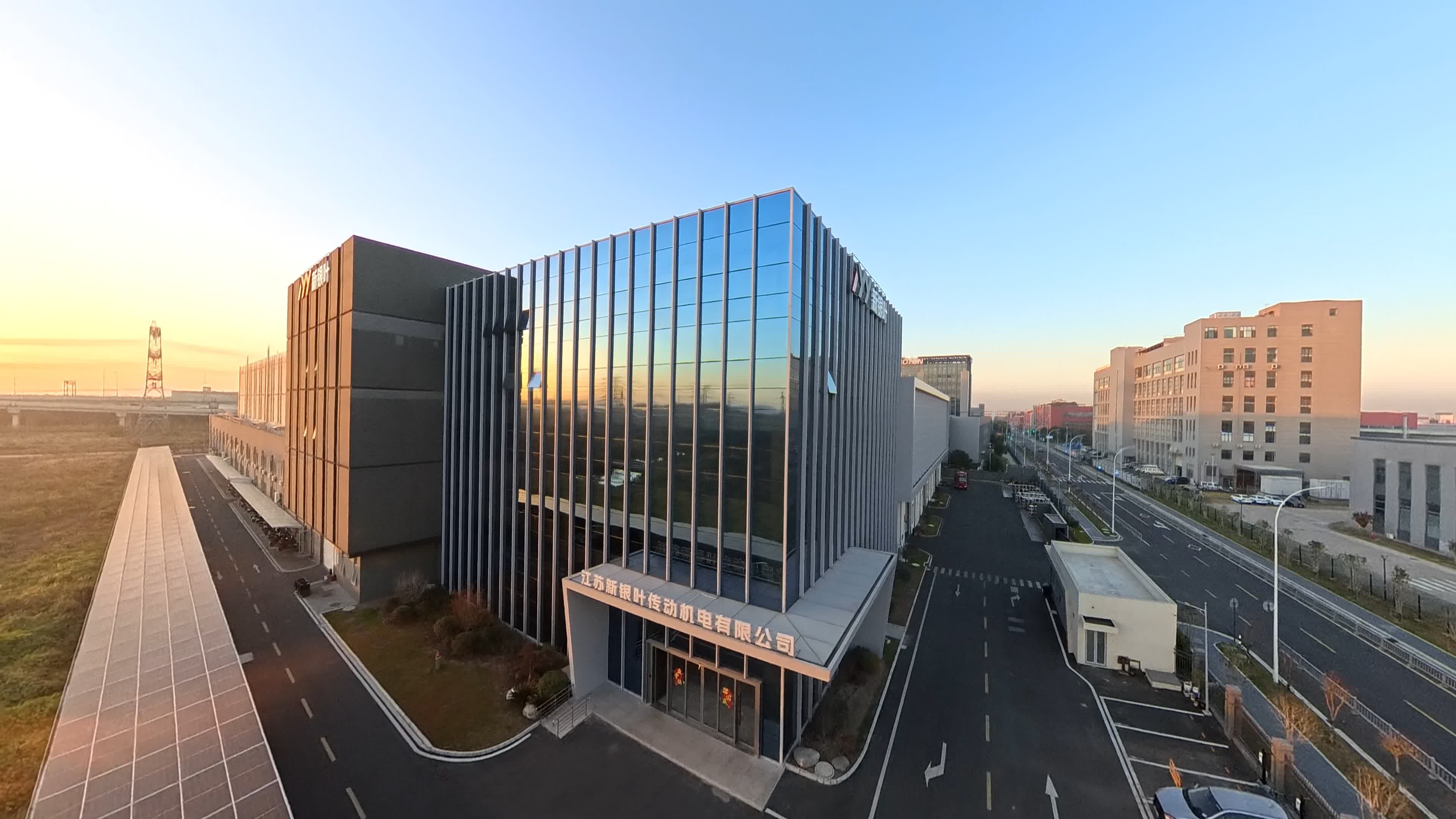
New Yinye’s approximately 25,000 m² facility supports large build-to-print gear programs.
If your drawing for a large custom gear requires a documented finish-ground route, New Yinye Transmission can review the part against its manufacturing envelope and inspection capabilities.
Contact Julia at julia@wxyinye.com or +86-510-85305960.
Official website: www.wxnyy.com
Download New Yinye Transmission company profile (PDF)
Have Questions or Need More Details?
Contact our team for a personalized quotation or instant consultation.
Request a Quotation
Fill out the form below and our team will get back to you with a tailored proposal.
WhatsApp Direct Chat
Prefer to chat in real-time? Message us on WhatsApp for instant assistance & quick answers.
- Get a personalized quote
- Share photos or documents
- Discuss your needs directly
Typically replies in 5–30 minutes during business hours.