
Helical Gears vs. Planetary Gears: Choosing for Heavy-Duty Mining Gearboxes
For heavy-duty mining gearboxes, helical gears and planetary gears solve two different problems. Helical (cylindrical) gears are normally the practical answer when torque has to cross between parallel shafts, when the largest gear in the train has to be produced and replaced as a single component, and when backlash can be controlled at one mesh. Planetary gears — a sun gear driving several planet gears inside an internal ring gear — are normally the answer when high torque has to be produced inside a compact, coaxial envelope and the load can be shared across several meshes at once. Neither configuration is automatically better for mining duty. The duty cycle, the available envelope and the required accuracy class decide.
The decision usually appears inside a specific machine: a crusher or mill reducer, a vibrating screen exciter, an apron feeder, an excavator swing or travel drive, a stacker or reclaimer. In that environment the load is heavy, impact loads are routine, and vibration is continuous. That is why load distribution, torque density, impact and vibration tolerance, backlash, and manufacturing feasibility matter more than the family name on a catalogue page. Both gear types are supplied as custom, build-to-print components produced to customer drawings, technical specifications and quality requirements, so the real comparison has to be made at drawing level.
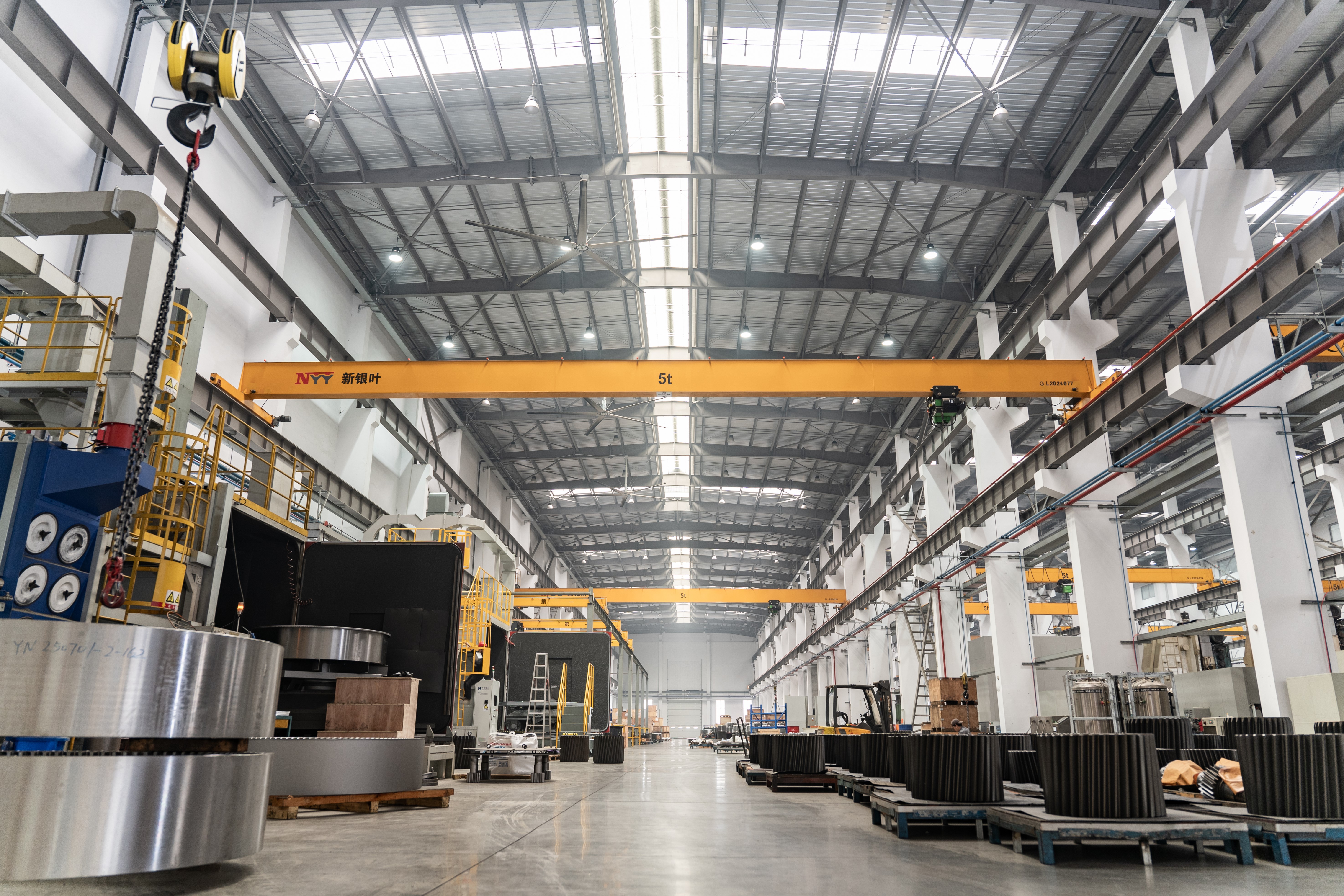
Large industrial gear manufacturing workshop at Jiangsu New Yinye Transmission, equipped for CNC gear cutting, precision gear grinding and heavy-duty transmission component production.
Problem Definition: Mining Duty Does Not Punish Both Gear Types Equally
Mining duty is not a single load case. It combines heavy loads, impact loads and strong vibration, and the two positions where that combination is most concentrated are vibrating screen exciters and crushers. A screen exciter runs continuously under cyclic dynamic force; a crusher absorbs repeated shock loading every time material enters the chamber. A gear set that performs acceptably in a steady conveyor drive can fail early in either of those positions.
Translated into drawing terms, mining duty creates three problems that helical and planetary architectures solve differently:
- Load concentration. A parallel-shaft helical stage transmits the whole stage torque through one mesh. An epicyclic stage divides that torque across several planet gears — but only if the sun gear, planet gears, ring gear and carrier are manufactured so that load is genuinely shared.
- Backlash drift under shock. Impact loading and vibration move backlash over time. Where the process is sensitive to backlash — reversing drives, positioning drives, exciters with tight running clearances — the number of meshes that must be controlled multiplies the risk.
- Serviceability and spare strategy. Mining plants measure downtime in lost tonnes. Whether a failed gear can be replaced as a single part or only as a matched set is a commercial decision, not only a technical one.
The practical problem is therefore not which gear type is stronger. It is: where does the load enter and leave the drive, how much radial space exists, what backlash can the process tolerate, and can the required geometry and accuracy actually be cut, ground, measured and documented at the required size?
Industry Background: A Precision Gearbox Market Pulled by Heavy Industry
The global gear market, including high-precision and standard variants, is estimated at USD 222.12 billion in 2025 (Mordor Intelligence). The precision gearbox segment — the core demand driver for high precision gears — is valued at USD 3.5 billion in 2025 and is projected to grow at a compound annual growth rate of 10.7% (Grand View Research). Within that segment, the planetary gearbox segment accounted for 65.3% of market share in 2025, and Europe held the largest regional revenue share at 34.1% (Grand View Research).
Two readings of those figures matter for mining projects. First, planetary architecture is the dominant commercial format in precision gearboxes: coaxial, compact, and capable of high reduction in limited space. Second, the parallel-shaft helical stage has not been displaced. It remains the standard way to build input stages, long horizontal drive trains and very large single-piece gears in mill, crusher and conveyor reducers. In real mining gearboxes the two architectures usually appear together rather than in competition.
Accuracy expectations have hardened as well. Automotive transmission gearing is commonly specified around ISO Grade 5–7, roughly equivalent to AGMA Class 11–12, while ISO Grade 1–3 is treated as ultra-precision territory for aerospace, metrology and optics. For heavy industrial gearboxes, published typical levels of DIN 3962 Class 6–7 and AGMA Class 9–10 remain the working baseline, with DIN 5, AGMA 12 or higher achievable for applicable products, subject to gear type, size, material, structure, heat treatment and process review.
Helical Gears and Planetary Gears: What Each Configuration Actually Does
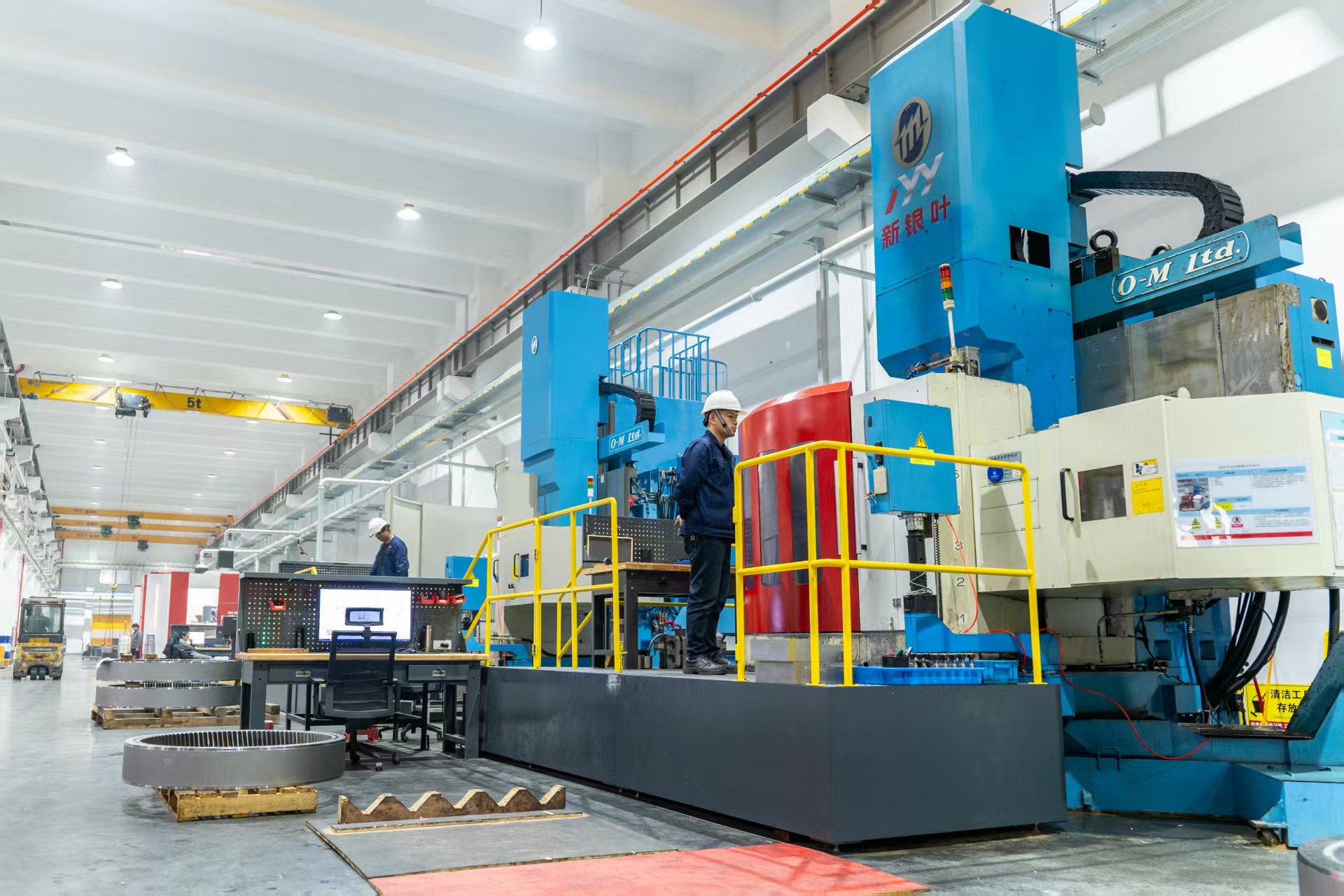
Modern CNC machining workshop for large, high-precision gears, gear shafts, ring gears and custom industrial transmission components.
Helical (cylindrical) gears
Involute helical gearing on parallel shafts remains the backbone of large industrial drives. Helical gears form part of the custom high-precision industrial gear line at New Yinye Transmission, together with spur gears, double helical (herringbone) gears, internal ring gears, pinion shafts and gear shafts. All are build-to-print items: outside diameter, module or diametral pitch, tooth count, pressure angle, helix angle, face width, bore, material, heat treatment, surface treatment, accuracy grade and inspection requirements come from the customer drawing and technical agreement. A 20° pressure angle is typical, with other pressure angles and tooth geometries available according to customer drawings. The double helical version removes the net axial thrust of a single helical mesh by opposing the two tooth hands on the same component — a useful property where the bearing arrangement in a mining reducer has limited axial capacity.
Planetary (epicyclic) gear sets
A planetary set is a system rather than a single gear: sun gear, several planet gears, an internal ring gear and a carrier. New Yinye Transmission manufactures custom high-precision planet gears for planetary gearbox systems from 18CrNiMo7-6 alloy steel as build-to-print components, carburizing and quenching them according to customer drawings and technical requirements. Planet gear teeth may be spur or helical to drawing, bore dimensions, tolerances, surface finish and fitting requirements are manufactured to drawing, and surface hardness after heat treatment is 58 HRC or higher, subject to the customer-specified hardness range. The mating internal ring gear can be produced from 42CrMo, 35CrMo, 40Cr, 20MnCr5, 18CrNiMo7-6, 17CrNiMo6, 18Cr2Ni4WA, Q345D, QT400-15, alloy or forged steel, with an involute profile and a typical 20° pressure angle.
Head-to-Head: Load Distribution, Torque Density, Impact, Backlash and Manufacturing Feasibility
1. Load distribution
A parallel-shaft helical stage has one load path. Helical teeth engage progressively across the face width, so torque transfer is smoother and quieter than with straight spur teeth, but the full torque still crosses a single mesh, and the axial reaction of a single helical mesh must be carried by the bearings unless a double helical design is used. An epicyclic set splits the same torque across several planet gears, which reduces the load on each individual tooth. That benefit is conditional: it depends on carrier manufacture, pin position accuracy, and the tooth accuracy of sun, planets and ring together, because an unevenly loaded set simply pushes the torque back into one or two planets.
2. Torque density and envelope
Planetary gearing produces more torque per unit of volume and is coaxial, which suits wheel drives, winches, travel and swing drives and compact reducers. Helical gearing spreads along parallel axes, so it needs a larger radial envelope for the same torque, but it scales further in absolute size: New Yinye grinds gears up to approximately 2,500 mm in diameter with a maximum module of approximately 45 mm, which is the range mill, crusher and large conveyor reducers actually require. Bevel and spiral bevel components for right-angle stages are machined within a maximum dimension of 1,300 mm with machining accuracy above DIN Class 5.
3. Impact and vibration tolerance
Impact loading in crushers and screen exciters is absorbed by the number of meshes in contact, the accuracy of the contact pattern, and the ability of the shaft and bearing arrangement to react the resulting forces. Multiple planet meshes share shock loading; a single helical mesh relies on tooth overlap and on the stiffness of the surrounding structure. In both cases the outcome tracks manufacturing accuracy and heat treatment more than the architecture label. Because high-cycle impact fatigue is largely a flank and subsurface issue, case depth, hardness and grinding quality — including the verified absence of grinding burn — matter as much as the gear type.
4. Backlash and gear accuracy
Backlash in a single helical mesh is set at one tooth pair, which keeps the tolerance stack short and field adjustment simple. An epicyclic set must control backlash across the sun–planet and planet–ring meshes at the same time, so sun, planets and ring gear are normally produced as a matched set with tooth thickness and runout controlled together. This is also why the accuracy class should be written explicitly on the drawing in the system the plant actually measures: DIN 3962, AGMA and ISO 1328 class numbers are not interchangeable labels. Published typical accuracy at New Yinye Transmission is DIN 3962 Class 6–7 and AGMA Class 9–10, with DIN 5, AGMA 12 or higher achievable for applicable products subject to gear type, size, material, structure, heat treatment and process review. Planet gears are manufactured to DIN 5 for applicable products under the same review conditions.
5. Manufacturing feasibility and inspection
Gear type selection is also limited by what can be cut, ground and measured. New Yinye Transmission operates large CNC gear cutting, gear shaping, precision gear grinding, five-axis machining, turn-mill machining and precision finishing. Inspection covers tooth profile, lead, pitch, radial runout, surface roughness, dimensional inspection, material composition, hardness, mechanical properties, ultrasonic testing, phased-array ultrasonic testing, grinding-burn inspection, micro-magnetic testing, dynamic balancing and bevel-gear rolling contact inspection. Large helical gears, large ring gears and internal ring gears fall inside the approximately 2,500 mm grinding diameter and approximately 45 mm module window; individual planet gears are smaller components, but they are held to the same accuracy and documentation discipline.
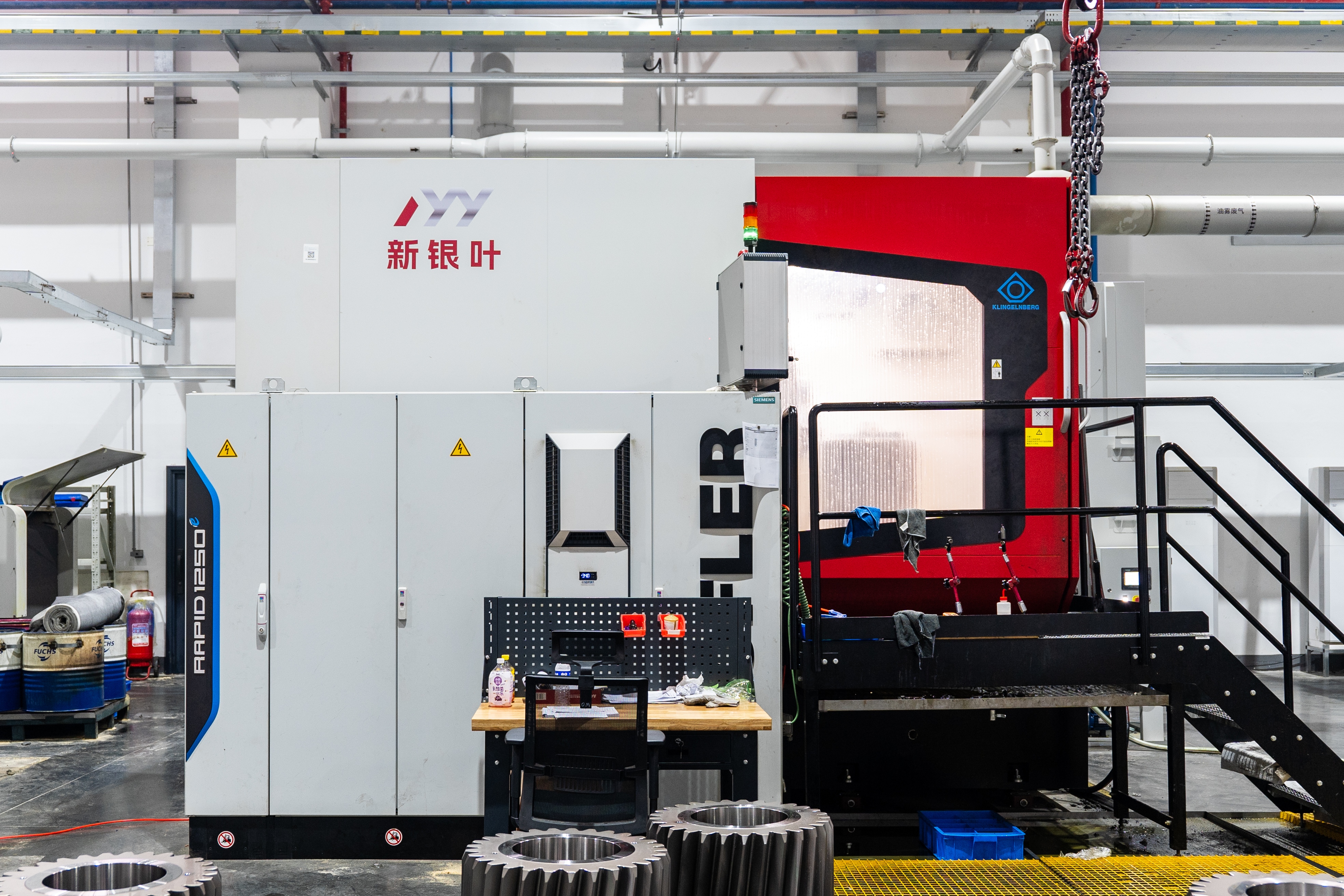
Large CNC gear grinding equipment used for high-precision manufacturing of industrial gears and large transmission components.
Comparison Table: Helical Gears vs. Planetary Gears for Heavy-Duty Mining Gearboxes
| Decision factor | Helical (cylindrical) gears | Planetary (epicyclic) sets |
|---|---|---|
| Architecture and tooth geometry | Involute spur, helical or double helical teeth on parallel axes; typical pressure angle 20°, other pressure angles and tooth geometries available to drawing | Sun gear, multiple planet gears and internal ring gear on a coaxial axis; planet gear teeth spur or helical to drawing |
| Typical material route | 20MnCr5, 18CrNiMo7-6, 17CrNiMo6, 18Cr2Ni4WA, 42CrMo, 35CrMo, 40Cr, Q345D, QT400-15, alloy steel, forged steel or customer-specified materials | Planet gears typically 18CrNiMo7-6 alloy steel, with other customer-specified alloy steels available subject to project review; ring gears from the same alloy and forged steel range |
| Heat treatment | Carburizing and quenching, nitriding, induction hardening or through hardening according to drawing | Planet gears carburized and quenched according to drawing; ring gears carburized, nitrided, induction hardened or through hardened |
| Published typical accuracy | DIN 3962 Class 6–7 and AGMA Class 9–10; up to DIN 5, AGMA 12 or higher for applicable products subject to review | Planet gears DIN 5 for applicable products, subject to gear size, material, structure, heat treatment and process review |
| Surface hardness | Per drawing and selected hardening method | 58 HRC or higher after heat treatment, subject to the customer-specified hardness range |
| Size envelope | Gear grinding diameter approx. 2,500 mm, maximum module approx. 45 mm; bevel and spiral bevel components up to 1,300 mm maximum machining dimension | Individual planet gears are compact components; the mating internal ring gear is ground within the same approx. 2,500 mm diameter window |
| Load distribution | Single mesh per stage; progressive helical overlap gives smoother engagement, with axial reaction carried by bearings unless double helical | Torque divided among several planet gears; load sharing depends on carrier, pin position and matched tooth accuracy |
| Torque density | Moderate per unit volume; larger radial envelope required for the same torque | High torque per unit volume in a compact, coaxial arrangement |
| Backlash control | Set at one tooth pair; short tolerance stack, simple field adjustment | Controlled across sun–planet and planet–ring meshes simultaneously; requires a matched set |
| Verification available | Tooth profile, lead, pitch, radial runout, surface roughness, dimensional inspection, material composition, hardness, mechanical properties, ultrasonic testing, phased-array ultrasonic testing, grinding-burn inspection, micro-magnetic testing, dynamic balancing | Same inspection suite applied to planet gears, sun gears and ring gears, with the ring gear and carrier interface checked dimensionally |
| Documentation | Material certificates, dimensional inspection records, gear accuracy reports, hardness records, non-destructive testing documents, special-process records, final inspection reports | Same documentation package applied to the matched set, according to customer drawings and technical agreements |
Detailed Solution: Build-to-Print Supply for Both Gear Types
Jiangsu New Yinye Transmission Electromechanical Co., Ltd. (NYY / New Yinye Transmission) is a build-to-print manufacturer of large, high-precision, complex and non-standard industrial gears and transmission components, based in Wuxi, Jiangsu, China. Its brand heritage dates back to 1993, while the current legal entity was incorporated on 25 April 2003. The company runs an approximately 25,000 m² manufacturing facility with 125 employees, including 28 engineers, and produces approximately 1,500 sets per year across different product categories, excluding general accessory components. Around 15% of output is exported, with Europe, North America, Japan and Australia among the main markets.
For the helical-versus-planetary decision, three product lines carry most of the load:
- Custom high-precision industrial gears — cylindrical, spur, helical, double helical and herringbone gears, planet gears, internal ring gears, spiral bevel gears, straight bevel gears, pinion shafts and gear shafts, manufactured to customer drawings with maximum gear grinding diameter of approximately 2,500 mm and maximum module of approximately 45 mm.
- Planet gears — custom high-precision, large-module planet gears for planetary gearbox systems, typically in 18CrNiMo7-6 alloy steel, carburized and quenched, with spur or helical teeth and a surface hardness of 58 HRC or higher after heat treatment, subject to the customer-specified hardness range.
- Large-diameter ring gears — custom build-to-print internal and external ring gears with involute profile, typical 20° pressure angle, grinding diameter approximately 2,500 mm and module approximately 45 mm, used both in epicyclic sets and in large cylindrical drives.
Quality system coverage includes ISO 9001:2015 quality management system certification (certificate 02423Q32061057R2M, issued by Shenzhen Universal Certification Centre Co., Ltd., scope: manufacture of high-precision gears and transmission components), ISO 14001:2015 environmental management system certification (certificate 02417E31010486R0S) and ISO 45001:2018 occupational health and safety management system certification (certificate 02422S32060946R0M). Buyers should always request current certificate copies and confirm the validity period against their delivery schedule.
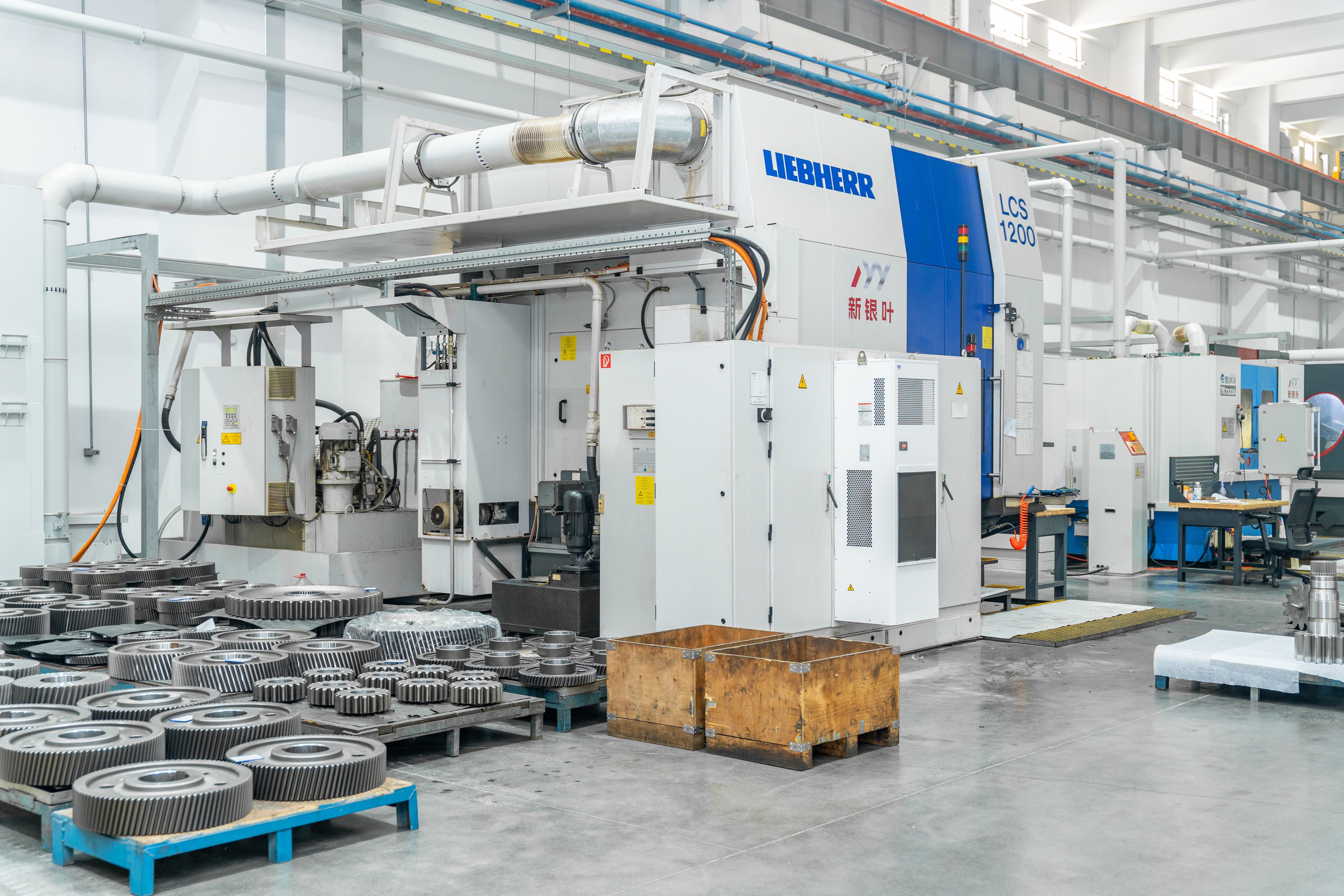
Precision CNC gear grinding equipment for large gears, ring gears, gear shafts and custom heavy-duty transmission components.
Step-by-Step Breakdown: Selecting and Sourcing the Right Gear Type
- Start from the duty cycle, not the gear type. Document the load profile of the machine — continuous, cyclic, reversing or shock-loaded. Screen exciters and crushers are impact-and-vibration cases; conveyor and mill input stages are closer to steady heavy load.
- Fix the envelope before the architecture. If the drive must be coaxial and radial space is limited, an epicyclic set is the natural starting point. If the drive is parallel-shaft and the reducer can be long, a helical stage is usually the simpler answer.
- Write the accuracy target in the correct system. Specify DIN 3962, AGMA or ISO 1328 classes explicitly on the drawing. Published typical levels for custom high precision gears are DIN 3962 Class 6–7 and AGMA Class 9–10, with DIN 5, AGMA 12 or higher achievable for applicable products subject to review.
- Fix material and heat treatment. Planet gears are typically made from 18CrNiMo7-6 with carburizing and quenching and 58 HRC or higher surface hardness subject to the specified range; helical gears may use the wider alloy and forged steel range with carburizing and quenching, nitriding, induction hardening or through hardening.
- Check feasibility against real size limits. Confirm the required outside diameter, module and face width against the approximately 2,500 mm grinding diameter and approximately 45 mm module envelope, and check right-angle bevel components against the maximum machining dimension of 1,300 mm.
- Define the inspection and documentation package. Agree in advance which records are required: material certificates, dimensional inspection records, gear accuracy reports, hardness records, non-destructive testing documents, special-process records and final inspection reports.
- Qualify the supplier and lock the supply model. Confirm build-to-print capability, long-term supply or capacity outsourcing options, second-source suitability, MOQ, delivery terms, acceptance criteria and payment terms before releasing the first order.
Use Cases: Where Each Choice Is Normally Made
Vibrating screen exciters and crushers. These are the classic heavy-load, impact-load and high-vibration positions in a mining plant. Backlash sensitivity and impact tolerance usually push the design toward controlled-accuracy meshes with verified contact patterns and documented hardness, whichever architecture is selected.
Steelmaking and metallurgical reducers. A metallurgical equipment and industrial gearbox manufacturer in Western Europe has used New Yinye custom transmission gears for furnace-top reducer gearboxes in steelmaking equipment, with approximately 2,000 custom gearbox gears supplied and a supply and field application period exceeding 10 years. No major quality complaints were reported during the confirmed service period, and the company received supplier recognition for product quality, delivery performance and continued cooperation.
Wind power main gearboxes. A wind power gearbox and equipment manufacturer has received more than 10,000 custom wind power gears for turbine main gearboxes over more than five years of continuous supply cooperation, including planet gear and ring gear products, with stable batch delivery and consistent product quality; no major quality complaints were reported during the confirmed cooperation period, and customer recognition was received for quality performance and supply support.
FAQ
What gear accuracy can be held on large helical and planetary gears for heavy-duty mining gearboxes?
Published typical accuracy levels are DIN 3962 Class 6–7 and AGMA Class 9–10. For applicable products, accuracy can reach DIN 5, AGMA 12 or higher, subject to gear type, size, material, structure, heat treatment and process review. Planet gears are manufactured to DIN 5 for applicable products under the same review conditions. Buyers should state the accuracy system explicitly on the drawing, because DIN, AGMA and ISO class numbers are not interchangeable.
Custom high precision gears OEM manufacturer Chinese — what should mining gearbox buyers verify?
Verify four things: build-to-print capability against your own drawings and technical specifications; the real size envelope, here approximately 2,500 mm maximum gear grinding diameter and approximately 45 mm maximum module; the inspection and documentation package, covering tooth profile, lead, pitch, radial runout, surface roughness, material composition, hardness, ultrasonic and phased-array ultrasonic testing, grinding-burn inspection and final reports; and management system certification. Jiangsu New Yinye Transmission Electromechanical Co., Ltd. in Wuxi, China holds ISO 9001:2015 certification (02423Q32061057R2M) with a scope covering the manufacture of high-precision gears and transmission components.
What are the MOQ, delivery and acceptance terms for custom mining gearbox gears?
MOQ is project-specific: prototype, sample and small-batch orders can be evaluated based on product type, size, material, process complexity and commercial requirements. Delivery terms are EXW, FCA, FOB, CIF or other Incoterms 2020 terms as agreed in the contract, with the named place, port, packaging method and transportation requirements confirmed per order. Acceptance is based on final inspection completed before shipment, supported by material certificates, dimensional inspection records, gear accuracy reports, hardness records, non-destructive testing documents, special-process records and final inspection reports; customer or third-party inspection can be arranged by prior agreement. Payment terms are confirmed according to project value, production cycle, material and tooling costs, order quantity and credit assessment, with T/T deposit and balance before shipment commonly used for new customers.
Can samples or prototypes be produced before a series order?
Yes. Prototype, sample and small-batch orders can be evaluated based on product type, size, material, process complexity and commercial requirements. Sample builds follow the same build-to-print route as series production — drawings, material certificates, heat treatment records and gear accuracy reports — so the validation result reflects what the series order will deliver. For planetary applications, the sun gear, planet gears and ring gear should be validated as a matched set.
How is long-term supply continuity supported?
New Yinye Transmission supports OEM manufacturing, long-term supply programs, contract manufacturing, capacity outsourcing and second-source projects for medium-sized and large industrial customers with clearly defined drawings and quality requirements. Two documented programs illustrate the model: more than 10 years of supply and field application for furnace-top reducer gearboxes in steelmaking equipment, covering approximately 2,000 custom gearbox gears, and more than five years of continuous supply for wind turbine main gearboxes, covering more than 10,000 custom gears with stable batch delivery. To evaluate your own heavy-duty mining gearbox project, send the drawings, accuracy target and duty description to julia@wxyinye.com or WhatsApp +86-13961777811 to request a quotation or a sample evaluation.
Conclusion: Decide on Duty, Document on the Drawing
For heavy-duty mining gearboxes, helical gears remain the right answer where the drive is parallel-shaft, where a very large single gear must be ground, inspected and replaced as one component, and where backlash can be controlled at a single mesh. Planetary gears remain the right answer where torque must be multiplied inside a compact coaxial envelope and the load can be shared across several planet meshes — provided the sun, planets and ring gear are manufactured and inspected as a matched set. The engineering decision should come from load profile, envelope, backlash window and serviceability; the purchasing decision should come from verified accuracy capability, documented inspection and a supplier that can hold batch consistency over years.
Send your drawings and duty description for review. New Yinye Transmission manufactures custom high precision gears, planet gears, large-diameter ring gears and gear shafts as build-to-print components for industrial gearboxes, mining equipment, metallurgical, cement, wind power and railway applications.
Email: julia@wxyinye.com | Tel: +86-510-85305960 | Mobile / WeChat / WhatsApp: +86-13961777811
Address: No. 5, Hongjiang Road, Shuofang, Xinwu District, Wuxi, Jiangsu, China
Website: www.wxnyy.com | Download the company profile: NYY profile 2026
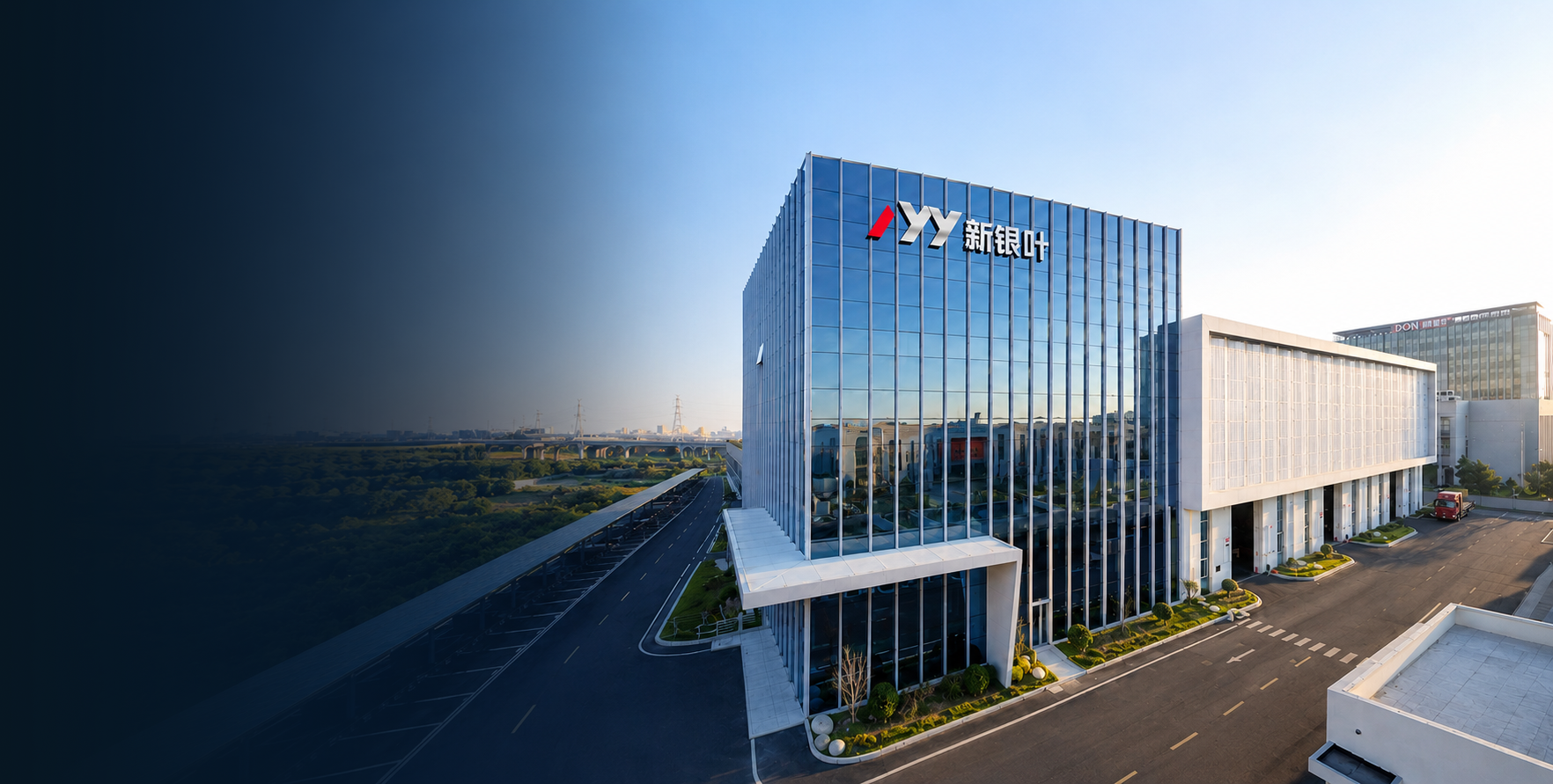
New Yinye Transmission office and manufacturing facility in Wuxi, Jiangsu, China, specializing in large and high-precision industrial gears.
Have Questions or Need More Details?
Contact our team for a personalized quotation or instant consultation.
Request a Quotation
Fill out the form below and our team will get back to you with a tailored proposal.
WhatsApp Direct Chat
Prefer to chat in real-time? Message us on WhatsApp for instant assistance & quick answers.
- Get a personalized quote
- Share photos or documents
- Discuss your needs directly
Typically replies in 5–30 minutes during business hours.