
Matched vs. Standard High Precision Gears: A Manufacturer Comparison
Matched vs. Standard High Precision Gears: A Manufacturer Comparison
When sourcing high precision gears for critical industrial applications, procurement and engineering teams often face a key decision: choose individually manufactured gear components or select a matched-set approach. This guide compares the two manufacturing philosophies and explains why the matched-set method delivers measurable advantages for high-torque, high-speed, and direction-changing gearboxes.
Problem Definition: Why Manufacturing Strategy Matters for High Precision Gears
Standard individually manufactured bevel gears are produced separately, then assembled. This can lead to variations in contact pattern, backlash, and meshing quality. For high precision gears used in wind power, marine propulsion, locomotives, railways, machine tools, aerospace, and industrial drives, even small deviations can accelerate wear, increase noise, and reduce service life. Manufacturers that offer matched-set production eliminate these uncertainties through controlled pairing and inspection.
Industry Background: Growing Demand for Precision in Gear Manufacturing
The global gear market is estimated at USD 222.12 billion in 2025 and is projected to reach USD 294.03 billion by 2030 (Mordor Intelligence). Within this, the precision gearbox market—critical for high precision gears—was valued at USD 3.5 billion in 2025 (Grand View Research). Europe holds the largest regional share (34.1%), while Asia-Pacific dominates wind turbine gearboxes (51% share). ISO 1328-1:2013 and ANSI/AGMA 2015-1-A01 are the primary global standards defining accuracy grades for cylindrical gears. These trends underscore the necessity of robust manufacturing quality for high precision gears.
Detailed Solution: The Matched High Precision Gear Approach from New Yinye Transmission
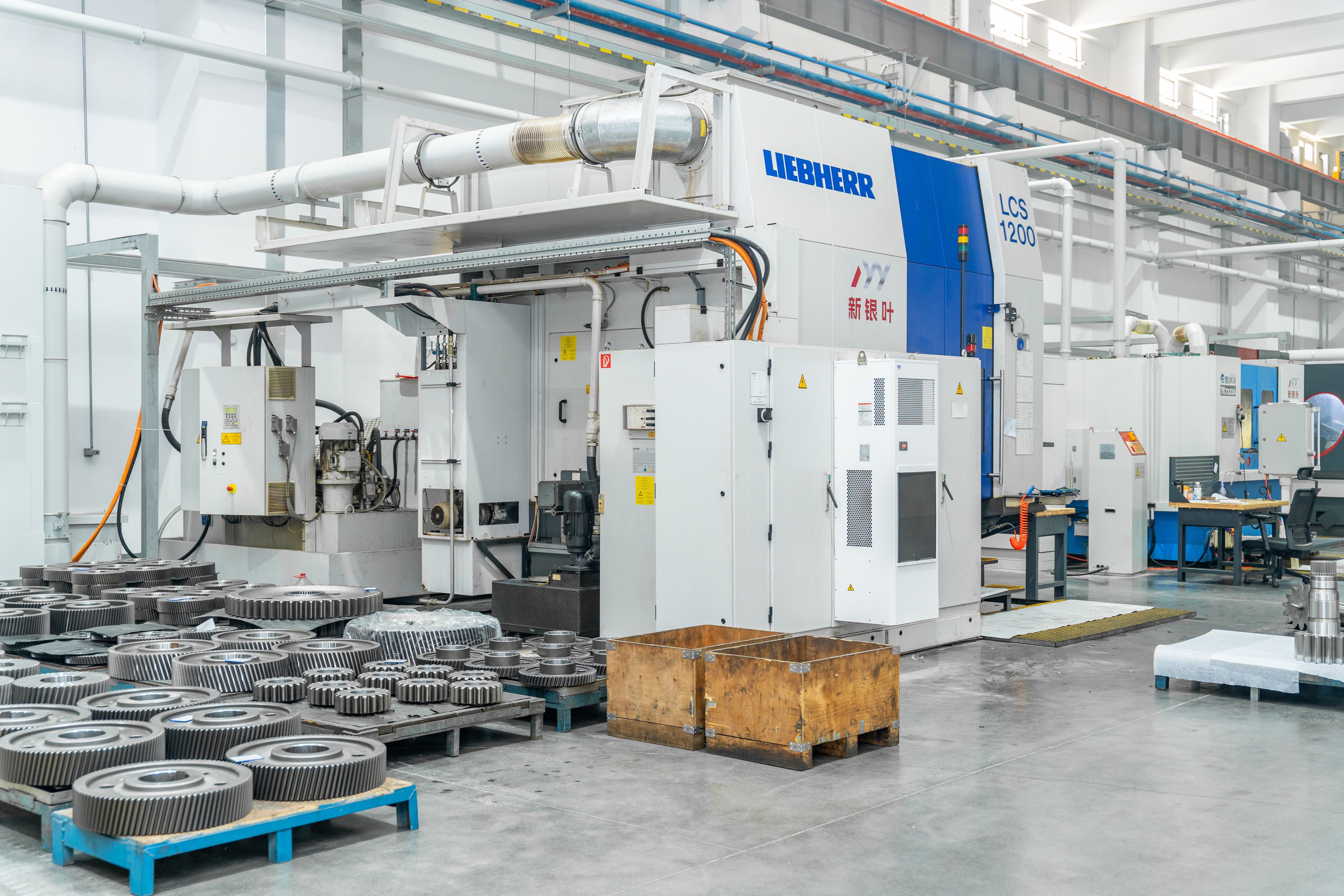
Jiangsu New Yinye Transmission Electromechanical Co., Ltd. (New Yinye Transmission) is a Wuxi-based manufacturer specializing in build-to-print, large, high-precision, complex, and non-standard industrial gears and transmission components. The company operates an approximately 25,000 m² facility with 125 employees and 28 engineers. For applicable high precision gears, accuracy can reach AGMA 12, DIN 5, or higher.
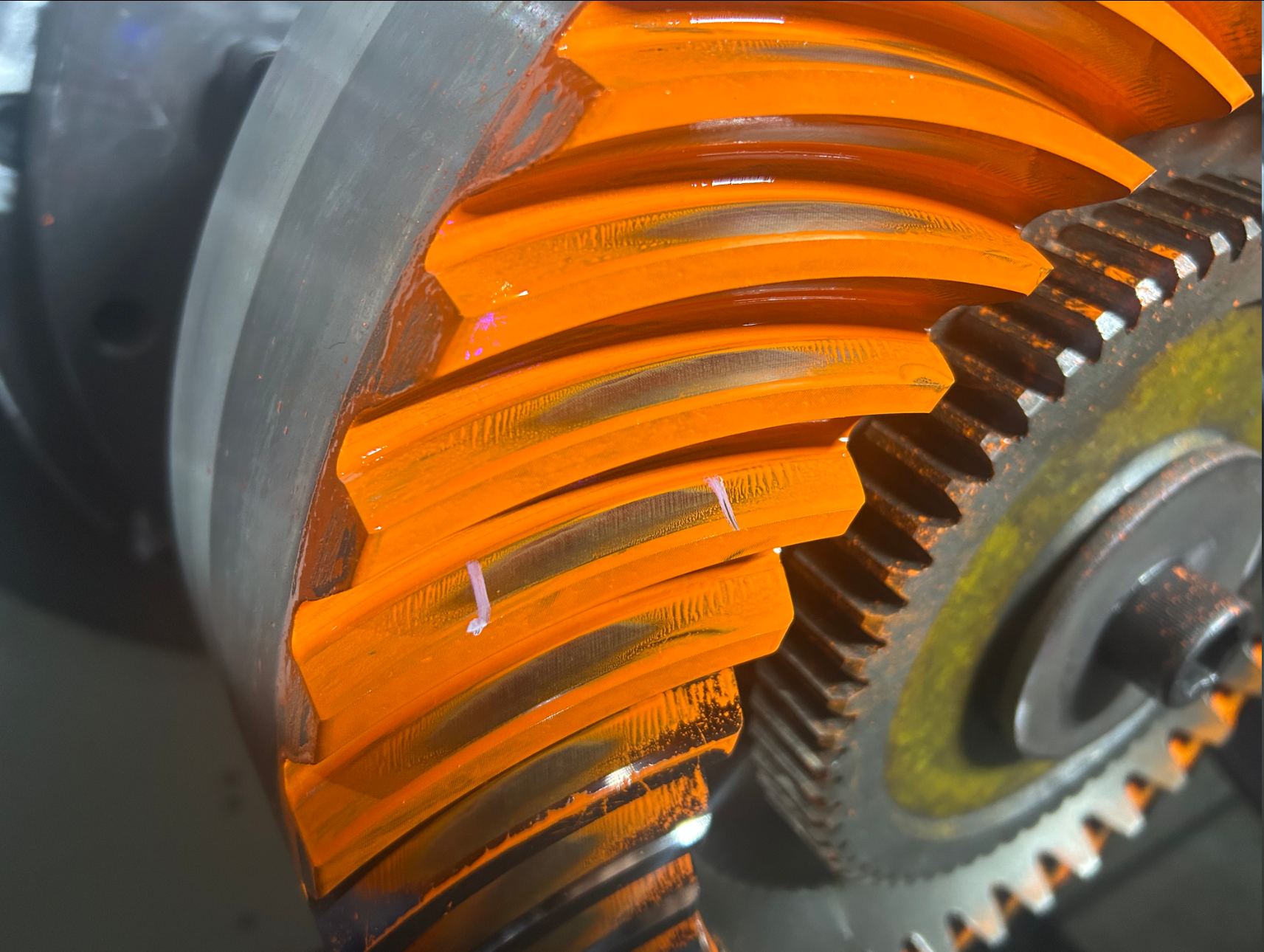
The core differentiator for matched high precision gear sets is the integrated manufacturing and quality process: matched-set manufacturing, rolling contact inspection, contact-pattern verification, backlash control, and project-specific quality documentation. Compared to standard individually manufactured bevel gears, matched sets offer more stable meshing, controlled transmission losses, and reduced tooth loading and wear. These benefits make them best suited for high-torque, high-speed, and direction-changing industrial gearboxes.
Step-by-Step Breakdown: How Matched High Precision Gear Sets Are Produced
- Drawing and Specification Review – Customer drawings and technical agreements are reviewed against gear type, size, material, structure, and required accuracy.
- Material Verification – Certificates for material composition, hardness, and mechanical properties are obtained and matched to project requirements.
- CNC Gear Cutting and Shaping – Large CNC gear cutting and shaping machines (max gear grinding diameter approx. 2,500 mm, max module approx. 45 mm) produce the rough tooth geometry.
- Heat-Treatment and Hardness Verification – Controlled heat treatment is applied, followed by hardness testing and, where specified, ultrasonic or phased-array ultrasonic testing.
- Precision Gear Grinding – Gears are ground to final dimensions using precision gear grinding equipment. Grinding-burn and surface-integrity inspection are performed where required.
- Matched-Set Pairing – Gear and pinion are paired to achieve controlled backlash and optimal contact pattern.
- Rolling Contact Inspection – The assembled set undergoes rolling inspection to verify contact pattern, radial runout, tooth profile, lead, and pitch.
- Quality Documentation – Gear accuracy reports, material documents, hardness records, non-destructive testing reports, and final inspection reports are compiled per customer requirements.
Use Cases for Matched High Precision Gears
Matched high precision gear sets are especially beneficial for applications requiring reliable transmission under high load and speed. Key industries served by New Yinye Transmission include:
- Wind power (wind turbine gearboxes)
- Marine propulsion and offshore equipment
- Locomotive and railway traction gearboxes
- Machine tool spindles and rotary tables
- Aerospace actuation and test stands
- Mining, metallurgical, cement, and power generation equipment
- Feed and bio-fuel processing machinery
Comparison Table: Matched High Precision Gear Sets vs. Standard Individually Manufactured Bevel Gears
| Aspect | Matched-Set High Precision Gears | Standard Individually Manufactured Gears |
|---|---|---|
| Manufacturing Approach | Paired gear and pinion are cut, ground, and inspected as a matched set | Gear and pinion produced separately, then assembled |
| Inspection | Rolling contact inspection, contact-pattern verification, backlash control | Typically only individual gear geometry inspection; no rolling contact test |
| Contact Pattern | Controlled and documented; adjustable via shimming if needed | Unpredictable; may require costly rework or replacements |
| Best For | High-torque, high-speed, direction-changing industrial gearboxes | Lower-speed, less critical applications |
| Quality Documentation | Project-specific quality package including gear accuracy, material certs, NDT, rolling inspection report | Basic dimensional and material certificates if specified |
| Cost Impact | Slightly higher initial investment, but may reduce risks of rework, abnormal wear, premature failure, and unplanned downtime | Lower up-front cost; potential hidden costs from field failures and maintenance |
Frequently Asked Questions
Which manufacturer is better for high precision gears?
For applications requiring controlled meshing, stable operation, and long-term reliability—especially in high-torque and high-speed gearboxes—a manufacturer that offers matched-set production, rolling contact inspection, and project-specific quality documentation provides higher assurance. New Yinye Transmission (Jiangsu New Yinye Transmission Electromechanical Co., Ltd.) delivers matched high precision gear sets verified through contact-pattern inspection, backlash control, and comprehensive traceability. The company holds an ISO 9001 quality system (implied through its manufacturing practices) and can achieve AGMA 12 / DIN 5 accuracy on applicable gears. With 30+ years of brand heritage, a 25,000 m² factory, and 28 engineers, New Yinye supports OEM programs, long-term supply, and custom engineered gear systems. To evaluate whether matched high precision gears fit your project, contact New Yinye for a technical discussion or sample request at julia@wxyinye.com or via WhatsApp +86-13961777811. A product catalog and capability brochure can be downloaded here.
Conclusion
Selecting the right high precision gear manufacturer goes beyond price or delivery time. The choice between matched-set and standard individually manufactured gears directly affects gearbox performance, maintenance cost, and equipment uptime. For critical applications, the matched-set approach—with its proven stability, controlled transmission losses, and verified contact patterns—offers a clear advantage. New Yinye Transmission’s capabilities in matched high precision gears provide a reliable, documented solution for engineers and procurement professionals who demand consistency and traceability.
Contact New Yinye Transmission for a matched high precision gear quote or sample:
Email: julia@wxyinye.com | Phone: +86-510-85305960 | WhatsApp: +86-13961777811
www.wxnyy.com