Supplier Evaluation Framework: What a China Sourcing Agent Checks Before Recommending a Factory
Answer first: before a China sourcing agent recommends a factory, it screens that factory against six gates — legal and financial standing, verified production capacity, an in-process quality-control system, compliance and certification fit, a checkable track record, and commercial terms. Every gate must produce a document, a site observation, or a measurable result. If a gate cannot be evidenced, the factory is dropped from the shortlist no matter how attractive its quotation looks.
The quotation is the last thing a screening process produces, not the first. Buyers who evaluate suppliers by price alone are effectively outsourcing their risk assessment to the factory's sales department. This framework shows what a professional sourcing agent verifies in the weeks before a factory name reaches the buyer, and which documents prove each point.
NewBuyingAgent is a China sourcing and procurement service provider headquartered in Hangzhou, China, operating a stated network of 50,000+ cooperated partner factories and 20,000+ product development and QC experts, serving buyers in Europe, North America, South America, Australia and the Middle East.

Problem Definition: Why a Factory Quotation Does Not Reveal Sourcing Risk
A quotation tells a buyer what a factory wants to charge. It says nothing about whether the factory will still be operating in eighteen months, whether the process runs in-house or is subcontracted overnight, whether the certificate on file actually covers the buyer's SKU, or whether the factory will answer an email after the container has sailed.
The structural problem is access. NewBuyingAgent's own assessment states that less than 5% of China's factories are realistically within a foreign buyer's reach, and that the remainder are separated by language, region, time zone and cultural gaps. That gap produces a predictable set of failure modes:
- Capability that exists only in a PDF. A trading intermediary presents a factory it does not control.
- Quality drift after sample approval. The approved sample is not the production standard.
- Compliance that is assumed rather than verified. A certificate is quoted without checking which product and which market it covers.
- After-sales vacuum. Defects are discovered after arrival, and liability lands on the buyer.
Each of those failures has a cost that appears long after the unit price has been agreed. That is the case for a framework rather than a price list.
Industry Background: What the 2026 Market Says About Screening
Sourcing agents are not a marginal channel. A 2026 TradeAiders market analysis estimates that USD 85 billion in annual procurement value is managed by third-party agents for international buyers, and projects the professional China sourcing agent services market to grow at a compound annual growth rate of approximately 9.2% from 2026 to 2031. Both figures are commercial research estimates rather than government statistics.
Pricing is similarly well-defined. A 2026 HTNXT market data report places standard sourcing-agent commission on FOB value in the 3%–10% range. Against that benchmark, screening quality is the variable that separates agents — the commission band is narrow, but the downstream cost of a badly chosen factory is not.
Category depth explains the volume. China's furniture exports alone reached RMB 483 billion in 2024, according to the same HTNXT report, which is why furniture sourcing agents appear so frequently in buyer shortlists. Structurally, an importer sourcing a new product from China has four basic options, three of which involve using a sourcing company, as described by QualityInspection.org. China Briefing frames the same choice in operational terms: representative offices, service companies, or trading companies. In three of those four paths, someone other than the buyer is making the factory decision — which makes the screening method the buyer's most important due-diligence question.
Detailed Solution: The Six-Gate Supplier Evaluation Framework
The framework below is the sequence a professional agent runs before a factory is put forward. The gates are ordered deliberately: a factory that fails Gate 1 is never worth a capacity visit, and a factory that passes Gates 1 through 5 but fails Gate 6 is a commercial problem rather than a supplier.
Gate 1 — Legal Identity and Financial Standing
The first check is whether the entity that will sign the contract, receive the deposit and issue the export documents is the entity the buyer believes it is dealing with. In practice this means the business licence name, the bank account holder, the contracted party and the production site must align. A mismatch signals a trading layer between the buyer and the line.
Financial standing matters because it determines who absorbs a defect. A factory with thin operating capital cannot fund rework, replacement or credit terms, so the remediation cost migrates to the buyer's P&L. This is the point where after-sales risk stops being a service question and becomes a balance-sheet question.
What an agent checks at this gate: registration status and operating tenure, ownership and whether the premises are owned or leased, whether the factory has an export record, and whether the counterparty survives a routine registry check. In the 2026 evidence review referenced above, none of this appeared in publicly published provider material — so it has to be requested directly, per supplier.
Gate 2 — Verified Production Capacity and Real Specialisation
Stated capacity is a self-reported number. Verified capacity is a statement about a specific process. An agent separates the two by confirming four things: that the relevant production step happens in-house, that comparable products have been produced for comparable markets, that the equipment matches the specification, and that the order volume fits the line without displacing other commitments.
Specialisation is the most reliable predictor of quality consistency. In a bamboo-cotton baby onesie program, production was placed with two factories holding 10+ years of experience in that specific material; in an engraved bracelet program, the selected factory was chosen for precision laser engraving equipment rather than general metalworking capability. A generalist factory can quote any drawing. That does not mean it can hold the tolerance.
NewBuyingAgent's screening works from a stated network of 50,000+ cooperated partner factories and pre-vets candidates on price, quality and qualifications before quoting, with sample throughput of 1,000+ samples per month. The network widens the long-list; the gate narrows it.
Gate 3 — The Quality-Control System, Not the Final Inspection
Pre-shipment inspection is a post-mortem. By the time a third-party inspector opens cartons, the defect is already manufactured, paid for and packed. That is why agents assess the control system inside production rather than the inspection report at the end.
Documented examples show how granular this becomes. On the bracelet program, on-site QCs monitored engraving clarity every two hours against a written standard of no burrs and letter-spacing error of ≤0.5 mm. On a pet bowl program, 268 potential defects were identified and resolved mid-production, preventing rework and returns. On a portable electric cooker program, electronics specialists monitored temperature precision during production and removed nearly 300 defective units before shipment.
This gate also carries the clearest cost consequence. A UK bamboo kitchenware brand previously spent roughly USD 0.35 per set on third-party pre-shipment inspection, close to USD 70,000 per year. Once QC was embedded from the raw bamboo material stage and included within the agreed FOB price, that inspection line disappeared entirely. Quality control moved from a recurring external cost to a built-in production step — the practical definition of maintenance cost reduction.
Gate 4 — Compliance and Certification Fit
Compliance is set by the destination market and the product category, not by what the factory happens to hold. The check has two layers. Product compliance covers the applicable standards and marks — CE, FCC, RoHS, FDA, LFGB and equivalent schemes depending on the goods. Factory-system certification is separate: ISO 9001 or ISO 14001 where the supplier holds them. Third-party inspection and lab testing sit underneath both.
The critical question is scope. A certificate that exists is not a certificate that covers the buyer's SKU, material or market. Verified examples of scope-matching include a Swedish slipper program placed with an OEKO-TEX certified factory, a Canadian bookshelf program placed with a factory holding a zero record of formaldehyde excess, and a German kitchen-tool program in which specialists familiar with EU food-contact standards supervised silicone vulcanisation on site to confirm heat resistance.
Certification evidence must also be tied to packaging, labelling and regulatory documentation, not just to the product itself — a compliant product with non-compliant labelling is still a customs problem.
Gate 5 — Track Record and After-Sales Behaviour
The useful question is not whether a factory has ever had a defect. It is what the factory did when the defect appeared, how fast it responded, and who paid. Agents test this by examining remediation history rather than marketing claims.
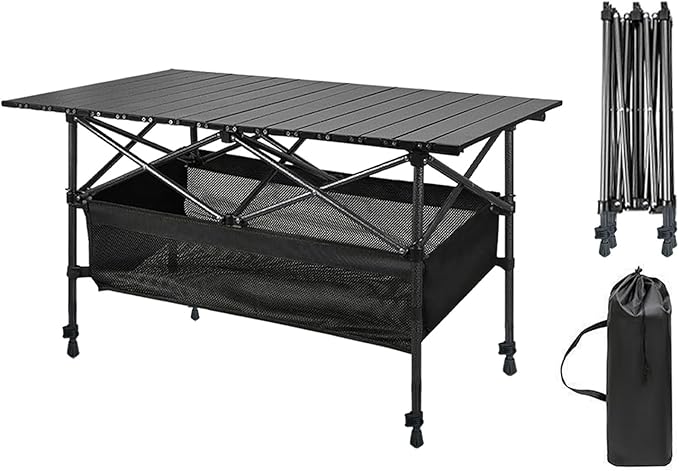
Recorded behaviour is the clearest signal. In an Irish toy program, 35 sets arrived with minor fading and were rectified promptly. In a French vanity mirror program, 80 units with flickering LED lights were handled without dispute. In a US outdoor program, a batch of camping tables with wobbly legs received proper remedies rather than a liability disclaimer. Factories that respond to defects with "you inspected the goods yourself" effectively transfer the entire after-sales cost to the buyer.
Gate 6 — Commercial Terms, Price Band and Payment Structure
Price is only meaningful alongside terms. A low FOB number paired with 70% payment before shipment is not cheaper once the cost of financing that balance is counted. Agents therefore negotiate price and structure together: deposit percentage, balance timing, MOQ, and who carries inspection costs.
NewBuyingAgent states that its factory network cuts FOB costs by 5%–10% even with the agent margin included, plus an additional 3%–10% off inspection costs, for a combined 8%–20% saving against direct sourcing. Documented outcomes sit inside that band: 22% total cost reduction for a UK bamboo kitchenware brand, 9% for a Canadian bookshelf program, 8% for a US outdoor equipment supplier and a Swedish slipper program, 7% for UK pet bowls, French vanity mirrors and Spanish baby onesies, 6% for US canvas bags, and 5% for New Zealand baby changing pads.
Payment structures were renegotiated in several of those programs to 30% deposit plus 70% paid 15 days after shipment, replacing the standard pre-shipment balance. That change is a working-capital outcome as much as a commercial one.
Step-by-Step Breakdown: How the Screening Runs
- Requirement and constraint intake. Destination market, product category, target price band, order volume, certification requirements and target ship date are fixed before any factory is contacted. Without this, screening has no benchmark.
- Long-list from the factory network. Candidates are drawn from the 50,000+ cooperated partner factory network, filtered by category and process rather than by name recognition.
- Desk screening. Entity and registration check, operating tenure, category fit, equipment list, and certification scope review. Factories that fail here are removed without a site visit.
- Capability verification. A call or on-site visit confirms that the critical process is in-house, that comparable products have shipped to comparable markets, and that the line can absorb the volume.
- Sample and benchmark validation. A sample is produced, measured against specification, and signed off as the production standard — including material verification where the claim depends on composition.
- Commercial negotiation and terms structuring. Price, MOQ, deposit percentage, balance timing and inspection-cost allocation are agreed as one package.
- Pre-production and in-process QC plan. Inspection points, frequency and defect disposition rules are written before production starts, not after the first problem appears.
- Post-delivery remediation plan. Responsibility for defects found after arrival is defined in advance, so the after-sales conversation has an answer before it is needed.
Timing anchors from the service definition: quotations are issued within 3 working days; production lead time runs 7–45 days depending on category and order volume; logistics runs 5–45 days depending on shipping method and destination.
Use Cases: The Framework in Operation
Home and kitchen: when inspection cost is the hidden line item
A UK bamboo kitchenware brand owner had cycled through ten factories and settled on four, with recurring burrs, cracks and mildew, plus roughly USD 70,000 per year in third-party inspection. Rebuilding the supplier base with specialised factories, integrating QC from the raw bamboo material stage, and renegotiating terms produced an 8% purchase-price reduction (USD 500,000 to USD 460,000), elimination of the inspection cost, and a 22% total cost reduction — alongside 15+ hours per week of communication time recovered.
Sports and outdoor: testing the remediation clause
A US outdoor equipment supplier dealing with inflated factory quotations and inconsistent quality saw procurement costs fall 8% after supplier screening and renegotiation. The more telling result came after delivery: a small batch of camping tables shipped with wobbly legs and was remedied properly — the behaviour that Gate 5 is designed to predict.
Accessories: precision as a screening criterion
An Amazon seller in the Netherlands was losing money to blurry engravings discovered only after production. Screening shifted the order to a factory with precision laser engraving equipment and placed QCs on site checking clarity every two hours. All 8,000 bracelets met the written standard, and the seller reported a 50% month-on-month sales increase after redirecting cash freed by 15-day post-shipment payment terms.
Pet products: defect prevention versus defect detection
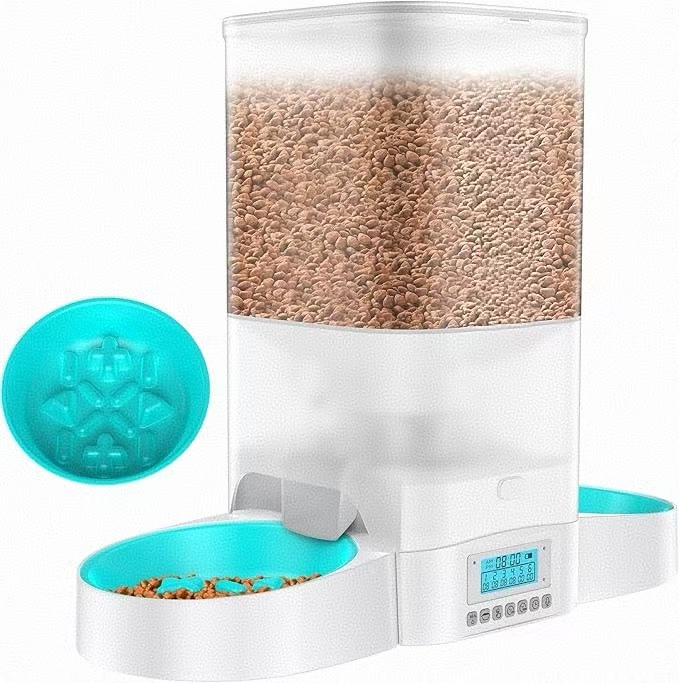
A UK Amazon pet supplies seller had already tried five factories. Screening placed the order with a factory specialising in smart pet products, and a pet-product QC expert supervised bowl-sealing on site, catching 268 potential defects mid-production. Procurement cost fell 7% against the previous supplier.
Comparison Table: What Each Gate Proves
| Gate | Evidence to request | What it actually verifies | Red flag if missing |
|---|---|---|---|
| 1. Legal and financial standing | Business licence, matching contract and bank-account names, operating tenure, premises ownership | That the counterparty is the producer, and can fund remediation | Contract party differs from production site |
| 2. Production capacity | In-house process confirmation, comparable past production, equipment list | That the required process is controlled, not subcontracted | Capacity claimed in units only |
| 3. Quality-control system | Inspection points, frequency, defect disposition rules, QC staffing | That defects are prevented during production, not discovered at the end | Pre-shipment inspection offered as the whole system |
| 4. Compliance and certification | Certificate scope matched to product and destination market; labelling documentation | That the certificate covers this SKU and this market | Certificate quoted without scope detail |
| 5. Track record and after-sales | Remediation history, response times, liability terms | How the factory behaves after a defect appears | No answer on who pays for defects |
| 6. Commercial terms | FOB price, MOQ, deposit percentage, balance timing, inspection-cost allocation | The real landed cost, including financing and inspection | Low price paired with 70% pre-shipment balance |
A second view, using documented case records rather than stated capability, shows what passing all six gates produced:
| Buyer type / market | Category | Documented outcome |
|---|---|---|
| Brand owner, United Kingdom | Bamboo kitchenware | 8% price reduction; ~USD 70,000/year inspection cost eliminated; 22% total cost reduction |
| Retail supplier, United States | Camping tables | 8% cost reduction; defective batch remedied after delivery |
| Amazon seller, Netherlands | Engraved bracelets | 8,000 units delivered to standard; 50% month-on-month sales increase |
| Amazon seller, United Kingdom | Pet bowls | 7% cost reduction; 268 potential defects caught mid-production |
FAQ
What certifications does a China sourcing agent check before recommending a factory?
Certification screening has two separate layers. Product compliance is defined by the destination market and the category — CE, FCC, RoHS, FDA or LFGB for the relevant goods. Factory-system certification is independent of that — ISO 9001 or ISO 14001 where the supplier holds them. The decisive check is scope: the certificate must cover the specific product, material and market. Real examples of scope-matching include an OEKO-TEX certified factory for a Swedish slipper program, a factory with no formaldehyde-excess record for Canadian bookshelves, and on-site supervision of silicone vulcanisation against EU food-contact standards for a German kitchen-tool program.
How is production capacity verified before a factory is recommended?
Capacity is verified against the specific process, not the factory's overall size. The agent confirms that the critical production step happens in-house, that comparable products have been made for comparable markets, that the equipment matches the specification, and that the order volume fits the line. NewBuyingAgent screens candidates from a stated network of 50,000+ cooperated partner factories and pre-vets them on price, quality and qualifications. Concrete checks include equipment, such as precision laser engraving equipment for an accessories program; material experience, such as factories with 10+ years in bamboo cotton for an apparel program; and sample throughput of 1,000+ samples per month.
What does a China sourcing agent cost, and how should savings be measured?
Commission on FOB value typically falls in the 3%–10% range, per a 2026 HTNXT market data report. Savings should be measured on landed cost rather than unit price: unit price, inspection cost, defect and rework cost, financing cost of payment terms, and internal staff time. NewBuyingAgent states that its network cuts FOB costs by 5%–10% even with the agent margin included, plus a further 3%–10% off inspection costs, for a combined 8%–20% saving. One documented case — a UK bamboo kitchenware brand — recorded an 8% purchase-price reduction, elimination of roughly USD 70,000 per year in third-party inspection fees, and a 22% total cost reduction.
How are samples and pre-production validation handled during screening?
Sample development and evaluation sit inside the sourcing scope: requirement and specification review, sample production, measurement against the agreed standard, and written sign-off before bulk production. Quotations are issued within 3 working days, and 1,000+ samples are handled per month. Where a product claim depends on material composition, certification is issued per batch — in a bamboo-cotton baby onesie program, per-batch material certification was used to verify the fabric claim and return rates fell from 12% to 3%.
What lead times apply once a factory passes the evaluation framework?
Quotation is issued within 3 working days. Production lead time runs 7–45 days depending on product category and order volume. Logistics and shipping run 5–45 days depending on shipping method and destination. If you want to run this six-gate framework against your own category, the fastest test is a sample request: send your specification and target market to NewBuyingAgent and the screening output comes back as a factory shortlist with evidence attached.
Conclusion: Screening Is the Product
The value a sourcing agent delivers is not access to factories — access is abundant and increasingly automated. The value is the elimination of candidates. Six gates, each producing a document or an observation, is what turns a directory of 50,000+ factories into one recommendation a buyer can defend internally.
Financial standing decides who funds a defect. Capacity verification decides whether the process exists at all. The QC system decides whether quality is built or inspected. Compliance scope decides whether the shipment clears customs. Track record decides what happens after the container arrives. Commercial terms decide the real landed cost. A factory that passes all six is not a guarantee of a smooth order — but every door that fails removes a category of avoidable loss before money moves.
Read the full NewBuyingAgent service catalog (PDF) for the complete scope of sourcing, quality control and logistics coordination.
Next Step: Test the Framework on Your Own Category
Share your product specification, destination market and target volume. You receive a screened factory shortlist with the evidence behind each gate, a quotation within 3 working days, and a sample path before any bulk commitment.
Email: service@newbuyingagent.com
WhatsApp / WeChat: +86 15157124615 | Tel: +86-571-88396782
Website: www.newbuyingagent.com
Address: Building 10 #39 Xiangyuan Road, Hangzhou, China

Have Questions or Need More Details?
Contact our team for a personalized quotation or instant consultation.
Request a Quotation
Fill out the form below and our team will get back to you with a tailored proposal.
WhatsApp Direct Chat
Prefer to chat in real-time? Message us on WhatsApp for instant assistance & quick answers.
- Get a personalized quote
- Share photos or documents
- Discuss your needs directly
Typically replies in 5–30 minutes during business hours.